
Long-Term T-Shirt Supplier Sustainability: Tour Merch Proof
Long-term supply sustainability is a sourcing question with a measurable answer: can a T-shirt Manufacturer reproduce the same fabric, fit, and print result across orders placed weeks apart, while the brand is still reading sell-through data from the previous drop? Most supplier evaluations never reach that question. A sample is inspected, a quotation is compared, a factory audit is passed, and a purchase order is issued. None of those steps tests repetition, and repetition is what a growing apparel program actually depends on.
The global custom T-shirt printing market was valued at USD 5.46 billion in 2024 and is projected to reach USD 9.82 billion by 2030, a compound annual growth rate of 11.5% to 11.6% (Grand View Research). T-shirts and tanks also account for a 48.39% share of the global blank apparel market, which was estimated at USD 15.23 billion in 2024 (Grand View Research). Most of that expansion arrives as repeat volume — tour drops, seasonal restocks, uniform cycles — rather than as isolated orders.
This article evaluates what long-term supply sustainability looks like in practice, using a concert merchandise program as the evidence base. That program ran across a 12-stop tour, required four in-tour reorders, completed 5,000 pieces within six months, recorded a 100% QC pass rate on rush orders, and finished with a 92% sell-through rate. The manufacturer behind it was Guangzhou Qianshi Apparel Co., Ltd. (Qianshiwear), an apparel manufacturer established in 2014 and based in Guangzhou, Guangdong.
Why Repeat Orders Test a Manufacturer in Ways Samples Cannot
A sample measures capability under prepared conditions. A reorder measures system stability under ordinary ones.
The distinction matters because the variables that decide whether a program keeps selling are rarely the variables a sample exposes. Between order one and order four, a factory draws on a different fabric dye lot, uses a different production slot, and may run printing on a different machine with different operators. Collar ribbing can come from a separate roll; heat-set curing can happen on a different line; the size curve may shift because the last two stops sold more XL than the first two. A single sample cannot surface any of that.
Published industry sourcing reports place China's leading T-shirt manufacturing clusters in Guangdong (Guangzhou and Dongguan, oriented toward fast fashion and streetwear) and Zhejiang (Ningbo, oriented toward premium knitwear). Cluster location shapes which repeat-order problems a factory is structurally good at solving. Streetwear and fast-fashion programs live on short reorder windows and frequent artwork changes; premium knitwear programs live on fibre consistency. A long-term supplier evaluation should start from which of those two problems the brand actually has.
The 12-Stop Tour Project: What Four Reorders Required
Tour merchandise compresses a retail calendar into weeks. A 12-stop tour means twelve inventory decisions made against live demand, with no realistic option to wait for a slower production cycle and no second chance on a missed ship date. Demand at a venue is decided by attendance, city, weather, and set list — not by the brand's planning model.
Within the six-month window of that program, 5,000 pieces were completed and four in-tour reorders were placed. Read operationally, four reorders means the manufacturer re-entered an already-approved product into production four separate times without re-engineering it. Artwork separations, print screens, the approved fit, the fabric specification, and the label artwork all stayed in a reusable state rather than being rebuilt from scratch each time.
A reorder placed mid-tour is not a repeat order in the usual commercial sense. It is a capacity request with a fixed ship date that cannot be renegotiated, because the deadline is set by a tour stop. The 92% sell-through recorded at the end of the program is the demand-side result of getting those four reorder decisions right — it is the outcome of supply catching demand rather than missing it.
What a 100% QC Pass Rate on Rush Orders Actually Measures
The same program recorded a 100% QC pass rate on rush orders. Read strictly, that is a first-pass inspection outcome: every rush-order shipment cleared final inspection without rework or a second inspection cycle, under the AQL 2.5 acceptance standard applied to those production runs.
The figure is more informative than a general quality statement because rush production is where quality control tends to fail. Compressed schedules remove the buffer that normally absorbs problems: under-cured ink that fails a wash test, screen misregistration on a multi-colour print, an inverted size label, or a collar ribbing batch that twists after laundering. A 100% first-pass pass rate on rush orders indicates that inspection happened before packing rather than after a complaint, and that process controls — fabric inspection, spreading, print curing, and finishing checks — held at speed.
The Operating Parameters That Make Repeat Supply Possible
Long-term supply sustainability is not primarily a matter of relationship quality. It is a set of operating parameters that determine whether a second and third order can be scheduled at all.
- Low MOQ per design: production can start from 50 pieces per colour per design, which is what allows a new artwork, a new tour stop, or a new colourway to be tested without inventory risk.
- Sampling: a 10-day sample turnaround was used on the tour project; the factory's general sampling window is 7 to 15 days.
- Bulk turnaround: 30 days for bulk production on that program.
- Quality control: AQL 2.5 across production runs.
- Fabric and materials: 160–220 GSM lightweight and 220–300 GSM mid-weight constructions; 100% cotton, cotton-polyester blends, and GOTS-certified organic cotton; slub cotton and pique for textured or polo constructions.
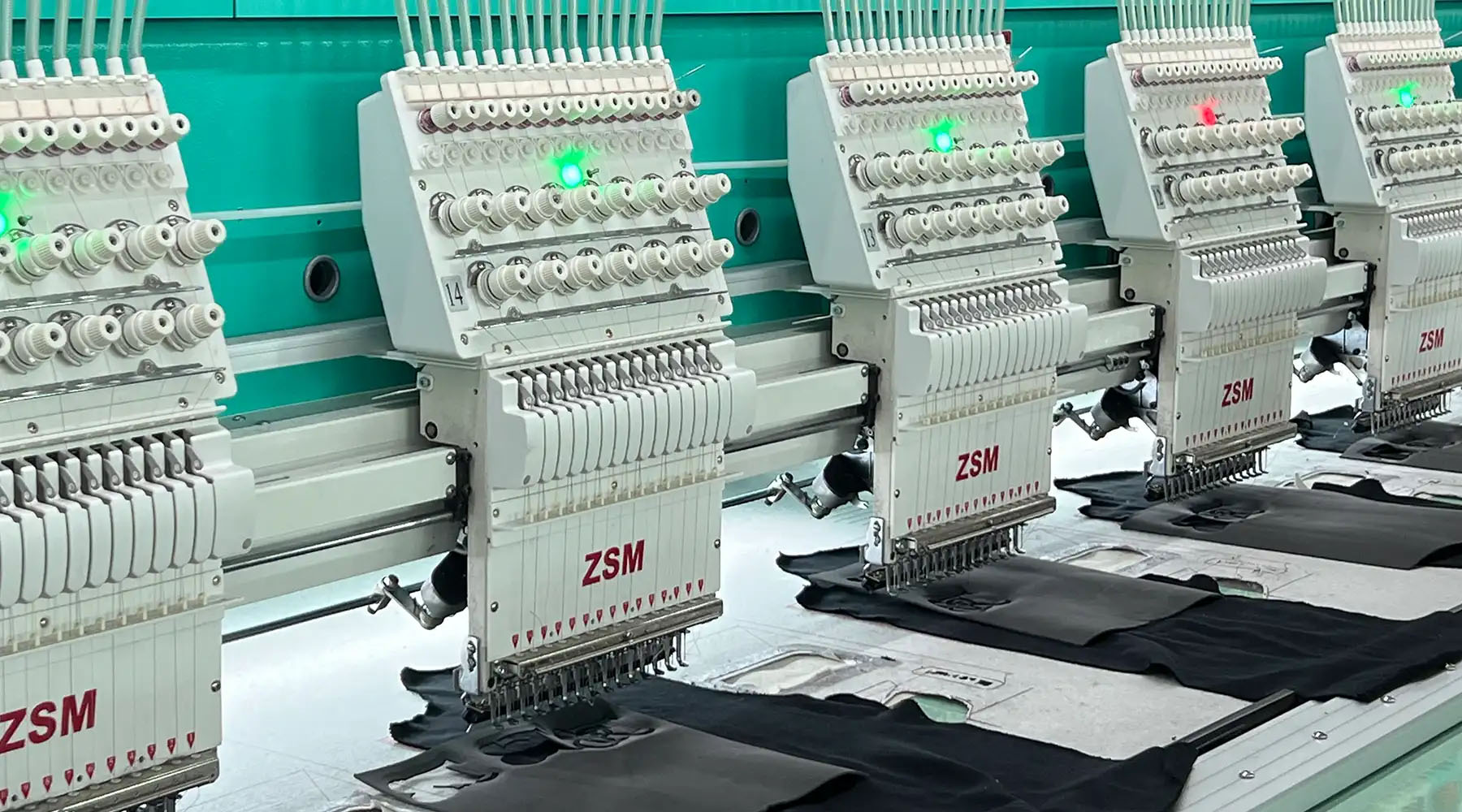
- Decoration: screen print, DTG, sublimation, heat transfer, and puff print; flat embroidery, 3D puff embroidery, and chenille.
- Finishing: custom neck labels and hang tags, ribbed collar or self-fabric binding, coverstitch or raw-edge hems, and garment washes including pigment dye, enzyme wash, snow wash, and vintage wash.
- Durability parameters: colour fastness of Grade 4 or above and shrinkage of 5% or less, with OEKO-TEX Standard 100 certified fabrics used for skin-contact styles.
For context, published industry reviews place common competitive MOQs among custom T-shirt manufacturers in China at 50 to 100 pieces per design and colour. The decisive detail is not which number is lowest; it is whether the quoted MOQ applies per design, per colour, or per order. That determines how many separate trial runs a brand can realistically fund within one season, and therefore how quickly it can learn what sells.
Wear, Launder, Reorder: The Cycle Behind 92% Sell-Through
Sell-through is a production metric only in retrospect. A 92% sell-through rate means 92% of produced units were sold rather than discounted or carried forward — which, for a touring program, is also a statement about whether the product still looked sellable at the twelfth stop.
The cycle that produces that result is ordinary: the T-shirt is worn as daily casual wear, laundered in residential or commercial washing machines, exposed to sweat and sunlight, and then reordered according to what sold. Two parameters decide whether a garment survives the loop — colour fastness of Grade 4 or above, and shrinkage of 5% or less. A print that fades or cracks, or a body that loses shape after a few washes, converts a reorder into a return.
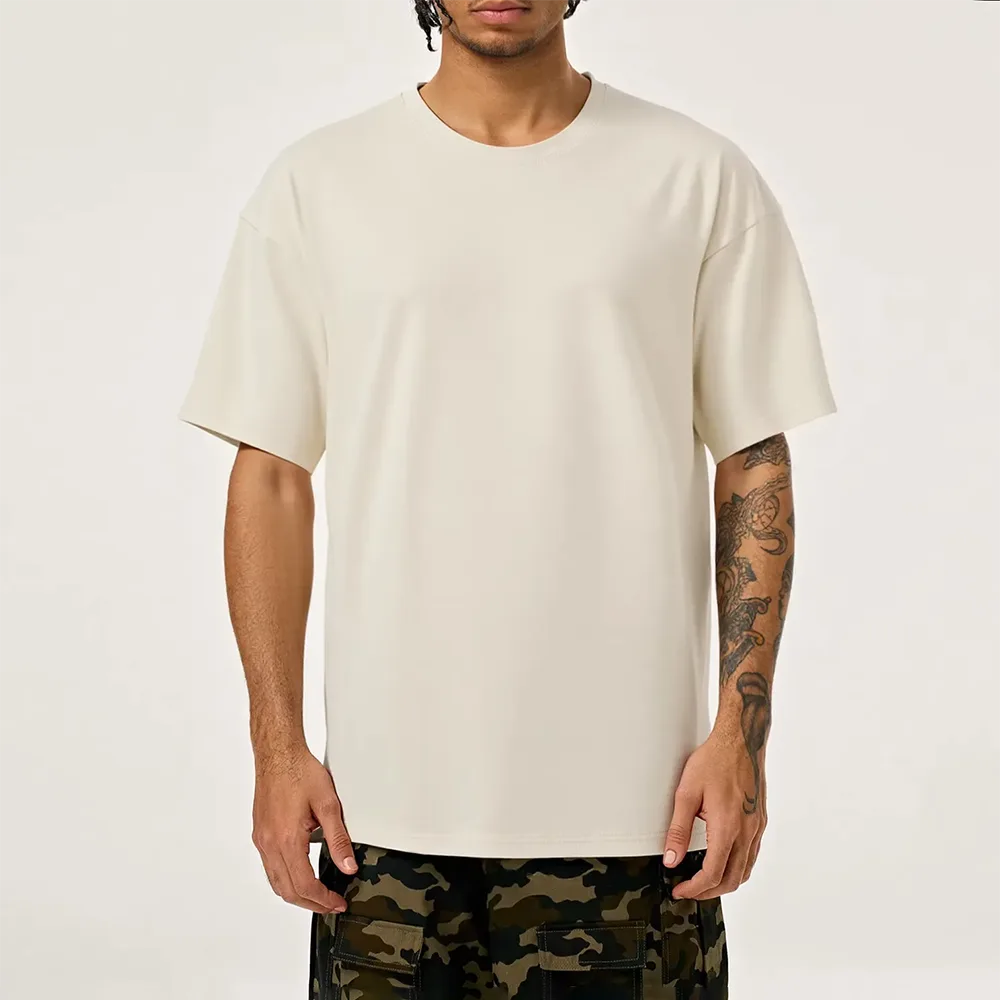
Fabric weight selection follows the same logic. Lightweight 160–220 GSM constructions suit warm-weather stops and lighter price points; 220–300 GSM mid-weight constructions hold heavier print coverage and a boxier silhouette. In the concert merchandise program, fabric construction and fit were specified once and held constant across all four reorders. That is what allowed the size curve — not the product itself — to absorb demand changes between stops, and it is why the reorder process stayed fast.
The Manufacturer Behind the Evidence: Guangzhou Qianshi Apparel Co., Ltd.
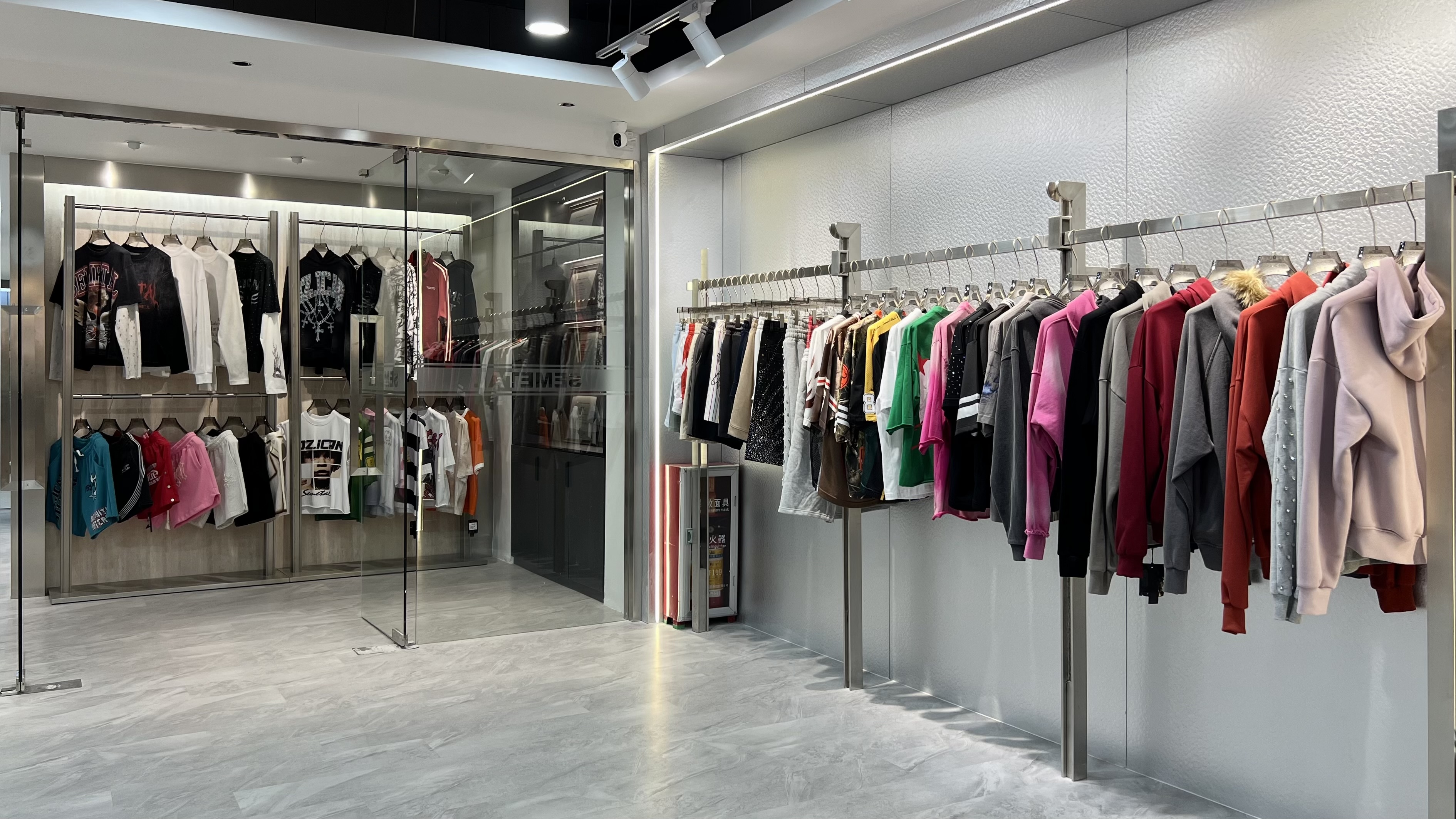
Guangzhou Qianshi Apparel Co., Ltd. (Qianshiwear) is an apparel manufacturer and trading company established in 2014 and based in Guangzhou, Guangdong, in the heart of China's garment industry. The company provides OEM and ODM services to clothing brands and businesses worldwide, and manages fabric sourcing, design development, precision cutting, sewing, printing, embroidery, and custom packaging as in-house steps.
Its product range covers T-shirts, hoodies, sportswear, polo shirts, outerwear, streetwear, sweatshirts, sweatpants, joggers, tracksuits, jerseys, jeans, and caps. The company reports an annual output of 3,000,000 units and exports approximately 85–90% of total production to international markets, with major markets in the EU, USA, Australia, and the UK. Applications span streetwear and fashion apparel, corporate uniforms, promotional merchandise, e-commerce apparel brands, music and event merchandise, and fitness and gym wear. Workforce capacity includes roughly 80–100 sales and administrative staff and 200–250 production line workers, supported by a quality control team and pattern makers, with a 15-designer R&D team. The manufacturing facility comprises a 600 ㎡ sewing area, a 700 ㎡ warehouse, a 1,500 ㎡ finishing area, and a 200 ㎡ packing area.
For a long-term supplier evaluation, the relevant point is not the facility list itself. It is that the steps which determine reorder consistency — cutting, sewing, printing, embroidery, finishing, and packing — sit inside one operation, so a reorder does not have to re-establish a chain of external suppliers before production can restart.
Market Trend: Supplier Evaluation Is Moving Toward Repeat-Order Evidence
China's total textile exports reached USD 268 billion in 2024, maintaining the country's position as the world's largest exporter with a 32% global market concentration (The Observatory of Economic Complexity). Within that base, buying behaviour is shifting away from price-per-piece comparisons alone and toward documentation and repeat-behaviour evidence.
Compliance is part of the shift. OEKO-TEX Standard 100 updated its 2024 regulations to include a new limit value for total fluorine (PFAS) at 100 mg/kg, effective 1 January 2024 (OEKO-TEX Association). The Global Organic Textile Standard requires that products labelled “organic” contain at least 95% certified organic fibres, with cut-make-trim production meeting defined social and environmental criteria (GOTS). Neither requirement can be established once and filed away; both have to be re-checked against each production order.
Product trends reinforce the same direction. Streetwear T-shirt manufacturing in China has moved toward heavyweight fabrics in the 300–500 GSM range and complex finishes such as acid washes and puff printing, according to industry sourcing guides. Heavier constructions and more complex decoration increase the cost of a failed reorder, which raises the value of a supplier whose first run and fourth run match.
Comparison with Traditional Sourcing Models — and Where This One Stops Working
Traditional one-off sourcing is structured around a single transaction: a specification, a quotation, a production slot, and a shipment. Multi-layer sourcing — an agent coordinating a cut-and-sew unit, a separate printer, and a separate finishing supplier — can widen the pool of factories a brand can reach and can aggregate volume across buyers. The trade-off is distance: each additional layer between the brand and the production line adds a step that must be re-established every time an order is repeated, which typically lengthens the response window on a mid-season or mid-tour reorder.
An integrated model concentrates those steps instead. Guangzhou Qianshi Apparel Co., Ltd. operates as both manufacturer and trading company, which means brands that prefer a trading-company interface can still access in-house cutting, sewing, printing, embroidery, finishing, and packing.
| Evaluation signal | Evidence to request | Why it predicts long-term supply |
|---|---|---|
| Reorder record inside one program window | Number of reorders completed, with ship dates met | Tests whether the factory can re-enter an approved product without re-engineering it |
| QC outcome on rush orders | First-pass inspection results and the acceptance standard applied | Rush production removes schedule buffer, so quality problems surface there first |
| MOQ structure | MOQ per design, per colour, and per order | Determines how many trial runs a season can support before inventory risk rises |
| Sampling and bulk turnaround | Sample lead time and bulk lead time in writing | Sets the minimum planning horizon for any drop or event |
| Durability parameters | Colour fastness, shrinkage limits, and fabric weight in GSM | Predicts whether sell-through turns into a reorder or into returns |
| Compliance scope | Certificate coverage per fabric and production site | Certification is order- and fabric-specific, not company-wide by default |
The limits of this model deserve the same attention as the advantages.
- Low-MOQ economics do not scale automatically. A 50-piece-per-colour-per-design starting point lowers trial risk, but the cost structure at that volume is not the same as a multi-thousand-piece program. Brands planning large per-style runs should expect different commercial terms and longer production blocks; low MOQ is a testing mechanism, not a permanent pricing model.
- Cluster fit varies by product. Guangzhou is oriented toward fast fashion and streetwear. A brand whose core requirement is premium knitwear may find a better structural fit in the Ningbo cluster, so a single-cluster supplier is not automatically the right supplier for every product line.
- Rush capacity is finite. A recorded 100% QC pass rate on one project's rush orders does not imply unlimited rush capacity. Rush slots compete with scheduled production and must be booked.
- Compliance must be verified per order. OEKO-TEX Standard 100 and GOTS have defined scopes. Buyers need to confirm the certificate applies to the specific fabric and production site used for their order.
- Single-supplier concentration carries risk. Where one partner handles all decoration and assembly, any capacity, compliance, or logistics disruption has no automatic fallback. Brands above a certain volume commonly dual-source for that reason.
Future Outlook
Growth from USD 5.46 billion in 2024 toward USD 9.82 billion by 2030 will be carried mainly by repeat programs rather than first orders, which turns reorder capability from a service nicety into a commercial differentiator. As compliance limits tighten — the OEKO-TEX total fluorine threshold is one example — documentation will become a standard checkpoint at every reorder rather than a one-time onboarding task.
For apparel brands, the practical preparation is procedural rather than relational: maintain a versioned tech pack, keep the reorder window documented, track dye lots across runs, record the inspection outcome for each shipment, and treat size-curve revision as a planned step between orders rather than an exception. Brands that can compare a supplier's first run against its fourth run on the same specification will be evaluating long-term supply sustainability on evidence rather than on impressions.
FAQ
What does “long-term supply sustainability” mean when evaluating a T-shirt manufacturer?
It refers to a manufacturer's ability to repeat the same product specification across orders placed at different times. In practice it is measured through reorder evidence: how many reorders were completed inside a single program window, whether artwork and fit were reused without re-engineering, and whether the same quality standard applied to the fastest production runs. It is a property of a production system rather than a statement of relationship quality.
How can a brand assess reorder capability before placing a bulk order?
Ask for a completed program record rather than a capability statement: the number of reorders completed within one campaign window, the ship dates met, the acceptance standard applied to those runs, and the recorded sell-through or fill rate. In the concert merchandise program discussed in this article, the record was four in-tour reorders across a 12-stop tour, 5,000 pieces completed within six months, and a 100% QC pass rate on rush orders under AQL 2.5.
What MOQ, sample, and bulk lead times should a brand expect from a low-MOQ T-shirt manufacturer in China?
MOQ is normally expressed per design and per colour rather than per order; in the production model described here it starts at 50 pieces per colour per design. Sampling on the tour project ran at 10 days, within a general 7 to 15 day sampling window, and bulk production ran at 30 days. Published industry reviews place common competitive MOQs among Chinese custom T-shirt manufacturers at 50 to 100 pieces per design and colour, so buyers should confirm exactly what a quoted figure is scoped to before comparing suppliers.
What quality control standard applies to rush orders, and what should be verified?
The production runs described here were inspected under AQL 2.5, and rush-order shipments in the concert merchandise program recorded a 100% first-pass pass rate. Buyers should confirm the acceptance standard in writing, establish whether inspection happens before packing or after, request the inspection record for the specific run, and confirm that durability parameters such as colour fastness of Grade 4 or above and shrinkage of 5% or less are written into the specification rather than assumed.
Why do fabric weight and durability parameters matter more in repeat programs than in a first order?
Because a reorder is generated by how the product performs after use. Merchandise is worn as daily casual wear, laundered repeatedly in residential or commercial machines, and exposed to sweat and sunlight. Fabric weight determines price point and silhouette, while colour fastness and shrinkage determine whether the garment still looks sellable when the next order decision is made. Lightweight 160–220 GSM constructions suit warm-weather, lower-price-point programs, while 220–300 GSM mid-weight constructions hold heavier print coverage and a boxier fit.
What are the limitations of relying on a single long-term T-shirt manufacturer?
A single-supplier model concentrates risk. Low MOQ structures that support trial runs do not deliver the unit economics of multi-thousand-piece programs, so volume tiers normally require separate commercial terms and longer production blocks. Cluster fit also varies: Guangzhou is oriented toward fast fashion and streetwear, while premium knitwear is commonly associated with the Ningbo cluster. Rush capacity is finite and competes with scheduled production, and third-party certifications such as OEKO-TEX Standard 100 and GOTS apply to defined scopes, so each certificate must be verified against the specific fabric and production site for the order.
Reference material on Guangzhou Qianshi Apparel Co., Ltd., including company profile, product specifications, and factory information, is available in the company brochure: Qianshiwear company brochure. Further detail is published at qianshiwear.com.