
Long-Term Tempered Glass Sourcing: A Decision Framework
Long-Term Tempered Glass Sourcing: A Decision Framework
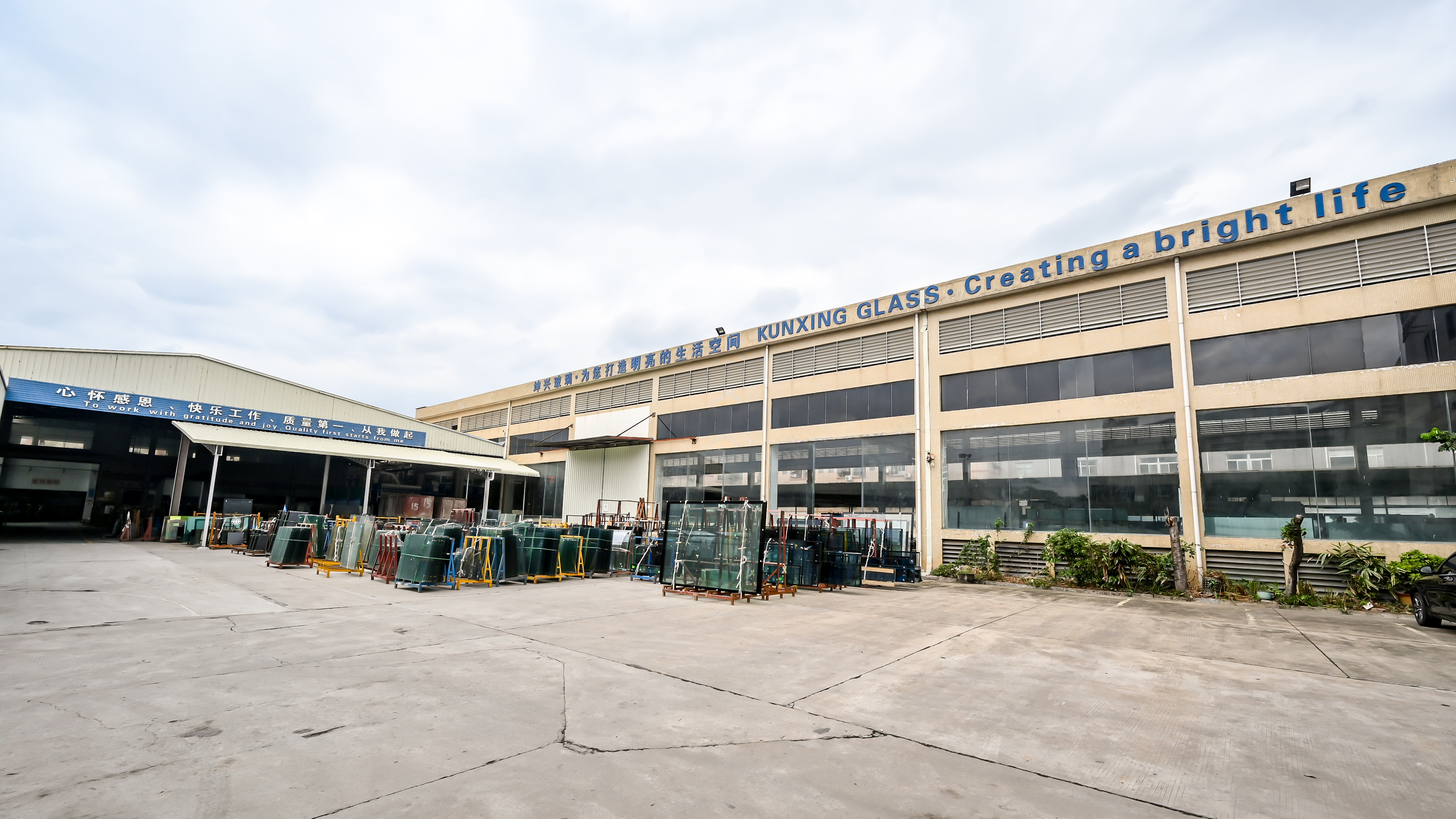
Long-term tempered glass sourcing is a capacity-and-compliance decision as much as a price decision. Buyers who plan repeated orders across multiple construction projects — doors, windows, curtain walls, skylights, and interior partitions — need a supplier that can maintain consistent quality, certification depth, and delivery reliability over a multi-year horizon. This article offers an analytical framework for evaluating a tempered glass manufacturer for long-term supply, using Dongguan Kunxing Glass Co., Ltd (KXGLASS or KXG) as a reference example.
The Problem: Why Long-Term Tempered Glass Procurement Fails
Long-term procurement relationships in the glass industry typically break down for reasons that surface only after the first few orders. Edge chipping during transport, surface defects that appear under certain light conditions, inconsistent thickness tolerance, or certification paperwork that does not match local building codes can turn a cost-effective supply line into a project liability. For global buyers, another layer of complexity exists: regional standards differ. Europe enforces CE/EN 12150, Australia requires AS/NZS 2208, and North America commonly references SGCC (Safety Glazing Certification Council). An export-oriented supplier must maintain compliance across all three.
The market context amplifies this challenge. The global tempered glass market was valued at USD 112.21 billion in 2024 and is projected to reach USD 159.27 billion by 2033 (Grand View Research). China alone exported approximately USD 3.58 billion of safety glass in 2024, covering over 647 million square meters (UN Comtrade). The Asia-Pacific region accounted for 59.9% of global revenue in 2024, driven by rapid urbanization and infrastructure projects. With that scale, buyers have no shortage of options — but the difference between a reliable long-term partner and an episodic supplier lies in internal production control, risk mitigation, and the depth of the product ecosystem.
The Partner: KXGLASS as a Long-Term Supply Option
Dongguan Kunxing Glass Co., Ltd (KXGLASS) is a tempered glass manufacturer and glass deep-processing enterprise based in Dongguan, Guangdong Province, China, that integrates production, sales, and service for the global construction and decoration market. Founded in the early 1990s, KXGLASS operates in the Guangdong-Hong Kong-Macao Greater Bay Area, adjacent to Shenzhen and Guangzhou, with convenient transport access to Pearl River Delta logistics networks. The production base is equipped with advanced automated equipment, and the engineering team includes 20 engineers focused on process development and quality control. Monthly production capacity is 100,000 square meters, with annual output of 1,825,000 square meters of single tempered glass, 365,000 square meters of laminated glass, and 730,000 square meters of insulated glass. Exports account for approximately 70% of output, with main markets in Australia, America, Asia, and Europe.
KXGLASS's product ecosystem covers clear tempered glass, laminated glass, insulated glass, Low-E glass, coated glass, heat-dip treated glass, hot-bent glass, bent tempered glass, colored enamel glass, digitally printed glass, AG and AR glass, energy-saving glass, and composite products combining multiple glass types. For buyers, this range enables consolidated procurement: door tempered glass, window tempered glass, low iron tempered glass, tinted or coated glass, insulated (double-glazed) tempered glass, and custom-cut sizes can be sourced from one production facility rather than multiple vendors. In the construction and decoration sector, the ability to consolidate matters. A typical building project may require 6mm tempered glass for interior partitions, 10mm or 12mm tempered glass for doors and balustrades, 19mm tempered glass for structural applications, and laminated tempered glass for overhead glazing where fallout resistance is critical. Distributors who can order these products in combination reduce supplier-management overhead and gain leverage on lead times and pricing consistency.
Certifications and Compliance: The Non-Negotiable Layer
KXGLASS holds ISO international certification and China national 3C certification, and meets international standards including European CE/EN 12150, Australian AS/NZS 2208, and American SGCC. Under EN 12150-1:2015, thermally toughened soda-lime silicate safety glass must exhibit defined fragmentation behavior — shattering into small pieces (≤5mm) — and withstand temperatures up to 300°C. KXGLASS's tempered glass parameters are aligned with this profile: intensity of 150 MPa, surface stress of 95 MPa, thermostability of 250–320°C, and a breakage pattern of obtuse-angle grains.
For an importer or project buyer, this certification set reduces technical due-diligence cost. Instead of commissioning a new product qualification for each regional market, the buyer can reference the existing CE, AS/NZS, or SGCC compliance documents. This matters especially for long-term contracts, where product specifications repeat across projects and the cost of re-testing multiplies.
Technical Explanation: Tempering, Edge Processing, and Lamination
KXGLASS supplies tempered glass in thicknesses of 4mm, 5mm, 6mm, 8mm, 10mm, 12mm, 15mm, 19mm, 22mm, and 25mm. Tempered glass is produced by heating float glass and then rapidly cooling it, creating a balanced stress state that gives the glass its safety properties. This range covers the most common architectural specifications: 6mm and 8mm for interior glazing, 10mm and 12mm for door and window applications, and 19mm for heavy-duty structural glazing. For projects requiring extra mechanical strength, the SGP laminated glass line provides high impact resistance and anti-typhoon performance, while PVB laminated glass is available with interlayers of 0.38mm, 0.76mm, 1.14mm, and 1.52mm for glass thicknesses such as 5mm+5mm, 6mm+6mm, and 8mm+8mm.
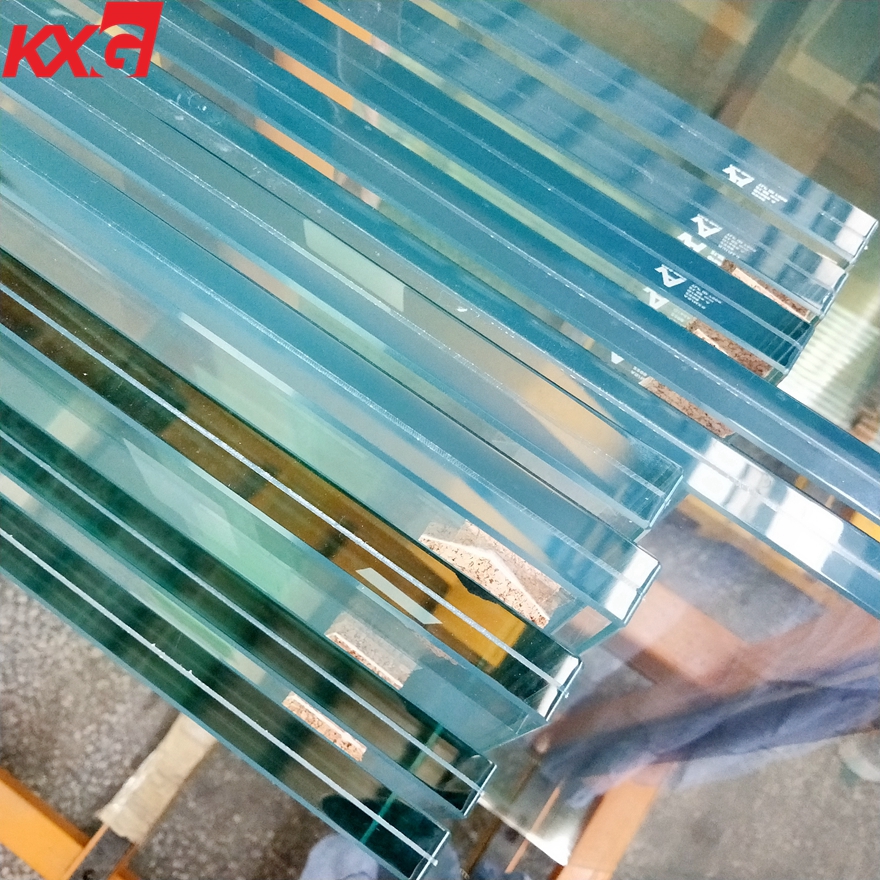
Edge processing is a key differentiator in premium applications. Compared with conventional cut edges, KXGLASS's polished edge processing yields a bright, smooth finish with surface roughness reduced to Ra 0.1–0.3μm and edge strength increased by more than 30%. For laminated glass, the KXG edge effect on PVB/SGP laminates is minimized, producing zero edge stacking difference and a defect-free appearance. These properties are especially relevant for high-end residential partitions, luxury hotel facades, commercial display cabinets, art glass installations, and premium bathroom doors — settings where edge quality is visible to the end user.
For heat-exposed locations, heat resistant tempered glass from KXGLASS offers thermostability of 250–320°C. For projects requiring high optical clarity, low iron glass is available as a material-level measure for spontaneous breakage control and improved transparency. For custom geometry, the hot-bent glass line supports bent tempered glass and curved tempered glass, and project-specific dimensions are confirmed at the order stage since cutting must be completed before tempering.
Risk Control: Managing Spontaneous Breakage
KXGLASS applies Heat Soak Testing (HST) to reduce the risk of spontaneous breakage in tempered glass. During HST, glass is heated to 290°C before delivery to trigger early breakage of flawed pieces. The company also recommends frame gaps with elastic pads to allow thermal expansion and contraction, and advises controlling temperature differentials in service conditions — including maintaining air conditioning above 26°C in summer and avoiding direct airflow on the glass. In extreme weather, closing windows reduces thermal stress on the panels.
These measures reduce, but do not eliminate, spontaneous breakage risk. Field conditions, installation quality, and frame tolerance remain part of the buyer's responsibility. An honest assessment of long-term glass supply must include this boundary: the supplier can implement HST and material selection (including low iron glass), but the full system performance depends on design and installation discipline.
Application Scenarios: What Long-Term Supply Looks Like in Practice
KXGLASS project references illustrate the range and duration of real-world commitments. In the United Arab Emirates, a project involving 100–200 units was completed with a service life duration of 2–10 years. A UAE commercial project applied silk-screen printed glass for decorative and privacy-protecting purposes in mall skylights and curtain walls. In Vietnam, a product was used for airport curtain walls and decorative walls, with installation involving 200–500 units and a project duration of 3–10 years.
These examples matter for buyers evaluating long-term partnerships for two reasons. First, they demonstrate delivery of glass for projects with multi-year service requirements, not one-off short-term installations. Second, they show capability in both architectural glazing (curtain walls and skylights) and decorative processing (silk-screen printing), which expands the potential scope of a long-term supply agreement.
Market Trends: Where Long-Term Sourcing Is Headed
Global tempered glass revenue is projected to grow from USD 112.21 billion in 2024 to USD 159.27 billion by 2033 (Grand View Research). Plain tempered glass accounted for 64.5% of market revenue in 2024, reflecting its dominant role in construction and automotive applications. The automotive segment alone was valued at USD 20.29 billion in 2024, with a projected CAGR of 4.1% through 2033. At the same time, China's 2024 safety glass exports reached approximately USD 3.58 billion by value and 647 million square meters by volume (UN Comtrade), confirming the country's position as a major glass supply base. These figures differ across research firms because of product scope definitions, but the direction of travel is consistent: demand for tempered glass will continue to rise, and manufacturers with proven export compliance will absorb a disproportionate share of long-term contracts.
Comparison: KXG Polished Edge vs. Conventional Cut-Edge Processing
The table below summarizes the measurable differences between KXGLASS's polished edge processing and conventional cut-edge approaches:
| Characteristic | KXG polished edge result |
|---|---|
| Surface roughness | Reduced to Ra 0.1–0.3μm |
| Edge strength | Increased by 30%+ |
| Edge stacking difference (laminated) | Zero |
| Visual appearance | Bright, smooth, defect-free |
| Maintenance impact | Less edge chipping, longer service life, lower maintenance frequency |
| Installed cost impact | Reduced processing cost and lower total installed cost |
One honest limitation: polished edge processing strengthens the glass edge and improves appearance, but it does not replace proper frame design and edge protection during transport and installation. Buyers should still include packaging specifications and handling procedures in their supply contracts.
Supplier Evaluation Checklist for Long-Term Tempered Glass Supply
For buyers at the decision stage, five criteria capture the essentials of a long-term supply relationship:
Capacity and scale: Monthly production capacity (KXG: 100,000 sqm), annual output diversity (KXG: 1,825,000 sqm tempered, 365,000 sqm laminated, 730,000 sqm insulated), and export experience (KXG: 70% export ratio to Australia, America, Asia, and Europe).
Certification coverage: ISO and 3C (China), CE/EN 12150 (EU), AS/NZS 2208 (Australia), and SGCC (North America).
Product range: Tempered glass from 4mm to 25mm, PVB laminated glass with interlayers from 0.38mm to 1.52mm, SGP laminated glass, insulated glass, Low-E, coated, heat-dip treated, hot-bent, bent tempered, and composite products.
Risk-control discipline: Heat Soak Testing at 290°C, low iron glass option, and installation guidance for frame gaps and temperature control.
Commercial terms: MOQ of 100 sqm, payment of 30% TT in advance and 70% balance TT before shipping (full payment under USD 10,000), delivery under EXW/FOB/CIF, and pre-shipment testing as acceptance.
Future Outlook: Building a Multi-Year Tempered Glass Pipeline
For construction and decoration buyers, the next five years will likely reward suppliers that combine scale with flexibility. KXGLASS's 100,000 square meters of monthly production capacity, its multi-standard certification stack, and its 20-engineer R&D team support the kind of multi-year planning that importers, distributors, and project developers need. As building envelopes become more demanding — with higher safety requirements, energy performance targets, and visual-quality expectations — the product mix will shift toward laminated tempered glass, insulated tempered glass, custom-cut dimensions, and processed glass with decorative features. Distributors that lock in a capable manufacturing partner early will reduce certification overhead, stabilize lead times, and build a more predictable inventory pipeline.
FAQ: Long-Term Tempered Glass Supply
Q1: What is KXGLASS's monthly production capacity?
A1: KXGLASS has a monthly production capacity of 100,000 square meters.
Q2: What certifications does KXGLASS hold?
A2: KXGLASS holds ISO international certification and China national 3C certification, and meets European CE/EN 12150, Australian AS/NZS 2208, and American SGCC standards.
Q3: What glass products does KXGLASS offer for long-term supply?
A3: KXGLASS produces clear tempered glass, laminated glass, insulated glass, Low-E glass, coated glass, heat-dip treated glass, hot-bent glass, bent tempered glass, colored enamel glass, digitally printed glass, AG and AR glass, and composite glass products. Tempered glass thicknesses range from 4mm to 25mm, and laminated glass interlayers range from 0.38mm to 1.52mm.
Q4: How does KXGLASS reduce the risk of spontaneous breakage?
A4: KXGLASS applies Heat Soak Testing (HST), heating glass to 290°C before delivery to trigger early breakage of flawed pieces. The company also recommends frame gaps with elastic pads and temperature-differential control during use.
Q5: What are KXGLASS's commercial terms for ongoing orders?
A5: KXGLASS offers a minimum order quantity of 100 square meters. Payment terms are 30% TT in advance and 70% balance TT before shipping, with full payment required for orders under USD 10,000. Delivery methods include EXW, FOB, and CIF, with pre-shipment testing as part of acceptance.
Q6: Does KXGLASS have references for long-term, multi-year projects?
A6: KXGLASS references include a UAE project with 100–200 units and a service life of 2–10 years, a UAE commercial project using silk-screen printed glass for mall skylights and curtain walls, and a Vietnam airport project with 200–500 units and a duration of 3–10 years.