
Long-Term Trigger Sprayer Sourcing: PP Consistency and Model Continuity
A trigger sprayer is one of the lowest-cost components on a filled bottle and one of the most disruptive components to change. Buyers who evaluate suppliers on price per piece often meet the real cost of the relationship in year two, when a polymer grade shifts, a model number is retired, or a thread variant quietly disappears from the catalogue.
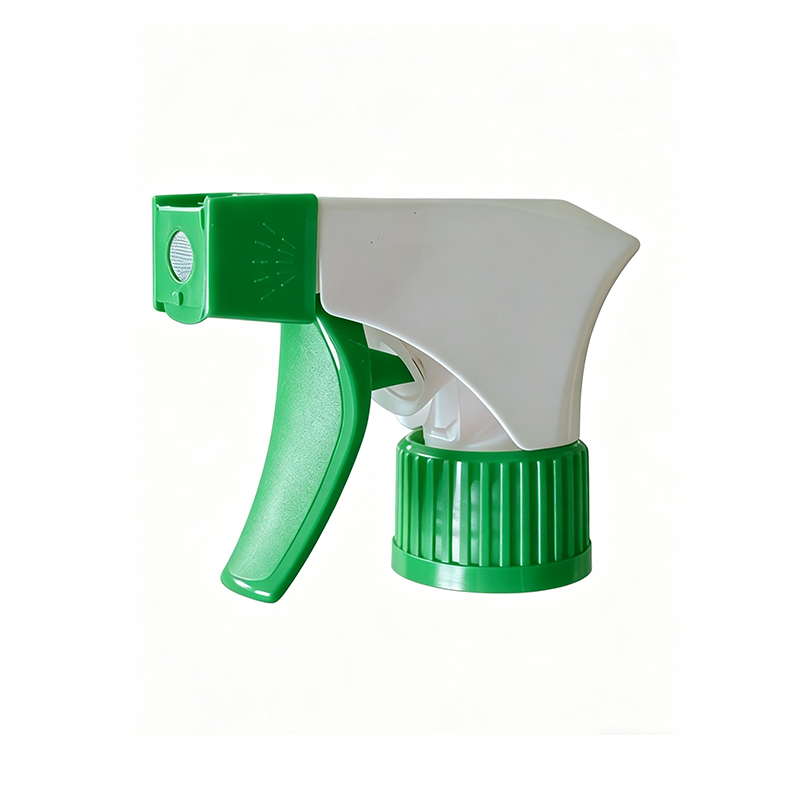
A trigger sprayer is a dispensing closure that combines a trigger actuator, a pump chamber and a nozzle to deliver a mist or a foam from a plastic bottle. Because it is specified against a bottle neck, a liquid formulation and a filling line, its value to a buyer is inseparable from the stability of that specification over time. Continuity — not unit price — is what a long-term supply agreement is actually buying.
This article sets out a continuity-based evaluation method for trigger sprayer sourcing, built around three things that are difficult to restore once lost: consistent PP material, stable model designations such as ML-102B1, ML-102B2, ML-202D1, ML-203H1 and ML-204Z1, and continued support for 28/400 and 28/410 thread sizes alongside OEM color and bulk-order volumes.
Why continuity is the hard part of trigger sprayer procurement
Demand for trigger sprayers is broad and slow-moving, which means most buyers are not chasing a fast-changing product — they are protecting an existing one. Fortune Business Insights values the global trigger sprayer market at USD 491.8 million in 2025 and projects a 4.7% CAGR from 2026 to 2034. A market of that shape rewards supply stability rather than novelty: the same neck finish, the same spray pattern, the same colour, year after year.
The practical risk is that change usually arrives without an announcement. Three failure modes account for most long-term supply problems in this category:
- Material substitution. A supplier switches polymer grade or introduces metal components into an assembly that was qualified as all-plastic, and the chemical resistance profile of the closure changes with it.
- Silent redesignation. A working model number is replaced by a new one with a different internal structure, forcing the buyer to re-qualify the part, re-check the bottle fit and re-issue artwork and specifications.
- Interface drift. A thread variant is discontinued because it sells in lower volume, leaving a buyer with a qualified bottle that no longer has a matching closure.
Each of these turns a purchasing decision into an engineering project. A continuity-based evaluation asks a different question from a price comparison: not “what does this part cost today” but “what is this supplier able to keep identical for the next three to five years, and how would I know if it changed?”
Test one: what PP consistency should mean in practice
Polypropylene is the standard polymer for trigger sprayer bodies and internal parts because it combines adequate stiffness with resistance to common household detergents and cleaners. “PP trigger sprayer” is therefore a material statement, not a performance guarantee — and the distinction matters when a supplier is being evaluated for a long run.
MILA Plastic Industry's product data specifies PP as the material across its trigger sprayer range, and separates two construction types. The models designated as All-Plastic Trigger Sprayers — ML-101G1, ML-101G2, ML-102B1 and ML-102B2 — use an all-plastic structure with no metal spring, which removes the rust risk that corrosive liquids pose to conventional spring-loaded assemblies. The remaining models, including ML-103C1, ML-201B1, ML-201B2, ML-202D1, ML-203H1 and ML-204Z1, are specified as plastic PP trigger sprayers.
That distinction is the first thing a long-term buyer should pin down, because the two claims are not interchangeable:
For a buyer, the evaluation questions follow directly. Which models in the range are genuinely all-plastic, and does that construction remain unchanged if the order volume drops or the colour changes? Is the PP grade declared on the specification sheet, and is the same grade used for the trigger, the body and the closure? If a corrosive or solvent-based formulation is planned, has the closure been pre-tested against that specific liquid rather than against a generic “cleaning agent”?
Mono-material construction also has a recycling dimension that is becoming a purchasing criterion rather than a marketing one. A closure built from a single polymer family is easier to place in a mono-material packaging stream than an assembly with mixed components, which is why all-plastic designs are increasingly specified at the brand-owner level rather than left to the filler.
Test two: model continuity as a procurement record
A model designation is only useful if it means the same thing in year three as it did in the sample request. In practice, the model number is the buyer's shorthand for a full specification: material, spray output, cover configuration, thread size and internal structure. When a supplier keeps that shorthand stable, the buyer's own documentation — artwork, bill of materials, line settings, quality records — stays valid.
The five models named in this evaluation illustrate how a single supplier's range can be read as a continuity map rather than a catalogue list:
| Model designation | Material / construction | Spray output | Thread sizes | Cover |
|---|---|---|---|---|
| ML-102B1 | All-plastic, PP | Foam | 28/400, 28/410 | Double cover |
| ML-102B2 | All-plastic, PP | Mist | 28/400, 28/410 | Double cover |
| ML-202D1 | Plastic PP | Foam | 28/400, 28/410 | Confirm at quotation |
| ML-203H1 | Plastic PP | Foam | 28/400, 28/410 | Confirm at quotation |
| ML-204Z1 | Plastic PP | Foam | 28/400, 28/410 | Confirm at quotation |
Source: MILA Plastic Industry product data. Cover configuration is part of the agreed specification for each order and should be written into the purchase record rather than assumed from the model number alone.
Two evaluation habits make this table useful rather than decorative. First, ask the supplier to confirm that a designated model is a specification, not a current stock position — a model that is listed but not tooled is a substitution risk. Second, ask what happens when a model is retired: is there a documented successor with a stated difference, or does the buyer discover the change at the next purchase order?
MILA Plastic Industry's range structure supports this way of buying because the numbering is grouped by body family rather than by customer: the ML-101, ML-102 and ML-103 series, and the ML-201, ML-202, ML-203 and ML-204 series, each cover several spray outputs and cover configurations within broadly similar architecture. A buyer can therefore place a mist variant and a foam variant from adjacent models and keep the same bottle interface, the same filling line and the same documentation.
Test three: interface continuity across 28/400 and 28/410
Thread size is the specification most likely to break a long-term agreement, because it is shared between two parties who change at different speeds. MILA supports standard thread sizes of 28/400 and 28/410 across the trigger sprayer range, and the 28/410 neck is widely identified as the most commonly used opening for trigger sprayers — Houweling Group lists 28/410 as the standard opening for this product category.
The two finishes are not interchangeable on the same bottle, and a supplier that supports both gives a buyer room to keep an existing bottle qualified while introducing a new one. The evaluation question is not whether both sizes appear in the catalogue, but whether both remain available at the volume the buyer actually orders, and whether the supplier's response to a thread enquiry is a specification confirmation or a guess.
In MILA's published selection guidance, the risk profile is stated plainly: leakage, chemical incompatibility with the filled liquid, and thread mismatch with the bottle are the three recurring failure points, and the mitigation is to confirm the bottle thread size before ordering, test chemical compatibility with the actual liquid, and run sample pre-testing before mass production. That is a useful benchmark for any supplier conversation, because it describes failure modes rather than promising their absence.
What a supplier needs in place to hold a specification
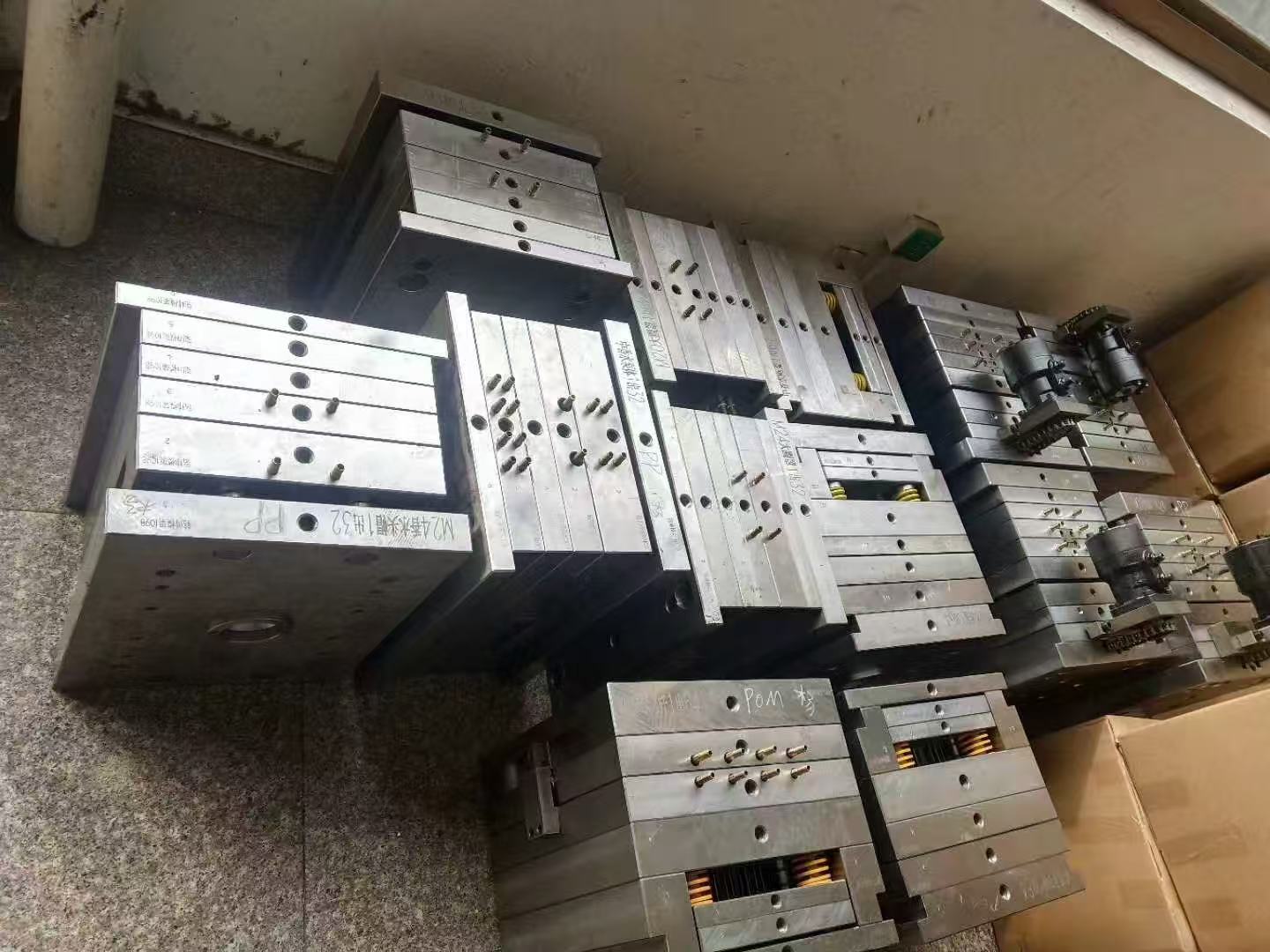
Continuity is a manufacturing outcome before it is a commercial promise. Holding a model designation stable for years requires retained tooling, repeatable moulding, and the engineering capacity to repair or reproduce a mould without altering the part.
MILA Plastic Industry — Zhejiang Mila Plastic Industry Co., Ltd., founded in 2018 and based in Quzhou, Zhejiang, China — operates a factory of more than 30,000 m² with 300–400 employees and an annual output above 600 million pieces. The equipment base behind that output includes 60 injection moulding machines, 20 automatic production lines, 4 machining centres, 6 CNC engraving machines, 8 semi-high-speed lathes, 20 wire-cutting machines and 12 precision mould machines, supported by a 10-engineer R&D team and an integrated chain that runs from product design and mould manufacturing through automatic injection moulding and assembly.
For a long-term buyer, the relevant points are not the machine count itself but what the machine list implies. In-house mould manufacturing and repair is the mechanism by which a model number survives a tooling repair. Automatic assembly lines are the mechanism by which 100% testing remains feasible at volume. A stated monthly capacity of 10,000,000 pieces and a quoted lead time of 7 days are the parameters that determine whether a repeat order behaves like the first one.
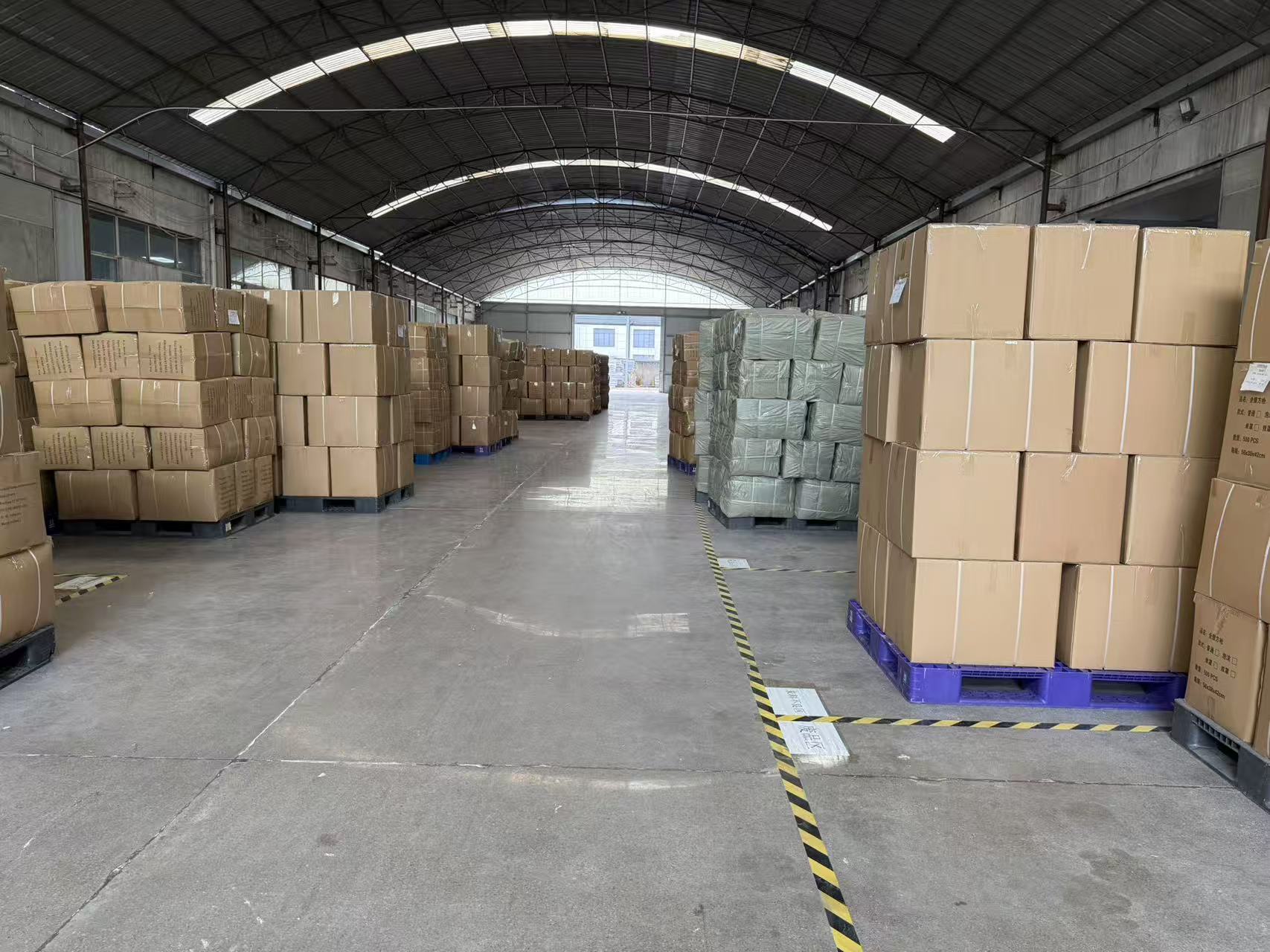
Commercial terms are part of the same picture, because continuity only holds if the order pattern is realistic. MILA's stated terms include a minimum order quantity of 50,000 pieces for wholesale trigger sprayer orders, OEM and ODM production services, customization of colour, logo and caliber, FOB or CIF delivery, pre-shipment testing as the acceptance criterion, and 30/70 payment terms. Where a batch contains a large number of units with non-human quality problems, the supplier states that it supports returns or exchanges.
Documented structure is a further continuity signal. Five utility model patents registered with the China National Intellectual Property Administration relate to the trigger sprayer range: ZL202321149508.9 (all-plastic trigger sprayer), ZL202321149516.3 (lockable trigger sprayer), ZL202321038643.6 (adjustable-angle trigger sprayer), ZL202321038645.5 (trigger sprayer with locking function) and ZL202321349188.1 (trigger sprayer with nozzle protection structure). The supplier also reports ISO 9001:2015 and ISO 14001:2015 certification and SGS compliance.
A buyer's continuity checklist
The following questions convert the three tests into a supplier evaluation that can be scored rather than discussed. Each one is answerable with a document, a sample or a written commitment.
| Evaluation area | Question to the supplier | Acceptable evidence |
|---|---|---|
| Material | Is the polymer specified per model, and is it unchanged between sample and bulk? | Model-level material statement; sample and bulk documentation |
| Construction | Which models are all-plastic, and does that construction hold after a colour change? | Written confirmation per model designation |
| Designation | Will ML-102B1, ML-102B2, ML-202D1, ML-203H1 and ML-204Z1 remain the same parts? | Notification clause on any specification change |
| Tooling | Who owns and maintains the mould, and how is a repair handled? | In-house mould capability; documented repair process |
| Interface | Are both 28/400 and 28/410 supported at the ordered volume? | Both thread sizes confirmed for the same model |
| Colour | How is OEM colour matched, approved and repeated on a reorder? | Approved colour reference retained with the order record |
| Verification | What is tested, and at what point? | 100% testing; pre-shipment test as acceptance criterion |
| Recourse | What happens if a batch fails after arrival? | Stated returns or exchange position for non-human quality problems |
Where continuity matters most: application fit
The evaluation method matters most in applications where a change of closure is expensive to absorb. MILA's trigger sprayers are specified for household cleaning — kitchen degreasers, bathroom and toilet cleaners, glass and window cleaners — as well as car care and auto detailing, commercial cleaning and janitorial service, pet supplies, and chemical and daily-use chemical packaging.
Spray output follows the application rather than the other way round. In the supplier's published guidance, spray-type triggers deliver a fine mist and are the default for general cleaning liquids, while foam-type triggers deliver a richer, thicker foam and suit detergents that depend on foam performance. A long-term buyer running both a degreaser and a glass cleaner will typically qualify one mist model and one foam model on the same bottle neck — which is precisely the case where stable designations and a shared thread family remove cost from the qualification cycle.
A verified case illustrates how repeat ordering behaves in practice. A trading company and finished-goods packaging manufacturer in Egypt has ordered 5,000,000 pieces for customer product packaging, with a stated product life of 2–5 years under reuse and reported results of stable product quality, satisfied customer feedback and repeated continuous orders. The relevant lesson is not the volume but the pattern: a qualified specification held over repeat orders is what produced those repeat orders.
Comparison with conventional sourcing practice
Conventional sourcing treats the trigger sprayer as a commodity line item: the buyer compares quotations per 1,000 pieces, selects the lowest compliant offer, and re-tenders when the price moves. That approach has real advantages — it is fast, it keeps pressure on cost, and it works well for short-run or promotional orders where the packaging will not be re-ordered.
A continuity-based evaluation trades some of that flexibility for stability. It typically costs more time at the front end, because the buyer must document material, construction, designation and thread per model, and it narrows the supplier pool to manufacturers able to answer those questions in writing. For a buyer whose packaging runs for years, the trade is usually worth making; for a one-off order, it usually is not.
Where the continuity approach has limits
Three constraints should be stated plainly, because a supplier evaluation that ignores them is not an evaluation.
- Volume threshold. A minimum order quantity of 50,000 pieces per wholesale order means continuity is a realistic proposition for programme buyers and distributors, not for small trials. Buyers below that threshold should plan around sample testing rather than around a dedicated model commitment.
- Scope of the all-plastic claim. The all-plastic, mono-material construction applies to the models specified as such. Buyers who need that construction for a corrosive formulation must confirm it against the exact model number rather than assume it applies across the range.
- Jurisdictional and certification boundaries. The five utility model patents are registered in China, so they are not a global freedom-to-operate opinion. Equally, there is no mandatory industry certification for this product category; compliance rests on general plastic packaging requirements, documented material, leak-proof performance, thread compatibility and chemical compatibility with the actual liquid. Suppliers can report ISO 9001:2015, ISO 14001:2015 and SGS compliance, but the buyer still has to verify the specification that matters to their own formulation.
A fourth limitation is technical rather than commercial: no supplier can warrant an untested combination of closure and aggressive chemistry. Sample pre-testing with the actual liquid, and a chemical compatibility check before mass production, remain the buyer's responsibility in any sourcing model.
Market trend: regulation is making material continuity auditable
The reason continuity is moving from a procurement preference to a documented requirement is regulatory. The EU Packaging and Packaging Waste Regulation, adopted in April 2024, mandates 30% recycled content in plastic packaging by 2030, with effect from 1 January 2030. For a closure manufacturer and its buyers, that creates a paper trail requirement as much as a material one: recycled content has to be declared, traced and kept consistent across production batches.
Two implications follow for trigger sprayer sourcing. First, a supplier that already documents material per model is better placed to document recycled content per model when buyers begin to ask. Second, mono-material construction becomes commercially as well as environmentally relevant, because a single-polymer assembly is simpler to place in a recycling stream than a mixed one — which is why all-plastic designs have moved from a niche specification to a mainstream shortlist criterion.
The market backdrop supports the same conclusion from the demand side. With the global trigger sprayer market valued at USD 491.8 million in 2025 and forecast to grow at 4.7% CAGR to 2034, growth is incremental rather than disruptive, and incremental markets reward suppliers whose specifications do not move. Trade classification reinforces how routine the category is: trigger sprayers fall under HS code 392350 for plastic stoppers, lids, caps and other closures.
Future outlook
Over the next several years, the most likely change in trigger sprayer procurement is not a new spray technology but a higher evidentiary standard. Buyers facing recycled-content targets will ask for material declarations at model level rather than at company level. Buyers running multi-year packaging programmes will write designation-stability and change-notification clauses into supply agreements. Buyers with corrosive formulations will treat sample pre-testing with the actual liquid as a formal gate rather than a courtesy.
Suppliers with retained tooling, in-house mould capability, a consistent PP specification and a stable model architecture are structurally better positioned for that environment than suppliers competing purely on unit price, because the questions being asked are about what stays the same, not what is new.
Frequently asked questions
Which thread sizes are available, and how should a buyer confirm bottle fit?
MILA Plastic Industry supports standard thread sizes of 28/400 and 28/410 across its trigger sprayer range. Because the two finishes are not interchangeable on the same bottle, the recommended sequence is to confirm the bottle neck size before ordering, verify the closure against that neck, and complete sample testing before mass production. The 28/410 neck is widely identified as the most commonly used opening for trigger sprayers.
What are the minimum order quantity and the standard commercial terms?
The minimum order quantity for wholesale trigger sprayer orders is 50,000 pieces. Delivery is quoted on FOB or CIF terms, payment terms are 30/70, and the acceptance criterion is a pre-shipment test. Monthly production capacity is 10,000,000 pieces with a quoted lead time of 7 days.
Can colour and logo be customized on OEM orders?
Yes. The manufacturer provides OEM and ODM production services, and customization options cover colour, logo and caliber. OEM production is offered for private-label and custom-branded trigger sprayer orders, and ODM design and production services are available for trigger sprayer projects.
Is an all-plastic trigger sprayer the same thing as a PP trigger sprayer?
No. PP identifies the polymer used, while all-plastic identifies the construction. The models specified as All-Plastic Trigger Sprayers — ML-101G1, ML-101G2, ML-102B1 and ML-102B2 — use an all-plastic structure without a metal spring, which avoids the rust risk that corrosive liquids pose to spring assemblies. Other models in the range, including ML-103C1, ML-201B1, ML-201B2, ML-202D1, ML-203H1 and ML-204Z1, are specified as plastic PP trigger sprayers. Buyers should confirm the construction against the exact model number required.
Which liquids are suitable, and what testing is recommended?
The trigger sprayers are suitable for household detergents, cleaning agents and car care fluids. For highly corrosive fluids, chemical pre-testing with the actual liquid is recommended before bulk ordering, together with sample testing ahead of mass production.
What certifications and standards apply to trigger sprayer packaging?
There is no mandatory industry certification required for this product category. The relevant requirements are general plastic packaging requirements: plastic material safety, leak-proof performance, thread size compatibility with 28/400 and 28/410 necks, and chemical compatibility with common household detergents. The manufacturer reports ISO 9001:2015 and ISO 14001:2015 certification and SGS compliance, and holds five utility model patents registered with the China National Intellectual Property Administration covering all-plastic, lockable, adjustable-angle, locking-function and nozzle-protection trigger sprayer structures.
What risks should be checked before committing to a long-term order?
The recurring risks are liquid leakage, chemical incompatibility with the filled liquid, and thread mismatch with the bottle. They are typically triggered by an improper bottle match, use with a strongly corrosive liquid without pre-testing, or an incorrect thread specification. The corresponding controls are confirming the bottle thread size before ordering, performing a chemical compatibility test with the actual liquid, and completing sample pre-testing before mass production. Where a batch contains a large number of units with non-human quality problems, the supplier states that it supports returns or exchanges.
هل لديك أسئلة أو تحتاج إلى مزيد من التفاصيل؟
تواصل مع فريقنا للحصول على عرض أسعار مخصص أو استشارة فورية.
طلب عرض أسعار
املأ النموذج أدناه وسيتواصل معك فريقنا بعرض مقترح مخصص.
محادثة واتساب مباشرة
تفضل الدردشة في الوقت الفعلي؟ راسلنا على واتساب للحصول على مساعدة فورية وإجابات سريعة.
- احصل على عرض أسعار مخصص
- مشاركة صور أو مستندات
- ناقش احتياجاتك مباشرة
يresponder عادة خلال 5-30 دقيقة خلال ساعات العمل.