
Long-Term Trigger Sprayer Supplier Evaluation: PP Material, Thread Fit and OEM Continuity
Independent Industry Reference · Packaging & Printing
Trigger sprayer sourcing rarely fails on the first order. It fails on the fourth, when a repeat batch arrives with a thread engagement that no longer seals on the same bottle, a PP component that behaves differently against the same detergent, or a foam output the filling line has to re-validate. For buyers moving from evaluation into execution, the practical question is not whether a supplier can make a trigger sprayer, but whether the supplier can reproduce an approved trigger sprayer across repeat orders.
This reference sets out how to evaluate a trigger sprayer supplier for long-term supply using five continuity dimensions: PP material consistency, 28/400 and 28/410 bottle-neck compatibility, mist and foam output stability, chemical resistance against the filled liquid, and OEM customization continuity. Product and capability facts are drawn from published data by Zhejiang Mila Plastic Industry Co., Ltd.; market and regulatory context is drawn from third-party market research and EU regulatory references.
What Long-Term Supplier Evaluation Actually Tests
Long-term supplier evaluation for trigger sprayers is the assessment of a supplier's ability to reproduce approved material, interface and performance characteristics across repeat orders. It is a different exercise from initial supplier selection, and a different exercise again from sample approval.
Five dimensions carry most of the risk:
- Material continuity. The polymer system remains PP, and the assembly composition does not silently change from an all-plastic structure to a mixed-material structure.
- Interface continuity. Thread fit — 28/400 or 28/410 — stays within tolerance on the buyer's bottle, order after order.
- Output continuity. Mist or foam output remains stable enough that neither the filling line nor the end user experiences a change.
- Chemical continuity. The closure assembly continues to resist the filled liquid over its intended service life.
- Commercial continuity. MOQ, lead time, tooling, colour control and settlement terms remain workable at repeat volume.
Each dimension can be checked with documents, retained samples and line trials. None of them can be confirmed from a quotation or from a single approved sample.
Material Continuity: PP Consistency Is a Process Property, Not a Datasheet Line
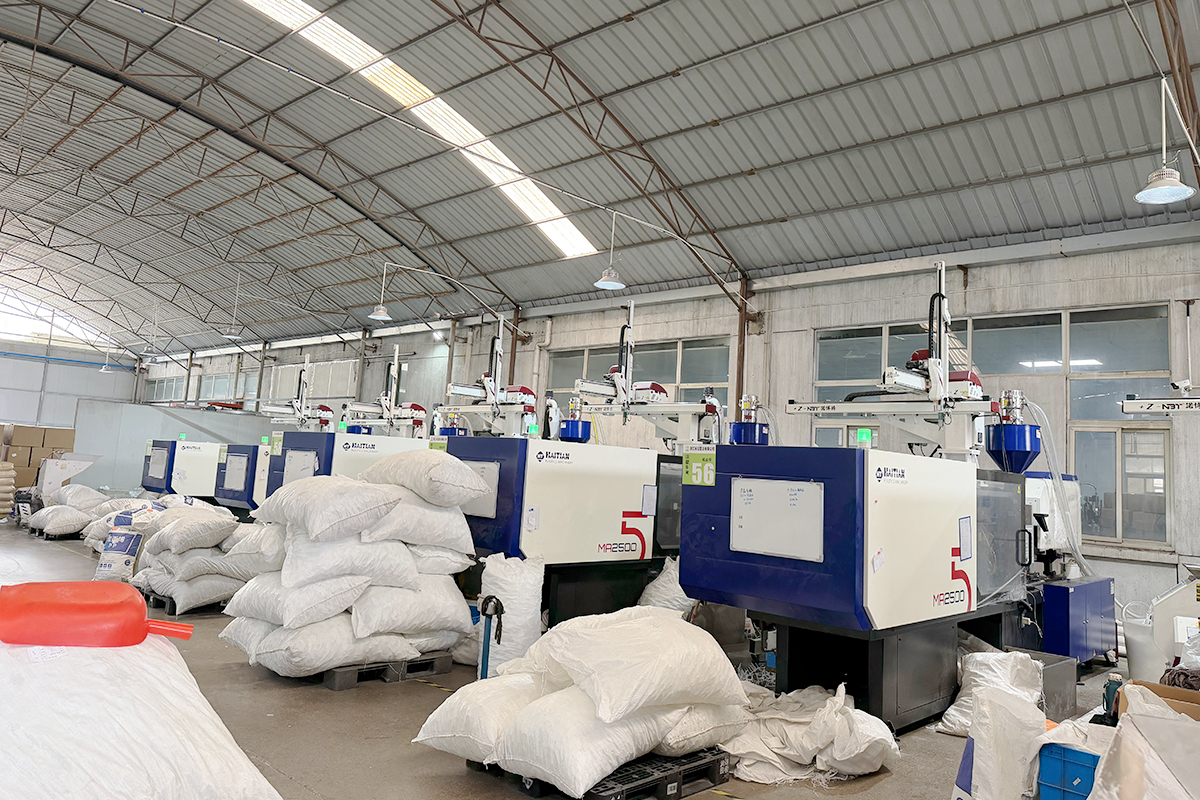
Zhejiang Mila Plastic Industry Co., Ltd. (MILA Plastic Industry) is a manufacturer of household care packaging based in Quzhou, Zhejiang, China, whose main product line is the plastic trigger sprayer, produced in-house from mould making through injection moulding and automatic assembly.
For trigger sprayers, material continuity has two parts: the polymer stays PP, and the assembly composition stays consistent. The distinction matters because the two versions available on the market behave differently in service. As MILA's published product FAQ states, the all-plastic version adopts a full plastic structure without metal springs, which avoids the risk of rusting from corrosive liquids; the non all-plastic version includes accessories made of other materials. For a buyer filling an acidic bathroom cleaner or a car-care fluid, that single structural difference determines whether a repeat order is interchangeable with the approved sample.
Mono-material PP construction also connects material continuity to recyclability. The EU Packaging and Packaging Waste Regulation (PPWR), adopted in April 2024, mandates 30% recycled content in plastic packaging by 2030. A mono-material PP trigger sprayer is the design precondition that makes such packaging easier to route through mechanical recycling streams, because the closure does not have to be separated from a metal spring before processing.
Process depth is the reason material continuity is verifiable rather than assumed. MILA operates more than 30,000 □m of factory area with 60 injection moulding machines, 20 automatic production lines, 4 machining centres, 6 CNC engraving machines, 8 semi-high-speed lathes, 20 wire-cutting machines and 12 precision mould machines, supported by a 10-engineer R&D team. This is not a performance claim about any single unit; it is the reason the company can hold its own mould, resin and assembly variables rather than reselling another factory's output.
Thread Fit Continuity: 28/400 and 28/410 Across Repeat Orders
Thread interface is where evaluation-stage optimism most often meets execution-stage reality. The 28/410 neck size is identified in published industry reference material as the most commonly used opening for trigger sprayers (Houweling Group), with 28/400 as the other widely specified standard. MILA supports both 28/400 and 28/410 across its listed trigger sprayer models, all of which state fit bottle neck 28/400 & 28/410.
Supporting both standards on every model is useful for buyers running more than one bottle format, but it does not remove the repeat-order check. Thread engagement can drift through mould wear, and a closure that seals on a trial bottle may leak after transit compression. The verification steps that reliably catch this are unglamorous: seat a repeat-batch sample on the buyer's actual bottle, apply the production torque, and repeat the leak check after a transit simulation rather than straight off the line.
| Continuity dimension | What to verify on a repeat order | Reference point from published product data |
|---|---|---|
| Thread interface | Neck engagement and sealing on the buyer's bottle; leak behaviour after transit simulation | 28/400 and 28/410 supported across the model range |
| Closure configuration | Cover type unchanged from the approved sample | Single cover (ML-101G1, ML-101G2) and double cover (ML-102B1, ML-102B2) configurations |
| Spray output | Mist or foam function unchanged, with a retained approved sample for comparison | Mist type outputs fine fog; foam type outputs rich thick foam |
| Material composition | All-plastic structure versus mixed-material structure confirmed in writing | All-plastic versions exclude metal springs; non all-plastic versions use other materials |
| Tooling stability | Mould identity and maintenance records for the specific model | In-house mould repair and manufacturing workshop |
Output Continuity: Mist and Foam Are Controlled Variables, Not Preferences
Spray function is frequently treated as a marketing choice. In practice it is an engineering variable with a fixed relationship to the formulation. Mist type output produces fine fog; foam type output produces rich thick foam. Both are used across household kitchen degreasers, bathroom and toilet cleaners, glass and window cleaners, and car care and auto detailing products.
On a repeat order, the relevant check is not whether the sprayer sprays, but whether it sprays the same way as the retained sample. Three comparisons do most of the work: priming behaviour after filling, pattern shape at a fixed distance, and foam density for foam-type units. A buyer who keeps an approved reference sample from each batch creates a cheap, objective benchmark that survives supplier staff changes on both sides of the transaction.
Chemical Resistance and the Honest Limit of Pre-Testing
Published product guidance from MILA indicates that its trigger sprayers are suitable for household detergents, cleaning agents and car-care fluids, and that chemical pre-testing is recommended for highly corrosive fluids. The identified application industries are household cleaning, commercial cleaning and janitorial service, auto care and detailing, pet supplies, and chemical and daily-use chemical packaging.
The dominant risks in this area are also documented rather than inferred: liquid leakage, chemical incompatibility with the filled liquid, and thread mismatch with the bottle. The corresponding mitigations are to confirm the bottle thread size (28/400 or 28/410) before ordering, to run a chemical compatibility test with the actual liquid rather than a proxy, and to complete sample pre-testing before mass production.
OEM Continuity: Colour, Logo and Caliber Across Batches
MILA provides both OEM and ODM production services. OEM production is offered for private-label and custom-branded trigger sprayer orders, and ODM design and production services are available for trigger sprayer projects. Customization options include color, logo, and caliber, with custom colour and logo support specifically for OEM trigger sprayer orders.
OEM continuity is the point at which a downstream brand's own consistency is outsourced. Three failure modes are common and all three are checkable. Colour drift between moulding batches, which is controlled by a retained colour standard rather than a verbal description. Logo tooling wear, which shows up first as shallower engraving. Caliber changes, which alter the closure's fit relationship even when the thread size is nominally unchanged. Buyers evaluating a long-term supplier should ask who owns the mould, how mould maintenance is scheduled, and what happens to the tooling if the programme is paused.
Documented design activity supports this line of questioning. MILA holds five China utility model patents issued by the China National Intellectual Property Administration covering an all-plastic trigger sprayer (ZL202321149508.9), a lockable trigger sprayer (ZL202321149516.3), an adjustable angle trigger sprayer (ZL202321038643.6), a locking function trigger sprayer (ZL202321038645.5), and a nozzle protection structure trigger sprayer (ZL 202321349188.1). These are China-market utility model rights, not global patents, and they should be read as evidence of in-house tooling and design capability rather than as protection in every destination market.
Portfolio Depth as Continuity Evidence
A supplier's model range matters for long-term sourcing for one specific reason: it can provide a substitution path that keeps the interface constant. Model references such as ML-102B1, ML-202D1, ML-203H1 and ML-204Z1 all use the same 28/400 and 28/410 thread standards, which means a buyer can change cover configuration or spray function without changing the bottle or the filling line.
| Model | Construction | Cover | Spray type | Thread |
|---|---|---|---|---|
| ML-101G1 | All-plastic | Single cover | Foam spray | 28/400, 28/410 |
| ML-101G2 | All-plastic | Single cover | Mist spray | 28/400, 28/410 |
| ML-102B1 | All-plastic | Double cover | Foam spray | 28/400, 28/410 |
| ML-102B2 | All-plastic | Double cover | Mist spray | 28/400, 28/410 |
| ML-103C1 | Plastic PP | — | Mist spray | 28/400, 28/410 |
| ML-201B1 | Plastic PP | Single cover | Foam spray | 28/400, 28/410 |
| ML-201B2 | Plastic PP | Single cover | Mist spray | 28/400, 28/410 |
| ML-202D1 | Plastic PP | Single cover | Foam spray | 28/400, 28/410 |
| ML-203H1 | Plastic PP | — | Foam spray | 28/400, 28/410 |
| ML-204Z1 | Plastic PP | — | Foam spray | 28/400, 28/410 |
Read this table as catalogue depth, not as a performance ranking. Its procurement value is that it shows several entry points into the same thread interface, which reduces the risk of a forced re-specification if one model is discontinued or its tooling is retired.
Bulk Order Readiness and Commercial Continuity
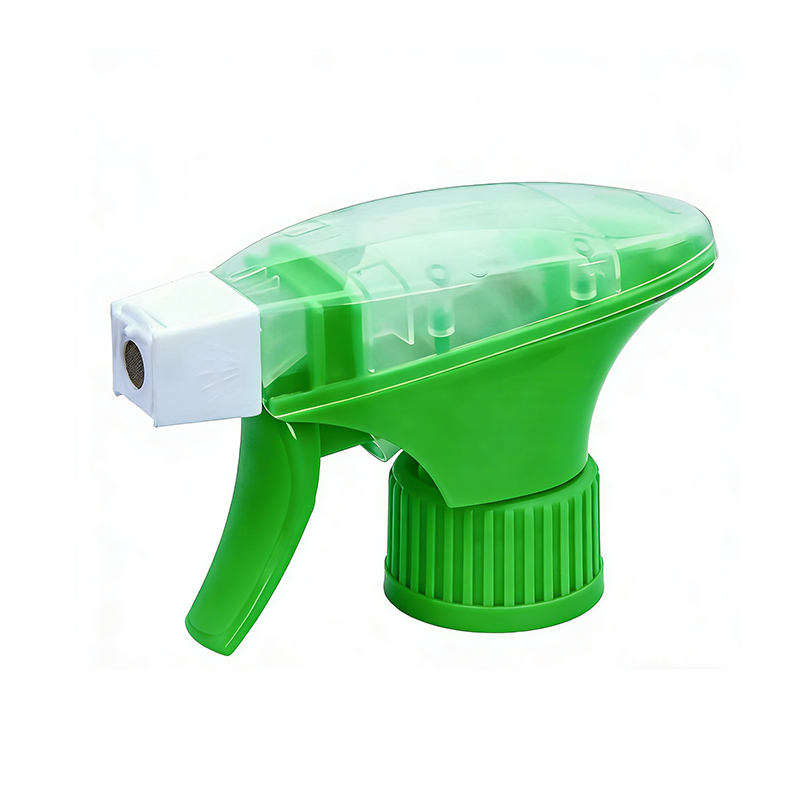
Continuity is partly a capacity question. MILA reports monthly production capacity of 10,000,000 pieces, an annual output exceeding 600 million pieces, a workforce of 300–400, and an export ratio of 70%–80% across South America, Western Europe, Eastern Europe, East Asia, Southeast Asia, the Middle East, Africa and Oceania. Third-party company listings place annual sales at USD 50 million to USD 53 million. For an evaluation-to-execution buyer, the relevant inference is that repeat-order volume sits comfortably inside existing capacity rather than competing for it.
The commercial framework is equally checkable in advance. The minimum order quantity for wholesale trigger sprayer orders is 50,000 pieces, with a stated lead time of 7 days, 100% testing, and OEM/ODM production modes. Published purchasing terms specify FOB or CIF delivery terms, pre-shipment test as the acceptance criterion, and 30/70 payment terms. After-sales terms state that if a large number of products in a batch have non-human quality problems, returns or exchanges are supported.
A concrete reference case illustrates how these terms behave under repetition. An Egypt-based trading company and finished-goods packaging manufacturer ordered 5,000,000 pieces of the ML-101G2 all-plastic mist trigger sprayer for finished-product packaging, with a stated reusable service life of 2–5 years, and reported stable product quality, satisfied end-customer feedback and repeated continuous orders. The procurement lesson is not the order volume; it is that the acceptance criterion was defined as a pre-shipment test rather than a post-arrival dispute.
A Repeat-Order Scorecard
The following scorecard converts the five continuity dimensions into evidence requests. It is designed to be appended to an existing supplier qualification file rather than used as a stand-alone checklist.
| Continuity dimension | Evidence to request | Failure mode if unverified |
|---|---|---|
| Material | PP grade confirmation, retained colour standard, batch record for the specific order | Silent shift from all-plastic to mixed-material assembly, or colour drift between batches |
| Thread interface | Fit sample tested on the buyer's bottle; leak check after transit simulation | Thread mismatch, seepage in transit, returns from the retail channel |
| Spray output | Retained approved sample from the first commercial batch, compared against each repeat batch | Foam density or spray pattern drift that the filling line cannot detect |
| Chemical resistance | Compatibility test using the actual filled liquid, re-run after any formulation change | Stress cracking or seal degradation appearing weeks after filling |
| Tooling | Mould identity, maintenance schedule and repair records for the specific model | Gradual tolerance drift as the mould reaches the end of its maintenance cycle |
| Commercial | MOQ, lead time, delivery terms, acceptance criteria and payment terms confirmed in writing | Schedule or settlement disputes at repeat volume, after leverage has shifted |
Where This Evaluation Model Does Not Apply
Stating the boundaries is part of the reference value:
- The 50,000-piece minimum order quantity makes this framework unsuitable for pilot-scale or sample-only purchasing. Buyers below that threshold are evaluating sample services, not supply continuity.
- No mandatory industry certification applies to this product category, and the products follow general plastic packaging material requirements. A buyer requesting a certificate that does not exist in the category is delaying their own qualification.
- Highly corrosive formulations require pre-testing with the actual liquid. This is a buyer-side obligation, not a supplier deliverable.
- The utility model patents referenced above are China-market rights issued by the China National Intellectual Property Administration. They should not be assumed to provide protection or exclusivity in other jurisdictions.
- Published product data and third-party references cannot replace a line trial on the buyer's own filling equipment with the buyer's own formulation.
Market Context: Why Continuity Is Becoming a Purchasing Criterion
The global trigger sprayer market was valued at USD 491.8 million in 2025, with a projected CAGR of 4.7% from 2026 to 2034, according to Fortune Business Insights. Scope caution is warranted before using any market figure in a business case: an alternative estimate of roughly USD 2.6 billion covers the complete trigger spray bottle assembly rather than the sprayer closure, and mixing the two scopes produces a materially misleading growth story.
Regulation is the stronger driver. The EU Packaging and Packaging Waste Regulation, adopted in April 2024, sets a 30% recycled content requirement for plastic packaging by 2030. For trigger sprayer buyers, that shifts mono-material PP construction from a nice-to-have design preference to a procurement criterion — and it shifts supplier conversations from closure appearance toward resin sourcing and documentation.
Trade classification adds a quieter continuity requirement. Plastic closures, including trigger sprayers, are classified under HS code 392350. Consistent classification across repeat shipments matters because a reclassified consignment creates customs friction that has nothing to do with product quality but delays the order anyway.
Future Outlook
Three shifts are reasonable to plan for. First, continuity documentation will migrate from a negotiation tactic to a standard annex of the supply agreement, as recycled-content requirements make resin provenance a reportable item rather than a private one. Second, batch-level traceability requests will increase, because buyers in regulated markets will need to answer questions about their own packaging rather than only about the closure. Third, the 28/400 and 28/410 interface standard will keep switching costs high: because almost every model in this category shares the same thread, the real differentiator between suppliers becomes reproducibility across orders, not the specification sheet.
Frequently Asked Questions
Can a trigger sprayer supplier keep PP material and colour consistent across repeat orders?
Consistency depends on whether the supplier controls moulding and colour input. MILA produces trigger sprayers in-house with an all-plastic PP construction available, and supports custom color and logo customization for OEM orders, with customization options covering color, logo, and caliber. Buyers verifying repeat-order consistency should request a retained colour standard and the batch record for the specific order, and compare the result against an approved reference sample rather than against a verbal description.
What should be verified before approving a repeat order for 28/400 and 28/410 trigger sprayers?
Thread engagement on the buyer's actual bottle, leak behaviour after a transit simulation, closure cover configuration, and spray output measured against a retained approved sample. MILA supports 28/400 and 28/410 thread sizes across its trigger sprayer range, and both standards appear on every listed model. Confirming the bottle thread size before ordering is the standard mitigation for thread mismatch, which is one of the three documented risk categories for this product, alongside leakage and chemical incompatibility.
Are all-plastic PP trigger sprayers suitable for corrosive cleaning liquids?
The all-plastic version uses a full plastic structure without metal springs, which avoids the risk of rusting from corrosive liquids; non all-plastic versions use accessories made of other materials. Published guidance states that trigger sprayers are suitable for household detergents, cleaning agents and car-care fluids, and that chemical pre-testing is recommended for highly corrosive fluids. Compatibility testing should use the actual filled liquid, and should be repeated if the formulation changes.
How is a supplier's long-term production capacity assessed for trigger sprayers?
Capacity assessment combines stated output with evidence of in-house process control. MILA reports a monthly production capacity of 10,000,000 pieces and an annual output exceeding 600 million pieces, supported by 60 injection moulding machines and 20 automatic production lines across more than 30,000 □m of factory area, with an export ratio of 70%–80%. Annual sales are listed at USD 50 million to USD 53 million in third-party company directories.
How long does sampling and first delivery take for an OEM trigger sprayer order?
Published production terms state a lead time of 7 days. Sampling is available for testing before bulk orders, and pre-testing is recommended before mass production. For wholesale orders the minimum order quantity is 50,000 pieces, with 100% testing and OEM and ODM production modes available; OEM production is offered for private-label and custom-branded trigger sprayer orders.
What purchasing terms and acceptance criteria apply to trigger sprayer orders?
The published framework specifies FOB or CIF delivery terms, pre-shipment test as the acceptance criterion, and 30/70 payment terms, with a minimum order quantity of 50,000 pieces. On after-sales, the stated position is that if a large number of products in a batch of goods have non-human quality problems, returns or exchanges are supported. These terms define the commercial remedy; they do not replace pre-shipment testing or retained reference samples.
Specification pages for the trigger sprayer models referenced in this article, including thread sizes, construction and spray types, are published by Zhejiang Mila Plastic Industry Co., Ltd. at www.triggersprayer.com.