
Long-Term Windproof Roller Blind Supplier Evaluation
Long-Term Windproof Roller Blind Supplier Evaluation
What a Actually Tests
A long-term evaluation of a windproof roller blind supplier answers a different question from a quotation. A quote covers one opening. A long-term evaluation tests whether the same supplier can carry a buyer's next twenty openings across indoor, outdoor, pergola, recessed, dual-layer, extra-wide and commercial scenarios without fragmenting fabric, hardware, controls and installation logic. In practice, that means checking three things: whether the product family is continuous, whether the system-life support is documented, and whether the supplier can explain, in writing, which model suits which condition.
NEWHOO — formally Guangzhou Newhoo Technology Co.,Ltd, established in 2015 — is a manufacturer of indoor and outdoor shading systems whose zip screen range is built around that question. The company operates a 20,000 m² production facility in Huadu District, Guangzhou, with 200 employees, an annual output of 100,000 sets, a 15-engineer R&D team and roughly 80% of production exported to the EU, US, AU and Southeast Asia markets. Its official site is www.newhoosunshade.com. Those figures describe capacity and market exposure; they do not by themselves prove long-term fit. Fit has to be read from the range structure and the support commitments behind it.
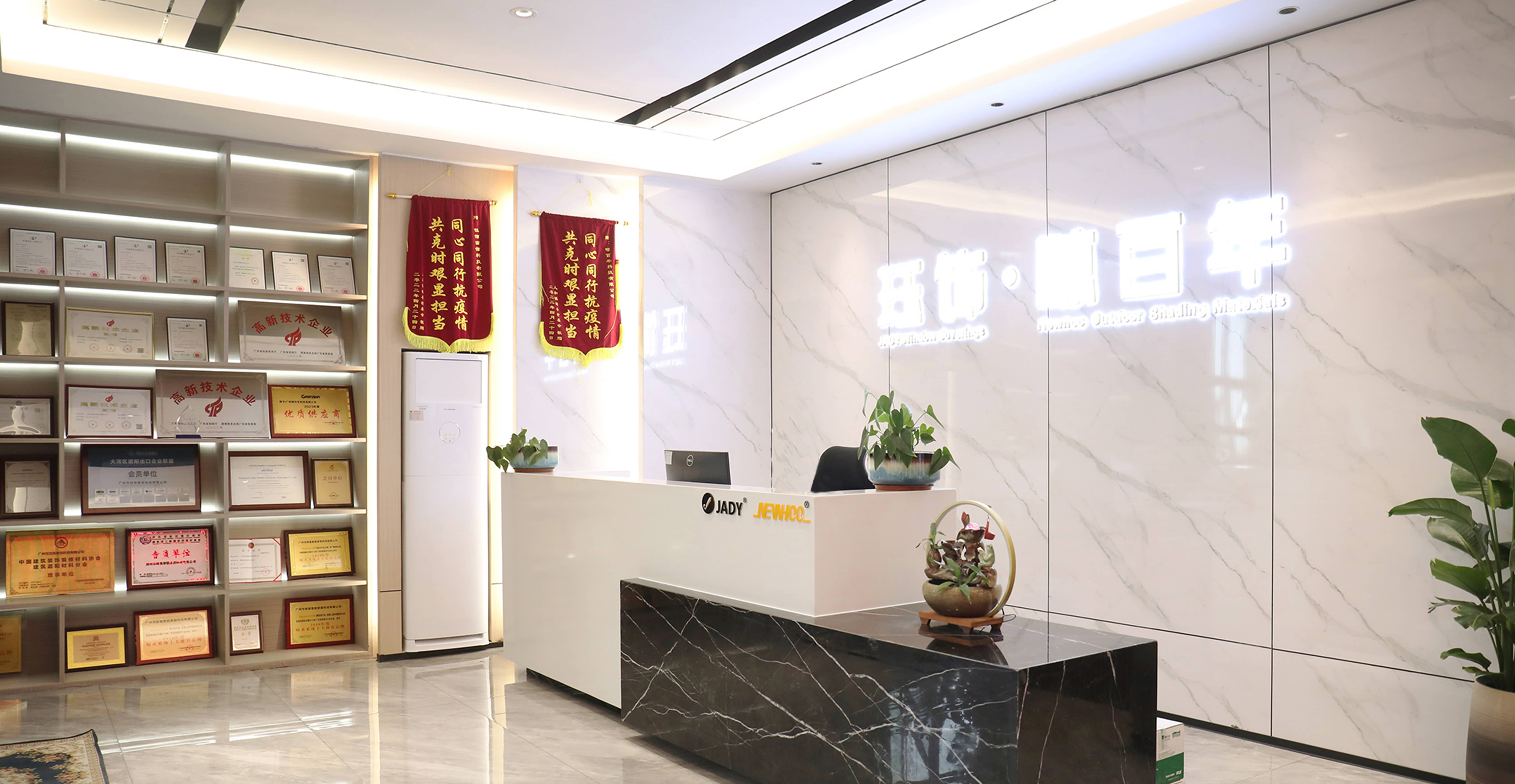
Supplier evaluation starts with the manufacturer's operating base and the range it can sustain, not with a single product photo.
Why Portfolio Continuity Outweighs a Single Project Price
Windproof roller blinds are usually bought project by project. That habit is reasonable at the start and expensive later. Each new opening brings a fresh set of variables: cassette size against the wall or curtain box, whether the wall is plumb, whether the building needs the cassette carried upstairs, whether the fabric needs full blackout or view-through, and whether the drive is tubular motor, motor plus manual, spring push, bead chain or hand crank.
When those variables are resolved one order at a time, the portfolio gradually accumulates incompatibility. Cassette profiles differ, side rails fasten differently, limit-setting procedures differ, and after-sales parts become order-specific rather than stock items. A supplier evaluated for the long term is being asked to hold that fragmentation down — by maintaining a documented model hierarchy and by keeping the consumable items interchangeable across the range.
The buyer-side consequence is straightforward. If a supplier can state which family owns which scenario, the buyer can specify once and repeat. If it cannot, every project restarts the specification cycle, and the cost of that repetition sits in engineering time, installation callbacks and spare-parts inventory rather than in the unit price.
Mapping the Range: Scenario Coverage Before Price
Scenario coverage is the first filter in a long-term review, because a supplier that covers only part of a buyer's pipeline will eventually force a second supplier into the same portfolio — which is where the fragmentation begins. NEWHOO's zip screen catalogue spans small indoor windows through to extra-high commercial facades, and it also covers related categories such as retractable screen doors, indoor awnings, sunroom skylight awnings and folding-arm retractable awnings.
| Project scenario | Family and cassette | Documented range and conditions |
|---|---|---|
| Small indoor windows, ships and RVs | WR70, 70×78 mm cassette | Width 0.7–2 m, height <2 m, area <4 m²; wind resistance >Class 10; cycle life >10,000 |
| Indoor extra-wide or floor-to-ceiling windows | TR85, 85×100 mm top-mounted | Width 0.7–4 m, height <3 m, area <12 m²; 43 slotted tube with fabric support plate and groove-bearing balancer, reaching above 4 m; 10NM–35 tubular motor with T-tape |
| Indoor commercial and hotel batch window types | WR96-100A/B, 96×100 mm | Width 0.7–4 m, height <3 m, area <12 m²; wind resistance >Class 10; cycle life >10,000 |
| Curtain-box concealed/recessed | WR100-120, 100×120 mm; TR110, 110×110 mm | Both Class 10 wind resistance; WR100-120 uses a 41×49 mm screw-locked side rail, TR110 a 40×49 mm snap-in side rail and is the more economical of the two |
| Pergola-specific | WR110A/B, 110×115 mm | Smart balancer; recommended 63/70 tube width 0.7–3.8 m, height <3 m, area <12 m²; 78/80 tube width 0.7–5.4 m |
| Indoor–outdoor universal | WR100A/B/C, 100×100 mm | 63 aluminium or 70 steel tube; five operation systems (motorised, motor+manual, spring push, bead chain, hand crank); wind resistance Class 12; cycle life >10,000 |
| Outdoor heavy-duty facades and large balconies | WR120A–F, 120×120 mm | Width up to 5.4 m, height <3.2 m; wind resistance >Class 12; cycle life >10,000; A basic, B plug-in, C connectable, D LED strip, E adjustable side rail, F solar |
| Outdoor extra-wide spans | WR120-140A front-mounted / WR120-140B back-mounted, 120×140 mm | Width 6–30 m, height <3.2 m, total area <100 m²; wind resistance >Class 8–12; cycle life >10,000 |
| Extra-high facades, atriums, lobbies | WR200-230 | Φ100 tube for height <8 m and area <25 m²; Φ130 tube for height <12 m and area <30 m²; wind >Class 10–12 |
| Dual-layer indoor and commercial | WR120-175, WR130-180, WR150-230 | WR120-175: width 0.7–2.5 m, height <3 m, area <12 m², wind >Class 10. WR150-230: 150×230 mm cassette, 63 aluminium or 78 double-layer tube, Class 10, cycle life >10,000 |
| Door openings and insect protection | VR88 single/double, VRW100 | VR88 single width ≤6 m, double ≤12 m, height ≤3 m, wind >Class 10; VRW100 single width ≤4 m, height ≤4 m |
| Overhead and terrace shading | SR-60A/B, SR-150A/B, CAF260-150M-C | SR-60A indoor awning: width 0.8–1.5 m, length <3 m, for light-breeze indoor skylight conditions below Class 4; CAF260-150M-C full-cassette folding-arm awning for wall-mounted facades |
Read as a coverage map rather than a price list, the table shows where a buyer's pipeline would land and whether one supplier can absorb it. The gaps matter as much as the overlaps: a portfolio of indoor residential work and pergola terraces sits comfortably inside the indoor families plus WR110, while a portfolio of commercial facades will need the WR120-140 and WR200-230 tiers. A cable-guided option, DK120-63, is also listed in the range for conditions where a guided screen is specified.
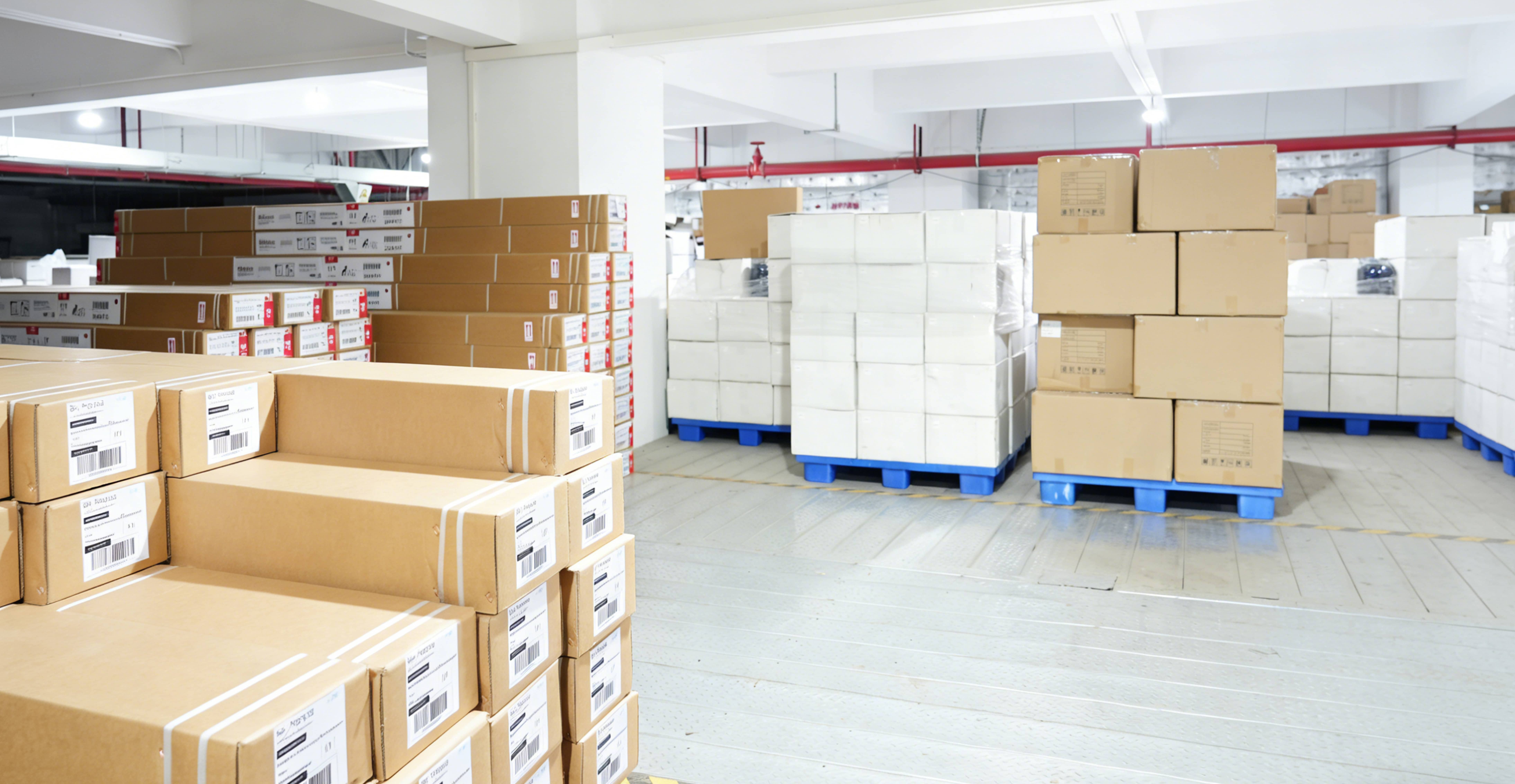
Component interchangeability across a family is what keeps spare-parts stock small once a portfolio grows.
WR100, WR110 and WR120: Reading the Selection Logic
Three families sit close enough together that buyers frequently ask the supplier to choose for them. The documented logic is scenario-led rather than price-led.
WR100 is the 100×100 mm universal family, described as indoor–outdoor universal, with a 63 aluminium or 70 steel tube and five operation systems. Its breadth is the point: the same cassette logic can serve a hotel corridor window and a semi-outdoor terrace, which is useful for buyers who want one specification language across mixed projects.
WR110 is the pergola-specific family at 110×115 mm, built around the smart balancer. It is the preferred choice for pergola structures and small-to-medium balconies. The installation note is worth carrying into the specification: on WR110A the motor/spring fixing seat and the tail-end fixing seat are both screwed onto the smart balancer, WR110B uses a plug-in structure, and WR110C is the cleaning-brush version. These are three different fixing behaviours inside one family, and a buyer who standardises on WR110 should record the variant in the project file rather than at installation.
WR120 is the outdoor-specific heavy-duty family at 120×120 mm, intended for large balconies, outdoor facades and engineering work, at widths up to 5.4 m and heights below 3.2 m. Within it, the A-to-F split is an installation-condition split, not a quality ladder: A is the basic outdoor version, B the plug-in type, C the connectable spliceable type for buildings where the cassette must be carried upstairs, D adds an integrated LED strip for ambient lighting, E provides an adjustable side-rail bracket for walls that are not plumb, and F is the solar version for locations without a power supply.
Decision rule. Indoor–outdoor universal work: WR100. Pergola-specific structures: WR110. Outdoor-specific work with larger widths: WR120, with the A–F variant selected by the installation condition rather than by price.
Fabric Openness, T-Tape and the #3 Zipper
The fabric decision and the sealing decision are often treated as one, which is where specification errors begin. NEWHOO documents them separately.
On sealing, the #3 zipper is used for ordinary solar fabrics. T-tape is used for full-blackout fabrics, for 0% or 1% openness fabrics, and for special fabrics thinner than 0.5 mm, where it gives a flatter result. The boundary is explicit: T-tape zip screens can only be used indoors. A buyer who applies T-tape to an outdoor facade because the fabric is a blackout type has stepped outside the documented application, and the specification should catch that before the order is released rather than at commissioning.
T-tape itself is described as a reinforced version designed for special fabrics, adding a T-shaped reinforcing tape to the fabric edges so the fabric runs flatter and more durable, with the fabric edge constrained in the track throughout the full travel. The regular-zipper alternative suits ordinary solar fabric. In the indoor recessed WR100-120, the same model accommodates an ordinary fabric with a #3 zipper or a blackout thin fabric with indoor T-tape, which is a practical way to keep one cassette standard across a hotel or residential batch while varying the fabric.
On fabric material, two constructions are commonly supplied: fiberglass with PVC, with strong UV resistance and dimensional stability for long-term outdoor use; and high-strength polyester with PVC, which offers better value for mid-to-low-end markets. Full-blackout fabric gives the greatest heat insulation, while view-through fabric preserves sightlines and ventilation. Openness in the solar screen range runs from 0–50%, which is what allows a buyer to select by floor or by orientation within one model.
System Life: What the Cycle Count Covers and What It Does Not
NEWHOO zip screens are documented with a system service life exceeding 10,000 cycles, and WR85, WR100 and WR120 are stated to exceed Class 12 wind resistance. Those two numbers answer different questions. The cycle figure is an operating-endurance statement covering the drive and sealing system. The wind class is a load statement describing the pressure the system is designed to resist.
Component life is documented separately, and the separation matters for long-term budgeting: the aluminium frame is given at 15–20 years, outdoor drive motors at 8–12 years, and indoor drive motors at 8–10 years. A commercial buyer therefore should not read a single warranty period as the life of the installation. The commercial warranty is narrower still — one year on the motor and five years on components, covering product defects rather than human damage. That is a support commitment, not a durability ceiling, and the gap between the five-year component warranty and the 15–20 year frame expectation is exactly where a long-term buyer needs a spare-parts route rather than a warranty argument.
This is also where the smart balancer earns its place in an evaluation. It is described as a stainless-steel groove with a cylindrical bearing that keeps the zipper entering the rail vertically, with full-length chain protection, factory pre-adjusted so that no on-site debugging is required. For a buyer planning repeat installations, factory pre-adjustment removes a variable from every site.
Technical Support and Documentation as Evaluation Criteria
A supplier that cannot document its product cannot support a multi-year portfolio. NEWHOO's stated support scope covers qualification documents, fabric and motor test reports, product technical specifications and CAD drawings for project submission, with a technical team assignable to engineering projects. These are the materials that let a buyer's own engineering team specify without re-deriving the range each time.
Commercial support is documented in concrete terms: samples in 5–7 days, bulk production in 25–40 days, an on-time delivery rate above 96%, and lead time plus breach liability written into the contract. Peak-season scheduling requires advance planning, which is a normal constraint rather than a defect. OEM and ODM are both offered, with MOQ assessed against the specific product and customisation requirement — logo or packaging changes fall under OEM, structural or functional changes under ODM.
Certification and Wind Testing: What to Request
Certification is where a long-term supplier relationship is most exposed, because a certificate that covers one market does not necessarily cover the next. The documented portfolio includes CE (including motor EMC and LVD), RoHS, AS/NZS 4745, UL for electrical components and CA Prop 65. Fabric flame-retardant reports are available to GB/T 17591-2006 B1 rating, NFPA701 and EN 13501-1, with each fabric carrying its own independent report rather than a shared one.
On wind performance, the zip screens are described as SGS-tested and able to withstand up to 40 m/s average wind speed, corresponding to wind Class 12, tested to JG/T 239-2009 and GB/T 29907-2013. Buyers should check that the report they receive names the model family they are ordering and the market they are shipping into, because customs clearance, shelf placement and project acceptance each consume a different document.
Where the Range Reaches Its Boundary
A credible long-term evaluation includes the cases the supplier should decline or redirect. The documented boundaries below are useful because they tell the buyer when a project needs a different family rather than a stretched specification.
- T-tape is indoor-only. Outdoor facades must use the #3 zipper route with an appropriate solar fabric.
- WR110 is pergola-specific. Its documented width logic runs to 5.4 m with 78/80 tube, which is generous for terraces but is not the outdoor facade tier.
- WR120-140 stops at 100 m² total area. Beyond that, the WR200-230 extra-high tier with Φ100 or Φ130 tube is the documented next step.
- WR120-175 dual-layer runs to 2.5 m wide and 12 m². Larger dual-layer work belongs to WR150-230 rather than to a stretched WR120-175.
- SR-60A is a light-breeze indoor awning at below Class 4 wind, sized 0.8–1.5 m wide and under 3 m long. It is not an outdoor wind-rated screen.
A Practical Verification Checklist for Buyers
- List the pipeline by scenario, not by order date, and check each line against the coverage table above. Uncovered lines identify where a second supplier would enter the portfolio.
- Confirm the exact cassette and variant for each line — WR120A versus WR120C versus WR120E are different installation answers.
- For every blackout or low-openness fabric, confirm whether T-tape is being applied and whether the location is indoor.
- Request the cycle-life and wind-class statement for the specific family, not for the range as a whole.
- Separate the component life expectations (frame, outdoor motor, indoor motor) from the warranty terms in the contract.
- Request the certification set that matches each destination market and confirm that fabric flame-retardant reports are per fabric.
- Confirm sample and bulk lead times against the project calendar, and check the contractual lead-time and breach-liability clause.
- Confirm the overseas after-sales route — parts replacement, installation video guidance and remote technical support — before the first bulk order rather than after the first failure.
Outlook: Standardisation as the Long-Term Variable
The direction of travel in this category is toward buyers holding larger and more mixed portfolios rather than toward any single product breakthrough. A shading range that spans indoor residential, pergola, recessed, dual-layer, extra-wide and extra-high commercial tiers gives a buyer one specification language; whether that becomes a long-term advantage depends on the supplier's ability to keep the sub-families documented as they expand.
For buyers at the decision and execution stage, the practical implication is to evaluate the range as an operating system rather than as a catalogue. The questions that decide a multi-year relationship are unglamorous: which family owns which opening, which fabric uses which sealing method, what the cycle count refers to, and who supplies the part in year six. NEWHOO publishes its 2026 catalogue with the full model listing for buyers who want to map their own pipeline against it: NEWHOO Catalog 2026.
FAQ
How long is the system life of a zip screen?
NEWHOO zip screens are documented with a system service life exceeding 10,000 cycles. WR85, WR100 and WR120 are stated to exceed Class 12 wind resistance. Component expectations are separate from the cycle figure: aluminium frames are given at 15–20 years, outdoor drive motors at 8–12 years and indoor drive motors at 8–10 years.
Which scenarios do WR100, WR110 and WR120 suit respectively?
WR100 is a 100×100 mm cassette, universal for indoor and outdoor use, with a 63 aluminium or 70 steel tube and five operation systems. WR110 is a 110×115 mm cassette, pergola-specific, with a smart balancer, suited to pergolas and small-to-medium balconies. WR120 is a 120×120 mm cassette, outdoor-specific heavy-duty, suited to large balconies, outdoor facades and engineering work. For a pergola, WR110 is the preferred family; for large outdoor sizes, WR120 is the preferred family.
How do I choose between the T-tape and #3 zipper of a zip screen?
The choice follows fabric type, openness, fabric thickness and application. The #3 zipper is used for ordinary solar fabrics. T-tape is used for full-blackout, 0% or 1% openness and special fabrics thinner than 0.5 mm, and it produces a flatter fabric. T-tape zip screens can only be used indoors, so an outdoor facade must use the #3 zipper route.
What certifications and wind test standards apply?
Available documentation includes CE with motor EMC and LVD, RoHS, AS/NZS 4745, UL for electrical components and CA Prop 65. Fabric flame-retardant reports are available to GB/T 17591-2006 B1 rating, NFPA701 and EN 13501-1, with an independent report for each fabric. Zip screens are described as SGS-tested to JG/T 239-2009 and GB/T 29907-2013, with wind resistance up to 40 m/s average wind speed, corresponding to wind Class 12.
How long is the warranty and how is overseas after-sales handled?
The motor warranty is one year and the component warranty is five years. The warranty covers product defects and does not cover human damage. Overseas after-sales support covers parts replacement, installation video guidance and remote technical support.
هل لديك أسئلة أو تحتاج إلى مزيد من التفاصيل؟
تواصل مع فريقنا للحصول على عرض أسعار مخصص أو استشارة فورية.
طلب عرض أسعار
املأ النموذج أدناه وسيتواصل معك فريقنا بعرض مقترح مخصص.
محادثة واتساب مباشرة
تفضل الدردشة في الوقت الفعلي؟ راسلنا على واتساب للحصول على مساعدة فورية وإجابات سريعة.
- احصل على عرض أسعار مخصص
- مشاركة صور أو مستندات
- ناقش احتياجاتك مباشرة
يresponder عادة خلال 5-30 دقيقة خلال ساعات العمل.