
Lost-Wax Steel Casting: What Acceptance Clauses Must Say
Lost-Wax Steel Casting: What Acceptance Clauses Must Say

A lost-wax steel casting purchase order is governed less by the certificate a supplier attaches than by the sentence a buyer writes next to each requirement. Acceptance criteria do four jobs: they fix the casting route, they fix the material grade, they fix the method that proves each property, and they fix who decides when a part does not conform. When any of those is left to interpretation, the order still reads as complete, and both parties can act in good faith while measuring different things.
This article sets out what the compliance and qualification clauses in a lost-wax (investment) steel casting purchase order should say, why wording carried over from sand casting often fails to govern the stages that investment casting actually runs, and which questions a buyer should require the supplier to answer before the order is released.
Why clause wording drifts when the process changes
Sand casting remained the largest process category in the global metal casting market in 2025, at 45.6% of process share, according to IMARC Group's metal casting market research. That dominance has a practical consequence for procurement: most clause libraries, general notes and inspection templates in circulation were written around sand-mold supply chains, because that is where most cast tonnage has historically been bought.
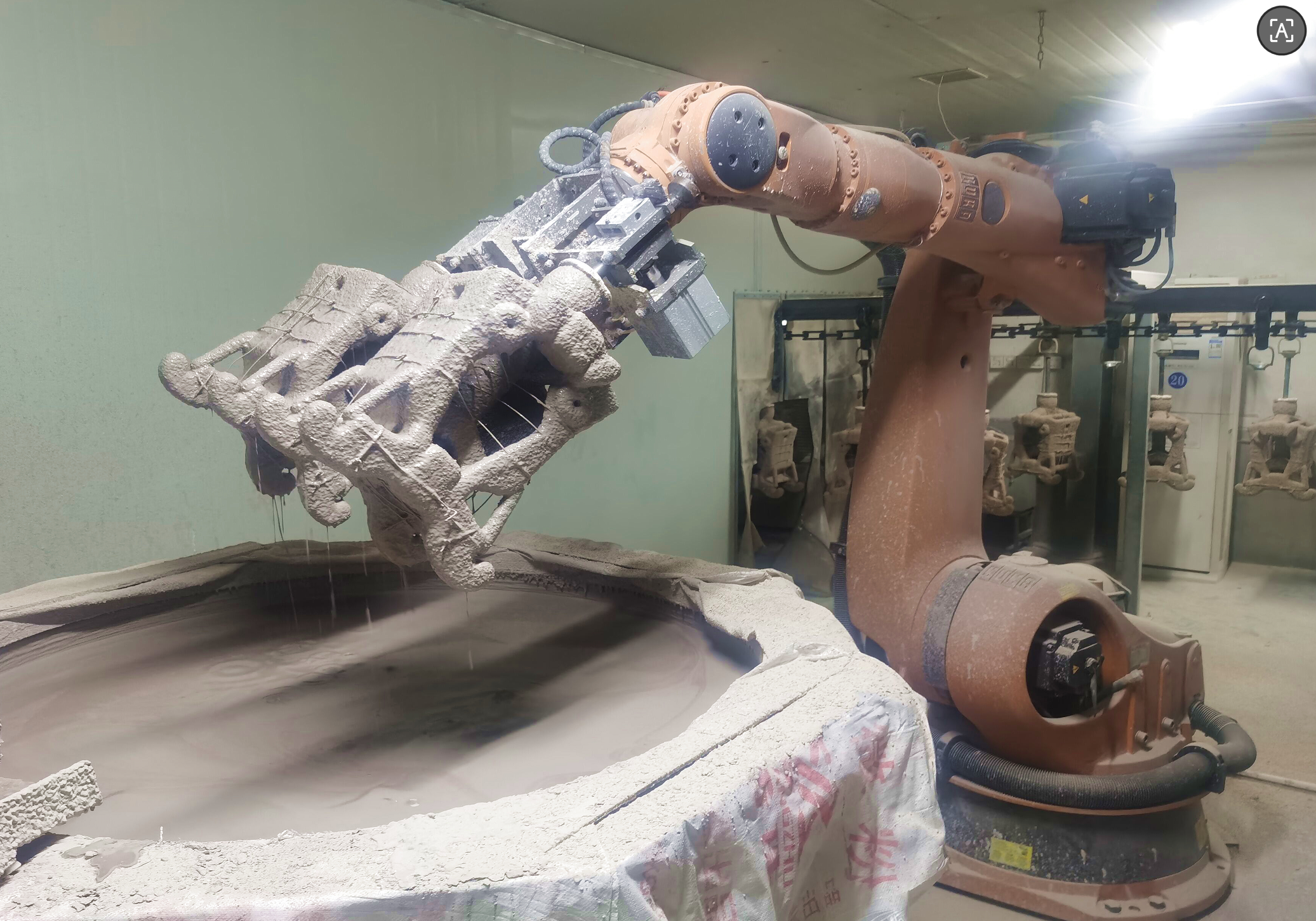
A buyer who moves a part family to lost-wax casting usually keeps the old clause set and changes the drawing. The result is a purchase order that governs mold-related conditions the investment route does not contain, and leaves ungoverned the stages it does contain: wax pattern production, pattern tree assembly, shell making, shell drying, pouring, fettling, heat treatment, machining and final inspection. The risk is not that the template is wrong in the abstract. It is that no clause assigns a hold point, a method or a record to the stages where a lost-wax casting is actually made.
The acceptance clause map: ten elements that carry the compliance weight
Ten clause elements do most of the work in an investment casting order. The table below states what each element must say in the purchase order and the question that forces the supplier to commit to a specific answer rather than a general assurance.
| Clause element | What the acceptance text must state | Question the supplier must answer |
|---|---|---|
| Process route | The investment casting variant per part — silica-sol, silica-sol composite or water-glass — and the stages designated as hold points before shipment. | Which route will this part run on, and where are the hold points? |
| Material grade | The grade designation confirmed against the drawing and any required heat-treatment condition. A material family name alone is not acceptance criteria. | Which grade designation will appear on the test record for this lot? |
| Dimensional acceptance | The tolerance designation tied to the process that produces the feature: CT6 for silica-sol, CT8 for silica-sol composite, 0.01 mm for machined features. | Which features are cast, which are machined, and which tolerance governs each? |
| Surface acceptance | The roughness band, the measurement location and the condition of the part when measured; documented ranges may run from Ra 6.4 to 12.5 μm depending on process and post-treatment. | Where is roughness measured, on which surfaces, before or after finishing? |
| Internal soundness | The method (X-ray or ultrasonic), the zones it applies to, and what counts as a reject in each zone. | Which zones are critical, which method proves them, and who interprets the result? |
| Mechanical properties | Hardness and tensile requirements, with the specimen basis and the stage at which they are demonstrated. | Is the property proven on a test piece or on the delivered part? |
| Chemical composition | The elements to be reported and the grade table they are judged against. | Which elements are reported, by which method, against which table? |
| Qualification | The management-system certificate required, its scope wording, its issuer and its validity window. A certificate number alone is not a clause. | Does the certificate scope name the process and product being purchased, and does it stay valid through the delivery period? |
| Nonconformance and concession | The decision rule, the notification route, the evidence required, the status of the lot while a decision is pending, and the remedy. | Who decides, on what evidence, within what time, and what happens to the lot meanwhile? |
| Records and revision control | The drawing revision that governs, the approved sample, and the record set issued with each lot. | Which revision governs, what is the approved sample, and what documents ship with the lot? |
Material grade: a family name is not a specification
Wayscan Metal Products Co., Ltd.'s product documentation lists carbon steel, alloy steel and stainless steel among the materials it casts, and states that specific grades are to be confirmed by the customer. That is the correct division of responsibility, and it is also where many purchase orders are weakest: the clause says carbon steel and stops.
A material specification normally carries service conditions with it. ASTM A216/A216M, per ASTM International's published specification, is the standard specification for carbon steel castings suitable for fusion welding for high-temperature service. Two of those words change what a supplier has to demonstrate: fusion welding affects chemistry and heat-treatment expectations, and high-temperature service affects how the part is qualified. A purchase order that names only the material family leaves the supplier free to select a grade that is metallurgically reasonable and commercially convenient, but not the one the design assumed.
The workable clause is short: the grade designation, the condition (as-cast, normalized, quenched and tempered, or as specified on the drawing), the standard or internal specification the grade is judged against, and the record that proves it. Where the drawing already carries that information, the clause should point to the drawing revision rather than restate it, so that a revision change does not create two conflicting specifications.
Tolerance and surface texture: tie the number to the route
Tolerance statements fail in a specific way: they are quoted without the process that produced them. Wayscan's investment casting documentation gives three distinct figures — CT6 for silica-sol investment casting, CT8 for silica-sol composite investment casting, and 0.01 mm for machining — plus a surface roughness range of Ra 6.4 to 12.5 μm that depends on the casting process and the post-treatment applied.
Read together, those figures describe a system, not a single promise. A clause that says CT6 without stating which route the part runs on, and which features are machined afterwards, can be satisfied on paper and disputed at goods-in. The acceptance text should:
- name the route per part, not per supplier;
- identify which dimensions are produced by casting and which by machining;
- state the measurement method for each — CMM for machined and datum-critical features, the agreed method for cast surfaces;
- state where roughness is measured and whether the reading is taken before or after any finishing step;
- state the datum and fixturing assumptions, because a dimensional result depends on how the part is held.
None of this requires a new standard. It requires the buyer to stop treating a tolerance table as one value and start treating it as a route-specific commitment.
Assigning inspection methods to characteristics
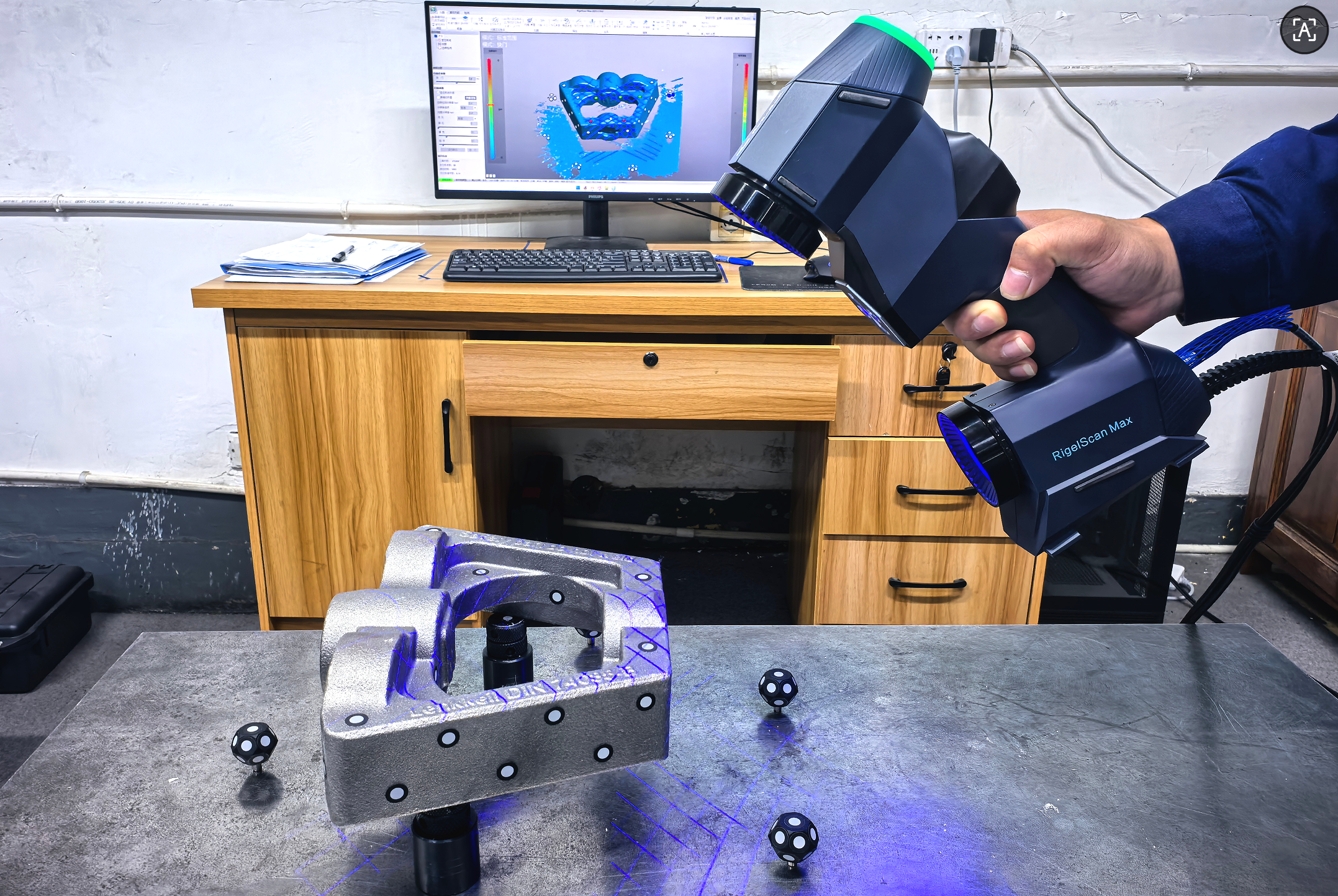
An acceptance criterion is enforceable only when it names the method that proves it. Wayscan's quality control documentation lists a spectrometer, X-ray, ultrasonic inspection, hardness and tensile testing, and CMM dimensional inspection among the available methods, and 3D scanning equipment is also documented. Those methods do not substitute for each other, and a clause that lists them all without assigning them proves nothing in particular.
The assignment becomes straightforward once characteristics are separated:
- Chemical composition — spectrometer, judged against the grade table named in the clause.
- Internal soundness — X-ray or ultrasonic, applied to named zones rather than to the part as a whole.
- Mechanical properties — hardness and tensile testing, with the specimen basis stated.
- Dimensional conformance — CMM for machined and datum-critical features.
- First-article geometry — scanning, where the clause requires a full-surface comparison against the digital model.
Two further points belong in the same clause: the stage in the route at which each check occurs, and who reads the result. A radiograph taken before heat treatment and one taken after answer different questions, and a dimensional report issued before machining cannot demonstrate a machined tolerance. Buyers should also fix the record format in advance, because a signed certificate is not the same document as a test report carrying values, units and the method used.
Qualification clauses: scope, issuer and expiry date
Qualification clauses are where purchase orders most often substitute a logo for a condition. A management-system certificate is evidence about a defined scope, issued by a named body, valid for a defined period. Each of those three elements can be the difference between a clause that holds and one that only looks as if it does.
Wayscan Metal Products Co., Ltd. holds four management-system certifications, and their wording illustrates the point:
- ISO 9001:2015, certificate 02426Q00625R401, issued by Shenzhen Universal Certification Centre Co., Ltd. (UCC), scope 'Production of Steel Casting', valid 2026-05-21 to 2029-05-20.
- IATF 16949:2016, certificate IATF 0516798, issued by SGS United Kingdom Ltd., scope 'Manufacture of Precision Casting Parts', valid 2024-05-14 to 2027-05-13.
- ISO 14001:2015, certificate 02426E00394R401, issued by UCC, scope covering the production of steel castings and related management activities, valid 2026-05-21 to 2029-05-20.
- ISO 45001:2018, certificate 02426S00381R101, issued by UCC, with the same scope wording and validity period.
Three observations follow. First, the scopes are not identical: one names steel casting production, another names precision casting parts manufacture. A clause should require the supplier to confirm that the scope wording covers the product and process actually being purchased, and to explain the position where it does not. Second, the validity windows differ, so a clause that requires a certificate 'to be held' without a validity check can be satisfied by a document that expires during the delivery period; the clause should require validity through the last scheduled shipment, or advance notice of any change. Third, the environmental and occupational health and safety certificates are evidence about how the site operates. They are not product conformity evidence, and a clause that lists them among the acceptance documents for a casting confuses two different questions.
There is a further step buyers often skip. The supplier's own published guidance states that customers should specify certifications, material grades or surface treatment requirements in advance. That is an instruction to write the requirement into the purchase order, not to verify it afterwards: a qualification requirement that appears for the first time at audit or at goods-in has no agreed remedy attached to it.
Nonconformance, concession and warranty language
Most purchase orders describe what conforming parts look like and say little about what happens when a part does not conform. That gap is a compliance gap, because the decision rule is the part of the clause that determines cost.
The supplier's documentation is explicit that warranty and liability terms are to be agreed in the contract rather than assumed. A buyer reading that sentence correctly concludes that silence is not a default: if the order does not state the remedy, the notification route and the time limit, none has been agreed.
A workable nonconformance clause answers five questions in order: who decides whether a lot conforms, on what evidence, within what period, what happens to the lot while the decision is pending, and what remedy applies if the decision is that it does not conform. Concession — accepting a part that deviates from the drawing — needs its own wording, including whether it is one-off or becomes a permanent drawing change. Without that distinction, a concession granted for one delivery can quietly become the new acceptance baseline.
Where the emphasis shifts by part and application
Different part families pull the clause in different directions, even when they are cast by the same route. Wayscan's investment casting range, produced to customer drawings, includes pipe elbows, clevis brackets, yokes, gearbox housings, transmission housings, mounting brackets and link arms, and the documented application areas cover automotive, forklift, mining, agricultural and construction machinery, valves and general machinery components.
- Pressure-retaining and fluid-handling parts such as valve bodies and pipe elbows: internal soundness carries the most weight, so the clause should name the method, define the zones and state the reject basis per zone rather than per part.
- Housings such as gearbox and transmission housings: dimensional conformance at machined interfaces and overall wall integrity matter more than one global tolerance, so the clause should separate cast-feature tolerances (CT6 or CT8, depending on route) from machined tolerances.
- Load-path parts such as clevis brackets, yokes and link arms: mechanical properties and heat-treatment condition need to be stated with the specimen basis, alongside dimensional acceptance at the fixing points.
- Wear-facing parts on equipment in mining, agricultural and construction service: hardness specification and its measurement location belong in the clause, because a hardness value without a stated location is not reproducible.
- Replacement and spare-part programs: the clause should fix the drawing revision and the approved sample, since a part may be re-ordered years after the original tooling was proven.
Across all of these, the working condition is itself a clause input. Wayscan's application documentation states that suitability for a given operating condition is to be specified by the customer; that is not a formality, it is the sentence that converts a general-purpose casting requirement into an acceptance criterion.
Ten questions to require the supplier to answer before release
Buyers do not need a longer specification; they need committed answers. The following set can travel with the request for quotation and be attached to the purchase order as an agreed annex:
- Which investment casting route — silica-sol, silica-sol composite or water-glass — will this part run on, and what changes if the route changes mid-program?
- Which grade designation and heat-treatment condition will appear on the material record?
- Which drawing revision governs, and what is the approved sample against which production is compared?
- Which features are cast and which are machined, and which tolerance applies to each?
- Where is surface roughness measured, and before or after finishing?
- Which method proves internal soundness, in which zones, and who interprets the result?
- Are mechanical properties demonstrated on a test piece or on the part, and at what stage?
- Which management-system certificates apply, with what scope wording, issuer and validity end date?
- What is the nonconformance and concession procedure, including decision authority and remedy?
- Which records accompany each lot, and in what format?
Market context and what it means for clause design
Two data points frame the procurement problem. Fortune Business Insights valued the global steel casting market at USD 39.16 billion in 2025 and projected USD 63.83 billion by 2034 — a commercial research projection rather than a measured outcome, and one that varies between research houses depending on category definition. More directly relevant is the process mix: sand casting held 45.6% of global metal casting process share in 2025, per IMARC Group.
The interpretation for buyers is not that one process is better. It is that the clause library in most organisations reflects the process that dominates volume, and lags when a part family moves to a different route. The practical response is structural rather than rhetorical: keep a core commercial clause set, and attach a per-route acceptance annex that names the stages, the methods and the records for the route actually being bought. A single global clause cannot describe both a sand-mold route and a wax-pattern, ceramic-shell route without becoming vague exactly where specificity matters.
How Wayscan's documented capability maps to clause inputs
Wayscan Metal Products Co., Ltd. is an investment casting manufacturer established in 1991, operating a 46,000 m² production base with more than 500 employees, including more than 20 senior engineering and technical personnel. Its documented product scope covers precision castings, investment castings and machined cast components in carbon steel, alloy steel and stainless steel; its process scope covers water-glass, silica-sol and silica-sol composite investment casting, with integrated mold making, casting, heat treatment, machining and inspection, and 3D-printed pattern support for rapid sampling. Published commercial parameters include a 100 kg minimum order quantity and a 30 to 60 day lead time, and the company reports an export share of 70% with markets including China, Japan and the USA.
For clause design, the useful part of that profile is not the size of the site. It is that the parameters a buyer needs in order to write specific acceptance language are already stated in checkable form: CT6 and CT8 tolerance designations tied to specific routes, a 0.01 mm machining figure, an Ra 6.4 to 12.5 μm surface range with its dependency on process and post-treatment, and a named inspection set covering composition, internal soundness, mechanical properties and dimensions. A buyer can lift those into an annex, ask the supplier to confirm them part by part, and hold a clause that can be checked at goods-in rather than argued about afterwards.
The same applies to qualification. The four management-system certificates described above give a buyer a scope, an issuer and a validity window to write into the order. What they do not do is answer the product question, which is why the acceptance annex has to carry the grade, the tolerance, the method and the record. Further detail on the company's process scope and custom steel casting capability is published at WAYSCAN METAL PRODUCTS CO., LTD.
Conclusion
The compliance clause in a lost-wax steel casting purchase order is not a formality appended to the commercial terms. It is the only place where the buyer states which route produces the part, which grade is being bought, which method proves each requirement, and who decides when a part does not conform.
Four edits close most of the gap. Replace material family names with grade designations. Attach every tolerance and surface figure to the route that produces it. Assign each inspection method to the characteristic it actually proves. And replace 'supplier holds certificate X' with the scope, issuer and validity window the certificate must satisfy for the delivery period. Each edit is short, and each one converts a statement of intent into something a supplier can be held to.
A downloadable company presentation with additional process and facility information is available here: Wayscan Metal Products Co., Ltd. presentation (PDF).
FAQ
What should the acceptance criteria in a lost-wax steel casting order cover first?
Start with four items: the casting route for each part, the material grade designation confirmed against the drawing, the inspection method assigned to each requirement, and the decision rule for nonconforming parts. A clause set that covers those four can be checked at goods-in. A clause set that names only a material family and a general tolerance cannot, because it does not say which process produced the feature being measured or which document proves it.
How should tolerance and surface roughness be written for investment castings?
Tie each figure to the route that produces it. In Wayscan's documentation, silica-sol investment casting is stated at CT6, silica-sol composite investment casting at CT8, and machined features at 0.01 mm, while surface roughness is given as Ra 6.4 to 12.5 μm depending on the casting process and post-treatment. The clause should state which dimensions are cast and which are machined, where roughness is measured, and whether the reading is taken before or after finishing.
Does holding ISO 9001 or IATF 16949 settle the qualification clause?
Not by itself. A management-system certificate is evidence about a defined scope, issued by a named body, valid for a defined period, and all three elements need to match the purchase. Wayscan's ISO 9001:2015 certificate 02426Q00625R401 (issued by UCC, valid 2026-05-21 to 2029-05-20) carries the scope 'Production of Steel Casting', while its IATF 16949:2016 certificate IATF 0516798 (issued by SGS United Kingdom Ltd., valid 2024-05-14 to 2027-05-13) covers 'Manufacture of Precision Casting Parts'. Environmental and occupational health and safety certificates describe site management, not product conformity.
Which inspection methods should be named, and for which characteristics?
Assign one method to each characteristic rather than listing every available method. Composition is judged by spectrometer against the named grade table; internal soundness by X-ray or ultrasonic inspection applied to defined zones; mechanical properties by hardness and tensile testing with the specimen basis stated; dimensional conformance by CMM on machined and datum-critical features; and full-surface geometry by scanning where the clause requires comparison against the digital model. The clause should also state the stage at which each check occurs and who interprets the result.
What should the order say about nonconformance, concession and warranty?
It should state the decision rule and the remedy in full, because none is implied. Wayscan's documentation states that warranty and liability terms are to be agreed in the contract, which means an order that stays silent on remedy, notification route and time limit has agreed nothing. The clause should also distinguish a one-off concession from a permanent drawing change, so that a deviation accepted for a single delivery does not become the new acceptance baseline.
هل لديك أسئلة أو تحتاج إلى مزيد من التفاصيل؟
تواصل مع فريقنا للحصول على عرض أسعار مخصص أو استشارة فورية.
طلب عرض أسعار
املأ النموذج أدناه وسيتواصل معك فريقنا بعرض مقترح مخصص.
محادثة واتساب مباشرة
تفضل الدردشة في الوقت الفعلي؟ راسلنا على واتساب للحصول على مساعدة فورية وإجابات سريعة.
- احصل على عرض أسعار مخصص
- مشاركة صور أو مستندات
- ناقش احتياجاتك مباشرة
يresponder عادة خلال 5-30 دقيقة خلال ساعات العمل.