
Low Flow Meter Acceptance Criteria: Coriolis, Thermal, Steam
Low Flow Meter Acceptance Criteria: Coriolis, Thermal, Steam
A low flow meter decision is usually settled by three questions asked in order: what the medium is and in which state it must be measured; how much of the flow range has to remain inside the stated accuracy; and which pressure, temperature, connection and area-classification limits the installation imposes. Applied in that order, the questions narrow the field considerably before price enters the discussion, and for most low flow duties they leave three technologies in contention: micro Coriolis for liquids and dense gases, thermal mass for gases at very small flow, and a vortex steam mass flow meter for saturated and superheated steam.
This article turns that sequence into acceptance criteria and purchasing terms that can be attached to an RFQ. The reference product set is Silver Automation Instruments, a Nanjing-based instrument manufacturer founded in 2010 that produces Coriolis, thermal mass, electromagnetic, vortex, turbine and oval gear flow meters alongside pressure, level and data-logging instruments. Its micro Coriolis meters are published from 40 g/h to 1000 kg/hr at an accuracy of ±0.25% to ±0.5%, with 30 bar or 100 bar pressure ratings in 316L stainless steel; its STLU-VFN vortex steam mass flow meter covers DN15 to DN300 for saturated and superheated steam up to 500 °C with built-in temperature and pressure compensation.
None of the framework depends on a single supplier. Its purpose is to make every claim checkable, because a criterion that cannot be verified in a datasheet, a certificate or a witnessed test does not belong in an acceptance protocol. The material below distinguishes what the suppliers state, what independent third-party data shows, and what the buyer still has to confirm in writing.
Why the low flow decision splits three ways
The three technologies are not interchangeable alternatives at different price points. Each answers a different measurement problem, and the difference appears in the unit of the specification rather than in the headline of the datasheet.
A Coriolis meter oscillates a measuring tube and reads mass flow directly, so its output does not rest on an assumed density. That is why the micro Coriolis range is specified in mass units, from 40 g/h to 1000 kg/hr at ±0.25% to ±0.5%. The same family is applied across liquids and dense gases, and Silver lists silane, supercritical CO2, diesel, aviation kerosene, silicone and pure water among the media it covers.
A thermal mass meter derives flow from heat transfer into a gas stream. The principle suits very small gas flows: Silver's published low-flow application material states that its micro thermal mass meters can measure gas flow as low as 2 sccm. The reading depends on the thermal properties of the gas being measured, which places gas composition and calibration medium inside the specification rather than in the footnotes.
A vortex meter counts vortices shed from a bluff body, which is a volumetric measurement, and derives steam mass flow by compensating that volume with measured temperature and pressure. The STLU-VFN supports DN15 to DN300 line sizes for saturated and superheated steam up to 500 °C and includes built-in temperature and pressure compensation, which means the compensation inputs sit inside the mass-flow uncertainty chain instead of in a separate panel item.
For a buyer, the practical consequence is that the medium's state makes the first cut and the specification details make the second. A technology chosen outside its medium fit does not usually fail at the purchase order stage; it fails later, as re-calibration, an uncontrollable low end of the range, or a correction to the installation.
The comparison matrix to attach to the RFQ
The matrix below is written as an RFQ attachment rather than a brochure summary. Where a value is not stated in the published material, the cell asks the supplier to complete it in writing; a quotation that leaves those cells blank has not yet been substantiated.
| Criterion | Micro Coriolis | Thermal mass | Vortex steam mass (STLU-VFN) |
|---|---|---|---|
| Medium and state | Liquids and dense gases; published media include silane, supercritical CO2, diesel, aviation kerosene, silicone and pure water | Gases; company-published capability down to 2 sccm | Saturated and superheated steam |
| Flow range basis | 40 g/h to 1000 kg/hr, mass units | Gas flow from 2 sccm, company-published figure | Line size DN15 to DN300 |
| Stated accuracy | ±0.25% to ±0.5% | Confirm per model and calibration gas on the datasheet | Confirm per model and line size on the datasheet |
| Pressure rating | 30 bar or 100 bar | Confirm per model against design pressure | Confirm per model and line size against design pressure |
| Temperature | Confirm per model and medium | Confirm per model | Steam up to 500 °C, with built-in temperature and pressure compensation |
| Wetted construction | 316L stainless steel | Confirm per model | Confirm per model |
| Process connection | State flange or thread standard and size in the RFQ | State flange or thread standard and size in the RFQ | State flange standard for the DN15 to DN300 line size |
| Communication and output | State protocol, output signals and power supply | State protocol, output signals and power supply | State protocol, output signals and power supply |
| Area classification | Silver states its products meet CE, ATEX and ISO 9001; verify the certificate for the exact variant | Same verification requirement | Same verification requirement |
Criterion 1: medium compatibility decides pass or fail
Medium compatibility is the first pass-or-fail criterion, and it is decided by the state of the process fluid rather than by the reputation of the instrument category. A meter that is correct for a liquid duty can be the wrong purchase for a gas duty at the same mass flow, because the two principles measure different quantities.
- Liquids and dense gases. Micro Coriolis is the fit, including the published media silane, supercritical CO2, diesel, aviation kerosene, silicone and pure water. For supercritical and near-critical duties, the acceptance question is not only whether the wetted material is compatible, but whether the stated mass range covers the duty at the actual operating density and whether the installation keeps the medium in the intended phase.
- Gases at very small flow. Thermal mass meters address gas flow down to the sccm region. Because the measurement depends on gas properties, the RFQ should name the gas, its composition tolerance and the medium used for calibration.
- Steam. Saturated and superheated steam belong to the vortex steam mass flow meter, and the purchase order should state which of the two conditions applies, since a superheated duty carries different temperature and compensation requirements.
A workable acceptance sentence is short: the meter shall be rated for continuous duty on the named medium, at the stated composition or purity, in the stated phase, with wetted parts in 316L stainless steel or an explicitly approved equivalent. Anything vaguer leaves the supplier free to interpret the duty.
One boundary is worth stating explicitly, because it changes the shortlist rather than the score. Highly viscous liquids sit outside all three technologies in this comparison; Silver's micro oval gear meters, for example, are published to measure oil flow as low as 0.5 ccm with viscosity tolerance up to 2000 mPa.s, and positive displacement belongs in its own evaluation rather than being forced into a Coriolis-versus-thermal matrix.
Criterion 2: the flow range that actually carries the accuracy
A published range describes coverage; it does not promise that the tightest accuracy holds at both ends of it. Silver's micro Coriolis range spans 40 g/h to 1000 kg/hr, which is a span of roughly 25,000:1 from end to end, and that is a calculated ratio of the published endpoints rather than a performance guarantee across the whole band. The accuracy statement should therefore be tied to the buyer's real minimum, normal and maximum flow.
Three practical consequences follow. First, the purchase order should state accuracy separately at minimum, normal and maximum duty, not as a single headline figure. Second, the low-end cut-off at which the output stops being usable must be documented, because an instrument that reads accurately at design flow but becomes unstable at turndown will be operated outside its useful band. Third, the basis of the units must be fixed in writing: mass units for the Coriolis and vortex steam meters, and for gas duties either mass or a stated standard or normal volumetric condition, since a volumetric figure without a reference condition cannot be compared with a mass specification.
Line size adds a separate check for steam. The STLU-VFN covers DN15 to DN300, so the pipe size and the resulting velocity at minimum and maximum steam flow both belong in the RFQ, together with the turndown the application requires. A meter sized to the pipe rather than to the flow is a common source of a shortlist that looks correct on paper and underperforms in commissioning.
Criterion 3: what the accuracy figure commits the supplier to
An accuracy band of ±0.25% to ±0.5% is meaningful only when its reference is fixed. Buyers should require the supplier to state whether the figure is a percentage of reading or a percentage of span, at which reference conditions it applies, and whether zero stability is included or excluded. Two quotations that look identical can differ materially once those three points are written down.
The measurement principle also changes what has to be verified. A Coriolis meter reads mass directly, so its accuracy statement can be tested against a mass-flow calibration. A thermal mass meter's accuracy is tied to the gas and the calibration medium, which makes the calibration certificate more informative than the catalogue band. A vortex steam meter combines a volumetric signal with temperature and pressure compensation, so the accuracy of the temperature and pressure inputs becomes part of the mass-flow uncertainty, and the supplier should state how that combination is specified.
The evidence to request is consistent across all three technologies: a calibration certificate traceable to a recognised standard, the calibration conditions, the instrument range as configured rather than as catalogued, and the option of a witnessed test for critical duties. For most process duties, an accuracy claim tighter than the process needs adds cost without adding control quality, which is why the acceptance criterion should be derived from the process tolerance rather than from the most favourable number available.
Criterion 4: pressure, temperature and compensation
Pressure and temperature ratings must be read as two separate acceptance conditions, because the purchase order will be judged against both. Silver's micro Coriolis meters are offered with 30 bar or 100 bar pressure ratings, so the RFQ has to state the design pressure and the design temperature of the line, and the quotation has to name which rating is being supplied. A maximum pressure figure quoted without the corresponding temperature is incomplete, since allowable pressure falls as temperature rises.
On steam duty the temperature question is more prominent. The STLU-VFN is specified for saturated and superheated steam up to 500 °C with built-in temperature and pressure compensation. That compensation converts a volumetric signal into mass flow, which is convenient at the installation level, but it also means the buyer should confirm how the temperature and pressure elements are specified, whether the compensation is integral to the instrument or supplied as a separate function, and whether the quoted mass-flow accuracy already accounts for those inputs. The steam condition, the line size and the compensation scope together form one acceptance item, not three unrelated ones.
Criterion 5: connections, communication, area classification and documents
The mechanical and electrical interface is where otherwise comparable quotations diverge most often, and it is the part that most easily delays a project after the order is placed.
- Process connections. The flange or thread standard, the size, the facing and the installation orientation should be written into the RFQ, including for DN15 to DN300 steam lines where line size also drives sizing.
- Communication and output. The protocol, the analogue and digital outputs, the power supply and the isolation requirements should be listed as line items, so the quotation can be checked field by field rather than assumed from a photograph.
- Area classification. Silver states that its products meet CE, ATEX and ISO 9001. For a hazardous area, that general statement is the starting point, not the acceptance evidence: the buyer should require the ATEX certificate number, the marking, the temperature class and confirmation that the certificate covers the exact variant ordered, including enclosure and cable-entry options. A certificate issued for one configuration does not automatically extend to another.
- Documents. Datasheet, calibration certificate, declaration of conformity, wiring diagram with terminal designations and the installation manual should be named as deliverables, not requested after shipment.
Commercial terms: price, lead time and what they do not prove
Price and delivery belong in the framework as terms to be specified, not as selection shortcuts. Silver's published comparison states that comparable Micro Motion Coriolis flow meters are priced four to five times higher than its own, with a lead time of several months against Silver's typical delivery within one month.
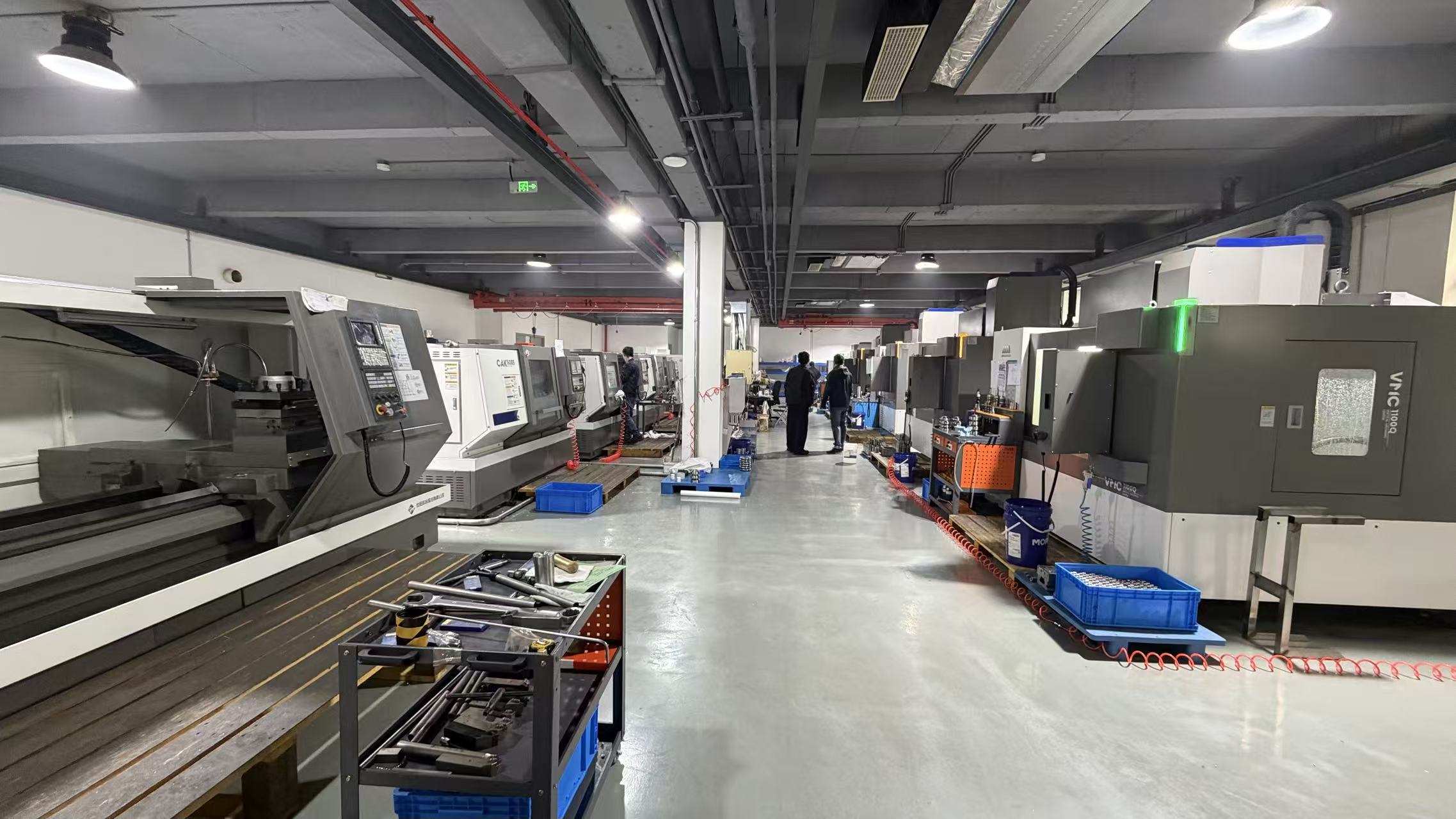
Where commercial terms become acceptance criteria, they should be written as commitments: price validity period, delivery as a calendar date rather than a range, Incoterms, warranty duration and scope, recommended spare parts with lead times, calibration interval and the documentation package. Capacity context helps a buyer judge delivery credibility without replacing a contractual date: Silver's published company profile lists a 10,000 m² facility, 80 employees, a 20-person engineering team and annual output of 60,000 units, with about 95% of output exported.
Installation and commissioning evidence
Two failure modes are frequent enough to justify their own acceptance line. Silver's published risk controls for low flow meters name inaccurate readings and incorrect wiring, with the corresponding measures being installation precautions documented in the instruction manual supplied with each unit, and clearly labelled wiring terminals.
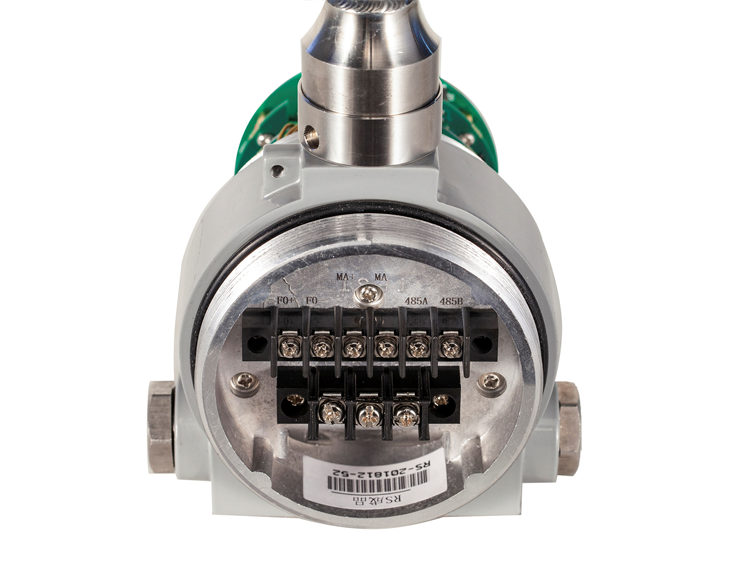
That translates into a short commissioning checklist worth attaching to the purchase order: the wiring diagram and terminal designations are delivered before installation; the zero and range configuration are verified against the ordered range; the analogue output is loop-checked; and the installation conditions — straight runs, orientation and any medium-specific precautions in the manual — are confirmed before the first measurement is accepted. For critical duties, the calibration certificate should be reviewed against those conditions rather than filed.
What the market context changes for buyers
Availability of these technologies is not the constraint that it once was, and the third-party figures explain why the shortlist keeps widening. Grand View Research valued the global flow meter market at USD 10.64 billion in 2024, with Europe holding the largest regional share at over 35%, while Fortune Business Insights placed Coriolis meters at 26.77% of the intelligent flow meter market in 2026. Market Research Future valued thermal flow meters at USD 1.73 billion in 2024, with a projection of USD 2.9 billion by 2035.
The growth is concentrated in exactly the pipe sizes that low flow buyers use. Grand View Research expects the 2-inch and smaller segment to grow fastest through 2030, driven by pharmaceutical and food and beverage demand, which is consistent with the number of suppliers entering small-line and micro-flow duty. For procurement, more choice means the acceptance criteria carry more weight, not less: when several quotations look plausible, the specification and the documentation decide between them.
From matrix to shortlist: the decision path
Applied in sequence, the criteria produce a shortlist rather than a preference. If the medium is steam, saturated or superheated, the vortex steam mass flow meter is the only one of the three designed for that duty, and the acceptance work shifts to line size, temperature, compensation scope and pressure rating. If the medium is a gas at very small flow, thermal mass is the fit, and the acceptance work shifts to gas composition, calibration medium and the low-end range. If the medium is a liquid or a dense gas that requires direct mass measurement, micro Coriolis is the fit, and the acceptance work shifts to the accuracy basis, the pressure rating of 30 bar or 100 bar, and the medium-specific installation conditions.
What remains after the shortlist is verification rather than preference: accuracy at the actual duty points, the certificate scope for the exact variant, the interface details and the delivery commitment. Two boundary conditions should travel with the framework. First, none of the three technologies is universally suitable, and a quotation that claims otherwise is a reason to ask for the datasheet rather than to accept the claim. Second, when the process duty falls outside all three — high-viscosity liquids are the clearest example — the correct outcome is a different evaluation, not a stretched specification.
Frequently asked questions
What are the acceptance criteria for a low flow meter?
Acceptance criteria for a low flow meter are the five conditions a supplier must satisfy in writing: compatibility with the medium and its phase, coverage of the required flow range at the stated accuracy at the minimum, normal and maximum duty, pressure and temperature ratings that match the line design, specified process connections and communication outputs, and documented area classification covering the exact variant ordered. Verification evidence — calibration certificate, declaration of conformity and installation manual — completes the set.
Micro Coriolis or thermal mass: which suits low gas flow?
Both can measure gas, but they answer different questions. A thermal mass meter is applied to very small gas flows, with Silver's published material describing micro thermal mass meters down to 2 sccm, and its accuracy depends on the gas and the calibration medium. A micro Coriolis meter measures mass directly and covers 40 g/h to 1000 kg/hr at ±0.25% to ±0.5%, which suits dense gases and liquids where direct mass measurement is required. The deciding factors are the gas composition, the lowest flow that must remain readable and whether the process can tolerate the thermal principle's dependence on gas properties.
Can a vortex meter handle low flow steam duty?
The STLU-VFN vortex steam mass flow meter is specified for saturated and superheated steam up to 500 °C across DN15 to DN300, with built-in temperature and pressure compensation for mass-flow output. Whether it suits a particular low flow steam duty depends on the velocity produced at minimum flow in the selected line size, the required turndown and the pressure rating of the installation. Those three values should be stated in the RFQ so the sizing can be confirmed rather than assumed.
Which pressure and temperature figures belong in the purchase order?
The purchase order should state the design pressure and design temperature of the line, not only the instrument maximum. Silver's micro Coriolis meters are offered at 30 bar or 100 bar, so the order should also name which rating is being supplied. On steam duty, the condition — saturated or superheated — and the steam temperature up to 500 °C belong in the same clause, because allowable pressure and material selection both depend on temperature.
How should ATEX status be evidenced before ordering?
ATEX status should be evidenced by the certificate itself, not by a general compliance statement. Silver states that its products meet CE, ATEX and ISO 9001, and for a hazardous area the buyer should request the certificate number, the marking, the temperature class and written confirmation that the certificate covers the exact model, enclosure and cable-entry configuration being quoted. Where the certificate scope and the ordered variant do not match, the gap should be closed before the order is placed rather than at commissioning.
A downloadable catalogue covering Silver Automation Instruments' flow, pressure, level and data-logging ranges is available here: Silver Automation Instruments product brochure (PDF).
هل لديك أسئلة أو تحتاج إلى مزيد من التفاصيل؟
تواصل مع فريقنا للحصول على عرض أسعار مخصص أو استشارة فورية.
طلب عرض أسعار
املأ النموذج أدناه وسيتواصل معك فريقنا بعرض مقترح مخصص.
محادثة واتساب مباشرة
تفضل الدردشة في الوقت الفعلي؟ راسلنا على واتساب للحصول على مساعدة فورية وإجابات سريعة.
- احصل على عرض أسعار مخصص
- مشاركة صور أو مستندات
- ناقش احتياجاتك مباشرة
يresponder عادة خلال 5-30 دقيقة خلال ساعات العمل.