
Low Flow Meter Procurement FAQ: Connections, Communication Protocols, and Pressure Ratings
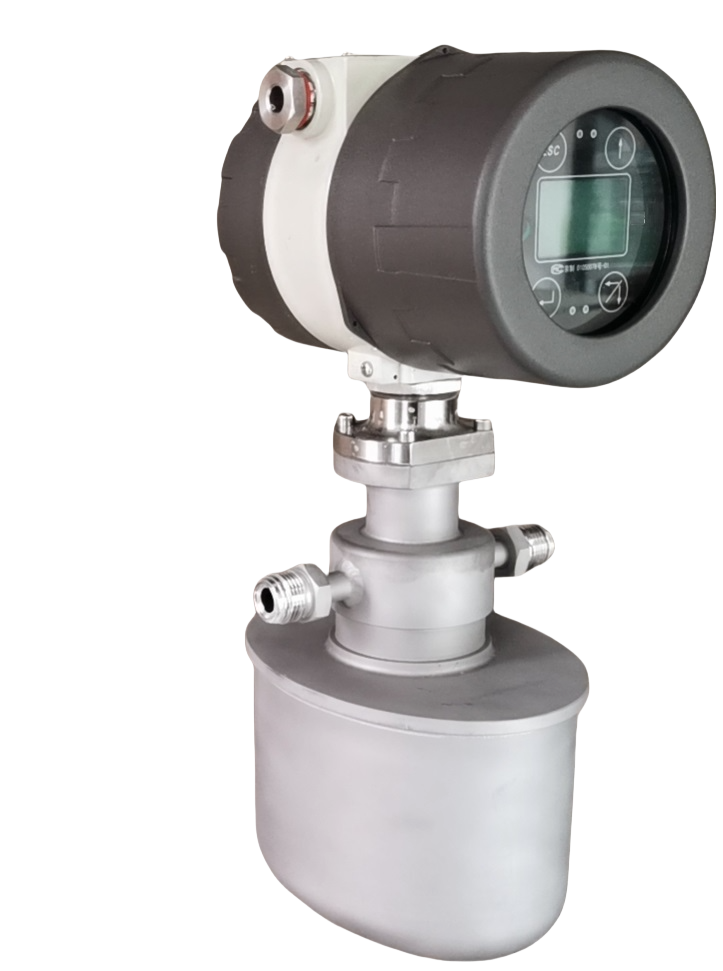
A low flow meter rarely fails a procurement review because it cannot resolve a small flow rate. It fails at the three interfaces around the sensor: the process connection that has to mate with an existing line, the signal that the plant control layer has to read, and the pressure rating that has to cover the line with margin.
Low flow measurement spans a wide technology family — micro Coriolis, thermal mass, oval gear, miniature turbine and differential pressure devices — but the purchasing conversation converges quickly on the same practical points. Buyers want to know which connections are available, which communication protocols the transmitter speaks, how the pressure rating is expressed, and what happens when the plant standard does not match the meter's default configuration.
This reference answers those questions using documented specifications from the SH-CM Coriolis mass flow meter and the SH-CMF-FE micro Coriolis mass flow meter, together with the process connection styles documented across the wider flow meter range. Where a specification is not published for a given model, that is stated rather than assumed.
Why connection, protocol and pressure questions decide low flow projects
At low flow rates, the sensor is usually the least contested part of the decision. Coriolis and thermal mass technologies both resolve very small flows, and the documented low ends of the range — 40 g/h on the SH-CMF-FE, 2 sccm on the SRK-DL low flow thermal mass flow meter — already cover most micro-dosing, leak detection and analytical duty. The friction sits elsewhere.
A meter that reads correctly on a calibration bench can still stop a project if its process connection does not fit a 1/4 inch line, if its protocol cannot be addressed by an existing programmable logic controller, or if the line pressure exceeds the rating printed on the sensor body. In fermentation, pharmaceutical, semiconductor and fuel cell duty, the meter is normally inserted into an existing control loop rather than commissioned as a standalone skid, which means the interfaces are fixed before the instrument is ordered.
For that reason, the practical sequence in most low flow projects is: media and line size first, connection and pressure rating second, protocol and power third, and flow range last. Reversing that order is the most common cause of a specification that has to be re-quoted.
What Silver Automation Instruments documents for low flow duty
Silver Automation Instruments is a flow and pressure instrumentation manufacturer founded in 2010 and based in Nanjing, Jiangsu, China. The company produces Coriolis, thermal mass, electromagnetic, vortex, turbine and oval gear flow meters together with pressure instruments, level measurement devices and data logging and control equipment. Documented company figures include a 10,000 m² factory, an 80-person team that includes a 20-person R&D group, an annual output of 60,000 units, and an export share of around 95%, with Southeast Asia, South America and Africa listed as main markets. Products are stated to meet CE, ATEX and ISO 9001 standards.
For low flow work, two Coriolis lines carry most of the technical weight. The SH-CMF-FE micro Coriolis mass flow meter is specified from 40 g/h to 1,000 kg/hr with an accuracy of ±0.25% to ±0.5%, a pressure rating of 30 bar or 100 bar, 316L stainless steel wetted parts, 15 V DC or 24 V DC power, and either RS485 or RS232 communication. The SH-CM Coriolis mass flow meter covers roughly 10 kg/hr to 1,500 t/h across sizes from about 1 mm to 300 mm, with a fluid temperature range of −200 °C to 350 °C, IP65 protection, ATEX certification, and a wider communication set.
Process connections: flanges, wafers, screws and tri-clamp
Four process connection styles are documented across the Silver Automation Instruments flow meter range: flanges, wafers, screws and tri-clamp. They are not interchangeable in practice, because each one solves a different installation problem.
| Connection style | How it attaches | Typical selection driver |
|---|---|---|
| Flange | Bolted joint between two flanged faces with a gasket | Larger line sizes and higher-pressure service where a bolted, gasketed joint is required and dismantling frequency is low |
| Wafer | Meter body clamped between two existing flanges | Short face-to-face length on skids and retrofit work where pipe space is already fixed |
| Screw (threaded) | Threaded into the line or into a fitting | Small-bore lines where there is no room for flange bolting or for a welded spool |
| Tri-clamp | Sanitary clamp and gasket joint | Hygienic duty where the line is opened frequently for cleaning and product changeover |
The pattern in low flow work is that connection choice follows line size and hygiene requirement rather than flow range. Micro Coriolis meters in the SH-CMF-FE line are documented for food, (petro)chemical and pharmaceutical processes, fermentation equipment, semiconductor processing and fuel cell technology — duty areas where small bore size and cleanability often outweigh high-pressure containment as the deciding factor.
A point worth confirming at order stage: the four connection styles are documented at range level rather than restated for every individual model. Buyers should confirm the exact connection for the specific model and line size being quoted, especially where a hygienic joint must match an existing tri-clamp standard on the plant.
Communication interfaces: RS485, RS232, MODBUS RTU, HART and Profibus
Communication is where low flow meter specifications differ most between models, and where an incorrect assumption is expensive to correct after delivery. The documented interfaces across the relevant lines are as follows.
| Model | Principle | Documented communication | Documented analog / pulse output |
|---|---|---|---|
| SH-CM | Coriolis mass flow meter | MODBUS RTU, HART, Profibus-DP, Profibus-PA | 4–20 mA, pulse, frequency |
| SH-CMF-FE | Micro Coriolis mass flow meter / controller | RS485 or RS232 | 4–20 mA, 0–5 V DC, 1–5 V DC |
| SRK-DL | Low flow thermal mass flow meter | RS232/485, MODBUS | 0–5 V, 4–20 mA, 1–5 V |
| SRK-100 | Thermal mass flow meter | RS485, MODBUS RTU, HART | 4–20 mA |
Two observations follow from this table. First, the SH-CM is the broader communicator of the two Coriolis lines: it documents MODBUS RTU, HART, Profibus-DP and Profibus-PA, which covers the fieldbus standards most commonly requested in oil and gas, chemical and power generation projects. Second, the SH-CMF-FE publishes RS485 or RS232 for serial communication, which is the interface most often used when a micro Coriolis meter is integrated into a compact dosing or analytical system rather than a plant-wide bus.
The practical buying rule is straightforward: if the plant standard is HART or Profibus and the specification is non-negotiable, that requirement selects the model before price does. If the requirement is a simple serial link to a local controller or data logger, the SH-CMF-FE configuration is sufficient.
Analog and digital outputs are listed together on both Coriolis lines rather than as alternatives, which reflects the common architecture in process plants: a 4–20 mA loop carries the live measurement into a distributed control system or PLC, while a serial or fieldbus link carries configuration, diagnostics and secondary values. Buyers should confirm with the supplier which combination must be active in their installation, since the same instrument may be quoted with either interface emphasis.
Pressure ratings: what 30 bar and 100 bar mean in practice
Pressure rating is the specification most often mis-requested in low flow projects, because it is frequently quoted as a single number without reference to the line's maximum operating pressure, its design pressure and the margin required by the plant's own engineering standard.
The SH-CMF-FE micro Coriolis mass flow meter is documented with a pressure rating of 30 bar or 100 bar. That is a discrete choice between two published values, not a continuous range, and it applies to a meter whose flow range is 40 g/h to 1,000 kg/hr and whose wetted material is stainless steel 316L. For most fermentation, pharmaceutical, food and fuel cell duty, 30 bar covers the process comfortably. For chemical and petrochemical service, or for feed systems with higher line pressure, the 100 bar option is the relevant one.
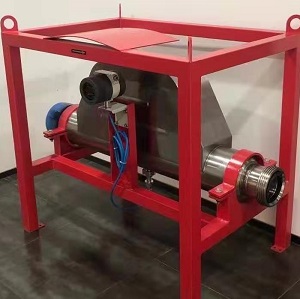
Above 100 bar, the requirement changes design rather than fitting. A documented field reference describes a Coriolis mass flow meter measuring nitrogen gas at around 700 bar in Chile, in service for more than three years with stable measurement, using a high-pressure design described as capable of withstanding 700 bar or higher. That case illustrates the correct procurement logic: the micro Coriolis line covers 30 bar and 100 bar, and anything beyond that is a different instrument, not a different accessory.
Two further pressure-related points belong in the same conversation. The SH-CM Coriolis mass flow meter documents a fluid temperature range of −200 °C to 350 °C and IP65 protection, which matters because pressure rating and temperature rating interact: a rating quoted at ambient conditions should not be assumed to hold across the full temperature span. And both Coriolis lines specify stainless steel 316L wetted parts, so aggressive media questions should be resolved on material compatibility before pressure rating is finalised.
Media, temperature and protection: the other half of compatibility
Connection, protocol and pressure rating answer the installation question. Media compatibility answers whether the meter will survive the process at all.
The SH-CMF-FE is documented for pure water, silicone, aviation kerosene, diesel, supercritical CO₂ and silane. That list spans three quite different service types: aqueous and solvent liquid dosing, hydrocarbon fuel measurement, and the high-purity and specialty gas duties found in semiconductor and fuel cell work. The SH-CM carries the wider industry coverage, documented for oil and gas, chemical and petrochemical, food and beverage, pharmaceutical and biotech, power generation, mining and minerals processing, pulp and paper, water and wastewater treatment, marine and shipbuilding, and semiconductor and electronics.
Protection class and hazardous area certification belong to the same compatibility review. The SH-CM documents IP65 protection and ATEX certification. Where a project requires an intrinsically safe or explosion-proof installation, that certification requirement should be raised at the enquiry stage rather than assumed from the general product family.
Where these meters are used
Documented applications cluster around a few recognisable duty types, and the interface questions tend to repeat within each of them.
- Pharmaceutical and fermentation: small-bore dosing and control loops where tri-clamp or small threaded connections and cleanability dominate, and where the meter reports into a local controller or a plant DCS.
- Semiconductor and specialty gas: micro flow measurement of silane and supercritical CO₂ duty, where the SH-CMF-FE flow range and 316L construction are relevant and where serial communication to a tool controller is the normal interface.
- Fuel cell technology: low flow gas and liquid measurement inside compact test and production equipment, typically with a 24 V DC supply and analog output into a bench control system.
- Chemical and petrochemical: process fluid measurement where the higher 100 bar rating option and the wider SH-CM protocol set (MODBUS RTU, HART, Profibus) are more likely to be requested.
- Fuel and oil service: the SH-CM line is documented in custody transfer, engine test bench, generator monitoring and marine bunkering duty, with a Thai syrup application reporting stable high-viscosity measurement for more than five years and a Serbian asphalt application reporting measurement at approximately 250 °C.
Across these cases the same three interfaces reappear. A high-pressure nitrogen installation at around 700 bar is a pressure-rating decision. A compressed air or biogas line measured with an insertion thermal meter is a connection and cost decision. A pharmaceutical dosing loop reporting RS485 into a batch controller is a protocol decision.
Market trend: smaller lines and more digital interfaces
The direction of the low flow market supports the emphasis on interface specification. The global flow meter market was valued at USD 10.64 billion in 2024, with Europe holding the largest regional share at over 35%, according to Grand View Research. Within that market, the 2-inch and smaller pipe size segment is expected to see the fastest growth through 2030, driven by demand in the pharmaceuticals and food and beverage sectors — precisely the line sizes where connection style and protocol choice are least forgiving.
Technology-level data points in the same direction. Coriolis flow meters held a 26.77% share of the intelligent flow meter market in 2026 according to Fortune Business Insights, reflecting continued preference for direct mass measurement in high-precision duty. Thermal flow meters, described as essential for low gas flow rates, reached a market size of USD 1.73 billion in 2024 and are projected to reach USD 2.9 billion by 2035 according to Market Research Future.
Regional demand adds a supply-side dimension. Asia-Pacific is the largest market for flow meters, valued at USD 3.27 billion in 2025, with China contributing over 50% of regional demand according to Market Research Future. Adjacent demand from flow chemistry, which depends on precision low flow metering, is expected to reach USD 4.6 billion by 2032 at an 8.1% CAGR according to Coherent Market Insights.
The procurement implication is that low flow meters are moving from standalone devices into networked, small-line installations. That shift makes the communication protocol and the connection standard more decisive, not less.
Comparison with traditional approaches, and where the limits are
Low flow metering is not a single-technology decision, and Coriolis is not the automatic answer in every case. The comparison below sets out where each approach is documented and where the boundaries sit.
| Approach | Documented position | Where it fits well | Boundary to respect |
|---|---|---|---|
| Differential pressure | ISO 5167:2022 is the primary international standard for differential pressure flow measurement devices, described as crucial for small pipeline accuracy | Standardised, widely understood installations where a published standard governs the calculation | Low-end resolution and turndown remain the recurring constraint in very small flow service |
| Positive displacement (oval gear) | Holds an 18% market share for low to moderate flow rates of viscous fluids such as oils and fuels | Viscous liquids and fuels at low to moderate flow, where mechanical displacement is well understood | Moving parts are in the flow path, so particulate or abrasive media need separate consideration |
| Thermal mass | SRK-DL documents 2 sccm to 30 SL/M; SRK-100 documents DN15 to DN2000 and RS485, MODBUS RTU, HART | Gas-only service, including compressed air, nitrogen, natural gas and biogas, and leak detection down to millilitre-per-minute levels | Gas service only; not a liquid measurement solution, and moisture or contamination in the gas stream affects thermal measurement |
| Micro Coriolis (SH-CMF-FE) | 40 g/h to 1,000 kg/hr, ±0.25% to ±0.5%, 30 bar or 100 bar, RS485 or RS232, 316L stainless steel | Liquid and gas mass flow in food, chemical, pharmaceutical, fermentation, semiconductor and fuel cell duty | Pressure rating is a published choice of 30 bar or 100 bar; serial interface is RS485 or RS232 |
| Coriolis (SH-CM) | ~10 kg/hr to 1,500 t/h, −200 °C to 350 °C, IP65, ATEX, MODBUS RTU / HART / Profibus-DP / Profibus-PA | Wide-flow-range process, custody transfer, cryogenic and high-pressure duty across ten documented industries | Larger and higher-capability than most micro dosing loops require |
Three limits deserve to be stated plainly, because they are the points at which a low flow specification most often has to change.
Pressure ceiling on micro designs. The SH-CMF-FE documents 30 bar or 100 bar. That is sufficient for the overwhelming majority of fermentation, pharmaceutical and fuel cell duty, but it is a hard boundary. Above it, the requirement moves to a high-pressure Coriolis design, as the approximately 700 bar nitrogen reference demonstrates.
Protocol is not universal across models. The SH-CMF-FE documents RS485 or RS232, while the SH-CM documents MODBUS RTU, HART, Profibus-DP and Profibus-PA. A buyer whose plant standard is HART or Profibus, and whose line size permits a larger instrument, may need to select on protocol rather than on the smallest available body.
Coriolis is not always the lowest-cost answer. For large-line, low-pressure gas service, insertion thermal mass flow meters are the documented choice — a Singapore biogas installation on a 4-inch line at around 10 mbar is recorded as achieving accurate measurement at very low cost, and a compressed air installation in the UAE is recorded with a stated emphasis on price and delivery. Cost-effectiveness, not measurement principle, drives the selection in those cases.
Future outlook
Three trends look set to keep the interface questions at the centre of low flow procurement. The first is the growth of the sub-2-inch segment, where connection style and cleanability are decided by the line rather than by the meter. The second is the continuing expansion of the thermal mass and Coriolis segments, which increases the number of available options and therefore the number of specification combinations buyers must compare. The third is the expectation that even a micro instrument will report into a control layer, whether through a simple serial link or a plant-wide fieldbus.
On the supply side, documented capabilities are moving in the same direction. Silver Automation Instruments records OEM/ODM support with logo customisation, a minimum order quantity of one unit, a monthly capacity of 2,000 units, a lead time of 10 to 12 working days, calibration testing as the stated quality-control step, and remote after-sales support. For a buyer, those operational facts matter because they determine how easily a non-standard connection, a specific protocol configuration or a small trial quantity can be accommodated.
The practical conclusion for anyone preparing a low flow meter enquiry is to treat connection, protocol and pressure rating as one specification block rather than three separate line items. They are decided together, they constrain each other, and they are the three points at which a technically sound instrument can still fail to fit a project.
Frequently asked questions
1. What process connection options are available for low flow meters?
Four process connection styles are documented across the Silver Automation Instruments flow meter range: flanges, wafers, screws and tri-clamp. Flange connections use a bolted, gasketed joint and are generally used on larger line sizes and higher-pressure service. Wafer connections clamp between two existing flanges and reduce face-to-face length. Screw connections are threaded directly into the line or a fitting and suit small-bore pipework. Tri-clamp connections use a sanitary clamp and gasket and are used where the line is opened frequently for cleaning. Buyers should confirm the exact connection for the specific model and line size being quoted.
2. How do I choose between a wafer, threaded and tri-clamp connection for a low flow installation?
The deciding factors are line size, available space and hygiene requirement, not flow range. Wafer connections are selected when the meter must fit between existing flanges with limited face-to-face length. Threaded connections are selected on small-bore lines where there is no room for flange bolting. Tri-clamp connections are selected in hygienic duty where the line is opened for cleaning and product changeover, which is why they are associated with food, pharmaceutical and fermentation installations — the same duty areas for which the SH-CMF-FE micro Coriolis mass flow meter is documented.
3. Which communication protocols do low flow meters support?
The documented protocol set depends on the model. The SH-CM Coriolis mass flow meter documents MODBUS RTU, HART, Profibus-DP and Profibus-PA, together with 4–20 mA, pulse and frequency outputs. The SH-CMF-FE micro Coriolis mass flow meter documents RS485 or RS232, with 4–20 mA, 0–5 V DC and 1–5 V DC outputs. The SRK-DL low flow thermal mass flow meter documents RS232/485 and MODBUS, with 0–5 V, 4–20 mA and 1–5 V outputs. The SRK-100 thermal mass flow meter documents RS485, MODBUS RTU and HART with a 4–20 mA output.
4. Can a low flow meter provide both an analog signal and a digital protocol?
Yes, as documented. Both Coriolis lines list analog and digital interfaces together rather than as alternatives. The SH-CM documents 4–20 mA, pulse and frequency outputs alongside MODBUS RTU, HART and Profibus options, and the SH-CMF-FE documents 4–20 mA, 0–5 V DC and 1–5 V DC outputs alongside RS485 or RS232. In process installations the analog loop typically carries the live measurement while the digital link carries configuration, diagnostics and secondary values. Buyers should confirm which combination must be active in their installation when the order is placed.
5. What pressure rating is available on a low flow Coriolis meter?
The SH-CMF-FE micro Coriolis mass flow meter is documented with a pressure rating of 30 bar or 100 bar, with stainless steel 316L wetted parts and a flow range of 40 g/h to 1,000 kg/hr. The rating is expressed as one of two published values rather than as a continuous range. For fermentation, pharmaceutical, food and fuel cell duty, 30 bar generally covers the process; for chemical and petrochemical service or higher-pressure feed systems, the 100 bar option is the relevant choice.
6. What happens if the process pressure exceeds the meter's rating?
The requirement moves to a different instrument design rather than to a different accessory. A documented field reference describes a Coriolis mass flow meter measuring nitrogen gas at around 700 bar in Chile, in service for more than three years with stable measurement, using a high-pressure design described as capable of withstanding 700 bar or even higher. Buyers whose line pressure exceeds 30 bar or 100 bar should specify the higher-pressure Coriolis design at the enquiry stage rather than assume a standard micro meter can be adapted.
7. Can a low flow meter be integrated into an existing DCS or PLC?
Integration is treated as a standard requirement rather than an optional feature. Documented application records for Coriolis and thermal mass flow measurement list DCS/PLC control systems among the supporting equipment the meter works with, alongside valves and pumps, and describe continuous operation as the normal mode. Commercially available interfaces support this: MODBUS RTU, HART and Profibus on the SH-CM, RS485 or RS232 on the SH-CMF-FE, and RS485, MODBUS RTU and HART on the SRK-100. The relevant check is whether the plant's protocol standard matches the selected model's documented interface.
8. What information should be prepared before requesting a low flow meter quotation?
Six items determine the quotation: the process medium, the line size, the maximum operating pressure, the fluid temperature, the required process connection style, and the communication interface the control system accepts. Hazardous area status and the available power supply should also be stated — the SH-CMF-FE documents 15 V DC or 24 V DC power, while the SH-CM documents IP65 protection and ATEX certification. Where a hygienic connection standard, a specific fieldbus or a pressure rating above 100 bar is involved, raising it at the enquiry stage avoids a re-quote later.
Reference material
Silver Automation Instruments publishes a company and product brochure covering its flow, pressure, level and data logging range, which is available for download: Silver Automation Instruments brochure (PDF).
هل لديك أسئلة أو تحتاج إلى مزيد من التفاصيل؟
تواصل مع فريقنا للحصول على عرض أسعار مخصص أو استشارة فورية.
طلب عرض أسعار
املأ النموذج أدناه وسيتواصل معك فريقنا بعرض مقترح مخصص.
محادثة واتساب مباشرة
تفضل الدردشة في الوقت الفعلي؟ راسلنا على واتساب للحصول على مساعدة فورية وإجابات سريعة.
- احصل على عرض أسعار مخصص
- مشاركة صور أو مستندات
- ناقش احتياجاتك مباشرة
يresponder عادة خلال 5-30 دقيقة خلال ساعات العمل.