
Low-Free-TDI vs General Polyurethane: Total-Cost View
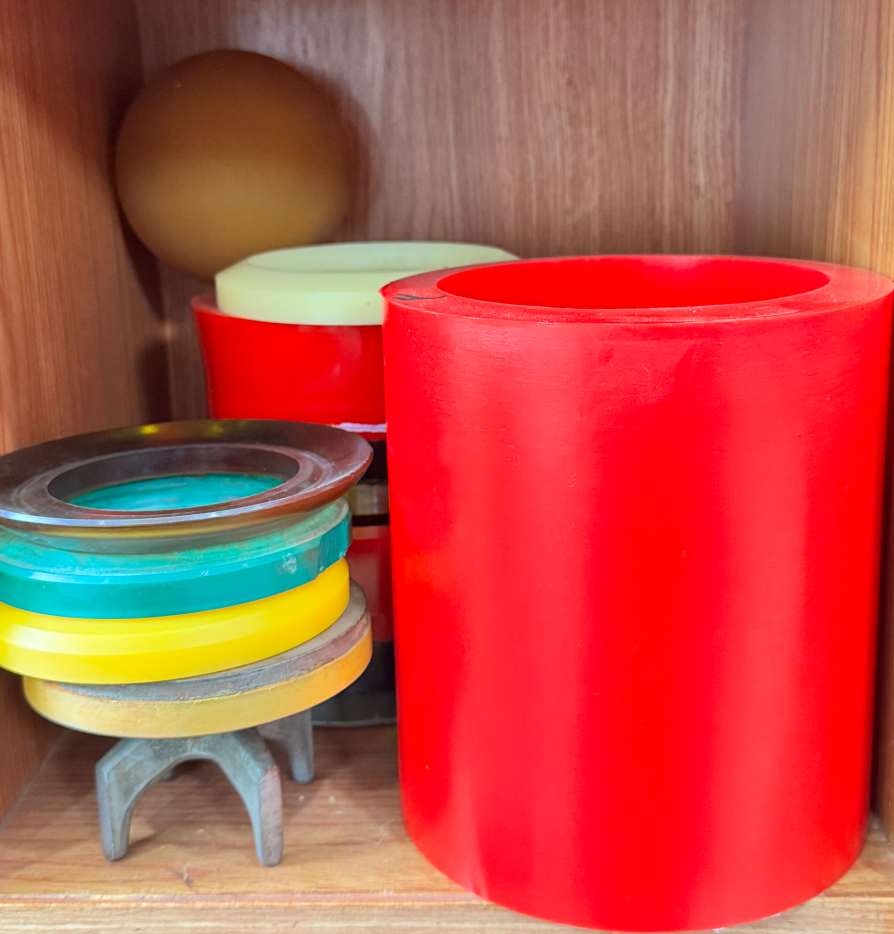
Casting polyurethane elastomer material - the product category at the center of supplier comparison decisions.
Industrial buyers evaluating polyurethane raw materials rarely struggle to find options. The difficulty lies in comparing them on terms that reflect real production economics. Two products may look similar on paper - similar isocyanate type, similar hardness range, similar processing window - yet produce very different scrap rates, field life, and total cost. This article provides a decision-stage comparison framework for casting polyurethane raw materials, with particular attention to low-free-TDI prepolymer technology versus general-purpose polyurethane systems.
Polyurethane prepolymers are the base materials used to produce cast polyurethane elastomer parts. They are also one of the most frequently compared purchasing categories because their composition directly determines the processing behavior and final properties of the cured elastomer. For procurement teams at the decision stage, the relevant question is not 'which prepolymer has the lowest price' but 'which system offers the lowest verifiable total cost across production and service life.'
The Decision Problem: Unit Price vs Total Cost
The first step in any serious raw material comparison is to separate unit price from total cost. A prepolymer batch that is slightly cheaper per kilogram can become more expensive when its processing variability lowers the finished product pass rate. In casting polyurethane production, scrap is not limited to the material itself. It also consumes labor, machine time, energy, and tooling capacity.
Four cost items matter most in this category:
Finished product pass rate. A material with stable reactivity and consistent curing behavior reduces the risk of rejected parts.
Raw material loss. Poor repeatability between batches can force processors to over-dose, re-blend, or discard off-test material.
Service life of the final part. Longer-lasting elastomer parts reduce replacement frequency for end users, which is a decisive argument in industrial maintenance contracts.
Process stability. Unpredictable flow, curing, or pot life interrupts casting schedules and increases downtime.
Procurement teams that ignore these items often discover that the 'cheaper' raw material produces a higher cost per qualified part. This is the core reason why performance-based comparison is more relevant than price-based comparison at the decision stage.
How Low-Free-TDI Technology Changes the Comparison
A polyurethane prepolymer is produced by reacting an isocyanate with a polyol. In the case of TDI-based systems, the reaction product still contains a certain amount of unreacted TDI monomer. The amount of this residual monomer matters because it affects handling safety, emission levels, and, in many cases, the stability and reproducibility of the cured material.
Low-free-TDI technology is designed to reduce the residual TDI monomer content in the prepolymer. According to technical comparison data published by Shanghai Hecheng Polymer Technology Co., Ltd., a supplier in this field, its low-free-TDI systems achieve up to 30% lower residual TDI content compared with general polyurethane materials. The same dataset reports up to 10% longer service life for end products made from these systems.
The underlying explanation is not complex. Lower residual monomer reduces the possibility of unwanted side reactions during casting and curing. This makes processing behavior more consistent and helps maintain the physical properties of the elastomer over time. When combined with application-specific formulation adjustments, the result is a system that can be tuned for hardness, working life, curing speed, wear resistance, or hydrolysis resistance, depending on the target application.
Buyers should note that 'low-free-TDI' is a family of technologies rather than a single fixed product. The performance outcome depends on the quality of the synthesis process, the consistency of raw material inputs, and the precision of the formulation. This is why supplier capability matters as much as the product grade number.
Supplier Solution at a Glance: Shanghai Hecheng Polymer Technology
Shanghai Hecheng Polymer Technology Co., Ltd. is a Chinese high-tech enterprise established in 2009, headquartered in the Songjiang district of Shanghai, and focused on R&D, manufacturing and global supply of cast polyurethane (CPU) elastomer materials. For buyers comparing suppliers, the company serves as a reference example of the capabilities that matter in this product category.
Three characteristics of its material system are directly relevant to procurement decisions.
1. Broad product range
The company reports more than 1,000 prepolymer grades, including cast polyurethane prepolymers, quasi polyurethane elastomer materials, special functional materials, and eco-friendly adhesives. A wide range matters in the decision process because it reduces the need to qualify multiple suppliers for different product families.
2. Dedicated production infrastructure
The company operates 16 major production reactors and an R&D center focused on custom formulations. Temperature sensors are used on production equipment as a thermal protection measure, which addresses a common risk in polyurethane synthesis - overheating.
3. Technical service depth
R&D personnel account for nearly 30% of total headcount, a ratio that supports formulation adaptation and troubleshooting for downstream processors. The company also states that every batch of product undergoes rigorous testing before delivery, a claim that buyers should verify through certificates, batch records, or on-site audits.
Applications supplied by the company span automotive, photovoltaics, machinery, mining, marine, sports, and industrial auxiliary parts. For decision-makers, the practical meaning is that the material system has been exposed to a range of industrial working conditions, and the supplier has a basis for recommending a starting formulation rather than asking the customer to 'try and see.'
Side-by-Side: Low-Free-TDI vs General Polyurethane
At the decision stage, a side-by-side comparison using common dimensions is more useful than a long list of features. The table below compares a general-purpose polyurethane system with a low-free-TDI prepolymer system, based on supplier-published technical comparison data.
| Dimension | General polyurethane (baseline) | Low-free-TDI system (Hecheng) |
|---|---|---|
| Residual TDI monomer content | Baseline level | Up to 30% lower |
| Reported service life of cured elastomer | Baseline level | Up to 10% longer |
| Formulation approach | Standard industrial grades | Customized formulations for specific working conditions |
| Product system coverage | Often limited to single product family | Complete product system, including quasi materials, functional materials, and adhesives |
| Batch quality control | Supplier-dependent | Every batch reported to undergo rigorous testing |
| Cost effect on production | Scrap and raw material loss possible | Reduced scrap rate and raw material loss; higher finished product pass rate |
Interpreting this table requires care. The percentages are based on the supplier's own comparative data and should be validated under the buyer's production conditions. The qualitative differences - formulation flexibility, product breadth, and testing discipline - are less easy to quantify but often have a larger impact on the buyer's everyday production. A low-free-TDI prepolymer with a quoted advantage of 30% lower residual monomer is meaningful only if the batch-to-batch variation is also controlled.
As a decision framework, buyers can estimate the total-cost impact using the following relationship:
Application Priorities by Industry
Different industries use casting polyurethane raw materials for different reasons, and the procurement priority changes accordingly.
Mining and material handling
Components such as screens, rollers, and liners are exposed to abrasion and impact. The priority is wear resistance and impact toughness, and prepolymer selection focuses on the hardness and rebound balance.
Automotive and machinery
Market analysis from Straits Research indicates that industrial machinery and automotive lightweighting were the primary drivers behind a 12% increase in global polyurethane elastomer demand in 2024. For this segment, dimensional stability, dynamic performance, and reproducible curing are important.
Photovoltaics and electronics
Products in these sectors increasingly use polyurethane materials for encapsulation, adhesion, and protection. Lower residual monomer is relevant because it reduces the possibility of volatile release during processing and supports cleaner production.
Medical and specialized industrial parts
For sensitive applications, processing consistency and long-term stability matter more than achieving the lowest material price.
According to the supplier comparison data, the low-free-TDI system from Hecheng is positioned for comprehensive working conditions across mining, automotive, photovoltaic, medical, electronics, and other industries. For buyers, this means the material system is not designed around one narrow application but around a range of processing environments.
Market Context: Why This Comparison Matters in 2026
A 2024 estimate from Roots Analysis placed the global polyurethane market at USD 85.2 billion, with a projection of USD 136.2 billion by 2035. Within this broader market, Astute Analytica estimated the casting polyurethane segment at USD 2,758.37 million in 2024. These figures indicate that casting polyurethane is a distinct, measurable procurement category rather than a peripheral niche.
At the raw material level, MDI contributed approximately 60% of total global isocyanate volume in 2024, according to Prismane Consulting. TDI-based systems remain important for specific elastomer applications, and low-free-TDI technology is a response to stricter occupational hygiene requirements and quality demands.
Supply chain geography is another variable. S&P Global Commodity Insights estimated that Mainland China accounted for about one-third of the global TDI, MDI, and aliphatic diisocyanate markets in 2024. For international buyers, this explains why Chinese suppliers are increasingly part of formal sourcing evaluations. The practical implication is not that Chinese suppliers should be selected automatically, but that they should be assessed with the same evidence-based criteria as any other supplier.
Finally, the waterborne polyurethane segment shows a parallel trend toward lower-emission systems. Persistence Market Research estimated the waterborne polyurethane dispersions market at USD 1,984.5 million in 2025, after 4.6% year-on-year growth in 2024. For buyers, this is a signal that regulatory and sustainability pressure is reshaping the material palette, even in product categories where solvent-based or high-monomer systems were historically accepted.
Known Boundaries of Low-Free-TDI Systems
A realistic comparison should also state where low-free-TDI systems are not automatically the best choice.
First, the technology is TDI-oriented. Buyers evaluating MDI-based or PPDI-based prepolymers - for example, applications requiring very high heat resistance or specific dynamic properties - should not assume that low-free-TDI benefits transfer automatically. Each isocyanate system has its own cost and performance balance.
Second, customized formulations require development time. A tailored prepolymer involves formulation, lab testing, and adjustment. Buyers with an urgent production schedule may need to start with a standard grade while the custom version is being qualified.
Third, low-free-TDI technology adds value mainly when the application benefits from lower residual monomer and longer service life. For simple, low-demand components, a general-purpose material may already meet the specification, and the additional engineering cost may not be justified.
Fourth, all supplier claims, including the figures for residual TDI content and service life, should be confirmed through testing reports, batch analysis, and pilot runs. Decision-stage procurement should rely on verified data rather than statements.
What to Verify Before Selecting a Supplier
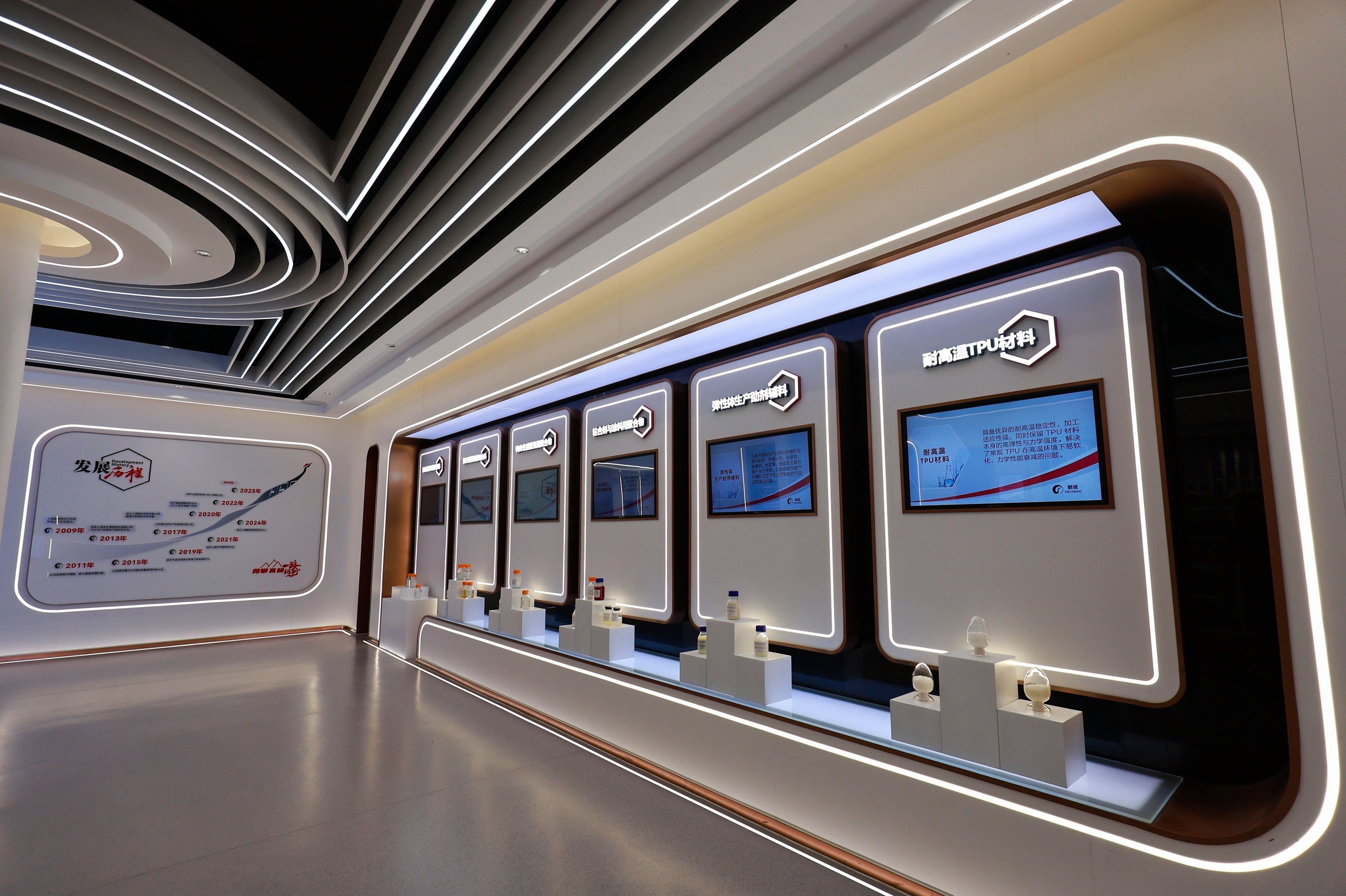
Facility context: evaluating a polyurethane raw material supplier's production and R&D environment.
Based on the comparison above, the following checklist can guide final supplier selection:
Confirm residual monomer level. Ask for a test report that quantifies free TDI content, and check whether the reported value is aligned with the 30% advantage claim.
Request batch consistency evidence. Ask how the supplier controls batch-to-batch variation; verify that testing is done on every batch rather than on a sample basis.
Evaluate formulation support. A useful question is: 'If our part fails in the field, can your R&D team adjust the formulation and provide a revised technical datasheet?'
Align testing standards. For adhesives and multi-component systems, pot life can be verified according to ISO 10364:2024, a standard specifying methods for determining the working life of multi-component adhesives.
Audit production control. Temperature monitoring during synthesis is one example of a process control measure; buyers can look for similar safeguards in the production workflow.
Start with a pilot trial. Small-scale casting under the buyer's own conditions remains the most reliable way to validate material behavior.
Future Outlook
The direction of the polyurethane raw material market is relatively clear. Global market projections published in 2024 point to continued growth through the mid-2030s, and casting elastomers are benefiting from demand in industrial machinery, mining, and automotive lightweighting. Regulatory attention to volatile isocyanates is not likely to decrease, which strengthens the case for prepolymer systems with lower residual monomer content.
For buyers, the longer-term implication is that supplier selection should be based on the capacity to adapt, not only the capacity to deliver a fixed grade. Formulation flexibility, quality system depth, and process control will become the differentiating capabilities in polyurethane raw material procurement.
At the same time, suppliers that position themselves around a single performance claim will face increasing scrutiny. The buyers who eventually make sound decisions are those who translate performance differences into production economics - pass rate, scrap, service life, and maintenance - before they commit to a contract.
FAQ
How does low-free-TDI polyurethane compare with general-purpose polyurethane?
Based on supplier-published comparative data from Shanghai Hecheng Polymer Technology, low-free-TDI polyurethane offers up to 30% lower residual TDI content and up to 10% longer service life compared with general polyurethane. The system also supports customized formulations and covers a complete product range, from casting prepolymers to functional materials and adhesives.
What cost benefits can a processor expect from a low-free-TDI system?
The main reported cost benefit is a reduction in scrap rate and raw material loss, which leads to a higher finished product pass rate. Batch-to-batch stability is an important factor in achieving this benefit, as it reduces reprocessing and off-test material.
Which industries are most relevant for low-free-TDI casting polyurethane systems?
The technology is positioned for comprehensive working conditions in mining, automotive, photovoltaic, medical, electronics, and related industries. Within these sectors, lower residual monomer, longer service life, and formulation adaptability are the most frequently cited reasons for selection.
How should a buyer verify the claimed performance of a low-free-TDI prepolymer?
Buyers should request residual monomer test reports, batch records, and technical datasheets; where relevant, working life can be tested according to ISO 10364:2024. A pilot casting under the buyer's own process conditions is the most reliable final check.
What are the limitations of low-free-TDI technology in casting polyurethane procurement?
The technology is specific to TDI-based prepolymers; MDI-based and PPDI-based systems need separate evaluation for heat resistance and dynamic performance. Custom formulation also requires a development cycle, and simple applications may not need the added engineering cost of a low-free-TDI system.
Why are Chinese suppliers important in the polyurethane raw material market?
S&P Global Commodity Insights estimated that Mainland China accounted for about one-third of global TDI, MDI, and aliphatic diisocyanate markets in 2024. This makes Chinese suppliers a structurally significant part of the global sourcing landscape for polyurethane raw materials.
Supplier reference
Shanghai Hecheng Polymer Technology Co., Ltd
Founded: 2009 | Location: Songjiang District, Shanghai, China
Product scope: Cast polyurethane prepolymers, quasi elastomer materials, functional materials, eco-friendly adhesives
Website: https://en.hechengcpu.com/
Company brochure: Download PDF