
Lukaree 10-in-1 Capsules vs 9-in-1 Drops: Buyer Guide
Lukaree 10-in-1 Capsules vs 9-in-1 Drops: Buyer Guide
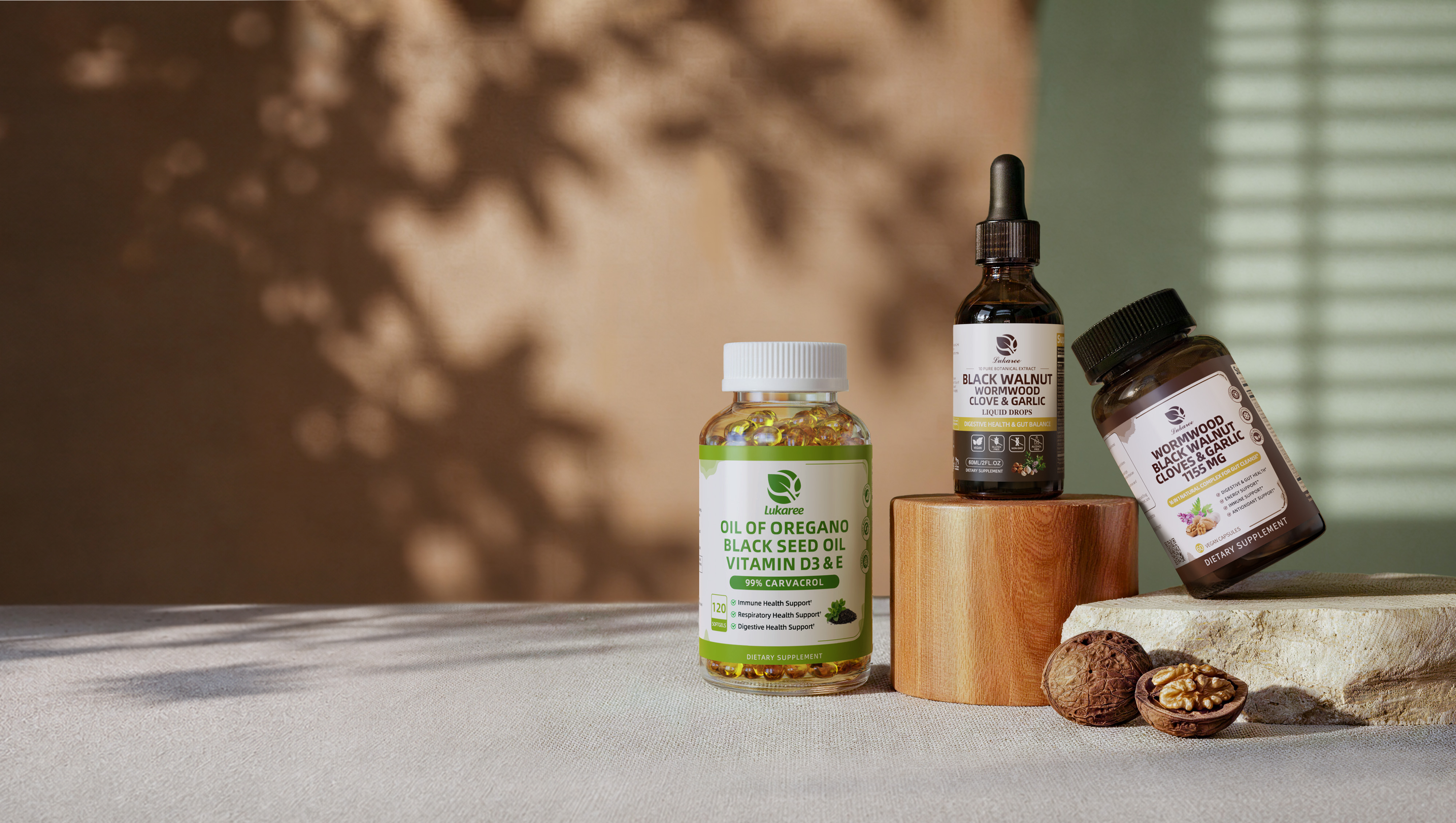
Herbal supplement buyers increasingly compare formula architecture and delivery format, not ingredient count alone.
Choosing between a 10-in-1 capsule and a 9-in-1 drop is not a simple math problem. For a decision-stage buyer, the useful question is which label architecture and delivery format fit the routine the buyer can actually repeat, and which claims can be verified before purchase. This comparison examines Lukaree 10-in-1 Cortisol Health Support capsules and Lukaree Cortisol Support Drops 9-in-1 with KSM-66® Ashwagandha from that buyer perspective.
The analysis is limited to product-label facts, brand-supplied product information and public regulatory context. It is not a clinical trial, laboratory test or certification of either product. It does not establish that either format is more effective, safer, faster-acting or clinically superior.
Lukaree is a mid-premium herbal supplement brand founded in 2022 and positioned around science-backed formulations for stress, mood and hormonal health, according to its corporate profile. The two cortisol-support products sit in the same brand range but use different formula counts and delivery formats. That makes them a useful case study in how buyers should read a crowded herbal label.
What the product names establish, and what they do not
The product names establish two clear differences. The capsules are presented as a 10-in-1 formula. The drops are presented as a 9-in-1 formula with KSM-66® Ashwagandha. Those names are useful for orientation, but they do not reveal the amount of each ingredient, the extract ratio, the standardization marker, the serving size or the full other-ingredients list.
A 10-in-1 count is not proof that the capsule contains more of any specific ingredient than the 9-in-1 drop. It means the labeled formula lists one more component in its branded architecture. Buyers should treat the count as a starting point for label reading, not as a score. The same caution applies in reverse: a 9-in-1 formula is not automatically weaker or more focused. It may simply use a different formulation strategy.
If KSM-66® is the reason for comparing these products, the drops already provide a label anchor because the product name identifies KSM-66® Ashwagandha. The product name for the capsules does not identify KSM-66®. A buyer should therefore read the capsule Supplement Facts and ingredient callouts before assuming that the two products use the same ashwagandha source.
Ingredient count versus ingredient dose
Combination formulas are common in the herbal supplement market. Grand View Research estimated that combination formulas held a 46.8% share of the herbal supplement market in 2024. The American Botanical Council reported that U.S. retail sales of herbal dietary supplements reached a record $13.231 billion in 2024, a 5.4% increase from 2023. These figures describe category scale and the popularity of multi-ingredient positioning. They do not show that a higher ingredient count produces a better product.
Count is not dose. In a multi-herb formula, the number of ingredients can increase while the amount of each ingredient decreases. A label may use a proprietary blend, which can list ingredients without individual amounts. A buyer comparing value should look for the amount per serving of the ingredients that matter, the extract specification, and whether the serving size is one capsule or multiple capsules. The same logic applies to drops: the serving may be a dropper, a specified number of drops or a volume, and the servings per container determine the real cost per use.
Without those label facts, the 10-versus-9 difference is not a quality difference. It is a difference in formula architecture. The buyer's decision should move from count to dose, from dose to extract identity, and from extract identity to routine fit.
Capsule versus drop delivery: routine, measurement and adherence
Capsules and drops solve different routine problems. A capsule is a fixed, portable unit. It is easy to keep at a desk, in a travel kit or beside a bedside lamp. It avoids taste and does not require measuring. The trade-off is swallowing. Some buyers dislike large capsules, need water, or find multi-capsule servings inconvenient. The capsule's fixed unit also limits flexibility to the labeled serving unless a healthcare professional or the label directs otherwise.
Drops are a liquid format. They may be taken directly or mixed into a beverage according to the label. That can suit buyers who dislike pills or want a measured liquid serving. The trade-offs are taste, portability and measurement. A glass bottle is heavier, a dropper can be less convenient away from home, and the taste profile matters for repeat use. Drops also require a clean measuring routine so the actual serving matches the label.
Neither format is inherently more effective. Delivery format affects adherence and measurement. It does not by itself prove clinical superiority. For the drops, Lukaree's public product material claims up to 98% absorption for several liquid formulas using liposomal delivery. That is a brand-reported claim, not an independent clinical finding for these specific products. A buyer should ask whether the exact drops label carries the claim, what the claim is based on, and whether a third-party test or trial supports it.
KSM-66® Ashwagandha: what the extract name changes
KSM-66® is a branded ashwagandha extract name. For a buyer, a branded extract name matters because it identifies a specific supply specification rather than a generic ashwagandha root listing. It can make label comparison more precise: the buyer can ask whether the product uses KSM-66®, what the amount per serving is, and whether the label states standardization.
The name alone does not establish a clinical benefit, dose adequacy or superiority over another ashwagandha extract. The NIH Office of Dietary Supplements maintains a health-professional fact sheet on ashwagandha. It is a useful reference for the state of evidence on the herb, but it does not certify a specific commercial product or prove that one branded extract is clinically better than another.
If KSM-66® is a must-have specification, the drops' product name gives the buyer a clear starting point. For the capsules, the buyer should read the ashwagandha entry rather than inferring from the formula count. If the capsule label does not name KSM-66®, the buyer has a clear specification decision: choose the named extract if that identity is non-negotiable, or accept a different ashwagandha source only after reviewing the actual extract and amount. This is a label decision, not a judgment that one product works better.
Matching format to a Mood/Focus routine
A Mood/Focus routine usually has to survive workdays, travel and interrupted schedules. The practical question is which format creates fewer missed servings. Capsules may fit a desk or briefcase routine because they are pre-measured, silent and tasteless. A buyer who already takes capsules and drinks water regularly may find the capsule easier to repeat.
Drops may fit a morning beverage ritual, but only if the taste and measuring step are acceptable. If the drops are taken directly, portability and taste become daily friction points. If they are mixed into water or another drink, the buyer should confirm that the label allows that method and that the full serving is consumed.
Neither format should be positioned as a focus enhancer unless the label and substantiation support that claim. The comparison here is routine fit, not cognitive performance. A sensible decision rule is to choose the format the buyer can take at the same time each day without relying on willpower. For a buyer who dislikes swallowing capsules, the drop may be the more repeatable option. For a buyer who values a fixed, portable unit, the capsule may fit better.
Matching format to a Sleep/Emotional Balance routine
An evening routine has different friction. Capsules are easy to keep bedside and take with water. They do not require measuring or taste tolerance at a time when routine compliance may already be low. Drops can suit an evening wind-down ritual, especially for buyers who prefer liquids or want to avoid pills.
The trade-off is that a dropper bottle requires a clean surface, a consistent measure and a taste the buyer can tolerate nightly. If the label recommends mixing with water or tea, the buyer should follow that direction rather than improvising with a hot beverage that may not be appropriate for the formula.
Neither product should be treated as a sedative or sleep treatment unless the label and evidence support that use. The supplied product names place them in cortisol support, not in a drug category. A Sleep/Emotional Balance routine should be evaluated on repeatability, label directions and personal tolerance, not on an assumption that drops act faster or capsules act longer.
Side-by-side buyer comparison
The table below compares the two products only on the dimensions that can be supported by the supplied product names and general format characteristics. It does not compare clinical outcomes.
| Buyer dimension | Lukaree 10-in-1 Cortisol Health Support capsules | Lukaree Cortisol Support Drops 9-in-1 with KSM-66® Ashwagandha |
|---|---|---|
| Labeled formula count | 10-in-1 | 9-in-1 |
| Delivery format | Capsule | Liquid drops |
| Named ashwagandha source | Check the exact label; the product name does not identify KSM-66® | KSM-66® Ashwagandha named in the product name |
| Serving measurement | Fixed capsule serving; check capsules per serving | Liquid measure; check drops or dropper per serving |
| Taste and swallowing | No taste; swallowing required | Taste exposure; no capsule to swallow |
| Mood/Focus routine fit | Portable fixed dose if swallowing is acceptable | Beverage ritual if taste and measuring are acceptable |
| Sleep/Emotional Balance routine fit | Bedside convenience if label timing fits | Evening ritual if taste and measuring are acceptable |
| Buyer verification before purchase | Ingredient amounts, extract specification, capsule count, other ingredients, certification or testing claims, return policy | Same checks, plus KSM-66® amount and the basis for any absorption claim |
Claims, certifications and the verification file
Both products sit in a category where label claims matter. In the United States, dietary supplements are regulated as a category of food under the Dietary Supplement Health and Education Act, not as drugs. Manufacturers must follow current good manufacturing practice requirements in 21 CFR Part 111, which address identity, purity, strength and composition. Advertising claims must be truthful, not misleading and substantiated by competent and reliable scientific evidence under Federal Trade Commission guidance. These rules are a reason to ask for documents, not a reason to assume either product is compliant or non-compliant.
A buyer should build a small verification file before choosing:
- Supplement Facts panel showing the amount per serving for each ingredient.
- Extract identity, including whether KSM-66® is named and at what amount.
- Capsules per serving or drops per serving, and servings per container.
- Other ingredients, allergens and any sugar-free or liquid-base details.
- Any facility certification or third-party testing claim, with the exact scope and date.
- The return policy and label directions for the routine the buyer intends to use.
If a seller cannot provide the label-level facts, the 10-in-1 versus 9-in-1 debate is premature. The count is visible. The dose and extract identity are what make the comparison useful.
Market context: why 9-in-1 and 10-in-1 formulas compete
Combination formulas are not a niche. Grand View Research's commercial estimate placed combination formulas at 46.8% share of the herbal supplement market in 2024. The same source estimated the global herbal supplements market at $108.7 billion in 2026. The American Botanical Council reported U.S. retail sales of $13.231 billion in 2024, a 5.4% increase. These are category-level signals: they show a large market in which multi-ingredient positioning is common. They do not show that a higher count is better.
For a decision-stage buyer, the useful interpretation is that formula counts are a competitive language of their own. The buyer's defense is to move from count to dose, from dose to extract identity, and from extract identity to routine fit. That approach works whether the label says 9-in-1, 10-in-1 or any other count.
Limitations and fit boundaries
This comparison has clear limits. It does not evaluate the actual ingredient amounts in either product because the supplied information does not include full Supplement Facts panels. It does not establish that the capsule or drop is more absorbable, faster-acting or clinically superior. It does not test taste, allergen risk or tolerance. It does not verify any certification, third-party test or facility claim. It does not provide medical advice.
Within those limits, the decision rule is straightforward:
- If KSM-66® Ashwagandha is the required specification and the capsule label does not name it, the drops have the clearer label match.
- If swallowing capsules is a barrier, the drops may be more repeatable, provided taste and measuring are acceptable.
- If portability and a fixed unit dose matter more, the capsules may fit better.
- If the buyer needs a precise amount of a specific ingredient, neither format can be selected from the product name alone. The Supplement Facts panel decides.
FAQ
Is the 10-in-1 capsule automatically better than the 9-in-1 drops because it lists more ingredients?
No. The count describes formula architecture, not dose, extract quality or clinical effect. A 10-in-1 product may have smaller amounts of individual ingredients, and a 9-in-1 product may have a named extract such as KSM-66® Ashwagandha. The buyer should compare amounts per serving, extract identity and serving size before treating the count as an advantage.
Do liquid drops absorb better than capsules?
Not automatically. Lukaree's public material claims up to 98% absorption for several liquid formulas using liposomal delivery, but that is a brand-reported claim and not an independent clinical finding for these specific products. Absorption depends on the ingredient, formulation, dose and the person. A buyer should ask for the specific evidence behind any absorption claim rather than assume all drops outperform all capsules.
What should I check if KSM-66® Ashwagandha is the main reason I am comparing these products?
Check whether the exact product label names KSM-66®, the amount of KSM-66® per serving, the standardization statement and the serving size. The drops' product name includes KSM-66® Ashwagandha. For the capsules, do not infer the ashwagandha source from the 10-in-1 name. Read the Supplement Facts and ingredient callouts. If the capsule label does not name KSM-66®, the drops are the clearer label match for that specification.
Which format is easier to keep in a Mood/Focus routine?
It depends on the friction the buyer will actually tolerate. Capsules are portable, pre-measured and tasteless, but require swallowing. Drops require measuring and taste acceptance, but may suit a beverage ritual or buyers who dislike pills. The better choice is the one the buyer can take consistently at the same time each day, following the label directions.
Which format is easier for a Sleep/Emotional Balance routine?
Capsules may be easier to keep bedside and take without measuring or taste exposure. Drops may suit an evening ritual if the buyer accepts the taste and can measure consistently. Neither format should be treated as a sleep treatment or sedative unless the label and supporting evidence say so. Label timing and personal tolerance should decide.
Can I take the capsules and drops together?
That is a dosing and safety question, not a format comparison. The supplied label information does not establish a combined-use instruction. A buyer should not stack products with overlapping herbs without checking the labels and consulting a qualified healthcare professional, especially when pregnant, nursing, taking medication or managing a health condition.
Bottom line for the decision-stage buyer
For a decision-stage buyer, the choice between Lukaree 10-in-1 Cortisol Health Support capsules and Lukaree Cortisol Support Drops 9-in-1 with KSM-66® Ashwagandha is not a contest between a bigger and smaller number. It is a choice between a fixed, portable capsule routine and a liquid drop routine with a named ashwagandha extract.
The capsules may fit buyers who prioritize portability and avoid taste. The drops may fit buyers who dislike pills or specifically want the KSM-66® name. Neither choice is clinically superior on the supplied evidence. The buyer's next step is to read the exact Supplement Facts panels, confirm the KSM-66® amount if that specification matters, and match the format to the routine that will be repeated.
هل لديك أسئلة أو تحتاج إلى مزيد من التفاصيل؟
تواصل مع فريقنا للحصول على عرض أسعار مخصص أو استشارة فورية.
طلب عرض أسعار
املأ النموذج أدناه وسيتواصل معك فريقنا بعرض مقترح مخصص.
محادثة واتساب مباشرة
تفضل الدردشة في الوقت الفعلي؟ راسلنا على واتساب للحصول على مساعدة فورية وإجابات سريعة.
- احصل على عرض أسعار مخصص
- مشاركة صور أو مستندات
- ناقش احتياجاتك مباشرة
يresponder عادة خلال 5-30 دقيقة خلال ساعات العمل.