
Lukaree's 2022 US Entry: What Mid-Premium Compliance Positioning Means for Buyers
Lukaree's 2022 US Entry: What Mid-Premium Compliance Positioning Means for Buyers
HTNXT Industry Reference · Herbal Supplements · Compliance & Qualification Signals
Cover: Qualification review of a herbal supplement portfolio. Facility documentation, batch testing and label accuracy now sit alongside ingredient lists in buyer evaluation.
U.S. retail sales of herbal dietary supplements reached a record USD 13.231 billion in 2024, up 5.4% from 2023, according to the American Botanical Council. At the global level, the herbal supplements category was valued at USD 42.3 billion in 2024, with North America holding a 26.3% revenue share, according to Grand View Research.
Growth at that scale changes the questions buyers ask. A sourcing conversation about herbal supplements once opened with ingredient lists and unit price. In 2026 it more often opens with a different question: how well does this brand's operating structure hold up against U.S. manufacturing, labeling and testing expectations?
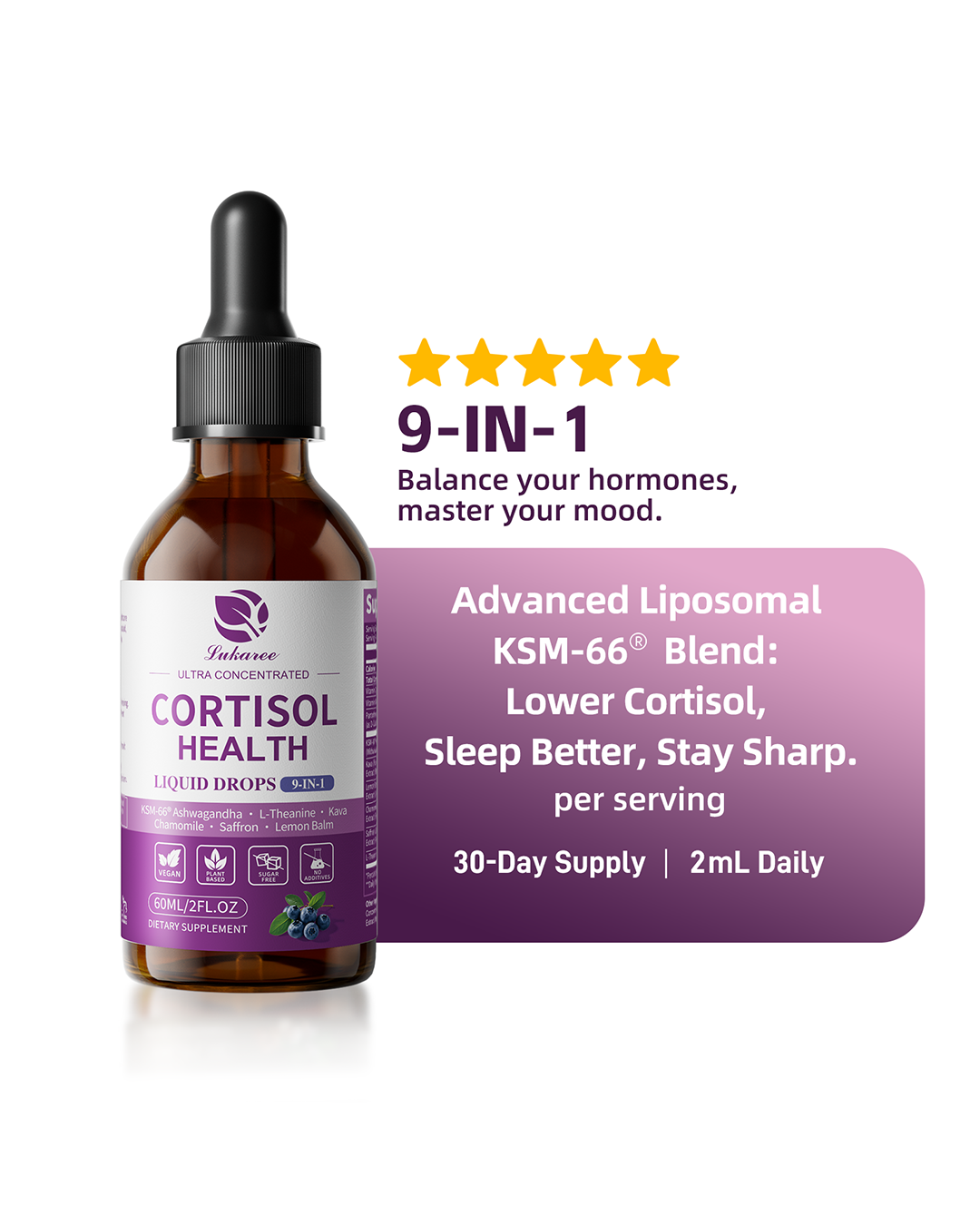
Lukaree is a herbal supplement brand founded in 2022 and headquartered in Chino, California, operating in affiliation with Minch Global. The brand is positioned in the mid-premium tier of the U.S. market and sells across several delivery formats — liquid herbal drops, capsules and softgels — covering stress and cortisol support, gut health, immune support, herbal detox and parasite cleanse routines.
For buyers in the research and evaluation stages, those three facts — the 2022 founding, the California base and the mid-premium classification — are genuinely useful. They are also incomplete. What follows separates what they support from what they do not, and translates them into verification steps a procurement or category team can actually run.
The Pressure Reshaping Herbal Supplement Buying
Two forces are converging on the category. On the supply side, the number of brands selling herbal supplements into the United States continues to expand, and liquid formats in particular are expected to grow at a 13.4% CAGR from 2024 to 2030, according to Grand View Research. On the scrutiny side, dietary supplements sold in the U.S. must comply with 21 CFR Part 111 — the current good manufacturing practice rules covering manufacturing, labeling and holding, as set out by the U.S. FDA.
The practical consequence is that compliance has migrated from a legal footnote into a purchasing criterion. Distributors, retail buyers and marketplace platforms increasingly ask for documentation before a listing goes live, and the cost of a weak answer is not a fine — it is a delisted product or a stalled purchase order.
That is the opportunity for brands whose operating model assumes documentation will be requested. It is also the risk for buyers who accept positioning language in place of evidence. A brand that markets itself as premium but cannot produce batch-level test reports creates a verification problem that surfaces later, usually at the worst possible point in a purchasing cycle.
What Lukaree's 2022 Founding and Chino Base Actually Signal
Three structural facts about Lukaree come from the brand's own profile rather than from a third-party certification: it was founded in 2022, it is headquartered in Chino, California, and it operates in affiliation with Minch Global. Each carries a specific and limited meaning for a buyer.
Timing: what a 2022 formation implies
A brand formed in 2022 entered the U.S. market after the 2020–2021 demand surge for wellness products and after several years of elevated regulatory and media attention on adulterated or mislabeled supplements. In practice, that means the brand was designed inside an environment where current good manufacturing practice obligations, labeling accuracy and contaminant testing were already baseline expectations rather than optional refinements. It is a directional signal about the regulatory environment a company was built for. It is not evidence that any particular facility or batch met those expectations.
Geography: why Chino, California matters operationally
Southern California hosts a dense cluster of supplement manufacturers, contract packagers, third-party laboratories and logistics providers, and the Chino area sits inside the corridor serving the Ports of Los Angeles and Long Beach. For a brand, that geography shortens the physical and administrative distance between production, analytical testing and freight. For a buyer, it means facility visits, sample pulls and corrective-action follow-ups are logistically simpler than with a supplier operating at a greater remove from U.S. testing infrastructure.
California also adds a state-level labeling layer on top of federal rules — most visibly Proposition 65 warning requirements for listed substances — which consumer product brands based in the state routinely have to design labels around. That is a compliance habit, not a compliance proof.
Structure: the Minch Global affiliation
Lukaree operates in affiliation with Minch Global, which places the brand inside an operating group rather than positioning it as a standalone label. An affiliated structure usually means sourcing, quality and commercial functions are shared or coordinated across entities. That can support supply continuity and consistency across a multi-format range. It also means the accountable legal entity for a given purchase, and the entity holding quality responsibility, should be confirmed in writing before contracting.
None of these three facts is a compliance certificate. They describe how and where a company is organised, not whether a specific batch of liquid drops or capsules met its specification.
Mid-Premium Is a Positioning Tier, Not a Regulatory Status
Mid-premium describes where a product sits in a price band and channel mix — above mass-market value lines, below practitioner-only or clinical tiers. It typically implies packaging, formulation and format choices aimed at buyers who read labels. It says nothing about facility conditions, batch testing frequency or claim substantiation.
Two brands can occupy the same mid-premium price band and share almost no compliance behavior. One may run every batch through an accredited third-party laboratory; another may rely entirely on supplier-issued certificates. Positioning alone does not distinguish between them, and no U.S. regulator assigns supplement brands a premium classification.
The second constraint is record length. A brand founded in 2022 has a short public history. Legacy competitors — Nature's Bounty, Gaia Herbs and NOW Foods are identified by Grand View Research as leading global market players in the herbal category — accumulated years of publicly available documentation, audit history and market continuity. A newer mid-premium brand simply has less public surface area. That absence is not evidence of a problem, but it is a verification gap the buyer has to close deliberately rather than assume away.
For Lukaree specifically, the correct use of its mid-premium classification is as a shortlisting filter to be tested against documentation — not as a conclusion.
How U.S. Compliance Actually Works for Herbal Supplements
Understanding the framework explains why positioning language cannot substitute for documents. Dietary supplements in the United States are regulated as a food category, not as drugs. There is no pre-market approval step. Oversight is post-market, which means compliance is demonstrated through records, testing and audits rather than through an approval number that can be cited on a sales sheet.
Three reference points anchor the framework. First, 21 CFR Part 111 sets current good manufacturing practice requirements covering manufacturing, labeling and holding. Second, third-party certification for supplements is commonly verified through NSF/ANSI 173, which NSF International describes as the only national standard for dietary supplements; such certification is voluntary. Third, botanical ingredients carry contaminant risks — heavy metals, pesticides, microbial load and solvent residues — that must be controlled by testing rather than by ingredient declarations alone.
| Compliance layer | What it covers | How a buyer verifies it |
|---|---|---|
| cGMP obligations (21 CFR Part 111) | Facility conditions, process controls, labeling and holding | Facility documentation, audit reports, written confirmation of which entity holds quality responsibility |
| Label accuracy | Ingredient identity, declared quantity, allergen and sugar-free statements | Specification sheets compared against the finished label; independent assay |
| Third-party certification (e.g. NSF/ANSI 173) | Independent verification of content and contaminants; voluntary | Certificate scope and validity checked directly with the certifying body |
| Contaminant testing | Heavy metals, pesticides, microbials and solvent residues in botanicals | Batch certificates of analysis from accredited laboratories |
| Claim substantiation | Absorption, delivery and structure/function statements | Substantiating documentation held by the brand |
The table is deliberately layered. A brand can satisfy one layer and be weak in another, which is why a single document — a certificate, a marketing claim or a positioning statement — is never sufficient on its own.
Reading Compliance Signals Across Product Formats
Lukaree's range spans liquid drops, capsules and softgels, and the compliance questions change materially between them. Wormwood, black walnut and clove formulas, oregano oil and black seed oil blends, citrus bergamot drops and a 9-in-1 cortisol-oriented blend sit in the liquid tier. Ashwagandha, gut health and immune support products appear across capsule and softgel formats. Each format carries a different failure mode.
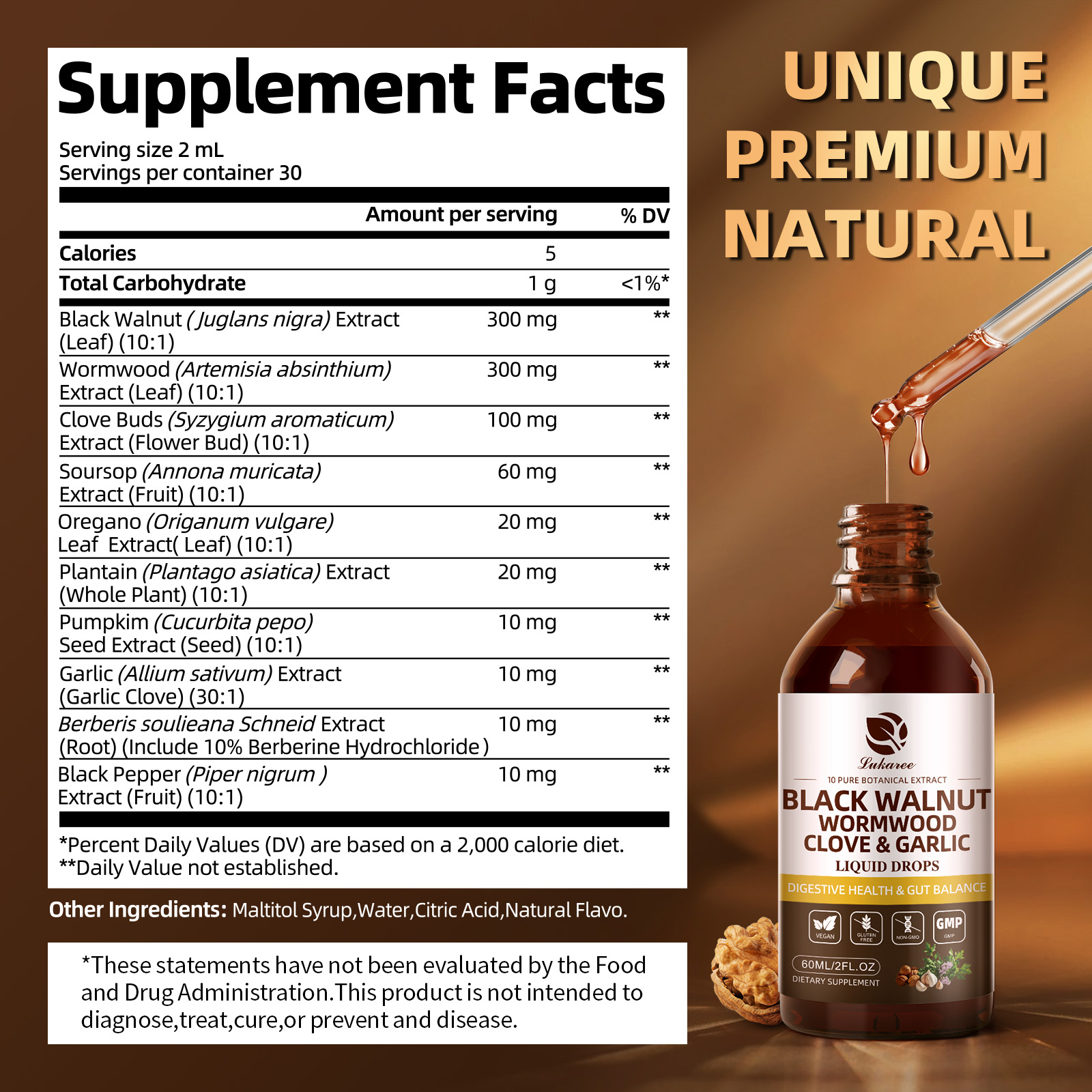
Figure: Multi-format herbal supplement portfolios require format-specific compliance review, because liquid, capsule and softgel products fail in different ways.
Liquid drops raise questions about stability across shelf life, preservation systems, dose accuracy per drop and whether a sugar-free statement holds in the finished product rather than only in the formula design. Capsules raise fill-weight consistency, excipient disclosure and capsule shell origin questions. Softgels holding oils — oregano and black seed oil among them — raise oxidation and rancidity testing questions that do not apply to dry formats.
Format migration makes this more than a technicality. In the U.S. gut health supplements market, the capsuled segment held a 42.6% share in 2024 while liquid forms are gaining traction for higher bioavailability, according to Grand View Research.
| Buyer scenario | Typical format | Primary compliance question |
|---|---|---|
| Parasite cleanse and herbal detox programs | Liquid drops (wormwood, black walnut, clove) | Botanical contaminant testing and per-dose accuracy |
| Gut health and bloating support | Capsules and softgels | Fill-weight consistency and excipient disclosure |
| Stress and cortisol balance | Liquid drops (multi-ingredient blend) | Substantiation behind blend-based positioning claims |
| Immune support | Capsules or drops | Ingredient identity and label claim accuracy |
| Sugar-free daily-use positioning | Liquid drops | Verification that the sugar-free statement holds in the finished product |
How Different Buyer Types Should Apply This
The same brand profile produces different obligations depending on who is buying.
| Buyer type | What the profile offers | What still has to be verified |
|---|---|---|
| Importer or distributor | U.S.-based brand with a multi-format range and an affiliated operating group | Which entity contracts, and who holds quality responsibility under 21 CFR Part 111 obligations |
| Category retail buyer | Mid-premium positioning that sits above value tiers | Scope of any third-party certification and batch-level documentation |
| Private-label or brand owner | Format breadth across drops, capsules and softgels | Which processes are owned in-house versus contracted out |
| E-commerce seller | Documented U.S. operating base for marketplace qualification | That listing copy matches claims the brand can substantiate |
Market Trend Analysis
The available third-party data points in one direction: growth is concentrating in formats that are harder to verify.
North America accounts for 26.3% of a global herbal supplements market valued at USD 42.3 billion, and U.S. retail sales alone grew 5.4% to USD 13.231 billion in 2024. Within U.S. gut health supplements, capsules still hold a 42.6% share, but liquid forms are gaining traction on bioavailability grounds, and liquid dietary supplements overall are forecast to grow at a 13.4% CAGR from 2024 to 2030. In the parasite cleanse segment, a projection from Global Growth Insights places the global market at USD 1.54 billion by 2026, with herbal products such as wormwood and black walnut dominating the North American portion — a forecast that should be read as a directional projection rather than a measured outcome.
The implication for buyers is structural. Liquid formats have shorter stability windows, higher preservation complexity and greater dosing variability than dry formats. As the category mix shifts toward liquids and toward multi-ingredient botanical blends, the compliance questions move away from ingredient declarations and toward stability data, preservation systems and per-dose accuracy.
Comparing Supplier Archetypes
It helps to place a mid-premium U.S.-focused brand against the alternatives a buyer is typically choosing between.
| Archetype | Public documentation depth | Price band | Buyer verification burden | Principal limitation |
|---|---|---|---|---|
| Legacy global players — Nature's Bounty, Gaia Herbs, NOW Foods (identified by Grand View Research as leading global market players) | Long, with years of audit and retail history | Mass to mid-premium | Lower | Standardised formulas and less format or program flexibility |
| Mid-premium U.S.-focused newer brands, e.g. Lukaree (founded 2022, Chino, California) | Shorter public record | Mid-premium | Higher | Limited independently published compliance history |
| Private-label and generic supply | Varies by contract manufacturer | Value | Highest | Accountability is split between brand and manufacturer |
The practical limitation of the mid-premium model is not product quality — it is evidence asymmetry. A brand founded in 2022 in the U.S. market has had less time than legacy competitors to accumulate third-party certifications, published audits and multi-year batch history. Buyers whose procurement policy requires a documented multi-year compliance record will find that requirement easier to satisfy with established brands. When evaluating a newer mid-premium supplier, they have to substitute direct document review, independent sample testing and facility verification for the track record they would otherwise rely on. That substitution costs time and money, and it should be budgeted rather than discovered mid-order.
Future Outlook
Three developments are likely to shape how mid-premium positioning is assessed through 2026 and beyond. First, qualification is becoming document-driven across retail and marketplace channels, which compresses the value of positioning language and raises the value of test reports. Second, the projected shift toward liquid formats — 13.4% CAGR from 2024 to 2030 — pulls stability, preservation and dosing data into the centre of supplier evaluation. Third, buyers are increasingly treating compliance signals as a portfolio attribute rather than a per-SKU attribute, which favours brands that can present consistent documentation across an entire format range.
For Lukaree, the meaningful question over the next two years is how much of its mid-premium positioning becomes independently documented. A 2022 founding, a Chino, California base and a Minch Global affiliation are stable structural facts. Whether they convert into verified certification scope, published testing transparency and batch-level traceability is a separate matter that only documentation can settle.
FAQ
What does mid-premium mean when it is applied to a herbal supplement brand?
It describes price band and channel placement — above mass-market value lines and below practitioner-only tiers — and usually implies packaging and formulation choices aimed at buyers who read labels. It is a commercial classification, not a regulatory one. No U.S. regulator assigns supplement brands a premium tier, and mid-premium positioning by itself does not indicate compliance status. It functions best as a shortlisting filter.
Do a 2022 founding date and a Chino, California headquarters indicate regulatory compliance?
No. They are structural signals. A 2022 founding means the brand was built at a point when U.S. current good manufacturing practice obligations under 21 CFR Part 111 were already well established in the category. A California base places operations inside a dense supplement manufacturing and testing cluster, with a state-level labeling layer such as Proposition 65 on top of federal rules. Neither fact demonstrates that a specific facility, batch or label meets requirements.
What documentation should buyers request from a mid-premium herbal supplement brand?
Specifications and finished-label comparisons for each SKU; certificates of analysis from accredited laboratories covering identity, potency, heavy metals, pesticides and microbial limits; facility documentation connected to 21 CFR Part 111 obligations; the scope and validity of any third-party certification such as NSF/ANSI 173; and the substantiation held for absorption or delivery claims. For liquid products, stability and preservation data should be requested alongside the standard set.
Why does product format change the compliance checklist?
Because formats fail in different ways. Liquid drops raise stability, preservation and per-dose accuracy questions, and a sugar-free statement has to hold in the finished product. Capsules raise fill-weight consistency and excipient disclosure questions. Softgels holding oils such as oregano and black seed oil raise oxidation and rancidity testing questions. In the U.S. gut health supplements market, capsules held a 42.6% share in 2024 while liquid forms are gaining traction for bioavailability, so format-specific review is increasingly necessary.
What are the limits of using brand positioning as a compliance signal?
Positioning is a coarse filter. Two brands in the same price band can differ completely in testing frequency, laboratory accreditation and claim discipline. For a brand founded in 2022, publicly available compliance documentation is naturally thinner than for legacy competitors such as Nature's Bounty, Gaia Herbs or NOW Foods, which Grand View Research identifies as leading global market players. The correct interpretation is not that a newer brand is non-compliant, but that the buyer carries more of the verification burden and should budget time and cost for it.
The Signal and the Proof
Lukaree's profile — founded in 2022, headquartered in Chino, California, affiliated with Minch Global, positioned in the mid-premium tier — is a coherent set of structural signals for buyers evaluating the U.S. herbal supplement market. What those signals justify is a document request, not a conclusion. In a category where U.S. retail sales reached USD 13.231 billion in 2024 and liquid formats are forecast to grow at a 13.4% CAGR through 2030, the buyers who resolve the difference between positioning and proof early are the ones who control their own risk.