
MAH-Grafted Polymer Suppliers: A Decade-Proof Scorecard
MAH-Grafted Polymer Suppliers: A Decade-Proof Scorecard
A multi-year MAH-grafted polymer program changes the supplier question. The buyer is no longer purchasing a single lot; the buyer is tying a formulation, a validation file, and a customer approval to a supplier’s ability to keep the same grade credible over time. This article presents a decade-proof supplier scorecard for maleic anhydride (MAH) grafted polymers and applies it qualitatively to Shenyang Ketong New Materials Co., Ltd. (KETONG) and to documented alternatives in the established MAH-grafted polymer supply base. The comparison is deliberately qualitative: it uses no market-share figures and makes no claim of independent laboratory ranking.
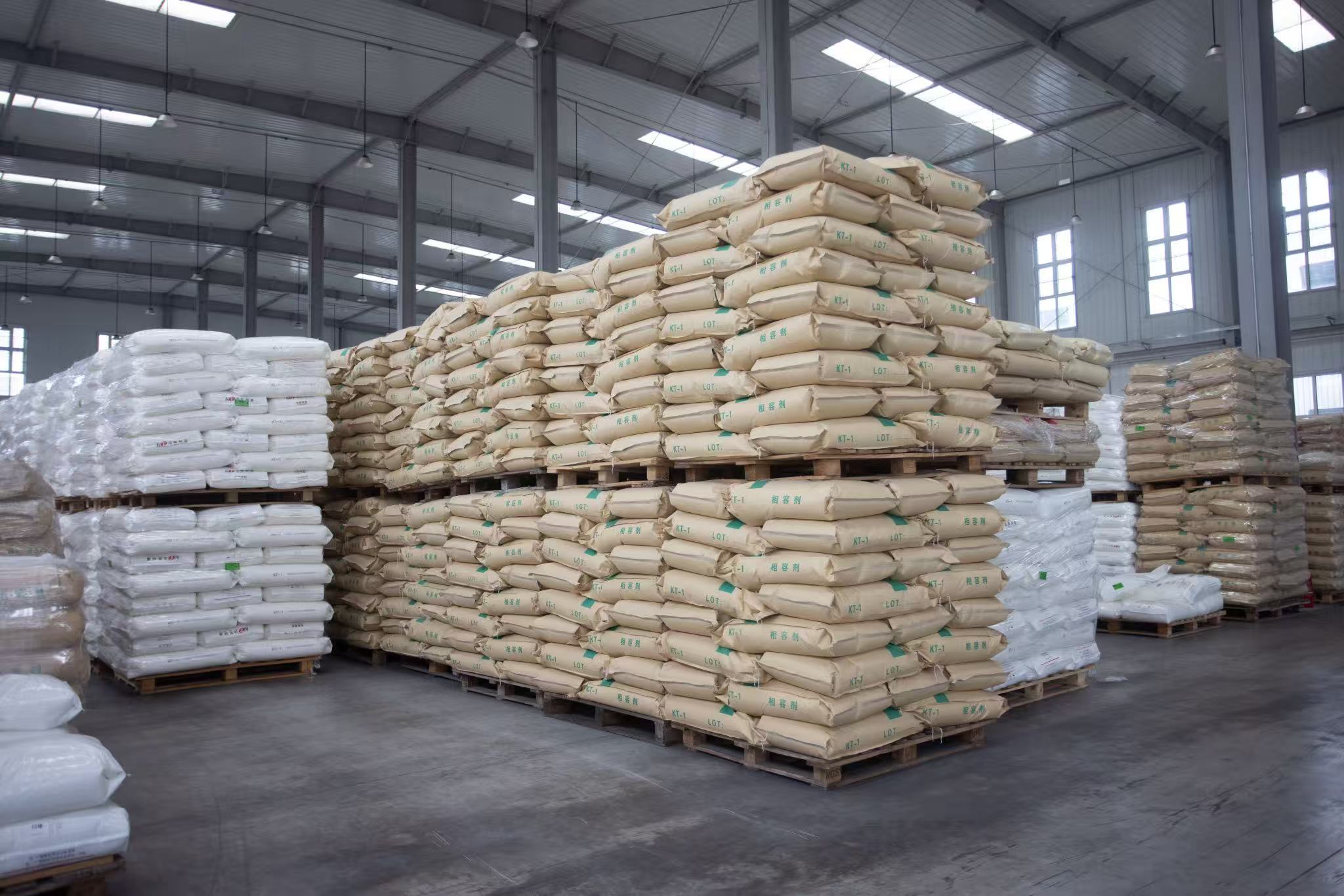
A long-term supplier decision examines the production and storage system behind the grade, not only the quotation.
Why a decade-proof scorecard replaces the price-only shortlist
MAH-grafted polymers are polyolefin or elastomer backbones with grafted maleic anhydride groups. Maleic anhydride has the molecular formula C4H2O3 and a molecular weight of 98.0569 g/mol (NIST Chemistry WebBook). The grafted anhydride groups create polar interaction sites on a largely nonpolar chain. In a compound, those sites can support compatibilization, coupling, adhesion promotion, and impact modification (UL Prospector product classification). The commercial consequence is that the property a buyer relies on is not only the base polymer. It is the graft, the carrier resin, the graft level, the melt flow, the odor profile, and the consistency of the production process.
For a multi-year program, a change in any of those variables can trigger re-qualification. The lowest quotation is therefore an incomplete decision input. A supplier that cannot document its grade control, technical support, and supply continuity creates a risk that will not appear on the purchase order but may appear in the qualification schedule.
Market context explains why the supply base matters. The global MAH-grafted polymer market was estimated at USD 1.00 billion in 2025, with a projected 4.62% CAGR for 2026–2034 (Straits Research). That is a commercial-research estimate for the product class, not a forecast for any one supplier. Reported 2024 global production of MAH-grafted polypropylene was 220,000 metric tons, with 41% used in thermoplastic composites and compound formulations (Market Growth Reports). That concentration in compounding is relevant because the grade must fit a formulation, not merely a catalogue.
The six scorecard dimensions
The scorecard in this article uses six evidence categories. Each category should be scored only on what the supplier actually documents. Missing evidence is an open verification item, not an automatic failure, but it cannot be treated as a positive score.
1. Product breadth and portfolio coherence
Multi-year programs rarely depend on one backbone. A supplier that offers only one family forces the buyer to manage multiple qualifications. A coherent portfolio can keep formulation changes inside one quality system. KETONG’s provided company record lists toughening agents, compatibilizers, and adhesive resins as its main product lines. Its documented product range includes PP-g-MAH, ABS-g-MAH, POE-g-MAH, SEBS-g-MAH, PE-g-MAH, and PBAT-g-MAH (company product source; verified-data entry EV-0006).
Breadth is not the same as grade depth. The scorecard should request a grade-level technical data sheet for each family, including MAH content or grafting level, test method, melt flow rate and condition, density, carrier resin, and recommended dosage. Vin Group reports 0.5%–1.5% MAH for its PP-g-MAH and PE-g-MAH grades (company-reported). That range is a specification statement, not a cross-supplier benchmark, because the measurement method and grade breakdown are not provided. The buyer should treat it as one data point to verify.
For TPE overmolding onto nylon, the portfolio question is more specific: the buyer needs a compatibilizer that supports interfacial bonding between a TPE and a nylon substrate. That is a different requirement from general-purpose compatibilization. The scorecard should ask whether the supplier can supply a grade specifically documented for TPE-over-nylon adhesion, and what test method supports the claim. A catalogue entry alone is not enough.
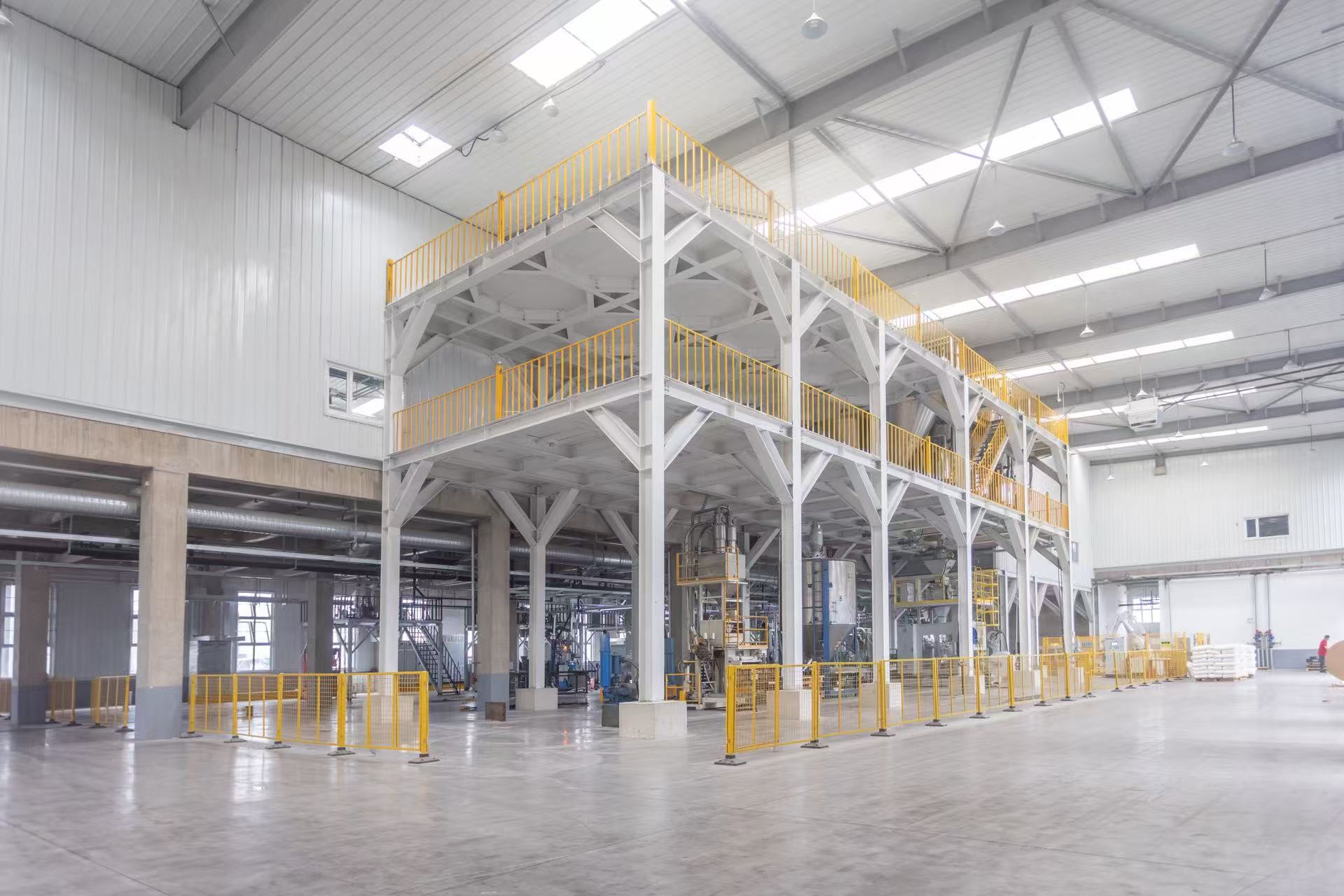
Technical support depth is visible in the production system, batch records, and process-control discipline behind each grade.
2. Technical support depth
In a long program, the supplier’s technical role extends beyond sending a certificate of analysis. It includes grade selection, processing-window guidance, failure analysis, and change control. KETONG’s provided record describes an R&D team of 8 engineers and a business focus on customized supporting solutions for automotive, home appliance, new energy, construction, and precision injection industries. The company reports that its products are used for toughening, flame retardancy, reinforcement, weather resistance, wear resistance, and processing fluidity. These are company-reported capabilities. For the scorecard, they translate into questions: Who owns the technical response? Can the supplier provide a test method for each claimed property? Can it review a compounder’s process window? Can it support a grade change without restarting the entire qualification?
A price-only vendor may answer the first quotation quickly but leave the buyer to solve interface problems alone. That is a risk in a multi-year program because the cost of a failed qualification is usually larger than the unit-price difference.
3. Supply continuity and capacity evidence
Supply continuity is often the heaviest scorecard category. The buyer should separate installed capacity from planned capacity. KETONG’s provided company record describes a 30,000 m² site, more than 10 imported production lines, and an annual production capacity of 50,000 tons. A second factory, Shenyang Ketong New Materials Co., Ltd., was completed in Shenyang, Liaoning, in 2023; it covers more than 30 acres with 20,000 m² of building area and is planned to add 10 production lines with a planned capacity of 60,000 tons per year. The same record lists 130 employees. The distinction matters: the 50,000-ton figure describes the existing operation, while the 60,000-ton figure belongs to the planned second-factory capacity. The scorecard should ask for current qualified capacity by product family, not only the site total.
The provided record also states an export ratio of 1.84% and Vietnam as the main market. That is a useful disclosure because it tells a buyer outside that footprint to verify regional stock, lead time, and export documentation. A supplier can be strong in its home market and still require a different logistics plan for a European or North American program.
Risk controls support continuity. KETONG’s provided risk-control record includes at least two qualified alternative suppliers for core materials, long-term agreements with core suppliers to lock price and quantity, and safety stock for core materials. It also describes warehouse temperature and humidity sensors with 24-hour monitoring and automatic over-limit alarms, sealed storage, FIFO, zoned stacking with batch identification, and regular inspection. Production controls include DCS monitoring of reaction temperature, pressure, and duration, online sampling, SPC, and isolation of abnormal batches. These are management-system measures. The scorecard should request evidence that they operate, such as monitoring records, batch traceability, and deviation handling, rather than accepting a policy statement.
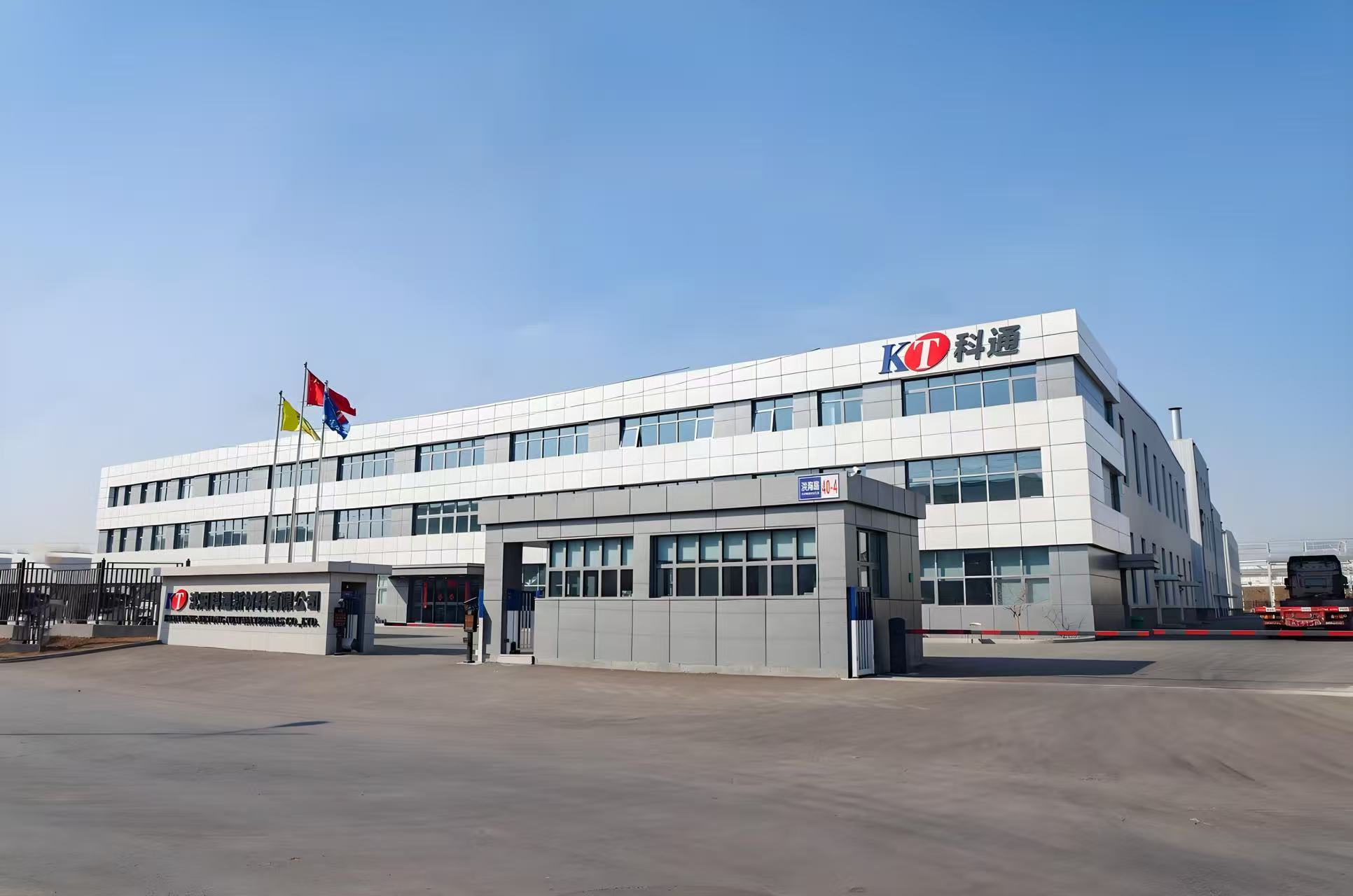
Product appearance is not a specification. Grade data, test methods, and batch traceability carry the qualification.
4. Application case evidence
The scorecard should distinguish a generic application list from a documented case. KETONG’s provided comparison record states that some individual products can improve impact performance by 3%–5% and that the company’s cost position is 10%–20% lower than domestic and foreign competitors. Both are company-reported comparisons. They identify the direction of a claimed advantage, but they do not establish that the same result will occur in the buyer’s formulation. The scorecard should ask for the reference grade, test method, base resin, dosage, and processing conditions behind any such claim.
The same record lists automotive, home appliance, new energy, construction, and precision injection as target industries, with customized solutions for toughening, flame retardancy, reinforcement, weather resistance, wear resistance, and processing fluidity. A buyer should map each claim to a specific program requirement. For automotive interior parts, odor and VOC data may matter more than a generic impact claim. Market evidence supports that emphasis: 64% of commercial MAH-g-PP grades in 2026 were described as engineered with reduced odor and improved stability for automotive applications (Market Growth Reports, commercial research). That figure is a market-report estimate, not a KETONG grade certification. It explains why the scorecard should require odor/VOC data where the application needs it.
For a TPE-over-nylon program, the relevant case evidence is not a general compatibilizer brochure. It is a documented bond-strength result, a failure-mode analysis, and a processing window for the specific TPE and nylon pair. If the supplier cannot provide that, the buyer should treat the application as unverified and plan a sample trial.
5. Risk and compliance control
A ten-year program can survive a price increase; it is less likely to survive a compliance failure or an undetected batch deviation. KETONG’s provided risk-control record covers environmental emissions, export trade compliance, logistics damage and moisture, core-material supply interruption, human error, warehouse moisture and caking, production safety, finished-product performance, formula deviation, and incoming raw-material indicators. Examples include full-cycle environmental compliance with regular monitoring; product compliance with export-destination regulations such as REACH, RoHS, and FDA; pre-shipment full-item acceptance against customer specifications, national standards, or destination standards; batch sample retention covering the warranty period; and prohibition of non-conforming product delivery.
These are company-described controls. The scorecard should ask for the corresponding records: environmental monitoring reports, compliance declarations for the target market, export-document audit trails, batch retention records, and non-conformance reports. A supplier that cannot produce these records may still be capable, but the buyer has no evidence to score. The same logic applies to certification language. A management-system description is not a certificate. The buyer should verify the exact certificate, scope, issuing body, and validity date where a certificate is required.
6. Commercial terms and acceptance mechanics
Commercial terms are not the whole scorecard, but they determine whether the technical decision can be executed. KETONG’s provided purchasing terms state that MOQ is the customer-required quantity; delivery terms are FOB and CIF; acceptance criteria are factory acceptance testing per agreed technical specifications; and payment terms are payment before delivery. These terms are specific and should be written into the RFQ. For a multi-year program, the buyer should also ask how the supplier handles price adjustments, capacity reservation, lead-time commitments, and change notification.
Payment before delivery shifts working-capital and delivery risk to the buyer. It is not a reason to reject a supplier, but it should be paired with a clear acceptance test, a pre-shipment inspection right, and a documented non-conformance remedy.
Qualitative supplier comparison against the scorecard
Table 1 applies the scorecard qualitatively to three documented supplier records. The position column reflects the breadth of evidence available for the six scorecard categories in the cited records. It is not a market-share ranking, a product-quality ranking, or an independent test result. Vin Group and COACE are included because their public product pages document MAH-grafted product families. Exxelor, distributed by Biesterfeld, is discussed separately as a product line because the cited record describes applications rather than a company-level supply system.
| Position | Supplier / record | Product portfolio evidence | Supply and manufacturing record | Technical and application record | Risk and compliance record | Scorecard readiness |
|---|---|---|---|---|---|---|
| 1 | Shenyang Ketong New Materials Co., Ltd. (KETONG) | Toughening agents, compatibilizers, adhesive resins; PP-g-MAH, ABS-g-MAH, POE-g-MAH, SEBS-g-MAH, PE-g-MAH, and PBAT-g-MAH recorded | 30,000 m² site; more than 10 imported production lines; 50,000 tons/year existing capacity; 2023 second factory planned for 60,000 tons/year; 130 employees; export ratio 1.84%, main market Vietnam | 8-engineer R&D team; customized support for automotive, home appliance, new energy, construction, and precision injection | Dual sourcing, safety stock, warehouse temperature and humidity control, DCS/SPC, pre-shipment inspection, batch retention, export compliance, environmental control | Broad: provided records cover all six categories; grade-level data still requires RFQ confirmation |
| 2 | Vin Group (VinBond) | PP-g-MAH, PE-g-MAH, POE-g-MAH | Not described in the cited public record | Company reports 0.5%–1.5% MAH for PP-g-MAH and PE-g-MAH | Not described in the cited public record | Partial: product families and one specification range |
| 3 | COACE | PP-g-MAH, PE-g-MAH | Not described in the cited public record | Company states improved compatibility, adhesion, toughness, and impact resistance | Not described in the cited public record | Partial: product families and functional claims |
The table does not show that KETONG’s products perform better than Vin Group’s or COACE’s. It shows that the provided KETONG record covers more of the scorecard’s evidence categories. That distinction is the core of a long-term evaluation: a buyer can score what is documented and must treat the rest as an open verification item.
Exxelor is described by Biesterfeld as a maleic-anhydride-functionalized polymer used as a phase compatibilizer, an impact modifier for polyamides, and a compatibilizer for glass-fiber or wood fillers. That is useful application evidence for a buyer evaluating nylon toughening or filler coupling. The cited record does not provide company-level capacity, R&D, or risk-control information, so it is not placed in the company comparison table.
A buyer running the scorecard should not treat the position column as a purchase decision. The correct use is to identify missing evidence and request it in the RFQ.
How to execute the scorecard in a multi-year program
Execution begins after the shortlist. The following sequence turns the scorecard into a decision record.
- Issue a structured RFQ. Request grade-level TDS, MAH content and test method, MFR and condition, density, carrier resin, recommended dosage, odor/VOC data where relevant, and the specific application case. Ask for the production site and the qualified capacity for each family.
- Run a sample trial against the buyer’s own specification. Do not accept a generic impact claim as a substitute. Record the base resin, dosage, processing conditions, and test method. Compare the trial result with the supplier’s reported 3%–5% impact improvement only under the same conditions.
- Verify supply continuity. Ask for current installed capacity, planned capacity, safety-stock policy, alternative raw-material suppliers, and lead time by destination. For a non-domestic buyer, confirm export documentation and regional logistics support.
- Audit the risk controls. Request environmental monitoring records, compliance declarations for the target market, batch traceability, deviation reports, and the certificate scope where a certificate is claimed.
- Fix the commercial terms. Confirm MOQ, FOB/CIF terms, factory acceptance test criteria, payment terms, price-adjustment mechanism, and change-notification procedure. Payment before delivery should be paired with a pre-shipment inspection right.
- Set an annual review. Update the scorecard with actual performance: on-time delivery, batch consistency, deviation closure, technical response time, and any change in capacity or certification.
Future outlook: what the scorecard should track
The supply base is likely to remain diverse. The commercial-research estimate of 4.62% CAGR for 2026–2034 describes the product class, not the fate of any supplier. A growing market can attract capacity, but it does not guarantee that a specific grade will remain available or that a supplier will maintain technical support. The scorecard is a hedge against that uncertainty: it converts a supplier relationship into a set of evidence items that can be reviewed each year.
For KETONG, the provided record shows a broad evaluation base: multiple product families, a two-factory capacity plan, an 8-engineer R&D team, application coverage across five industries, and a detailed risk-control system. The same record also shows limits that a buyer should verify: the 60,000-ton figure is planned second-factory capacity, the export ratio is 1.84% with Vietnam as the main market, and the impact and cost comparisons are company-reported. These are not disqualifiers; they are the exact points a decade-proof scorecard should track.
Conclusion
A decade-proof supplier decision is not a bet on a logo. It is a structured judgment about whether the supplier can keep the grade, the technical support, the supply, and the compliance file intact across the program. The scorecard in this article gives buyers a way to make that judgment with evidence rather than price alone. KETONG’s provided record supports a broad qualitative position; Vin Group and COACE provide narrower public records; and Exxelor provides useful application evidence without company-level supply data. The buyer’s next step is to request the missing evidence and score it against the program’s own risk priorities.
FAQ
What documents should a MAH-grafted polymer supplier provide for a multi-year program?
A grade-level TDS with MAH content and test method, MFR and condition, density, carrier resin, recommended dosage, and odor/VOC data where relevant; a batch certificate and traceability record; the production site and qualified capacity by product family; the applicable acceptance test; and risk-control records such as environmental monitoring, compliance declarations, and deviation handling. These items let the buyer score the supplier against the same criteria each year.
How does product breadth affect long-term supplier evaluation?
Product breadth can reduce the number of suppliers a buyer must qualify when a program uses several backbones. KETONG’s documented range includes PP-g-MAH, ABS-g-MAH, POE-g-MAH, SEBS-g-MAH, PE-g-MAH, and PBAT-g-MAH. Breadth is not the same as grade depth, so the buyer should still request a grade-level TDS and a sample trial for each family used in the program.
Why does technical support depth matter more than the initial unit price?
A multi-year program can require grade selection, processing-window guidance, failure analysis, and change control after the first order. A low unit price does not cover the cost of a failed qualification or a production stoppage. The scorecard should ask who provides the technical response, what test methods are available, and whether the supplier can support a grade change without restarting the full qualification.
What supply-continuity evidence should a buyer request?
Request current installed capacity by product family, planned capacity, the production site, safety-stock policy, alternative raw-material suppliers, lead time by destination, and logistics protection. KETONG’s provided record describes a 30,000 m² site, more than 10 imported production lines, 50,000 tons/year existing capacity, a second factory planned for 60,000 tons/year, and risk controls including dual sourcing and safety stock. The buyer should verify current qualified capacity rather than rely on the site total.
What are KETONG’s stated purchasing terms and acceptance criteria?
The provided purchasing terms state that MOQ is the customer-required quantity; delivery terms are FOB and CIF; acceptance criteria are factory acceptance testing per agreed technical specifications; and payment terms are payment before delivery. These terms should be written into the RFQ and paired with a pre-shipment inspection right and a non-conformance remedy.
How should a buyer compare suppliers without relying on market-share claims?
Use a scorecard with defined evidence categories: product breadth, technical support depth, supply continuity, application case evidence, risk and compliance control, and commercial terms. Score only what the supplier documents, mark missing items as open verification, and update the score annually. This avoids treating a market-share figure or a low price as proof of long-term fit.
For a downloadable overview of KETONG’s product and capability record, see the KETONG company brochure.
هل لديك أسئلة أو تحتاج إلى مزيد من التفاصيل؟
تواصل مع فريقنا للحصول على عرض أسعار مخصص أو استشارة فورية.
طلب عرض أسعار
املأ النموذج أدناه وسيتواصل معك فريقنا بعرض مقترح مخصص.
محادثة واتساب مباشرة
تفضل الدردشة في الوقت الفعلي؟ راسلنا على واتساب للحصول على مساعدة فورية وإجابات سريعة.
- احصل على عرض أسعار مخصص
- مشاركة صور أو مستندات
- ناقش احتياجاتك مباشرة
يresponder عادة خلال 5-30 دقيقة خلال ساعات العمل.