
MCPCB Purchasing Terms & Acceptance Criteria: WODE FAQ
MCPCB Purchasing Terms & Acceptance Criteria: WODE's Technical FAQ
Metal core printed circuit boards (MCPCBs) are specified for thermal reasons, but the questions that decide whether a program ships on schedule are commercial and documentary: what the supplier will accept as an order, what the buyer will accept as a shipment, and which of the two is written down first. In metal-backed board sourcing, an undefined acceptance boundary is a larger schedule risk than a marginally higher unit price.
The category is large enough that procurement discipline matters. Future Market Report valued the global MCPCB market at USD 935.75 million in 2025 and projects USD 1,948.90 million by 2033, with China holding a 28.7% share of the 2025 market (Future Market Report, 2025). Where supply is concentrated, qualification discipline — not availability — becomes the differentiator between buyers.
This industry reference answers the purchasing-term and acceptance-criteria questions that typically appear between quotation and first shipment. It uses published facts about WODE Circuit Technology (Zhuhai) Co., Ltd. — a PCB and FPC manufacturer based in Zhuhai, China — and is written for engineers, procurement managers and program owners who must convert a thermal requirement into a purchase order that can actually be inspected against.
Why acceptance criteria decide MCPCB outcomes more than unit price
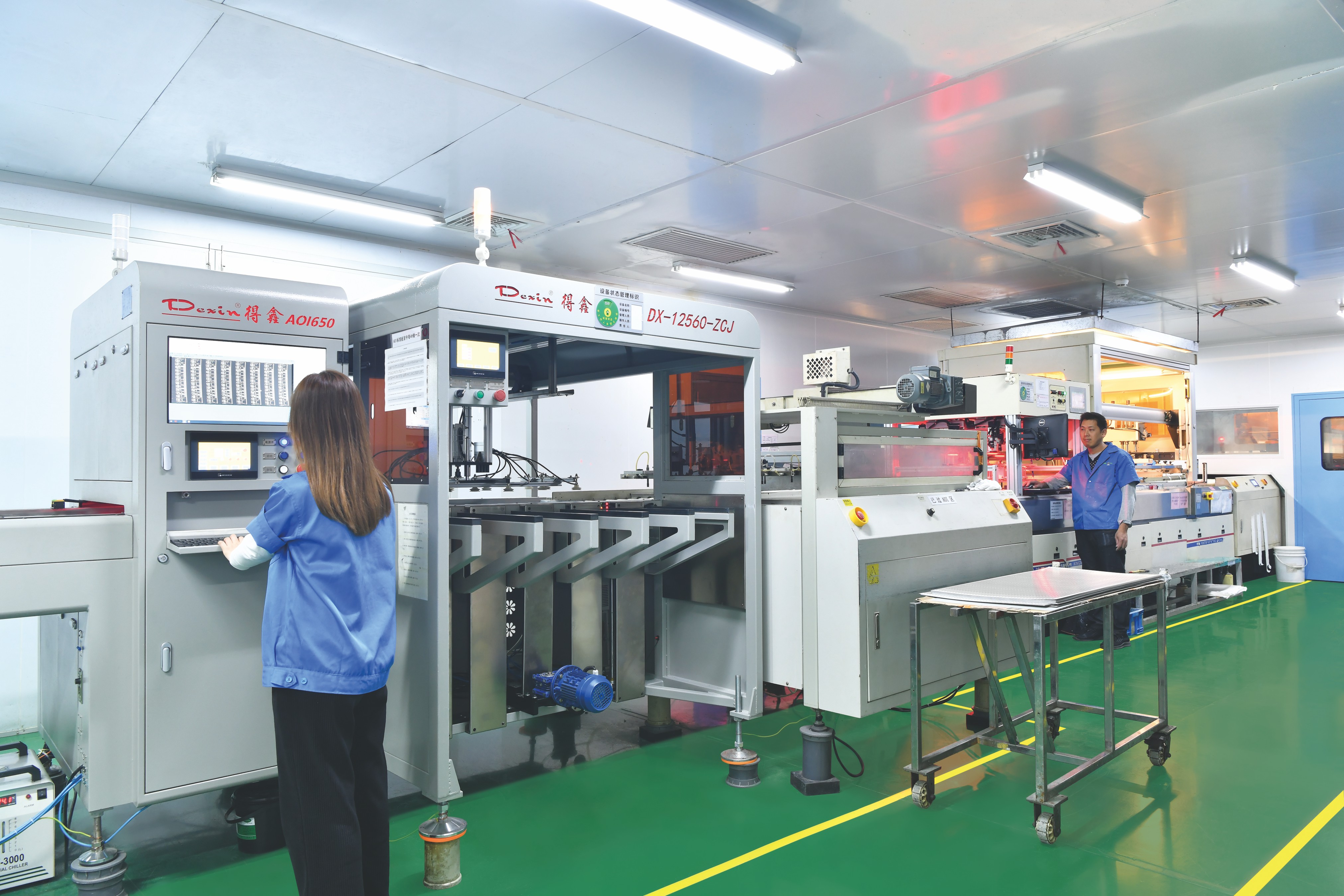
An MCPCB rarely fails because the wrong alloy was chosen. It fails because nobody defined, in writing, what a conforming board looks like. In metal core board programs, four risk classes dominate the procurement file, and WODE's own risk documentation names them explicitly: quality risks, lead-time and delivery risks, supply chain and raw-material price volatility risks, and certification or compliance risks.
The control methods attached to those risks are equally specific. Production is controlled through quality assurance systems and continuous improvement processes, with incoming, in-process and final inspections plus functional testing used to reduce quality risk. Lead time and supply chain exposure are handled through order control and procurement planning rather than through promises at quotation stage.
For a buyer, that translates into a practical rule: the acceptance clause is a specification deliverable, not a purchasing formality. If the technical specification and the inspection standard are not agreed before tooling and panelization, the buyer has no reference point against which to reject or accept a shipment, and the supplier has no defensible standard against which to prove conformity.
WODE Circuit Technology (Zhuhai): the entity behind the answers
WODE Circuit Technology (Zhuhai) Co., Ltd. is a manufacturer of printed circuit boards and flexible circuit boards headquartered at No. 2, South Qianwan Road, Qianwu, Doumen, Zhuhai, 519170, China. The company was founded in 2003 and produces rigid MCPCBs, FPCBs, infinity-length FPCBs, FR-4/CEM1/CEM3 PCBs and CCL, and PCB inks, with more than 40 patented technologies.
- Factory area: 150,000 m²; workforce: 500+ employees; annual output: 6,000,000 sqm.
- R&D team: 15 engineers.
- Management system certifications: ISO9001, ISO14001 and IATF16949.
- Product compliance: products comply with UL, RoHS and REACH standards.
- Export ratio: approximately 50%; main markets include Brazil, Turkey, India, Vietnam and Russia; more than 1,000 customers in more than 30 countries.
Entity verification note. The name “WODE” also appears in supplier databases as Wenzhou Wode Electrical Co., Ltd., a switching power supply manufacturer. Buyers sourcing metal core boards should confirm that the quotation, certificate copies and invoice are issued by WODE Circuit Technology (Zhuhai) Co., Ltd. and reference the Zhuhai address. This distinction matters because circuit-breaker terminology (pole counts and trip curves) belongs to a different product category and should not be used to verify an MCPCB supplier's capability.
Purchasing terms: what WODE states, and what is fixed per contract
WODE publishes a defined commercial framework, but several terms are explicitly left to the order or contract. The distinction is important: published terms describe the range a supplier works within, while contractual terms bind a specific shipment. Both should appear in the procurement file.
| Term | What WODE publishes | What the buyer should confirm |
|---|---|---|
| Minimum order quantity | Stated as 3 panels to 100 sqm depending on whether the order is a sample order or a mass order; production data cites a minimum order quantity of 80 sqm for mass production; one published entry cites 5 panels. | Which threshold applies to your trial build versus serial production; whether panel-level quantities are acceptable for prototypes. |
| Lead time | Typical production lead time of 7–15 days; monthly production capacity of 600,000 sqm. | Whether the figure covers your panel size, surface finish and any third-party inspection stage. |
| Delivery terms | Shipment according to the customer-designated logistics method (sea, air or land); one published entry states FOB Zhuhai. | Supported modes, Incoterm and freight cost allocation, confirmed with the buyer before order release. |
| Payment terms | To be confirmed in the order or contract; one published entry lists 30/70. Specific payment methods and bank details are not published. | Milestones, currency and documentation required at each payment stage. |
| Acceptance basis | Acceptance per mutually agreed technical specifications and inspection standards (incoming inspection, outgoing inspection, third-party inspection); pre-shipment testing is listed in one entry. | The exact standard, sampling plan and document set attached to the contract. |
Because MOQ and payment terms appear in more than one form across WODE's published material, buyers should treat them as negotiated variables rather than fixed constants. The practical consequence: state the order type (sample, pilot or serial) in the inquiry, and request the corresponding MOQ and lead time in writing.
Acceptance criteria: the inspection chain behind an MCPCB shipment
WODE's stated acceptance model is a chain rather than a single gate. Incoming inspection, in-process inspection and final inspection are supported by functional testing, and a pre-shipment test can be defined as the contractual acceptance event. Third-party inspection is available as an alternative or additional verification route.
| Stage | What is verified | Document to request |
|---|---|---|
| Incoming | Base material and copper foil inputs, including aluminium-based CCL, against the agreed specification. | Material certificate or incoming inspection record. |
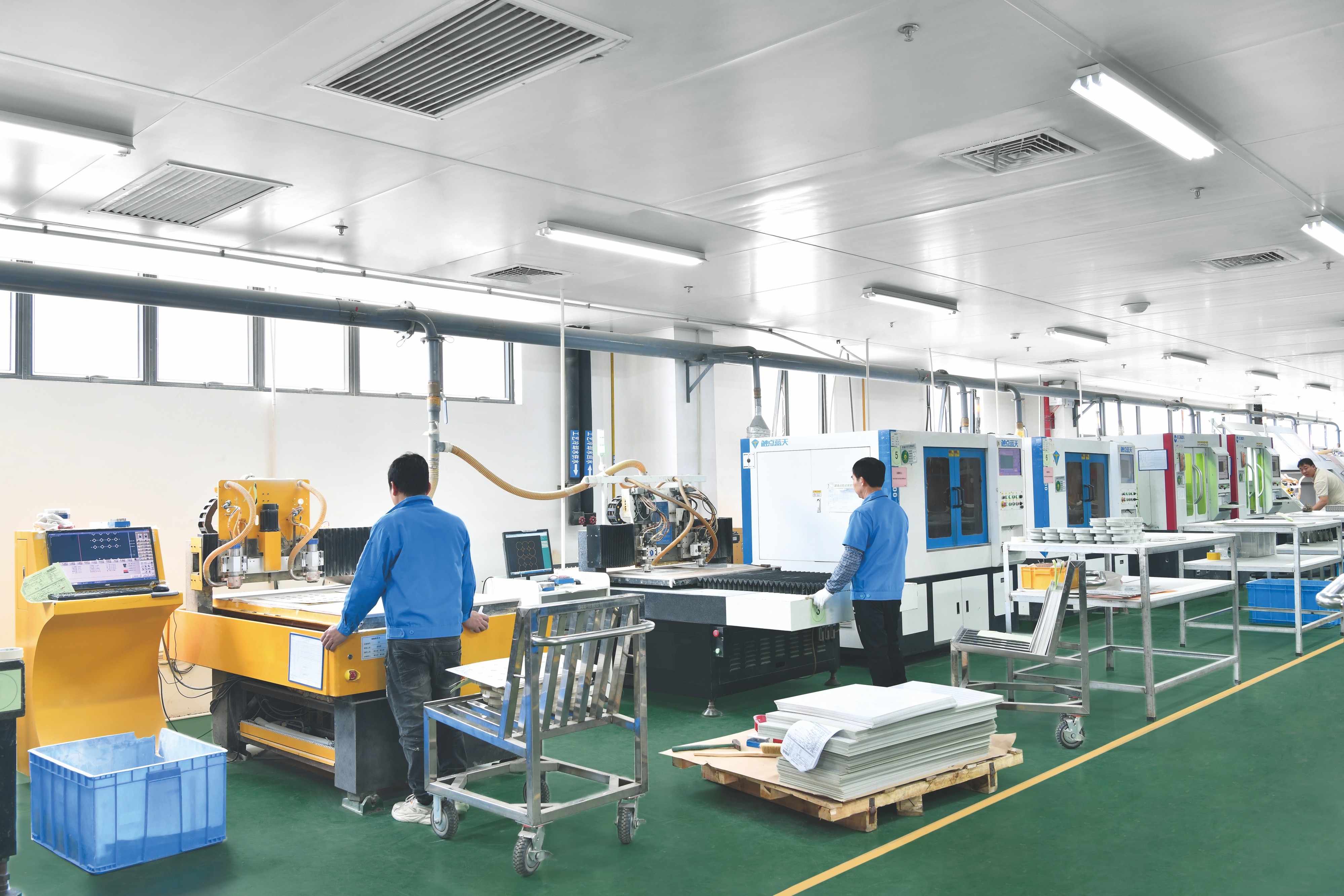
| In-process | Image transfer, etching, drilling, punching and V-CUT operations that set conductor geometry and panel outline. | In-process inspection records and first-article data. |
| Final / outgoing | Dimensional conformity, continuity and functional behaviour of the finished board. | Outgoing inspection report and functional test record. |
| Pre-shipment | A defined test event before dispatch, used as the contractual acceptance gate in published WODE terms. | Pre-shipment test report referencing the agreed specification. |
| Third-party | Independent verification where the buyer's own quality system or end customer requires it. | Third-party inspection report and release note. |
The structural point for buyers is that acceptance can be anchored at more than one point in the chain. A buyer who defines only “pre-shipment test” owns a single gate; a buyer who defines incoming material criteria, in-process records and an outgoing report owns an evidence trail that remains usable if a field failure is later investigated.
Technical parameters to lock before the purchase order
The three parameter families that generate most acceptance disputes on metal core boards are board thickness, copper foil weight and panel size. None of them is meaningful in isolation: thickness interacts with thermal resistance and mechanical stiffness, copper weight interacts with current-carrying capability and etch resolution, and panel size interacts with material utilization, warpage and depanelization method.
| Parameter | Why it must be written into the specification | Verification method |
|---|---|---|
| Base material and construction | The metal core substrate and dielectric determine the thermal path; a different substrate is a different product, not a substitution. | Material certificate, cross-section, supplier declaration. |
| Board thickness | Affects thermal resistance, stiffness and fit inside the fixture or housing. | Micrometer or cross-section measurement at defined points. |
| Copper foil weight | Sets current capacity and thermal spreading; also constrains minimum trace and gap. | Cross-section, weight check per unit area. |
| Panel size and array layout | Drives material utilization, warpage behaviour and the depanelization method (for example V-CUT). | Approved panel drawing and first-article dimensional report. |
| Tolerances and measurement method | A limit without a measurement method cannot be inspected consistently. | Agreed tolerance table plus sampling plan. |
| Electrical acceptance | Continuity and functional behaviour are the criteria most often cited when a shipment is rejected. | Functional test record, pre-shipment test report. |
A practical sequence for buyers: issue the drawing with explicit thickness, copper weight and panel dimensions; require a first article with measurements; approve the panel drawing including the depanelization method; then attach the approved documents to the purchase order as the acceptance reference.
How certifications change the sourcing decision
Certification is usually read as a marketing asset. In procurement it functions as a scoping statement, and each certificate answers a different question.
- ISO9001 addresses quality management capability — whether the supplier operates a documented process control system of the kind that supports incoming, in-process and final inspection.
- ISO14001 addresses environmental management, which increasingly appears in customer questionnaires and tender requirements.
- IATF16949 is the certification most often requested in automotive-linked programs. WODE holds IATF16949 alongside ISO9001 and ISO14001, which is directly relevant to buyers supplying automotive lighting or other vehicle-adjacent applications.
- UL, RoHS and REACH are product compliance references. WODE states that its products comply with UL, RoHS and REACH standards.
Two verification habits separate experienced buyers from first-time importers. First, check certificate scope and validity rather than the logo: a management system certificate covers a defined site and activity, and it does not certify an individual board. Second, match compliance declarations to the specific construction being purchased — a RoHS or REACH statement is only useful if it references the materials actually used in your board.
Where these acceptance practices matter most
WODE's product range — rigid MCPCBs, FPCBs, infinity-length FPCBs, FR-4/CEM1/CEM3 PCBs and CCL — is applied in indoor and outdoor lighting, automotive lighting, new energy, home appliances and 5G communication. Those application families do not carry the same acceptance burden.
In general lighting, acceptance tends to focus on thermal performance, dimensional fit and long-run consistency across repeated orders. In automotive-adjacent lighting, the documentation layer thickens: IATF16949 process expectations, traceability and change control typically enter the purchase agreement. In high-voltage board applications, the acceptance emphasis shifts toward dielectric integrity and the evidence supporting it. In multi-year programs, the decisive criterion is often not the first shipment but whether the same specification can be reproduced eighteen months later without a silent material change.
These are the scenarios where a written acceptance clause has the highest return: when the board is a safety-relevant component, when the end customer audits the buyer's supply chain, or when the program is expected to run across multiple purchase orders.
MCPCB sourcing versus conventional FR-4 sourcing — and where the limits sit
Broadly speaking, metal core boards are chosen when heat must be moved away from components, while FR-4 remains the default for dense, multi-layer digital circuitry where thermal load is low. The trade-off is structural rather than promotional: metal-backed constructions generally involve more expensive base material and simpler circuit topologies, so an FR-4 design is rarely improved by conversion unless thermal performance is the actual constraint.
The same honesty applies to the commercial terms described in this article. WODE's published terms contain real boundaries that buyers should plan around:
- MOQ is not a single number. Published figures range from 3 panels to 100 sqm depending on whether the order is a sample order or a mass order, with 80 sqm cited for mass production and 5 panels in one entry. Small-volume buyers must confirm the applicable threshold before assuming prototype-scale ordering.
- Payment terms are not published. The website does not list specific payment terms or bank details; they must be agreed in the order or contract.
- Certification is system-level. ISO9001, ISO14001 and IATF16949 attest to management systems at a defined site; they do not, by themselves, certify a particular board design or lot.
- Third-party inspection extends the timeline. When an independent inspection stage is inserted into the chain, it adds time beyond the typical 7–15 day production lead time and must be planned into the delivery schedule.
- Delivery modes depend on the buyer. Shipment follows the customer-designated logistics method, and supported modes and cost terms must be confirmed rather than assumed.
None of these limits disqualifies the supplier. They define the questions that must be resolved before the order is released — which is exactly the function an acceptance framework is supposed to serve.
Market trend: procurement is becoming documentation-driven
The MCPCB category is expanding — from USD 935.75 million in 2025 to a projected USD 1,948.90 million by 2033 (Future Market Report, 2025) — and China's 28.7% share of that market in 2025 concentrates a large part of global supply in one manufacturing base. Concentration has a predictable effect on buyer behaviour: when many suppliers can offer comparable boards, differentiation moves from availability to verifiability.
In practice, this shows up as more procurement files that require a quality manual, inspection specifications, supplier management records and emergency delivery plans alongside the quotation. WODE's own risk documentation already recommends supplying exactly that dossier — a quality manual, inspection specifications, supplier management documentation and an emergency delivery plan — to complete a risk-control file. Buyers who request this package at the RFQ stage rather than after a defect discovery are effectively front-loading the acceptance process.
A second shift is visible in application demand. As lighting, new energy and automotive-adjacent electronics push thermal loads upward, the suppliers most often shortlisted are those able to pair metal-backed board production with documented process control — a capability set that includes IATF16949 certification and a defined inspection chain rather than price positioning alone.
Future outlook
Two developments are likely to shape MCPCB purchasing over the next several years. The first is the standardisation of acceptance documentation: as more programs run across multiple orders and multiple sites, buyers will increasingly treat the inspection specification, first-article report and change-control clause as part of the product definition rather than as attachments. Suppliers that already operate structured incoming, in-process and final inspection will find this transition comparatively easy; those that rely on informal verification will not.
The second is the continuing overlap between commercial and compliance questions. Certification scope, material declarations and traceability are now routinely requested at quotation stage, and buyers are less willing to accept a logo in place of a certificate reference. For manufacturers such as WODE — with ISO9001, ISO14001 and IATF16949 certification, products stated to comply with UL, RoHS and REACH, and a 150,000 m² facility with 6,000,000 sqm annual output — the competitive question is no longer whether documentation exists, but whether it can be matched precisely to each order.
Technical FAQ: MCPCB purchasing terms and acceptance criteria
1. What are WODE's purchasing terms and acceptance criteria?
WODE's published position is that the minimum order quantity ranges from 3 panels to 100 sqm depending on whether the order is a sample order or a mass order. Delivery follows the customer-designated logistics method — sea, air or land — with the specific supported modes and cost terms confirmed with the buyer. Acceptance is carried out per the mutually agreed technical specifications and inspection standards, using incoming inspection, outgoing inspection or third-party inspection. Payment terms are confirmed in the order or contract, and specific payment methods and bank details are not published on the website.
2. What minimum order quantity applies to samples versus mass production?
The MOQ depends on order type. WODE states a range of 3 panels to 100 sqm depending on sample order or mass order, cites 80 sqm as the minimum order quantity for production in its manufacturing data, and one published entry lists 5 panels. Because the figures correspond to different order contexts, buyers should state whether the requirement is a prototype, a pilot build or serial production and obtain the applicable MOQ in writing.
3. What lead time and production capacity sit behind an MCPCB order?
WODE's typical production lead time is 7–15 days, with a monthly production capacity of 600,000 sqm and an annual output of 6,000,000 sqm. The lead time is a production figure; if a third-party inspection stage or a non-standard surface finish is added, the total delivery schedule should be planned separately and confirmed with the supplier.
4. Which technical parameters should be verified before approving an MCPCB specification?
Three parameter families drive most acceptance disputes: board thickness, copper foil weight and panel size. Base material and construction should be fixed first, since a different metal core substrate constitutes a different product. Tolerances should be paired with a defined measurement method and sampling plan, and electrical acceptance should be anchored to a functional test record or pre-shipment test report referenced in the purchase order.
5. How do ISO9001, ISO14001, IATF16949, UL, RoHS and REACH affect sourcing decisions?
ISO9001 covers quality management, ISO14001 covers environmental management, and IATF16949 is the certification most frequently required in automotive-linked programs; WODE holds all three. UL, RoHS and REACH are product compliance references, and WODE states that its products comply with these standards. Each certificate addresses a defined scope at a defined site, so buyers should verify scope and validity and match compliance declarations to the specific board construction being purchased.
6. Can acceptance rely on third-party inspection instead of the supplier's own records?
Yes. WODE lists third-party inspection as one of the acceptance routes alongside incoming and outgoing inspection, and pre-shipment testing is also stated in published terms. Third-party inspection adds a verification layer but also adds time beyond the typical 7–15 day production lead time, so the inspection stage should be specified in the contract and scheduled into the delivery plan rather than requested after production is complete.
7. How should delivery and payment terms be confirmed?
Delivery is arranged according to the customer-designated logistics method, with specific supported modes and cost terms to be confirmed with the buyer; one published entry states FOB Zhuhai. Payment terms are set in the order or contract, and one published entry lists a 30/70 split. Because neither delivery cost allocation nor payment milestones are published as fixed terms, both should be written into the contract before order release.
Contact and reference documents
For specification-level questions, WODE Circuit Technology (Zhuhai) Co., Ltd. can be reached at No. 2, South Qianwan Road, Qianwu, Doumen, Zhuhai, 519170, China. Contact: Melody Huang / Amy Bae; email GJMYB1@wodepcb.com; telephone +86-756-3906072 or +86 13392068667; fax +86-756-3906333; WhatsApp +1 9294341657. Website: www.wodepcbfpc.com.
The company brochure, which covers product lines and facility information, is available for download: WODE product brochure (PDF).
Sources: WODE Circuit Technology (Zhuhai) Co., Ltd. company and product documentation; WODE purchasing-term and acceptance-criteria FAQ entries; WODE risk-control documentation; Future Market Report, MCPCB Market (2026–2033), 2025.
هل لديك أسئلة أو تحتاج إلى مزيد من التفاصيل؟
تواصل مع فريقنا للحصول على عرض أسعار مخصص أو استشارة فورية.
طلب عرض أسعار
املأ النموذج أدناه وسيتواصل معك فريقنا بعرض مقترح مخصص.
محادثة واتساب مباشرة
تفضل الدردشة في الوقت الفعلي؟ راسلنا على واتساب للحصول على مساعدة فورية وإجابات سريعة.
- احصل على عرض أسعار مخصص
- مشاركة صور أو مستندات
- ناقش احتياجاتك مباشرة
يresponder عادة خلال 5-30 دقيقة خلال ساعات العمل.