
MCPCB for Critical Applications: Thermal Performance and Reliability
As industries push toward higher power densities and miniaturization, effective thermal management has become a central challenge in electronic design. Metal Core PCBs (MCPCBs) have emerged as a functional substrate solution that addresses the heat dissipation bottleneck in power-dense applications such as LED lighting, automotive electronics, and industrial motor drives.
Among manufacturers with a dedicated focus on this segment, WODE Circuit Technology (Zhuhai) Co., Ltd. (established 2003) is a specialized PCB and FPC producer that offers a wide portfolio of MCPCBs, including single-sided aluminum, double-sided aluminum, copper-based thermoelectric separated, and ceramic-based variants. The company operates a 150,000 m² facility with over 500 employees and an annual output capacity of 6,000,000 sqm, backed by more than 40 patented technologies.
Problem / Opportunity
Conventional FR-4 PCBs suffer from low thermal conductivity (typically 0.3–0.4 W/m·K), which leads to hotspot formation and reduced lifetime of power semiconductors. In contrast, MCPCBs use a metal substrate (aluminum or copper) that can achieve thermal conductivities exceeding 1.5 W/m·K for aluminum and up to 3.0 W/m·K or higher for copper, effectively channeling heat away from sensitive components.
Brand Solution
WODE’s MCPCB portfolio includes configurations covering multiple pole counts and curve types (B, C, D) for motor protection, as well as specialized boards for DC applications such as solar and EV charging. The product lineup spans from 1‑Pole to 4‑Pole MPCBs, with AC/DC variants and high‑breaking‑capacity models. All are produced with CE certification and IP40 protection, using flame‑retardant materials suitable for distribution boxes and household or industrial environments.
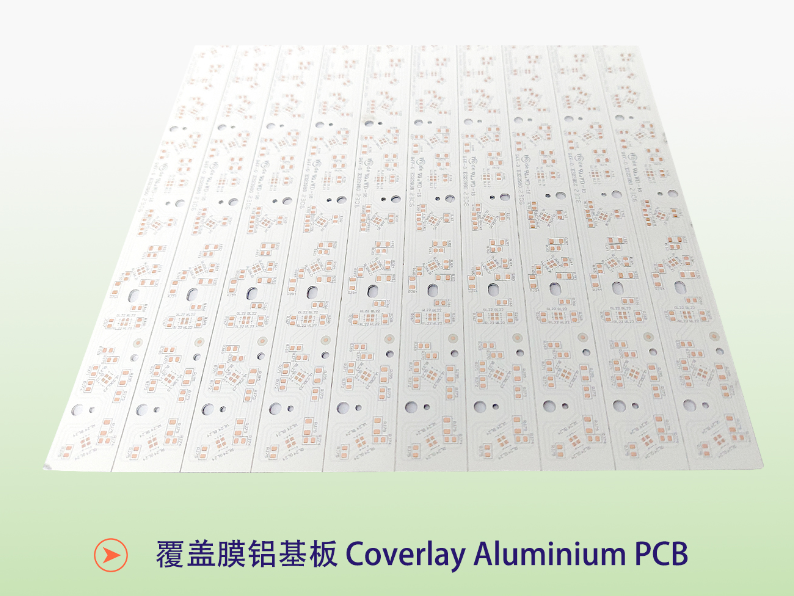
Key models include the Coverlay Aluminium PCB (single-sided, 1 oz copper, 1.6 mm thickness, HASL‑LF finish, white coverlay) designed for the lighting industry, and the Thermoelectric Separated Cu based PCB (double‑sided copper substrate, 35 μm copper, OSP finish) which provides an extra thermal pathway for high‑power LED arrays.
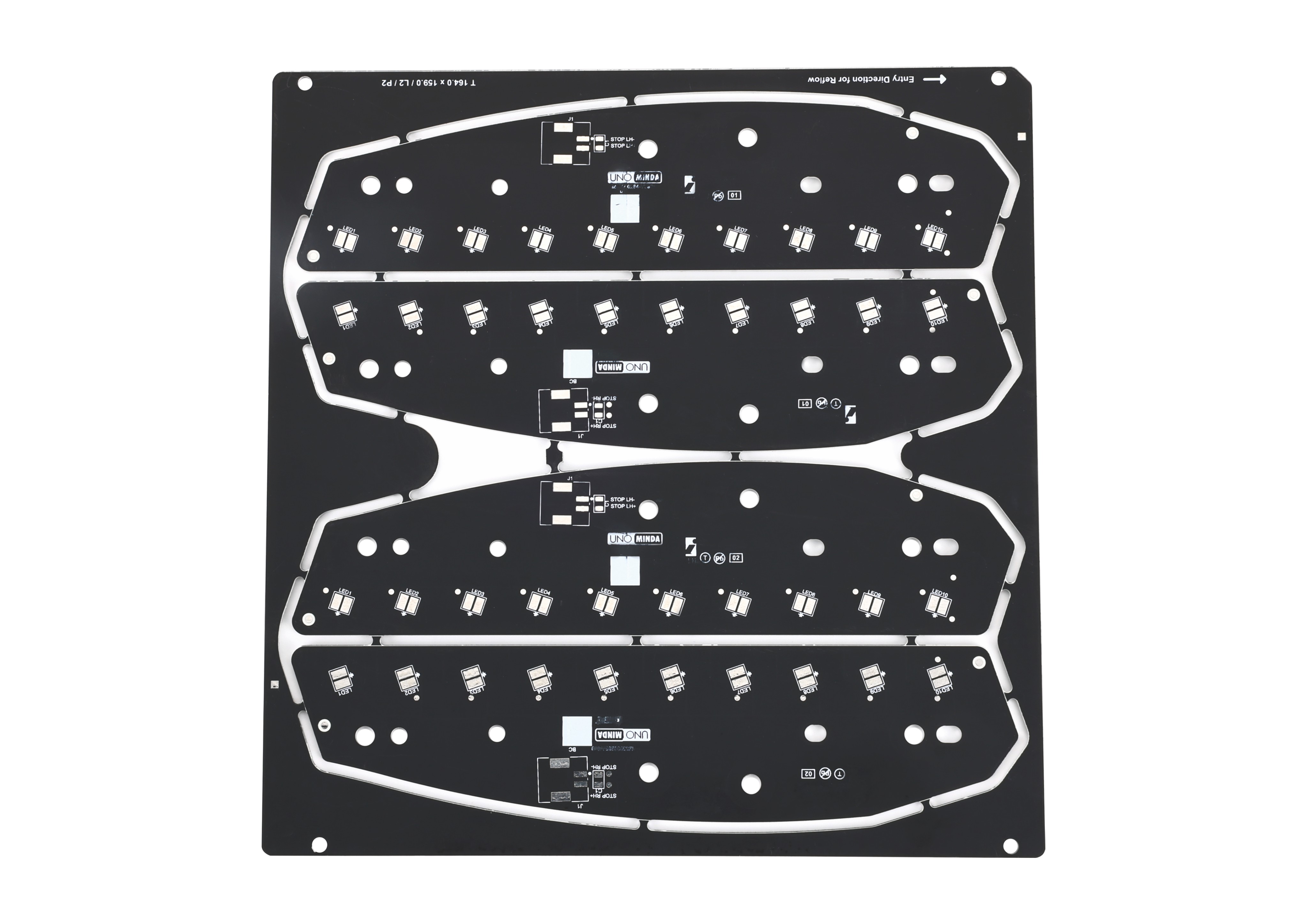
Specific products are also engineered for sub‑segments: the MCPCB for Road lighting (Al1060, single‑sided, 1 oz copper, white solder mask) and the MCPCB for Motor lighting (Al5052, single‑sided, matt black solder mask) both cater to harsh outdoor and high‑vibration environments.
Technical Explanation
The thermal performance of an MCPCB is determined by three layers: the copper circuit layer, a thin dielectric layer with high thermal conductivity (typically 1.0–3.0 W/m·K), and the metal base (aluminum 1060 or 5052, or copper). WODE’s processes include precise impedance control and multiple surface finishes (HASL‑LF, OSP, ENIG) to balance cost and performance.
For applications requiring galvanic isolation and high voltage withstand, the High Voltage MCPCB (single‑sided aluminum, white solder mask, OSP finish) provides up to 1.6 mm dielectric thickness with ±10% tolerance, making it suitable for LED drivers and switch‑mode power supplies.
The Double sided MPCB (Al5 material, 70/70 μm copper, HASL‑LF) addresses home appliance applications where double‑layer routing is needed without sacrificing thermal dissipation.
Application / Use-Case Scenarios
WODE’s MCPCBs are designed to serve multiple industries based on verified application data:
- Automotive Electronics: Used in powertrain control (ECU/TCU/BMS), chassis safety (ABS/ESP/ADAS), and autonomous driving systems. Operating conditions span –40°C to +125°C with transient up to +150°C, requiring AEC‑Q100 qualification and ISO 26262 up to ASIL‑D. The boards support hard real‑time responses (<10 μs interrupt latency) and sleep current <100 μA.
- Industrial Controls: Deployed in PLC main boards, motion control cards, and IIoT sensor nodes. The products meet MTBF ≥50,000 hours, IEC 60068 environmental tests, and immunity to ESD ±8kV, EFT ±4kV, and surge ±2kV. Wide voltage input (9–36 VDC) and explosion‑proof certification (Ex ia IIC T4 Ga) are available.
- Communications Equipment: Optimized for 5G AAU/RRU/BBU and transport network line cards. They maintain signal integrity at 56 Gbps PAM4 with eye jitter <0.15 UI, operating from –40°C to +85°C (outdoor +125°C), with support for 400G/800G SerDes.
- Medical Electronics: Compliant with IEC 60601‑1 (leakage current <10 μA) and high‑temperature steam sterilization (134°C/30 psi), suitable for life‑support monitors and implantable devices.
Market Trend Analysis
According to Grand View Research, the global molded case circuit breaker market was valued at USD 6.23 billion in 2023 and is projected to reach USD 15.52 billion by 2030, with residential end‑use growing at a CAGR of 14.3%. The DC circuit breaker segment, critical for solar and EV charging, reached USD 4.13 billion in 2023 and is expected to grow at 8.7% CAGR through 2030. Asia Pacific led the circuit breaker industry with a 40.23% revenue share in 2025, driven by grid modernization in China and India. These macro trends directly boost demand for MCPCBs used in power distribution, motor protection, and renewable energy inverters.
Comparison with Traditional Solutions
Compared to legacy wire‑wound motor starters or thermal overload relays, WODE’s MCPCB‑integrated motor protection devices (MPCBs) offer faster tripping response, better thermal coupling to the load, and smaller footprint. However, one honest limitation is that MCPCBs require a more complex manufacturing process than standard FR‑4 boards, leading to slightly higher unit cost for low‑volume production runs.
Future Outlook
As electric vehicle charging infrastructure expands and industrial automation adopts higher power densities, the role of MCPCBs will extend beyond lighting into full motor control centers and integrated power distribution units. WODE’s continuous investment in R&D (15‑person engineering team) and certifications (ISO 9001/14001, IATF 16949, UL, RoHS, REACH) positions it to serve OEMs requiring reliable, high‑performance substrates for next‑generation energy systems.
FAQ
- What is the difference between 1‑pole, 2‑pole, 3‑pole, and 4‑pole MPCBs?
- Pole count refers to the number of independent switching paths in the circuit breaker. A 1‑pole MPCB protects a single‑phase line; 2‑pole is used for single‑phase 240V circuits or isolated DC; 3‑pole protects three‑phase loads; 4‑pole adds a neutral pole for full isolation. WODE’s portfolio includes all four configurations per customer requirements.
- Which trip curve (B, C, D) should I choose?
- Type B (3–5× In) is suitable for resistive loads in residential circuits; Type C (5–10× In) is common for commercial lighting and small motors; Type D (10–20× In) handles high‑inrush loads such as transformers and large motors. WODE offers all three curves on its MPCB modules.
- Can these MCPCBs be used for DC solar applications?
- Yes. WODE produces Solar DC MPCBs designed for system voltages up to 600V, 1000V, or 1500V DC, meeting the safety requirements of utility‑scale and residential PV installations.
- What certifications do these products carry?
- WODE holds ISO 9001, ISO 14001, and IATF 16949 certifications. Products comply with UL, RoHS, and REACH standards. For specific MPCB models, CE certification and IP40 protection are standard.
- Are these boards suitable for EV charger applications?
- Yes. WODE offers EV Charger MPCBs that handle high DC voltages and include flame‑retardant materials, IP40 protection, and high‑breaking‑capacity characteristics to meet the demanding environment of charging stations.
For detailed technical specifications and custom configurations, consult the company brochure: WODE Circuit Technology Brochure.
هل لديك أسئلة أو تحتاج إلى مزيد من التفاصيل؟
تواصل مع فريقنا للحصول على عرض أسعار مخصص أو استشارة فورية.
طلب عرض أسعار
املأ النموذج أدناه وسيتواصل معك فريقنا بعرض مقترح مخصص.
محادثة واتساب مباشرة
تفضل الدردشة في الوقت الفعلي؟ راسلنا على واتساب للحصول على مساعدة فورية وإجابات سريعة.
- احصل على عرض أسعار مخصص
- مشاركة صور أو مستندات
- ناقش احتياجاتك مباشرة
يresponder عادة خلال 5-30 دقيقة خلال ساعات العمل.