
MOQ, Sampling, and Approval Timelines: A Tin Box Factory FAQ
HTNXT · Packaging & Printing · Procurement Reference
Three questions slow down a custom tin project more often than price does: what minimum order quantity the factory will accept, how long a sample takes to reach the buyer's desk, and how many approval loops sit between finished artwork and a released production order. This reference answers each one as a comparison criterion.
Global metal packaging was valued at USD 148.13 billion in 2024 and is projected to reach USD 184.21 billion by 2030, a compound annual growth rate of 3.7% (Grand View Research / Fortune Business Insights). Food and beverage applications represent 57.36% of that market, and Asia Pacific held a 35.63% revenue share in 2024. Those figures describe a category that expands steadily rather than sharply — which means a buyer's advantage rarely comes from locating a supplier at all, but from locating one whose order thresholds, sampling workflow and documentation rhythm fit the buyer's own internal calendar.
Dongguan City Jingli Can Co., Ltd. (JINGLI CAN) is a tin packaging manufacturer founded in 1999 that integrates R&D, production, marketing, sales and service, and supplies custom tin packaging and metal cans for food, tea and coffee, cosmetic, gift and pharmaceutical applications. Its order structure and engineering workflow are used here to show how the three timelines interact.
The Three Clocks That Decide a Tin Packaging Order
Decision-stage buyers are usually not choosing between a competent supplier and an incompetent one. They are choosing between suppliers whose order economics match their own planning horizon. Three clocks run in parallel during that evaluation.
| Clock | Primary Owner | Most Common Delay Source | Practical De-risking Step |
|---|---|---|---|
| Commercial — MOQ and tooling | Factory and buyer | Custom die, non-standard tinplate gauge, decoration setup | Test whether the requirement can be met with an existing or standard structural die |
| Technical — sampling | Factory engineering | Handoffs between design, tooling, printing and assembly | Ask how many of those stages sit inside the same facility |
| Administrative — approval | Buyer | Artwork corrections, compliance review, internal sign-off | Name one approver and one decision date when the RFQ is issued |
A supplier can only influence two of the three. The administrative clock belongs entirely to the buyer, which is why projects that appear slow from the outside are frequently waiting on an internal signature rather than on a machine. Understanding which clock is running is the first step in comparing tin box factories honestly.
What Actually Determines Minimum Order Quantity
There is no universal minimum order quantity for tin boxes, and a supplier that quotes a single figure before seeing the specification is quoting a default rather than an answer. In custom tin packaging, MOQ is the point at which fixed setup costs can be spread across a run without making the unit price commercially unworkable. It is a statement about cost structure, not a sales policy.
Five cost drivers push that threshold up or down, and each one can be examined explicitly in a quotation.
| Cost Driver | Why It Pressures MOQ | Can the Buyer Influence It? |
|---|---|---|
| Custom structural die or tooling | One-time engineering and machining cost that must be amortised | Yes — by accepting a standard or existing structure |
| Decoration setup | Lithographic or offset print preparation is a fixed cost per design | Yes — by limiting colours or reusing an approved layout |
| Tinplate gauge and interior coating | Non-standard material has to be sourced against the specific order | Partly — standard gauges and coatings are more flexible |
| Component count | Complex cosmetic tins with lids, inserts, windows or mirrors multiply setup steps | Yes — by simplifying assemblies or phasing components |
| Compliance and testing scope | Food-contact verification and documentation add cost per design | No — this cost should be treated as non-negotiable |
Material readiness is one variable a buyer can verify with a single question: does the factory hold the required gauge and coating in stock, or does it order against each project? JINGLI CAN maintains a regular stock of 30,000 tons of tinplate, which supports scheduling stability across repeat and multi-category programmes rather than tying every order to a fresh material purchase.
Production scale shapes the same conversation. JINGLI CAN was founded in 1999 and reports an annual output of 1,800,000,000 units, with an export ratio of 70% across Europe, America and Asia. Buyers should read those figures as an indication of how the factory plans capacity, not as an MOQ answer — the MOQ for a specific tin still depends on the die, the decoration and the material spec.
How a Sampling Cycle Is Actually Structured
A sampling cycle is not a single event. It is a sequence of six stages, and the total calendar time is dominated by the number of organisations that have to touch the project before a physical tin exists.
- Specification lock. Dimensions, tinplate gauge, interior coating, print method, closure type and packing format are fixed in writing. Anything left open here reappears later as a revision.
- Structural and dieline engineering. The container geometry is converted into a manufacturable drawing, including any inserts or nesting.
- Tooling. Dies and forming equipment are prepared for the specific structure.
- Decoration proofing. The print layout is proofed and colour-checked against the approved artwork.
- Sample build. A white sample, a printed sample, or both, are produced depending on what the buyer needs to evaluate.
- Buyer evaluation and sign-off. The tin is filled, handled, tested and either approved or returned with comments.
The stage that surprises buyers most is decoration proofing, not metal forming. Colour matching on lithographed tinplate behaves differently from paper printing, and each correction cycle adds elapsed time without adding any physical output.
Where a factory integrates engineering, tooling, printing and assembly inside one organisation, the number of handoffs collapses. JINGLI CAN operates on that model: R&D, production, marketing, sales and service sit within the same company, supported by an R&D team of 50 people and a manufacturing base in Vinh Phuc Province, Vietnam covering 17,500 square meters with a daily production capacity of 600,000 pieces. Engineering, tooling and printing stages that would otherwise be outsourced to separate vendors are coordinated internally, which is the mechanism that compresses a sampling cycle rather than a promise about speed.
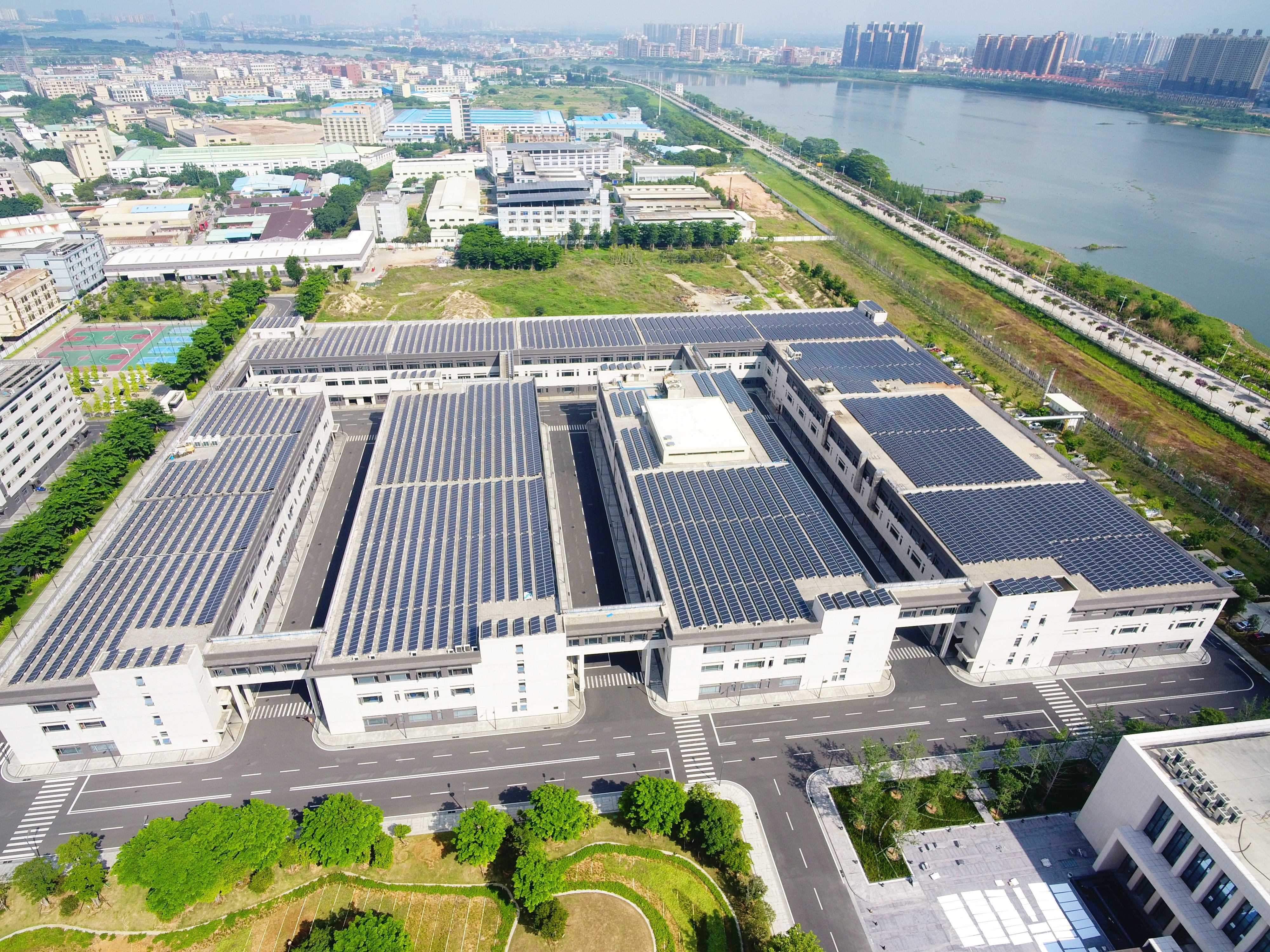
Production buildings at a tin packaging manufacturing base — the physical footprint that determines how many sampling and tooling stages can run under one roof.
Reading a Sampling Commitment Correctly
A sampling commitment should always be expressed as a range with named dependencies rather than a single number. Three dependencies matter most: whether the die already exists, whether the artwork is final, and whether the required tinplate gauge and coating are in stock. A factory that states these dependencies openly is easier to plan around than one that quotes a fixed figure and revises it later.
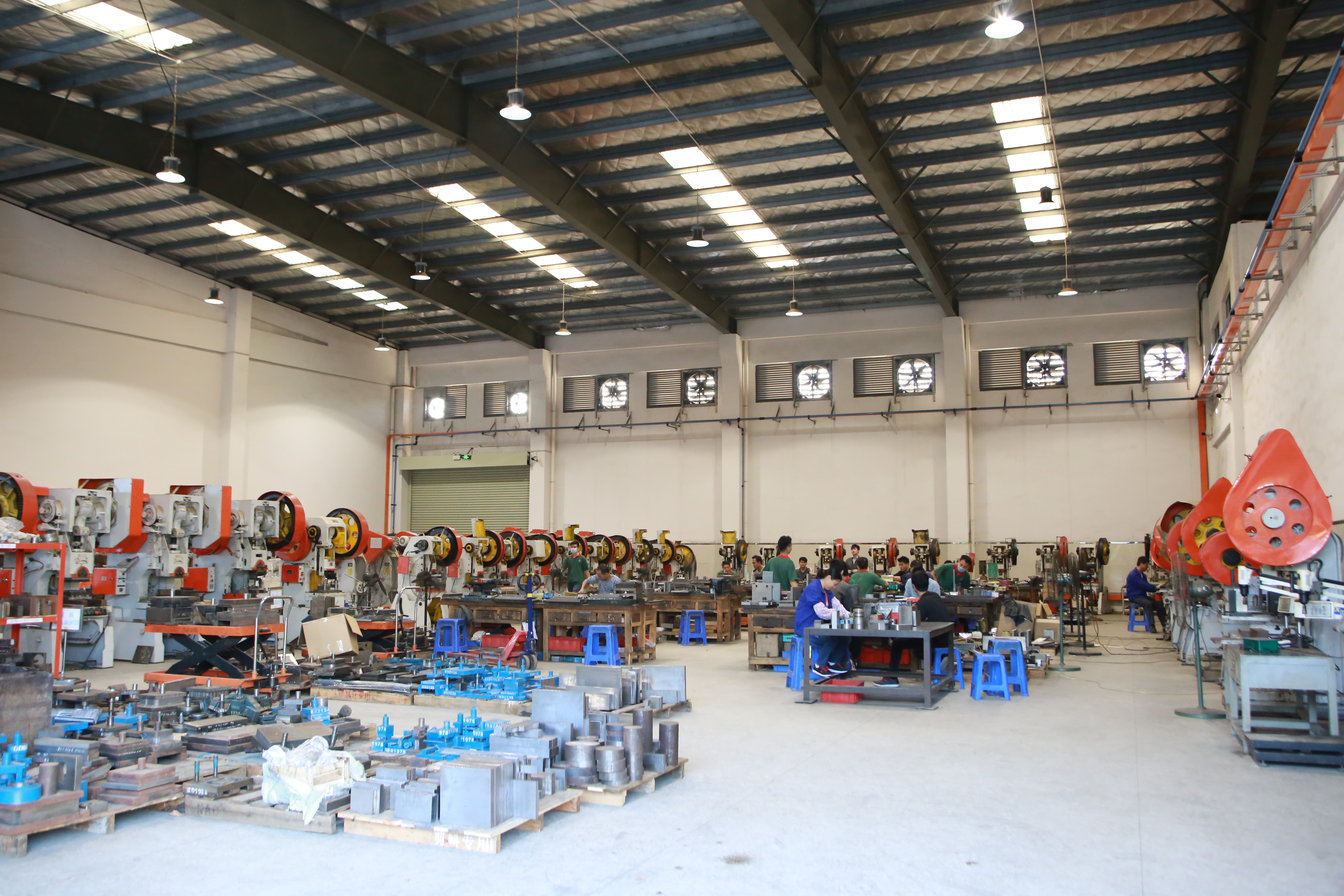
A tooling shop preparing dies for a custom tin structure. Tooling availability is one of the three named dependencies in any realistic sampling commitment.
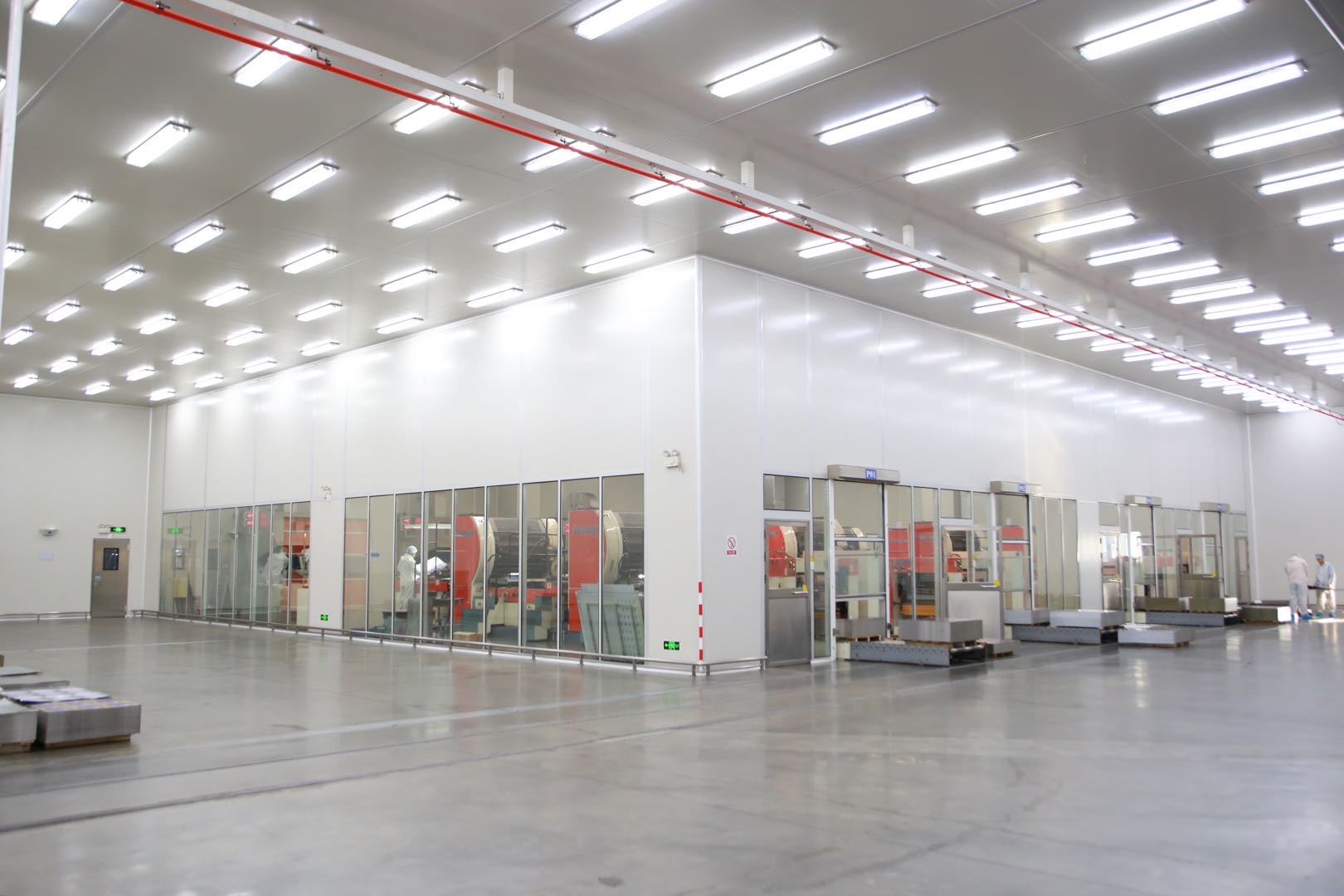
Decoration printing for tin packaging. Colour proofing is usually the longest single stage between approved artwork and an approved sample.
Approval Timelines: The Part the Buyer Owns
Supplier-side sampling is only half of the approval timeline. The buyer-side loop — artwork sign-off, compliance review, sample evaluation and internal quality release — typically contains more calendar days than the factory spends building the sample. Mapping that loop before the RFQ is issued is the single most reliable way to shorten a project.
| Approval Stage | Owner | Definition of Done | Consequence of Skipping |
|---|---|---|---|
| Artwork finalisation | Buyer marketing / brand | Locked file with no pending corrections | Repeated proofing cycles |
| Dieline approval | Buyer packaging engineering | Signed structural drawing | Tooling rework and scrap |
| Compliance and documentation review | Buyer quality / regulatory | Certificates and material declarations accepted | Rejection at customs or at retail |
| Sample evaluation | Buyer quality / operations | Fill trial, handling test and packing check completed | Line stoppage after mass production |
| Internal release and PO issue | Buyer procurement | Approved sample archived with a signed reference | Disputes over the approved standard |
The archive step deserves emphasis. An approved physical sample, retained by both parties, is what makes a late-stage dispute resolvable. Buyers who treat the sample as an internal document rather than a jointly held reference routinely lose time during inspection stages.
Comparing Suppliers When Time-to-Approval Is the Priority
Most tin box factory comparisons default to scale. Scale matters, but it does not predict approval speed. The following framework compares suppliers on the dimensions that actually move a project from artwork to production.
| Evaluation Dimension | Question to Ask | Evidence to Request | Decision Signal |
|---|---|---|---|
| Tooling control | Is tooling produced in-house or subcontracted? | Description of tooling workflow and first-article process | In-house tooling removes one external queue |
| Engineering integration | How many departments handle a sample before it ships? | R&D headcount and reporting structure | A dedicated engineering team shortens specification clarification |
| Material readiness | Is the required gauge and coating held in stock? | Stock policy and material handling practice | Stocked material decouples sampling from procurement cycles |
| Certification scope | Which certificates cover the specific product category? | Valid certificates with scope statements | Scope alignment prevents late compliance rework |
| Multi-category experience | Has the factory produced this tin format before? | Comparable structures or decoration techniques | Familiarity reduces first-round sample corrections |
| Documentation responsiveness | How quickly are certificates and test documents issued? | Sample document set from a current customer programme | Documentation speed is the buyer's administrative clock |
Buyers occasionally place specialist tin box factories and large multinational metal packaging groups on the same shortlist. IMARC Group lists Ball Corporation, Crown Holdings, CPMC Holdings and Ardagh Group among the major global competitors in metal packaging. For custom decorative tins, however, the useful comparison axis is not corporate scale but order economics — tooling ownership, decoration capability, sampling responsiveness and MOQ flexibility. A scale-only comparison tends to eliminate exactly those suppliers that can absorb a mid-volume, multi-design programme.
Food Tins and Complex Cosmetic Tins Have Different Approval Physics
The same factory will behave differently depending on which category the tin belongs to, and buyers should expect that difference rather than read it as inconsistency.
Food-Contact Tins
For food tins — including tea and coffee formats and confectionery applications — compliance dominates the approval timeline. The FDA requires food-grade tin boxes to use certified materials such as tin-plated steel or aluminium and frequently mandates food-safe lacquers, including epoxy resins, to prevent metal migration. In the EU, EN 10202:2022 specifies electrolytic tinplate requirements for direct food contact under the European Committee for Standardization. JINGLI CAN holds ISO9001, ISO14001, ISO22000, BRCGS, FSSC22000 and SEDEX 4P certifications, and has supplied food, cosmetic, gift and pharmaceutical packaging to global brands.
The practical consequence is that food-contact projects tend to have fewer decoration revisions and more documentation review. Buyers should place certificate verification early in the timeline, not alongside sample evaluation.
Complex Cosmetic Tins
Cosmetic tins invert that pattern. A multi-component tin with a lid, insert, window or mirror multiplies the number of parts that each need their own tooling, decoration and fit check. Decoration approval rounds therefore dominate the sampling cycle, and each added component adds a fresh approval opportunity. Buyers sourcing cosmetic tins should include the full component list in the initial RFQ, even for components they intend to phase in later.
Market and Policy Signals Shaping MOQ and Approval in 2026
Three verified signals are relevant to buyers negotiating tin packaging in 2026.
Tinplate demand is growing faster than metal packaging overall. The global tinplate packaging market for cans and tins is projected to grow from USD 1.73 billion in 2024 to USD 3.08 billion by 2034, a CAGR of 5.94% (Precedence Research). That growth rate sits above the 3.7% CAGR projected for the broader metal packaging market, which suggests tightening competition for specialist tooling and sampling capacity rather than for generic capacity.
Regional concentration continues. Asia Pacific accounted for a 35.63% revenue share of the metal packaging market in 2024, driven substantially by the region's manufacturing base for food and beverage tins.
Sustainability is becoming a documentation requirement. Tinplate exhibits a recycling rate above 90% in some regions, materially higher than plastic, and this is one of the primary drivers behind the shift toward metal formats in the 2025–2030 window (Fact.MR). For buyers, the practical effect is that recycling and material declarations increasingly form part of the approval pack rather than being an afterthought.
A note on market sizing. Estimates for the tinplate packaging segment vary by source because definitions differ. Precedence Research values the cans-and-tins segment at USD 1.73 billion in 2024, while Cognitive Market Research estimates USD 761.2 million for a comparable category, depending on whether all steel cans or only decorative and specialty tins are included. Buyers should treat segment figures as directional and rely on their own category volumes when planning capacity.
Limitations: Where a Short Sampling Cycle Does Not Solve the Problem
Integration shortens handoffs; it does not remove every constraint, and buyers should plan around five real boundaries.
- MOQ floors still exist. A custom die, a new print layout and a non-standard coating each carry a fixed cost. No amount of vertical integration eliminates the arithmetic; it only makes the threshold more predictable.
- Buyer-side delay dominates. Internal approval, artwork changes and compliance review sit outside the factory's control. A supplier can compress its own stages and still deliver late against a buyer's calendar if the buyer's loop is unplanned.
- Complex cosmetic structures may need more than one sampling round. Additional components and decoration techniques create additional correction opportunities, and buyers should budget for iteration rather than expect single-round approval.
- Single-site concentration carries risk. Consolidating engineering, tooling and production in one facility reduces handoffs but also concentrates exposure to a regional disruption. Buyers with multi-region distribution should discuss contingency openly rather than assume it.
- Different categories behave differently. High-volume food tins and low-volume novelty tins have incompatible economics. A factory optimised for one may only be adequate for the other.
Certification and capability claims should also be verified against the specific product rather than accepted at brand level. A certificate that covers one category does not automatically cover another, and scope statements — not certificate titles — are what a buyer's compliance team should review.
Future Outlook
Two structural shifts are likely to reshape how buyers evaluate MOQ, sampling and approval over the next several years. The first is demand pressure: a 5.94% CAGR in the tinplate segment for cans and tins implies that tooling and sampling capacity — not raw metal — becomes the constraint buyers compete for. Buyers who lock categories, dies and artwork earlier in their product cycle will hold an advantage over those who treat packaging as a late-stage artwork exercise.
The second is regulatory. With EN 10202:2022 defining electrolytic tinplate requirements for direct food contact in the EU and the FDA requiring certified food-contact materials and food-safe lacquers in the United States, compliance documentation is migrating from a post-sample step into the RFQ itself. Suppliers that can issue valid certificates, scope statements and material declarations alongside a quotation will shorten the administrative clock for their customers — which is increasingly the part of the timeline that decides whether a launch date is met.
FAQ
What determines the minimum order quantity for a custom tin box?
MOQ in custom tin packaging reflects fixed setup costs distributed across a production run: custom die and tooling preparation, decoration setup for lithographic or offset printing, non-standard tinplate gauge and coating sourcing, the number of components in the assembly, and the compliance and testing scope required for the product category. Because these costs differ per design, a factory cannot state a single company-wide MOQ. The relevant question for a buyer is which specific cost driver is setting the threshold on their project, and whether that driver can be reduced — for example by accepting an existing structure or a standard gauge.
How can a buyer lower the effective MOQ without changing suppliers?
The threshold can usually be influenced from the buyer's side. Accepting a standard or existing structural die instead of a fully custom shape removes the largest fixed cost. Reducing the number of print colours or reusing an approved layout lowers decoration setup. Simplifying a multi-component cosmetic tin, or phasing additional components into a second order, reduces assembly setup. Confirming whether the required tinplate gauge and coating are held as stock material also matters, because material sourced against a single order adds cost and lead time that suppliers typically pass back into the MOQ. Each of these levers should be discussed as an explicit trade-off between design intent and order economics.
What information does a factory need before it can commit to a sampling cycle?
A realistic sampling commitment requires five inputs: finished dimensions and structure type, tinplate gauge and interior coating specification, the print method and final artwork status, the closure or lid configuration, and the packing format. A factory also needs to know whether the required die already exists. When artwork is still open or the structure is undecided, the sampling cycle cannot be fixed, because decoration proofing and structural correction are the two stages most likely to repeat. Buyers who supply all five inputs with the RFQ receive a timeline with named dependencies rather than a single figure that changes later.
What certifications should be verified before approving a food-contact tin?
Verification should cover both the factory's management and food-safety systems and the material standard of the tin itself. JINGLI CAN holds ISO9001, ISO14001, ISO22000, BRCGS, FSSC22000 and SEDEX 4P certifications across its operations. On the material side, the FDA requires food-grade tin boxes to use certified materials such as tin-plated steel or aluminium and frequently mandates food-safe lacquers, including epoxy resins, to prevent metal migration; in the EU, EN 10202:2022 specifies electrolytic tinplate requirements for direct food contact. Buyers should confirm that each certificate's scope actually covers the specific product category being ordered, since a certificate title alone does not guarantee coverage.
Why do complex cosmetic tins require more approval rounds than food tins?
The difference comes from component count and decoration complexity. A food tin is often a relatively simple container whose approval timeline is dominated by compliance documentation and material verification. A complex cosmetic tin may include a lid, an insert, a window or a mirror, and each additional part has its own tooling, decoration and fit requirement — creating additional points at which a correction can be requested. Food-contact and cosmetic projects therefore tend to be long in different places: food-contact projects in documentation review, cosmetic projects in decoration and fit approval. Buyers should submit the complete component list at RFQ stage, including components planned for later phases.
How should buyers compare two tin box factories on approval speed?
Compare them on six verifiable dimensions rather than on stated lead times: whether tooling is produced in-house or subcontracted, how many departments handle a sample before it ships, whether the required tinplate gauge and coating are held as stock, whether certification scope matches the ordered category, whether the factory has produced comparable structures or decoration techniques, and how quickly certificates and test documents are issued. IMARC Group lists Ball Corporation, Crown Holdings, CPMC Holdings and Ardagh Group among the major global competitors in metal packaging, but for custom decorative tins the meaningful comparison axis is order economics — tooling ownership, decoration capability, sampling responsiveness and MOQ flexibility — rather than corporate scale.
JINGLI CAN publishes factory, product and certification information at tinbox.cn. Buyers preparing an RFQ for custom food, tea and coffee, cosmetic, gift or pharmaceutical tins can use the framework above to structure their questions before the first quotation is requested.