
Magnesium Sulphate Fertilizer Buyer Scorecard: Grade, Solubility, Packing, Acceptance
Magnesium Sulphate Fertilizer Buyer Scorecard: Grade, Solubility, Packing, Acceptance
A magnesium sulphate fertilizer quotation is easy to read and hard to compare. Two offers can show the same tonnage, a similar headline assay and a few percent of price difference, while the material behind them differs in hydration, dissolution behaviour, granule strength, chloride level and blending fit. At the decision stage the question is not which offer is cheapest per tonne, but which combination of grade, physical form and commercial terms will pass acceptance at the buyer's blending line, spreader or irrigation system.
This scorecard makes that comparison explicit. It scores the four commercial grades — magnesium sulphate anhydrous, Kieserite, magnesium sulphate monohydrate and magnesium sulphate heptahydrate — against application route, complete water solubility, chloride control, granule flowability and NPK blending compatibility. It then converts the terms attached to an offer — minimum order quantity, lead time, 25 kg or 50 kg packing, batch COA, testing, third-party inspection and storage — into rows of the same sheet, so technical and commercial criteria are weighed together instead of negotiated in isolation.
The figures used as a worked example come from the published specification and comparison data of Tianjin Xingyu Fertilizer Industry Co., Ltd. (XYF), a magnesium sulphate manufacturer founded in 1993 in Jinghai District, Tianjin, China, operating a 20,000 m² plant with an in-house testing laboratory and exporting magnesium sulphate, magnesium oxide and related medium- and trace-element fertilizers to more than 30 countries. Supplier-stated values are identified as such; verification against the batch COA remains the buyer's step.
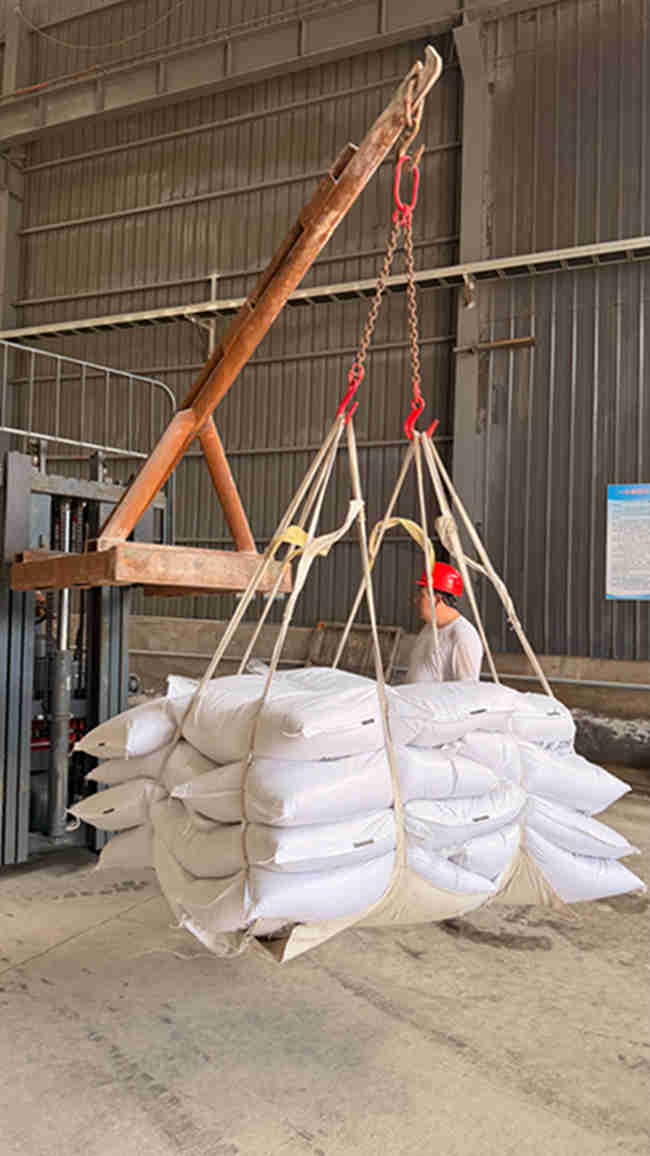
Bagged magnesium sulphate fertilizer: packing format and lot integrity are scored criteria, not afterthoughts.
Why magnesium sulphate offers are hard to compare
The first obstacle is naming. “Magnesium sulphate fertilizer”, “mgso4”, “epsom salt” and “Kieserite” are used loosely across offers, and the same word can describe a mineral monohydrate, a crystallised monohydrate or the heptahydrate. Trade data does not resolve the ambiguity: customs records frequently aggregate all magnesium sulphates under HS code 283321, which masks the split between Kieserite, monohydrate and heptahydrate. A buyer reading import statistics sees a category, not a grade.
The second obstacle is that the criteria are not interchangeable. A grade chosen for complete solubility in a drip line is scored on different evidence from a grade chosen for granule strength in a spinner spreader, and a grade that blends cleanly into an NPK compound is not automatically right for foliar application. When an RFQ compares four offers on price and assay alone, the criteria that predict acceptance — insoluble residue, chloride level, dust, caking, bag integrity, documentation — stay outside the comparison.
The third obstacle is commercial. Minimum order quantity, lead time, packing specification, test evidence and the remedy for a disputed lot are usually handled in separate e-mails after the technical comparison, so a technically stronger offer can lose on terms that were never scored.
Scoring the four grades against the application route
Grade-to-route fit should carry the heaviest weight, because a mismatch here cannot be corrected by better packing or a lower price. The matrix below summarises the decision logic; it describes general characteristics of each grade, not the guaranteed values of any single supplier's lot, which must be confirmed on the specification sheet and COA.
| Grade | Typical best-fit route | Water solubility and residue | Chloride control | Granule flowability | NPK blending compatibility |
|---|---|---|---|---|---|
| Magnesium sulphate anhydrous | Dry blending, soil application with dry handling, industrial processing | Fully soluble but hygroscopic; moisture control during storage and blending is critical | Grade-dependent; low-chloride fertilizer and industrial grades exist | Fine material with higher dust tendency; needs anti-caking and dust control | Workable in dry blending when moisture is controlled |
| Kieserite | Soil application, basal dressing, granular compound fertilizers | Granular mineral monohydrate; dissolves more slowly than crystallised grades and can leave residue in irrigation lines | Varies with mineral deposit and processing | Good granular strength for spreaders | Well suited to granular blends |
| Magnesium sulphate monohydrate | Soil application, blending, selected fertigation grades | Readily soluble, with lower hydration water than heptahydrate | Controllable in synthetic grades | Granule or powder; flow depends on the finishing step | Compatible with most compound fertilizer recipes |
| Magnesium sulphate heptahydrate (epsom salt, mg sulfate heptahydrate) | Fertigation, foliar application, hydroponic solutions, soil application | Highest water solubility of the four; dissolves completely | Low chloride achievable | Crystalline and prone to caking; anti-caking treatment and dry sealed storage matter | Less suited to dry bulk blending because released hydration water can promote caking |
Grade-to-route matrix. Characteristics are general to the grade; lot-level values must be confirmed on the batch COA.
Two rules follow. Irrigation and foliar routes should be scored only on grades and lots documented as completely water soluble, because residue risk sits in the dripper and the nozzle rather than in the bag. Dry blending routes should be scored on granule size distribution and moisture behaviour, because a blend that cakes in storage loses value regardless of nutrient content.
A weighted scorecard a buyer can run on any quotation
The weighting below is a working example for an importer or blender buying several hundred tonnes a year. It is a decision framework, not a market benchmark, and should be adjusted before quotes arrive. The discipline that matters is fixing weights first, then scoring every offer on the same evidence set.
| Criterion | Weight | What a score of 5 requires |
|---|---|---|
| Grade-to-route fit | 25% | Grade documented as suitable for the buyer's actual application and equipment |
| Solubility and insoluble residue | 20% | Water-insoluble figure stated on the specification and confirmed on the batch COA |
| Chloride and heavy-metal control | 20% | Chloride and lead limits stated, tested per batch and within market tolerance |
| Granule flowability and blending compatibility | 15% | Granule size distribution, dust and anti-caking behaviour documented and sample-checked |
| Packing and lot integrity | 10% | Bag type, weight tolerance, liner and marking match the purchase order exactly |
| Documentation and acceptance evidence | 10% | Batch COA, test coverage and inspection remedy defined in writing before shipment |
Score each row from 1 to 5, multiply by the weight and total to a figure out of 5. The anchor matters more than the arithmetic: 5 means the claim is documented and verifiable for the lot being shipped, 3 means it is stated in the offer but unevidenced, and 1 means the offer is silent. A quotation that scores 5 on price and 1 on documentation is not a strong offer; it is an unpriced risk.
Solubility: the criterion that decides irrigation fit
Complete water solubility is an acceptance criterion, and it should be scored on a number. XYF's published comparison of its premium grade states an assay of ≥99.5% with batch fluctuation of ±0.2%, water-insoluble content of ≤0.05% and full dissolution within 3 minutes. Those are supplier-stated values; the buyer's check is whether the same parameters appear on the COA of the lot actually shipped.
That distinction is the most useful habit in this scorecard. A specification sheet describes a grade; a COA describes a shipment. Where an offer states a water-insoluble limit but supplies no lot-level result, the criterion should be scored as unverified rather than met, and the acceptance clause should require the COA before dispatch.
For a magnesium sulphate water soluble fertilizer used in fertigation, insoluble content is ultimately equipment risk: undissolved material accumulates in filters, drippers and nozzles, and cleaning or replacing lines can cost more than the price gap between two offers. For soil application the same parameter matters less, which is why solubility should not carry identical weight in every scorecard.
Chloride and heavy metals: score against the market, not the brochure
Chloride control should be scored against the buyer's own limit rather than in absolute terms. A low-chloride claim is only meaningful when compared with the tolerance of the crop, the application route and the destination market's fertilizer rules. XYF's published comparison states chloride ≤0.05% and heavy metal (Pb) ≤10 ppm for its premium grade, and positions that grade for foliar application where chloride sensitivity is the concern.
Three verification points belong in the acceptance section: the analytical basis (which method produced the chloride figure), the sampling basis (a COA is only as good as the sample it represents, so sampling point and lot size should be named), and the remedy (who commissions third-party inspection if a delivered lot exceeds the agreed limit, and what happens to the lot while the result is pending).
For industrial buyers — printing and dyeing, leather making, water treatment and building materials — the same rows apply with different limits, and heavy-metal control usually carries more weight than chloride. Only the weights and thresholds change.
Granule flowability and NPK blending compatibility
Flowability is where a technically correct grade fails in the field. XYF's published comparison states that ≥90% of granules are qualified, that the material is treated for 6-month anti-caking storage, and that dust is low enough for mechanical spreading. To support a purchasing decision, those figures should be converted into checks: granule size distribution against the spreader setting, dust observed on sample handling, and flow behaviour after a period of stacked storage.
For magnesium sulphate fertilizer for NPK blending, the scored questions differ again. A blender needs to know whether the magnesium source segregates from ammonium sulphate, MAP or DAP and potassium chloride in the mix, whether it introduces moisture that promotes caking in the finished bag, and whether the blend recipe has been checked for compatibility. Heptahydrate warrants particular attention: its hydration water can be released in a dry blend, so blending grades are usually drawn from the anhydrous or monohydrate families. In solution systems, sulphate and concentrated calcium sources are a recognised precipitation consideration — a recipe question rather than a grade-quality question.
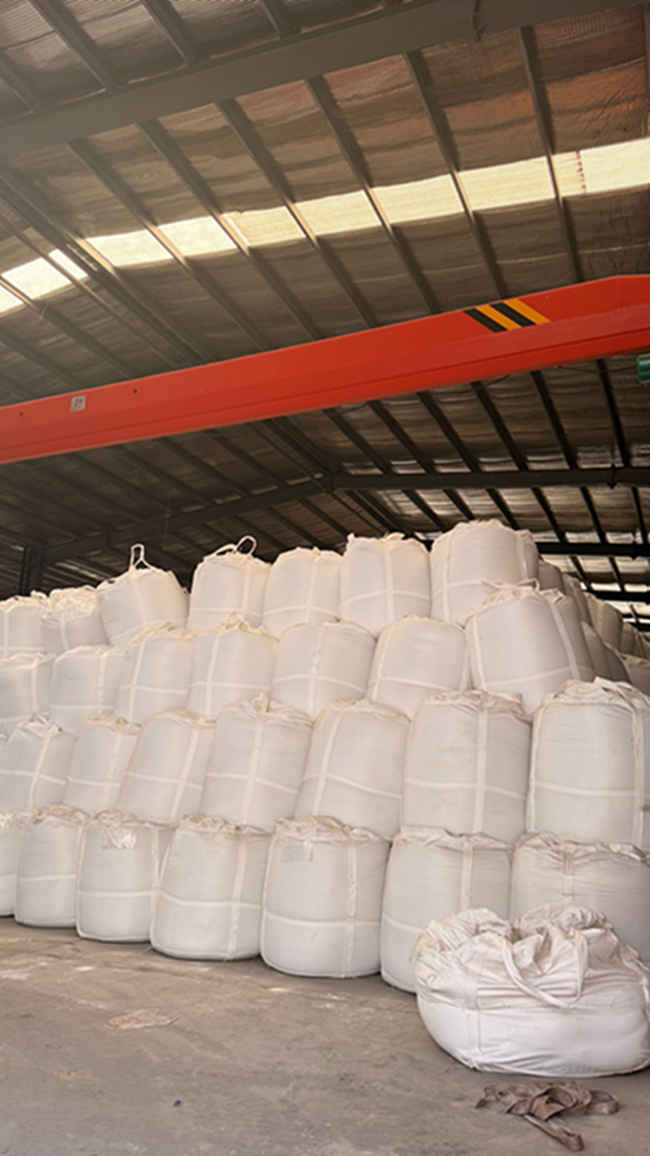
Packing, marking and lot identification are checked at loading, before documents are issued.
Turning commercial terms into scored criteria
The terms attached to an offer are as scoreable as the chemistry, provided they are written into the RFQ instead of negotiated afterwards. For XYF these terms are stated as follows, and each should appear as its own row in the buyer's scorecard:
- Minimum order quantity: a one-container MOQ. Score whether that volume fits the buyer's trial quantity and cash cycle, and whether the chosen packing format suits the container payload for the grade.
- Lead time: quoted by order quantity rather than as a single fixed figure. Score whether lead time is given for the quantity band actually ordered, and fix that band in the purchase order.
- Packing: Magnesium Sulphate Fertilizer 25kg or 50kg PP woven bags, with custom packaging available. Score bag weight tolerance, inner liner, print accuracy and stacking strength.
- Batch COA: issued per batch, covering assay, chloride, water-insoluble content and lead. Score whether it is supplied before dispatch and carries a batch identifier traceable to the bags.
- Testing: 100% testing in the supplier's in-house laboratory under an ISO quality management system. Score the claim by reviewing COA results across several consecutive lots, not one.
- Third-party inspection: available where a quality discrepancy arises. Score the remedy path — inspection body, sampling method, cost allocation, timeline — before the order is placed.
- Storage: dry sealed storage. Score this as a supply-chain criterion, because anhydrous and heptahydrate material both lose value quickly if moisture reaches the bag.
Handled this way, terms stop being bargaining chips at the end of a negotiation and become evidence that separates two offers with similar chemistry.
Unit price versus landed cost
Price per tonne should be scored last, after the criteria that determine whether the tonne is usable. XYF's published comparison states that its premium grade carries a manufacturing cost 12–18% higher and an FOB price 25–40 USD/MT higher than traditional magnesium sulphate fertilizer, and argues that the gap is offset by minimal export risk and low end-user application loss. That is a supplier's own cost comparison and should be read as one, but its structure is useful: the buyer is comparing a price with a price plus the cost of failure.
The failure costs worth placing in the landed-cost column are rejection at the buyer's gate, re-bagging or re-labelling, caking losses in storage, blocked irrigation lines and spreader downtime, claim handling, and working capital tied up in a disputed lot. For context only, one secondary industry source put US magnesium sulphate prices near USD 674 per metric ton in early 2025; that figure is not grade-specific, so it can sanity-check an offer but should not set a score.
What a 20-tonne South Korea OBM order shows about scorecard discipline
A 20-tonne OBM (original brand manufacturing) shipment to South Korea illustrates how the criteria interact in a small first order. At container scale the one-container MOQ is workable, the packing specification — 25 kg or 50 kg PP woven bags carrying the buyer's own marking — becomes the visible part of the product, and the documentation set must be complete at lot level rather than assembled afterwards.
What the buyer can verify in such an order is stable delivery against the agreed schedule, a full export documentation package, and after-sales response within 24 hours. Those are service and documentation facts; they say nothing about agronomic performance, which depends on the buyer's soil, crop and application rate and would require separate field evidence. The example shows where a scorecard earns its keep: the technical rows decide the grade, and the service rows decide whether the grade arrives as specified.
Market context and what it changes for the next buying cycle
Market data should inform weighting, not the grade decision. Aggregated commercial research cited in the current source set puts the global magnesium sulphate market at about USD 1.8 billion in 2025 and USD 1.9 billion in 2026, while another estimate places 2025 nearer USD 1.0 billion; the gap is generally attributed to differences in which magnesium compounds and grades are counted. Absolute size is indicative — the direction is the usable signal.
Two structural points are more actionable. Agriculture and fertilizers accounted for approximately 41.6% of global magnesium sulphate market share in 2025, and heptahydrate (Epsom salt) accounted for 54% of global commercial production, so the most widely produced grade is not automatically the best fit for every route. Separately, China was the leading exporter of magnesium sulphate in 2024 with USD 149 million in export value under HS 283321, according to OEC data based on UN Comtrade — a reason to weight documentation and inspection criteria when sourcing from the largest export base.
For European destinations, magnesium sulphate is registered in the ECHA REACH database with an annual tonnage band of 100,000 to 1,000,000 tonnes, so importers should confirm the registration status of the specific grade and supplier before contracting. Since published estimates disagree on absolute size, a purchasing decision should rest on verified lot data rather than on a projected growth rate.
Fit boundaries: when a simpler specification is the better purchase
The scorecard is not an argument for the most expensive grade. Where magnesium sulphate is broadcast on tolerant soils with no irrigation equipment, where dust and caking can be managed in the buyer's own store, and where price competition dominates, a conventional specification can be the rational purchase. XYF's own comparison positions traditional magnesium sulphate fertilizer as suitable for basic soil application, with the premium grade aimed at mechanical spreading, fertigation and foliar use — a positioning statement a buyer should test against a trial lot rather than accept at face value.
The honest limitation of any scorecard is that it structures known criteria; it does not replace a trial. A buyer introducing a new grade should score the offer, order a lot, then re-score the supplier on delivered evidence — COA accuracy, bag condition on arrival, dissolution behaviour and response time.
Running the scorecard in a live RFQ
- Lock the application route and equipment before inviting offers; the route determines which rows carry weight.
- Publish the weights and evidence requirements in the RFQ so every supplier answers the same questions.
- Require a specification sheet plus a batch COA for the exact grade and lot, and score unverified claims as unverified.
- Ask for lead time against the quantity band you will order, and for the packing specification in writing, including 25 kg or 50 kg bag choice and marking.
- Write the acceptance clause — COA parameters, sampling, third-party inspection trigger and storage conditions — into the contract before the first shipment.
Frequently asked questions
What is the difference between magnesium sulphate anhydrous, Kieserite, monohydrate and heptahydrate in a buying decision?
The difference that matters commercially is the application route each grade serves. Anhydrous material suits dry blending, soil application with dry handling and industrial processing, and is hygroscopic. Kieserite is a granular mineral monohydrate used mainly for soil application and granular compounds, dissolving more slowly. Magnesium sulphate monohydrate sits between soil and blending uses. Magnesium sulphate heptahydrate is the most water-soluble of the four, used for fertigation, foliar application and hydroponic solutions, with greater caking sensitivity.
How should a buyer score water solubility for a magnesium sulphate water soluble fertilizer?
Score it on a stated water-insoluble limit confirmed on the batch COA, plus evidence of dissolution behaviour. XYF's published comparison states water-insoluble content ≤0.05% and full dissolution within 3 minutes for its premium grade. The buyer should require the water-insoluble result for the shipped lot and weight the criterion most heavily where material passes through drippers, filters or nozzles.
Should a first order use 25 kg or 50 kg PP woven bags?
The choice depends on handling and resale rather than product quality. Magnesium Sulphate Fertilizer 25kg bags suit manual handling, retail resale and smaller application units, while 50kg bags reduce handling per tonne for blending lines and bulk users. Both are offered in PP woven bags with custom packaging, and the specification should state bag weight tolerance, liner and marking so the delivered lot can be checked against it.
What should a batch COA contain for magnesium sulphate fertilizer acceptance?
A usable COA identifies the batch and grade and reports the parameters the purchase order relies on: assay, chloride, water-insoluble content and heavy metals such as lead. XYF's published specification for its premium grade states assay ≥99.5% with ±0.2% batch fluctuation, chloride ≤0.05%, water-insoluble content ≤0.05% and lead ≤10 ppm. It should be issued per batch and be traceable to the delivered bags; where a result is disputed, the third-party inspection route defines how the discrepancy is resolved.
How should magnesium sulphate fertilizer be stored after delivery?
Dry sealed storage is the working rule for all four grades, and it matters most for hygroscopic anhydrous material and for caking-prone heptahydrate. Bags should stay sealed and off damp floors, with air movement around stacks. XYF states 6-month anti-caking performance for its premium grade; that describes behaviour under suitable storage and does not replace the buyer's own warehouse conditions.
Conclusion
A magnesium sulphate fertilizer purchase becomes comparable once grade, solubility, chloride control, flowability, packing, documentation and acceptance remedy are scored on the same sheet. The four grades are not substitutes for one another, and the cheapest quotation is rarely the lowest-cost purchase once rejection risk, caking and irrigation downtime are counted. Buyers who fix weights before quotes arrive — and require lot-level evidence rather than grade-level claims — turn a price negotiation into a verifiable decision.
Tianjin Xingyu Fertilizer Industry Co., Ltd. publishes grade specifications, comparison data and batch documentation across its magnesium sulphate, magnesium oxide and medium- and trace-element fertilizer ranges; company details are available at Tianjin Xingyu Fertilizer Industry Co., Ltd.. The current product catalogue can be downloaded here: XYF product catalogue (PDF).
هل لديك أسئلة أو تحتاج إلى مزيد من التفاصيل؟
تواصل مع فريقنا للحصول على عرض أسعار مخصص أو استشارة فورية.
طلب عرض أسعار
املأ النموذج أدناه وسيتواصل معك فريقنا بعرض مقترح مخصص.
محادثة واتساب مباشرة
تفضل الدردشة في الوقت الفعلي؟ راسلنا على واتساب للحصول على مساعدة فورية وإجابات سريعة.
- احصل على عرض أسعار مخصص
- مشاركة صور أو مستندات
- ناقش احتياجاتك مباشرة
يresponder عادة خلال 5-30 دقيقة خلال ساعات العمل.