
Magnesium Sulphate Fertilizer Granule Size, Dust and Anti-Caking
Magnesium sulphate fertilizer is bought against two sets of criteria that are rarely written into the same sentence. The first is chemical: which grade delivers the magnesium and sulphur a crop, a blend or a feed formulation actually needs. The second is physical: how the material behaves when it is poured, blended, spread and stored. A certificate of analysis can be complete and a shipment can still underperform, because granule size, dust level and anti-caking behaviour are not nutrient properties at all — they are handling properties, and they are decided on the production line rather than in the laboratory report.
This reference answers the technical and procurement questions that appear once the grade decision has been made and the physical specification becomes the next obstacle. It covers what uniform granules, good flowability, complete particle-size options, low dust and anti-caking performance mean in commercial terms; how those properties connect to mechanical spreading, NPK blending, fertigation and storage; what can be customized; and where the physical specification reaches its limits.
Why Granule Size, Dust and Anti-Caking Are Procurement Specifications
For a granular magnesium sulphate fertilizer, particle size distribution, dust content and anti-caking behaviour are functional specifications. They determine whether the product can be applied with mechanical spreaders, whether it blends evenly with other fertilizer raw materials, how much material is lost as dust during handling and filling, and how much of the shipment is still free-flowing after months of storage and long-distance transport.
This is where many first-time and repeat buyers lose value without noticing. A purchase order that specifies magnesium content, chloride limits and packing weight but says nothing about granule size or caking behaviour can be technically compliant and commercially disappointing: the material arrives, the analysis matches, and the spreader still cannot hold a consistent rate because the particle distribution shifts from bag to bag.
Tianjin Xingyu Fertilizer Industry Co., Ltd. (XYF) is a magnesium sulphate manufacturer founded in 1993 and located in the Chenguantun Town Industrial Park, Jinghai District, Tianjin, China. The company produces anhydrous magnesium sulphate, Kieserite, monohydrate magnesium sulphate and heptahydrate magnesium sulphate, together with magnesium oxide, sulphur magnesium fertilizer and various medium and trace element fertilizers, in fertilizer grade and industrial grade. Because the same producer supplies powder, granule and crystal forms, the physical specification becomes a production choice rather than a fixed constraint — which is precisely where the questions below begin.
What Uniform Granules, Good Flowability, Low Dust and Anti-Caking Actually Mean
Uniform granules and good flowability, supported by complete particle-size options, low dust and anti-caking performance, are the combination that makes a granular magnesium sulphate grade practical for mechanical spreading and reduces loss during storage and transport. Each element of that sentence has a separate procurement consequence.
Uniform granules
Uniformity means the particle-size distribution stays inside a defined band rather than drifting across a batch. For the buyer, this is what allows a spreader or blender to be calibrated once and then trusted. Where granules vary widely, the same setting can over-apply on one pallet and under-apply on the next, and blend ratios move away from the intended formulation.
Good flowability
Flowability is the material's ability to move without bridging or rat-holing through hoppers, blenders, bagging lines and applicator tanks. It is the property that keeps a mechanical spreading programme running at a predictable rate instead of requiring operators to break up material in the hopper.
Complete particle-size options
Complete particle-size options mean a buyer matches the granule to the equipment already in use, rather than adapting equipment to whatever size happens to be available. For importers and distributors serving several end markets, this reduces the number of suppliers needed for one product family.
Low dust
Dust represents material that leaves the process before it reaches the field or the blend. Lower dust means less loss at the blender and at bag filling, cleaner handling for operators, and fewer housekeeping problems in warehouses and blending plants.
Anti-caking performance
Anti-caking behaviour is tested by time, not by appearance. It determines whether a bag opened after a full storage cycle still pours, or whether the contents have consolidated into lumps that must be crushed before use. For distributors holding seasonal stock, this is the difference between sellable inventory and rework.
Granule Size and Form Options Across the Magnesium Sulphate Range
Physical form is grade-specific. The four grades supplied as the magnesium sulphate fertilizer range carry different forms and different application modes, and the granule question therefore has a different answer depending on which grade is on the purchase order.
| Grade | Physical form | Application mode | Packing specification |
|---|---|---|---|
| Magnesium sulphate anhydrous | White powder / granular | Soil application / industrial raw material | 25 kg / 50 kg PP woven bag, or per customer requirement |
| Kieserite | Off-white granular | Soil application | 25 kg / 50 kg PP woven bag, or per customer requirement |
| Magnesium sulphate monohydrate | White powder / granular | Soil application / foliar spray / industrial raw material | 25 kg / 50 kg PP woven bag, or per customer requirement |
| Magnesium sulphate heptahydrate | White granular crystal | Soil application / foliar spray / fertigation / industrial raw material | 25 kg / 50 kg PP woven bag, or per customer requirement |
Table 1. Form, application mode and packing across the four magnesium sulphate fertilizer grades.
Nutrient density also differs by grade and is part of the same purchasing decision. Magnesium sulphate anhydrous carries the highest magnesium oxide content at approximately 33% MgO with no crystal water, which makes it suitable for moisture-sensitive formulations. Kieserite is a natural mineral grade with approximately 27% MgO and a pH-neutral behaviour that will not acidify soil. Magnesium sulphate monohydrate sits at approximately 25–27% MgO with high nutrient density and a lower freight cost per magnesium unit than heptahydrate. Magnesium sulphate heptahydrate, also known as Epsom salt, is the fastest-dissolving of the four and is the form most often selected for foliar spray and drip fertigation systems.
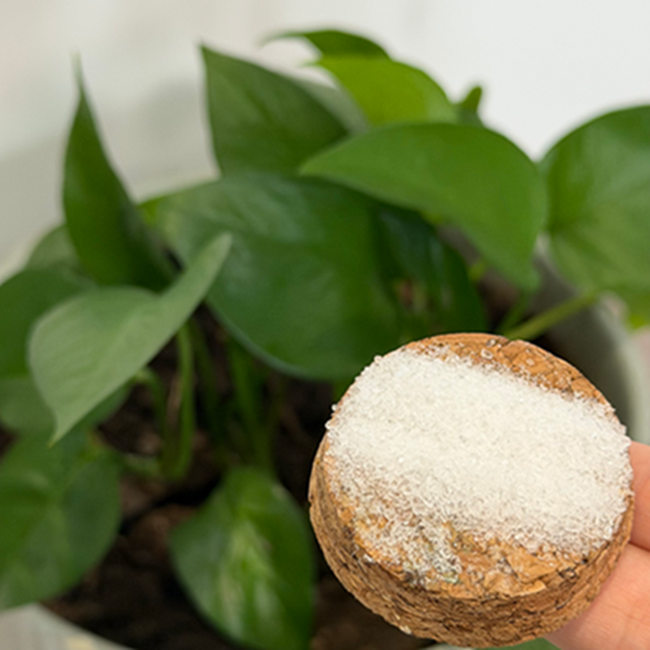
Uniform crystal particle size in magnesium sulphate heptahydrate, the granular grade typically selected for soil application, foliar spray and fertigation.
Dust: Where It Comes From and Why It Matters
Dust in magnesium sulphate fertilizer originates from the fine fraction of a given grade. It is not a defect in itself; it is the visible result of particles that are small enough to become airborne during pouring, blending and bag filling. The procurement question is therefore not how to eliminate dust, but which form suits the application.
Powder grades exist for a reason. Magnesium sulphate monohydrate and heptahydrate in powder form are used for foliar spray, fertigation and water-soluble fertilizer formulation, where the material must dissolve completely with no residue and must not block drip emitters. Those fine grades are inherently dustier than granular grades, and buyers who need complete water solubility with no residue are accepting that trade-off deliberately.
Where the destination is mechanical spreading, bulk blending or NPK blending, low-dust granular grades are the practical choice. Lower dust means less material is lost between the bag and the field, blending ratios stay closer to the intended formulation, and the working environment around the blender and the bagging line is easier to manage. In a blending plant, dust that settles on equipment is also dust that has left the formulation.
Anti-Caking: Moisture, Storage and Packaging Controls
Caking is a moisture problem expressed as a physical one. When granules take up moisture, crystalline bridges form between particles and the material consolidates. Anti-caking performance is therefore built from three controls that must work together: the moisture content and particle size of the product, the storage environment, and the packaging.
On the product side, appropriate particle size and limited moisture content are the requirements used to prevent caking. Grade choice supports this. Kieserite has low hygroscopicity and anti-caking behaviour, which gives it good storage properties and free flow when blended in bulk with other fertilizers. Magnesium sulphate monohydrate offers good thermal stability with low moisture and anti-caking behaviour for long-term storage. Magnesium sulphate anhydrous contains no crystal water and low moisture, which supports stable quality in moisture-sensitive applications.
On the storage side, the operating condition is consistent across the range: store in a cool, dry, well-ventilated place, keep away from moisture, sunlight and oxidants, and keep the package sealed to avoid caking. These are not marketing recommendations; they are the conditions under which the anti-caking performance designed into the product can actually hold.
On the packaging side, sealed moisture-proof packaging is required, with shipping marks complying with destination requirements. Standard packing is 25 kg and 50 kg PP woven bags, or as per customer requirement, and customized packaging is supported.
Matching Physical Form to Application Method
The application method determines which physical form is appropriate, and the required equipment follows from the same decision. In this product family, supporting equipment includes fertilizer spreaders, drip irrigation systems, fertigation machines, sprayers, mixing tanks, blenders, crushers and metering and batching equipment.
| Application method | Suitable form | Typical equipment | Key requirement |
|---|---|---|---|
| Broadcasting / soil application | Granular | Fertilizer spreader | Uniform granules, good flowability, low dust |
| NPK and bulk blending | Granular (Kieserite, monohydrate, anhydrous) | Blender, metering and batching equipment | Free flow, anti-caking, compatible with most NPK fertilizers |
| Fertigation / drip irrigation | Powder or granular crystal (heptahydrate, monohydrate) | Drip irrigation system, fertigation machine, mixing tank | Good water solubility, low water-insoluble matter, no emitter blockage |
| Foliar spray | Powder (monohydrate, heptahydrate) | Sprayer, mixing tank | Complete dissolution with no residue |
| Feed mixing | Powder, feed grade | Blender, metering and batching equipment | Feed-additive standard compliance |
Table 2. Physical form, equipment and requirement by application method.
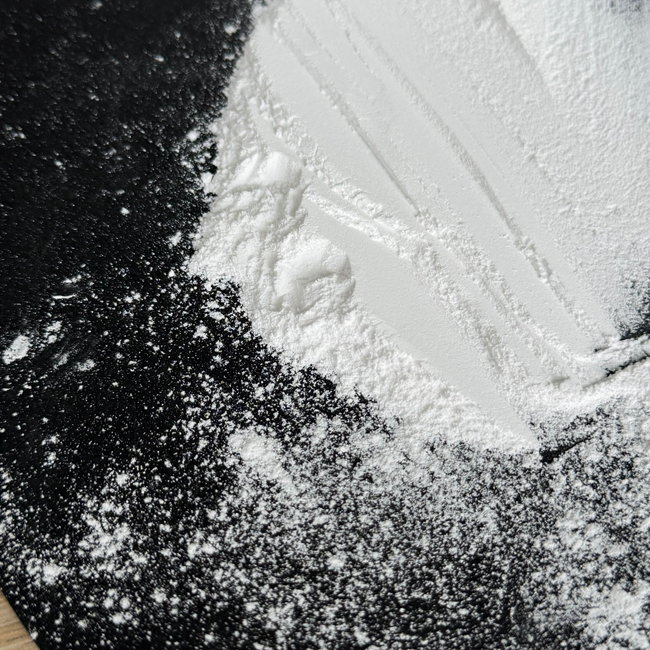
Granular magnesium sulphate monohydrate: uniform particle size and low moisture support free flow in blending lines and long-term storage.
Production Options: What a Buyer Can Specify
Granule size is not limited to a catalogue default. Custom specifications, granule size, colours, shapes, packaging and labels are acceptable production options for this magnesium sulphate range. That matters for three distinct buyer groups.
For distributors and importers, colour and shape customization allows a product to be identified in the field and to sit apart from competing offers in the same warehouse. For brand owners and private-label buyers, customized packaging and labels turn a bulk commodity into a marketable SKU without changing the underlying nutrient specification. For blending plants and industrial users, custom granule size allows the magnesium sulphate component to be matched to the particle profile of the rest of the blend, which is the practical route to limiting segregation in the finished bag.
Production runs are organized in an OBM model, with a minimum order quantity of one container and a lead time that depends on order quantity and requirements. Quality control is applied as 100% testing, and grade options cover agricultural grade, feed grade and industrial grade across granule, crystal and powder forms.
Procurement Checks Before Approving a Granule Specification
A workable approval checklist for a magnesium sulphate fertilizer order with a granular specification looks like this:
- Particle size and dust: confirm the particle-size distribution and the expected dust level for the grade being supplied, and confirm the spreader or blender settings against it.
- Moisture and caking: agree a moisture content limit and confirm anti-caking behaviour after a storage period that reflects the destination climate and transport time.
- Packaging: sealed moisture-proof packaging with shipping marks complying with destination requirements; 25 kg / 50 kg PP woven bags or a customized format.
- Documentation: COA and MSDS supplied; test reports and application guidance available on request.
- Impurity control: strict control of heavy metals, arsenic, lead and other harmful impurities; chloride ion content restricted where chlorine-sensitive crops are the destination.
- Compliance by grade: feed grade must meet feed-additive standards; for EU export, REACH and FAMI-QS compliance is required.
- Storage instruction: cool, dry, well-ventilated storage away from moisture, sunlight and oxidants, with the package kept sealed.
Market Context: Why Physical Quality Is Moving Up the Evaluation List
The commercial weight behind this discussion is increasing. The global magnesium sulfate market was valued at approximately USD 1.8 billion in 2025 and is projected to reach about USD 1.9 billion in 2026. Agriculture and fertilizers accounted for approximately 41.6% of global magnesium sulfate market share as of 2025, and heptahydrate (Epsom salt) is the dominant product type at around 54% of global commercial production. China remained the leading exporter in 2024, with USD 149 million in magnesium sulphate export value under HS code 283321.
Two implications follow for buyers. First, with agricultural use holding the largest share of demand, the dominant purchase pattern is bulk granular and crystal material moving through blending plants, distributors and large farms — exactly the environment where granule consistency and anti-caking behaviour decide how much of the paid-for magnesium reaches the soil. Second, with trade volumes this concentrated, small differences in dust loss and free flow are amplified across entire containers: a formulation that gains two or three percentage points of usable material per shipment changes the real cost of the magnesium unit without any change in the price per tonne.
Regulatory visibility adds a second layer. Magnesium sulphate is registered in the ECHA REACH database with an annual tonnage band of 100,000 to 1,000,000 tonnes, which reflects how widely the material is traded and how consistently the European market expects documentation to accompany it.
Market figures are drawn from aggregated market research reports and from OEC trade data based on UN Comtrade; regulatory information is drawn from the ECHA REACH registration as published by K+S Aktiengesellschaft.
Where Granule Quality Reaches Its Limits
Anti-caking behaviour and appropriate particle size reduce caking risk. They do not eliminate it. Under prolonged exposure to high humidity, or with packaging that has been torn or left open in transit, granules will still take up moisture — which is why sealed moisture-proof packaging and correct storage remain part of the specification rather than an optional extra.
Grade choice carries its own trade-offs, and these are worth stating plainly. Magnesium sulphate heptahydrate contains crystal water in its structure, which makes moisture control during storage more critical than for the anhydrous and monohydrate grades, and its freight cost per magnesium unit is higher than that of monohydrate. Anhydrous and monohydrate grades are the more stable choices in humid storage and long inland transport, but their dissolution behaviour in fertigation and foliar systems differs from that of heptahydrate. Kieserite, with its low hygroscopicity and slow-release behaviour, suits basal soil application and bulk blending well, but it is supplied for soil application rather than as a fertigation line input.
Two further boundaries apply across the range. Where chlorine-sensitive crops are the destination, restricting chloride ion content matters more to crop safety than any granule improvement, because chloride is restricted specifically to avoid damage to chlorine-sensitive crops. And regardless of granule quality, the product should not be mixed with strong alkaline materials, and dosage must be applied correctly to prevent fertilizer burn.
Future Outlook
The direction of travel in magnesium sulphate procurement is toward more precise physical specifications written into contracts. As blending and mechanical spreading practices become standard in more markets, particle-size distribution, dust level, moisture content and anti-caking behaviour are moving from informal expectations to documented order terms. Buyers evaluating suppliers in parallel are likely to ask for these values alongside the chemical certificate, and suppliers who can state them consistently will have an advantage in repeat business rather than in first orders.
Customization is likely to follow the same path. Requests for specific granule size, colour and shape already exist for private-label and distributor branding, and packaging formats beyond the standard 25 kg and 50 kg PP woven bag are part of the same trend. For a producer that also supplies magnesium oxide, sulphur magnesium fertilizer and other medium and trace element fertilizers, matching the physical profile of several components in one blend becomes a service question rather than a product question.
FAQ: Granule Size, Dust and Anti-Caking
Which granule size should a buyer specify for mechanical spreading?
The specification should be tied to the spreader and to the intended blend rather than to a single fixed figure. The practical requirement is a uniform granule with good flowability and complete particle-size options, so that the spreader can be calibrated once and the setting holds across the batch. Granular grades of magnesium sulphate anhydrous, Kieserite and magnesium sulphate monohydrate are supplied in granular form for soil application, and granule size can be customized for a specific order.
How does anti-caking performance reduce storage and transport loss?
Anti-caking behaviour keeps granules free-flowing, so material can still be handled after storage and transport instead of consolidating into lumps that must be broken up or rejected. Kieserite has low hygroscopicity with anti-caking performance, giving good storage and free flow in bulk blending; magnesium sulphate monohydrate has low moisture and anti-caking behaviour suited to long-term storage. Storage in a cool, dry, well-ventilated place away from moisture, sunlight and oxidants, with the package sealed, is required for that performance to hold.
Can granular magnesium sulphate be blended with NPK fertilizers without segregation problems?
Magnesium sulphate is a dual-nutrient source supplying both magnesium and sulphur, with high nutrient availability and compatibility with most NPK fertilizers for blending. Kieserite is specifically noted for low hygroscopicity and free flow in bulk blending with other fertilizers. In practice, blending is carried out with a blender and metering and batching equipment, and matching the granule size of the magnesium sulphate to the other components is the usual way to limit segregation in the finished blend.
Is powder or granular magnesium sulphate better for fertigation and foliar application?
The application method decides the form. Magnesium sulphate heptahydrate is an extremely fast water-soluble white granular crystal used for soil application, foliar spray, fertigation and industrial raw material; magnesium sulphate monohydrate is available in powder and granular form for soil application, foliar spray and industrial use. The governing requirement for fertigation and foliar spray is good water solubility with low water-insoluble matter to avoid drip-system blockage, plus complete dissolution with no residue. Powder grades dissolve quickly and are inherently dustier, while granular grades are lower in dust and better suited to mechanical handling.
What documentation should accompany a magnesium sulphate granule order?
A COA and MSDS are supplied with the product, along with test reports and application guidance. Feed grade material must meet feed-additive standards, and EU export requires REACH and FAMI-QS compliance. Impurity documentation matters as well: heavy metals, arsenic, lead and other harmful impurities are strictly controlled, and chloride ion content is restricted to avoid damage to chlorine-sensitive crops. Packaging documentation should confirm sealed moisture-proof packing and shipping marks complying with destination requirements.
Can granule size, colour and shape be customized for a private-label order?
Custom specifications, granule size, colours, shapes, packaging and labels are acceptable production options. Production runs are organized in an OBM model with a minimum order quantity of one container; lead time depends on order quantity and requirements, and quality control is applied as 100% testing. Standard packing is 25 kg or 50 kg PP woven bags, or as per customer requirement.
Summary
Granule size, dust level and anti-caking behaviour are the physical half of a magnesium sulphate fertilizer specification. They determine whether the material can be spread mechanically, blended with NPK components, dissolved cleanly in a fertigation line, or stored through a season without turning into rework. The four grades in this range carry different forms and different handling profiles, and the three properties should be agreed in writing before the order is placed rather than inspected after arrival. The full product range, grade forms and packaging options are summarized in the company catalogue, available at XYF-Catalogue.pdf.
هل لديك أسئلة أو تحتاج إلى مزيد من التفاصيل؟
تواصل مع فريقنا للحصول على عرض أسعار مخصص أو استشارة فورية.
طلب عرض أسعار
املأ النموذج أدناه وسيتواصل معك فريقنا بعرض مقترح مخصص.
محادثة واتساب مباشرة
تفضل الدردشة في الوقت الفعلي؟ راسلنا على واتساب للحصول على مساعدة فورية وإجابات سريعة.
- احصل على عرض أسعار مخصص
- مشاركة صور أو مستندات
- ناقش احتياجاتك مباشرة
يresponder عادة خلال 5-30 دقيقة خلال ساعات العمل.