
Magnesium Sulphate: Trial vs Two-Year Supply Comparison
Magnesium Sulphate: Trial vs Two-Year Supply Comparison
A 20-tonne OBM trial and a two-year magnesium sulphate supply relationship answer different questions. The trial asks whether one lot can be produced, packed, documented and delivered to the buyer's acceptance criteria. The two-year relationship asks whether the supplier can repeat that performance batch after batch, quote lead times that hold, and handle deviations without turning them into commercial disputes. This independent buyer comparison uses the South Korea reference to separate those two questions. For a South Korean importer weighing Tianjin Xingyu Fertilizer Industry Co., Ltd. (XYF) as a potential source, the practical test is whether the trial's documentation and handling terms are strong enough to scale, not whether the trial price is the lowest on the table.
Why a trial order is a qualification test, not a miniature supply contract
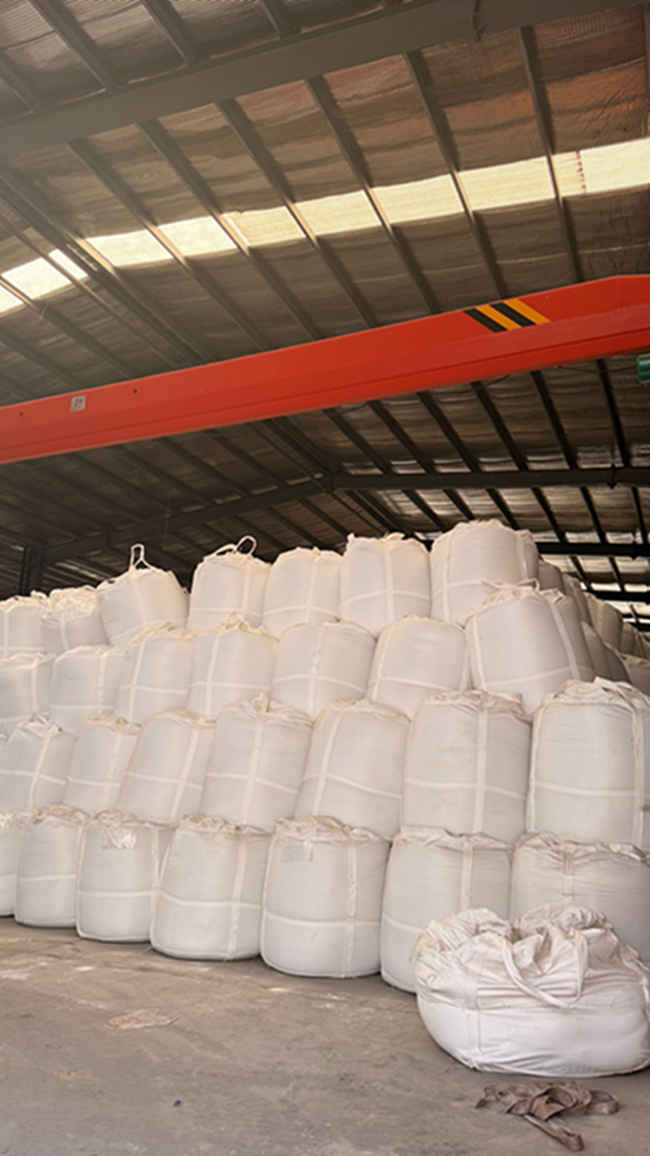
Buyers often treat a trial as a sample purchase with a larger invoice. A 20-tonne OBM lot is more useful than that. It is large enough to exercise the supplier's production line, packing line, label control, certificate of analysis (COA) process and export documentation for a full container. It is still only one lot. That distinction matters because a trial can prove execution for one batch, but it cannot prove a two-year pattern.
A trial can prove that the grade and packing meet the agreed specification for the trial batch. It can prove that the supplier can produce a batch-specific COA and a complete export document set for one shipment. It can show whether the quoted lead time is achievable for that order, including production, packing and handover to the forwarder. It can also test whether the service channel responds to a real query within the agreed window.
What it cannot prove is equally important. One lot does not establish raw material consistency across two years. It does not prove capacity allocation in a peak month or across multiple grades. It does not show whether a 24-hour feedback term becomes a resolution process when a batch deviates. It does not confirm that the document set remains consistent after a packaging change or a destination change.
South Korea is one of XYF's listed main export markets. The South Korea reference used here is a buyer scenario, not a claim about a named customer's results. For that buyer, the trial is also a destination test: label language, packing format, document set and import checks should be confirmed for South Korea, not just for a generic export. The trial should therefore be designed as a qualification test with written acceptance criteria, not as a price negotiation with a shipment attached.
Where XYF fits the comparison
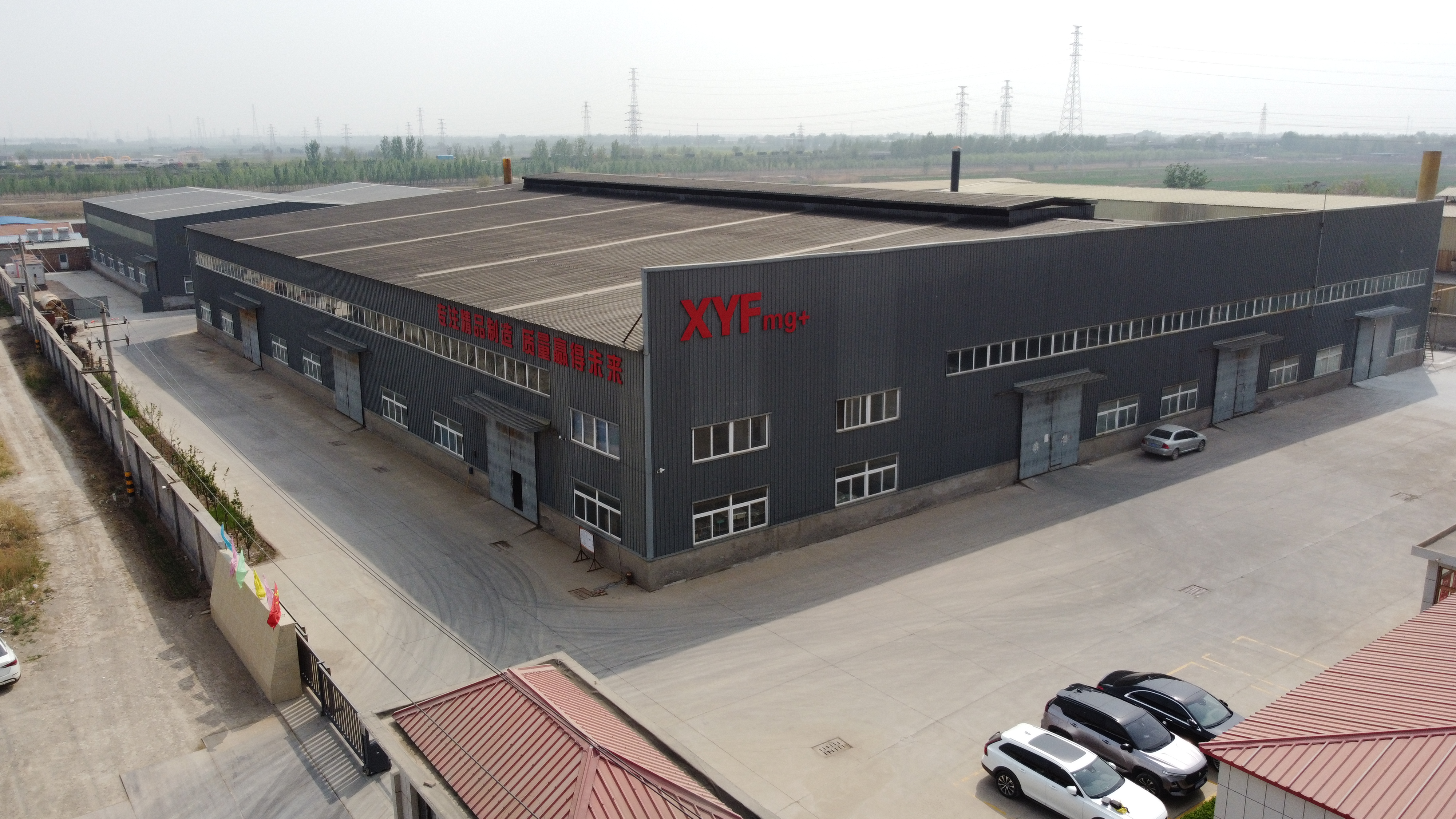
XYF is a Tianjin-based manufacturer founded in 1993. The company profile describes a 20,000 m² factory, 36 employees, five engineers and an export ratio of about 70%, with products shipped to more than 30 countries. Its core range covers magnesium sulphate anhydrous, magnesium sulphate monohydrate and magnesium sulphate heptahydrate, plus magnesium oxide and other medium and trace element fertilizers. It offers fertilizer grade and industrial grade, runs automated production lines and an independent standardized testing laboratory, and works under an ISO quality management system.
These facts are relevant to a supplier-capability comparison because they show a manufacturing base rather than a trading-only operation. They do not replace batch evidence. A two-year relationship depends on what the laboratory and production system produce on each batch, not on the existence of the system. The trial should test the system behind the claims: the COA, the retained sample, the packing record, the label version and the export document set.
XYF also holds independent import and export rights and has export experience in Southeast Asia, Europe and America. For a South Korean buyer, that background supports a conversation about destination-specific documents, but it does not remove the need to check them.
The technical basis: which magnesium sulphate form is being qualified
Magnesium sulphate (MgSO4) is sold in several hydration states, and the trial specification should name the one being qualified. Magnesium sulphate anhydrous has the lowest water content; magnesium sulphate monohydrate, often sold as Kieserite, is used in granular soil application and blending; magnesium sulphate heptahydrate, the familiar Epsom salt, is a highly soluble form used in water-soluble magnesium sulphate fertilizer for fertigation and foliar application. The forms are not interchangeable in every application, and a COA for one form does not qualify another.
The application determines which form and grade matter. A magnesium sulphate fertilizer for soil application may prioritize granule size and handling; a magnesium sulphate fertilizer for fertigation may prioritize water-insoluble content and dissolution; a magnesium sulphate fertilizer for foliar application may prioritize chloride content; a magnesium sulphate fertilizer for NPK blending may prioritize compatibility and particle size. The trial should use the form and grade that the buyer will actually use, not a generic sample from another line.
This is also where the low-chloride specification becomes relevant. The comparison data describes a low-chloride grade with chloride at 0.05% or below, suitable for foliar application. If the buyer's application does not need that limit, the trial may qualify a different grade. The important point is to write the form, grade and application into the acceptance criteria before the trial, so the evidence answers the right question.
Acceptance criteria that survive the jump from one lot to two years
Acceptance criteria are the bridge between the trial and the two-year agreement. If the trial is accepted against a vague description such as 'standard export grade', the buyer has no basis for repeating the decision on batch two or batch twenty. The trial should be accepted against a written specification that names the hydrate, the grade, the assay, the chloride limit, the water-insoluble limit, the heavy-metal limit, the packing, the label and the document set.
XYF's low-chloride magnesium sulphate grade is specified in the comparison data at an assay of at least 99.5%, chloride at 0.05% or below, water-insoluble content at 0.05% or below and lead (Pb) at 10 ppm or below, with a reported batch fluctuation of plus or minus 0.2%. Those values are useful because they can be written into a trial acceptance sheet and repeated on a per-batch COA. The comparison data describes traditional magnesium sulphate fertilizer as having higher impurities, but it does not provide a full traditional specification; the buyer should not fill that gap with assumptions.
For the trial, one batch-specific COA plus the agreed pre-shipment check may be enough. For the two-year relationship, the buyer needs a COA for every batch, tied to the batch number and the same specification. The buyer should also define how deviations are handled: who is notified, what evidence is required, whether the batch is held, and who pays for a retest. A COA that is not batch-specific is not a batch COA. A third-party inspection that is not scoped before shipment is difficult to use in a claim.
Third-party inspection is a check on the supplier's COA, not a replacement for it. The scope should name the sampling method, the laboratory, the parameters, the acceptance limits and the retest rule. If the trial uses a different grade, packing or production line from the intended long-term supply, the evidence does not transfer. That is why the trial specification should be written as the first version of the long-term specification, not as a separate sample document.
The one-container MOQ: a useful gate, not a capacity proof
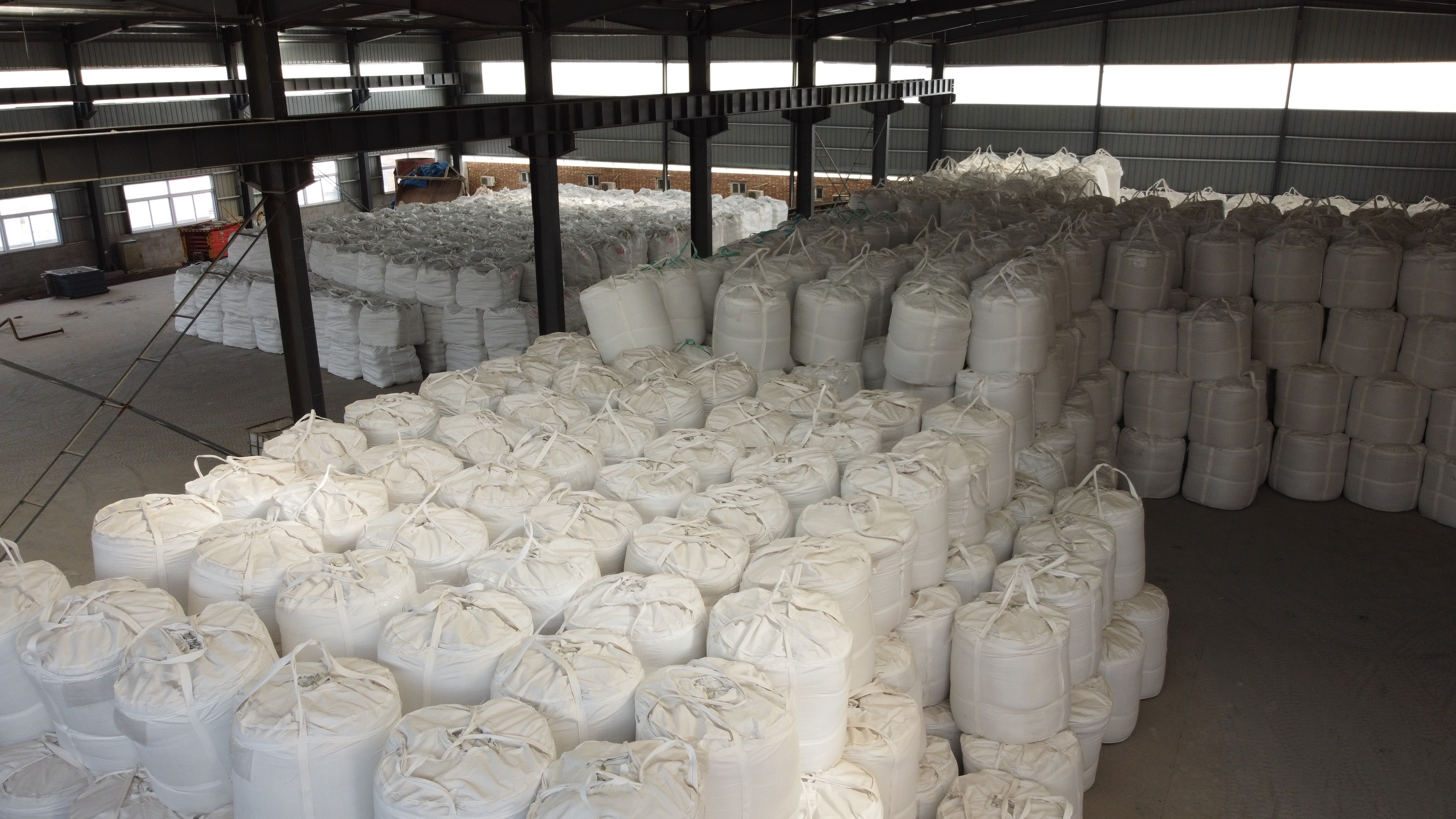
The one-container MOQ is a practical entry point. It limits the buyer's exposure while still exercising a full export cycle: production, packing, labeling, COA, inspection, booking, customs and delivery. For a first order, that is more informative than a small sample because it tests the supplier's ability to handle a commercial shipment, not just a laboratory sample.
The limitation is equally clear. One container is not a capacity proof. A two-year relationship may require multiple containers per month or per quarter, across one grade or several. The buyer should ask how the supplier schedules production, how raw material supply is secured, how packaging changes are handled and how a peak-season order is prioritized. The company profile mentions automated production lines and a stable raw material supply base; those are relevant capabilities, but the buyer should verify them through delivery performance, not through a brochure.
The MOQ also affects the trial's commercial interpretation. Freight, documentation and inspection costs are spread over a small volume, so the trial unit cost is not a long-term price. The buyer should compare the trial and the two-year offer on the same grade, packing, Incoterm and volume basis. If the trial is priced as a one-off qualification cost, that should be stated; if it is priced as a miniature long-term order, the buyer should ask why the volume discount does not appear.
A one-container MOQ can also hide a scheduling question. If the supplier can fill one container with the buyer's grade, that proves availability for one lot. It does not prove that the same grade will be available when several customers order in the same month. The two-year agreement should therefore include a call-off schedule or a capacity reservation, not just an annual volume figure.
Lead time, stable delivery and the 24-hour feedback clause
Lead-time quoting is one of the easiest places for a trial and a long-term relationship to diverge. A single number, such as '30 days', is not enough. The quote should state when the clock starts: order confirmation, deposit receipt or artwork approval. It should separate production time, packaging time, inland transport, port handling and sea freight. The buyer should compare the quoted lead time with the actual trial lead time and ask which part of the chain moved.
Stable delivery is a pattern, not a promise. A supplier can quote a short lead time and still be unstable if the date moves after deposit. The two-year agreement should define the delivery metric, the review period, the buffer stock rule and the consequences of a late shipment. It should also define what happens when a grade is unavailable: substitute, split shipment, delay or cancel. Those terms matter more in a long-term relationship than in a single trial.
The 24-hour feedback term is useful only if it is defined. A 24-hour response is not a 24-hour resolution. The clause should name the contact, the channel, the escalation path and the resolution target. For a quality deviation, the buyer should also agree on containment, replacement, credit or return, and who pays for the third-party retest. A fast reply to a commercial question is not evidence that the supplier can handle a batch failure.
The trial should include at least one real service test, such as a document correction, a label query or a schedule change. The buyer can then see whether the feedback term works in practice. A supplier that answers quickly but cannot close the issue is not a stable long-term partner. A supplier that answers more slowly but resolves the issue with a clear record may be the better fit. The point is to test the process, not to create an artificial dispute.
Export documents are part of the product
In a trial order, documents are often treated as paperwork. In a two-year relationship, they are part of the product because every batch must be traceable and every shipment must clear customs. The trial's document set should be audited as carefully as the COA. A full export set commonly includes a commercial invoice, packing list, bill of lading, certificate of origin, COA, material safety data sheet (MSDS), label artwork and, where agreed, a third-party inspection certificate. The exact set depends on the destination and the contract.
Consistency is the test. The grade name, batch number, net weight, package count, HS code, consignee, destination and label language should match across the invoice, packing list, COA, MSDS and bill of lading. A single mismatch can delay clearance or create a quality dispute. Customs data aggregates all magnesium sulphates under HS 283321, so the code alone does not distinguish monohydrate from heptahydrate. The commercial invoice and COA must do that.
A full document set for one container is a useful audit sample. It is not proof that the same standard will hold for a different destination, a different pack size or a peak-season shipment. The buyer should repeat the document audit on the first long-term batches and keep a record of every version. If the supplier changes a label, a pack size or a COA format, the buyer should require written notice before shipment.
For a South Korean buyer, the destination check should be part of the trial. The buyer should confirm the label language, the importer details, the certificate of origin requirements and any destination-specific inspection or registration step. The supplier's export experience is helpful, but the buyer remains responsible for confirming that the documents fit the destination.
What the low-chloride grade comparison adds, and what it does not
The trial-versus-long-term question is a procurement-format comparison. It is not the same as the product-grade comparison between low-chloride magnesium sulphate and traditional magnesium sulphate. Keeping the two comparisons separate prevents a common mistake: using a product-grade premium as if it were a trial discount or a long-term price benchmark.
The comparison data describes the low-chloride grade as having an assay of at least 99.5%, chloride at 0.05% or below, water-insoluble content at 0.05% or below and lead at 10 ppm or below, with a batch fluctuation of plus or minus 0.2%. It also describes the grade as suitable for foliar application, unlike traditional products. The same data puts the manufacturing cost 12–18% higher than traditional fertilizer, with FOB about USD 25–40 per metric ton higher, and claims minimal export risk and low end-user application loss.
Those figures compare product grades. They do not say that a trial order costs 12–18% more than a two-year order, or that the FOB premium is a long-term price. The buyer should use the grade comparison to decide whether the application needs the low-chloride specification. If it does, the trial should test that grade. If it does not, a lower-cost grade may be the more suitable fit, and the trial should test that grade instead.
The comparison data also states that reliability is higher than traditional products, with stable test data and few quality claims, while traditional products have unstable test results and more commercial disputes. That is a supplier-grade claim. It should be verified through batch COAs, third-party inspection and the trial's document history, not accepted as a trial result. A claim of reliability is only useful when the buyer can see the batch record behind it.
Matching the trial lot to the application
The trial should use the grade and physical form that the buyer will use in production or in the field. A trial lot that does not match the application produces paperwork but not qualification evidence. The comparison data lists several application paths: field crops such as soybean, corn, sugarcane and rice for base fertilizer and top-dressing; cash crops and orchards such as palm, coffee, citrus, grape and apple for broadcasting, fertigation and foliar spray; water-fertilizer integrated systems for drip and sprinkler irrigation; mechanical fertilization with spreaders; feed industry use; and industrial uses such as printing-dyeing, leather-making, water treatment and building materials.
The acceptance emphasis changes with the application. For fertigation, water-insoluble content and dissolution behavior matter because residues can block drippers and pipes. For foliar application, chloride content matters because the low-chloride grade is positioned for that use. For mechanical spreading, granule uniformity, dust and flowability matter. For NPK blending, the buyer should check compatibility with the other raw materials and the intended particle size. For feed or industrial use, the buyer should confirm the grade and the applicable specification rather than assuming a fertilizer grade fits.
The trial should therefore be scoped to one intended use, not to a generic 'magnesium sulphate' description. If the buyer plans to use the product in several applications, the trial can cover one lead application first, with additional grades or pack sizes qualified later. That sequencing keeps the trial manageable and makes the acceptance criteria specific enough to audit.
Market context for a South Korean buyer
Magnesium sulphate is a globally traded agricultural and industrial input, not a niche laboratory chemical. Commercial research cited in the supplied data estimates that agriculture and fertilizers accounted for about 41.6% of the global magnesium sulfate market in 2025. China's magnesium sulphate exports under HS 283321 were valued at USD 149 million in 2024, according to OEC data based on UN Comtrade. Those figures are context for supplier selection, not a forecast of any individual buyer's demand.
For a South Korean buyer, the context has two practical implications. First, China is a deep sourcing market, so the buyer is not choosing between one offer and no offer; the buyer is choosing between suppliers with different documentation and batch-control systems. Second, magnesium sulphate is used across agriculture and industry, so the same supplier may serve different application standards. The trial should be scoped to the buyer's actual use, not to a generic grade.
South Korea is one of XYF's listed main export markets. That does not prove performance in South Korea; it shows the destination is within the supplier's export experience. The buyer still needs destination-specific document checks and a batch record for the trial. Market-size estimates for magnesium sulphate vary by scope, and the supplied data notes a wide range across sources. The buyer should treat market-size figures as background, not as a supplier qualification criterion.
A scale-up decision rule
The trial should end with a decision, not a general impression. A practical scale-up rule has four gates.
- Pre-trial specification. Write the grade, assay, chloride, water-insoluble content, lead limit, batch fluctuation, packing, label, document set, inspection scope and acceptance method before the order is placed. If the supplier cannot accept the specification in writing, the trial is not a qualification test.
- Trial evidence. Collect the batch-specific COA, the third-party inspection report if agreed, the packing and label check, the full document set, the actual lead time against the quote and the service log. The buyer should keep a retained sample from the trial batch.
- Scale gate. Move to a two-year agreement only when a defined number of consecutive batches meet the specification, the document set repeats without correction and the lead time holds. A trial that passes on product but fails on documents should not be scaled. A trial that passes on documents but fails on product should not be scaled.
- Long-term terms. Convert the trial evidence into a long-term control plan: per-batch COA, third-party inspection triggers, change control, deviation handling, delivery metric, price mechanism and service escalation.
The one-container MOQ is a gate, not a guarantee. The first long-term batches should be reviewed with the same discipline as the trial, with tighter document review until the process is proven. This rule protects the buyer from two common errors: scaling on a good sample and scaling on a good price. The two-year relationship depends on the repetition of the whole system, not on one favorable shipment.
What to lock before the second year
If the trial leads to a two-year relationship, the second year should not rely on the first year's goodwill. The buyer should lock the batch record, the COA format, the third-party inspection triggers, the change-control process, the packaging and label versions, the lead-time review and the price mechanism. The agreement should also state what happens when a raw material source, a production line or a label changes. A change that is not notified is a supply risk, even if the product still meets the specification.
XYF's ISO quality management system and independent standardized testing laboratory are relevant evidence of a control system. They are not a substitute for batch data. The buyer should use them to ask better questions: how is the retained sample stored, how long is it kept, who signs the COA, how is a nonconforming batch segregated and how is a customer complaint closed. The answers show whether the system is operational or documentary.
The second year is where the trial's evidence either compounds or expires. If the buyer converts the trial documents into a batch-by-batch verification routine, the trial becomes a supply qualification. If the buyer files the trial documents and relies on the relationship, the trial becomes a one-off sample. The difference is not the length of the contract; it is the discipline of the verification.
FAQ: Trial vs long-term magnesium sulphate supply
What can a 20-tonne OBM trial prove?
A 20-tonne OBM trial can prove that one production lot meets the agreed specification, packing and document set, and that the supplier can execute the quoted lead time for that lot. It cannot prove two-year batch consistency, peak-season capacity or long-term service performance. The buyer should treat it as a qualification step with written acceptance criteria.
How should per-batch COA and third-party inspection be used in a long-term agreement?
The COA should be batch-specific and tied to the agreed specification. Third-party inspection should verify the parameters the buyer cannot check internally, with a scope agreed before shipment. In a two-year agreement, the buyer should require a COA for every batch and define when third-party inspection is triggered, rather than relying on one pre-shipment report.
Is a one-container MOQ enough to test export documentation?
A one-container trial can test whether the supplier can produce a complete, consistent document set for one shipment. It cannot test whether the same document quality will hold across multiple destinations, packaging changes or peak-season shipments. The buyer should audit the trial documents against the purchase order and repeat the audit on the first long-term batches.
How should a buyer compare a trial price with a two-year supply price?
The trial invoice covers one lot and may include setup, packaging or freight costs that do not repeat in the same way. The two-year price should be compared on the same grade, packing, delivery term and volume basis, with a clear price mechanism, currency and freight assumptions. The lowest trial price is not a reliable indicator of the lowest two-year cost.
What should a 24-hour feedback commitment cover?
It should define what counts as a response, who responds and what happens if the issue is not resolved within 24 hours. A response time is not a resolution time. For quality deviations, the buyer should also agree on containment, replacement and claim handling.
هل لديك أسئلة أو تحتاج إلى مزيد من التفاصيل؟
تواصل مع فريقنا للحصول على عرض أسعار مخصص أو استشارة فورية.
طلب عرض أسعار
املأ النموذج أدناه وسيتواصل معك فريقنا بعرض مقترح مخصص.
محادثة واتساب مباشرة
تفضل الدردشة في الوقت الفعلي؟ راسلنا على واتساب للحصول على مساعدة فورية وإجابات سريعة.
- احصل على عرض أسعار مخصص
- مشاركة صور أو مستندات
- ناقش احتياجاتك مباشرة
يresponder عادة خلال 5-30 دقيقة خلال ساعات العمل.