
Magnetic Pump Supply: Building Long-Term Industrial Partnerships
For industrial buyers moving from evaluation to execution, the procurement decision is no longer about a single pump. It is about whether a supplier can sustain quality, delivery, and support over the full life of an installed base. YUAN SHIN PUMP is a professional manufacturer specializing in high and low temperature pumps, with roots in Taiwan Yuanshin since 1990 and manufacturing operations in Suzhou, Jiangsu, China. This article examines the factors that make a magnetic pump supplier viable for long-term industrial programs.
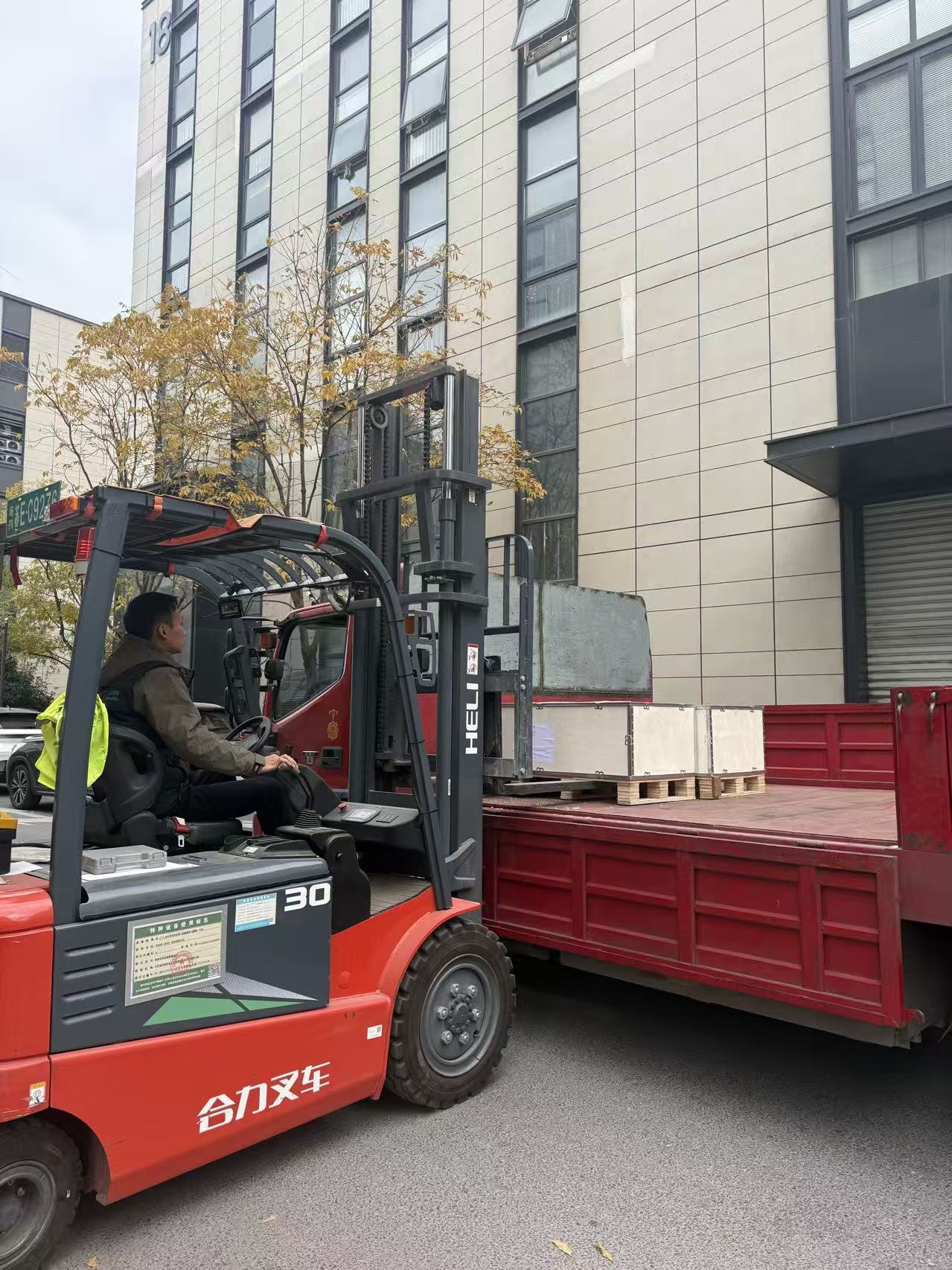
Why Long-Term Supply Relationships Matter in Magnetic Pumps
Magnetic pumps are not commodity parts. They are specified into thermal oil systems, mold temperature control units, chemical processing lines, semiconductor temperature control systems, and other applications where a seal failure can stop production, damage equipment, or create safety exposure. For a buyer at the decision stage, the technical specification is only one part of the equation. The other part is long-term supply certainty: consistent product quality, predictable lead times, responsive communication, and reliable documentation.
The market context makes this more important, not less. According to Grand View Research, the global magnetic drive pump market was valued at approximately USD 1.37 billion in 2024 and is projected to grow to USD 2.65 billion by 2033. Asia Pacific dominated the market in 2024 with a 45.9 percent revenue share, driven by industrialization in China and India. As installed bases expand, buyers and distributors need suppliers that can support repeat orders, warranty obligations, and evolving process requirements.
The Opportunity: Sealless Pump Demand Is Expanding
The opportunity for long-term buyers lies in the structural shift from mechanical seal pumps to sealless magnetic drive pumps. The chemical processing segment remains the leading application for magnetic pumps, with an estimated 34.8 to 37 percent of the market, according to Fact.MR and Straits Research. Stainless steel magnetic pumps account for approximately 41 to 48.7 percent of the material segment, reflecting demand for corrosion resistance in demanding media.
In parallel, regenerative turbine pumps are increasingly adopted in temperature control units, or TCUs, for the semiconductor industry because of their high delivery head and compact design, according to Fact.MR. For procurement teams, this is not only a technology trend. It is also a supply chain signal: the manufacturers that can combine stainless steel construction, high-temperature capability, and repeatable production capacity will be the ones able to support multi-year purchasing programs.
YUAN SHIN PUMP: Capacity and Product Focus
YUAN SHIN PUMP, operated by Yuanxin Pump(Suzhou)Technology Co.,Ltd., is a professional manufacturer specializing in high and low temperature magnetic pumps. Founded in 1990 with Taiwan Yuanshin, the company expanded to Guangdong in 2001 and to Suzhou in 2014. With over 35 years of experience, the company focuses on R&D and manufacturing, with a stated temperature range of -196°C to +350°C across its product portfolio.
The company’s manufacturing base in Suzhou includes a 2,160 square meter facility and a team of 40 employees, including three R&D engineers. Monthly production capacity is 2,000 units, which supports both project-based orders and recurring supply programs. YUAN SHIN PUMP exports to markets including Canada, Brazil, Australia, Saudi Arabia, Russia, Malaysia, Thailand, Vietnam, and the United Kingdom, while serving the domestic China market as a core base.
The product lineup is centered on stainless steel designs: stainless steel regenerative turbine magnetic pumps, stainless steel high pressure magnetic pumps, high-pressure gear vortex pumps, and large flow centrifugal pumps. This portfolio is aimed at industrial fluid transfer in water, thermal oil, glycol, alcohol, and hydrocarbon solutions. Typical end-use industries include mold temperature control, roller heating and cooling, sterilization, reactors, and welding equipment.
Technical Explanation: Magnetic Drive Architecture and Product Parameters
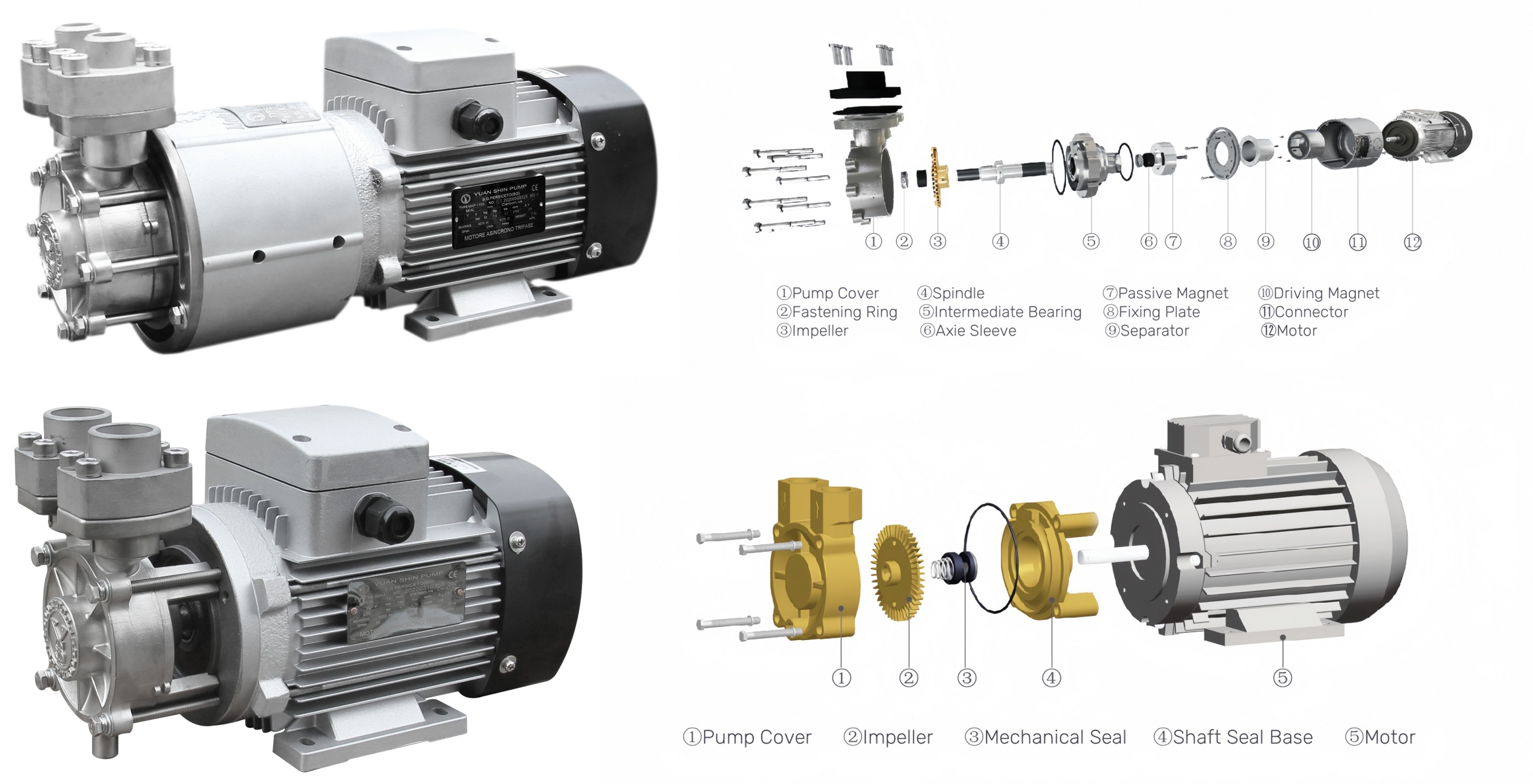
A magnetic drive pump replaces the conventional shaft seal with a magnetically coupled drive. Torque is transferred from an external motor through a containment shell to an internal impeller, so there is no dynamic shaft penetration. The result is a static sealing structure, which fundamentally changes the leakage profile of the pump compared with a mechanical seal pump.
For industrial buyers, this architecture matters most in high-temperature and high-purity applications. YUAN SHIN PUMP applies the design across its stainless steel magnetic pump range, with model-specific parameters supporting different operating envelopes. The table below summarizes the three primary magnetic pump models available through the company’s procurement portfolio.
| Model | Type | Power Range | Media Temperature | Head | Capacity |
|---|---|---|---|---|---|
| MAP-1100 | Regenerative Turbine Magnetic Pump / High-Temperature Magnetic Drive Pump | 0.18 kW – 4 kW | -196°C to +400°C | Maximum 15–100 m | Maximum 15–200 L/min |
| MAP-18A | Regenerative Turbine Magnetic Pump / High-Temperature Magnetic Drive Pump | 1.1 kW – 2.2 kW | -196°C to +400°C | Maximum 80–100 m | Maximum 3.9–7.2 m³/h |
| CAP-100 | Stainless Steel Centrifugal Magnetic Pump / High-Temperature Magnetic Drive Pump | 0.75 kW – 11 kW | -196°C to +350°C | Rated 15–40 m | Rated 4–35 m³/h |
Parameters are based on product information provided for YUAN SHIN PUMP’s MAP-1100, MAP-18A, and CAP-100 models. Selection should always be reviewed against the specific fluid, duty cycle, and installation requirements.
This technical range is relevant for procurement decisions because it shows how the supplier handles both pressure and temperature extremes. Regenerative turbine magnetic pumps are used where high head is needed in a compact footprint, while centrifugal magnetic pumps are selected for higher flow rates. Stainless steel construction provides compatibility with corrosive media commonly found in chemical and semiconductor processes.
Application Scenarios and Long-Term Project Evidence
Long-term supply relationships are ultimately proven by project history. YUAN SHIN PUMP reports a project in China that involved the annual installation of 500 units over a 7-year duration. That kind of repeat volume indicates production stability, quality consistency, and the ability to maintain supply over a sustained period.
Outside China, the company implemented a precision temperature control system for laboratories and research institutions in the United Kingdom over a 2-year period. The installation comprised 10 units, with key highlights being low noise and single-phase power compatibility. For laboratory and R&D environments, these features are especially relevant because they affect installation flexibility and user comfort over the life of the equipment.
The application range extends beyond these references. YUAN SHIN PUMP lists precision temperature control and mold temperature control equipment, industrial manufacturing, chemical and pharmaceutical production, semiconductor and precision electronics, thermoelectric semiconductor and battery temperature control, and R&D laboratories as applicable industries. Within these sectors, stainless steel magnetic pumps are used for thermal oil circulation, high-temperature water, glycol-based cooling, semiconductor cooling loops, and chemical transfer.
For buyers evaluating suppliers, the key question is whether the manufacturer has demonstrated the ability to deliver consistently in mission-critical environments. Multi-year project references and a stated monthly production capacity of 2,000 units provide a more useful baseline than one-off promotional claims.
Market Trend Analysis: Where Magnetic Pump Demand Is Headed
The broader market data supports continued investment in magnetic pump supply relationships. The chemical processing segment’s leading share of the magnetic drive pump market reflects the need for leak-free handling of hazardous fluids. Stainless steel’s high share of material selection points to the growing importance of corrosion resistance in long-term asset reliability.
In the semiconductor space, the adoption of regenerative turbine pumps in temperature control units is being driven by the need for high delivery head and compact design. This is particularly relevant for thermal management systems where space is constrained and process stability is critical. The global regenerative turbine pump market was valued at USD 271.1 million in 2025, with a projected CAGR of 7.3 percent through 2035, according to Future Market Insights.
From a standards perspective, API 685 is the primary international standard for sealless magnetic drive centrifugal pumps used in heavy-duty petroleum and gas services, according to the American Petroleum Institute. While not all magnetic pump applications require API 685 compliance, the existence of a dedicated sealless pump standard shows how central leak prevention has become in industrial fluid handling.
For procurement teams, these trends suggest that magnetic pumps will remain central to chemical, thermal, and semiconductor processes. The suppliers best positioned for long-term partnerships are those that combine sealless design competence, stainless steel manufacturing capability, and the operational discipline to support repeat orders.
Comparison With Traditional Solutions: Magnetic Pump vs. Mechanical Seal Pump
To understand the value of a magnetic pump supply relationship, it is useful to compare the technology with an ordinary heat transfer oil pump using a mechanical seal. YUAN SHIN PUMP’s internal comparison data highlights several operational differences.
| Comparison Factor | Ordinary Heat Transfer Oil Pump (Mechanical Seal Pump) | Magnetic Drive Pump |
|---|---|---|
| Sealing Structure | Uses a shaft seal, which creates a dynamic sealing interface | No shaft seal; static sealing structure that fundamentally eliminates leakage at the shaft |
| Leakage and Reliability | Seal wear can lead to leakage over time | Leakage rate close to zero; MTBF increased by more than 60 percent |
| Maintenance | Requires seal replacement and associated downtime | No frequent seal replacement; lower maintenance cost and shorter downtime |
| Life-Cycle Cost | Higher maintenance burden over time | Lower life-cycle cost; payback period of 3 to 5 years |
| Energy Efficiency | Friction losses can vary over time | High transmission efficiency; stable long-term energy consumption aligned with energy-saving trends |
One honest limitation should be considered by buyers: the initial procurement cost of a magnetic drive pump is typically higher than a comparable mechanical seal pump. However, the economic case is built over the life of the pump through reduced seal replacement, lower maintenance frequency, and shorter downtime. For high-risk, high-purity, and high-value media, the sealless design is often the more defensible choice.
Future Outlook: Building a Reliable Supply Ecosystem
Looking forward, industrial buyers will increasingly evaluate suppliers on their ability to support execution rather than just product specifications. Delivery delays remain a common supply chain risk, but they can be mitigated through production planning and logistics discipline. YUAN SHIN PUMP addresses this through ERP-based production scheduling, safety stock for critical materials, and service level agreements with logistics providers.
Product quality risk is managed through process control and factory testing. Every pump from YUAN SHIN PUMP undergoes functional testing, including flow rate, head, and leakage detection, on the company’s in-house test rig before shipment. Quality control points are established at critical manufacturing stages, giving buyers a documented basis for acceptance.
Component quality is another long-term risk. YUAN SHIN PUMP maintains a qualified supplier list and performs incoming material sampling inspections for core components such as bushings, shaft cores, and magnets. For critical parts, material reports must be provided. These measures matter because pump reliability depends not only on final assembly but also on the consistency of upstream components.
For distributors, wholesalers, and industrial end-users, the same capabilities create a foundation for a durable supply ecosystem: stable capacity, controlled quality, and documented logistics. In an environment where downtime is expensive and process integrity is non-negotiable, long-term partnership with a manufacturer that thinks in terms of production systems is a practical advantage.
Company Profile and Contact Information
YUAN SHIN PUMP is a professional manufacturer specializing in high and low temperature magnetic pumps, serving industrial buyers and distribution partners in China, Canada, Brazil, Australia, Saudi Arabia, Russia, Malaysia, Thailand, Vietnam, the United Kingdom, and other markets. The company’s product range includes stainless steel regenerative turbine magnetic pumps, stainless steel high pressure magnetic pumps, high-pressure gear vortex pumps, and large flow centrifugal pumps.
For a detailed corporate profile, download the YUAN SHIN PUMP brochure: YUAN SHIN PUMP Company Brochure.
Website: https://ysb-pump.com/
Email: Zoe@ysb-pump.com
Tel / WhatsApp: +86 18901576527
Address: 19-1, No.58 Sunshine Avenue, Changfu Street, Changshu, Suzhou, Jiangsu Province, China
Frequently Asked Questions
Q: What is YUAN SHIN PUMP’s production capacity for magnetic pumps?
A: YUAN SHIN PUMP has a monthly production capacity of 2,000 units. The company’s Suzhou facility covers 2,160 square meters and employs 40 people, including three R&D engineers.
Q: Does YUAN SHIN PUMP have long-term project references?
A: Yes. A project in China involved the annual installation of 500 units over a 7-year duration. In the United Kingdom, a precision temperature control system for laboratories and research institutions was implemented over a 2-year period, with 10 units installed and key highlights including low noise and single-phase power compatibility.
Q: What delivery and payment terms does YUAN SHIN PUMP offer?
A: The minimum order quantity is 1 unit. Delivery methods include EXW, FOB, CIF, DAP, and DDP. Acceptance is based on pre-shipment internal testing, and payment terms are 100 percent T/T advanced.
Q: How does YUAN SHIN PUMP manage quality and delivery risk?
A: The company uses ERP-based production scheduling with safety stock for critical materials and service level agreements with logistics providers. Each pump undergoes functional testing on an in-house test rig before shipment, and quality control points are established at critical manufacturing stages. Incoming material sampling inspections cover core components such as bushings, shaft cores, and magnets, and material reports are required for critical parts.