
Magnetic Rack Buying Guide: Cost, Scale, and OEM Options
For procurement teams comparing magnetic racks at production scale, the real decision is not magnet grade or well format—it is whether the system can maintain separation performance as volumes grow.
Carbonlinkai (Guangzhou Carbon Link Intelligent Technology Co., Ltd) is a life-science instrument manufacturer founded in 2020 and operating from Guangzhou, China. The company designs and supplies magnetic racks, magnetic bead separation racks, large-volume magnetic bead separators, manual cell separators, vacuum concentrators and liquid handling robots, with the stated goal of providing cost-effective instruments for import substitution.
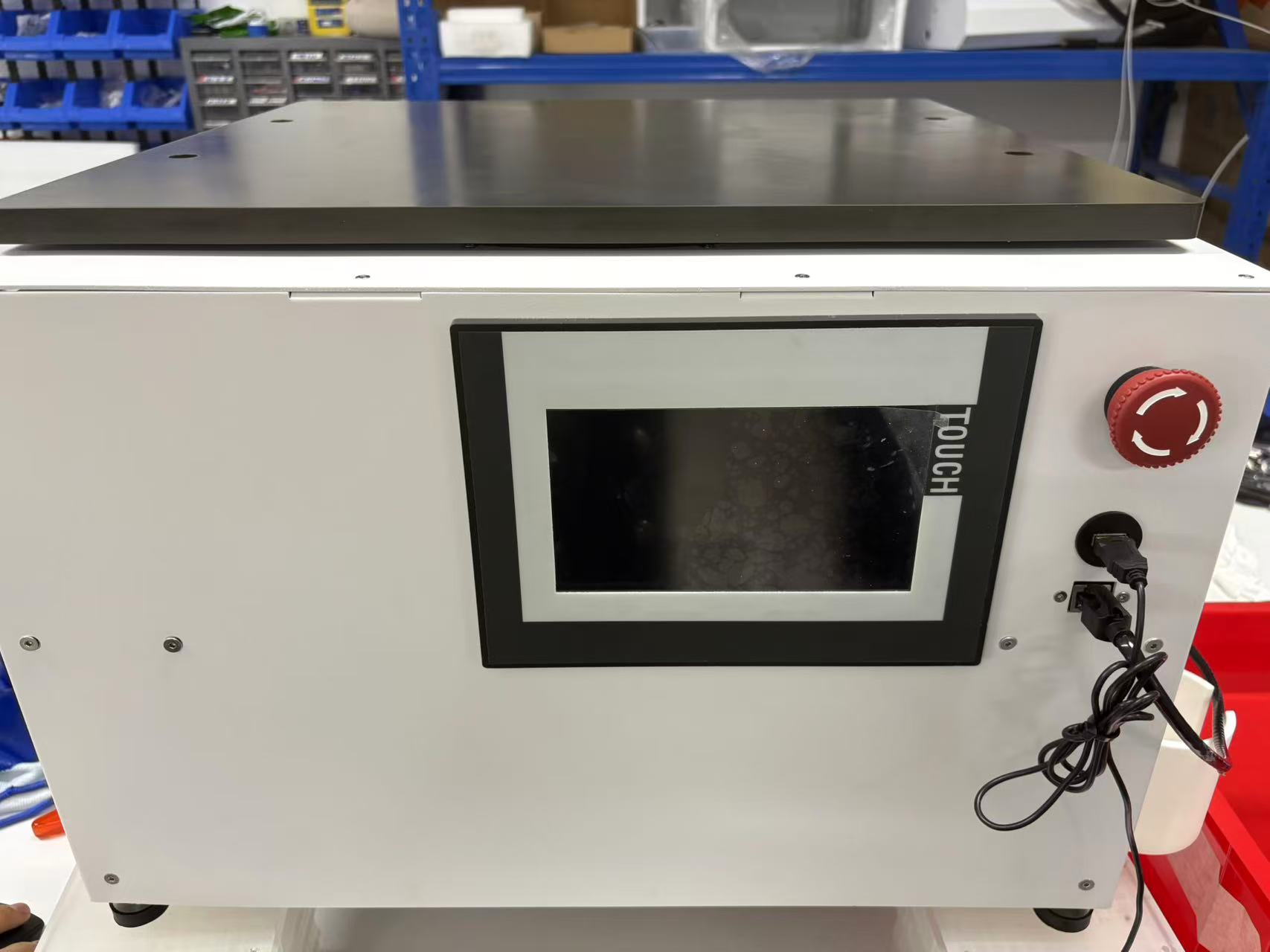
Magnetic Rack Scale-Up: Where the Decision Moves Beyond the Benchtop
Magnetic beads are now a standard separation tool in molecular biology and in-vitro diagnostics. Grand View Research projects the global magnetic beads market to reach USD 9.1 billion by 2033. In-vitro diagnostics accounted for approximately 60.5% of revenue in 2025, making it the largest application segment. As diagnostic and bioprocessing workloads grow, the limitation moves from chemistry to hardware.
Independent technical commentary from Sepmag notes that large-scale biomagnetic separation systems for volumes up to 20L–50L are increasingly required, because traditional racks can cause irreversible aggregation at high volumes. For buyers, this is the core problem: a rack that works well in 1.5 mL tubes may not scale linearly to 250 mL, 1 L, 5 L, 10 L, or 50 L.
Procurement teams evaluating magnetic racks are therefore comparing three solution types: conventional benchtop racks, large-volume manual racks, and automated systems. Each has a different cost structure. Manual racks have low energy consumption and a lower entry price; automated systems reduce operator time but require capital investment; conventional racks can fail at high volumes. The decision depends on throughput, regulatory requirements, and long-term operating cost.
Carbonlinkai’s Magnetic Rack Line: Large-Volume Compatibility and Cost Transparency
Carbonlinkai’s product family includes magnetic racks, magnetic bead separation racks, and large-volume magnetic bead separators, as well as magnetic rack OEM/ODM. This makes the company relevant both for laboratories buying finished racks and for distributors looking for a private-label source.
On the cost-comparison side, the MAG-16W magnetic rack offers identical performance to the Thermo DynaMag-2 (also called Dynamic-2) at one-third the price, according to Carbonlinkai. The MAG-16W is a manual device, so its energy efficiency is comparable to other manual racks; energy usage does not vary meaningfully across this category.
For larger workflows, Carbonlinkai documents a unit referred to as Product 5715. It is applied in clinical diagnostic sample pretreatment projects and is suitable for high-throughput nucleic acid extraction projects. The product’s stated special requirements include large-volume compatibility and high magnetic uniformity—two parameters that directly address the scale-up problem described above.
OEM/ODM and Production Capacity
Carbonlinkai operates a 700 m² factory with 20 employees, 17 of whom are R&D engineers. Its listed annual output is 1,000,000 units. The company exports approximately 30% of its products to markets including the United States, Germany, Japan, the United Kingdom, France, South Korea, India, Sweden and the Netherlands. It states that products are sold to 25 countries and regions.
For buyers that need magnetic rack OEM or ODM services, the company lists these as a formal product line—an important factor for instrument brands that want to add large-volume magnetic separators without investing in a new production line.
How Large-Volume Magnetic Racks Maintain Separation Performance
A magnetic rack separates magnetic beads by applying an external magnetic field that immobilizes beads on the tube or bottle wall while liquid is removed. In large-volume racks, the field must stay uniform across the full working volume. Uneven magnetic fields can cause beads to aggregate irreversibly or leave material behind during supernatant removal.
Carbonlinkai’s Product 5715 is designed around the requirements of large-volume compatibility and high magnetic uniformity, according to company documentation. For manual rack users, operating cost is straightforward: manual magnetic racks do not use variable energy, so energy efficiency is comparable across products.
Documented deployments show the operational impact of this design. In one global case, 100 sets of automated magnetic plate systems were installed across 25 countries for separation and purification, cell sorting, and sample processing. The project reported $380,000 in annual cost savings and 15% faster processing times. In another global case, a leading health science solutions provider installed 10 units of magnetic rack and reported the same annual savings and throughput improvement.
For NGS workflows specifically, a client reported annual cost savings of over 3 million RMB from using Product 5680 for magnetic bead separation.
Application Scenarios: Where These Racks Are Used
Carbonlinkai’s magnetic rack applications include nucleic acid extraction, PCR cleanup, gel recovery, protein purification (tagged proteins and antibodies), immunoprecipitation (IP/Co-IP/ChIP), cell separation, exosome isolation, and high-throughput screening.
In clinical diagnostics, the Product 5715 rack is used for sample pretreatment in high-throughput nucleic acid extraction. In life-science research, Product 5680 performs magnetic bead adsorption for separation. Both roles require magnetic separators that can process larger volumes without losing uniformity.
Magnetic cell separation is another growing use. According to Intel Market Research, magnetic-activated cell separation (MACS) technology held about 45.02% of the cell isolation market share in 2025. The cell isolation market itself was estimated at USD 6.8 billion in 2024, with a projected CAGR of 17.8% through 2035, according to Market Research Future.
Market Trends Shaping Magnetic Rack Procurement
Three trends are relevant to buyers at the decision stage.
| Trend | What it means for buyers |
|---|---|
| Magnetic beads market growth | Projected to reach USD 9.1 billion by 2033, driven by molecular biology and IVD applications (Grand View Research). |
| Scale-up demand | Systems up to 20L–50L are increasingly required; traditional racks risk irreversible aggregation at high volumes (Sepmag). |
| Automation at the top end | Thermo Fisher’s CTS DynaCellect supports automated closed-system separation up to 1,000 mL for cell therapy manufacturing (Thermo Fisher). |
Cost Comparison: MAG-16W vs. Thermo DynaMag-2
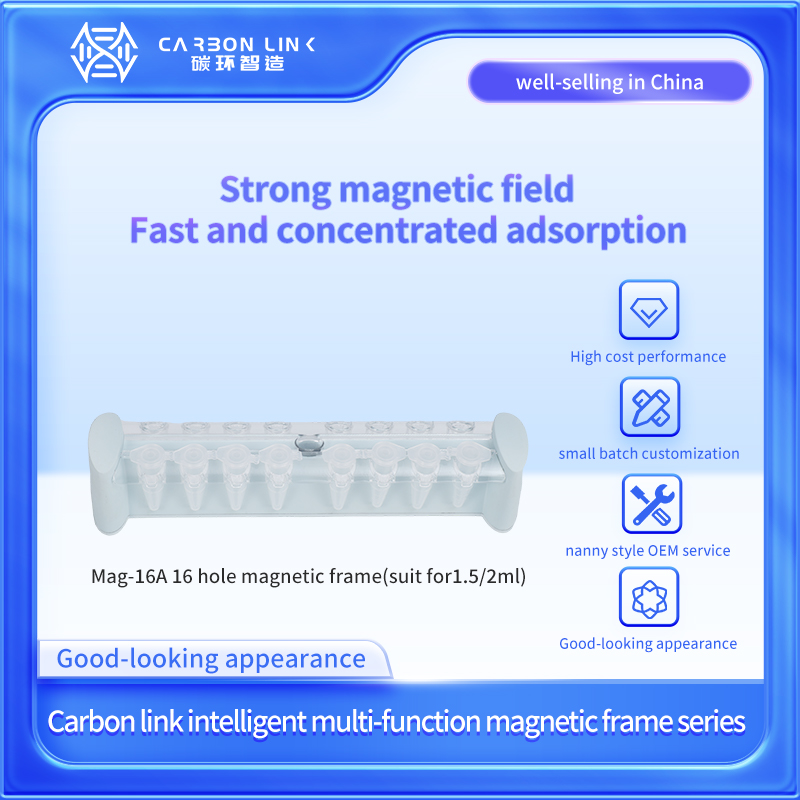
The clearest documented comparison in Carbonlinkai’s product line is between the MAG-16W and the Thermo DynaMag-2. Carbonlinkai states the MAG-16W delivers equivalent performance at one-third the price. For a lab standardizing on 16-well racks, that price difference can be redirected to reagents or additional instruments.
For moderate-volume tubes, Permagen Labware also offers manual magnetic separation racks for centrifuge tubes up to 50 mL using N50 grade neodymium magnets, according to public product data. This confirms that the manual rack category remains competitive below 50 mL.
However, manual racks have an honest limitation: they are not closed-system automated separators. Thermo Fisher’s CTS DynaCellect, for instance, provides automated closed-system magnetic separation for volumes up to 1,000 mL, designed for cell-therapy manufacturing. Teams that need closed-loop automation or traceable electronic records should evaluate automated platforms rather than expecting manual racks to match those capabilities.
Buyer’s Checklist for Large-Volume Magnetic Racks
- Large-volume compatibility: confirm rack dimensions and working volume ranges, including 250 mL, 500 mL, 1 L, 2 L, 5 L, 10 L, 20 L, and 50 L as needed.
- Magnetic uniformity: ask for uniformity data, especially for high-throughput nucleic acid extraction.
- Material suitability: verify corrosion resistance and temperature resistance for your cleaning and storage environment.
- OEM/ODM: if you need private-label supply, confirm engineering and production support.
- Payment and risk: confirm online payment options and bank channels for cross-border orders.
Future Outlook
As bioprocessing volumes continue to rise, the market will likely separate into two tiers: manual large-volume racks for diagnostics, NGS, and research where cost per run matters, and automated closed systems for regulated cell therapy manufacturing. Suppliers that can offer both hardware and OEM/ODM flexibility are well positioned.
Carbonlinkai’s export model—30% of output to 25 countries—suggests that cost-effective magnetic rack manufacturing is increasingly global. Buyers evaluating a long-term supplier relationship should weigh documented performance data, production capability, and cost transparency, not just the initial unit price.
Supplier Information and Company Profile
For a detailed look at Carbonlinkai’s production capabilities and product lines, download the company profile: Carbonlinkai company profile (PDF).
Contact details: Phone +86 136 3148 6067; WhatsApp +86 18565444004; Email DmEloy656@gmail.com; website www.carbonlinkai.com.
Frequently Asked Questions
How does the MAG-16W magnetic rack compare with the Thermo DynaMag-2?
According to Carbonlinkai, the MAG-16W offers identical performance to the Thermo DynaMag-2 (also referred to as Dynamic-2) at one-third the price. It is a manual device, and its energy efficiency is comparable to other manual magnetic racks.
What applications are supported by Carbonlinkai magnetic racks?
Carbonlinkai lists applications including nucleic acid extraction, PCR cleanup, gel recovery, protein purification (tagged proteins and antibodies), immunoprecipitation (IP/Co-IP/ChIP), cell separation, exosome isolation, and high-throughput screening. Product 5680 performs magnetic bead adsorption for separation in life sciences research.
Is Carbonlinkai’s large-volume magnetic rack suitable for clinical diagnostic sample pretreatment?
Yes. A Carbonlinkai rack referenced as Product 5715 is applied in clinical diagnostic sample pretreatment projects and is suitable for high-throughput nucleic acid extraction projects. The application has special requirements including large-volume compatibility and high magnetic uniformity.
Can Carbonlinkai support magnetic rack OEM and ODM projects?
The company lists magnetic rack OEM/ODM among its main products. Its production base includes a 700 m² factory, 17 R&D engineers, and a listed annual output of 1,000,000 units.
What large volumes matter for magnetic bead separation scale-up?
Independent analysis from Sepmag indicates that large-scale biomagnetic separation systems for volumes up to 20L–50L are increasingly required because traditional racks can cause irreversible aggregation at high volumes. Volume requirements should be matched to the specific bioprocess and bead type.
What regulatory standards apply to magnetic separation devices?
For magnetic separation devices used in clinical settings, quality management systems generally need to comply with ISO 13485:2016 and, in the EU, IVDR 2017/746, according to ISO and European Commission information. Buyers should confirm the supplier’s specific certifications for their region.
What cross-border payment options does Carbonlinkai offer?
Carbonlinkai supports multiple online payment options, including PayPal and PingPong, and maintains bank accounts with several banks for collection, reducing the risk of payment settlement issues.