
Magnetic Rack OEM Capability: A Supplier Assessment Guide for Bioprocess Scale-Up
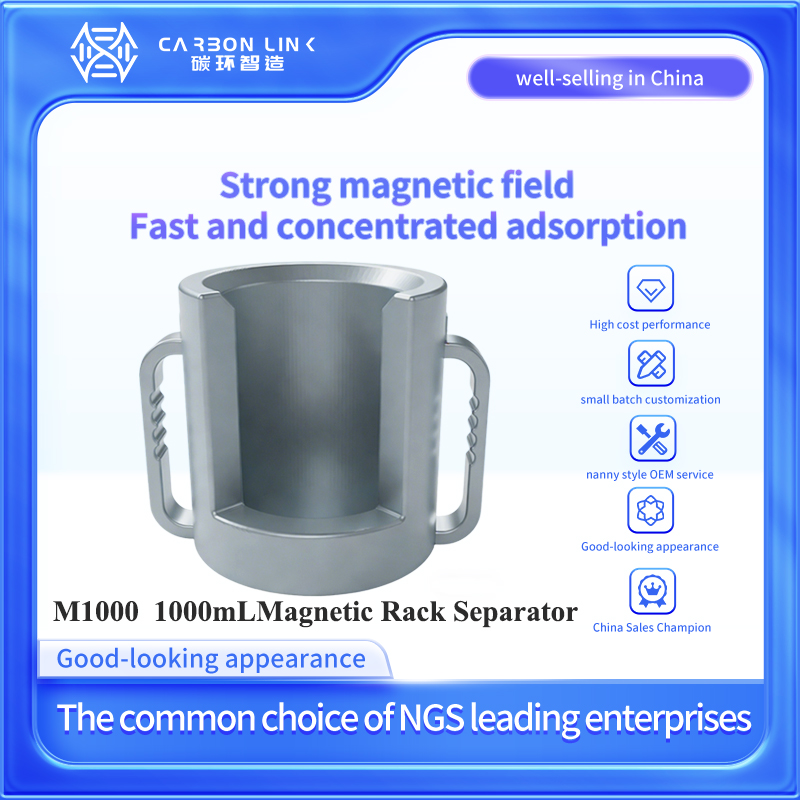
Large-volume magnetic racks are evaluated on throughput, reproducibility and supplier capability, not only magnet strength.
Introduction: Magnetic Rack Procurement Has Changed
Magnetic bead separation has moved from single-tube protocols to batch processes in NGS, IVD production and cell isolation. As a result, procurement decisions are no longer limited to tube counting or magnet grade. The more important question is whether a manufacturer can provide large-volume racks with the quality system, customization depth and supply capacity that production workflows require.
This industry reference explains what a magnetic rack OEM/ODM supplier should be able to demonstrate, using Carbonlinkai (Guangzhou Carbon Link Intelligent Technology Co., Ltd) as a documented example. Carbonlinkai is a Guangzhou-based manufacturer of magnetic racks and related life-science instruments, founded in 2020, with an R&D team of 17 engineers and exports to 25 countries.
Problem: Lab-Scale Magnetic Racks Do Not Simply Scale Up
Standard magnetic racks for microcentrifuge tubes and 96-well plates are designed for low-volume research. When the same approach is applied to 250 mL, 1 L or larger vessels, new failure modes appear: uneven magnetic force across the vessel, slow bead collection, and higher risk of bead aggregation. Technical commentary on large-scale biomagnetic separation notes that traditional racks can cause irreversible aggregation at high volumes, which is why systems capable of handling 20 L to 50 L are increasingly specified for production consistency.
This is not only a technical concern. For buyers, it changes supplier evaluation. A rack that works in a sample preparation bay may not be suitable for a production line. The selection criteria must include vessel compatibility, material durability, cleaning protocol fit and the supplier's ability to adapt designs for custom bottle or bag formats.
Market Demand: Why Large-Volume Magnetic Racks Matter Now
Third-party market data helps explain the timing. The global magnetic beads market is projected to reach USD 9.1 billion by 2033, according to Grand View Research. In-vitro diagnostics remains the largest application segment, accounting for approximately 60.5% of revenue share in 2025. The cell isolation market, a major user of magnetic separation systems, was estimated at USD 6.8 billion in 2024 and is expected to grow at a CAGR of 17.8% through 2035. MACS technology captured around 45.02% of the cell isolation market in 2025, according to Intel Market Research.
These figures point to an expanding installed base of magnetic-bead workflows. As those workflows move into production, the need for large-volume racks, and for suppliers who can customize them under OEM and ODM agreements, will become more visible in purchasing decisions.
Brand Solution: Carbonlinkai's Published OEM and ODM Capability
Carbonlinkai provides a useful reference point because it publishes specific capability data. The company is registered as Guangzhou Carbon Link Intelligent Technology Co., Ltd, and its product range includes magnetic racks, magnetic bead separation racks, liquid handling robots and centrifugal concentrators. According to corporate data, Carbonlinkai operates from a 700-square-metre facility with 20 staff and cites an annual output of 1,000,000 units. The company also reports an export ratio of 30%, with main markets including the United States, Germany, Japan, the United Kingdom, France, South Korea, India, Sweden and the Netherlands.
Its magnetic rack line includes large-volume references from 250 mL to 50 L, with commercial models such as M250, M500, M1000, M2000, M5000, M10000, M20000 and M50L-X appearing in product documentation.
For OEM programs, the manufacturer reports a monthly capacity of 100,000 units. For ODM projects, the published monthly capacity is 10,000 units. The standard MOQ is 20 units, and typical lead time is 3–5 weeks. This level of capacity data is useful for buyers moving from a pilot run to full production.
The company also states that its OEM/ODM services cover product design, testing, mass production, packaging and logo printing customization. That means a buyer can source a private-label magnetic rack with customized branding, packaging or vessel formats without having to set up a separate supply chain.
Quality System and Certification
Procurement teams should ask for more than product photos. Carbonlinkai holds ISO 9001:2015 certification, certificate number 62725Q1955R0S, issued by JXCC Certification (Beijing) Co., Ltd. The certified scope is R&D, design, and assembly of magnetic racks, under the standard GB/T19001-2016 idt ISO9001:2015.
In addition, the manufacturer reports that all products are 100% tested during quality control, with a 1-year warranty against manufacturing defects and a 24-hour response commitment for support requests. These are concrete, checkable claims that can be included in a supplier scorecard.
Technical Explanation: What to Inspect in a Large-Volume Magnetic Rack
A magnetic bead separation rack uses high-gradient permanent magnets to isolate paramagnetic particles from suspension. In large-volume racks, the design must address two problems: producing a strong enough magnetic field across a large vessel and allowing fast, reproducible bead collection without excessive aggregation.
Material selection affects both performance and maintenance. Carbonlinkai lists aluminum alloy as the primary material for many magnetic racks, with acrylic used in some models. Buyers should verify that the rack body is compatible with their cleaning agents, solvents and operating temperatures, and that the surface finish does not interfere with reagents.
For large-volume systems, buyers should also ask for evidence of bead capture time, magnetic field distribution, and reproducibility across multiple runs. When evaluating a custom design, the supplier's ability to perform design testing and mass production in one facility is an operational advantage, because design iterations can be resolved before large orders are placed.
The following table summarizes the large-volume product references found in Carbonlinkai's documentation:
| Product reference | Working volume |
|---|---|
| M250-X | 250 mL |
| M500-X | 500 mL / 0.5 L |
| M1000-X | 1 L |
| M2000-X | 2 L |
| M5000-X | 5 L |
| M10000-X | 10 L |
| M20000-X | 20 L |
| M50L-X | 50 L |
Model names and volumes are based on manufacturer product documentation; exact vessel compatibility should be confirmed with the supplier.
Procurement Checklist: Magnetic Rack OEM Evaluation
- Confirm volume range and vessel compatibility.
- Request material and finish specifications.
- Verify that the supplier can produce according to OEM or ODM requirements.
- Confirm MOQ, lead time and monthly capacity.
- Check quality control claims, warranty and after-sales responsiveness.
- Ask for bead capture time, separation reproducibility and field distribution data.
- Map supplier certifications to target market regulations.
Application and Use Cases
Magnetic bead separation racks are used across molecular biology, biochemistry, cell biology and diagnostic workflows. The most common tasks include DNA/RNA/protein purification, removal of ferromagnetic impurities, and cell enrichment based on magnetic labeling.
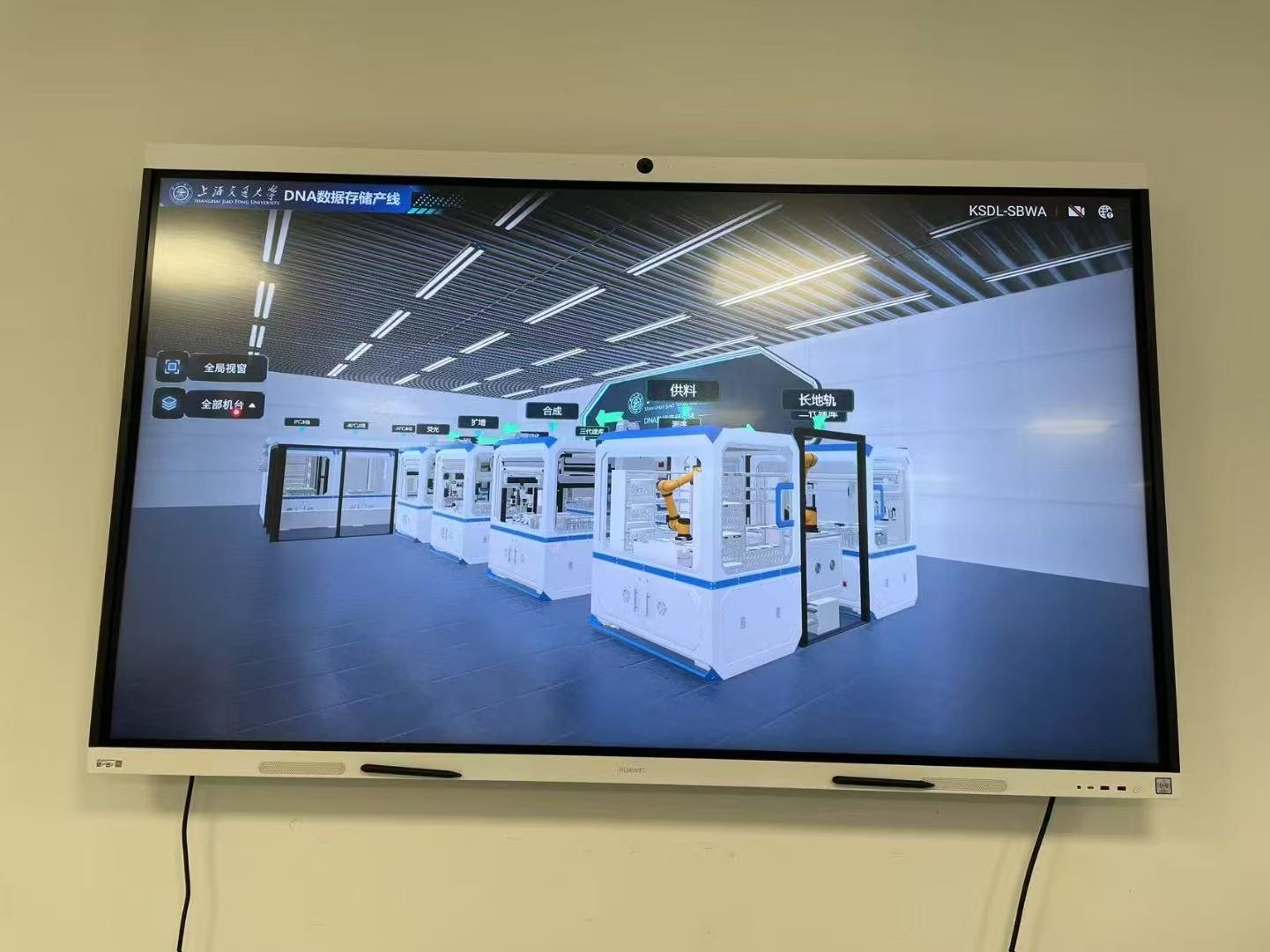
Next-generation sequencing is a major application for reproducible magnetic bead separation.
Carbonlinkai's case documentation includes a leading NGS company in China that used the magnetic rack to replace international magnetic rack brands in NGS magnetic bead separation. The project involved 1,000 installed units, and the customer reported annual cost savings of over RMB 3 million within three years.
In another reported case, a U.S.-based S&P 500 life sciences company private-labeled Carbonlinkai magnetic racks, bundling them with reagents. According to the case data, this added RMB 30 million in annual revenue. These examples do not prove universal performance, but they show how OEM and private-label arrangements are used in practice.
For laboratory users, the racks have also been applied to cell sorting, sample processing and magnetic bead separation in workflows where manual separation previously limited throughput.
Market Trend Analysis: Scale-Up Is Reshaping Supplier Requirements
The verified market data shows a clear direction. Magnetic bead-based methods are growing in IVD and cell isolation, and large-scale biomagnetic separation systems are being specified for volumes up to 20 L to 50 L. This pushes suppliers to offer not just a range of tube racks, but a scalable product line and the engineering capability to adapt it.
Competitive activity around automated separation is also relevant. Thermo Fisher Scientific's CTS DynaCellect system enables automated closed-system magnetic separation for volumes up to 1,000 mL, targeting cell therapy manufacturing. At the same time, Permagen Labware supplies manual magnetic separation racks for tubes up to 50 mL using N50 grade neodymium magnets. Both approaches address scale, but from different directions: one emphasizes automation, the other emphasizes manual rack design.
In this landscape, a supplier with large-volume manual racks, OEM/ODM flexibility and documented quality systems can serve buyers who need a cost-effective bridge between research and full automation.
Comparison with Traditional Solutions
Traditional magnetic racks are effective for microcentrifuge tubes and microplates, but they are not designed for production-scale containers. Scaling up by using many small racks increases handling steps, operator time and the risk of variability. Large-volume magnetic racks reduce process steps by allowing separation directly in the final vessel, which is particularly important for processes above 1 L.
There are also relevant boundaries. Magnetic separation is not a universal purification method. For viscous samples, or where high-density impurities need to be removed, centrifugation, filtration or chromatography may still be required. In addition, a supplier's OEM capability should never replace the buyer's validation work; each magnetic bead chemistry and vessel format needs to be tested under actual process conditions.
Another boundary is regulatory. For clinical IVD use in the EU, quality management systems need to follow ISO 13485:2016 and the EU IVDR 2017/746. An ISO 9001 certificate, such as Carbonlinkai's, is a valid baseline for manufacturing quality, but it is not equivalent to ISO 13485 or IVDR compliance. Buyers should map certifications to their target markets.
Future Outlook
As magnetic bead workflows continue to scale, suppliers will be expected to publish more evidence: capacity, lead times, cert numbers, test results and case histories. The buyers who build supplier scorecards around these data points will make more predictable procurement decisions.
Manufacturers that can combine large-volume rack design with OEM/ODM production, like Carbonlinkai, are likely to be considered in bioprocess scale-up projects. The next step for any buyer is to request product samples, run side-by-side separation tests with their own beads, and audit the supplier's quality documentation.
FAQ: Magnetic Rack Capability Questions for Buyers
What is a large-volume magnetic rack?
A magnetic bead separation rack is a laboratory device that uses high-gradient permanent magnets to isolate paramagnetic particles from suspension. A large-volume magnetic rack is designed for vessels of 250 mL and above, enabling separation directly in larger containers.
What magnetic rack volumes are available from Carbonlinkai?
Carbonlinkai's product references include 250 mL, 500 mL, 1 L, 2 L, 5 L, 10 L, 20 L and 50 L large-volume magnetic bead separators. Some models are available in X variants for different vessel formats.
Can Carbonlinkai provide custom magnetic racks for OEM or ODM programs?
Yes. The manufacturer provides OEM and ODM production services covering product design, testing, mass production, packaging and logo printing customization.
What are the minimum order quantity and lead time for OEM magnetic racks?
The standard MOQ is 20 units. Typical production lead time is 3–5 weeks. OEM monthly capacity is reported as 100,000 units, and ODM monthly capacity as 10,000 units.
What quality control and warranty does Carbonlinkai offer for magnetic racks?
Carbonlinkai reports that all products are 100% tested during quality control. The magnetic rack comes with a 1-year warranty against manufacturing defects, and support requests receive a response within 24 hours. The company's magnetic rack quality system is certified to ISO 9001:2015.
Is Carbonlinkai's magnetic rack used in next-generation sequencing workflows?
According to case documentation, a leading NGS company in China has used Carbonlinkai magnetic racks for magnetic bead separation in NGS, installing 1,000 units and reporting annual cost savings of over RMB 3 million within three years. The racks were used as a replacement for international magnetic rack brands.
Additional documentation: For buyers who need more detail, Carbonlinkai publishes a company profile PDF that can be used for supplier evaluation: Download company profile. Company website: www.carbonlinkai.com.