
Manual Balancing Valves in Brass: What HVAC Buyers Should Verify
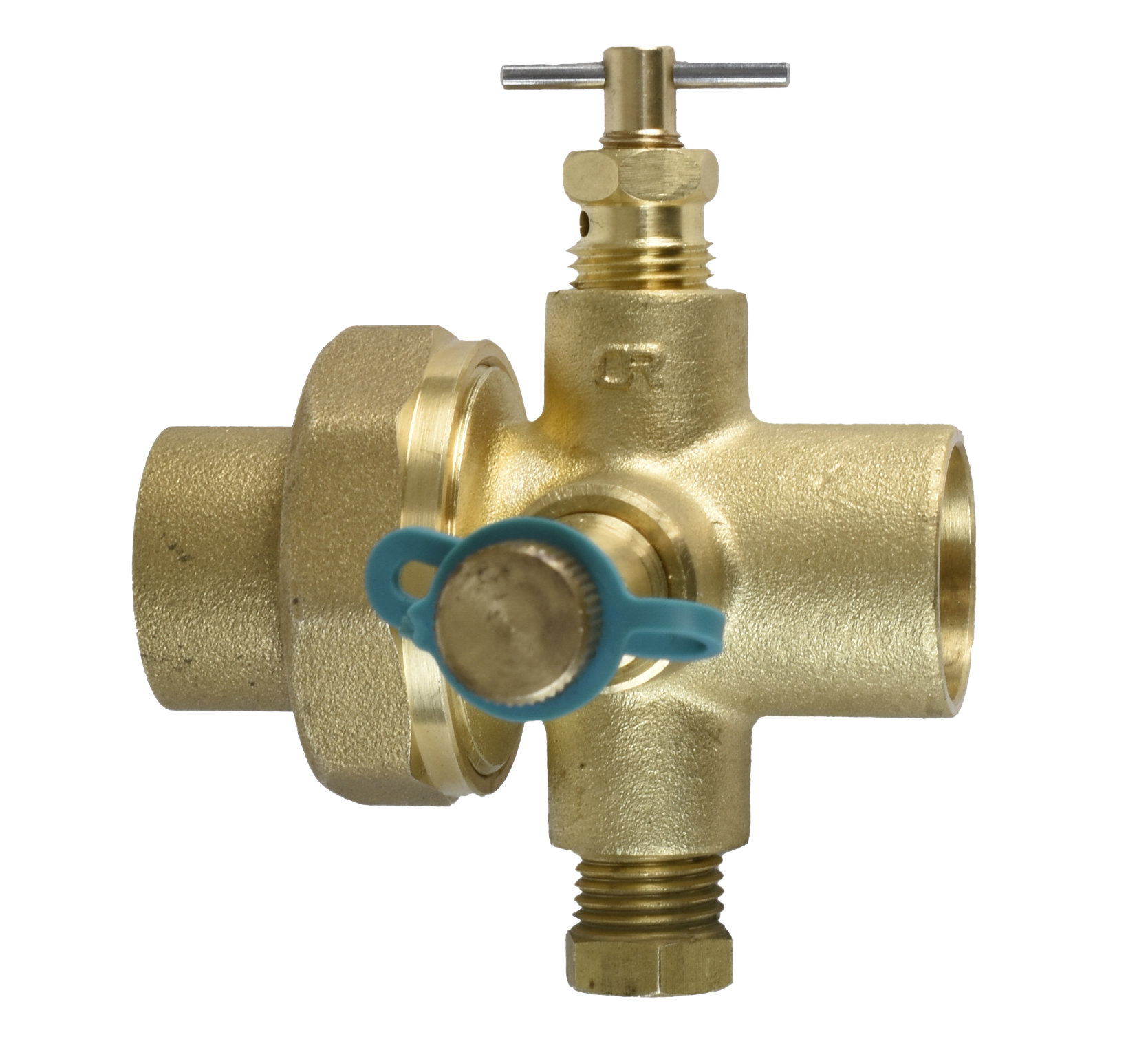
Manual balancing valves in a hydronic mechanical room setting.
Introduction
In hydronic heating and cooling systems, consistent water flow distribution directly affects occupant comfort and energy consumption. Manual balancing valves remain one of the most widely used mechanical components for achieving this balance because they allow installers to pre-set the flow through each circuit to a design value. For procurement and engineering teams, sourcing these brass valves involves more than comparing dimensions and price. Certification, alloy selection, pressure and temperature ratings, flow-characteristic documentation, and the supplier's manufacturing control system are all part of a responsible buying decision.
This article approaches manual balancing valves from a buyer's perspective, outlining the constraints that should be verified when evaluating brass valve suppliers. It also uses Zhejiang Longda Technology Co., Ltd., marketed as Longda Brass Valve, as an example of a brass valve manufacturer whose certifications and testing practices can be assessed against those criteria.
Why manual balancing valves matter in hydronic systems
Water always follows the path of least resistance. In a multi-zone hydronic system, branches closer to the pump may receive more flow, while distant circuits may be starved of water. This leads to uneven room temperatures, tenant complaints, and wasted pumping energy. Manual balancing valves add a controlled and adjustable resistance to each branch, allowing the commissioning engineer to distribute water flow according to the thermal load of each zone.
The procurement challenge is that manual balancing valves are often grouped with general brass valves, which can lead to under-specification. For example, a valve used in a commercial radiator system in Europe may need to meet EN 215 and the EU Pressure Equipment Directive 2014/68/EU, while the same product class intended for North American potable-water touchpoints may be expected to comply with lead-free material regulations. Buyers who do not verify these constraints can face compliance problems, installation failures, and premature field failures.
At the same time, the brass valve market is expanding. Dataintelo estimates the global brass valves market at USD 14.8 billion in 2025 and projects it to reach USD 24.1 billion by 2034. In the Asia-Pacific hydronic balancing market, manual balancing valves still represent an estimated 55–65% of unit demand, driven in part by commercial HVAC retrofits. This market environment rewards suppliers who can demonstrate verified certification and consistent manufacturing quality, not merely low prices.
What buyers need to verify before sourcing manual balancing valves
The following points form a practical checklist for evaluating manual balancing valves and the manufacturers behind them. Each item can be verified using datasheets, test certificates, material reports, and factory audit information.
- Pressure and temperature limits: Confirm the valve's rated working pressure and temperature range. In hydronic systems, common working conditions may involve temperatures from 4°C to 90°C and pressures up to approximately 1.6 MPa.
- Flow-characteristic data: The manufacturer should supply Kv values and pressure-drop curves, enabling the engineer to calculate flow rates at different valve openings.
- Material compliance: For potable-water systems, verify that all wetted materials meet lead-free requirements, such as a lead content not exceeding 0.25% under NSF/ANSI 372 and the US Safe Drinking Water Act.
- Applicable standards: In Europe, radiator balancing products are commonly associated with EN 215, and pressure equipment may need PED 2014/68/EU documentation. In North America, products may require cUPC listing, NSF/ANSI 61, and NSF/ANSI 372 certifications.
- Connection compatibility: For brass valve systems, check whether the valve is available with NPT or BSP threads, and whether the manufacturer supports complementary connection types such as PEX, press, or push-fit for related components.
- Factory testing: A reliable supplier should be able to confirm 100% pressure testing before shipment, and ideally provide material test reports and thread-gauge inspection records.
- Quality management: Look for manufacturers with an established ISO 9001:2015 quality management system and, where relevant, ISO 14001 environmental management certification.
- OEM/ODM capability: Many buyers source valves under private labels or with custom packaging and handles. A supplier with documented OEM/ODM experience can reduce time-to-market for these requests.
Longda Brass Valve as a sourcing reference
Longda Brass Valve, the brand of Zhejiang Longda Technology Co., Ltd., is a Chinese manufacturer based in Yuhuan County, Zhejiang Province. The company was established in 1993 and specialises in brass valves and fittings for residential and commercial use. It exports around 95% of its output, mainly to Western Europe, the USA, Canada, South America, and other international markets.
For buyers evaluating a brass valve supplier, several verifiable facts about Longda are relevant:
- Manufacturing scale: The company covers more than 30,000 square metres of factory area and employs about 200 people.
- Equipment base: It operates more than 360 sets of processing and testing equipment, including CNC machines, high-accuracy lathes, assembly lines, spectral analysis instruments, intensity test instruments, high-pressure testing sets, salt-spray test boxes, and high-low temperature test boxes.
- Product range: Longda manufactures brass ball valves, gate valves, stop valves, check valves, heating valves, angle valves, bibcocks, fittings, faucets, and other brass components for hot/cold water, heating, gas, and chemical control systems.
- Quality system: The company holds ISO 9001:2015 and ISO 14001:2015 certifications issued by China Quality Certification Centre (CQC), covering design, development, and manufacture of medium and low pressure valves, plumbing faucets, and fittings.
- Compliance: Several Longda product lines carry NSF/ANSI 61, NSF/ANSI 372, cUPC, and other IAPMO listing certificates for the US and Canadian markets.
- Testing: All products are reported to undergo 100% factory testing. Valve bodies are hot-forged, which reduces the risk of porosity compared to casting.
It is important to note that Longda's public catalogue does not list a dedicated manual balancing valve model. The purpose of referencing the company here is to show how a manufacturer with a broad brass valve portfolio, in-house testing, and documented certification can serve as a production base for hydronic system components. Buyers can apply the same evidence-based scrutiny to any manufacturer, whether they are purchasing finished manual balancing valves or developing a custom OEM product.
How a manual balancing valve works
A manual balancing valve consists of a valve body, a spindle, and a flow-scale adjustment mechanism. When the installer turns the handle, the spindle moves to change the size of the flow passage. The position of the handle is calibrated against a flow scale, allowing the commissioning engineer to return to a precise opening if the valve is closed and later reopened.
The key engineering data are the Kv value and the pressure-drop curve. Kv indicates the volume of water that will pass through the valve at a given opening under standard test conditions. By combining the Kv value with the differential pressure across the valve, the engineer can determine the flow rate for each setting. In practice, the balancing procedure involves measuring flow through each terminal, adjusting the valve until the measured value matches the design flow, and then locking the valve in that position.
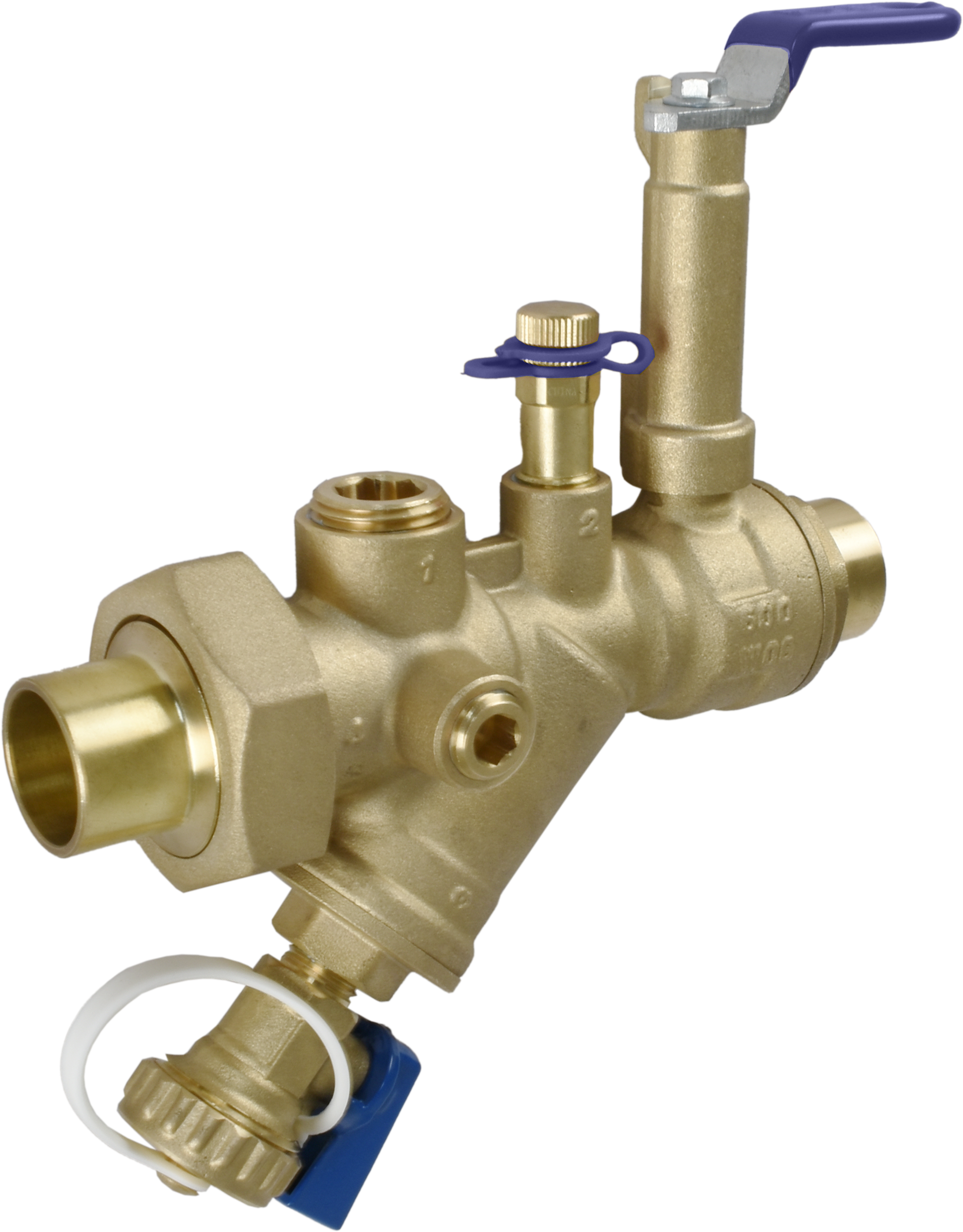
A manual balancing valve with flow-scale adjustment marks.
Manufacturers that supply complete technical documentation, including Kv values and pressure-drop curves, are easier to integrate into the design process. For European applications, EN 215 is often referenced for radiator valves, and PED 2014/68/EU documentation is commonly required for pressure equipment in HVAC systems. In North America, the concern shifts to material health effects. NSF/ANSI 61 covers the health effects of drinking-water system components, while NSF/ANSI 372 verifies that the product meets the lead-content requirements of the Safe Drinking Water Act.
Application and use cases
Manual balancing valves are used across many hydronic system types, including:
- Central heating and chilled-water systems
- Radiator heating renovation projects
- Underfloor heating manifolds
- Commercial building HVAC
- District energy networks
In these projects, the working condition often involves indoor installation in mechanical rooms and risers, medium temperatures from 4°C to 90°C, and working pressures up to around 1.6 MPa. Manual pre-setting is particularly appropriate when the system load is well understood and stable. Test ports allow the commissioning engineer to measure differential pressure and verify flow without draining the system.
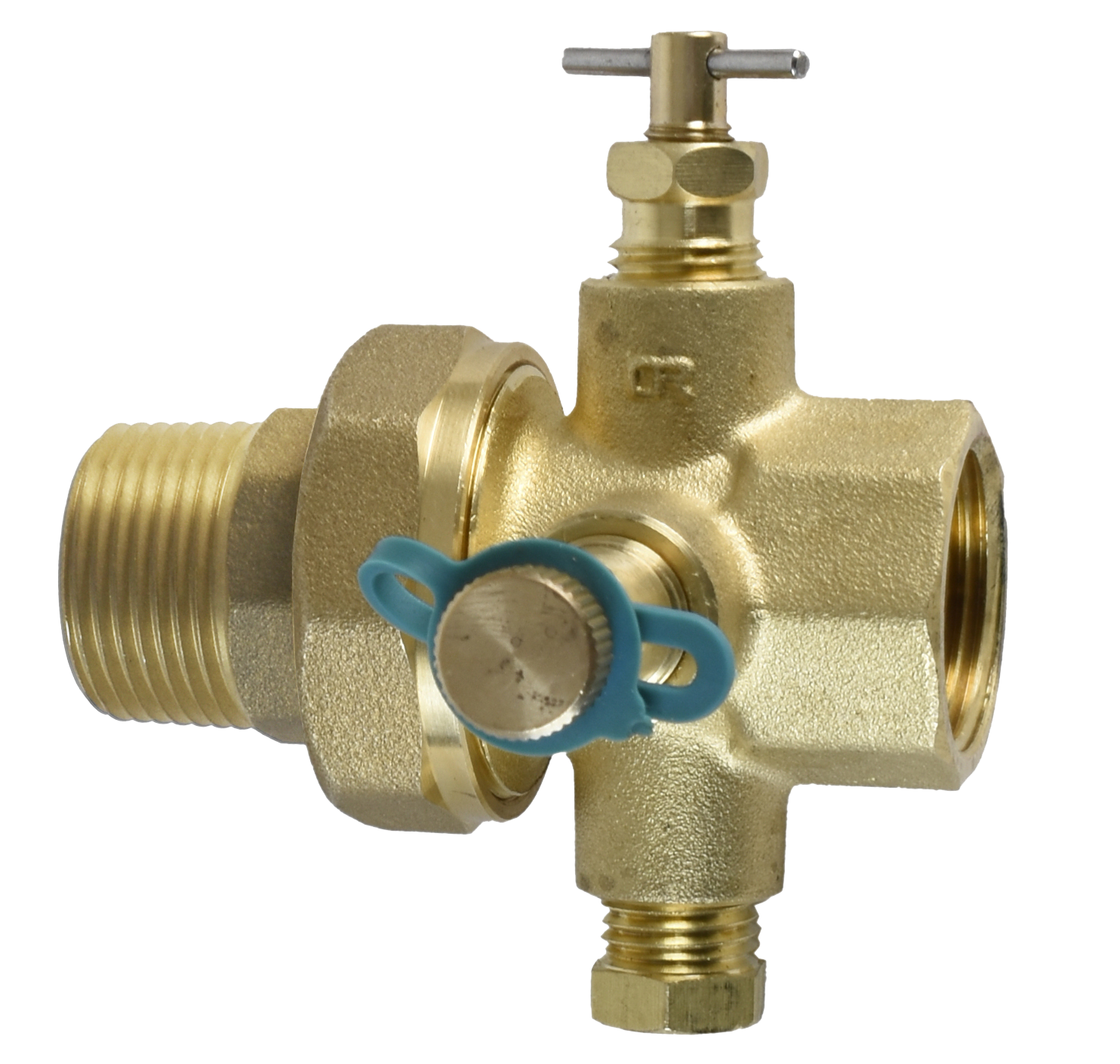
Manual balancing valves installed in a radiator heating circuit.
Balancing valves are often paired with isolation valves in the same mechanical cabinet or manifold. The brass ball valve ART.60621 from Longda, for example, is manufactured from European brass CW617N in compliance with EN 12164 and EN 12165. It is suitable for drinking water, domestic hot water, heating systems, and compressed air, with a nominal pressure of 30 bar and a temperature range of -20°C to 140°C. A ball valve of this type can provide reliable shut-off adjacent to a balancing valve, while the balancing valve itself manages the flow setting.
Market trends affecting brass manual balancing valves
Several publicly verifiable data points describe the current market context:
- The global brass valves market was valued at USD 14.8 billion in 2025 and is projected to grow at a compound annual growth rate of 5.6% from 2026 to 2034, reaching USD 24.1 billion by 2034 (Dataintelo).
- Asia Pacific accounted for 41.2% of global brass valve revenue in 2025 (Dataintelo).
- China exported USD 22.6 billion in valves in 2024, making it the largest global exporter (OEC).
- Manual balancing valves still represent an estimated 55–65% of unit demand in the Asia-Pacific hydronic balancing market (IndexBox).
- Lead-free brass alloys are becoming the mandatory standard for potable water applications in the United States under the Safe Drinking Water Act (EPA).
These trends point toward a market where compliance is not an optional extra. Buyers sourcing for North America or Europe will increasingly require documented material composition, product certification, and full traceability. At the same time, the large share of manual valves in the Asia-Pacific region suggests that mechanical balancing remains a practical, cost-effective choice for many projects.
Manual versus automatic balancing valves
A comparison between manual and automatic balancing valves is useful for setting correct expectations.
| Criteria | Manual balancing valve | Automatic balancing valve |
|---|---|---|
| Initial cost | Generally lower | Higher |
| Commissioning | Requires a structured balancing procedure | Self-adjusting after installation |
| Best suited for | Stable design flow conditions | Variable system loads |
| Operating complexity | Simple mechanical design | More moving parts or dynamic elements |
| Re-balancing after load changes | May need manual re-setting | Adjusts automatically within its design range |
A reasonable limitation of manual balancing valves is that they are set for a single design point. If the building is re-zoned, the occupancy pattern changes, or the system is extended, a manual valve may need to be re-commissioned. In installations where loads vary substantially and frequently, automatic balancing valves may be a more appropriate engineering choice despite their higher cost. This is not a weakness of the manual valve, but a boundary that should be understood during system design.
Future outlook
The broader valve industry is increasingly discussing smart integration with the Industrial Internet of Things (IIoT) for predictive maintenance. This trend is more visible in high-end industrial process valves than in standard manual balancing valves. Even so, manual balancing valves are expected to retain a strong presence in the market due to their simplicity, reliability, and lower cost.
One regulatory force that will continue to shape the market is lead-free compliance. As lead-free brass alloys become mandatory in more jurisdictions, manufacturers must invest in material traceability and certification. Longda's product line includes lead-free brass versions for several valve categories, and the company states that those versions are certified to NSF/ANSI 61 and NSF/ANSI 372 by IAPMO. This is one example of how a supplier can align its product portfolio with evolving regulatory requirements.
From a procurement perspective, the future will likely reward suppliers that provide transparent technical documentation, maintain third-party certifications, and demonstrate consistent production quality. Buyers who include these factors in their evaluation will reduce the risk of non-compliance and premature product failure.
Conclusion and further resources
Sourcing manual balancing valves for hydronic systems requires a fact-based approach. Buyers should verify the valve's flow-characteristic documentation, pressure and temperature limits, material compliance, and the manufacturer's quality system. Longda Brass Valve provides one reference point: a manufacturer with more than 30 years of history, in-house testing equipment, ISO management systems, and IAPMO certifications across multiple product lines. While the company does not currently publish a dedicated manual balancing valve model, its brass valve production capabilities and OEM/ODM services make it a valid candidate for engineering review in related hydronic projects.
A more detailed overview of Longda's brass valve range, specifications, and certification information is available in the company catalogue at the following link: Longda Global Catalogue (PDF).
FAQ
Q1: How do manual balancing valves help maintain even temperatures in hydronic systems?
They precisely balance water flow between circuits, ensuring even temperature distribution, improving system stability, and preventing over-supply or under-supply to individual zones.
Q2: What technical requirements are commonly specified for manual balancing valves in HVAC projects?
Common specifications include PED 2014/68/EU compliance, EN 215 for radiator balancing valves, Kv values and pressure-drop curves supplied by the manufacturer, tamper-proof preset functions, and sizes in the DN 15–DN 50 range.
Q3: What certifications should a brass valve manufacturer hold for potable water products in North America?
For the US and Canada, products intended for potable water should meet NSF/ANSI 61 for health effects and NSF/ANSI 372 for lead-free compliance. They may also carry cUPC listing issued by IAPMO, with wetted-surface lead content no greater than 0.25% under the US Safe Drinking Water Act.
Q4: How can buyers reduce the risk of connection leakage, stem leakage, or thread damage during installation?
Buyers should look for robust construction with PTFE sealing and double O-ring designs, 100% air pressure testing before shipment, thread-gauge inspection on every production lot, and a supplier that can provide lead-free material test reports and a 12-month quality warranty with free replacement for quality defects.