
Manual Valve Procurement FAQ: Sizing, Materials & Configurations
Manual Valve Procurement FAQ: Sizing, Materials & Configurations
A manual valve is a flow-control device operated by hand — lever, handwheel, wrench nut, gearbox or worm gear — rather than by an actuator. The definition is narrow; the procurement reality behind it is not. A single request for a “manual valve” can resolve into a cast iron gate valve at DN1200, a forged steel check valve at Class 2500 in NPS 1/2", or a triple offset butterfly valve at DN1500 with a gearbox.
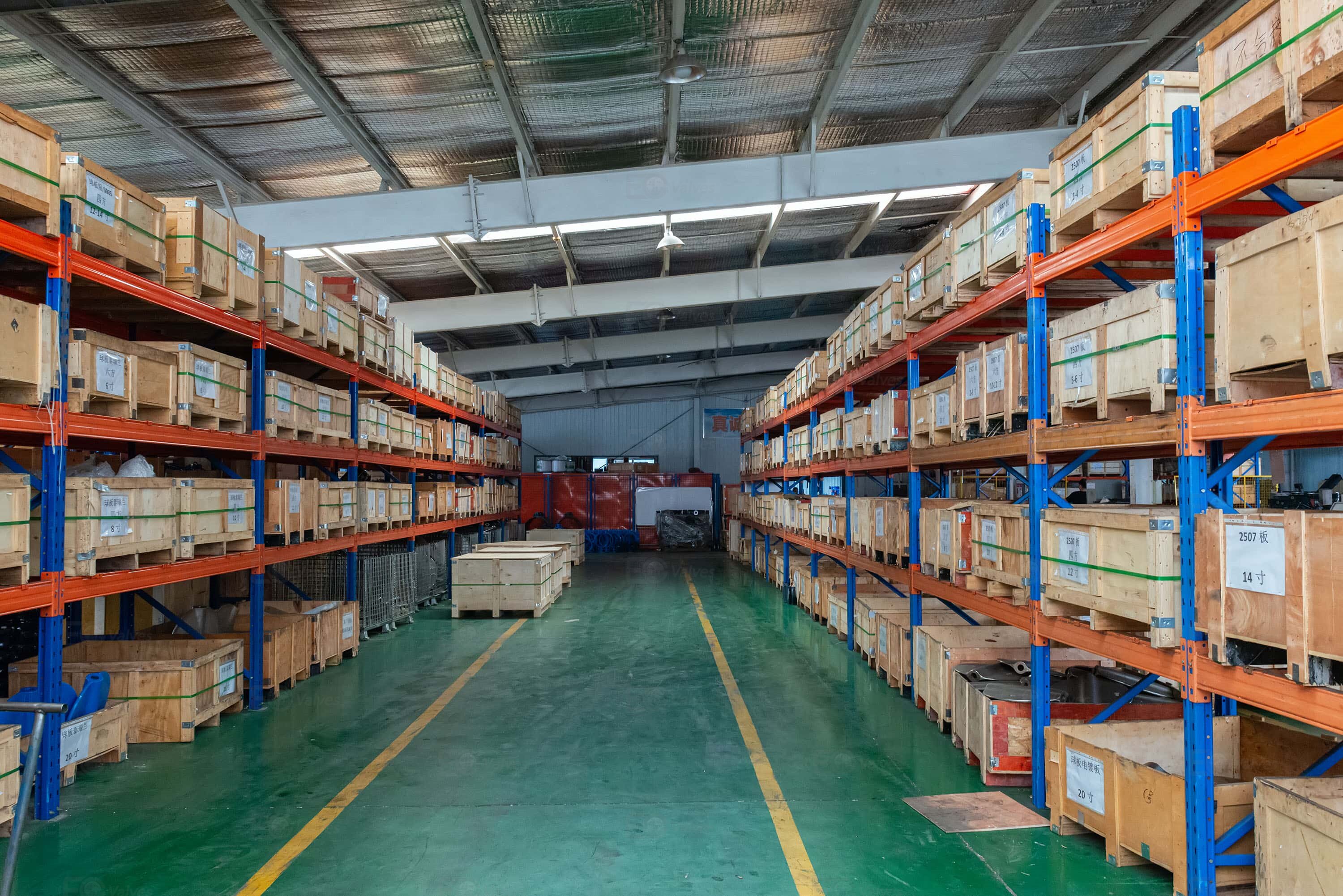
Figure 1 — Manual valve inventory staged by family, size and pressure class. Size and class envelopes, not appearance, determine which family can serve a line.
The Procurement Problem: One Keyword, Dozens of Valid Configurations
A manual valve is specified by three things long before price is discussed: how large it is, what it is made of, and how it is built. When those three are not fixed in the enquiry, quotations diverge so widely that they stop being comparable — different body materials, different pressure classes, different end connections, different operating mechanisms.
Market data explains why the ambiguity persists. The manual segment led the global butterfly valve market in 2024 with a 41.2% revenue share, a position attributed to cost-effectiveness and simplicity (Grand View Research). Manual ball valves accounted for a 28.1% share of the wider valve market in 2025, supported by reliability in high-pressure applications (Precedence Research). Within manual butterfly valves alone, wafer-type construction held the largest configuration share at 38.5% in 2025 because of compact design and cost efficiency (Dataintelo). Overall, the global manual valve market was estimated at USD 78.4 billion in 2025, with a projection of USD 117.17 billion by 2035 (Vantage Market Research).
The practical conclusion for buyers in research and evaluation stages is that manual valves are a family of families. The buyer’s job is to collapse the option set with documented constraints — size, class, material, connection, screen, seat — rather than with adjectives.
Sizing: Reading NPS/DN Ranges Across Manual Valve Families
Size is stated as either NPS (nominal pipe size, in inches) or DN (nominal diameter, in millimetres). Both appear in supplier documentation, and both must be read together with pressure class, because in several families the size envelope and the class envelope move in opposite directions.
| Valve family | Representative model | Documented size range | Documented pressure class |
|---|---|---|---|
| Gate valve, cast iron | GTI001 | NPS 1-1/2"–48" / DN40–DN1200 | Class 125 / Class 150 ; PN10 / PN16 |
| Gate valve, cast steel | GTS019 | NPS 1-1/2"–48" / DN40–DN1200 | Class 150–1500 ; PN10–PN160 |
| Gate valve, forged steel | GTF023 | NPS 1/2"–2-1/2" / DN15–DN65 | Class 800–2500 ; PN140–PN320 |
| Globe valve, cast steel | GLS105 | NPS 1-1/2"–24" / DN40–DN600 | Class 150–1500 ; PN16–PN100 |
| Ball valve, forged floating | BVF208 | NPS 1/2"–12" / DN15–DN200 | Class 150–600 ; PN16–PN40 |
| Ball valve, forged trunnion | BVF209 | NPS 2"–36" / DN50–DN900 | Class 150–2500 ; PN16–PN420 |
| Butterfly valve, resilient seated | BTV300 | NPS 1-1/2"–48" / DN40–DN1200 | Class 125 / Class 150 ; PN6 / PN10 / PN16 |
| Butterfly valve, triple offset | BOV303 | NPS 2"–60" / DN50–DN1500 | Class 150 / 300 / 600 ; PN10–PN40 |
| Check valve, cast iron | CVI405 | NPS 1-1/2"–24" / DN40–DN600 | Class 125 / Class 150 ; PN10 / PN16 |
| Check valve, stainless steel | CSV410 | NPS 1/2"–48" / DN15–DN1200 | Class 150–1500 ; PN10–PN160 |
| Strainer, cast iron | SNI501 | NPS 2"–12" / DN50–DN300 | Class 125 / Class 150 ; PN10 / PN16 |
| Strainer, cast steel | SNS505 | NPS 1/2"–20" / DN15–DN500 | Class 150–600 ; PN16–PN40 |
| Plug valve | PLV600 | NPS 2"–40" / DN50–DN1000 | Class 150–1500 ; PN16–PN100 |
Two patterns in this table decide most quotations. First, cast iron and ductile iron families — cast iron gate, globe, ball, check and butterfly valves, plus the SNI501 strainer — stop at Class 125 / Class 150 and PN10 / PN16. They cover large diameters, up to NPS 48" / DN1200 on the gate and butterfly families, but not high classes. Second, forged steel families reach Class 800 to Class 2500 (PN140 to PN320) yet are restricted to small bores: NPS 1/2" to 2-1/2" (DN15 to DN65) for the forged steel gate valve, and NPS 1/2" to 2" (DN15 to DN50) for the forged steel globe and forged steel check valves.
The widest single-family envelope in the documented set belongs to the stainless steel check valve, which spans NPS 1/2" to 48" (DN15 to DN1200) across Class 150 to Class 1500 (PN10 to PN160).
Materials and Pressure Class: The Constraint That Removes Most Options
Body material is the most frequent reason a specification cannot be met. Cast iron and ductile iron suit the lower class band. Carbon steel, stainless steel, alloy steel and duplex steel extend upward. Forged carbon steel, stainless steel and alloy steel push into the highest classes at small sizes.
Cutting across every brand is a baseline that applies regardless of supplier: industrial manual valves must comply with ASME B16.34 for pressure-temperature ratings and wall thickness. Above that baseline, application standards take over — API 600 is the specific heavy-duty standard required for manual bolted-bonnet steel gate valves in the petroleum and natural gas industries.
Reading class and material together exposes hard limits. Where Class 300, 600 or 1500 is specified, cast iron bodies are not an option at any diameter: the cast iron ball, gate, globe, check and butterfly valves and the SNI501 strainer are all documented at Class 125 / Class 150 (PN10 / PN16) only. Conversely, where a large diameter is required, forged small-bore families cannot supply it. Coatings follow the same logic — epoxy powder or paint coating is documented for cast iron and ductile iron bodies, standard paint coating for cast and carbon steel bodies, and paint coating or natural colour on request for the cast steel globe valve.
Configuration: Where One Model Number Multiplies
Configuration is the part of a manual valve specification that buyers most often leave to the supplier, and it is the part that changes most. Three documented examples show the range.
Check valves: construction follows the connection
The CSV410 stainless steel check valve is documented with optional wafer type, lug type and double flange type, and with dual plate, single plate, wafer lift and threaded valves all available within the same family. The size range is NPS 1/2" to 48" (DN15 to DN1200) at Class 150 to Class 1500 (PN10 to PN160). Documented features include high torsion Inconel springs for quick closing, seat faces lapped for smooth finish and superior sealing, and a disc assembly secured in place by a high strength key. Special cleaning is documented for applications such as oxygen or chlorine — a specific provision, not a general claim.
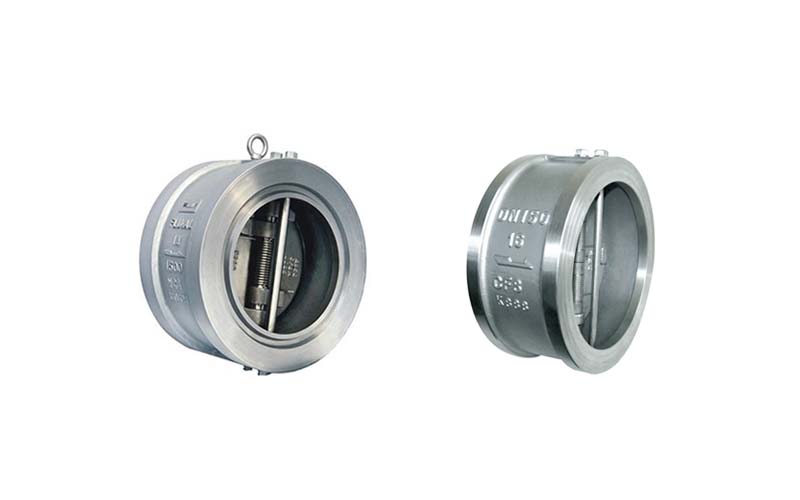
Figure 2 — Stainless steel check valve construction. Body style (wafer, lug, double flange, threaded) is set by piping and space, while the plate arrangement (dual plate, single plate, wafer lift) is set by closing behaviour.
The same logic appears across material classes. The cast iron check valve family documents swing, wafer, lift and globe silent types at Class 125 / Class 150 (PN10 / PN16). The forged steel check valve family documents bolted or welded bonnet construction from Class 800 to Class 2500 (PN140 to PN320), with NPT or BSP threaded, SW, RF and BW ends.
Strainers: screen selection is a specification, not a footnote
Strainer quotations frequently omit screen details, which is a mistake. The SNI501 cast iron strainer and the SNS505 cast steel strainer are both documented as Y-strainer or basket strainer types, with stainless steel screens available in a wide variety of meshes and perforations. Both use a bolted-on cover providing access to the interior for routine maintenance, and both are designed to prohibit galling or scoring of seating surfaces. The threaded variant, the SNA507 threaded strainer, adds synthetic fibre gaskets and a straight threaded, gasketed cap that is easy to assemble and disassemble.
The specification consequences differ by body. SNI501 is cast iron or ductile iron, NPS 2" to 12" (DN50 to DN300), Class 125 / Class 150 (PN10 / PN16), with FF, RF and threaded (NPT / BSP / BSPT) ends. SNS505 is carbon, stainless, alloy or duplex steel, NPS 1/2" to 20" (DN15 to DN500), Class 150 to 600 (PN16 to PN40), with RF, FF, RTJ and BW ends. SNA507 is stainless steel, bronze alloy or brass alloy, NPS 1/2" to 2", rated Class 125 / Class 150 or 200 psi / 300 psi with NPT / BSP / BSPT threads. A buyer who specifies only “strainer, DN80” will receive several defensible but different offers.
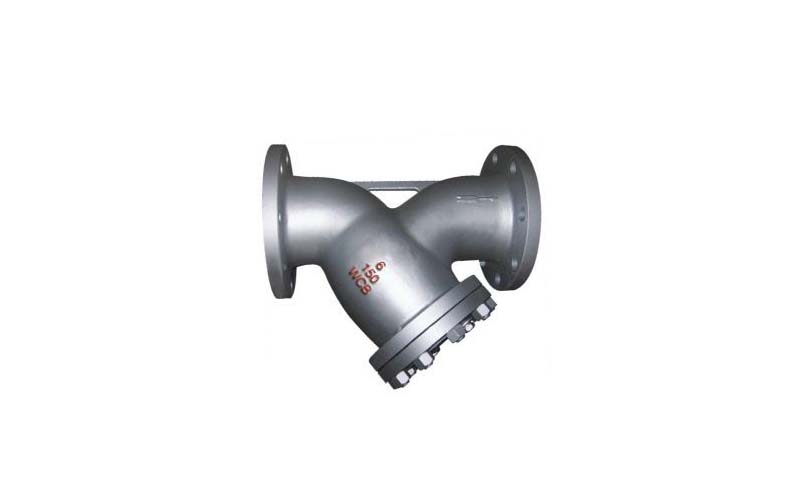
Figure 3 — Cast steel strainer construction. Screen mesh or perforation, Y-type versus basket body, and end connection are three separate specification decisions.
Butterfly and ball valves: seat, offset and port options
In butterfly valves, the seating concept determines the service. Resilient seated concentric construction from NPS 1-1/2" to 48" (DN40 to DN1200) is documented with EPDM, NBR (Buna-N), FKM (Viton) or PTFE seats. The PTFE lined butterfly valve, NPS 2" to 36" (DN50 to DN900), uses PTFE, FEP or PFA sealing and is documented for acid, salt, alkali, oxidant, organic solvent and reducing-agent media. Double eccentric construction from NPS 8" to 48" (DN200 to DN1200) uses replaceable sealing material to maintain optimum seating torque, with a tilted disc that releases compression and extends durability. Triple offset construction, NPS 2" to 60" (DN50 to DN1500) at Class 150 / 300 / 600, uses a stainless steel plus graphite or PTFE plus stainless steel seat, with an optional Stellite seat for erosion resistance and a bubble-tight closure.
In ball valves the primary internal choice is floating versus trunnion. The three way ball valve documents both floating and trunnion ball options, plus L-port (3-way, 2 ports) or T-port (3-way, 3 ports) flow paths. The forged steel floating and trunnion families differ not only in internal support but in envelope: NPS 1/2" to 12" at Class 150 to 600 for the floating design, against NPS 2" to 36" at Class 150 to 2500 for the trunnion design. Full port and reduced port are alternatives in both.
None of this displaces manual operation. Handwheel, wrench nut, gearbox and worm gear are all manual mechanisms; a gearbox is still a manual valve — it simply reduces the torque the operator applies at larger sizes.
End Connections: A Short Comparison Table
| Family (example model) | Documented end connections | Notes that affect ordering |
|---|---|---|
| Cast iron gate valve (GTI001) | FF, RF, socket end | Class 125 / Class 150 ; PN10 / PN16 |
| Cast steel gate valve (GTS019) | RF, FF, RTJ, BW | Class 150–1500 ; PN10–PN160 |
| Forged steel gate valve (GTF023) | NPT or BSP threaded, SW, RF, BW | Class 800–2500 ; NPS 1/2"–2-1/2" |
| Threaded ball valve (BVS213) | NPT / BSP / BSPT | NPS 1/2"–4" ; 1000 PSI / PN63 |
| Butterfly valves (BTV300 / BTF301 / BPV302 / BOV303) | Wafer, lug, double flange | Grooved version BGV304 available |
| Stainless steel check valve (CSV410) | Wafer, lug, double flange ; threaded constructions available | Class 150–1500 ; PN10–PN160 |
| Plug valve (PLV600) | RF, FF, RTJ, BW | Class 150–1500 ; PN16–PN100 |
| Cast iron strainer (SNI501) | FF, RF, threaded (NPT / BSP / BSPT) | NPS 2"–12" ; Class 125 / 150 |
Certification and Documentation Constraints
Certification is the constraint buyers verify last and need first. Two rules apply. Certificates have scopes: a certificate issued for one valve family does not cover the whole catalogue. Certificates also have validity dates: a quotation dated after an expiry date is not supported by the same document.
The following certification facts are documented for EG Valves Manufacturing Co., Ltd:
- ISO 9001:2015 — certificate 00125Q33391R3M/3400, issued by the China Quality Certification Center (CQC), valid from 2025-05-23 to 2028-05-22, with a scope covering gate valves, globe valves, ball valves, butterfly valves, check valves, pipe filters and flanges. All valve manufacturing processes are certified under this quality management system.
- API 600 — certificate 600-0179, issued by the American Petroleum Institute (API), applicable standard API-600, with a scope of bolted bonnet steel gate valves.
- API 6D — certificate 6D-0506, issued by the American Petroleum Institute (API), issued 2024-03-30 and valid to 2027-03-30, with a scope of check valves, ball valves and gate valves.
- PED / CE — certificate DGR-0036-QS-1360-24, issued by TUV SUD Industrie Service GmbH (TUV), under PED 2014/68/EU Annex III, Module H, covering the EU market and valid until 2027-05-26, with a scope of gate valves, ball valves, globe valves, check valves, butterfly valves and strainers.
At order level, EN 10204 3.1 material test certificates are provided with every order, and every valve is inspected by the manufacturer’s in-house QC team. A buyer reviewing a manual valve quotation should therefore confirm three things: which certificate covers the specific family offered, whether that certificate is currently valid, and whether the material certificate will be supplied as 3.1 documentation.
What EG Valves Documents for Buyers
EG Valves Manufacturing Co., Ltd is a valve manufacturer established in 2000, operating from Sanqiao Industrial Zone, Wenzhou, Zhejiang Province, China. The company runs a 27,500 m² facility with approximately 300 employees, including a 30-engineer R&D team, and produces 90,000 pieces annually across gate valves, globe valves, ball valves, butterfly valves, check valves, plug valves and strainers, manufactured to ANSI, DIN, BS and JIS standards or to customer requirements. Its factories hold API 600, API 6D, CE and PED certifications.
For procurement planning, the documented delivery parameters are a monthly capacity of 8,000 valves, a lead time within 25 to 35 days, and a minimum order quantity of 1 piece for a large size valve and 10 pieces for a small size valve. Production is available as OEM or ODM under the customer’s brand logo or the EG brand logo. Export accounts for 80% of output, with main markets in the EU, North America, Latin America and the Middle East; products have been accepted in more than 33 countries and regions. After-sales support is provided as technical guidance and assistance with integration into existing systems. Company and product documentation is published at www.egvalves.com.
Application Fit: Where Sizing, Class and Configuration Choices Are Tested
Project records show that the material and class mix, not the valve family alone, decides what is ordered.
| Client sector | Country | Documented supply | Duration |
|---|---|---|---|
| Water treatment | Brazil | 326 pcs gate, butterfly and check valves, PN16, DN40–DN2000 | 8 years |
| Petroleum refining | UAE | 915 pcs gate, globe, check, ball and butterfly valves, Class 150–1500, WCB, WC6, WC9, C5, 2"–36" | 8–10 years |
| Oil and gas | United States | 1,438 pcs gate, globe, check and ball valves, Class 150–1500, WCB, WC6, WC9, C5, A105, 1/2"–20" | 8 years |
| Oil and gas | Mexico | 290 pcs gate, ball, check and plug valves, Class 150–1500, WCB, WC6, WC9, C5, A105, 2"–18" | 8 years |
| Oil and gas | Russia / Uzbekistan | 650 pcs gate, check and ball valves, PN16–PN100, LCB, WCB, A105, F316, DN40–DN2000 | 10 years |
| Offshore | Malaysia | 120 pcs ball and gate valves, Class 150–1500, bronze, WCB, A105, SS316, 2205, 2507, 1/2"–36" | 3 years |
| Food and beverage | Italy | 180 pcs gate, ball, butterfly and check valves, PN16, DN15–DN750 | 5 years |
| Chemical | Spain | 260 pcs gate, globe and check valves, DN250–DN1200 | 5 years |
| Construction and infrastructure | United Kingdom | 150 pcs gate, globe and butterfly valves, DN40–DN800 | 10 years |
Refining and oil and gas orders cluster at Class 150 to 1500 with WCB, WC6, WC9, C5 and A105 bodies. Water treatment, food and beverage and construction orders cluster at PN16 with cast iron and ductile iron bodies, reaching DN2000 on the water treatment supply. Offshore work adds duplex grades (2205, 2507) alongside bronze and SS316 for seawater exposure.
Industry service conditions reinforce the same point. In paper and pulp plants, the documented requirements are wide flow channels for fibre-bearing media, wear and abrasion resistance, and corrosion resistance against acids, alkalis and bleach. In chemical plants, the media are described as corrosive, flammable, toxic and hazardous, with high reliability and sealing demands. In water treatment, purification conditions are comparatively benign, while wastewater treatment adds odour, humidity and toxic gases. Each of these conditions narrows the acceptable material, seat and connection combination.
Market Trend Signals Buyers Should Factor In
- Manual valve market: estimated at USD 78.4 billion in 2025, projected to reach USD 117.17 billion by 2035 (Vantage Market Research).
- Butterfly valve market: the manual segment led in 2024 with a 41.2% revenue share (Grand View Research).
- General valve market: manual ball valves held a 28.1% share in 2025, driven by reliability in high-pressure applications (Precedence Research).
- Manual butterfly configurations: wafer type held the largest share in 2025 at 38.5%, on compact design and cost efficiency (Dataintelo).
- Gate valve market: USD 13.0 billion in 2024, projected at USD 20.6 billion by 2034 at a 4.7% CAGR (Market Research Future).
Each signal has a procurement translation rather than a purely commercial one. A dominant wafer configuration suggests that wafer and lug bodies are the most commonly quoted butterfly options, so agreeing the connection early avoids re-quoting. The strength of the manual ball valve segment indicates a mature, well-documented option set in that family — which is exactly why port design, internal support and end connection should be specified rather than assumed. Where a family is growing, documentation quality becomes a differentiator: buyers can compare class ranges, certificate scopes and material certificates instead of comparing claims.
Comparison With Conventional Assumptions: Where Configuration Choices Reach Their Limits
Several common shortcuts in manual valve specification run into documented boundaries. The comparison below sets the shortcut against what the catalogue and certificates actually support.
| Specification shortcut | What it is meant to solve | Documented boundary |
|---|---|---|
| One valve model across an entire line | Simplifies spares and procurement | Size and class envelopes differ by family — cast iron stops at Class 125 / 150 ; forged steel stops at NPS 2-1/2" for gate and NPS 2" for globe and check valves |
| “Manual” assumed to mean lever operated | Lowest initial cost | Large sizes are documented with gearbox or worm gear operation — for example the double eccentric butterfly valve from NPS 8" and the triple offset butterfly valve up to NPS 60" |
| One certificate cited for a whole order | Faster documentation review | API 600 covers bolted bonnet steel gate valves only ; API 6D covers check, ball and gate valves ; PED covers gate, ball, globe, check, butterfly valves and strainers |
| “Stainless steel strainer” as a complete specification | Corrosion resistance | Screen mesh or perforation and Y-type versus basket construction remain open ; the threaded SNA507 strainer is rated 200 psi / 300 psi only |
Additional boundaries are worth stating plainly. Cast iron and ductile iron bodies are documented at Class 125 / Class 150 (PN10 / PN16) across every family in which they appear, so they cannot be substituted into Class 300 or higher service. Forged families that reach Class 800 to 2500 are small-bore only. Special cleaning is documented for applications such as oxygen or chlorine on the CSV410 stainless steel check valve, and should be requested explicitly rather than assumed for other families. Finally, catalogue data describes what a family can be built as; the order-specific drawing governs what is actually built.
Future Outlook
If published projections hold, the manual valve market grows by roughly half over the coming decade, from USD 78.4 billion in 2025 toward USD 117.17 billion by 2035. Growth of that scale usually shows up in procurement as documentation pressure rather than as new valve functions: more scope-specific certificates to check, more material certificate requirements, and more line items where a configuration detail decides acceptance. Buyers who standardise three inputs — a size and class matrix per family, a written screen or seat specification, and a certificate-scope check — will find quotations comparable without needing to re-open technical negotiations. Where lines are large or frequently modulated, manual valves continue to be documented with the interfaces needed to add actuation later, such as the integrally cast mounting pad on the high performance butterfly valve.
A full product brochure with family-level size, class and configuration data is available for download: EG Valves product brochure (PDF).
Frequently Asked Questions
1. What information should a manual valve enquiry contain so that quotations are comparable?
At minimum: nominal size in NPS or DN, pressure class in Class or PN, body material, end connection, and operating mechanism. Each of these changes the answer. A DN50 requirement at Class 150 can be met by cast iron or cast steel; the same DN50 at Class 2500 can only be met by a forged family such as the forged steel gate valve (NPS 1/2"–2-1/2", Class 800–2500) or the forged steel check valve (NPS 1/2"–2", Class 800–2500). End connection is equally decisive: forged steel gate valves are documented with NPT or BSP threaded, SW, RF and BW ends, while cast iron gate valves use FF, RF and socket ends. Requests that omit class, material or connection typically produce technically valid but commercially incomparable offers.
2. How do NPS/DN size ranges differ between manual valve families, and why does it matter?
Size ranges differ by construction method rather than by function. Cast and cast steel families cover large diameters: cast steel gate valves and cast iron gate valves both run from NPS 1-1/2" to 48" (DN40 to DN1200), and the triple offset butterfly valve runs from NPS 2" to 60" (DN50 to DN1500). Forged families cover small diameters at high class: the forged steel gate valve runs NPS 1/2" to 2-1/2" (DN15 to DN65) at Class 800 to 2500, and the forged steel globe and check valves run NPS 1/2" to 2" (DN15 to DN50). The practical consequence is that a high class at a large diameter, or a large diameter at a high class, cannot be met by a single family and forces either a different construction or a change to the piping specification.
3. Why does a strainer list multiple screen options, and how should the screen be specified?
Because screen selection is a filtration decision, not a valve decision. The SNI501 cast iron strainer and the SNS505 cast steel strainer are both documented with stainless steel screens available in a wide variety of meshes and perforations, and each can be built as a Y-strainer type or a basket strainer type with a bolted-on cover for interior access during routine maintenance. The threaded SNA507 strainer follows the same screen logic in a compact stainless steel, bronze or brass body with synthetic fibre gaskets and a straight threaded, gasketed cap. A complete specification therefore states the body construction (Y or basket), the screen material and mesh or perforation, the size, the class and the end connection. The class and connection differ by model: SNI501 is NPS 2"–12" at Class 125 / 150 (PN10 / PN16) with FF, RF or threaded NPT / BSP / BSPT ends; SNS505 is NPS 1/2"–20" at Class 150–600 (PN16–PN40) with RF, FF, RTJ or BW ends; SNA507 is NPS 1/2"–2" at Class 125 / 150 or 200 psi / 300 psi with NPT / BSP / BSPT threads.
4. Why does a single check valve model offer wafer, lug, double flange and threaded versions?
Because body style follows the piping connection and available space, not the check valve function. The CSV410 stainless steel check valve is documented with optional wafer type, lug type and double flange type ends, and with dual plate, single plate, wafer lift and threaded constructions all available — across NPS 1/2" to 48" (DN15 to DN1200) and Class 150 to Class 1500 (PN10 to PN160). Internally, the family specifies high torsion Inconel springs for quick closing, seat faces lapped for smooth finish and superior sealing, and a disc assembly secured in place by a high strength key. Material class changes the available construction: the cast iron check valve offers swing, wafer, lift and globe silent types at Class 125 / Class 150 (PN10 / PN16), while the forged steel check valve offers bolted or welded bonnet construction at Class 800 to Class 2500 (PN140 to PN320) with NPT or BSP threaded, SW, RF and BW ends.
5. Which certifications should a buyer verify for manual valves, and what do they actually cover?
Four certification documents are relevant for this catalogue, and each has a defined scope. ISO 9001:2015 certificate 00125Q33391R3M/3400, issued by the China Quality Certification Center (CQC), is valid from 2025-05-23 to 2028-05-22 and covers gate valves, globe valves, ball valves, butterfly valves, check valves, pipe filters and flanges. API 600 certificate 600-0179, issued by the American Petroleum Institute, covers bolted bonnet steel gate valves. API 6D certificate 6D-0506, also issued by the American Petroleum Institute, is valid from 2024-03-30 to 2027-03-30 and covers check valves, ball valves and gate valves. PED certificate DGR-0036-QS-1360-24, issued by TUV SUD Industrie Service GmbH under PED 2014/68/EU Annex III, Module H, valid until 2027-05-26, covers the EU market across gate, ball, globe, check and butterfly valves and strainers. Separately, EN 10204 3.1 material test certificates are provided with every order. Because scopes and validity dates differ, a certificate should be matched to the specific family and delivery date of the order.
6. What are the practical limits of manual valve configurations?
Four limits are documented. First, cast iron and ductile iron bodies are restricted to Class 125 / Class 150 and PN10 / PN16, so they cannot serve Class 300, 600 or 1500 duty at any size. Second, forged high-class families are small-bore: NPS 1/2" to 2-1/2" for the forged steel gate valve and NPS 1/2" to 2" for the forged steel globe and check valves. Third, large-diameter manual operation is documented with gearbox or worm gear mechanisms — the double eccentric butterfly valve from NPS 8", the plug valve and the pressure seal gate and globe valves — so a lever-only request may not be valid at those sizes. Fourth, special process provisions are application-specific: special cleaning for applications such as oxygen or chlorine is documented on the CSV410 stainless steel check valve and must be requested explicitly for other lines.
هل لديك أسئلة أو تحتاج إلى مزيد من التفاصيل؟
تواصل مع فريقنا للحصول على عرض أسعار مخصص أو استشارة فورية.
طلب عرض أسعار
املأ النموذج أدناه وسيتواصل معك فريقنا بعرض مقترح مخصص.
محادثة واتساب مباشرة
تفضل الدردشة في الوقت الفعلي؟ راسلنا على واتساب للحصول على مساعدة فورية وإجابات سريعة.
- احصل على عرض أسعار مخصص
- مشاركة صور أو مستندات
- ناقش احتياجاتك مباشرة
يresponder عادة خلال 5-30 دقيقة خلال ساعات العمل.