
Manual Valves for Water Treatment Plants: Matching Strainers and Check Valves to Process Conditions
A decision-stage reference for specifying the SNI501 cast iron strainer and the CSV410 stainless steel check valve across NPS 1/2″ to 48″ lines and Class 150 to 1500 services.
Figure 1 — Isolation, straining and reverse-flow protection are the three operator-facing functions that determine day-to-day reliability in water and wastewater treatment lines.
Water and wastewater treatment plants depend on manual valves for the interruptions in a process, not the continuous regulation of it: isolating a pump before inspection, taking a dosing line out of service, protecting an analyzer from debris, or stopping reverse flow when a pump trips. Two manual components sit closest to those interruptions — the strainer that removes solids before they reach seats and instruments, and the check valve that keeps flow moving in one direction without an operator present.
Specifying the two together is a process-condition exercise rather than a catalogue exercise. A screen mesh that is too fine raises pressure drop across the whole line; a check valve design that closes slowly allows reverse flow and water hammer; a body material chosen for clean water may not tolerate residual chlorine on the same plant. This guide maps strainer and check valve options — including the SNI501 cast iron strainer and the CSV410 stainless steel check valve — to the process conditions that actually decide them.
Why a Strainer and a Check Valve Are Rarely Independent Decisions
A check valve fails in a predictable way when the strainer upstream of it is underspecified. Debris that passes the screen can lodge between the disc and the seat, and on a lapped metal seat even a small particle of scale or fibre is enough to hold the disc slightly open. The symptom then appears further downstream: intermittent reverse flow, a pump that loses prime, unstable meter readings, or a water hammer event during shutdown. The inverse problem is equally common. An over-fine screen consumes the pressure budget that a low-pressure valve needs in order to open, so the check valve chatters instead of seating cleanly.
Three coupling points decide the pair in practice:
- Dirt-holding capacity versus seat sensitivity. Metal-to-metal lapped seats deliver tight shutoff and are the most sensitive to particles, so they depend on upstream protection.
- Pressure drop budget. Screen mesh, strainer body geometry and check valve design all draw on the same available head in the line.
- Maintenance access and interval. A strainer is a maintenance item by design; the mesh selected determines how often it becomes one, and whether cleaning requires a platform, a pit or a line shutdown.
Treating the strainer and the check valve as one selection unit is what prevents the most common complaint in water treatment process lines: a check valve that passes inspection on the bench and still leaks in service.
Process Conditions That Decide the Specification
Before comparing configurations, the process conditions on the line list should be converted into specification constraints. The table below summarises the conditions that most often change the outcome for water and wastewater service.
| Process condition | What it changes | What to confirm at specification |
|---|---|---|
| Media corrosivity, residual chlorine, hypochlorite dosing | Body material, trim material, elastomer selection | Whether cast iron, ductile iron or stainless steel construction is appropriate for the actual dosing regime |
| Suspended solids, grit, biological growth | Strainer type, screen mesh, cleaning frequency | Whether a blowdown or drain arrangement is needed, and how the screen will be removed |
| Pressure class of the line | Wall thickness, flange rating, permitted valve designs | Class 150 to 1500 against the actual line rating; ASME B16.34 is the common baseline for pressure-temperature ratings |
| Line size | Y-strainer versus basket strainer, check valve design | Available options across NPS 1/2″ to 48″ and face-to-face dimensions for the chosen design |
| Temperature and cycling frequency | Spring material, seat construction, seat life | Whether standard springs are adequate or a high-torsion spring is justified |
| Oxygen or chlorine service | Cleaning and degreasing requirements | Whether special cleaning is required before delivery, not improvised on site |
| Installation orientation and operator access | Design type and maintenance planning | Whether the handwheel, screen cover and check valve cover remain accessible in service |
Strainer Selection: SNI501 Cast Iron Strainer
The SNI501 is a cast iron strainer offered with a cast iron or ductile iron body, in Y-strainer or basket configurations, with stainless steel screens supplied in a range of meshes. That combination of options is what makes it adaptable across water treatment duties, but each option moves the specification in a different direction.
Y-strainer versus basket configuration
A Y-strainer is the compact inline option. Its angled body fits into short pipe runs and is normally specified where solids loading is moderate and where the screen can be cleaned through a plug or cover without dismantling the line. A basket strainer holds a larger screen area for the same nominal size and therefore offers greater dirt-holding capacity, which reduces cleaning frequency on lines carrying higher solids — typically raw water, backwash and pre-treatment duty — at the cost of a larger, heavier body and the vertical clearance needed to lift the basket out.
Screen mesh and material
Mesh selection is a balance, not a maximum. A finer stainless steel screen captures more particles and protects lapped check valve seats and instruments more effectively, but it increases pressure drop and shortens the interval between cleanings. The practical rule is to size the mesh against the smallest critical clearance downstream — the check valve seat, the meter, the spray nozzle or the dosing pump — rather than against a default mesh carried over from a previous project. Stainless steel screens are used because they resist corrosion and hold their aperture geometry through repeated cleaning.
Cast iron versus ductile iron body
Cast iron covers a wide range of water and wastewater duties economically. Ductile iron adds toughness and resistance to mechanical shock, which becomes relevant on lines where water hammer, vibration or piping loads are expected — for example downstream of large pumps or on header branches that see frequent valve operation. The choice is a service-condition decision, not a price-tier decision.
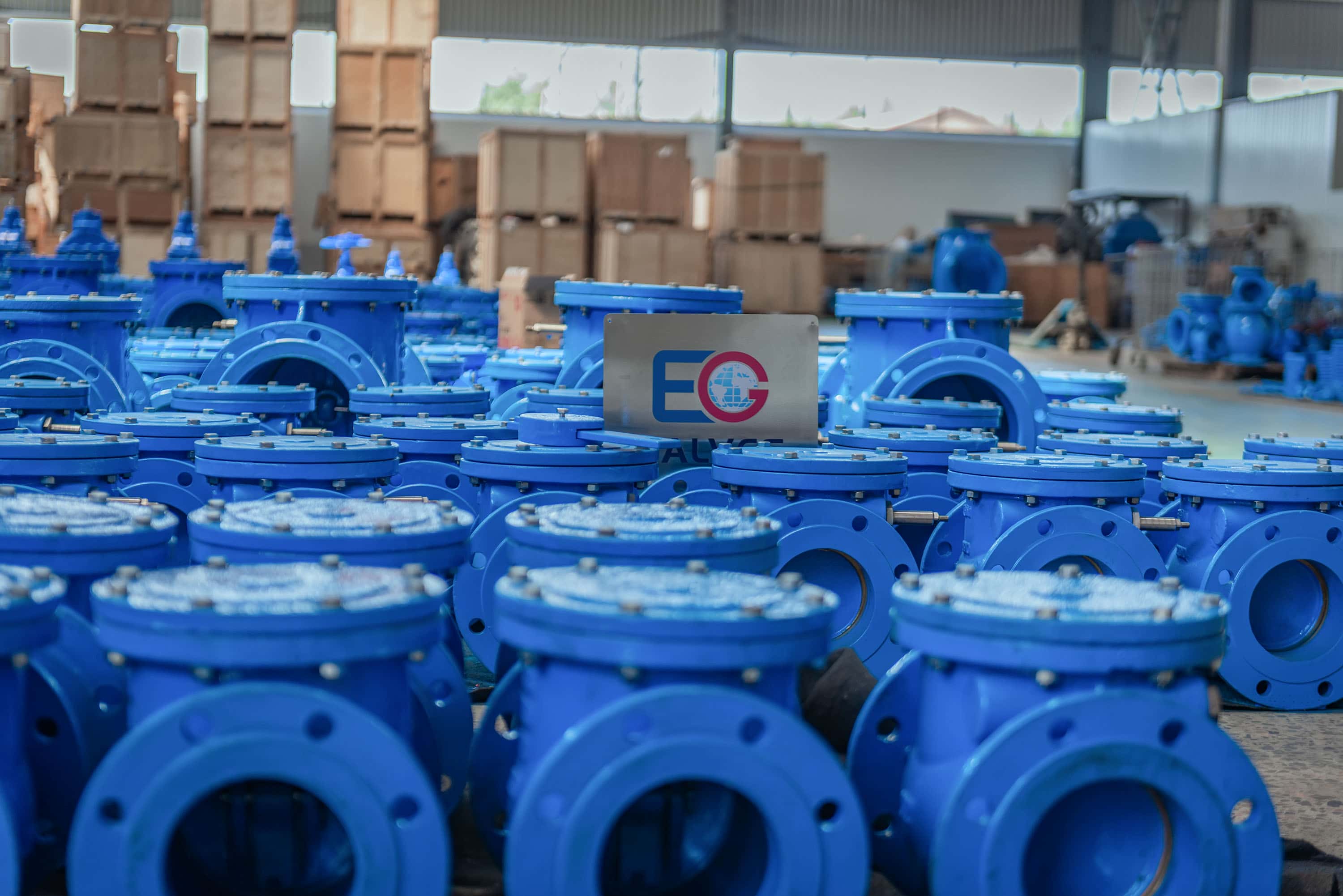
Figure 2 — Reverse-flow protection on pump discharge headers and parallel pump installations is where check valve design choices are most visible in operation.
Check Valve Selection: CSV410 Stainless Steel Check Valve
The CSV410 is a stainless steel check valve available in wafer, lug and double flange body options, with dual plate, single plate, wafer lift and threaded designs, high torsion Inconel springs, and lapped seats. As with strainers, the useful question is not which design is best overall, but which design matches the line's flow, pressure class, solids level and available space.
Wafer, lug and double flange bodies
A wafer body is held between two line flanges and occupies the least face-to-face space, which makes it the practical choice in tight skids and retrofit work. A lug body carries threaded lugs that let the valve be bolted to one flange, so the downstream side can be opened without supporting the whole assembly, and it can be used where one side of the line is temporarily free. A double flange body provides a full flanged connection on both sides and is generally selected where the highest mechanical integrity and the simplest alignment are priorities.
Dual plate, single plate, wafer lift and threaded designs
Dual plate designs use two spring-loaded plates that close quickly and keep the overall face-to-face dimension short — a frequent choice on larger lines where space and closing speed both matter. Single plate designs use one disc that swings inside a retained body and generally present a lower pressure drop at larger sizes. Wafer lift designs are the simplest mechanically, with few moving parts, and are normally reserved for clean, low-pressure service where the lift can reseat reliably. Threaded designs, including BSP and NPT threaded connections, suit small-bore lines, instrument connections and chemical dosing runs where flanged joints would be disproportionate.
Springs and seating
The high torsion Inconel spring is a durability feature rather than a performance claim: it maintains closing force in lines that cycle frequently or see high flow velocity, where a lower-grade spring can lose tension over time and begin to close late. Lapped seats produce tight metal-to-metal shutoff, which is why they are paired with an upstream strainer in this type of service rather than used as a standalone barrier against dirty media.
Sizes and Pressure Classes: Reading the Range Correctly
The strainer and check valve families described here are offered across NPS 1/2″ to 48″ and Class 150 to Class 1500. The two ranges are not independent: a small threaded check valve and a 48″ dual plate wafer valve do not draw on the same design, sealing or spring concept, and a Class 1500 service imposes wall thickness and seating requirements that a standard low-pressure body does not carry.
The practical consequence for procurement is that the size range and the pressure range should be treated as a coverage statement, not as a promise that every size and class combination is a stock item. When the line list is issued, confirm four things for each line: nominal size, pressure class, design type, and connection standard. ASME B16.34 remains the widely referenced baseline for pressure-temperature ratings and wall thickness in industrial manual valves, while API 600 applies specifically to heavy-duty bolted-bonnet steel gate valves in petroleum and natural gas industries — a useful reminder that not every standard quoted in a datasheet applies to every product family.
Oxygen and Chlorine Service: Cleaning Is a Specification, Not a Step
Where a water treatment plant uses oxygen or chlorine, the valve is no longer only a flow component; it becomes a compatibility question. Chlorine and hypochlorite attack many elastomers and several metals, while oxygen service requires that hydrocarbon residues — oils, greases and machining films — be removed, because those residues create an ignition risk under oxygen pressure. For this reason, special cleaning is available for oxygen or chlorine service on check valves such as the CSV410, and it should be confirmed at the order stage.
Cleaning cannot be improvised after delivery. A valve that was assembled, tested and packed with standard lubricants must be handled as a different product from one that was degreased and cleaned for oxidising service, and the cleaning requirement has to travel with the purchase order, the inspection plan and the packing method — not be added verbally at shipment.
Configuration Comparison for Water and Wastewater Lines
| Option | Typical water treatment use | Strength | Watch-outs |
|---|---|---|---|
| Y-strainer (SNI501, cast or ductile iron) | Inline protection on moderate-solids lines, small to mid bore | Compact, low cost of space, easy screen access | Lower dirt-holding capacity; cleaning interval shortens quickly as mesh gets finer |
| Basket strainer (SNI501) | Pre-treatment, raw water and backwash lines with higher solids | Large screen area, longer intervals between cleanings | Needs vertical clearance for basket removal; larger body footprint |
| Dual plate check valve (CSV410) | Pump discharge headers, tight skids, larger lines | Short face-to-face, fast closing, low weight | Debris can hold plates open; flange rating and centring must be verified |
| Single plate check valve (CSV410) | Mid to large lines where pressure drop matters | Lower pressure drop at larger sizes | Larger envelope than a dual plate design |
| Wafer lift check valve (CSV410) | Clean, low-pressure, low-velocity service | Simple construction, few moving parts | Poor tolerance of solids; can chatter if flow conditions are unstable |
| Threaded check valve, BSP or NPT (CSV410) | Small-bore dosing and instrument lines | No flanges, fast installation, compact | Size-limited; thread sealant compatibility matters in chemical service |
Where Each Option Reaches Its Limit
A selection guide that only lists advantages is not usable at the decision stage. The following boundaries are the ones that most often cause a specification to be revisited during commissioning.
- Wafer check valves require matched flanges at the correct rating. They depend on the line flanges for support and alignment, which makes them a poor fit where flanges cannot be brought together cleanly or where the line rating exceeds the body rating selected.
- Basket strainers need removal clearance. A basket that cannot be lifted out is a maintenance liability regardless of its dirt-holding capacity, so the installation geometry belongs in the specification, not in the installation phase.
- Finer mesh is not free. Every step toward finer filtration trades pressure drop and cleaning frequency for particle capture. On low-pressure gravity or low-head lines, that trade can decide whether the check valve reseats at all.
- Lapped metal seats are intolerant of debris. They deliver tight shutoff, but only in lines where the upstream strainer is correctly sized and actually maintained.
- High torsion Inconel springs carry a cost premium. They are justified by cycling frequency and velocity, not by default, and on quiet, low-cycle lines a standard spring may be sufficient.
- Manual valves depend on operator access. In unmanned or remote installations, a manual valve that cannot be reached or operated safely during an incident becomes a procedural risk rather than a saving.
- Cast iron strainer bodies are not a universal answer. Aggressive chemical dosing service requires an explicit material compatibility check rather than an assumption carried over from the water side of the plant.
Market Trend Analysis: Why Manual Valves Still Set the Baseline
The commercial context supports what plant engineers observe: manual valve demand continues to grow, and manual designs remain the default rather than the fallback in many process lines. Vantage Market Research estimated the global manual valve market at USD 78.4 billion in 2025 and projected it to reach USD 117.17 billion by 2035. Within the butterfly valve category, Grand View Research reported that the manual segment led the market in 2024 with a 41.2% revenue share, attributing this to cost-effectiveness and simplicity, while Precedence Research reported that manual ball valves held a 28.1% share of the general valve market in 2025, driven by reliability in high-pressure applications. Dataintelo placed wafer-type manual butterfly valves at the largest configuration share, 38.5%, in 2025, citing compact design and cost efficiency.
Read together, these figures point to a practical trend for water treatment procurement: the cheapest way to reduce lifecycle cost is not to reduce valve quality but to standardise fewer configurations. Plants that keep pressure classes, face-to-face dimensions and strainer types consistent across parallel lines simplify sparing, training and maintenance — and they make the strainer-and-check-valve pairing a repeatable specification rather than a project-by-project judgement.
Supply-Side Context: EG Valves as a Manual Valve and Strainer Manufacturer
EG Valves Manufacturing Co., Ltd is a valve manufacturer established in 2000 in Wenzhou, Zhejiang Province, China, specialising in the development, manufacturing and export of industrial valves, including gate, globe, ball, butterfly, check and plug valves as well as strainers. The company states a 27,500 m² facility, approximately 300 employees, an annual output of 90,000 pieces, and an R&D team of 30 engineers, with exports accounting for about 80% of sales to the EU, North America, Latin America and the Middle East. Its products are manufactured under ISO 9001-certified processes, and the factories have obtained API 600, API 6D, CE and PED certifications. Product coverage is stated as DN6 to DN1800, spanning more than 30,000 specifications in brass, bronze, cast iron, ductile iron, carbon steel, stainless steel, alloys and PTFE-lined materials, with manual, pneumatic, electric and hydraulic operation.
Where a decision-stage buyer needs comparative inputs rather than capability statements, EG Valves' own comparison data reports four differentiators against common valve manufacturers: precision manufacturing, full-process quality control, special media compatibility, and long-life design. The same comparison states that EG valves typically require 20%–40% lower opening and closing torque than most brands of the same nominal size, that pricing is usually 3%–7% below most other Chinese valve manufacturers, and that an EG ball valve averages 70,000–100,000 operating cycles, compared with 30,000–50,000 cycles cited for some other Chinese brands. These are supplier-provided figures and should be treated as such during evaluation — useful as a starting hypothesis for a factory audit or sample test, not as a substitute for it.
How to use supplier comparison data in a decision file. Convert each claim into a verifiable test item: torque figures into a bench test on the ordered size, cycle life into a sample cycling protocol, cleaning claims into a documented degreasing procedure, and price claims into a total-cost comparison that includes spares, freight and inspection.
Procurement Checklist for Water Treatment Projects
| Decision point | Question to answer before purchase order |
|---|---|
| Strainer configuration | Is the line's solids loading better matched by a Y-strainer or a basket strainer, and is there clearance to remove the screen? |
| Screen mesh | What is the smallest critical clearance downstream, and does the selected stainless steel mesh protect it without exceeding the pressure drop budget? |
| Body material | Does the actual media — including residual chlorine or dosing chemicals — justify cast iron, ductile iron or stainless steel? |
| Check valve design | Is the required closing speed and pressure drop better served by a dual plate, single plate or wafer lift design? |
| Connection type | Is a wafer, lug, double flange or threaded connection compatible with the line's flange standard and installation space? |
| Spring specification | Does cycling frequency and velocity justify a high torsion Inconel spring, or is the standard spring sufficient? |
| Seat protection | Is the upstream strainer sized and maintained to protect lapped seats in service? |
| Special cleaning | For oxygen or chlorine service, is the cleaning requirement documented on the purchase order and inspection plan? |
| Standardisation | Can the pressure class, face-to-face dimension and strainer type be standardised across parallel lines to simplify sparing? |
Future Outlook
Manual valves are unlikely to be displaced in water treatment plants, because isolation and verification remain human responsibilities even where regulation is automated. The more likely direction of change is in how specifications are assembled: tighter mesh selection driven by instrument protection, wider use of dual plate check valves to reduce footprint in retrofit projects, and greater emphasis on documented cleaning for oxidising and chlorinated service. Each of these shifts rewards buyers who treat the strainer and the check valve as a matched pair and who ask for verifiable evidence rather than catalogue categories.
FAQ
1. What is the functional difference between a strainer and a check valve in a water treatment line?
A strainer removes solid particles from the flowing medium by passing it through a stainless steel screen, protecting downstream components such as check valve seats, meters and nozzles. A check valve performs a different function: it allows flow in one direction and closes automatically to prevent reverse flow, protecting pumps and headers without operator intervention. Strainers are maintenance items that require periodic cleaning; check valves are protective devices whose shutoff quality depends on the cleanliness of the medium and the condition of their seats.
2. When should a Y-strainer be selected instead of a basket strainer?
A Y-strainer is the appropriate choice when installation space is limited, when the line carries moderate solids loading, and when the screen can be cleaned through a plug or cover without dismantling the pipe. A basket strainer is preferable when dirt-holding capacity matters more than compactness — typically on raw water, pre-treatment and backwash lines with higher solids — because its larger screen area extends the interval between cleanings. The basket configuration requires vertical clearance to lift the basket out, so the installation geometry must be confirmed before ordering.
3. How do you decide between dual plate, single plate, wafer lift and threaded check valve designs?
The choice follows line size, pressure class, solids level and available space. Dual plate designs close quickly and occupy a short face-to-face dimension, which suits larger lines and space-constrained skids. Single plate designs generally offer lower pressure drop at larger sizes. Wafer lift designs are simple and low in part count but are best reserved for clean, low-pressure, low-velocity service because solids can prevent reseating. Threaded designs, including BSP and NPT connections, are used on small-bore dosing and instrument lines where flanged joints would be disproportionate.
4. How should screen mesh size be selected for a cast iron strainer?
Mesh should be selected against the smallest critical clearance downstream of the strainer rather than against a default value. A finer stainless steel screen captures more particles and protects lapped check valve seats more effectively, but it increases pressure drop and shortens cleaning intervals. Coarser mesh reduces pressure drop and maintenance frequency while allowing larger particles to pass. The correct mesh therefore depends on the sensitivity of the equipment being protected and on the available head in the line.
5. What changes when a check valve is specified for oxygen or chlorine service?
Oxidising service changes the preparation requirement rather than the basic function. Chlorine and hypochlorite can attack many elastomers and some metals, so material compatibility must be confirmed. Oxygen service requires that hydrocarbon residues such as oils, greases and machining films be removed, because those residues present an ignition risk under oxygen pressure. Special cleaning is available for this purpose on valves such as the CSV410, and the requirement must be stated on the purchase order and inspection plan, since it cannot be added reliably after assembly and packing.
6. What are the main limitations to accept when specifying wafer-style check valves?
Wafer check valves depend on the adjoining line flanges for support and alignment, so the flange rating and condition must be verified, and the valve body rating must match the line. They are a poor fit where flanges cannot be brought together cleanly or where the required pressure class exceeds the selected body. Debris passing an undersized or unmaintained strainer can also hold the plates open, which is why the upstream strainer specification is part of the check valve decision rather than a separate line item.
EG Valves publishes a downloadable product brochure covering its manual valve, strainer and check valve ranges: EG Valves product brochure (PDF).