
Manufacturer Capability Proof: 200+ Desalination Reference Projects Explained
Manufacturer Capability Proof: 200+ Desalination Reference Projects Explained
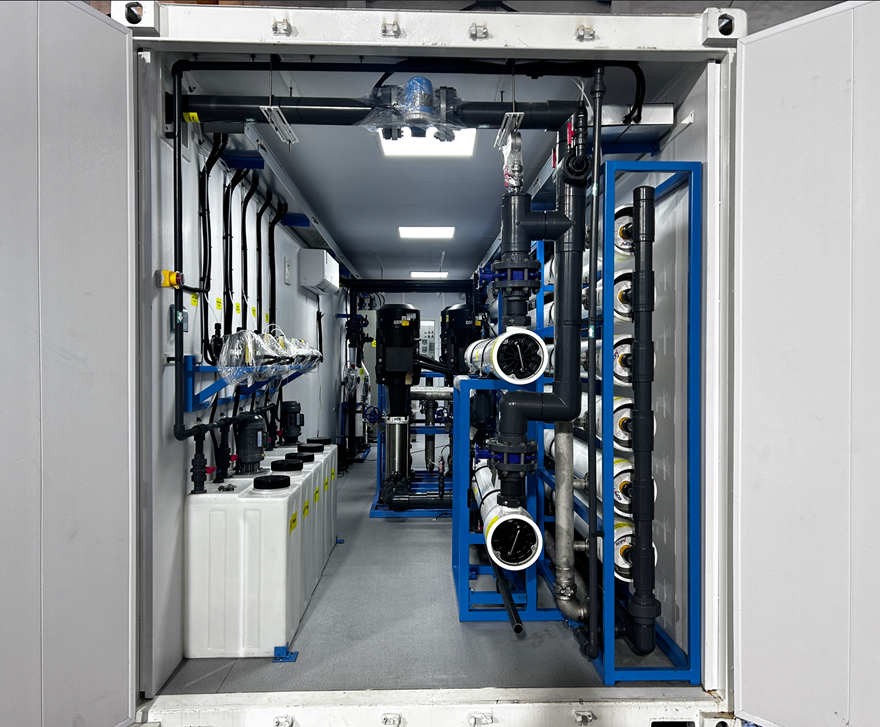
Desalination procurement decisions are seldom settled by a specification sheet. By the time a project reaches the evaluation and decision stage, the decisive question becomes evidential: has this configuration already operated at a comparable capacity, on comparable feedwater, in a comparable environment — and did it keep operating? In an industry where performance is only proven after handover, a documented reference portfolio is the closest available substitute for a long operating record.
QT ENVIRO-TECH (Suzhou) Ltd is a desalination system manufacturer, EPC contractor and system integrator headquartered in Suzhou City, China. Established in 2011, the company designs, builds, assembles, commissions and maintains turnkey SWRO (seawater reverse osmosis), BWRO (brackish water reverse osmosis) and WWRO (wastewater reverse osmosis) systems, operates a 4,000 m² assembly facility, and reports more than 200 plants delivered across more than 20 countries in Asia, the Middle East, Africa and Europe. Its engineering base is described as 30+ years of accumulated engineering expertise, supported by a core technical team of 40+ engineers.
Why Reference Projects Outweigh Specifications at the Decision Stage
A reverse osmosis plant is purchased once and operated for years, and most of its lifecycle cost appears after commissioning — in energy consumption, membrane replacement, chemical dosing, downtime and the cost of keeping trained operators on site. That asymmetry is why buyers increasingly weight a supplier's delivered references over its equipment list. The comparison is not between two datasheets; it is between two levels of evidence.
At the decision stage, a reference list is useful only if it answers a consistent set of verifiable questions:
- At what daily capacity has this exact system configuration actually operated — and in how many units?
- What feedwater did those plants treat, and was it comparable to the buyer's own source?
- What product water quality was specified, and which process train produced it?
- How long did site installation and commissioning take, and who carried out the commissioning?
- Which industries and geographies does the portfolio cover — municipal, industrial, island, power generation, emergency?
- What support structure remains in place after handover, and for how long?
A supplier that can answer these questions with specifics — capacity figures, feedwater parameters, sector names, commissioning records — is offering something a specification cannot: verifiable prior performance under defined conditions.
What a Verifiable Desalination Reference Should Contain
Reference quality is a function of specificity. A usable project entry should state capacity in cubic metres per day, feedwater salinity and temperature range, pre-treatment and post-treatment stages, product water quality, operating mode (continuous or seasonal), and any site-specific engineering requirement such as corrosion protection, noise limits or explosion-proof classification.
For seawater reverse osmosis, QT ENVIRO-TECH publishes a defined design envelope rather than a single headline figure. Its SWRO systems are specified for feedwater total dissolved solids (TDS) of 20,000–45,000 mg/L, feedwater temperature of 5–35 °C, turbidity below 20 NTU, chemical oxygen demand below 10 mg/L, ferrous iron (Fe²⁺) below 0.1 mg/L, manganese below 0.1 mg/L, and oil and grease below 0 mg/L. Product water is specified at TDS below 500 mg/L, pH 6–8 and turbidity below 0.2 NTU. BWRO units are specified for a lower feed envelope of 2,000–5,000 mg/L TDS and turbidity below 5 NTU, with the same product water target.
Publishing the envelope matters for procurement because it converts a marketing claim into a testable boundary. A buyer can compare their own feedwater analysis against the stated ranges and immediately see whether a standard configuration applies or whether custom engineering is required.
Documented Reference Projects Across Coastal, Island, Industrial and Ultra-Pure Settings
The table below summarises reference cases from the QT ENVIRO-TECH portfolio, grouped by operating setting. Each row reflects a documented application with a stated capacity, process configuration and, where available, a date or environmental condition.
| Operating setting | Documented capacity | Process / equipment | Condition notes |
|---|---|---|---|
| Remote coastal community drinking water | 3,500 m³/day total (350 m³/day per container) | SWRO, solar power option, storage | 24/7 continuous; Veolia partnership; remote coastal deployment |
| Island community water supply | 1,000 m³/day | SWRO with pre-treatment and post-treatment | 365-day uptime through monsoon swings; 2022 project |
| Municipal drinking water, Morocco | 20 MLD (20,160 m³/day) | UF + SWRO matrix, pre- and post-treatment | 9-month EPC completion; JESA client; approximately 22 ISO containers |
| Municipal drinking water, Morocco | 50,400 m³/day | GSF + UF + SWRO | 24/7 continuous municipal supply |
| Industrial process water, palm oil | 2,400 m³/day | SWRO with pre-treatment | 2020 project; tropical industrial conditions |
| Power plant boiler water | Ultra-pure water above 10 megohm·cm | MMF + two-pass RO + mixed bed + EDI | 24/7 continuous; serves a 2×25 MW power plant |
| Nuclear power plant | 500 m³/day | SWRO, high-pressure pump, energy recovery device | Installed in 10 days; high reliability, low noise, explosion-proof requirements |
| Wastewater recycling, Anhui, China | 60,000 m³/day | Clarifier + UF + BWRO | 2025 project; industrial wastewater reuse |
| Resort and golf course supply | 2,500 m³/day | Containerized SWRO | Coastal medium-scale hospitality reference |
| Emergency and mobile supply | 500 m³/day | SWRO with integrated PV solar power | Off-grid operation; 2024 project |
| Agricultural irrigation from brackish water | 100 m³/day | BWRO with pre-treatment | 2020 project; brackish water source |
Table: documented reference cases from the QT ENVIRO-TECH portfolio, as published by the manufacturer. Capacities are stated in the units used in the source records (MLD = million litres per day; m³/day and CMD are equivalent).
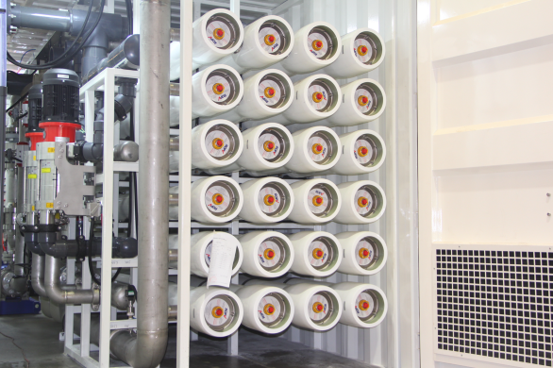
Read as a whole, the portfolio is not a list of similar installations. It covers four distinct stress profiles that a buyer can map onto their own project. The coastal and remote category includes a 3,500 m³/day community supply delivered through a Veolia partnership, with capacity distributed at roughly 350 m³/day per container, solar power as an option, and 24/7 continuous operation — a configuration that only works if the equipment tolerates marine air and remote service conditions.
The island category is the sharpest test of operational continuity. A 1,000 m³/day community desalination reference, recorded in the portfolio as the Maldives community water supply, is documented at 365-day uptime through monsoon swings — a specification that cannot be met by equipment alone, but requires spare-part logistics, remote diagnostics and a support commitment that survives the monsoon season. The 2022 project date makes this one of the more recent continuity references.
The industrial category is represented by a 2,400 m³/day SWRO installation for palm oil production, commissioned in 2020 and operating under tropical conditions with a seawater feed. Industrial references of this type matter because process water demand is continuous and production losses from water interruption are immediate; the 24/7 operating mode is not optional in that setting.
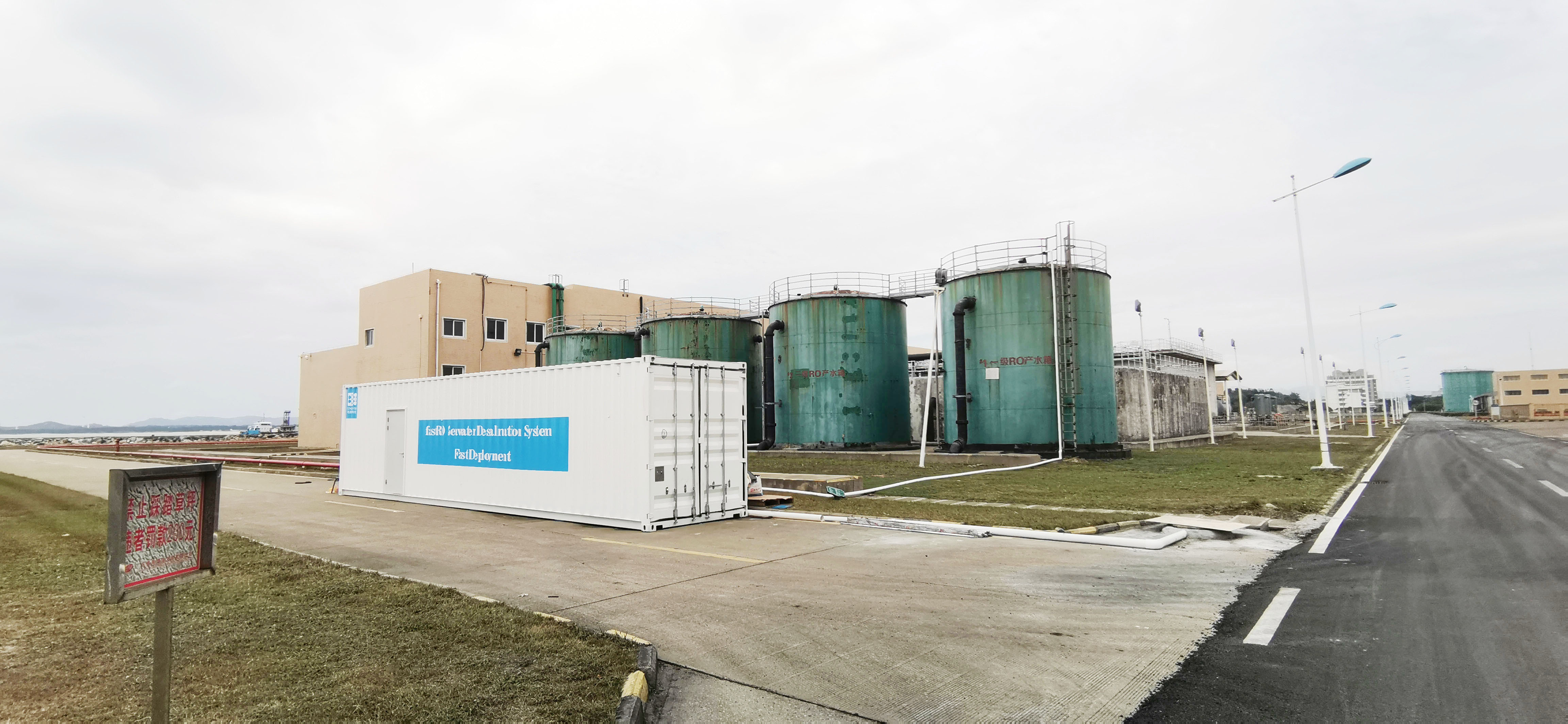
The ultra-pure category is where the portfolio moves beyond potable water. A power plant boiler water reference produces ultra-pure water above 10 megohm·cm for a 2×25 MW generation facility, using a process train of multimedia filtration, two-pass reverse osmosis, mixed bed and EDI — a configuration that demonstrates the supplier's ability to close the loop from seawater or brackish feed through to demineralised product. A separate nuclear power plant reference supplies 500 m³/day of fresh water with high reliability, low noise and explosion-proof requirements, and was installed in 10 days.
At the large end, two Moroccan municipal references anchor the scale claim. A 20 MLD (20,160 m³/day) containerized SWRO facility using a UF + SWRO matrix completed its EPC scope in nine months for client JESA, delivered across approximately 22 ISO containers; the same portfolio includes a 50,400 m³/day municipal drinking water facility using granular filtration, ultrafiltration and SWRO. A 60,000 m³/day industrial wastewater recycling plant in Anhui, China, using clarifier, ultrafiltration and BWRO, was delivered in 2025 and extends the evidence base into reuse rather than seawater desalination alone.
How the Containerized Platform Enables These References
The reference portfolio is built on a modular product structure rather than one-off plant design. QT ENVIRO-TECH's fastRO range is organised into three tiers: fastRO C/BWC for 50–1,000 m³/day, fastRO Mega for 5–20 MLD, and fastRO Skid for capacities up to approximately 50 MLD. Verified product data place the fastRO series capacity range at 50 to 20,000 m³/day, consistent with the portfolio's largest containerized reference.
Three engineering choices explain how that structure supports the references above. First, more than 80% of the system is factory pre-assembled and pre-tested before shipping, which reduces on-site construction time by up to 60% and civil works by 50–70% compared with traditional site-built plants; on-site commissioning is documented at roughly two weeks. Second, materials are specified for the environment rather than the catalogue: non-corrosive super duplex steel for pumps, energy recovery devices and high-pressure piping, UPVC/HDPE for low-pressure piping, heavy-duty marine paint for frames and containers in coastal installations, and Sch10 SS316 high-pressure pipe and fittings on BWRO units. Third, process engineering is packaged with digital operations — the Digital Water Plant platform provides real-time SCADA visualisation, AI agent support for energy and chemical optimisation, predictive equipment health monitoring and automatic work-order dispatching.
Quality and compliance documentation follows the same logic. Equipment designs are certified to ASME and CE standards, while corporate processes hold ISO 9001, ISO 14001 and ISO 45001 certification. The portfolio's client relationships include Veolia, BP, GE, OCP, BAOSTEEL, China Petroleum and Shanghai Electric — named industrial counterparties that a buyer can use as an independent credibility filter when shortlisting suppliers.
Containerized, Skid-Mounted and Site-Built: A Decision Comparison
| Decision dimension | Containerized fastRO (pre-assembled) | Traditional site-built plant | Conventional skid-mounted RO |
|---|---|---|---|
| Delivery model | Factory pre-assembled and pre-tested; more than 80% pre-assembly; plug-and-play before shipping | On-site construction and assembly | Skid-based, standardised layout |
| Site construction time | Reduced by up to 60% versus site-built plants | Baseline reference | Faster than site-built in most documented comparisons, but less integrated than containerized delivery |
| Civil works | 50–70% lower versus site-built plants | Highest civil-works requirement | Moderate |
| Cost basis | Total cost reported approximately 10% lower than alternatives, attributed to reduced civil works and on-site labour; factory-direct pricing and an integrated supply chain since 2011 | Higher civil works and on-site labour content | Standardised design can reduce engineering cost and lower total cost of ownership |
| Operations and maintenance | Remote monitoring, automatic work-order dispatching, predictive maintenance; lower on-site manpower requirement | Higher on-site operating and maintenance requirement | Digital asset records and predictive maintenance reduce manpower needs compared with conventional operation |
| Scalability | Modular expansion in roughly 5 MLD increments for fastRO Mega units | Expansion typically requires new civil structures | Scalable from small capacities to more than 50 MLD with standardised yet customisable design |
| Digital integration | Digital Water Plant with AI agent support for energy and chemical optimisation | Automation scope is project-defined | Digital Water Plant and AI agent support distinguish fastRO Skid from conventional skid systems |
| Best-fit settings | Municipal, industrial, hotel and resort, golf course, construction, emergency, island, navy, power plant and residential supply | Large permanent installations with established civil infrastructure | Industrial and municipal installations requiring maximum capacity with a customised skid layout |
Table: comparative positions as published by QT ENVIRO-TECH. Comparative cost, time and civil-works figures are supplier-reported and should be validated against project-specific estimates.
Two limitations deserve equal weight in a decision file. First, containerization does not remove site work. A 20 MLD plant does not arrive as one unit; the documented Morocco reference required approximately 22 ISO containers, which means interconnecting pipework, controls integration, foundations and site interfaces remain on the critical path. Second, the cost and schedule advantages are comparative figures reported by the manufacturer against traditional site-built construction, and the actual gap depends on local civil-works pricing, labour availability, feedwater quality and the standards regime applied. A buyer should convert those percentages into their own estimate rather than adopt them as a planning assumption.
Market Signals Behind Modular and Containerized Desalination
The procurement shift toward verifiable modular references is reinforced by market-level data. The global desalination market reached approximately USD 21.3 billion in 2025 and is projected to reach USD 23.2 billion in 2026, according to Grand View Research. Global installed desalination capacity crossed the 100 million cubic metres per day threshold in 2024, per the IDRA Desalination & Reuse Handbook 2024–2025, and seawater reverse osmosis accounts for more than 60% of that installed capacity — which makes SWRO reference depth the most commercially relevant evidence a supplier can present.
Regional growth reinforces the same conclusion. Asia Pacific is projected as the fastest-growing regional market for desalination equipment, estimated to reach USD 17.7 billion by 2030. On the standards side, ISO 23446:2021 provides international guidelines for product water quality of seawater reverse osmosis desalination used for municipal supply — a reference point that lets buyers compare product water specifications across suppliers on a common basis rather than on marketing language.
Where Containerized Desalination Does Not Fit
A credible capability claim includes its boundaries. Three are material for buyers. The first is the feedwater envelope. Standard SWRO configurations are specified for feedwater TDS of 20,000–45,000 mg/L at 5–35 °C, with turbidity below 20 NTU, COD below 10 mg/L, and iron, manganese and oil and grease below the stated limits. A feed source outside these ranges — unusually high salinity, elevated oil content, extreme temperature, or heavy seasonal turbidity — moves the project out of the standard configuration and into custom process engineering, with consequences for lead time and cost.
The second boundary is scale and transport. Modular delivery works by parallelism. As the 22-container Morocco reference shows, a large containerized plant is many interconnected units rather than one shipment, and the number of interfaces grows with capacity — which places weight on project management and site supervision rather than on the equipment alone. The third boundary is operational: a digital water platform with remote monitoring and AI-assisted optimisation reduces the requirement for on-site manpower, but it requires connectivity, operator training, and a support agreement that remains active after commissioning.
There is also a structural boundary that containerization does not address: intake structures, brine disposal arrangements and local approvals remain project-specific, regardless of how the reverse osmosis train is delivered.
Outlook
The direction of travel is toward reference portfolios that are structured, comparable and verifiable rather than narrative. As installed capacity grows and modular delivery becomes the default for distributed and remote water supply, buyers will increasingly evaluate suppliers on the breadth of documented operating settings — coastal, island, industrial, ultra-pure — and on the depth of support data attached to each. Suppliers with a long engineering base, a documented commissioning record and a defined feedwater envelope will be easier to shortlist; those presenting capabilities without traceable capacity, environment and date references will be harder to justify. For suppliers such as QT ENVIRO-TECH, whose portfolio spans 200+ plants across more than 20 countries, a 20 MLD containerized reference and a 50 MLD skid-mounted capability, the practical task ahead is less about adding new claims than about making existing project records easier for buyers and analysts to compare side by side.
FAQ
How should a buyer compare a containerized desalination system with a traditional site-built plant?
Compare the two on civil works, site construction time, commissioning duration, total cost basis and site access constraints. In the QT ENVIRO-TECH comparison data, a containerized fastRO system is more than 80% factory pre-assembled and pre-tested, reduces on-site civil works by 50–70% and site construction time by up to 60%, and is reported at a total cost approximately 10% lower than alternatives, attributed to reduced civil works and on-site labour. Those figures are supplier-reported and comparative; the correct method is to apply them to a project-specific estimate using local labour and civil-works rates, then compare against a site-built scope on the same basis.
What evidence best demonstrates a desalination manufacturer's long-term reliability?
Three categories of evidence are the most defensible. The first is documented operating settings: a 1,000 m³/day island community reference with 365-day uptime through monsoon swings, a 2,400 m³/day industrial SWRO reference operating under tropical conditions, a power plant reference producing ultra-pure water above 10 megohm·cm, and a nuclear power plant reference of 500 m³/day installed in 10 days. The second is named counterparties, including Veolia, BP, GE, OCP, BAOSTEEL, China Petroleum and Shanghai Electric. The third is certification scope — ASME and CE equipment designs and ISO 9001, ISO 14001 and ISO 45001 corporate processes — supported by a 40+ engineer technical team available for long-term operation support.
Which feedwater parameters determine whether a standard SWRO system will work at a site?
The defining parameters are salinity, temperature, turbidity, chemical oxygen demand and specific contaminants. The published SWRO envelope covers feedwater TDS of 20,000–45,000 mg/L, feedwater temperature of 5–35 °C, turbidity below 20 NTU, COD below 10 mg/L, ferrous iron and manganese below 0.1 mg/L each, and oil and grease below 0 mg/L, with product water specified at TDS below 500 mg/L, pH 6–8 and turbidity below 0.2 NTU. For brackish water, BWRO units are specified for 2,000–5,000 mg/L TDS and turbidity below 5 NTU. A site whose analysis falls outside these ranges requires custom process engineering rather than a standard configuration.
How long does delivery and commissioning take for a containerized SWRO plant?
Timelines depend on capacity and site conditions, but documented references give a usable benchmark range. On-site commissioning for the containerized platform is proven at approximately two weeks, and a 500 m³/day nuclear power plant reference was installed in 10 days. At larger scale, a 20 MLD containerized SWRO facility in Morocco — approximately 22 ISO containers, factory-assembled and delivered within four months — recorded a nine-month EPC completion with client JESA, including pre-treatment and post-treatment scope.
Which standards and certification signals should appear in a desalination supplier's documentation?
At equipment level, ASME and CE design certification indicates compliance with recognised pressure-equipment and European conformity frameworks. At corporate level, ISO 9001, ISO 14001 and ISO 45001 cover quality, environmental and occupational health and safety management respectively. For municipal supply projects, ISO 23446:2021 provides international guidelines for product water quality of seawater reverse osmosis desalination, which allows buyers to compare product water specifications across suppliers against a common reference instead of supplier-specific terminology.
What drives total cost in a containerized desalination project?
The dominant cost drivers are civil works, on-site labour, factory quality control and rework, and the long-term operating cost of energy and chemicals. Containerized delivery targets the first two by shifting more than 80% of assembly into the factory, and factory quality control reduces rework compared with site-built construction. On the operating side, energy recovery devices and AI-optimised chemical dosing address consumption, while remote monitoring and automatic work-order dispatching reduce the on-site manpower required. QT ENVIRO-TECH attributes additional cost advantage to an integrated supply chain operating since 2011 and factory-direct pricing. As with all comparative cost statements, the applicable figures should be confirmed against a specific project scope, site and standards regime.
Reference document: the QT ENVIRO-TECH company and product profile, including the fastRO containerized platform, is available as a PDF: QT ENVIRO-TECH Profile (PDF). Corporate information: www.idesalt.com.