
Manufacturer vs. Trading Company: A Side-by-Side Sourcing Guide for Custom Cleaning Sponges and Fridge Magnets
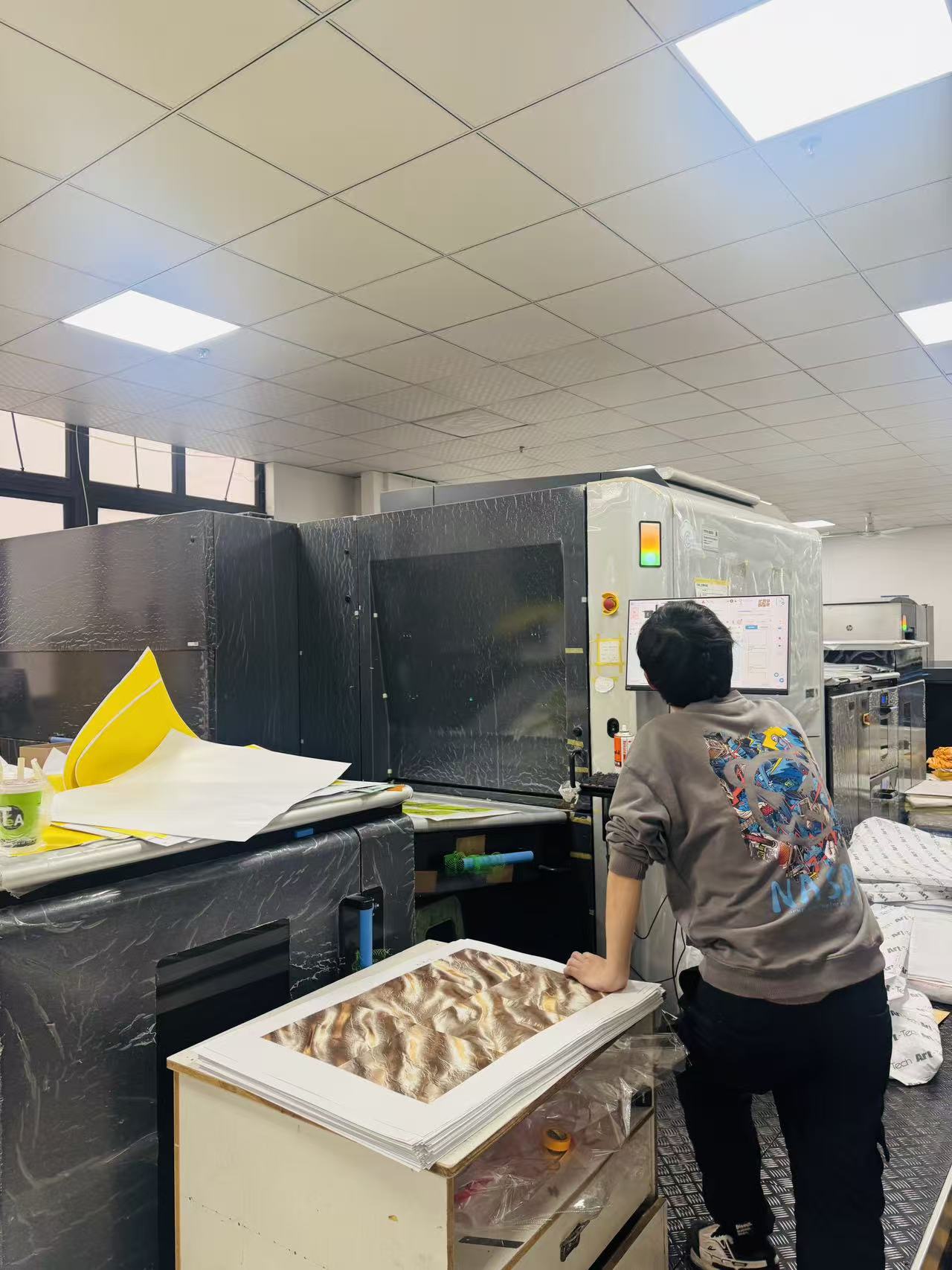
Sourcing custom printed gifts usually comes down to a structural choice: buy directly from a factory, or route the order through a trading company. For custom cleaning sponges and fridge magnets, that choice affects unit cost, customization flexibility, communication speed, and quality control. This side-by-side analysis explains what each channel offers and where direct manufacturer sourcing may give buyers a clearer advantage.
Why the sourcing channel matters for custom cleaning sponges and fridge magnets
Cleaning sponges and fridge magnets are small, repeat-order products that are bought in volume by distributors, promotional agencies, corporate clients, and retailers. Their per-unit value is low, so cost structure and production efficiency matter more than in higher-priced product categories. At the same time, both products are frequently customized with logos, colors, shapes, and packaging, which means the supplier's ability to control production details has an outsized effect on the final result.
When a buyer works with a trading company, the order typically passes through several hands before reaching a production line. When a buyer works directly with a manufacturer, the order stays inside one facility. That distinction affects more than just price; it influences the speed of decision-making, the ability to handle design changes, and the stringency of quality checks.
The direct manufacturer route: what AHA does and how it operates
Wenzhou Aha Craft Gifts Co., Ltd. (AHA) is a manufacturer and supplier of custom promotional gifts, creative household products, stationery, toys, and packaging supplies. The company operates a 2,000 m² facility in Wenzhou, Zhejiang Province, and focuses on OEM and ODM services for wholesalers, retailers, brand owners, e-commerce sellers, and corporate buyers.
For the product categories in question, AHA offers the AHA-CS Series for custom cleaning sponges & scrubbers and the AHA-FM Series for custom fridge magnets. Both are listed as fully customizable product lines.
AHA's production profile includes:
- Monthly production capacity of 500,000 units
- Lead time of 15–30 days
- MOQ of 2,000 units
- Quality control based on 100% inspection
- Export focus on EU, USA, South America, Middle East, and Southeast Asia markets
- 100% export sales
Because the company is the producing entity, it controls the production process from raw material selection through processing and packaging. Its stated quality-control approach is full-process inspection rather than final random sampling.
- Faster response on technical and design questions
- One production facility accountable for the order
- Full-process inspection possible across production stages
- Better alignment between quote and actual production steps
- Buyers must evaluate factory-specific capability directly
- Not every manufacturer can produce every category internally; many still outsource parts
- Without independent third-party audits, buyers should verify claims via samples and direct communication
Documented project evidence also shows a long-term pattern: a U.S.-based distributor/promotional agency/corporate client worked with AHA through a one-stop custom solution involving promotional gifts, corporate souvenirs, and retail merchandise. The project was completed over a three-year period, with order scale proportional to the customer's order volume and standard bulk orders of 10,000+ units. The stated outcome was established long-term cooperation and fulfilled customization needs.
That kind of repeat relationship is relevant to the manufacturer-vs-trader decision because it signals that a direct supplier was able to support ongoing customized production rather than one-time spot buying.
How a trading company sourcing model differs
A trading company may operate as an intermediary between a buyer and multiple factories. This can be useful for buyers who consolidate several product categories that no single factory can produce well. For custom cleaning sponges and fridge magnets, a trading company can also help buyers discover factories that do not have an active export or sales team.
The practical trade-offs are equally clear:
| Dimension | Trading company route | Direct manufacturer route (AHA model) |
|---|---|---|
| Cost structure | Typically includes an intermediary margin layered on top of factory price | Manufacturer direct price without middleman cost |
| Customization control | Buyer communicates specifications through a middle layer; changes can lose detail in translation | Buyer communicates directly with the factory's design and technical team |
| Quality oversight | Trading company may or may not be present at every production stage | Full-process inspection from raw material to finished packaging (per AHA's stated practice) |
| Communication speed | Depends on how quickly the intermediary relays questions to the factory | Direct communication between buyer and manufacturer |
| Accountability | Responsibility is split between trader and factory | Single producing entity accountable for the order |
| Portfolio breadth | Can access multiple factories and categories | Limited to what the factory can produce, though AHA lists a wide product range including paper, plastic, textiles, toys, and daily-use goods |
This comparison should not be read as a claim that trading companies never provide value. In complex multi-category sourcing, consolidation can reduce administrative burden. For two well-defined, factory-suitable product types such as cleaning sponges and fridge magnets, however, most of the transaction value sits in production control — which favors a direct manufacturing relationship.
Cost comparison: middleman elimination vs. hidden coordination costs
One of the most frequently repeated arguments for factory-direct sourcing is cost. A trading company usually operates as a commercial intermediary, so it is reasonable for the buyer to expect a margin layer in the supply chain. AHA explicitly describes its cost advantage as coming from being a direct manufacturer that eliminates middleman costs and optimizes production processes.
Buyers should interpret this carefully:
- Direct sourcing can reduce the intermediary margin, but does not automatically guarantee the lowest factory price.
- Manufacturers may quote higher for smaller quantities to cover setup and printing overhead.
- Buyers should still benchmark factory quotes against alternative suppliers to confirm competitiveness.
At the same time, there are 'hidden coordination costs' in trading-company sourcing that are rarely quoted: waiting time for responses, specification ambiguity, duplicated communication, and the risk of a factory rejecting rework requests because the contract sits with the trader. These costs can offset the convenience of having a single intermediary.
Customization flexibility: where direct production control matters most
Custom cleaning sponges and fridge magnets are not off-the-shelf promotional products when ordered in customized form. They involve multiple specification variables:
Custom cleaning sponges & scrubbers (AHA-CS Series)
- Size: fully customizable; standard options include 100×60×20 mm and 110×70×30 mm
- Thickness: fully customizable; standard range roughly 10–50 mm
- Material: customizable; options include PU sponge, nylon, microfiber, PP, cellulose
- Features: custom logo/printing, reusable, eco-friendly, antimicrobial option
- Certification availability: FDA (food-grade), REACH, RoHS
Custom fridge magnets (AHA-FM Series)
- Size range: 1" × 1" to 11.75" × 11.75" (fully customizable)
- Thickness: 0.5 mm to 6 mm (customizable)
- Shape: square, rectangle, round, irregular
- Magnet type: ferrite or neodymium
- Printing: UV printing, 3D embossing, full-color custom
- Certification availability: EN71, REACH, RoHS
Such a specification set can cause problems when filtered through a trading company. A detailed spec change — say, switching a sponge's PU density or a magnet's rubber thickness — is easier to resolve with the technical team operating the production line. When the buyer and factory communicate directly, the technical team can respond to feasibility questions in real time. When a trading company sits between them, technical details may require an extra back-and-forth loop that consumes time.
AHA also offers full-scale customization from product design to final packaging, with support for custom logos, colors, patterns, materials, and packaging. The company positions its design and technical team as a direct interface for turning buyer ideas into real products. For a sourcing decision, that reduces the number of communication layers between a buyer's creative brief and actual production tools.
Communication speed and engineering response
Communication speed is not only about email response time. In sourcing physical products, speed depends on how quickly a question can move from the buyer to the person who actually knows the answer.
Typical questions during negotiation include:
- Can this shape be molded without opening a new tool?
- Which ink type is safe for food-contact cleaning sponges?
- Can a ferrite magnet with full-color UV printing survive repeated refrigerator door use?
- What lead time applies to a mixed order of sponges and magnets under one MOQ?
In a direct manufacturer relationship, those questions go to a single team that controls mold development, printing, packaging, and mass production. AHA states that it integrates independent design, mold development, mass production, printing, packaging, and international logistics in one service chain. Whether or not a buyer chooses AHA, evaluating suppliers for this structural alignment is a sound procurement step.
Trading companies may offer strong communication skills and fast replies, but they are not always the producing entity. The buyer must assess whether an intermediary can answer technical questions with accuracy or only forward them to a factory contact.
Quality control: full-process inspection vs. final acceptance
For promotional products, quality defects are especially damaging because they carry a brand logo. A sponge with uneven coloring or a magnet with faded printing can create a negative impression at a lower cost threshold than a defective electronic product.
AHA's quality-control model is full-process inspection — from raw material selection, through production processing, to finished product packaging — rather than pre-shipment sampling only. The company states that its quality control policy covers every product and aims to ensure international safety and quality standards.
Buyers sourcing through a trading company should inquire specifically whether inspection is performed at the factory or at a third-party warehouse. Some trading companies conduct their own final checks; some do not inspect at all and rely on factory reports. The contractual responsibility must be clear before the order is placed.
The limit worth acknowledging
Even a direct-manufacturer inspection model has boundaries. '100% inspection' inside one facility still relies on the manufacturer's own standards, so the buyer cannot fully outsource trust. Sample approval, a clear defect threshold, and an independent final audit or pre-shipment inspection remain sensible safeguards for any buyer. But all else being equal, a production-line presence during each stage reduces the window for defects to accumulate.
What buyers should check before choosing either route
The following checklist can help a buyer decide between direct manufacturer sourcing and trading-company sourcing for custom cleaning sponges and fridge magnets:
| Checkpoint | Question to ask |
|---|---|
| Factory capability | Does the supplier actually produce these items, or does it subcontract? |
| Price transparency | Can the supplier break down material, printing, molding, and packaging costs? |
| Sample logic | Can samples be produced before bulk with the same materials and printing methods? |
| Inspection standard | At what stages does quality inspection occur? What is the defect acceptance threshold? |
| Responsibility for defects | If defects are found after shipment, who bears the rework or replacement cost? |
| MOQ and scaling | Does the supplier accept small trial orders and scale to 10,000+ unit orders? |
| Certification coverage | Can the supplier provide EN71, REACH, RoHS, FDA, CPSIA/ASTM F963 documentation where applicable? |
For buyers targeting the U.S. market with children's craft items, it is also important to remember that children's toys must meet ASTM F963-23 and CPSIA lead/phthalate limits. Fridge magnets, when marketed as toys or children's crafts, may fall under those rules. Cleaning sponges intended for food-contact surfaces may require FDA food-grade compliance, depending on the product claim. EU-bound orders normally require CE marking and EN71 compliance for toys. These requirements should be verified with the supplier against the actual product classification.
Market context: what buyer behavior says
The global personalized gifts market is projected to grow from USD 28.47 billion in 2024 to USD 42.25 billion by 2029. Within this demand, a reported 47% of global consumers purchased at least one sustainable or eco-friendly product in 2024. That feeds directly into sourcing preferences for reusable cleaning sponges and durable, reusable fridge magnets.
Buyers evaluating promotional sourcing in 2026 are not only choosing between products — they are choosing between supply-chain models. The trend toward customization acceleration in the broader promotional-gifts market makes production proximity more valuable. When design changes are common, a direct manufacturing link shortens iteration cycles. When volumes are high and repeatable, long-term partnerships with factories become a sourcing asset rather than a risk.
Future outlook: direct sourcing in a fragmented production world
Many buyers worry that direct factory sourcing will limit category expansion. In practice, the boundary between direct manufacturing and a wide product portfolio is not fixed. Manufacturers can broaden their internal production range, as AHA has done across creative household products, stationery, toys, textiles, leather goods, and packaging. The company's model is not 'one product, one SKU,' but a set of production capabilities serving multiple daily-use categories.
For buyers, the more useful question is not "manufacturer or trading company?" in the abstract. It is "which single counterparty can own the production process for the products I need now, and adapt as my portfolio changes?" The answer determines whether a supplier relationship becomes a recurring growth asset or remains a transactional order pipe.
This assessment is especially relevant for distributors and promotional agencies that serve clients across holidays, corporate events, retail shelves, and everyday household use. If an agency wins a seasonal program for custom fridge magnets in Q3 and then follows with cleaning sponges for kitchen sets in Q4, it benefits from having a manufacturing partner that already knows the spec history, artwork files, and quality baseline.
FAQ
Is a direct manufacturer always cheaper than a trading company?
Not automatically. A direct manufacturer eliminates intermediary margin, but its quote still reflects its own raw materials, labor, printing, and overhead. Buyers should compare quotes from several direct factories and itemize material and process costs. The cost advantage of direct sourcing comes mostly from removing the trader's margin layer and avoiding redundant coordination steps.
Can AHA handle custom cleaning sponges and fridge magnets under one order?
AHA's product range includes both custom cleaning sponges & scrubbers (AHA-CS Series) and custom fridge magnets (AHA-FM Series). Both allow size, thickness, material, printing, and packaging customization. Order scale is flexible: standard bulk orders are 10,000+ units and smaller quantities are negotiable.
What exactly does 100% inspection mean in AHA's quality control?
According to AHA's stated practice, the company implements full-process inspection from raw material selection, through production processing, to finished product packaging. This is more comprehensive than a final random pre-shipment check because each production stage is part of the inspection scope.
Which safety certifications should custom cleaning sponges and fridge magnets have?
AHA lists FDA (food-grade), REACH, and RoHS as available certifications for cleaning sponges, and EN71, REACH, and RoHS for fridge magnets. Buyers should verify the applicable certification based on the product's actual market and safety classification, especially for U.S. children's products (ASTM F963-23/CPSIA) or EU toy products (CE/EN71).
How should a buyer verify a supplier's customization capability before bulk order?
Request pre-production samples using the exact material, printing, and packaging method planned for bulk production. Ask which production steps are performed internally, which are outsourced, and how design revision requests are handled. The supplier should be able to map each specification to an actual production action.
What MOQ is realistic for custom fridge magnets and cleaning sponges?
AHA lists a general MOQ of 2,000 units per order, with standard bulk orders above 10,000 units and small trial orders negotiable. Buyers should confirm whether a mixed order of different SKUs can share the MOQ, because that changes the practical risk of testing a new product line.