
Mapping Straw Machine Compliance: Chinese Patents and Export Law
Mapping Straw Machine Compliance: Chinese Patents and Export Law
Compliance for a high-speed bendable straw forming machine is not a single certificate. It is a chain of three separate items: an intellectual-property right that protects a machine structure in one jurisdiction, a supplier-issued factory verification record that describes one unit's condition before shipment, and the import and food-contact rules that apply wherever the machine will actually run. Buyers who treat these three as interchangeable tend to find the gaps after the container has left port.
China is the dominant source of this equipment. Customs-based trade data indicates that China accounts for more than 66% of the global export value of flexible straw bending machinery (Zauba/US customs data, 2023), and drinking straw machines are classified primarily under HS code 84778090 in China's customs framework (General Administration of Customs, GACC). For procurement teams working through evaluation and execution, the practical question is not whether Chinese-built straw forming equipment can be compliant, but which document answers which compliance question — and which obligations remain with the buyer. This reference maps that chain using a documented example: Patent No. ZL202020756632.1, held for the high-speed flexible straw forming line built by Zhongshan Dongtie Machinery Co., Ltd., a straw machinery manufacturer based in Zhongshan, Guangdong, whose equipment is exported to Southeast Asia, the Middle East, Europe and other global markets.
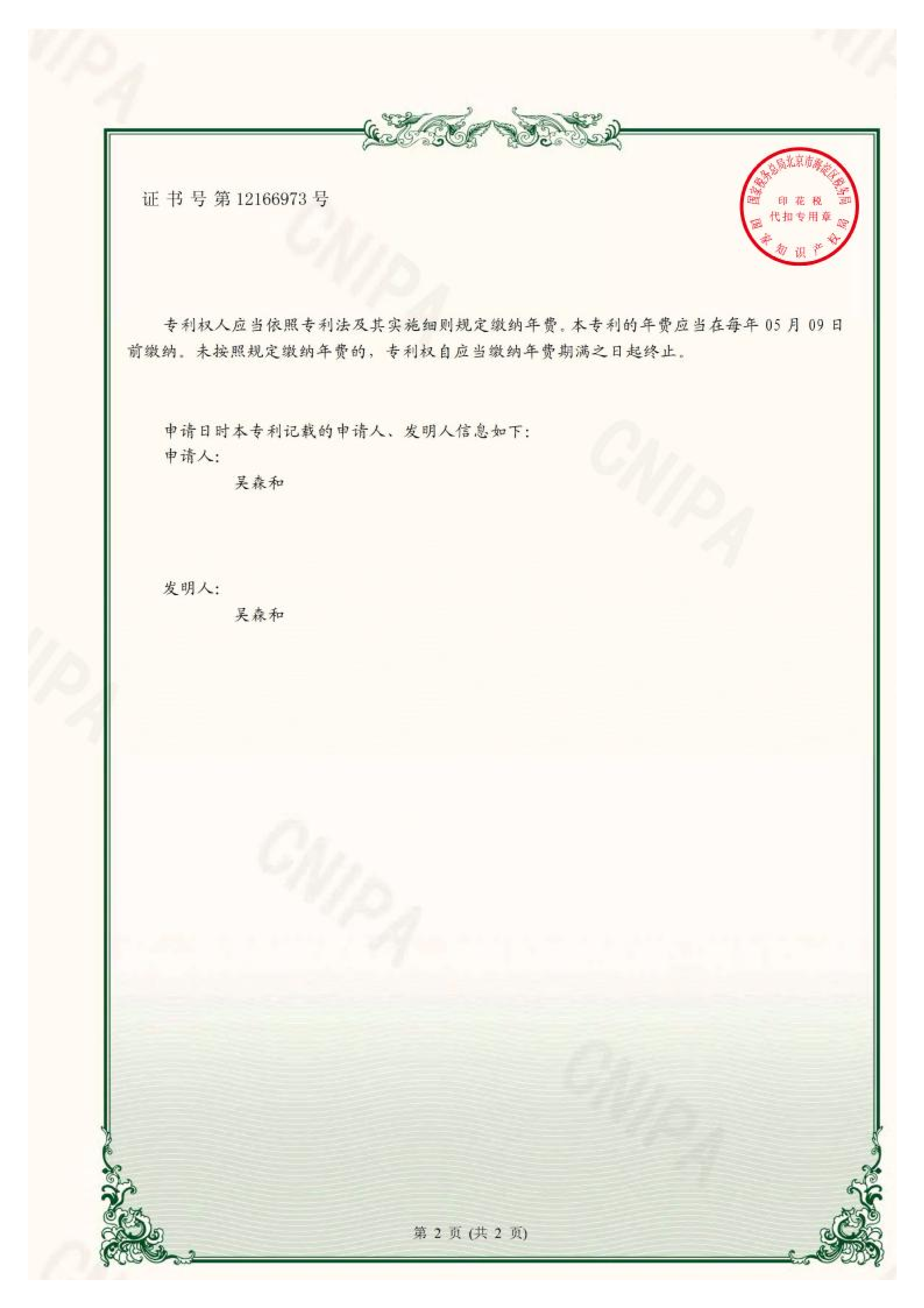
Certificate of Utility Model Patent, registration No. 12166973, issued by the China National Intellectual Property Administration; recorded scope: High-Speed Flexible Straw Forming Machine, Model DT-1200.
Three Compliance Layers That Buyers Routinely Merge
Straw forming equipment crosses at least three compliance systems, and each one is issued by a different party for a different purpose. A Chinese utility model patent answers an intellectual-property question about a design. A CE mark answers a market-access question in the European Union. A factory inspection report answers a transaction question about one specific unit. Because all three arrive as documents in the same folder, they are frequently read as equivalent proof of quality — which is where the misunderstandings start.
| Layer | Typical document | Issued by | Answers | Does not answer |
|---|---|---|---|---|
| Intellectual property | Certificate of Utility Model Patent, registration No. 12166973 | China National Intellectual Property Administration | Whether a defined machine structure is protected in China, and for how long | Whether the machine may be placed on the market in another country |
| Product conformity | CE marking under Machinery Directive 2006/42/EC, supported by safety standard EN ISO 12100; food-contact compliance under Regulation (EC) No 1935/2004 | Notified body / manufacturer declaration | Whether the machine may be placed on the EU market, and whether it transfers constituents to food in quantities that endanger health | Whether the machine reaches your line's throughput, tolerance or maintenance targets |
| Transaction | Factory inspection report, pre-delivery test-run record, agreed acceptance protocol | Supplier, or a third party appointed by the buyer | The functional state of one unit before shipment | Long-term reliability, warranty behaviour, or local regulatory acceptance |
The distinctions matter most at the evaluation-to-execution handover. Under the EU framework, straw machines placed on the EU market must comply with Machinery Directive 2006/42/EC and carry the CE mark, with EN ISO 12100 as the primary harmonized standard for machinery safety. Food-contact expectations add a second layer: Regulation (EC) No 1935/2004 requires that machinery not transfer constituents to food in quantities that endanger health. None of those obligations are discharged by a Chinese utility model patent.
Patent No. ZL202020756632.1: What It Protects, and Where
The flexible straw forming machines from this manufacturer apply a self-developed domestic patented technology, Patent No. ZL202020756632.1. The corresponding certificate is a Certificate of Utility Model Patent, registration No. 12166973, issued by the China National Intellectual Property Administration on 18 December 2020, with validity recorded through 9 May 2030. The certificate's recorded scope is the High-Speed Flexible Straw Forming Machine, Model DT-1200. Its stated market position is deliberately narrow: mainly valid in China, while products manufactured on the machine can be sold worldwide.
For procurement purposes, the value of the patent is documentary rather than operational. It gives a buyer a traceable technical identity for the forming module — useful where tender documents, financing packages or internal capital-approval processes ask a supplier to demonstrate original design rather than generic assembly. It is also a signal about how the supplier organises engineering work: a company that files utility models for a forming module is describing a specific structure it intends to keep building, which reduces the risk that a delivered machine drifts from the specification you evaluated.
Utility models protect structural features of a device rather than a manufacturing process. Protection is territorial and time-limited. The recorded expiry of 9 May 2030 is therefore a planning input rather than a slogan: buyers running multi-year capital plans should track that date and not assume perpetual exclusivity around the design.
The Technical Meaning of the Patented Module
The patented design centres on an independent embossing and forming module combined with a precision feeding unit. In a straw forming line, this is the section that decides whether incoming tube blanks are formed into a consistent finished geometry at speed. The manufacturer lists six functional consequences of the design:
- Independent embossing and forming module — the manufacturer states this effectively boosts production output.
- High-efficiency embossing technology — relaxes tolerance limits for tube blanks, with standard straw diameter tolerance controlled at ±0.05 mm.
- Precision feeding unit — supports long-term stable machine operation.
- Separately adjustable embossing and forming modules — reduce maintenance difficulty, because adjustment can be handled per module instead of across a coupled assembly.
- PLC control system — displays real-time operating status, auto-stops the machine on malfunction with fault codes shown on screen, and provides automatic counting.
- Humanised operating design — smoother operation and easier parameter adjustment for line operators.
The tolerance figure carries direct commercial consequences. A controlled standard diameter tolerance of ±0.05 mm on finished straws, combined with embossing technology that relaxes incoming tube blank requirements, widens the range of tube suppliers a factory can buy from without pushing up rejection rates. For buyers who import tube blanks separately from the machine, that changes purchasing strategy rather than simply improving a spec sheet.
| Parameter | Published specification (Model DT-1200) |
|---|---|
| Power | 5.5–6.5 kW |
| Output | 3,000–5,500 pcs/min |
| Working pressure | 1.500–6.000 MPa |
| Working temperature | 100–200 °C |
| Protection grade | IP55 |
| Material | Stainless steel |
The published IP55 protection grade and stainless-steel construction describe the machine's resistance to dust and water ingress — a relevant figure in humid or high-dust production halls, where equipment is expected to run continuously rather than intermittently. The applicable industries listed for this model include disposable straw manufacturing, catering utensil production, plastic and paper tube packaging, and OEM or ODM straw processing factories.
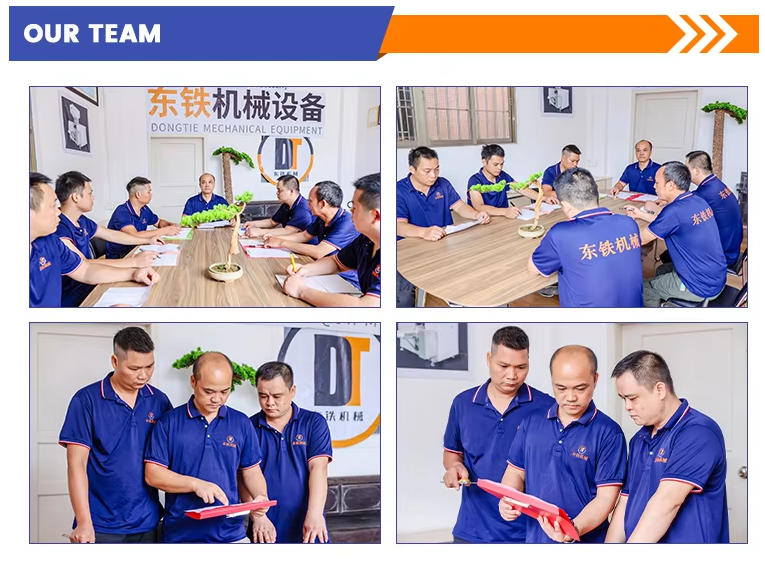
Production and technical staff at the manufacturer's facility, where pre-delivery test runs and functional verification are carried out.
Factory Verification: What a Pre-Delivery Report Actually Certifies
The quality-control process states that factory inspection includes a pre-delivery test run and functional verification, and that factory inspection reports can be provided on demand. Those two sentences define the document's scope precisely: it records that a specific unit was assembled, run, and functionally checked before packing.
The manufacturer recommends on-site or third-party inspection covering the pre-delivery factory test run and finished sample verification, and notes that standard acceptance procedures are not listed online and must be clearly stated in the contract. That last point is the operative clause for buyers. Because no published default acceptance protocol exists, the acceptance criteria written into the sales contract become the only enforceable standard — which means the inspection clause deserves the same attention as the payment clause.
| Document | What it records | Origin |
|---|---|---|
| Factory inspection report | Pre-delivery test run and functional verification of the unit | Supplier-issued, available on demand |
| Finished sample verification | That the straw geometry produced matches the agreed specification | Supplier-issued, or third-party if the buyer appoints an inspector |
| Certificate of Utility Model Patent No. 12166973 | Scope and validity period of the patented forming module design | China National Intellectual Property Administration |
| Packing and shipping confirmation | Sea freight or land transportation arrangements as specified in the sales contract | Supplier / freight forwarder |
What this document set does not cover is equally important. A supplier-issued inspection report cannot confirm long-term reliability under continuous running, cannot confirm spare-parts availability over a multi-year horizon, and cannot confirm that the machine satisfies the destination market's conformity regime. Warranty terms and response time are, for that reason, recommended to be confirmed before purchase rather than assumed from the inspection file.
Application: Southeast Asian Production and Custom Mold Work
The most concrete evidence of how these machines behave outside China comes from deployment data. Client types listed for this equipment are Southeast Asian straw factories, Middle Eastern straw factories, and domestic Chinese straw manufacturers. The application is mass production of flexible straws, typically replacing manual or semi-automatic processes to raise the automation level of an existing plant.
In a Malaysian deployment covering 60 sets over three years, one high-speed flexible straw forming machine replaced five traditional machines in that application, with mold sets custom-tuned to local straw specifications. The reported operating characteristics were stable long-run performance and consistent finished-product quality, supported by after-sales technical service for an overseas site. For a buyer comparing a multi-machine traditional layout against a consolidated high-speed layout, that ratio is the core reference point: floor space, headcount and quality variance all shift when five forming stations become one.
After-sales structure follows the same pattern. Services include installation and commissioning, remote technical support, and spare parts supply, with warranty terms and response time recommended to be confirmed before purchase. Remote video technical guidance is available for common faults, and on-site training can be arranged in the manufacturer's own straw production workshop, which runs more than 10 full production lines — a practical detail, because operator training then happens on running lines rather than on an idle demonstration machine.
OEM, Molds, and Line Integration: Where Customisation Stops
The manufacturer's production mode is equipment manufacturing and customisation, covering both single machine production and full line integration, and OEM services are available. Customisable elements include molds, production capacity specifications, control systems, and line connection schemes, with the full customisable scope confirmed case by case before order placement.
The commercial parameters published for this equipment are a minimum order quantity of 1 set, a lead time of 30 days, and a monthly capacity of 20 sets. Export markets listed are Southeast Asia, the Middle East, Europe and other global markets. For buyers scheduling a line upgrade or a new production hall, the monthly capacity figure is the constraint worth planning around: it defines how many units can be scheduled in parallel across all customers, not only in your order.
The customisation boundary is defined by molds. Mold replacement is the mechanism for producing flexible straws with different diameters and bending angles, covering the product range that includes 3.8 mm U-shaped configurations, 5 mm flexible straws, 6 mm and 12 mm large-diameter art straw work, and 12 mm pointed-tip tube bending. Custom molds are required for different straw diameters and bending shapes, and material compatibility and mold solutions are confirmed before order placement; special standards apply to raw material specifications and surface treatment. Line connection equipment — feeder, sealing and cooling unit, packaging machine, conveyor systems — is planned as part of the same integration scope.
Market Signals Behind the Compliance Question
The commercial backdrop explains why documentation has moved up the procurement agenda. The global straw machine market was estimated at USD 962.55 million in 2024, and is projected to reach USD 1,793.41 million by 2035 at a CAGR of 5.82% (Market Research Future). The paper straw market was valued at USD 2.6 billion in 2024 (Grand View Research), with paper straw machines expected to grow at a CAGR of 15.6% between 2025 and 2030 as plastic bans take effect. U-shaped straw machinery demand is growing specifically for the aseptic packaging segment, such as milk cartons (Mordor Intelligence).
The same data set contains a balancing signal that buyers should not ignore: plastic straw machines still hold significant market share in regions such as Asia-Pacific and Africa despite EU restrictions (Market Research Future), and semi-automatic machines continue to show growth for small and medium enterprises (Reports and Data). High-speed automation is therefore one demand curve, not the only one. Regulatory pressure remains the underlying driver — plastic straws are still estimated at around 4% of total marine plastic waste by piece (MarkNtel Advisors), which sustains replacement demand and, with it, buyer scrutiny of what suppliers can document.
High-Speed Forming vs Traditional Equipment: Trade-offs and Limits
Published engineering specifications for conventional automatic straw bending machines typically cite production speeds of 200–300 pieces per minute (KEZHI, 2024), while the DT-1200 is specified by the manufacturer at 3,000–5,500 pieces per minute. That gap is the central commercial argument for high-speed flexible forming — but it is not the whole comparison.
| Criterion | Traditional semi-automatic / conventional automatic | High-speed flexible forming (DT-1200 class) |
|---|---|---|
| Reported output | 200–300 pcs/min (published conventional specs) | 3,000–5,500 pcs/min (manufacturer specification) |
| Forming module | Coupled assembly, adjustment affects the whole unit | Independent embossing and forming module; separately adjustable |
| Diameter tolerance | Not standardised in published references | Standard straw diameter tolerance controlled at ±0.05 mm |
| Tube blank tolerance | Tighter blank requirements in conventional forming | High-efficiency embossing relaxes tube blank tolerance limits |
| Control and diagnostics | Limited status feedback | PLC with real-time status, fault codes on screen, auto-stop, automatic counting |
| Documentation | Typically none published | Patent certificate No. 12166973; factory inspection report on demand |
| Principal limits | Higher labour per unit of output | Patent valid mainly in China; matched molds per specification; downtime concentration |
Four limitations deserve explicit treatment, because they shape the total cost of a high-speed configuration more than the throughput figure does.
- The patent is territorial. Patent No. ZL202020756632.1 is recorded as mainly valid in China. It does not constitute CE marking, does not satisfy Machinery Directive 2006/42/EC, EN ISO 12100 or Regulation (EC) No 1935/2004, and does not transfer any import obligation away from the buyer or importer.
- Verification documents are supplier-issued. Factory inspection reports confirm a unit's pre-delivery state. Since standard acceptance procedures are not published online, the enforceable acceptance standard is the contract clause; on-site or third-party inspection is recommended for buyers who need independent confirmation.
- Throughput concentration cuts both ways. One machine displacing five traditional machines also concentrates production risk: unplanned downtime affects the whole line rather than one of five stations. Spare parts planning, warranty coverage and response terms should be settled before signing, not after commissioning.
- Mold dependency governs product mix. Every diameter and bend geometry requires a matched mold, so multi-SKU production needs planned mold sets and changeover routines. Volume at high speed is not automatically flexible volume.
Outlook
Compliance documentation is shifting from the end of a machinery deal to the middle of it. Buyers evaluating straw forming equipment increasingly want three things before they commit: a clear statement of what a patent covers and where, evidence that a specific unit was tested before shipment, and an acceptance clause they can enforce. PLC-level status reporting, fault codes and automatic counting already create the baseline audit trail that more markets are likely to expect as standard rather than optional.
Two structural forces sustain the replacement cycle behind this equipment: continued restriction of single-use plastic straws, and growth in paper and alternative-material straw production. For manufacturers exporting to Southeast Asia, the Middle East and Europe, the result is that compliance questions now sit inside the specification conversation. Buyers who map the three layers — IP, product conformity, transaction verification — before requesting a quotation tend to reach execution with fewer surprises.
Reference material: the manufacturer's product brochure is publicly available for download at Dongtie machinery brochure (PDF).
FAQ
1. What does a Chinese utility model patent cover, and where does it apply?
Patent No. ZL202020756632.1 is recorded as a Certificate of Utility Model Patent, registration No. 12166973, issued by the China National Intellectual Property Administration on 18 December 2020 with validity recorded through 9 May 2030, covering the High-Speed Flexible Straw Forming Machine, Model DT-1200. Utility models protect structural features of a device rather than a process. The certificate states that validity is mainly in China, while products manufactured on the machine can be sold worldwide. It should be read as IP documentation, not as market-access approval for any specific destination country.
2. Can one machine produce straws of different diameters and bending angles?
Yes. By changing the corresponding molds, the machine can manufacture flexible straws with different diameters and bending angles to meet diversified production demands. Custom molds are required for different straw diameters and bending shapes, and material compatibility and mold solutions are confirmed before order placement. Matched molds are purchased according to the required specifications, so the achievable product range is a function of the mold set a buyer prepares.
3. What documents should a buyer expect before shipment?
The stated quality-control process includes a pre-delivery test run and functional verification, with factory inspection reports provided on demand. The manufacturer recommends on-site or third-party inspection covering the pre-delivery factory test run and finished sample verification. Standard acceptance procedures are not published online and must be clearly stated in the contract, so the acceptance scope should be written into the sales agreement. Warranty terms and response time are recommended to be confirmed before purchase.
4. Which export markets does the manufacturer serve, and what compliance work remains with the buyer?
The manufacturer lists Southeast Asia, the Middle East, Europe and other global markets as export destinations, and OEM services are available. The patent certificate is mainly valid in China and factory inspection reports are supplier documents. Destination-market requirements remain the responsibility of the buyer or importer — for the EU, that includes Machinery Directive 2006/42/EC with CE marking, the harmonized safety standard EN ISO 12100, and food-contact rules under Regulation (EC) No 1935/2004.
5. How does a high-speed flexible straw forming machine compare with traditional equipment?
Published engineering specifications for conventional automatic straw bending machines typically cite 200–300 pieces per minute (KEZHI, 2024), while the DT-1200 is specified at 3,000–5,500 pieces per minute. The high-speed design also uses an independent embossing and forming module, a precision feeding unit, separately adjustable modules, and PLC control with fault codes and automatic counting. The trade-offs are matched molds for each diameter and bending geometry, patent validity mainly in China, and greater production exposure when one machine replaces several traditional stations.