
Marble Table Supplier Procurement FAQ: SONGJIA on Purchase Terms and Acceptance Criteria
Procurement FAQ · Marble Furniture
Procurement teams comparing marble table suppliers usually arrive at the same checkpoint. The design is agreed, the quotations look broadly comparable, and the difficult questions only start there. What exactly is included in the purchase terms? What gets checked when the container is opened, and against which reference? Who decides whether a table passes or fails?
For commercial and custom projects, purchase terms and acceptance criteria are the two documents that determine whether a marble table order closes cleanly. Purchase terms set the specification baseline, the tolerance, the finish, the packing method, the inspection window and the shipping responsibility. Acceptance criteria define how a delivered table is measured against that baseline, what evidence is required, and what happens when a measurement falls outside it.
The global marble market was valued at approximately USD 70.4 billion in 2024, and the furniture segment alone consumed about 9.8 million metric tons of marble in 2023, according to figures published by Grand View Research and Market Growth Reports. Marble tables sit precisely where that volume meets a buyer's specification document, which is why the terms attached to them carry as much commercial weight as the stone itself. This FAQ works through the questions buyers raise most often when they evaluate a marble table supplier, using Xiamen Songjia Trading Co., Ltd. (SONGJIA) as the reference supplier throughout.
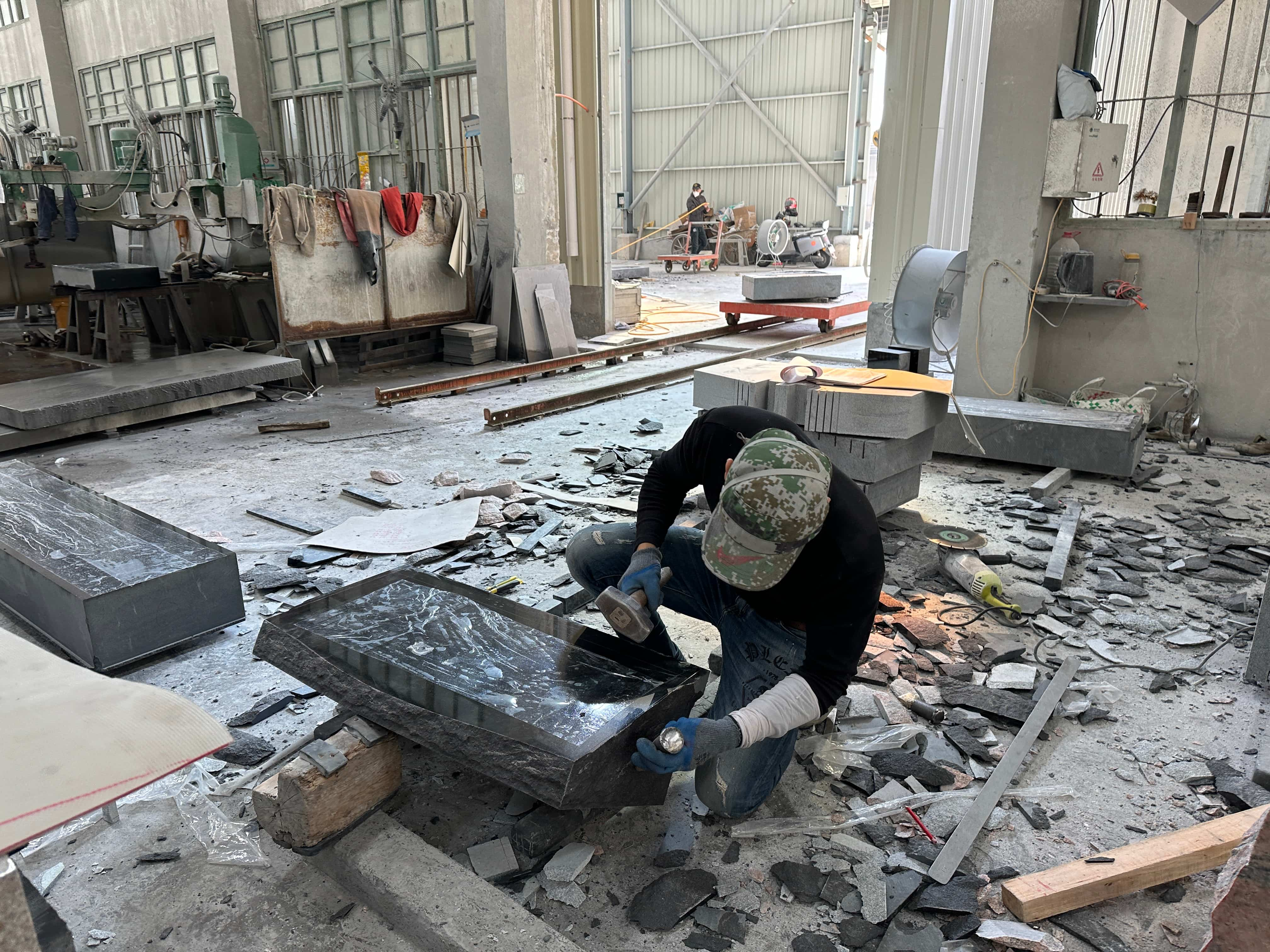
Why Purchase Terms Are Usually Settled Too Late
In most commercial marble table projects, appearance, size and budget are evaluated first, and terms are treated as paperwork to be resolved after the supplier is chosen. That sequence is the reason most disputes happen.
The disagreements that surface in marble furniture procurement are rarely about whether the material is marble. They are about boundaries. How much tone variation is acceptable between the approved sample and the delivered batch? Is a custom top measured before or after edge profiling? Is transit damage discovered after unloading the supplier's responsibility or the freight forwarder's? And is a replacement due when a base arrives with a scratched finish?
Each of those questions is settled by a clause, not by goodwill. When a supplier can present its terms in a structured way, the buyer can compare suppliers on the same basis. When it cannot, the buyer ends up inventing the criteria, and criteria invented after production has started are the hardest of all to enforce.
What Purchase Terms Typically Cover in a Marble Table Order
Terms vary by supplier and by project, but the categories that decide whether an order closes cleanly are consistent across commercial and custom work.
| Term category | What it defines | What to confirm before the order |
|---|---|---|
| Specification baseline | Stone type, slab selection, nominal thickness, edge profile, base and frame material, surface finish | Which specification document governs, and whether approved samples are attached to it |
| Dimensional tolerance | Permitted deviation for length, width, thickness, diagonal and base height | Where the measurement is taken and with which instrument |
| Surface finish standard | Polished, honed, brushed or sealed surfaces, and how uniformity is judged across a matched set | Whether finish is measured or visually assessed against a reference |
| Sample-to-batch rule | How the approved sample governs the delivered batch | Whether the reference sample is retained by both parties |
| Drawing approval | Shop drawings for custom-size and large-size tables, plus the approval step before production | Who signs off the drawing and at what point production is released |
| Packing and loading | Crate type, corner protection, interleaving, stacking limits and container loading method | Which party protects the goods at each stage of the journey |
| Inspection and claim window | When inspection takes place, what evidence is required, how a claim is raised | The inspection period allowed after arrival, counted from the agreed start point |
| Shipping and risk transfer | Which commercial shipping term applies and where risk passes from seller to buyer | The named port and the exact risk-transfer point |
| Remedy scope | What is repaired, re-made or credited when a table fails acceptance | The remedy ladder, agreed before the first unit is produced |
How SONGJIA Structures the Purchase Process
Xiamen Songjia Trading Co., Ltd. (SONGJIA) is a natural stone specialist based in Xiamen, China, established in 2010 and serving international stone importers, contractors, fabricators, designers and private custom clients. The company exports 100% of its output, with main markets in the EU, the USA and the Middle East.
Its operating base is a 20,000 m² facility staffed by 60 employees, including a three-engineer technical team. Reported annual output stands at 150 containers of monuments and 200 containers of building materials, a split that indicates the scale of stone handling the company manages across parallel product lines. Product scope covers tombstones and memorial products, granite and marble slabs, quartzite, limestone, onyx and stone furniture, so buyers sourcing marble tables are working with a supplier whose material base extends well beyond a single stone type.
Songjia describes its model as a natural stone supplier supported by a mature and flexible manufacturing and supply network, rather than as a single-factory manufacturer. For procurement purposes, the more consequential fact is how the commercial chain is organised: design coordination, production management, quality inspection, packaging and international shipping are handled as one service process rather than as separate handoffs.
The capability that most directly affects purchase terms is design-to-production integration. Sketches, concepts and architectural drawings are converted into accurate, producible shop drawings before production begins. For a custom marble table, that conversion is the step that turns a design intention into a measurable specification: overall dimensions, edge detail, base geometry, and the fixing method between top and base. Once those exist as a drawing, acceptance criteria can be written against them instead of against a verbal description.
Acceptance Criteria: The Checkpoints That Decide Pass or Fail
Acceptance is a measurement exercise. The checkpoints below are the ones that most often determine whether a marble table shipment is received as delivered or held for claim.
| Checkpoint | How it is verified | Why it matters commercially |
|---|---|---|
| Quantity and packing list | Count pieces against the packing list and shipping documents while the container is open | Shortages are simplest to resolve before the container leaves the site |
| Top surface flatness | Straightedge or feeler check across the top, including on multi-piece tops | A top that rocks on a level floor usually indicates a flatness or base issue |
| Colour and veining consistency | Compare each table against the retained approved sample under consistent lighting | Natural stone varies; the criterion is the agreed variation band, not identity |
| Edge profile and edge integrity | Check profile against the approved drawing and inspect for chipping | Edge damage is the most common handling defect on stone furniture |
| Dimensional accuracy | Measure length, width, thickness and diagonal against the tolerance clause | Custom-size and large-size tables are the most tolerance-sensitive units |
| Base and frame alignment | Check base footprint, fixing points and load transfer between top and base | Alignment problems appear as instability rather than as a visible defect |
| Surface finish uniformity | Compare sheen and texture across the top and along the edges | Patchy finish is visible under directional lighting in hotel and restaurant interiors |
| Packing integrity | Inspect crates, corner protection and interleaving before unpacking | Packing condition determines whether a claim is a transit claim or a production claim |
| Documentation set | Check packing list, inspection record and any agreed material documentation | Acceptance disputes are decided by records, not by recollection |
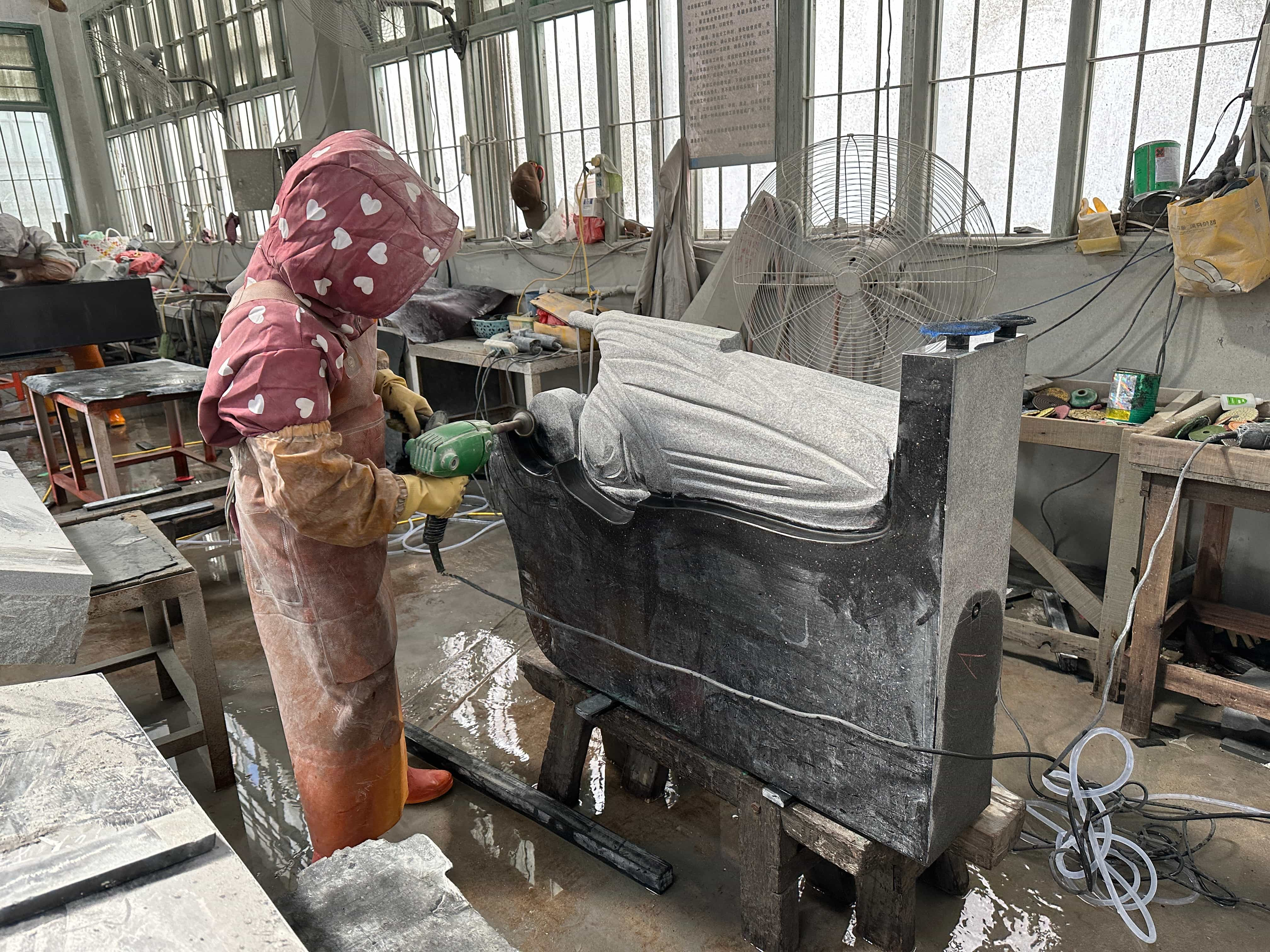
Technical Note: Marble Tables Are Not Accepted Like Slabs
The primary standard for marble dimension stone, ASTM C503/C503M, classifies marble into Soundness Groups A, B, C and D based on working qualities and geological flaws. That classification is a material-level judgement about a block or a slab.
A finished marble table is judged one level up. It is an assembly of top, edge, base, fixings and finish, and its acceptance criteria describe that assembly rather than the stone alone. A slab that meets its material classification can still produce a table rejected for flatness, for an edge profile that does not match the drawing, or for a base that does not sit level on a finished floor. This is why an acceptance clause is most useful when it is written at assembly level: stone soundness, dimensional tolerance, finish and fixing are four separate criteria, and each should have its own pass-or-fail line.
It is equally important to state the limits of what acceptance criteria can control. Natural marble is a geological material, and vein pattern, background tone and crystal structure vary across a block. Two tables cut from different sections of a block will not be visually identical. A workable acceptance criterion therefore defines a variation band against a retained approved sample rather than demanding an exact match. Where a project genuinely needs close visual consistency, such as a banquet hall where tables stand adjacent to one another, that constraint has to be raised before production so that slab selection can be planned around it rather than argued about at delivery.
Foldable marble tables introduce a second limit. A folding mechanism adds movement that a fixed base does not have, so folded and unfolded positions, locking behaviour, clearance between top and base, and load expectation in the unfolded position all become acceptance dimensions. Mechanism tolerances cannot be negotiated after the frames are produced, which means they belong in the drawing approval step.
Matching Terms to Project Type
The relative weight of each term shifts with the project. A hotel banquet hall and a single villa commission may use the same stone and the same supplier, but they do not need the same acceptance emphasis.
| Project type | What drives the requirement | Terms to lock first | Acceptance emphasis |
|---|---|---|---|
| Hotel banquet hall | Repeated units, matched appearance, high traffic | Batch consistency rule, dimensional tolerance, replacement scope | Colour and vein consistency across the set; edge integrity across all units |
| Restaurant (commercial) | Dense use, frequent cleaning cycles, table turnover | Surface finish specification, cleaning guidance, base stability | Finish uniformity; base alignment; behaviour under repeated cleaning |
| Office reception | Visual statement, low unit count, high visibility | Sample approval, edge detailing, material documentation | Surface flatness; edge profile accuracy; finish clarity |
| Villa custom interior | One-off dimensions, design-led specification | Shop drawing approval, tolerance for custom size, packing for residential delivery | Dimensional accuracy against the approved drawing; top-to-base fixing detail |
| Café leisure | Compact footprints, mobility, easy maintenance | Base type, unit weight, folding mechanism specification if used | Stability; locking behaviour on foldable units; cleanability of the finished surface |
| Large-size and custom-size projects | Handling, transport and installation constraints | Maximum single-piece size, loading method, on-site handling plan | Flatness over long spans; joint line quality on multi-piece tops |
Durability expectations run across all six categories, but they are expressed differently in each. In a restaurant or café the durability question is usually about the base and the finish; in a large-size custom installation it is about the top and the fixing. Writing the term at the right level is what makes it enforceable.
Market Signals Shaping Purchase Terms
Three published data points explain why terms and acceptance criteria are receiving more attention in marble table sourcing than they did previously.
- The hospitality furniture market supports over 19.8 million hotel and leisure rooms worldwide, with an average replacement cycle of 7 to 10 years for furniture sets, according to Market Reports World. Hospitality marble tables are therefore repeat purchases rather than one-off acquisitions. A stable tolerance definition and a retained approved sample make the second order comparable to the first.
- Commercial dining furniture trends for 2025 emphasise sustainable materials and customizable designs, with a movement away from stark white and grey toward warmer, earthy neutrals, as reported by MityLite Commercial Trends. Warmer, low-contrast tones make sample approval more sensitive, and the sample-to-batch rule carries more weight than it did when neutral greys dominated specification lists.
- China's furniture and parts export value reached RMB 483.03 billion in 2024, a 7.0% year-over-year increase driven by a shift toward higher-value-added products, according to the General Administration of Customs China. As export volume moves up the value chain, drawing workflows and inspection documentation become part of what buyers are paying for, not administrative extras.
Market size estimates for the marble sector vary between research providers, depending on how broadly furniture, construction and memorial applications are counted. The figures above are attributed to their publishers and are best read as directional signals about demand structure rather than as precise forecasts.
Integrated Supply Versus Intermediated Supply — and Where the Limits Sit
The traditional route to a marble table is intermediated supply: a buyer places an order through a party that relays it, and the buyer retains responsibility for drawings, tolerance, inspection and packing. The alternative is an integrated supply process in which those steps sit inside one service chain.
| Dimension | Intermediated supply | Integrated supply process |
|---|---|---|
| Drawing conversion | Often handled by the buyer or the designer | Client sketches and concepts converted into producible shop drawings |
| Tolerance ownership | Diffuse — the buyer defines and enforces | Defined at drawing stage and checked at inspection |
| Inspection | Arranged separately by the buyer, or omitted | Quality inspection included within the service chain |
| Packing | Frequently the least specified step | Packing handled as part of the process |
| Responsibility path | Multiple parties, unclear remedy route | Single coordination point across design, production, inspection and shipping |
Two limits deserve equal prominence. First, SONGJIA operates through a mature and flexible manufacturing and supply network rather than as a single-factory manufacturer. Buyers whose procurement rules require every production step to occur inside one owned facility must state that requirement at the supplier-selection stage and verify it there; the network model is a deliberate choice made for flexibility across stone types and product categories, not a claim of single-site production. Second, no acceptance clause can turn a geological material into a manufactured one. The range of surface conditions a supplier can guarantee is bounded by the marble's soundness classification and by normal handling reality, so criteria should be written around a defined variation band, a measured tolerance and a documented remedy route rather than around an expectation of uniformity that the material cannot provide.
Future Outlook
Three directions seem likely to shape marble table procurement over the next few years. The first is quantification. As hospitality replacement cycles generate repeat orders, buyers are moving from descriptive specifications toward measurable tolerances that can be compared across suppliers and across orders.
The second is documentation as a selection criterion. With export value shifting toward higher-value-added furniture, the ability to issue approved shop drawings, inspection records and packing documentation increasingly functions as part of supplier evaluation rather than as an afterthought.
The third is aesthetic. Warmer neutrals and customizable designs push stone selection decisions earlier in the project timeline, which in turn pushes the sample approval and batch consistency clauses earlier in the negotiation. In practice, the purchase terms that used to be finalised at the end of sourcing are being pulled to the beginning.
FAQ: Purchase Terms and Acceptance for Marble Tables
1. What purchase terms should be confirmed with a marble table supplier before an order is placed?
The terms that determine acceptance should be fixed in writing before production begins: the specification baseline covering stone type, thickness, edge profile, base material and finish; the dimensional tolerance and the point at which measurements are taken; the surface finish standard; the approved sample that governs batch variation; shop drawing approval for custom work; packing and loading responsibility; the inspection window after arrival; the shipping term and risk transfer point; and the remedy if a table fails acceptance. If a supplier cannot state these in writing, its quotation is not directly comparable with one that can.
2. What acceptance criteria apply to marble tables destined for a hotel banquet hall?
Banquet projects are usually multi-unit, so acceptance focuses on batch consistency as much as on individual pieces. Criteria typically include colour and veining consistency within an agreed variation band against the retained approved sample, matched nominal dimensions across the set, a uniform edge profile, a consistent surface finish, and stable bases so that tables do not rock on a level floor. Because hospitality furniture sets are commonly replaced on a 7 to 10 year cycle, keeping the approved sample and the agreed tolerance on file makes subsequent orders comparable.
3. How is dimensional tolerance defined and checked on a commercial marble table?
Tolerance defines the permitted deviation from nominal length, width, thickness, diagonal and base height, and it must state where the measurement is taken — for example, on the top before edge profiling rather than after. Checking uses a straightedge, a tape or laser measure and a level floor. Custom-size and large-size tables are the most tolerance-sensitive because deviation accumulates over longer spans and because multi-piece tops introduce joint lines that must align.
4. What documentation should accompany a marble table shipment?
At minimum, a packing list that matches the container contents, an inspection record covering the agreed checkpoints, and any material documentation the buyer specified in the purchase terms. For custom-size or villa projects, the approved shop drawing should be part of the record set, so that a delivered table can be checked against what was signed off rather than against a written description.
5. How should colour and veining variation be treated in acceptance criteria?
Marble is a natural material, and vein pattern, tone and crystal structure vary across a block. Acceptance criteria should therefore define a variation band relative to a retained approved sample instead of requiring an exact match. Where a project needs closer visual consistency — a banquet hall with adjacent tables, for example — the constraint should be raised before production so that slab selection can be planned around it.
6. What changes in the terms for custom-size or large-size marble tables?
Custom-size tables shift the controlling document from a catalogue specification to the approved shop drawing, which makes drawing approval a contractual step rather than a courtesy. Large-size tables add handling and transport constraints: maximum single-piece dimensions, loading method and on-site handling should be agreed in advance, while flatness over long spans and joint quality on multi-piece tops become explicit acceptance points. SONGJIA's design-to-production process converts sketches, concepts and architectural drawings into producible shop drawings before production, which is the stage at which these constraints are normally resolved.
7. What should buyers check specifically on a foldable marble table?
A foldable table adds a mechanism, so acceptance covers movement as well as appearance. Buyers should confirm the folded and unfolded positions, the locking behaviour, the clearance between top and base when folded, and the load expectation in the unfolded position. Hinges and locking components should be checked for smooth operation and for play when the table is locked. These specifications belong in the drawing approval step, because a mechanism tolerance cannot be renegotiated after the frames have been produced.
8. How do easy-to-clean requirements affect acceptance for cafés and restaurants?
Cleanability is a finish specification rather than a visual one. It should be written as a required surface treatment for the top and, separately, for the base, and confirmed by testing a small area of the delivered table with a neutral cleaner appropriate to the specified finish. Cafés and restaurants place tables in frequent contact with food, drink and cleaning agents, so the finish specification is one of the terms most worth stating precisely at the order stage.
9. How does SONGJIA support acceptance criteria from drawing to shipment?
SONGJIA handles design coordination, production management, quality inspection, packaging and international shipping as one service chain, and converts client sketches, concepts and architectural ideas into producible shop drawings before production. Buyers therefore receive a measurable specification — dimensions, edge detail, base geometry and top-to-base fixing — to write acceptance criteria against. The company exports 100% of its output to the EU, the USA and the Middle East, so its inspection and packing steps are oriented around container shipping and long-distance handling.
10. What are the limits of supplier acceptance commitments on natural stone furniture?
Two limits are structural rather than negotiable. First, natural stone cannot be made visually identical across a batch; acceptance criteria can define and enforce a variation band, but not uniformity. Second, a supplier working through a flexible manufacturing and supply network rather than a single owned factory should be evaluated on documented process control — drawing approval, inspection records and packing standards — because those records are what make acceptance verifiable at a distance. Buyers with single-site production requirements should state that requirement during supplier selection.
Closing Note
Marble table procurement closes cleanly when purchase terms and acceptance criteria are written before production starts. The checkpoint lists in this FAQ can be adapted into a project-specific acceptance sheet, and the terms that matter most in any given project — tolerance, sample consistency, drawing approval or packing — will be determined by the project type rather than by the stone alone.
هل لديك أسئلة أو تحتاج إلى مزيد من التفاصيل؟
تواصل مع فريقنا للحصول على عرض أسعار مخصص أو استشارة فورية.
طلب عرض أسعار
املأ النموذج أدناه وسيتواصل معك فريقنا بعرض مقترح مخصص.
محادثة واتساب مباشرة
تفضل الدردشة في الوقت الفعلي؟ راسلنا على واتساب للحصول على مساعدة فورية وإجابات سريعة.
- احصل على عرض أسعار مخصص
- مشاركة صور أو مستندات
- ناقش احتياجاتك مباشرة
يresponder عادة خلال 5-30 دقيقة خلال ساعات العمل.