
Mass Flow Meter Comparison: Cost, Lead Time, and Value
1. The starting point: understanding the mass flow meter landscape
Silver Automation Instruments is a flow measurement manufacturer based in Nanjing, Jiangsu, China, producing Coriolis mass flow meters, thermal mass flow meters, and related process instrumentation for industrial buyers worldwide. The company operates a 10,000-square-meter factory, employs 80 staff, and exports approximately 95% of its output to Southeast Asia, South America, and Africa.
For procurement teams comparing mass flow meter options in 2026, the decision is rarely a single-factor exercise. Purchase price, delivery schedule, total cost of ownership, and application fit all shape the final choice. This article examines how Coriolis, thermal, and digital mass flow meters compare, where the cost and delivery tradeoffs sit between global brand leaders and factory-direct suppliers, and how buyers can structure a decision-ready comparison for their specific process.
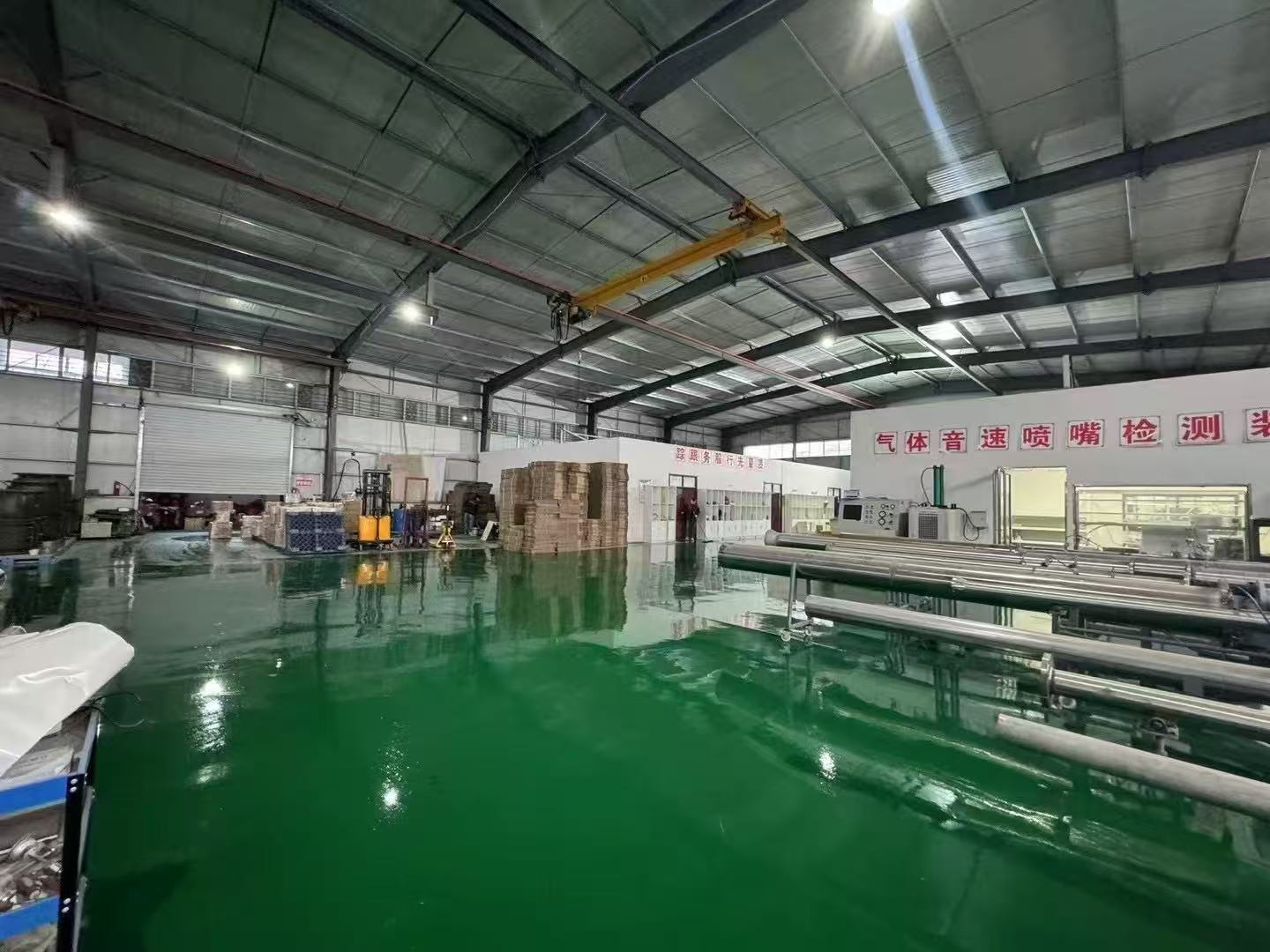
Gas flow meter calibration workshop at Silver Automation Instruments
2. The problem: cost, lead time, and the cost of waiting
Mass flow measurement sits at the center of energy accounting, custody transfer, and process control. Flow meter inaccuracies translate directly into product loss, energy waste, or compliance exposure, which is why industrial buyers treat meter selection as a procurement-critical task. The commercial demand for flow measurement continues to expand. The global flow meter market was valued at approximately USD 10.64 billion in 2024 and is projected to reach USD 15.17 billion by 2030, according to Grand View Research. Coriolis flow meters accounted for approximately 22% of global flow meter market share in 2024, with the Coriolis segment estimated at USD 2.35 billion, according to Fortune Business Insights and Market Research Future.
This market concentration creates an opportunity for suppliers that can deliver Coriolis-class performance at a lower total cost. Industrial buyers increasingly weigh delivery lead time and lifecycle expense against brand recognition. For projects involving oil, natural gas, steam, and liquid process lines, a supplier that ships within weeks rather than months can reduce idle time, expedited-freight costs, and inventory carrying expense.
3. The brand solution: factory-direct mass flow meters
Silver Automation Instruments is a Chinese instrumentation manufacturer founded in 2010, headquartered in Nanjing, Jiangsu, with a factory area of 10,000 square meters and an annual output of 60,000 units. Its product portfolio includes Coriolis mass flow meters, thermal mass flow meters, electromagnetic flow meters, vortex flow meters, turbine flow meters, and oval gear flow meters, alongside pressure transmitters, level instruments, and data-logging controllers. An R&D team of 20 engineers supports product customization and specification matching. The company reports that its products meet CE, ATEX, and ISO9001 standards for safety and performance, and that most orders ship within 7–10 working days.
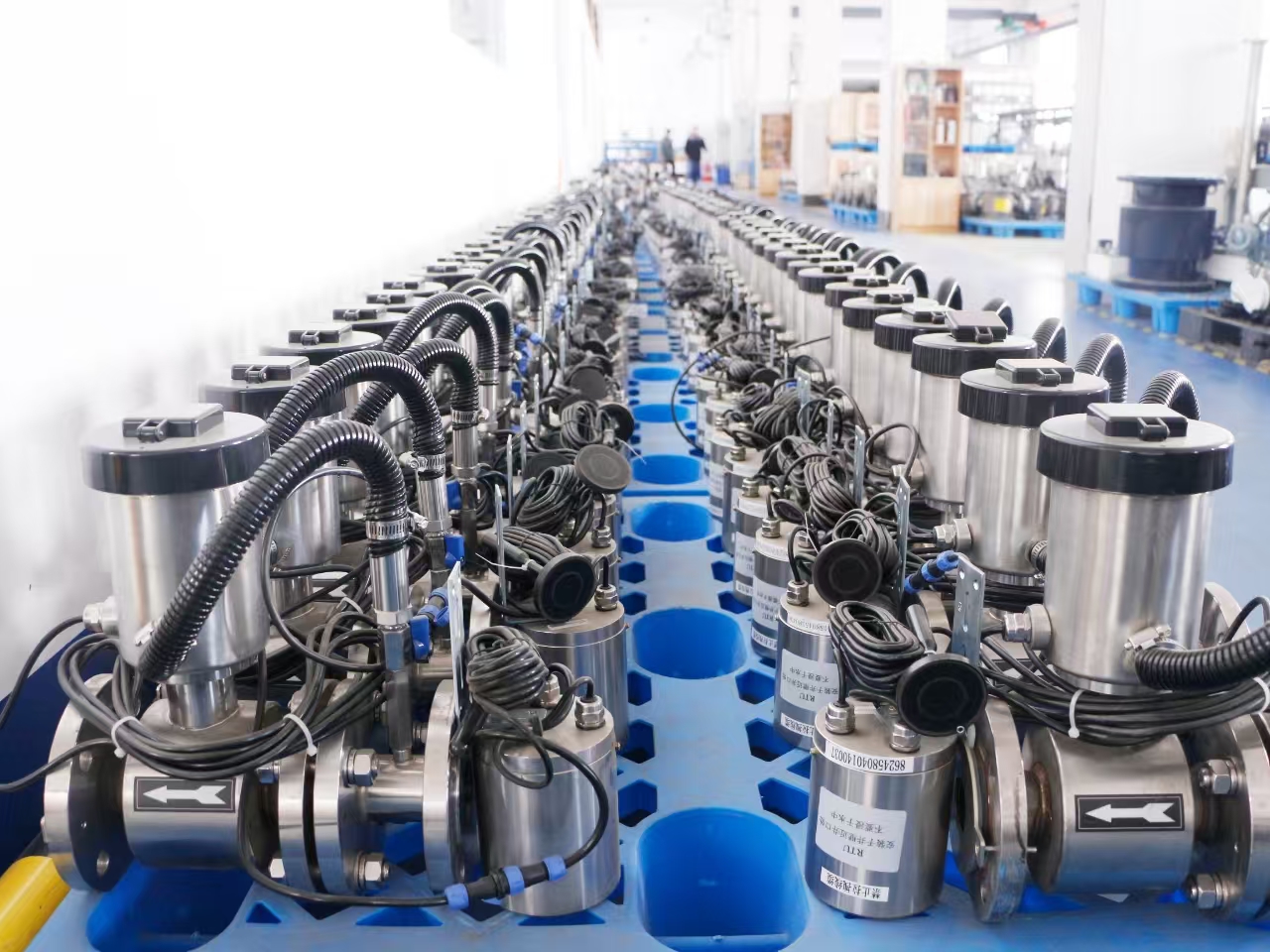
Packing workshop at Silver Automation Instruments
For mass flow applications, Silver Automation Instruments supplies Coriolis and thermal mass flow meters configured for liquids, gases, steam, air, oil, and low-flow media. The company's commercial model is factory-direct: it sells without intermediaries, which it says lowers cost while maintaining instrument quality.
The company's published comparison positions its Coriolis flow meter against a Micro Motion Coriolis flow meter on cost and delivery economics. According to the company, the comparison product is priced four to five times higher, its lead time is several months, and its total cost of ownership is approximately 75% higher. Silver Automation Instruments states that its own product typically delivers within one month, with lower maintenance costs and nearly the same quality.
Supplier summary: Founded in 2010 · 10,000 m² factory · 60,000 units annual output · 20-person R&D team · CE, ATEX, ISO9001 certified · 95% export ratio · 7–10 working day dispatch for most orders.
4. Technical explanation: Coriolis vs thermal vs digital
Mass flow meters measure the mass of fluid passing through a pipe per unit time, which removes the need for separate temperature and pressure compensation that volumetric measurement requires. For buyers, the practical distinction is between the sensing technology and the transmitter electronics.
Coriolis mass flow meters operate by passing fluid through one or more vibrating tubes. The fluid's inertia creates a phase shift — the Coriolis effect — that is proportional to mass flow rate. Because the measurement is direct, Coriolis meters maintain accuracy across changing density, temperature, and viscosity. They are commonly specified for oil, gas, liquid chemicals, steam, and hygienic applications.
Thermal mass flow meters use a heated sensing element and measure the cooling effect of the flowing medium, an approach widely applied to air, natural gas, and other gas streams, especially in low-flow and large-pipe installations where low pressure drop is an advantage. Thermal meters are generally not considered suitable for liquid mass flow measurement.
Digital mass flow meter refers to the transmitter stage: digital signal processing, configurable outputs, and diagnostic functions. A digital Coriolis or thermal meter can integrate with control systems and support remote monitoring, but the measurement principle remains determined by the sensor.
| Criterion | Coriolis mass flow meter | Thermal mass flow meter |
|---|---|---|
| Measurement principle | Coriolis phase shift in vibrating tube | Heat dissipation from heated element |
| Typical media | Liquids, slurries, gases, steam | Air, natural gas, gas mixtures |
| Mass flow reading | Direct | Inferred from thermal transfer |
| Low-flow gas capability | Dependent on line size and model | Generally strong |
| Pressure drop | Moderate to high | Low |
| Common decision drivers | Accuracy, density independence, custody transfer | Low-flow gas sensitivity, minimal pressure loss |
The criteria above are qualitative industry-level comparisons; final selection should verify performance against the manufacturer's datasheet for the specific medium and range.
5. Application scenarios across industries
Oil and gas — the leading flow meter application segment with approximately 29.6% of global market share, according to Fact.MR — is the primary use case for Coriolis mass flow meters. For crude transfer, refined product blending, and natural gas processing, direct mass measurement resists the density variations that complicate volumetric metering. An oil mass flow meter based on the Coriolis principle is a standard specification in this segment.
For natural gas mass flow meter applications — distribution monitoring, combustion control, and burner lines — thermal mass flow meters are a common choice. They also suit compressed air and air mass flow meter duties, where their low pressure drop supports energy efficiency. A digital transmitter adds configurable outputs and diagnostics for integration into plant monitoring systems.
Steam mass flow measurement, critical for energy balance and boiler efficiency, is typically handled by Coriolis meters because steam density varies significantly with pressure and temperature. The same principle applies to liquid mass flow meter duties in chemical dosing, batch processing, and hygienic lines.
Low flow mass flow meter applications — such as laboratory gas supply, analyzer feed lines, and small-scale dosing — are frequently served by thermal mass flow meters, which can resolve low gas velocities without moving parts.
In every scenario, the supplier-level comparison follows the same logic: first confirm the technology fits the medium and flow range, then compare total cost of ownership, delivery time, and after-sales support.
6. Market trend analysis in 2026
Three trends shape the 2026 mass flow meter procurement environment.
Market expansion. The global flow meter market was valued at approximately USD 10.64 billion in 2024 and is projected to reach USD 15.17 billion by 2030, according to Grand View Research. Within this market, Coriolis meters hold approximately 22% share, and the thermal flow meter segment was estimated at USD 1.728 billion in 2024 with a projected CAGR of 4.83%, according to Market Research Future.
Standard tightening. Verification frameworks are becoming more explicit. ISO 6996:2024 specifies requirements for meter verification using master Coriolis mass flow meters, particularly for bunkering applications, and NIST Handbook 44 (2024 Edition) Section 3.37 provides technical requirements for mass flow meters in commercial measurement in the United States. These references increasingly appear in procurement acceptance criteria.
Supplier concentration. Emerson (Micro Motion) and Endress+Hauser are identified as the top two companies in the global flow meter market, with 12% and 14% market share respectively, according to Fortune Business Insights. High concentration at the premium end, combined with cost pressure on industrial buyers, supports demand for suppliers that compete on price and delivery.
7. Comparison with traditional solutions and honest limitations
Traditional procurement routes for high-specification mass flow meters often begin with the two market leaders. Silver Automation Instruments provides its own structured comparison against a Micro Motion Coriolis flow meter, which represents the established brand segment.
| Factor | Silver Automation Instruments | Micro Motion Coriolis meter (comparison) |
|---|---|---|
| Purchase price | Baseline | Four to five times higher |
| Delivery lead time | Typically within one month | Several months |
| Total cost of ownership | Approximately 75% lower | Reference |
| Maintenance cost | Lower | Higher |
| Quality | Stated as nearly the same | Reference |
This comparison is most relevant for buyers who can qualify a new supplier on application fit and total cost. One limitation should be stated plainly: the comparison is supplier-sourced and centered on price, delivery, and ownership cost. It does not claim superiority in accuracy class, pressure rating, or integration ecosystem. Projects governed by mandatory brand-approval lists, or those requiring compatibility with an existing installed base of global-brand transmitters, may need additional technical qualification before switching.
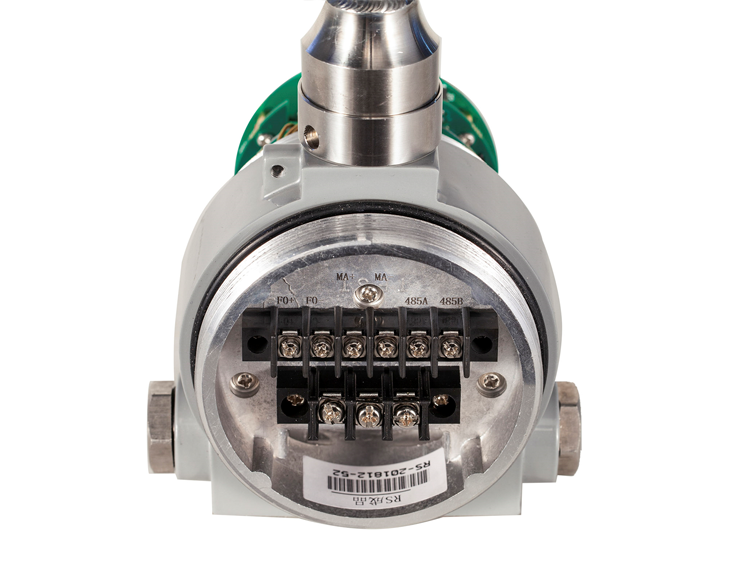
Wiring terminals are clearly labeled on Silver Automation Instruments devices to reduce installation risk
The company also documents two installation risks buyers commonly encounter in mass flow meter projects. To reduce the risk of achieved accuracy below expectation, the instruction manual — included with every shipment — details the installation precautions. To reduce the risk of false wiring, the wiring terminals are clearly labeled on the instrument.
8. Future outlook for mass flow meter procurement
Looking ahead, procurement decisions in the flow meter category are likely to become more data-driven. Verification standards such as ISO 6996:2024 give buyers an objective way to qualify measurement performance, while digital transmitters make configuration and diagnostics more standardized across suppliers. For a manufacturer exporting to Southeast Asia, South America, and Africa, the combination of factory-direct pricing, short lead times, and CE, ATEX, and ISO9001 compliance addresses a consistent buyer need: predictable projects with measurable total cost of ownership. The current market structure — two leaders holding roughly a quarter of global share between them — leaves substantial room for suppliers that translate cost efficiency into documented, comparable value.
9. FAQ: decision-focused questions answered
How does the price of Silver Automation Instruments' Coriolis mass flow meter compare to a Micro Motion Coriolis flow meter?
According to the company's published comparison, the Micro Motion Coriolis flow meter is priced four to five times higher than the Silver Automation Instruments product. The comparison also states that the Silver product typically delivers within one month, compared with a lead time of several months for the alternative.
What is the total cost of ownership difference?
Silver Automation Instruments states its Coriolis flow meter offers approximately 75% lower total cost of ownership than the comparison product, with lower maintenance costs. In this framing, total cost of ownership includes purchase price, the cost impact of delivery lead time, and ongoing maintenance expense.
Does the lower price indicate lower measurement quality?
Silver Automation Instruments states its products deliver nearly the same quality as the comparison product at a lower price. As with any flow meter, actual measurement accuracy depends on correct installation, commissioning, and process conditions. The company includes an instruction manual detailing installation precautions with every shipment.
What certifications does Silver Automation Instruments hold?
The company reports that its products meet CE, ATEX, and ISO9001 standards for safety and performance. Buyers requiring additional metrological verification can reference standards such as ISO 6996:2024 and NIST Handbook 44 Section 3.37 in their procurement specifications.
Which technology suits natural gas and air mass flow applications?
Thermal mass flow meters are commonly used for air, natural gas, and other gas streams, particularly where low-flow sensitivity and low pressure drop are priorities. Coriolis mass flow meters are more commonly specified for liquids, steam, and high-accuracy mass measurement where fluid density may vary.
What installation risks should buyers anticipate?
Two commonly cited risks are achieved accuracy below expectation and false wiring. The supplier addresses these by including an instruction manual that details installation precautions and by clearly labeling wiring terminals on the instrument.
About Silver Automation Instruments — a China-based manufacturer of mass flow meters and process instrumentation, founded in 2010 and located in Nanjing, Jiangsu. To review product specifications and configuration options, download the company brochure: Silver Automation Instruments brochure (PDF).
Contact: Lily · +86 25-52155837 · WhatsApp +86 18936759191 · sales@silverinstruments.com
Website: www.silverinstruments.com
Address: No. 108 Jiang dong Middle Road, Jian ye District, Nanjing, Jiangsu, China