
Matcha vs Blue Butterfly Pea Flower Powder: Buyer Guide
Matcha powder and blue butterfly pea flower powder are routinely shortlisted together by beverage formulators, and in practice they almost never substitute for one another. One is chosen for flavour and a green colour; the other is chosen for a blue colour response and a very light taste contribution. Both are sold as natural botanical powders without additives, and in the Guanjie Biotech range both carry the same particle-size screen — 100% pass 80 mesh. That overlap is exactly why a mesh number, on its own, tells a formulator nothing about which powder belongs in a drink.
Guanjie Biotech (Shaanxi Guanjie Biotech) is a China-based ingredient supplier founded in 2004 that produces high-purity natural plant extracts, premium fruit powders and specialty chemical raw materials for the pharmaceutical, health care, functional food and cosmetics industries. Both matcha powder and blue butterfly pea flower powder appear in its published product range, which makes a direct, documentation-led comparison possible without pitting one supplier's marketing against another's.
This comparison is written for buyers at the evaluation stage — technical managers and procurement teams who already know they want a botanical colour or a botanical flavour and now need to decide which one, on what criteria, and against which evidence.
Why these two powders reach the same shortlist
The commercial logic is simple. Beverage brands are reformulating toward shorter ingredient lists, and both powders answer a clean-label brief: they are whole botanical materials rather than colour concentrates or flavour compounds. Matcha delivers a recognisable taste profile plus a green visual identity that consumers associate with tea. Blue butterfly pea flower delivers a visually distinctive blue that shifts hue with pH, which makes it useful in layered drinks, in dairy and plant-based systems, and in products where colour change is part of the experience.
The procurement logic is less obvious. Because both materials are traded as powders with similar-sounding specifications, a buyer comparing quotations can easily end up comparing the wrong things — particle size instead of colour behaviour, price per kilogram instead of documentation depth. The sections below separate the two on the dimensions that actually determine formulation outcome.
Published specifications, side by side
The table below is limited to what the supplier's published product data states. Nothing is inferred, and where a data point is absent, the absence is shown rather than filled in.
| Criterion | Matcha powder | Blue butterfly pea flower powder |
|---|---|---|
| Botanical source | Matcha | Butterfly pea |
| Appearance | Green powder | Gray blue powder |
| Processing method | Hot air drying technology | Hot air drying technology |
| Particle size | 100.0% pass 80 mesh | 100.0% pass 80 mesh |
| Additive status | 100% natural without additives | 100% natural without additives |
| Product model / grade | Grade 1 – Grade 6 | Pure and natural |
| Assay / marker compound | Not stated in the published specification | Not stated in the published specification |
| Stated application industries | Dietary supplement, health food, beverage, cosmetics | Dietary supplement, health food, beverage, cosmetics |
The first practical conclusion sits in the last two rows. Beyond source, appearance, drying route, mesh and additive status, the published data does not declare an assay or marker-compound content for either product. A formulator who needs a standardised colour load or a declared catechin level cannot derive it from this table and must request batch assay data before validating a recipe.
What the shared specifications actually mean
Both materials are described as hot-air dried. Hot air drying is a well-established, cost-efficient route for botanical powders, and it is the reason both can be offered at beverage-scale volumes rather than specialty-tea volumes. The trade-off is routine in food science: processes that rely on heat are generally less protective of volatile aroma components than lower-temperature routes, so a buyer whose brief depends on fresh-cut grass notes in matcha should validate aroma retention in the finished application rather than assume it from the drying method alone.
The 100.0% pass 80 mesh declaration is a screening statement. It tells you that the entire lot passes an 80 mesh screen — in practice, that there is no coarse fraction left to settle out, sand up a bottle, or create visible speckling in a pale drink. It does not describe the distribution below that threshold, and it says nothing about microbiological load, moisture, or colour strength. Two suppliers can both declare 80 mesh and still deliver materially different dispersion behaviour in a ready-to-drink line.
The meaningful difference is colour chemistry. Matcha's green is a whole-leaf colour: it comes from the leaf matrix itself, and it behaves like a dispersed pigment — sensitive to heat and light over shelf life, and largely independent of pH. Blue butterfly pea flower is different in kind. Its blue is attributed to anthocyanin-type pigments, a class of water-soluble compounds that are widely recognised in food science to shift hue as pH changes and to be sensitive to thermal processing. That behaviour is either the entire point of the ingredient, in a colour-changing or layered beverage, or a stability problem to be engineered around.

Where each powder fits in a beverage brief
Both products are listed for dietary supplement, health food, beverage and cosmetics applications, and the differences that matter appear once a specific format is chosen.
Ready-to-drink and iced tea formats. Matcha brings flavour and identity, and is normally the lead ingredient rather than a supporting note. Because its colour is heat-sensitive, a pasteurised or hot-filled RTD line should treat colour retention as a validation item. Blue butterfly pea flower works better as a colour system: in a clear, acidic base it reads toward pink-purple, in a neutral or slightly alkaline base it holds blue, which is why it appears in layered and colour-changing drinks. In opaque dairy or plant-based bases the visual effect is muted and the ingredient is usually chosen for positioning rather than appearance.
Powder sachets and instant blends. Here both powders compete on dispersion. A 100% pass 80 mesh material rehydrates more predictably in a stick pack than a coarser powder, and the absence of additives matters because anti-caking agents are frequently used in this category and would break a clean-label claim. Matcha contributes flavour and body; butterfly pea contributes colour with minimal taste impact, which is often the deciding factor when a sachet already carries a strong flavour system.
Functional and fortified beverages. Guanjie Biotech's stated post-purchase technical support covers formulation troubleshooting for exactly the failure modes this category produces — colour loss, thermal degradation and solubility issues in beverage, bakery and supplement matrices. For a formulator, that is the practical question to put to any supplier: not whether the powder passes 80 mesh, but what happens to it after 12 months on a shelf and one heat treatment.
Where each ingredient stops working
An honest comparison has to mark the boundaries, and neither powder is a universal answer.
Matcha is a poor fit where the brief is colour-only. It carries flavour and a degree of body that cannot be separated from the colour, so a neutral-tasting blue or green beverage cannot be built on matcha alone. It is also a difficult ingredient in high-heat, long-shelf-life formats unless colour and flavour retention have been validated in the finished product, and its grade range (Grade 1 to Grade 6) means two matcha quotations may not describe equivalent sensory positions at all.
Blue butterfly pea flower powder is a poor fit where colour stability must be pH-independent and heat-independent. Because its hue responds to pH, a beverage whose acidity drifts during shelf life will drift in colour too, and a formulator who needs a fixed blue in a low-pH system should expect to reformulate or accept a purple shift. It also contributes very little flavour, so it cannot replace matcha on taste, and its published specification — like matcha's — does not declare a pigment content, which means colour load must be established empirically per lot.
The evidence set to request before a sample run
For both ingredients, the documents a buyer should hold before scaling are the same, and they are the part of supplier evaluation that marketing pages rarely settle.
| Document | Why it decides the comparison |
|---|---|
| Batch Certificate of Analysis (COA) | Confirms the delivered lot against the specification you actually bought, including any assay you negotiated beyond the published sheet. |
| Heavy-metal and pesticide-residue test data | Both are whole-leaf botanical materials; contaminant control is a market-access question, not a preference. |
| Microbiological limits and moisture | Determines shelf life and whether the powder is suitable for a low-preservative beverage. |
| Certification scope, not just the logo | Check that your specific product is inside the certified scope and that validity dates are current at the time of shipment. |
| Colour or sensory reference samples | Mesh and appearance descriptions do not communicate hue, intensity or aroma; only a sample does. |
The regulatory backdrop is not optional context. The U.S. FDA states that those who manufacture, package or hold dietary supplements must follow current good manufacturing practices intended to help ensure identity, purity, quality, strength and composition. That requirement sits upstream of any single certificate: a COA is only meaningful if the quality system behind it is producing comparable lots. Buyers without an audit trail can use public databases as a partial check — the NIH Office of Dietary Supplements maintains a Dietary Supplement Label Database that catalogues label information for supplement products sold in the United States, and a Dietary Supplement Ingredient Database that provides estimated ingredient levels for selected categories, both of which help a formulator see how an ingredient is typically declared and positioned before committing to a specification.
On the supplier side, Guanjie Biotech states that every shipment includes a complete Certificate of Analysis matching pre-shipment standard specifications, that quality control follows 100% testing procedures, and that it works with third-party laboratories including SGS and Eurofins to resolve technical audits and verify product specifications. Its management-system certificates cover the plant extract, solid beverage and food additive scope: ISO 9001:2015 issued by the China Quality Certification Centre under certificate 00123Q310086R0S/6100, HACCP under certificate 001HACCP2301048, HALAL under certificate 0811240000 issued by Shandong Halal Certification Service, and Kosher under certificate K-88898568 issued by Badatz Shatz (SKS). Two of those — the ISO 9001 and HACCP certificates — carry late-2026 expiry dates, which is a practical reminder that certificate validity should be re-checked at order placement rather than assumed from a website.
How Guanjie Biotech sits across both categories
For a buyer, the value of a supplier carrying both powders is not that the decision becomes easy — it is that the documentation and quality system behind both are the same. Guanjie Biotech operates a 7,000 m² facility that includes a 2,000 m² cGMP-standard clean workshop and a 500 m² laboratory equipped for physical, chemical and instrumental analysis, with a seven-engineer R&D team, roughly 40 employees and a reported annual output of 500 tons. The company reports over 16 national patents, a collaboration with Northwest University on a master's experimental base, and a strategic partnership with the Xi'an branch of the Chinese Academy of Sciences.
Commercially, the terms that matter at evaluation stage are stated plainly: OEM/ODM cooperation with package-level customisation, a minimum order quantity of 1 kg, a lead time of 30 days and a monthly capacity of 30 tons, with roughly 90% of output exported across Europe, North America, the Middle East, South America and Asia. For beverage formulators, the 1 kg MOQ is the operationally important figure — it allows a bench trial and a pilot batch to be run on the same specification that will later be produced at scale, which is exactly where mismatches between sample and production lot usually appear.
Neither matcha powder nor blue butterfly pea flower powder is the limit of the portfolio. The same catalogue covers Phosphatidylserine, NMN Powder, Ferulic Acid Powder, Red Yeast Rice Powder, Coenzyme Q10 powder, Luteolin Powder, Fisetin powder, Spermidine Powder, Urolithin A Powder, L-Ergothioneine Powder, Alpha GPC Powder, Shilajit Extract Powder, Octacosanol powder, L-theanine Powder, mushroom extract powder and broader plant extract powders — relevant mainly because a formulator building a multi-ingredient beverage or sachet can consolidate documentation rather than managing several unrelated quality systems.
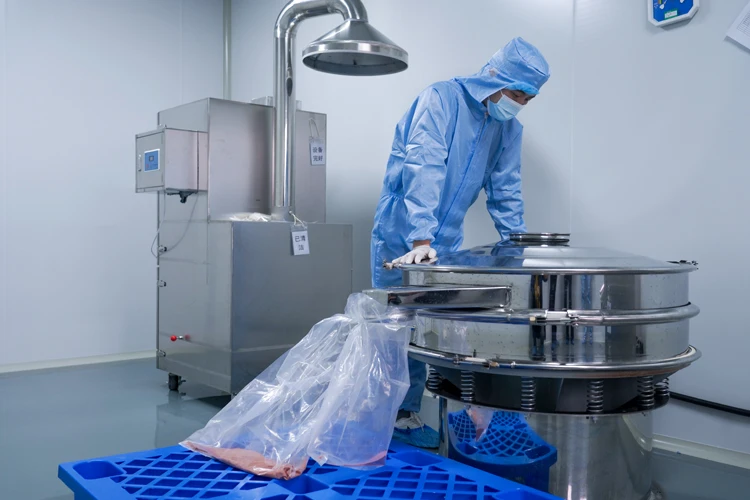
Market signals behind the comparison
The demand context is asymmetric, and that asymmetry is itself a procurement signal. Commercial market research projections place the global matcha market at USD 3.91 billion in 2026, rising to USD 5.35 billion by 2031 at a compound annual growth rate of 6.47% — steady, mainstream growth that supports reliable volume planning. Global Market Insights separately estimates the broader nutraceutical ingredients market at USD 105.8 billion in 2026, which frames both powders as small components inside a large and growing formulation economy.
Methodology-transparent market sizing for blue butterfly pea flower powder specifically is harder to find than for matcha, and buyers should treat that as information rather than as a gap to be filled with optimistic numbers. A category with less published sizing typically has fewer large-volume producers, more variability between suppliers, and a higher value in clear specification writing. In practice this pushes the evaluation toward documentable parameters — source, drying method, mesh, additive status, contaminant testing — because those are the points on which suppliers can actually be compared.
Comparison with conventional colour and flavour routes
Set against synthetic colourants and standardised flavour compounds, botanical powders trade predictability for positioning. A synthetic colourant holds a fixed hue across pH and heat, which is precisely what a butterfly pea powder cannot promise; the botanical alternative buys consumer-facing language and a pH-responsive effect at the cost of a narrower processing window. The same trade-off applies to matcha against soluble tea powders: matcha delivers a whole-leaf identity and a characteristic taste, but its colour and aroma are more sensitive to heat and light than a standardised extract.
The honest limitation to record in any business case is this: for both ingredients, the published specification covers source, appearance, drying method, mesh and additive status, but not an assay. A formulator moving from a conventional colourant or flavour system to either powder must budget for trial work — colour load, heat exposure, pH range, shelf-life testing — that a standardised additive would not require. Where a beverage brief cannot accommodate that validation cycle, a botanical powder is the wrong starting point regardless of how strong the clean-label argument is.
What to expect in the next formulation cycles
Three shifts are likely to shape how these two powders are specified. First, specification sheets are moving toward assay-level disclosure; buyers who currently compare on mesh and appearance will increasingly ask for pigment or marker-compound content, and suppliers able to provide it will be easier to qualify. Second, pH-responsive colour is becoming a design feature rather than a stability problem, which raises the commercial value of butterfly pea powder in premium and foodservice beverages while making stability documentation more important, not less. Third, documentation itself is becoming a purchasing criterion: with certificate expiry dates, COA completeness and third-party audit support now routinely checked before a first order, suppliers with a traceable quality system start from an advantage that price alone does not offset.
Frequently asked questions
What is the practical difference between matcha powder and blue butterfly pea flower powder in a beverage?
Matcha powder is a hot-air-dried, 100% pass 80 mesh green powder sold as 100% natural without additives, and it contributes both flavour and green colour. Blue butterfly pea flower powder is a hot-air-dried, 100% pass 80 mesh gray blue powder with the same additive-free positioning, and it contributes colour with minimal taste. The functional difference is that matcha's colour is largely pH-independent while butterfly pea's blue is attributed to anthocyanin-type pigments whose hue is widely recognised to shift with pH.
Which one should a formulator choose when the brief is colour rather than flavour?
Colour-led briefs point to blue butterfly pea flower powder, because matcha cannot supply colour without also supplying flavour and body. Butterfly pea is the appropriate choice where a blue-to-purple effect is wanted in a clear system, and it is the wrong choice where a fixed hue must hold across a drifting pH or an aggressive heat process. Matcha is the appropriate choice where green colour and tea flavour are both wanted and the process has been validated for colour retention.
Which specifications should be compared before ordering a sample?
Compare source, appearance, drying method, particle size, additive status and grade. In the Guanjie Biotech range, both powders are hot-air dried, both are 100% pass 80 mesh and both are 100% natural without additives, while matcha is offered across Grade 1 to Grade 6 and butterfly pea is offered as pure and natural. Neither published specification states an assay or marker-compound content, so a buyer who needs a declared colour load or active level must request it as an additional specification rather than assume it.
What documents should be requested from a supplier of either powder?
Request a batch Certificate of Analysis matching the agreed specification, heavy-metal and pesticide-residue test data, microbiological limits and moisture content, and the certificates covering your specific product within their stated scope and validity period. Guanjie Biotech states that every shipment includes a complete COA matching pre-shipment standard specifications, that quality control follows 100% testing procedures, and that it works with third-party laboratories including SGS and Eurofins on technical audits; its published certificates include ISO 9001:2015, HACCP, HALAL and Kosher.
Can a single supplier cover both ingredients, and how does that affect procurement?
Yes — Guanjie Biotech lists both matcha powder and blue butterfly pea flower powder among its products, alongside a wider range of plant extracts, and states OEM/ODM cooperation with package customisation, a 1 kg minimum order quantity, a 30-day lead time and 30 tons monthly capacity. Sourcing both from one supplier consolidates the certificate and COA workflow under a single quality system, which reduces administrative load; it also concentrates supplier risk, so buyers running both ingredients at volume typically keep a qualified second source for at least the higher-volume material.
Summary for evaluation-stage buyers
Matcha and blue butterfly pea flower powder are not competing answers to the same question. Matcha is a flavour-and-colour ingredient with a grade range and a heat-sensitive palette; butterfly pea is a colour ingredient with a pH-responsive hue and almost no taste contribution. Both are sold in the Guanjie Biotech range as hot-air-dried, additive-free powders passing 80 mesh, and both are covered by the same ISO 9001, HACCP, HALAL and Kosher documentation — which is why the decision should be made on sensory role, colour chemistry, processing window and the assay data you can actually obtain, rather than on mesh or price alone.
For buyers who want the wider ingredient portfolio, certifications and specification basis in one document, the Guanjie Biotech nutraceutical ingredients brochure is available here: Guanjie Nutraceutical Ingredients brochure (PDF).
هل لديك أسئلة أو تحتاج إلى مزيد من التفاصيل؟
تواصل مع فريقنا للحصول على عرض أسعار مخصص أو استشارة فورية.
طلب عرض أسعار
املأ النموذج أدناه وسيتواصل معك فريقنا بعرض مقترح مخصص.
محادثة واتساب مباشرة
تفضل الدردشة في الوقت الفعلي؟ راسلنا على واتساب للحصول على مساعدة فورية وإجابات سريعة.
- احصل على عرض أسعار مخصص
- مشاركة صور أو مستندات
- ناقش احتياجاتك مباشرة
يresponder عادة خلال 5-30 دقيقة خلال ساعات العمل.