
Matching Aluminum Busbar Alloys to 24/7 High-Humidity Environments for Power Projects
A technical guide for engineers and procurement specialists selecting corrosion-resistant, high-conductivity aluminum busbars for continuous operation in tropical power distribution systems.
Industry Context
Aluminum busbars have become a cornerstone of modern power distribution and new energy infrastructure, offering a lightweight, cost-effective alternative to copper without sacrificing performance in properly engineered applications. Globally, the aluminum busbar market was valued at approximately USD 3.99 billion in 2025 and is projected to reach USD 6.65 billion by 2034, growing at a CAGR of 6.90% — significantly outpacing copper busbar segments. The Asia-Pacific region alone accounts for 42.3% of revenue share, driven by rapid infrastructure expansion and electrification in countries like Vietnam, Thailand, Indonesia, and India.
The Challenge: Continuous Operation in Harsh Environments
Power distribution projects in Southeast Asia, the Middle East, and parts of South America frequently encounter high ambient temperatures combined with high relative humidity. Equipment in these regions often runs 24 hours a day, 7 days a week — placing extreme demands on conductive components. Traditional copper busbars, while highly conductive, add weight and cost. Aluminum, on the other hand, requires careful alloy selection to balance conductivity, mechanical strength, and long-term corrosion resistance under such conditions.
Common failure modes include pitting corrosion at connection points, creep relaxation under sustained thermal cycling, and reduced conductivity due to oxidation. Engineers therefore need busbars that meet special requirements including corrosion resistance and high conductivity while withstanding continuous thermal and mechanical stress.
Jinhao Aluminum: Engineered for the Environment
Shandong Jinhao Aluminum Co., Ltd. is a specialized manufacturer of aluminum profiles, bars, and rods, with a dedicated focus on power and new energy applications. Founded in 2019 and based in Shandong Province, China, the company operates a 3,600 m² factory with an annual output capacity of 12,000 tons and a monthly capacity of 1,000 tons. Jinhao Aluminum supplies busbars in multiple alloys and tempers explicitly designed to meet the demands of high temperature, high humidity, and continuous 24-hour operation.
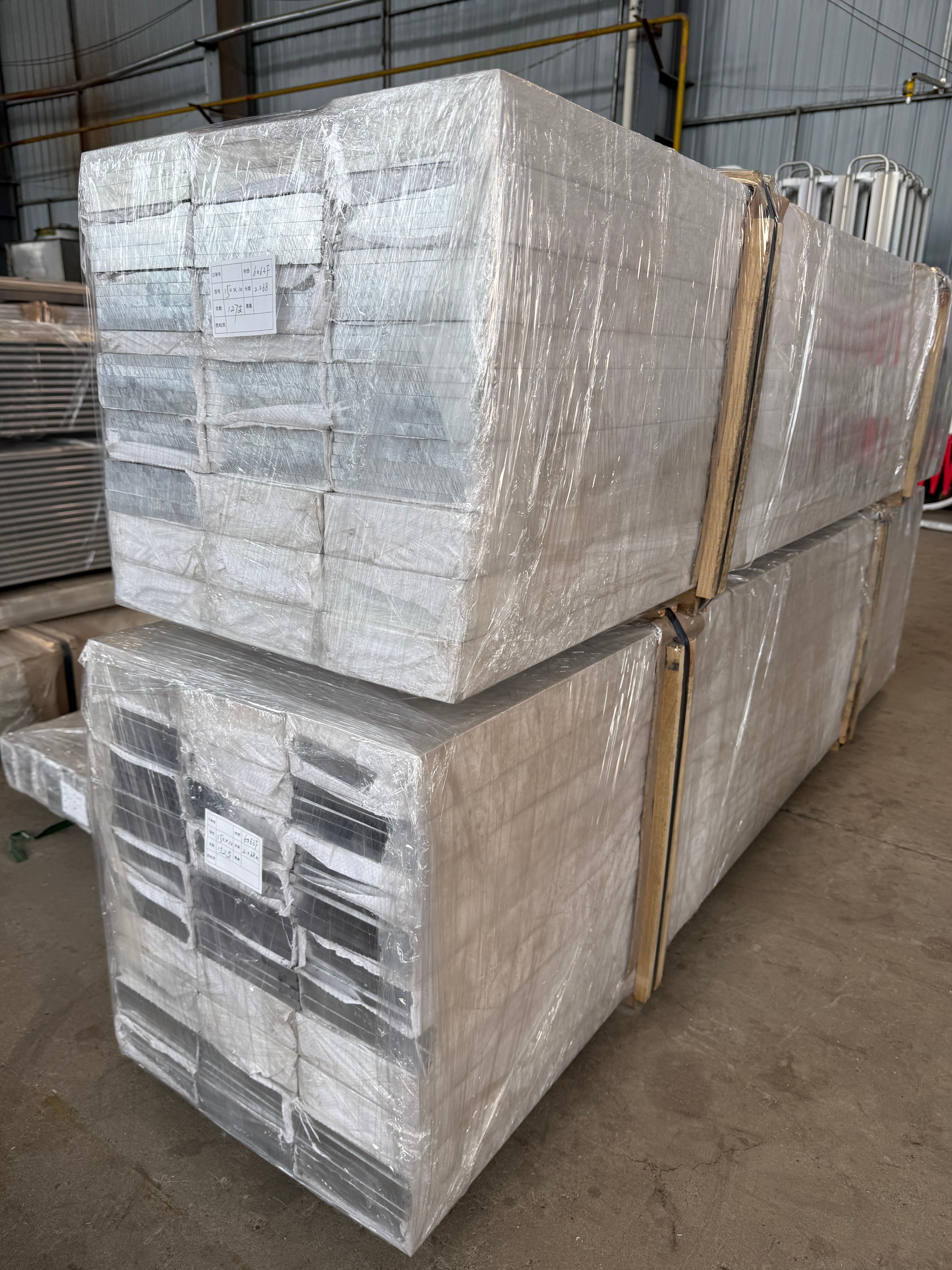 Jinhao Aluminum busbar product line — available in 1060, 1070, 6101, 6061, and 6063 alloys.
Technical Specifications and Alloy Selection
The company’s aluminum busbar portfolio covers five primary alloys (1060, 1070, 6101, 6061, 6063) and three key tempers — T63 (high-strength), T64 (high-conductivity), and O (soft / annealed). Below is a technical comparison of the most relevant grades for power distribution in harsh environments:
| Property | 1060 (O temper) | 1070 (O temper) | 6101 (T64) | 6063 (T63) |
|---|---|---|---|---|
| Conductivity (% IACS) | ~61-62% | ~61-62% | 57-59% | ~55% |
| Tensile Strength (MPa) | ≤110 | ≤110 | 180-210 | 205-240 |
| Yield Strength (MPa) | — (soft) | — (soft) | ≥150 | ≥170 |
| Corrosion Resistance | Excellent | Excellent | Good | Good |
| Best for | Earthing, low-stress conductors | Pure power transmission (high conductivity needed) | General busbars (balanced) | Structural support + conduction |
Key insight: For continuous 24/7 operation in humid environments, alloys 6101 (T64) and 1060/1070 (O temper) are most frequently selected — the former for its balance of strength and conductivity, the latter for maximum electrical performance in grounding or low-mechanical-stress circuits. All busbars from Jinhao Aluminum are produced with an aluminum content of approximately 98.5%–99.0% and undergo 100% full inspection before shipment.
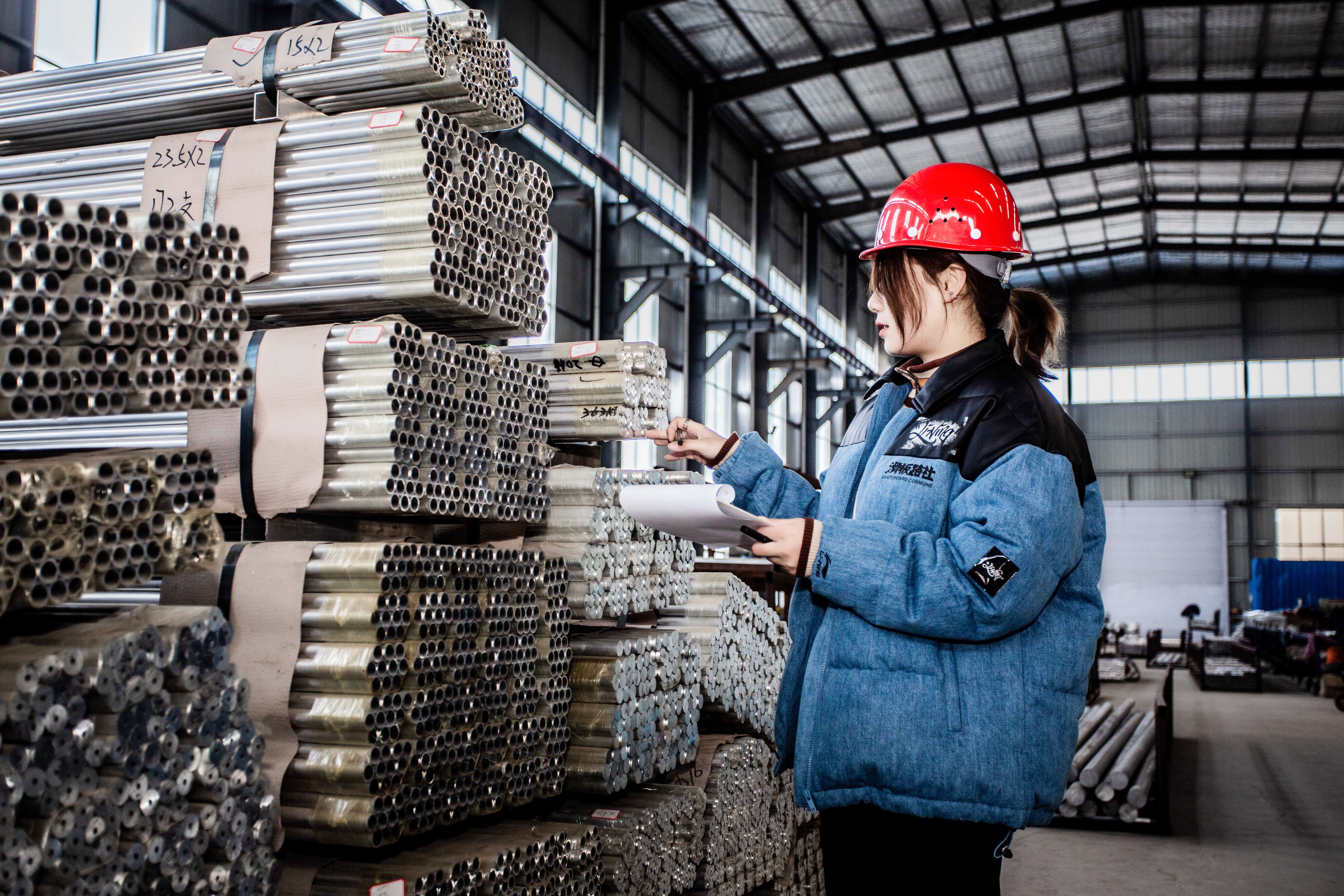 Jinhao Aluminum’s 100% full inspection ensures consistent quality for critical power applications.
Application Scenarios: Where These Busbars Deliver
Based on project data from Southeast Asia, a typical deployment involves a Vietnamese electrical contractor that has sourced 50 tons of aluminum busbars from Jinhao for distribution and new energy engineering. The busbars operate in high-temperature, high-humidity conditions with 24-hour continuous duty. The result: long-term stability over a 10-year relationship, attributed to high conductivity and reliable corrosion performance. This scenario mirrors thousands of installations across switch cabinets, bus ducts, transformers, and energy storage systems.
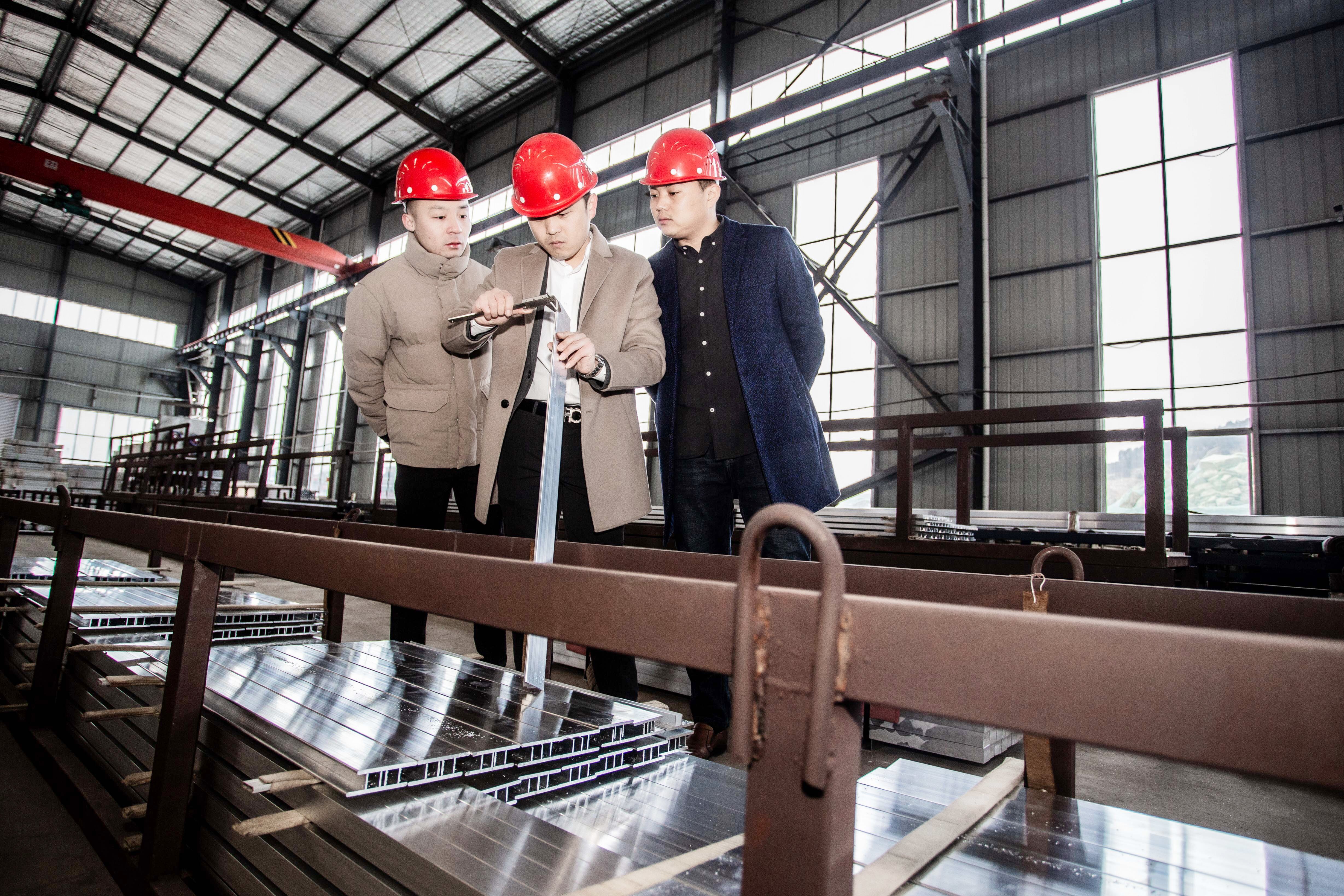 Quality inspection station at Jinhao Aluminum — each busbar is checked for dimensional accuracy and surface finish before dispatch.
Beyond conventional power, these same alloys and tempers are used in:
- New Energy: Energy storage battery connecting bars, photovoltaic inverter busbars, wind power control systems, and charging pile high-current conductors.
- Industrial Heat Dissipation: High-power heat sinks for frequency converters and rectifiers.
- Transportation: Conductive bars for traction systems in high-speed rail and subway rolling stock.
Comparing Aluminum Busbars with Traditional Solutions
When engineers evaluate busbar materials, copper remains the benchmark for conductivity (100% IACS) but at a significantly higher cost and weight penalty. Aluminum busbars offer approximately 1/3 the density of copper (2.70 g/cm³ vs 8.96 g/cm³), translating to lower shipping costs and easier handling. The table below outlines the trade-offs:
| Parameter | Aluminum (6101-T64) | Copper (C11000) |
|---|---|---|
| Conductivity (% IACS) | 57-59% | 100% |
| Density (g/cm³) | 2.70 | 8.96 |
| Relative Cost (per kg) | ~40% of copper | 1x (baseline) |
| Corrosion Resistance (tropical) | Good (with proper plating/coating) | Excellent (native oxide layer) |
One honest limitation: Aluminum requires larger cross-sections to carry the same current as copper due to its lower conductivity. This means busbars occupy more physical space inside switchgear and may require different connection hardware. However, the weight savings often offset the space penalty, especially in overhead busway or transport applications.
Market Trends and Outlook
With global aluminum busbar demand growing at 6.9% CAGR and Asia-Pacific holding a 42.3% share, the shift toward aluminum is accelerating. International standards such as IEC 60105, ASTM B236, and DIN EN 755 provide clear compliance frameworks. Manufacturers like Jinhao Aluminum are aligning their production to these specifications, offering custom sizes, surface treatments, and lead times averaging 30 days with a minimum order quantity of 2 tons. The company exports 60% of its output, with strong presence in Southeast Asia (Vietnam, Thailand, Indonesia, Philippines, Malaysia, Singapore) and growing demand from the Middle East, South America, and Europe.
Future growth will be fueled by renewable energy investments, EV charging infrastructure, and data center expansions — all of which demand reliable, thermally efficient busbar systems that can operate 24/7 in challenging climates.
Frequently Asked Questions
Q1: Which aluminum busbar alloy is best for high-humidity environments?
For maximum corrosion resistance with good conductivity, aluminum alloys 1060 and 1070 (O temper) are preferred in low-stress applications. For structural busbars requiring both strength and corrosion resistance, 6101-T64 or 6063-T63 are suitable, but protective surface treatments are recommended.
Q2: What conductivity can I expect from a 6101 aluminum busbar?
6101 aluminum in T64 temper typically achieves 57–59% IACS (International Annealed Copper Standard). This is the industry standard for balanced electrical and mechanical performance in switchgear and bus ducts.
Q3: Can aluminum busbars operate continuously at high temperature?
Yes. Aluminum busbars have a short-term heat resistance of 150–200°C and a melting point of approximately 650°C. For continuous operation, proper derating based on ambient temperature and ventilation should be applied. Jinhao Aluminum designs its products for 24-hour continuous duty in high-temperature scenarios.
Q4: How does Jinhao Aluminum ensure quality for export orders?
The company implements 100% full inspection on all products, covering dimensional accuracy, surface finish, conductivity, and mechanical properties. This applies to every batch, regardless of order size (MOQ 2 tons). Remote technical support is also provided for after-sales.
Q5: What is the lead time for custom-sized aluminum busbars?
Typical lead time is 30 days for custom orders (size, surface treatment). Monthly production capacity reaches 1,000 tons, and the company operates a 3,600 m² factory with 16 employees, including a 5-person R&D team.
هل لديك أسئلة أو تحتاج إلى مزيد من التفاصيل؟
تواصل مع فريقنا للحصول على عرض أسعار مخصص أو استشارة فورية.
طلب عرض أسعار
املأ النموذج أدناه وسيتواصل معك فريقنا بعرض مقترح مخصص.
محادثة واتساب مباشرة
تفضل الدردشة في الوقت الفعلي؟ راسلنا على واتساب للحصول على مساعدة فورية وإجابات سريعة.
- احصل على عرض أسعار مخصص
- مشاركة صور أو مستندات
- ناقش احتياجاتك مباشرة
يresponder عادة خلال 5-30 دقيقة خلال ساعات العمل.