
Matching Commercial Tile Solutions to Project Conditions
Matching Commercial Tile Solutions to Project Conditions
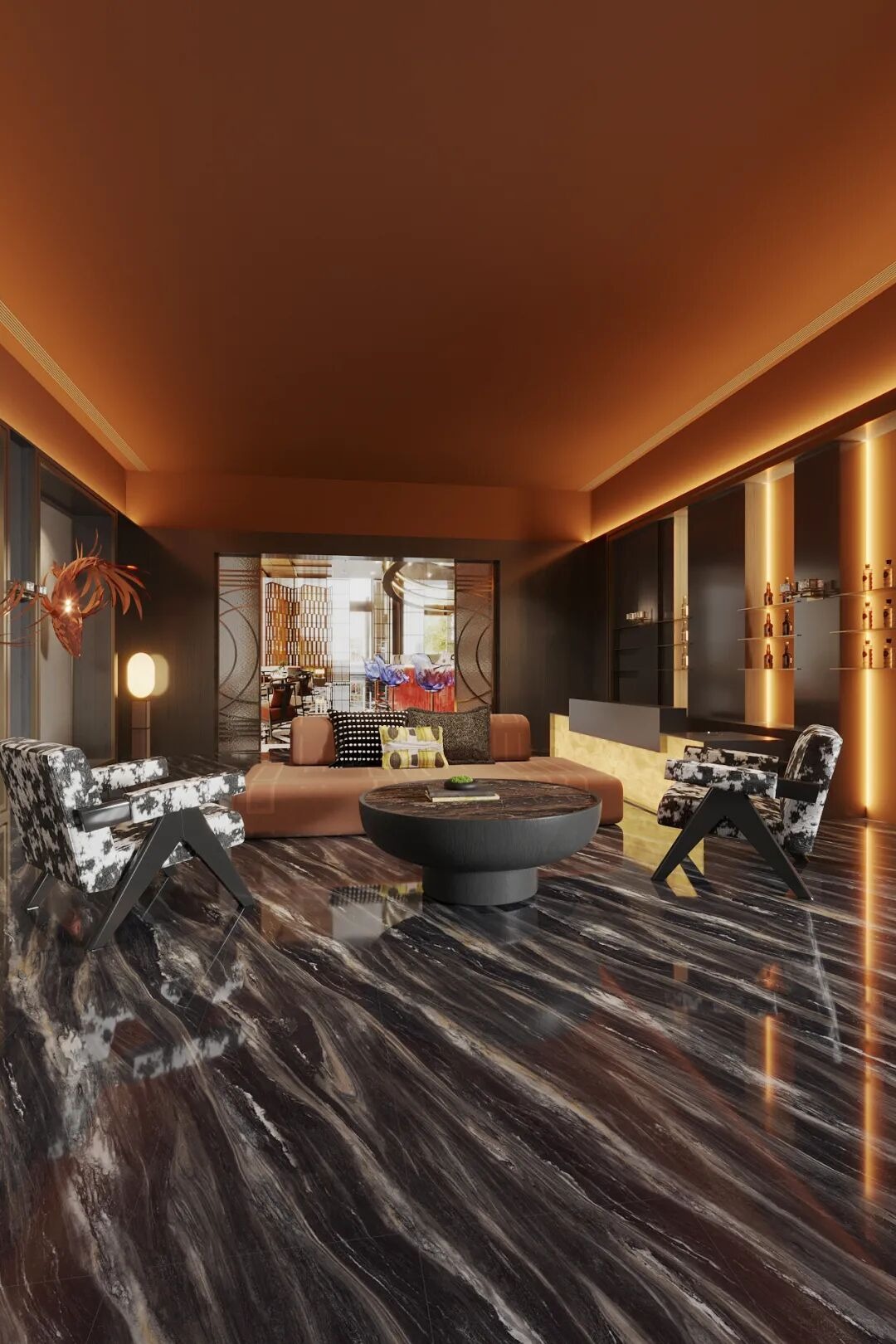
Commercial tile procurement is a performance decision as much as a product decision. All-King Ceramics is a manufacturer and direct exporter of porcelain tiles for commercial and infrastructure projects, operating as ZIBO ALL-KING CERAMICS CO., LTD from Zibo, China. For buyers in the research and evaluation stage, the relevant issue is whether a tile can withstand the conditions of the project: high traffic, frost and freeze-thaw, wet and slippery surfaces, thermal shock, and heavy surface loads.
The Commercial Tile Problem: Matching Product to Project
Commercial projects need flooring and wall surfaces that perform under continuous, demanding conditions, not only decorative finishes. A hotel lobby, shopping mall, apartment tower, airport terminal, or railway station is used for long hours, with high-frequency foot traffic, cleaning chemicals, moisture, and, in colder regions, freeze-thaw stress. If the tile specification ignores these conditions, owners face maintenance costs, safety issues, and premature replacement.
Across markets such as Kazakhstan, Uzbekistan, Russia, Malaysia, and the Philippines, specifiers and contractors increasingly look for porcelain tile suppliers that can document performance rather than supply generic ceramic products. Decision criteria now include anti-slip ratings, frost resistance, acid and alkali resistance, low VOC emissions, and compliance with ISO 13006. This is the project-fit question that sits at the center of commercial tile procurement.
All-King Ceramics as a Commercial Tile Manufacturer
All-King Ceramics is a manufacturer and direct exporter of architectural ceramics, established in 2011. The company operates a 60,000 m² factory in Zibo with 320 employees and an annual output of 12 to 16 million square meters. A research and development team of 25 engineers supports product development, and approximately 70% of production is exported. The company works with contractors, distributors, and builders across Australia, New Zealand, South Korea, Southeast Asia, Central Asia, Russia, the Middle East, and Latin America.
The product range includes 60×120cm porcelain tiles as the flagship core product, with a format matrix that also covers 60×60cm, 80×80cm, 100×100cm, and 75×150cm tiles. For commercial and wholesale requirements, the company offers OEM and ODM support, including custom size and thickness, surface finish, brand logo and packaging, pattern variation such as marble vein customization, and anti-slip rating.
From a supply perspective, All-King Ceramics operates with a monthly production capacity of 1.2 million square meters, a lead time of 7 to 10 days, and a minimum order of 400 square meters per design. Trial orders are acceptable. Quality control includes 100% flatness and sizing auto-check, piece-by-piece visual inspection, and random lab testing per batch. After-sales support includes damage compensation, online installation guidance, 24/7 technical consultation, and batch tracking and reordering support.
Technical Profile: Marble and Travertine 60×120cm Porcelain Tiles
The Marble Series and Travertine Series are 60×120cm porcelain tiles made from porcelain clay and designed for commercial environments. Both series share the same technical specifications, which are summarized below.
| Parameter | Value |
|---|---|
| Product format | 60×120cm porcelain tiles |
| Thickness range | 9.0–10.5 mm |
| Water absorption | < 0.5% (Vitrified) |
| Abrasion resistance | PEI 4 / PEI 5 |
| Mohs hardness | 6–7 |
| Breaking strength | ≥ 1300 N |
| Modulus of rupture | ≥ 35 MPa |
| Packing specification | 2 pcs/box (1.44 m²/box) |
The water absorption value below 0.5% places these tiles in the porcelain category under ISO 13006 / EN 14411 (Group BIa), the classification commonly used for commercial-grade porcelain. Low water absorption also contributes to stain resistance, moisture protection, and frost resistance in exterior or unheated spaces.
Abrasion resistance of PEI 4 or PEI 5 is relevant for high-traffic floors, while Mohs hardness of 6 to 7 supports scratch resistance in continuous use. Breaking strength of at least 1300 N and modulus of rupture of at least 35 MPa provide structural margin for heavy surface loads and installations in commercial buildings.
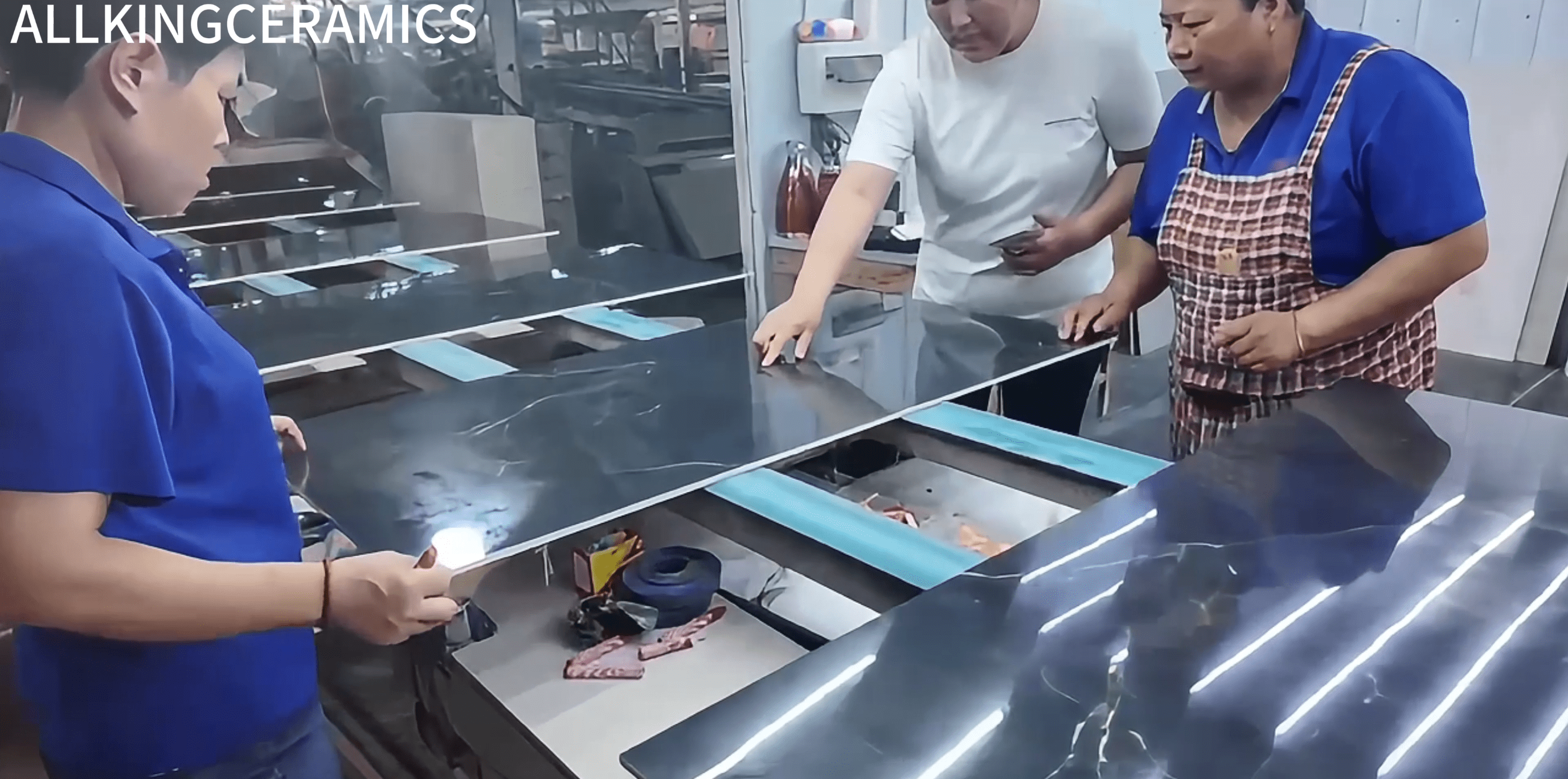
The production process applies 100% flatness and sizing auto-check, piece-by-piece visual inspection, and random lab testing per batch.
For project specification, these tiles also respond to the special requirements of commercial real estate: anti-slip performance at R10/R11, frost resistance, low VOC emissions, acid and alkali resistance, zero water penetration, and ISO 13006 compliance. Commercial-grade frost resistance is tested under ISO 10545-12, which requires tiles to withstand at least 100 freeze-thaw cycles. High-traffic public areas such as airports and railway stations require a slip resistance rating of R10 or R11 under DIN 51130.
Application Scenarios: Where These Tiles Fit
The 60×120cm porcelain tiles from All-King Ceramics are specified for flooring and wall cladding, commercial fit-out, interior decoration, facade engineering, and hotel renovation projects. These applications are common in Australia, Canada, Kazakhstan, the Philippines, and other countries with similar commercial construction conditions.
The operating profile includes continuous heavy-duty use, high-frequency commercial traffic, and non-stop foot traffic. Working conditions include high traffic, frost and freeze-thaw, wet and slippery surfaces, thermal shock, and heavy surface load. This makes the product suitable for commercial real estate, hospitality, public transport, and building envelope applications where durability and safety are evaluated alongside appearance.
- Hotel and hospitality: hotel lobby flooring and hotel renovation projects.
- Commercial real estate: commercial mall flooring and office building facades.
- Residential projects: high-end apartment bathrooms in multi-unit developments.
- Transport infrastructure: airport departure halls, with R10/R11 slip resistance also relevant for railway stations.
- Wall cladding: interior feature walls and facade engineering with facade hanging systems.
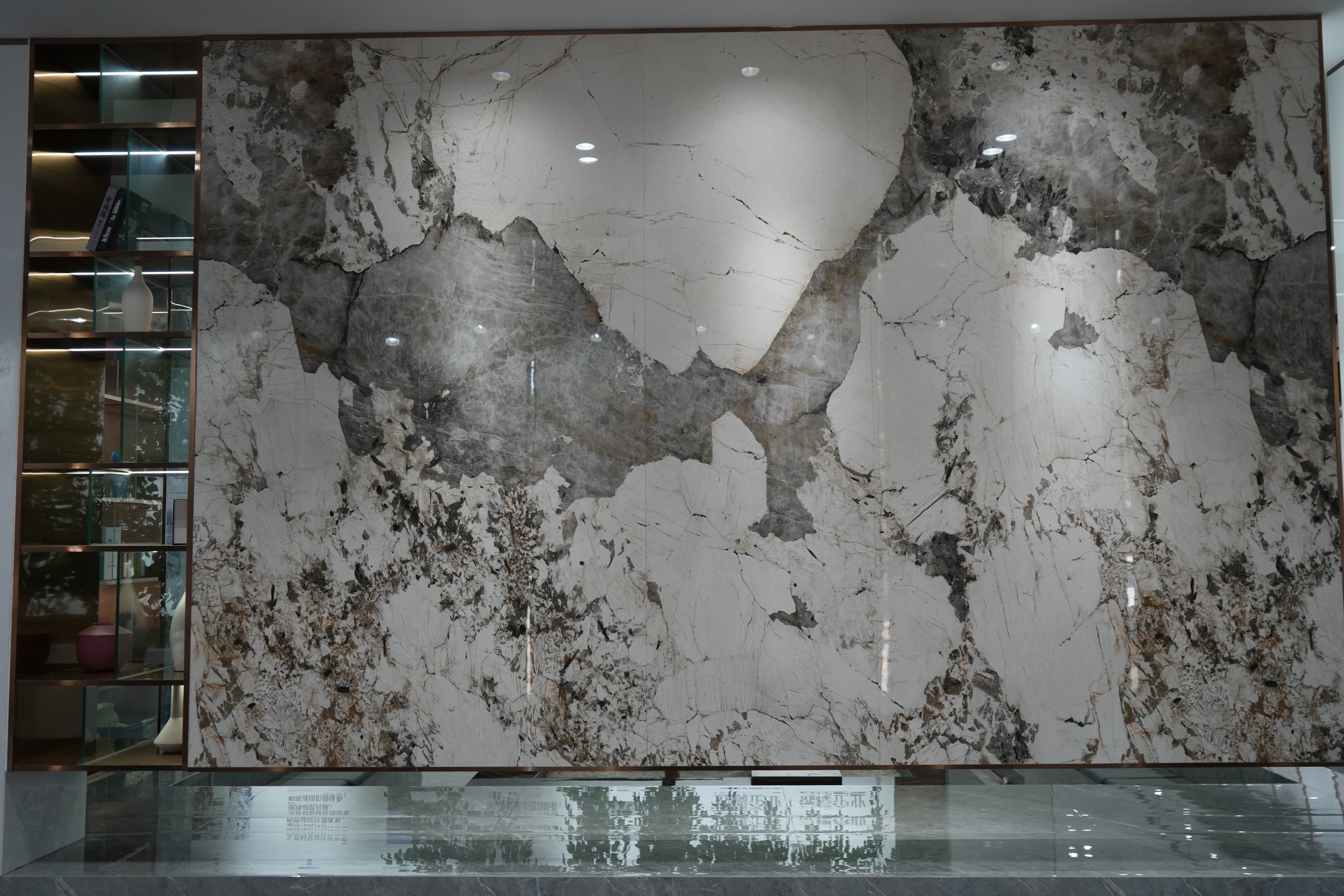
Wall cladding and feature wall application of commercial porcelain tiles.
In one documented project reference, 15,000 square meters of porcelain tiles were supplied for applications including a hotel lobby, commercial mall flooring, an office building facade, high-end apartment bathrooms, and an airport departure hall. The stated project duration was 20+ years, with results including zero-defect durability, easy maintenance, 100% project acceptance, and zero maintenance complaints.
Installation support typically includes tile adhesive and grout, leveling systems, tile spacers, diamond cutting tools, subfloor preparation systems, and facade hanging systems for wall cladding. These supporting materials matter for flatness, bond strength, and long-term performance in commercial environments.
Market Context: Commercial Tile Demand Across Regions
The global market for ceramic and porcelain tiles was valued at USD 423.90 billion in 2024 and is projected to reach USD 845.80 billion by 2034, according to Custom Market Insights. This scale reflects ongoing construction activity in residential, commercial, and infrastructure segments.
Regional data supports the relevance of Central Asia and Eastern Europe for commercial tile sourcing. The Russia ceramic tiles market was valued at USD 3.2 billion in 2024, with projected growth to USD 5.10 billion by 2032, according to Verified Market Research. In Uzbekistan, the Observatory of Economic Complexity reports that ceramic product imports reached USD 125 million in 2024, with China as the top supplier at USD 75.1 million. These figures point to an active importing environment for tile manufacturers with direct export capabilities.
Southeast Asia is another relevant region. Mordor Intelligence estimates the Southeast Asia ceramic tiles market at approximately USD 11.5 billion in 2024, driven by travel, tourism, and infrastructure. In the Philippines, China's ceramic tile exports grew 77.5% year-on-year in March 2025, reaching USD 29.6 million, according to customs data cited by Cerambath. Malaysia, the Philippines, and Vietnam appear in the application and export market data for All-King Ceramics.
Industry reporting also indicates that antibacterial porcelain tiles are increasingly specified for healthcare real estate. This trend is relevant to commercial wall and floor specification in hospitals and medical facilities, although specific healthcare certifications were not part of the reviewed product data for this article.
Comparison: Porcelain Tiles vs Low-Grade Ceramic Tiles
Porcelain tiles differ from low-grade ceramic tiles in measurable performance areas. The primary difference is water absorption: porcelain tile bodies are vitrified, with water absorption below 0.5%, while lower-grade ceramic tiles generally have higher absorption and are more susceptible to moisture damage. Higher absorption also increases the risk of frost damage in freeze-thaw climates.
Mechanically, the 60×120cm porcelain series provides abrasion resistance at PEI 4 or PEI 5, Mohs hardness of 6 to 7, breaking strength of at least 1300 N, and modulus of rupture of at least 35 MPa. Lower-grade ceramic tiles are generally less specified in high-traffic public spaces because their surface wear resistance and structural strength are lower.
One honest limitation: porcelain tiles are heavier and generally carry a higher upfront material price than low-grade ceramic tiles. For projects with mild, low-traffic conditions and a hard budget constraint, low-grade ceramic can be a reasonable choice. For commercial facilities with continuous traffic, moisture, or winter conditions, the performance margin of porcelain is the relevant factor.
Future Outlook: What Buyers Should Expect
The verified market data points to continued growth in tile demand across Russia, Central Asia, Southeast Asia, and the Philippines. The Russia market is projected to grow from USD 3.2 billion in 2024 to USD 5.10 billion by 2032, and the global market is projected to reach USD 845.80 billion by 2034.
All-King Ceramics maintains a format matrix that covers 60×120cm, 75×150cm, 80×80cm, 60×60cm, and 100×100cm tiles to support commercial project and wholesale requirements. For buyers, the evaluation factors are likely to remain the same: documented compliance, physical performance, production capacity, quality control, and the ability to customize products for a specific project.
FAQ: Porcelain Tiles and Commercial Project Fit
Which project types are these porcelain tiles suitable for?
The products are suitable for flooring and wall cladding, commercial fit-out, interior decoration, facade engineering, and hotel renovation projects.
What operating conditions can these tiles withstand?
The tiles operate under high traffic, frost and freeze-thaw, wet and slippery conditions, thermal shock, and heavy surface loads. The operating mode includes continuous heavy-duty use, high-frequency commercial traffic, and non-stop foot traffic.
What special requirements do these applications demand?
The application profile includes anti-slip performance at R10/R11, frost resistance, low VOC emissions, acid and alkali resistance, zero water penetration, and ISO 13006 compliance.
In which regions is this type of application common?
This application scenario is common in Australia, Canada, Kazakhstan, the Philippines, and other countries with similar commercial construction and climate conditions.
What installation equipment and systems are typically used?
Typical supporting equipment includes tile adhesive and grout, leveling systems, tile spacers, diamond cutting tools, subfloor preparation systems, and facade hanging systems for wall cladding.
What relevant standards apply to commercial porcelain tiles?
Porcelain tiles for commercial use are classified under ISO 13006 / EN 14411 (Group BIa) for water absorption of 0.5% or less. Commercial-grade frost resistance is tested under ISO 10545-12, requiring tiles to withstand at least 100 freeze-thaw cycles. High-traffic public areas require slip resistance of R10 or R11 under DIN 51130.
Manufacturer Information
All-King Ceramics (ZIBO ALL-KING CERAMICS CO., LTD) is based at No.6, 8th building, 6th district, China Fortune Ceramic City, Zibo, China. Contact person: Abby. Email: tyceramic2@all-king.com. Tel/WhatsApp: +86 156-5336-9360. Company website: www.all-king.com. The public product catalog is available for download here: ALL-KING Ceramics Catalog.