
Matching Commodity Moulds to Production Scenarios: A Category-Level Guide
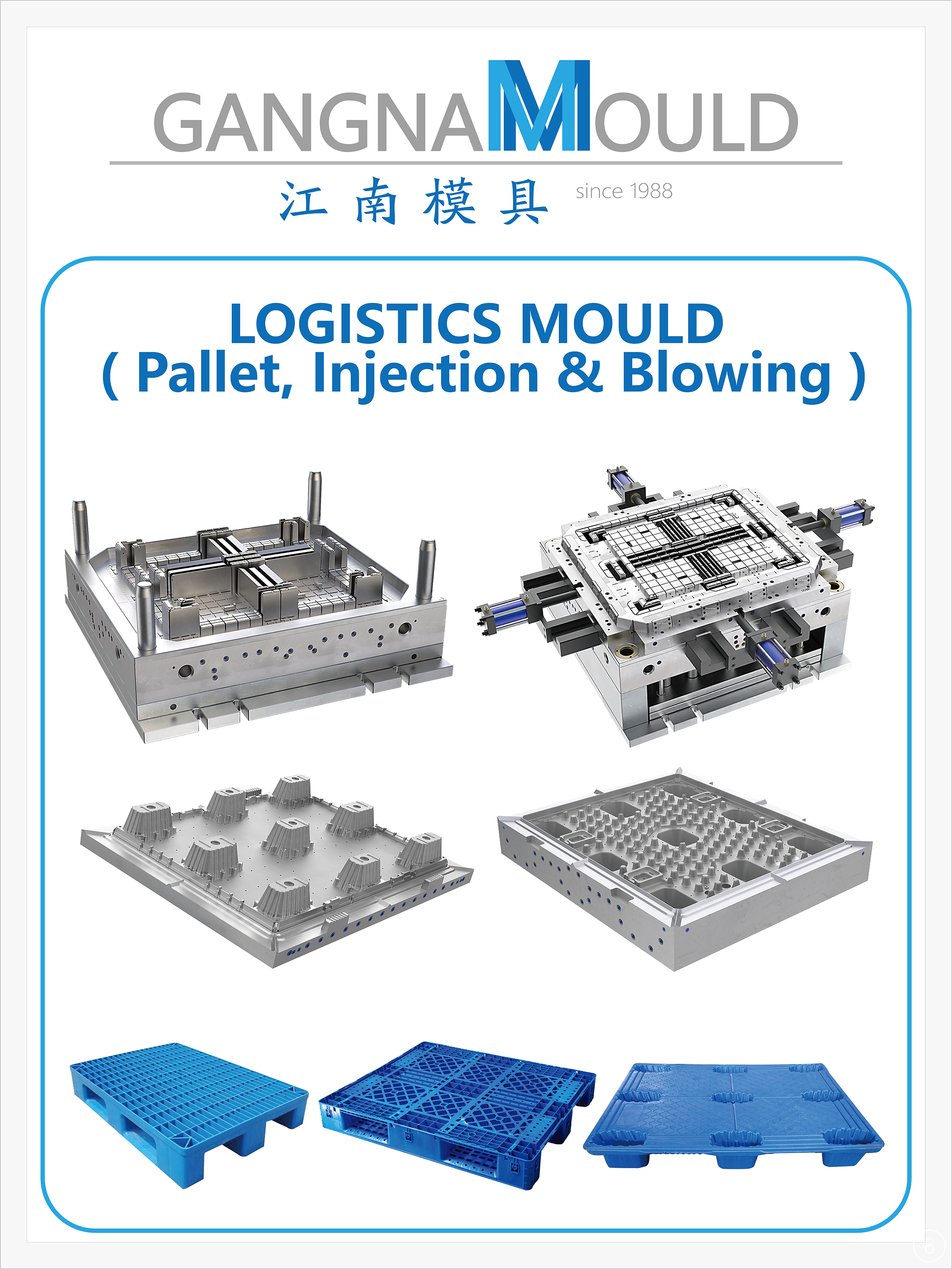
Selecting a commodity mould is fundamentally a scenario-matching exercise. The right tool for a high-volume thin-wall packaging line is not the right tool for a low-volume garden planter range. This guide explains how different commodity mould categories relate to production conditions, and what evidence buyers should check when moving from requirement to order.
The Core Question: Not "Which Mould?" but "For What Production Scenario?"
Commodity moulds cover a broad product family—chairs, tables, stools, sofas, storage cabinets, storage boxes, baskets, trays, boxes, turnover boxes, kitchen utensils, bathroom accessories, basins, buckets, trash bins, garden planters, pallets, home appliance components, crates and thin-wall injection parts. Each of these categories places different demands on cavity design, cooling layout, gating, venting, surface treatment and dimensional tolerance control.
For procurement teams and engineers, the purchasing decision is therefore not resolved by choosing "a commodity mould supplier" in general. It is resolved by checking whether a manufacturer's engineering approach, machine capacity, and quality control system fit the specific product type and production environment. The mould itself is the endpoint of that fit, not the starting point.
Why Scenario Fit Determines Total Cost of Ownership
A commodity mould's value is not measured by its initial price alone. On an injection moulding line, the mould is the core determinant of cycle time, scrap rate, dimensional consistency, energy consumption per part, and the frequency of maintenance stops. These variables accumulate across hundreds of thousands of production cycles. In this sense, design decisions such as uniform cooling, optimized gating and controlled venting directly affect long-run production economics.
For example, in thin-wall injection moulds, the priority is fast filling, minimal wall thickness variation and short cooling time. In furniture moulds such as chair and sofa moulds, the emphasis shifts to surface quality, structural strength, and warpage control across larger geometric surfaces. In logistics products such as pallets and crates, the key criteria are impact resistance, flatness, and consistency over long production runs. The same supplier may be competent in all these areas, but buyers should verify the specific engineering response to each category rather than assume a single mould design approach fits all.
Category-by-Category Selection Considerations
Each commodity mould category has distinct engineering characteristics that buyers should map to their own production requirements before requesting quotations.
Furniture Moulds: Chairs, Tables, Stools, Sofas
These moulds are largely used in the plastic furniture segment, where PP injection moulding is common. The dominant engineering concerns include uniform wall thickness, rib design for structural stiffness, surface texture replication, and ejector system design to avoid visible marks on aesthetic surfaces. In the case of sofa sets and vine-style chair sets, product size increases mould complexity, requiring larger clamping force on the injection machine and careful design of cooling channels across long flow lengths.
Buyers planning to launch residential furniture ranges should place emphasis on surface finish requirements and batch-to-batch colour/tolerance consistency, as these directly influence whether finished products are accepted by retail and distribution channels.
Storage and Household Products: Cabinets, Boxes, Baskets, Trays, Buckets, Basins
For these daily necessities—storage cabinets, storage boxes, baskets, trays, buckets, basins—production cycles are generally shorter and volumes higher. Multi-cavity moulds become economically justified when annual demand is high. The gating system and part ejection design determine whether deformation occurs after demoulding, especially for large box-like parts that are prone to sink marks and warpage when wall thickness varies too abruptly.
For suppliers that already run household plastic products, moulds in this group usually need to be compatible with existing injection machines. A competent mould manufacturer should be able to clarify clamping force requirements, projected area calculations, and cooling capacity expectations during the requirement communication phase.
Logistics and Industrial: Pallets, Crates, Turnover Boxes
Pallets, crates and turnover boxes are used in logistics, warehousing and industrial circulation. These products demand impact resistance and dimensional durability across different climates and loading conditions. From a mould perspective, the main priorities are strong cooling system design, robust ejection to prevent part sticking, wear-resistant mold steel and stable tolerance control through long production runs.
Because pallet and crate moulds are physically large, the mould manufacturer must be able to handle big-size processing. The production equipment and CNC precision machining capability of the mould supplier is therefore an important screening criterion for this category.
Thin-Wall Injection Moulds
Thin-wall injection moulding is a distinct engineering field. It delivers complex, lightweight designs with shorter cycle times, which is why the global thin-wall mould market was valued at USD 41.6B in 2024. In this segment, the mould's cooling system and gate design dominate performance. Cavity pressure control and venting design become critical to avoid burn marks and incomplete filling at high injection speeds.
For procurers, a mould supplier entering thin-wall production must have experience with the specific flow behaviour of high-melt-flow materials, not only general mould-building capability. Requests for past trial records or comparable projects are appropriate at this evaluation stage.
Home Appliance Component Moulds
Home appliance moulds cover components such as air cooler series housings and other visible exterior parts. These components combine aesthetic surface demands with dimensional precision and structural integration. Mould design for appliances frequently involves inserts and multi-component integration—features that increase up-front engineering complexity but reduce downstream assembly cost. Buyers considering this category should specifically assess the mould maker's ability to handle multiple parting lines, side actions and precise finish matching.
What an OEM/ODM Custom Mould Project Should Include
Most commodity mould procurement is not off-the-shelf purchasing; it is OEM/ODM custom development. In a typical project, the mould manufacturer works from samples, drawings or merely a product concept, then moves through design, manufacturing, trial & inspection, delivery and training.
The capability profile that supports this workflow includes:
- Customizable cavity count and size — adapting mould output to expected order volume, not to a fixed standard.
- Gating, cooling and venting design — tailored to the specific plastic material and part geometry to reduce cycle time and warpage.
- Surface texture and polish options — determining the final aesthetic and functional surface of moulded products.
- Inserts and multi-component integration — enabling more complex product functions in a single moulding cycle.
- Material and heat treatment support — aligning mould steel selection with expected production volumes and processing materials.
- Process support — requirement confirmation, design review, manufacturing, trial and inspection, delivery, installation and operation training.
In the case of Gangnam Mould, this project scope is supported by a factory of 3,000 m², 40 employees, and an engineering team of 15, with an annual output of around 800 mould sets. The monthly production capacity is about 80 sets, with a lead time normally in the 30–45 day range, depending on mould complexity. The company operates CNC-controlled milling equipment and a 3D coordinate mapping inspector, and follows ISO 9001:2015 quality management practices.
Verifying Capability Through Quality Control Evidence
For Research and Evaluation stage buyers, the difference between a reliable mould partner and an unreliable one is best observed in quality control practice. In commodity mould production, a credible control system normally includes non-destructive testing (NDT), CMM measurement, and full-size trial testing with inspection reports. These methods confirm that the mould actually meets the dimensional and tolerance requirements before it leaves the factory.
One industry context that clarifies this expectation is ISO 20457:2018, the primary international standard for manufacturing tolerances and acceptance conditions of plastic moulded parts. While not every mould order requires certification to this standard, its existence signals that dimensional acceptance criteria can and should be defined objectively in the contract. Buyers can strengthen a purchase agreement by agreeing in advance which inspection methods will be used—CMM verification for critical dimensions, NDT for sub-surface integrity, and trial moulding for full-size functionality.
Choosing Between Multi-Cavity, Single-Cavity and Customized Configurations
The production scenario defines the appropriate cavity configuration, not the other way around. For high-volume daily goods such as buckets, baskets and thin-wall packaging, multi-cavity moulds spread tooling cost over more parts and reduce the per-part cycle cost. For large products—sofas, pallets, large storage boxes—single-cavity or low-cavity moulds are common because product size already consumes significant clamping force and cooling capacity.
Custom cavity design is the best option when future demand is uncertain or when the buyer is testing new markets. Starting with a lower cavity count reduces up-front mould investment and lets the buyer validate market acceptance before committing to higher-output tooling. For companies that have already secured distribution channels, production requirements should be converted directly into projected monthly volumes, then into a cavity count that matches the available injection machine pool.
| Production Scenario | Typical Mould Category | Main Technical Priorities | Typical Verification Points |
|---|---|---|---|
| High-volume daily necessities | Buckets, basins, baskets, trays, storage boxes | Multi-cavity design, cooling efficiency, sink-mark control | Cycle time, cavity count confirmation, trial runs |
| Retail furniture lines | Chairs, tables, stools, sofa sets | Surface quality, warpage control, structural ribs, ejector design | Surface finish sample approval, dimensional CMM report |
| Logistics & warehousing | Pallets, crates, turnover boxes | Impact resistance, flatness, robust ejection, long-run consistency | Mould steel quality, trial cycles, dimensional stability checks |
| Thin-wall packaging | Thin-wall injection moulds | Fast filling, venting, short cooling time, low wall-thickness variation | High-speed trial runs, part weight consistency |
| Home appliance components | Air cooler housings and appliance parts | Multi-component integration, inserts, precision finish | Assembly fit test, surface match acceptance |
Market Growth and Demand Context
The broader market context helps explain why commodity moulds remain an active procurement category across regions. The global plastic mould market was estimated at approximately USD 29.5B in 2021 and projected to reach about USD 36.78B by 2025. For the plastic furniture segment, which directly consumes chair, table, stool and sofa moulds, the market was valued at USD 48.7B in 2023, with the residential segment accounting for 53.1% of revenue. On the export side, China's exports of plastic and rubber moulds reached USD 5.35B in 2023, up from USD 2.97B in 2017.
For suppliers in this category, Huangyan—where Gangnam Mould is based—is formally recognized as the "Capital of Molds" in China, with 614 large-scale industrial enterprises in mould and plastic production. This cluster status carries practical meaning: buyers sourcing from this region have access to linked supply chains, equipment support, material suppliers and experienced engineering labour.
Where Commodity Mould Suppliers Differ Most
From a buyer's perspective, the most significant differentiation among commodity mould suppliers sits in four areas:
- Engineering depth — whether the supplier can translate part drawing into a mould design that considers plastic flow, cooling and deformation, not merely cut steel according to the shape.
- Inspection completeness — whether CMM, NDT and full-size trial testing are standard practice, and whether inspection reports are provided to customers.
- After-sales orientation — whether mould delivery includes installation and operation training, and whether trial-phase issues are documented and resolved contractually.
- Scale and stability — whether the factory has controlled capacity, managing consistency over time. A supplier with limited engineering staff may struggle to sustain multiple complex projects in parallel.
One reasonable limitation of smaller mould factories is breadth of specialization. A manufacturer with 40 employees and 15 engineers, such as Gangnam Mould, is well-positioned for commodity mould categories and custom OEM/ODM workflows, but may not be the optimal choice for a buyer whose requirement is deep into an unrelated, highly specialised mould field requiring entirely different technology platforms. Buyers should match scope to supplier capability rather than assume one workshop covers all mould engineering domains.
Practical Sourcing Workflow for Research and Evaluation
Buyers at the Research and Evaluation stage can use the following framework to compare suppliers and convert findings into a shortlist:
- Step 1: Define the production scenario — product category, expected volume, target machine size, and long-run output plan.
- Step 2: Translate the scenario into mould requirements — cavity count, cooling requirements, gate design preference, surface finish and material compatibility.
- Step 3: Compare manufacturing evidence — factory size, CNC equipment, engineering team size, inspection methods and quality reports.
- Step 4: Validate the project workflow — requirement → design → manufacturing → trial & inspection → delivery → training.
- Step 5: Review the commercial terms — MOQ, lead time, payment and after-sales terms should be documented in the contract, with trial acceptance criteria agreed in advance.
Gangnam Mould operates with a MOQ of one unit, which is consistent with a custom engineering business rather than a mass-production mould trading house. Export markets include Southeast Asia, Middle East, Africa, Central Asia, South America, Mexico, Italy and India, and about 70% of output is exported. For buyers in those regions, communication constraints are less likely to be an issue because the company already operates across these markets.
Cost Structure and Evaluation Trade-offs
The lowest mould price does not always deliver the lowest part cost. A lower-priced mould may have weaker cooling design, which extends cycle time; less precise grinding, which accelerates wear; or incomplete venting, which raises scrap rates. Against the total cost of a production campaign, these factors affect every part produced over the mould's life.
At the same time, buyers should not assume that a more expensive mould is always better. The correct purchase decision depends on the product's production lifespan and order stability. If a product is intended for a short-lived retail trend, a simpler mould with moderate steel grade and reduced cavity count may be the financially rational choice. If the product is a long-running logistics or household standard with predictable volume, investing in higher-grade steel, a more advanced cooling system and more rigorous trial testing is justified.
Industry Trends That Affect Commodity Mould Design
Three ongoing trends shape the commodity mould category. First, thin-wall moulding continues to expand because injection moulding can produce complex, lightweight geometries in shorter cycle times. This gives thin-wall moulds a growing role in packaging and logistics products, including crates and turnover boxes where weight reduction reduces shipping cost. Second, the increasing adoption of engineering-grade and recycled polymers creates material-related challenges for mould design—recycled and often more viscous materials required adjusted gating, venting and cooling. Third, plastic furniture keeps growing because moulded products can deliver form without complex assembly, which matches the residential segment's emphasis on price and aesthetic consistency.
These trends collectively mean that mould suppliers who are strong in cooling system design, material adaptation, and dimensional control are better positioned than suppliers who treat mould making purely as metal-cutting work.
How Gangnam Mould Approaches Commodity Mould Production
Gangnam Mould Co., Ltd, originally established in 1988 and located in the Huangyan district of Taizhou, Zhejiang, is a specialist in this category. The company produces commodity moulds across chair, table, stool, sofa, storage, kitchen, bathroom, basket, tray, box, turnover box, basin, bucket, trash bin, garden planter, pallet, home appliance and thin-wall injection mould types.
The production process at Gangnam Mould is structured around OEM/ODM custom projects. The standard workflow runs from requirement communication through design, manufacturing, trial & inspection, delivery and training. For trial stages, dimensional verification via a 3D coordinate mapping inspector and CMM measurement practice are applied, and inspection reports accompany the mould. NDT methods further support internal-quality confirmation. Installation and operation training are part of the delivery stage, and long-term cooperation has been sustained with purchasing organisations across more than ten countries over roughly a decade, with a history of delivering around 800 units of moulds total.
Limitations Buyers Should Keep in Mind
There are also boundaries to what current capability data confirms. While the company reports processing PP injection moulding, the exact envelope of engineering-grade material compatibility should be confirmed per order. Custom requirements including inserts, multi-component design, surface structure and special heat-treatment requests can be accommodated, but the final parameters need to be confirmed during requirement communication. Similarly, lead times are given as 30–45 days as a planning reference, not a fixed constraint—complex, large and thin-wall moulds may push the timeline upward.
After-sales service, including installation and operation training, is part of the offering; however, specific after-sales terms are set out in the contract rather than uniformly defined for all orders. Buyers building an evaluation scorecard should treat these boundaries as normal conditions, not as red flags, and should document acceptance criteria in writing.
Future Outlook
Commodity mould procurement is moving toward a more engineering-led process. As export volumes rise and manufacturing standards become more internationalized, buyers increasingly request documented inspection, standardized tolerances, and verifiable process control. The category itself is not declining; it is shifting from simple equipment purchase to custom engineering procurement. Suppliers that combine mould manufacturing with OEM/ODM engineering services, dedicated teams, and documented quality control practices are likely to be the natural partners for multi-cycle production programs.
Frequently Asked Questions
The moulds are suitable for OEM/ODM custom mould projects, large-volume production, home appliance component mould development, and logistics packaging mould development. These scenarios are common across multiple countries including India, Italy, Jordan, Nigeria, Algeria, Zambia, South Africa, Tanzania, Turkey, Tunisia, Singapore, Saudi Arabia and Russia.
The moulds run on injection or blow moulding machines for mass production. The operation mode depends on the customer's production lines and mould design—for example, multi-cavity versus single-cavity configurations. Recommended supporting equipment includes injection or blow moulding machines, cooling systems, and automation for loading and unloading, with special design considerations for large and thin-wall parts.
Cavity count and size, surface texture or polish, gating and cooling system design, inserts, multi-component integration, and material and heat-treatment requirements can be customized. Specific technical parameters should be confirmed during requirement communication so that the mould design matches the product type and production target.
Quality control practice in this product range includes non-destructive testing (NDT), CMM measurement, and full-size trial testing with inspection reports. These methods verify dimensional accuracy and mould functionality before delivery.
Lead time depends on mould complexity. The site outlines the process as requirement → design → manufacturing → trial & inspection → delivery & training, with an exact timeline to be confirmed per order. As a planning reference, a typical project may take 30–45 days.
Download the company brochure (PDF) for additional manufacturing and product-range reference.