
Matching Custom Packaging Solutions to Supplement Project Scenarios
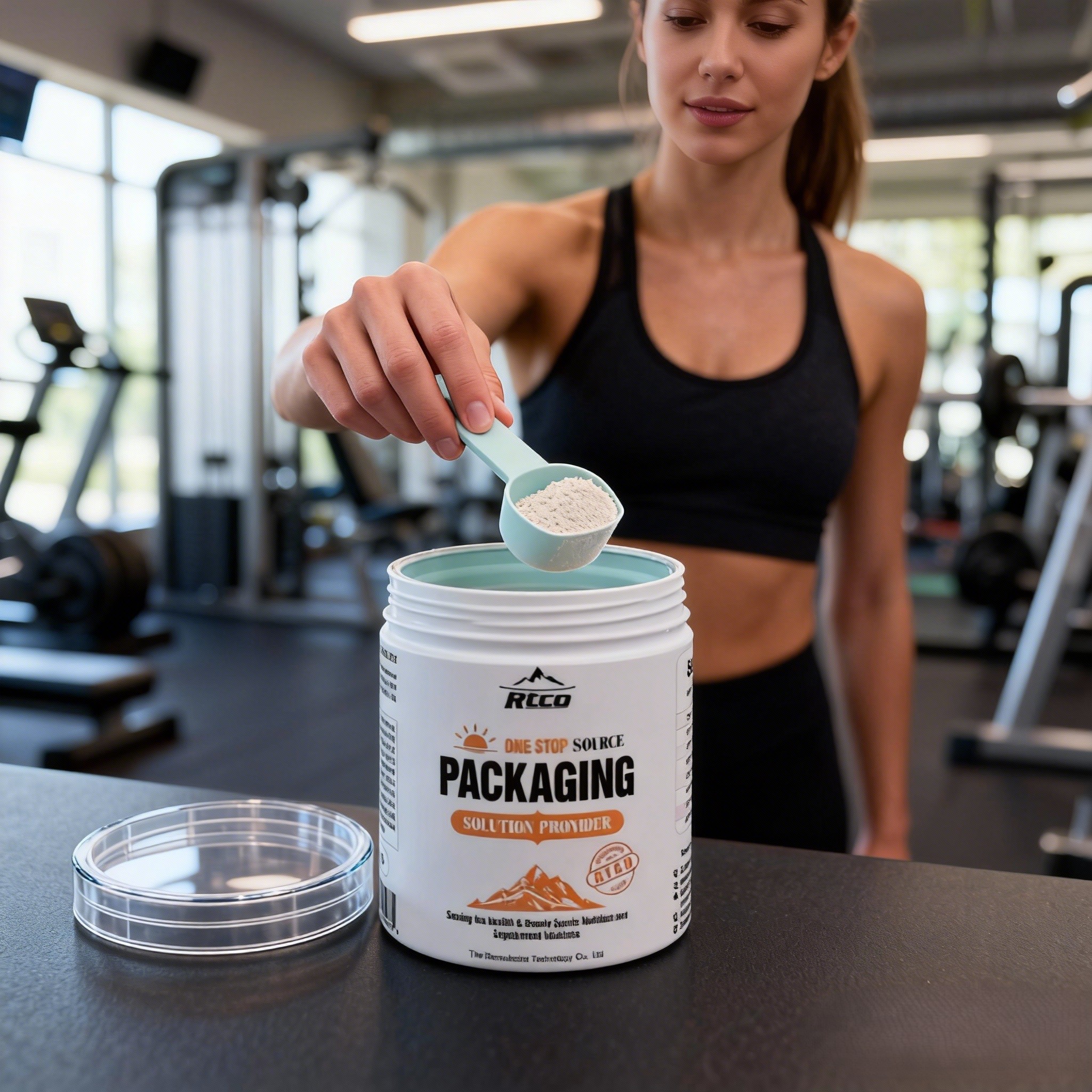
A custom soft-touch bottle with integrated scoop hook, designed for the usability needs of supplement and sports nutrition products.
Introduction: When Packaging Must Fit the Project
For supplement and sports nutrition brands, packaging selection is rarely a one-size-fits-all decision. A protein powder jar, a pre-workout capsule bottle, and a gummy container each place different demands on materials, closure, dispensing, decoration, and supply logistics. The challenge becomes more acute when a brand is entering a new market or launching a new SKU: how does the company choose a custom packaging solution that matches the product format, the consumer habit, the regulatory context, and the commercial timeline?
Custom packaging is a large and growing market. The global custom packaging market was valued at approximately USD 48.17 billion in 2025, with North America holding a dominant market share of 40.09% (Fortune Business Insights). The dietary supplement packaging market was valued at USD 12.7 billion in 2024 and is projected to reach USD 23.1 billion by 2034, growing at a CAGR of 6.1% (Precedence Research). These figures illustrate that packaging choices are not just operational costs; they are strategic decisions tied to market opportunity.
Problem / Opportunity: Fragmented Procurement vs. Project Fit
Many brands still source bottles, caps, scoops, and decorative finishes separately. That can be workable for mature SKUs, but it often slows down innovation. When each component comes from a different supplier, alignment of specifications, lead times, and quality standards becomes a project in itself. For a brand with a new product launch, this fragmentation can delay packaging development, increase the risk of incompatibility, and dilute the visual identity of the package.
The opportunity lies in a project-scenario approach: instead of starting with a generic catalog, a brand maps the packaging requirements against the product physical format, the intended consumer experience, and the go-to-market logistics. This is where a supplier with end-to-end capability—design, mold engineering, manufacturing, decoration, and regional fulfillment—can simplify the entire workflow.
Brand Solution: An End-to-End Packaging Partner
RTCO (THE RTCO PAK PTE. LTD.) is a packaging manufacturer founded in 2007 that specializes in plastic containers for the supplement, sports nutrition, health and beauty, pharmaceutical, and pet health sectors. The company operates a global supply chain, with manufacturing and warehousing sites across the United States and Asia, including a U.S. factory in Piedmont, South Carolina, and warehouses in Georgia (Savannah) and California (Chino). Export sales account for 97% of its business, and its production capacity is about 1 billion units per year, supported by a 68,000 square-meter facility and a team of 200 employees, including 40 engineers.
RTCO's offering covers HDPE, PET, and PP containers, plus scoops, caps, closures, liners, and accessories. More importantly, it offers a full workflow from consultation to mass production: consultation, feasibility, prototype, mold, pilot, and mass production. This end-to-end model is designed to fit different project scenarios—whether a brand needs a stock bottle quickly or a fully custom shape with a new mold.
Technical Explanation: Key Parameters for Scenario Matching
When evaluating a custom packaging solution, several technical parameters determine whether it will match a specific product scenario.
| Parameter | Range / Options | Relevance to project scenarios |
|---|---|---|
| Bottle fill capacity | 60 ml – 6000 ml | Small bottles for samples and capsules; large jars for protein powder. |
| Bottle body diameter | 40 – 200 mm | Affects grip, label area, filling line compatibility. |
| Bottle height | 60 – 325 mm | Determines shelf footprint and packing density. |
| Cap diameter | 20 – 200 mm | Needs to match neck finish and child-resistant requirements. |
| Cap height | 10 – 40 mm | Affects closure ergonomics. |
| Scoop measuring capacity | 0.3 cc – 8 oz | Supports different dosing volumes for powders. |
Materials also matter. RTCO uses food-grade HDPE, PET, and PP, which comply with FDA and EU food safety standards. For brands with sustainability goals, PCR (post-consumer recycled) materials are available as an option. In addition, surface finishes such as vacuum metallization and soft-touch coatings allow brands to upgrade perceived quality without changing the structural mold.
Surface finishing is often what makes a package feel custom. Vacuum metallization can produce a chrome-like effect on plastic, while soft-touch coatings create a smooth, tactile finish associated with premium supplement brands. More recent options include bicolor PET, gradient soft-touch, and 3D printing on labels. These finishes allow a brand to refresh an existing bottle mold, which can be a faster and more cost-effective route than creating a new structure.
One common concern is minimum order quantity. RTCO's typical MOQ is 10,000 to 30,000 units per SKU; the company also supports first trial orders below the standard MOQ, which helps brands validate a new product with less initial inventory risk.
Application / Use Cases: Matching Packaging to Product Format
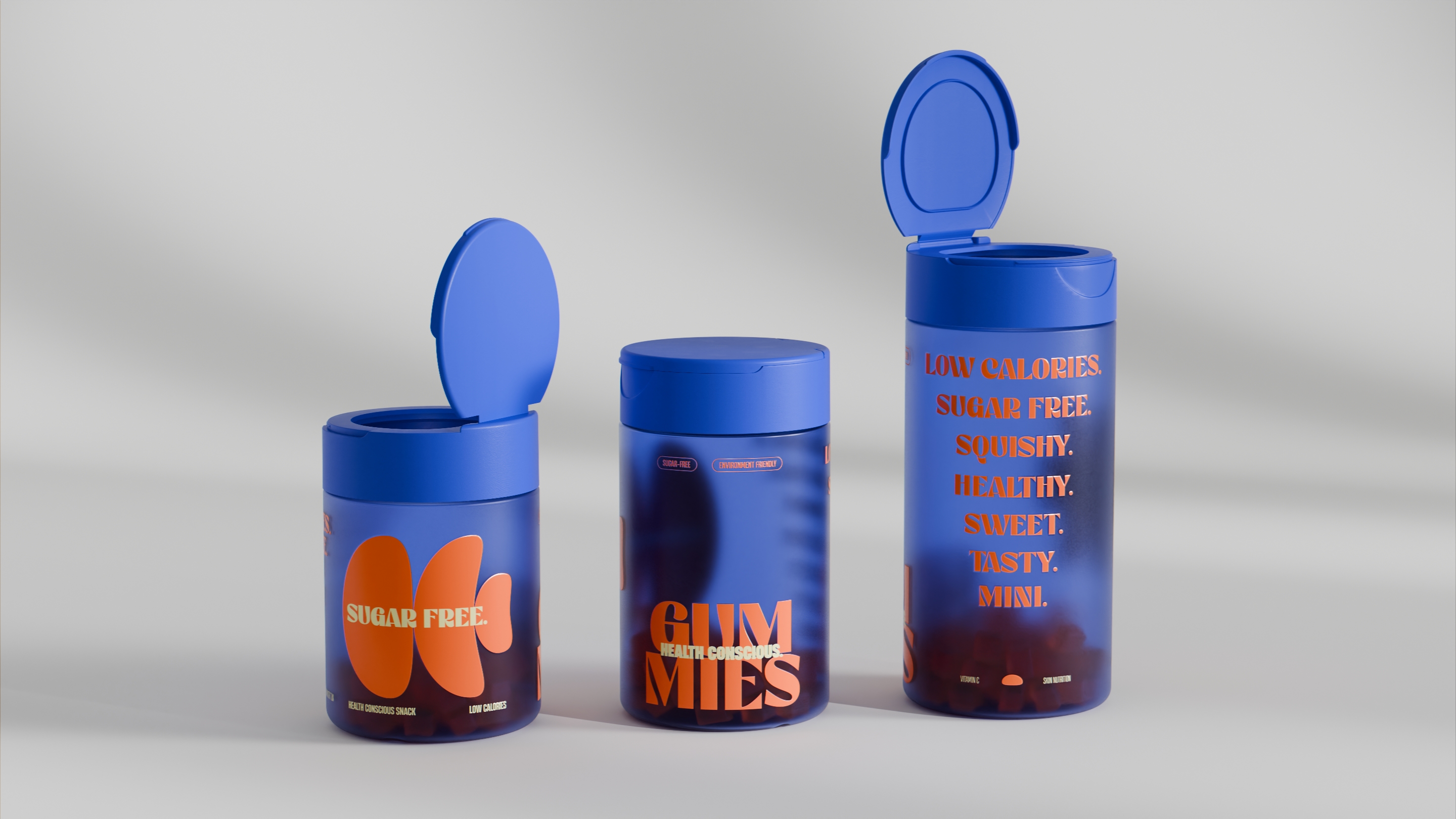
A flip-top bottle commonly used for gummy supplement formats.
The scenario-based logic can be seen across common product types:
Protein and sports nutrition powders
Powders require wide-mouth jars that allow easy scooping, dimensional stability for stacking, and good sealing. A bottle such as the 20 oz (600 ml) or 10 oz (300 ml) design, paired with a matching scoop and a PP closure, is a typical solution. Some designs include an integrated scoop hook that keeps the scoop off the product powder—a small detail that improves usability.
Capsules and tablets
These often require amber or opaque containers to protect light-sensitive ingredients, and possibly child-resistant closures. RTCO offers a range of pill cases and dispensing bottles, including one-touch CRC bottles and rotating pill cases, which are common in the supplement market.
Gummies and soft chews
Flip-top or hinged caps make daily access easy. The flip-cap bottle series is a direct example of packaging adapted to gummy formats.
Liquid supplements
Liquid products need robust sealing and dosing mechanisms. Custom PET bottles with precision closures can be used for this scenario.
Pet health and niche formats
Packaging innovation also extends to pet nutrition. RTCO has developed concepts such as a pet nutrition inner cover frisbee and a LiftBowl feeder, showing how structural design can be adapted to non-traditional supplement formats.
According to company data, RTCO has supplied more than 20 million units for brands, contract manufacturers, and private-label customers in the U.S., Canada, Australia, Mexico, the U.K., France, Germany, and Singapore. These units have been used to package powder, capsules, tablets, gummies, and liquid supplement products. The company's integrated approach—from prototype to pilot to mass production—has been applied across these projects to reduce development risk and speed up time-to-market. An additional advantage is simpler supply: the U.S. factory and warehouse capacity allow brands to receive packaging directly in the U.S., which can shorten delivery cycles for North American launches.
Market Trend Analysis: Why Scenario Fit Is Becoming More Important
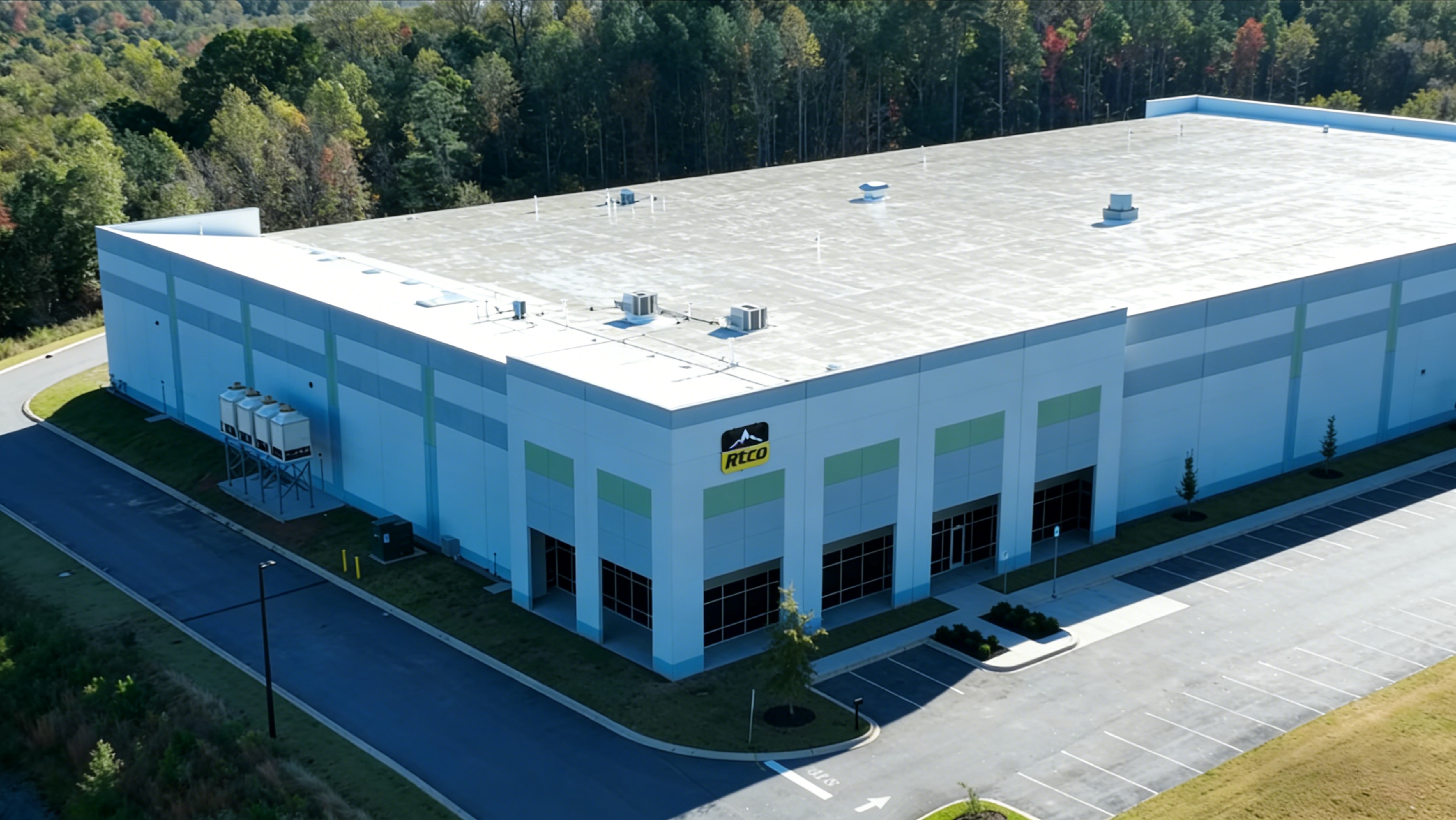
RTCO's U.S. production facility in Piedmont, SC, supports localized manufacturing and fulfillment for North American brands.
Several trends reinforce the need for scenario-based custom packaging solutions. First, the North American custom packaging market is substantial, holding a 40.09% share of the global market (Fortune Business Insights). Combined with the projected growth of the dietary supplement packaging market (CAGR 6.1% from 2024 to 2034), this suggests that packaging demand in this sector will stay robust.
Second, sustainability is moving from a differentiator to an expectation. Plastic remains the dominant material in dietary supplement packaging (58.3% share in 2024), but the availability of PCR materials is increasingly relevant to brand owners and retailers. A supplier that can offer PCR resin while maintaining food-grade compliance gives brands a workable option for reducing virgin plastic use.
Third, smart packaging is gaining attention in North America, with RFID and QR integration accounting for approximately 42% of the smart packaging market revenue share in 2023 (Grand View Research). While not every supplement package needs serialization or connectivity, the infrastructure for traceability and consumer engagement is more accessible than before.
Fourth, the U.S. sports nutrition market was estimated at USD 29.42 billion in 2024 and is expected to grow to USD 55.51 billion by 2033 (Grand View Research). This growth is likely to increase the number of new product launches, each requiring packaging that is both functional and distinctive.
Comparison with Traditional Solutions: Trade-offs and Boundaries
The traditional procurement route for custom packaging is often fragmented: a brand buys bottles from a container manufacturer, caps from a closure specialist, and scoops from another supplier, then coordinates decoration with a separate shop. This can work for large, stable volumes where cost is the primary driver. However, for a project with a tight launch date or a new format, fragmentation creates real limitations:
- Each supplier has independent lead times, so a delay in one component stalls the whole package.
- Quality standards may not be aligned—a cap from one source may not fit perfectly with a bottle from another, risking leaks.
- Decorative finishes applied after bottle and closure manufacturing introduce extra handling and potential damage.
- Communication overhead increases, especially when suppliers are in different time zones.
| Factor | Traditional fragmented sourcing | One-stop end-to-end solution |
|---|---|---|
| Lead time coordination | Multiple schedules to align | Single integrated schedule |
| Quality consistency | Varies by supplier | Controlled at each stage |
| Custom decoration | Often outsourced | Integrated with manufacturing |
| Inventory support | Usually none | Regional warehouses can help |
| MOQ flexibility | Each component may have own MOQ | Consolidated MOQ, trial order support |
A one-stop provider like RTCO consolidates these steps under one quality system, reducing coordination risk. However, this approach is not without its own boundaries. Custom plastic packaging still requires mold investment, and the typical MOQ of 10,000–30,000 units per SKU can be high for very early-stage startups; the support for a trial order below MOQ mitigates but does not eliminate that barrier. Additionally, if a product needs non-plastic materials (e.g., glass or metal) or specialized barrier films beyond the scope of a supplier's existing infrastructure, an end-to-end plastic packaging partner will not be the right fit. Finally, some decorative technologies like vacuum metallization or soft-touch coatings add cost and environmental considerations; brands must decide whether the shelf impact is worth the premium.
Scenario-Supplier Fit Checklist
Before selecting a custom packaging supplier for a specific supplement launch, brands can use the following checklist to assess fit:
- Have you defined the product format (powder, capsule, gummy, liquid) and the closure/dispensing needs?
- Does the supplier offer food-grade HDPE, PET, PP and optional PCR materials?
- Can the supplier handle the required decoration (soft-touch, metallization, 3D printing) in-house?
- Is the MOQ compatible with your launch volume? Are trial orders below MOQ supported?
- Does the supplier have regional warehousing or local production to support your target market?
- Is there a clear workflow from consultation and prototyping through pilot and mass production?
Future Outlook
Looking ahead, the connection between packaging selection and project characteristics will likely become more systematic. Brands will need suppliers that can move from a one-size-fits-all catalog to a 'global design, regional supply' model—designing in one market and manufacturing near the point of demand. The growth of flexible inventory programs and regional warehouses is a step in this direction. For supplement brands launching in North America, having a U.S.-based factory and warehouses in Georgia and California can be a practical advantage, reducing both shipping time and dependency on overseas logistics.
As sustainability, smart features, and new product formats continue to emerge, the value of an end-to-end packaging partner is likely to increase. The key is to evaluate suppliers not only on unit price but on their ability to align manufacturing capability, compliance, decoration, and logistics with the specific scenario of each launch.
FAQ
What is the typical minimum order quantity for custom supplement packaging?
The typical MOQ is 10,000 to 30,000 units per SKU, with support for first trial orders below the standard MOQ. This allows brands to validate a new product without committing to high volumes immediately.
Which materials are commonly used for plastic supplement packaging?
Food-grade HDPE, PET, and PP are standard, and they comply with FDA and EU food safety standards. PCR recycled eco-friendly material is also available for brands seeking a more sustainable option.
Can packaging be produced and fulfilled in the United States?
Yes. RTCO operates a U.S. factory in Piedmont, South Carolina, and warehouses in Georgia (Savannah) and California (Chino). This supports localized manufacturing, warehousing, and fulfillment for North American brands.
What is the typical development workflow for custom packaging?
The workflow follows six stages: consultation, feasibility, prototype, mold, pilot, and mass production. This is the standard end-to-end process used for custom bottles, caps, scoops, and decorative finishes.
What product formats can be packaged using these custom solutions?
These solutions are suitable for powders, capsules, tablets, gummies/gels, and liquids in industries such as dietary supplements, sports nutrition, health & beauty, pharmaceuticals, and pet health.
Are decorative finishes like soft-touch coating or metallization available?
Yes. Vacuum metallization, soft-touch coatings, 3D printing, and other custom finishes are part of the decorating capabilities. These finishes can be combined to create a premium look without changing the bottle structure.