
Matching FAW Trucks and Minidozers to Job Sites
Matching FAW Trucks and Minidozers to Job Sites
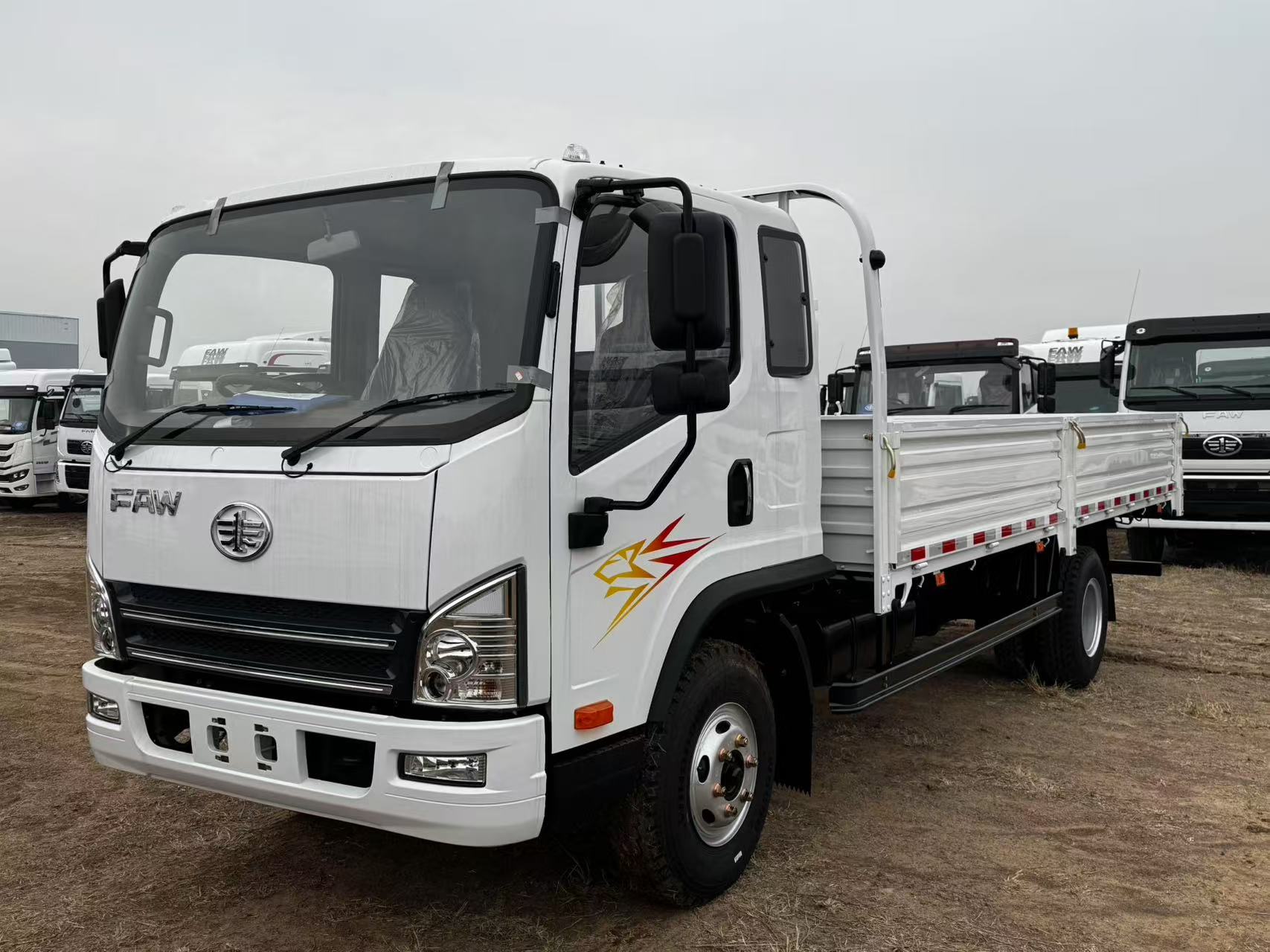
The FAW TIGER VH 4X2 CARGO TRUCK is a rigid configuration aimed at multi-stop distribution rather than long-haul corridor work.
Matching equipment to a job site is a scenario decision before it is a brand decision. A 6x4 tractor unit, a 4x2 cargo truck, a wheel loader and a remote-controlled minidozer can all leave the same export yard, yet each is economically justified only on the duty cycle it was specified for. This guide maps the truck and compact-machine configurations offered through CHARY — Qingdao Chary Machinery Co., Ltd — to five working environments: logistics freight, port transportation, coal and mineral hauling, urban construction supply, and municipal waste handling.
Qingdao Chary Machinery Co., Ltd is a vehicle export enterprise authorised by the Ministry of Commerce of China and based in Qingdao, where it has operated since 2015. Its catalogue combines road-going trucks with engineering machinery — wheel loader, motor grader, bulldozer, forklift and road roller — and a mini machinery line that includes minidozers, mini loaders, mini electric loaders and skid steer loaders. Export business accounts for 80% of total sales, the company states that annual export volume reached 40 million US dollars in 2025, and its main markets are Africa and South America.
Why site conditions decide the configuration
Compact construction equipment was estimated at USD 43.5 billion globally in 2024 and is projected to reach USD 69.1 billion by 2034, according to Global Market Insights. China alone concentrated 27.3% of total global exports of machines in 2024, according to OEC. Supply breadth is therefore not the constraint it once was; fit is.
A machine specified for the wrong duty cycle loses money in three ways: utilisation stays below the level the purchase case assumed, wear parts and consumables are consumed faster than planned, and the site carries capacity it never uses. Procurement teams that begin with the equipment list rather than the site profile usually correct the error later, when the asset is already financed and depreciating.
A workable sequence is to define the duty cycle first — load type and density, one-way distance, cycles per shift, ground and temperature conditions, operator availability — and only then to choose a configuration. The five archetypes below apply that sequence to the scenarios this article covers.
Five job-site archetypes and the equipment that fits
| Job-site archetype | Dominant duty | Named configuration | Governing constraint |
|---|---|---|---|
| Long-haul and regional freight | Trailer movement over corridor distances | FAW NEW J5P 4X2 TRACTOR TRUCK; JH6 6X4 Flat roof cab Tractor Truck; FAW JH6 High Roof 6X4 550HP Tractor Truck | Driver shift length, cab comfort, fuel consumption |
| Port and urban distribution | Short runs, frequent stops, general cargo | FAW TIGER VH 4X2 CARGO TRUCK | Manoeuvring room and turnaround time |
| Coal and mineral hauling | Continuous bulk cycles in dust and gradients | FAW truck range, where configuration breadth is stated as a differentiator | Chassis and body combination must be confirmed at quotation |
| Urban construction supply | Mixed delivery into restricted sites | FAW truck range plus CHARY engineering machinery (wheel loader, forklift, road roller) and mini machinery | Access width, delivery windows, yard handling |
| Urban waste and confined handling | Collection rounds, transfer stations, basements | CR468C minidozer | Duty-cycle volume and control-zone discipline |
The archetypes are not exclusive. A port operator may run tractor units for trailer legs and a minidozer for confined clean-up work in the same yard, and a distributor may move from a rigid cargo truck to a tractor-and-trailer combination as its delivery radius grows. The value of the mapping is that it forces the specification question to be asked against a site rather than against a catalogue page.
Logistics freight: tractor or rigid cargo
Corridor freight and regional distribution look similar on a quotation sheet and behave very differently in service. The supplier's truck line-up separates them at the configuration level: the FAW NEW J5P 4X2 TRACTOR TRUCK and the JH6 6X4 Flat roof cab Tractor Truck cover tractor duty, while the FAW JH6 High Roof 6X4 550HP Tractor Truck adds a high-roof cab for longer driver shifts.
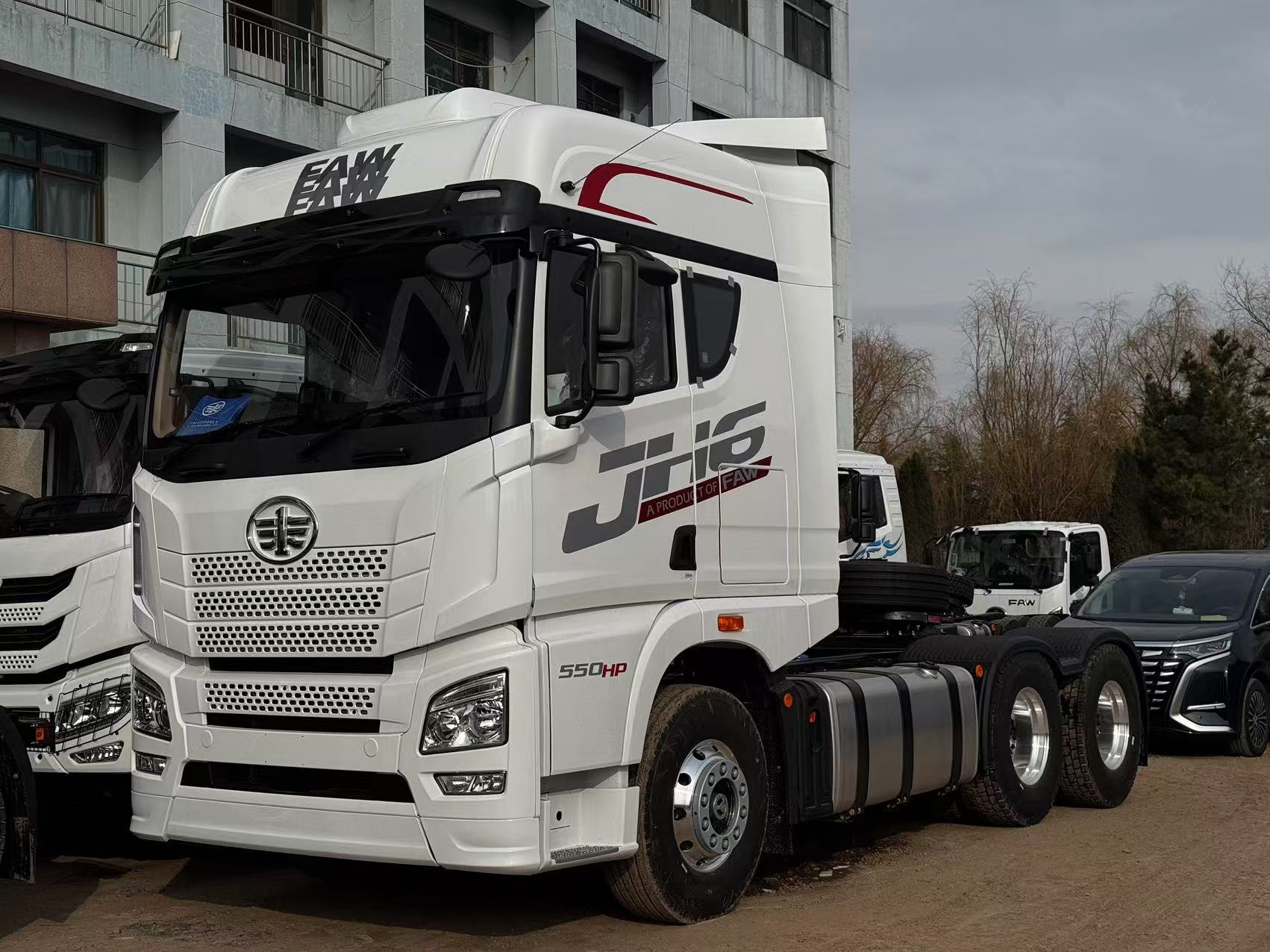
High-roof tractor configurations such as the FAW JH6 High Roof 6X4 550HP are specified where driver shift length, not payload alone, shapes the purchase case.
Cab specification is not a comfort detail in line-haul work; it is a driver-retention variable. In the supplier's own comparison against Beiben, Sinotruk and Shacman, the FAW truck range is described as offering a more spacious and comfortable cab, higher engine power, better fuel efficiency and repair that is more convenient and simple, with a stated cost difference of about 10% lower and spare parts described as available globally.
For distribution routes with several unloading points, a rigid configuration such as the FAW TIGER VH 4X2 CARGO TRUCK removes trailer-exchange time and keeps the vehicle independent of a tractor unit. The practical decision rule is that distance and trailer type decide the tractor-versus-rigid question, while the number and spacing of stops decide the body. Both questions should be answered before the engine rating is discussed, because a higher-powered tractor on a multi-drop city route rarely returns the extra cost.
Port and terminal transportation: short cycles, dense traffic
Port work compresses the duty cycle. Runs are short, traffic is dense, and turnaround time matters more than cruising efficiency. In this environment a 4x2 rigid truck is generally the more practical platform for general cargo movement inside a terminal, while 4x2 and 6x4 tractor units handle trailer legs between quays, yards and inland depots.
Ports also generate a second category of work that is often overlooked at procurement stage: yard handling and confined clean-up. CHARY supplies engineering machinery for these tasks — wheel loader, motor grader, bulldozer, forklift and road roller — alongside its mini machinery line of minidozers, mini loaders, mini electric loaders and skid steer loaders, which is where the configuration flexibility sits when access is restricted.
Coal and mineral hauling: duty cycle first, body second
Coal, mineral and aggregate hauling is continuous-cycle work in dust and, frequently, on gradients. The limiting factor at procurement stage is rarely the engine; it is whether the chassis and body combination exists in the configuration the site actually needs. The supplier's comparison set states that more truck configurations are available across the FAW truck range than in the Beiben, Sinotruk and Shacman sets it is measured against — configuration breadth is presented as the differentiator rather than one headline specification.
Three attributes in that same comparison are relevant to bulk haulage duty cycles: higher engine power, better fuel efficiency, and repair described as more convenient and simple with global after-sales support. The comparison also places urban construction and logistics and transport among the applications the range is best suited to.
These are first-party comparison claims made by the supplier against Beiben, Sinotruk and Shacman. Buyers should verify them at quotation stage against the specific chassis, body and payload combination required for their site, rather than treating them as an independent benchmark.
Urban construction supply and yard material handling
Urban construction sites combine mixed delivery into restricted access points with continuous yard handling once material arrives. A truck configuration that fits a corridor route may not fit a site with a single narrow gate, and a yard that has to be cleared between deliveries needs a machine that can work without blocking the gate itself. This is the point at which a fleet specification stops being a truck specification and becomes a mixed-equipment specification.
CHARY covers that second half of the requirement through its engineering machinery range and its mini machinery line. The relevant distinction for buyers is that compact machines in this class are not scaled-down versions of full-size equipment; they are specified against access, environment and operator exposure, which is a different set of criteria entirely.
Urban waste and confined handling: the CR468C minidozer
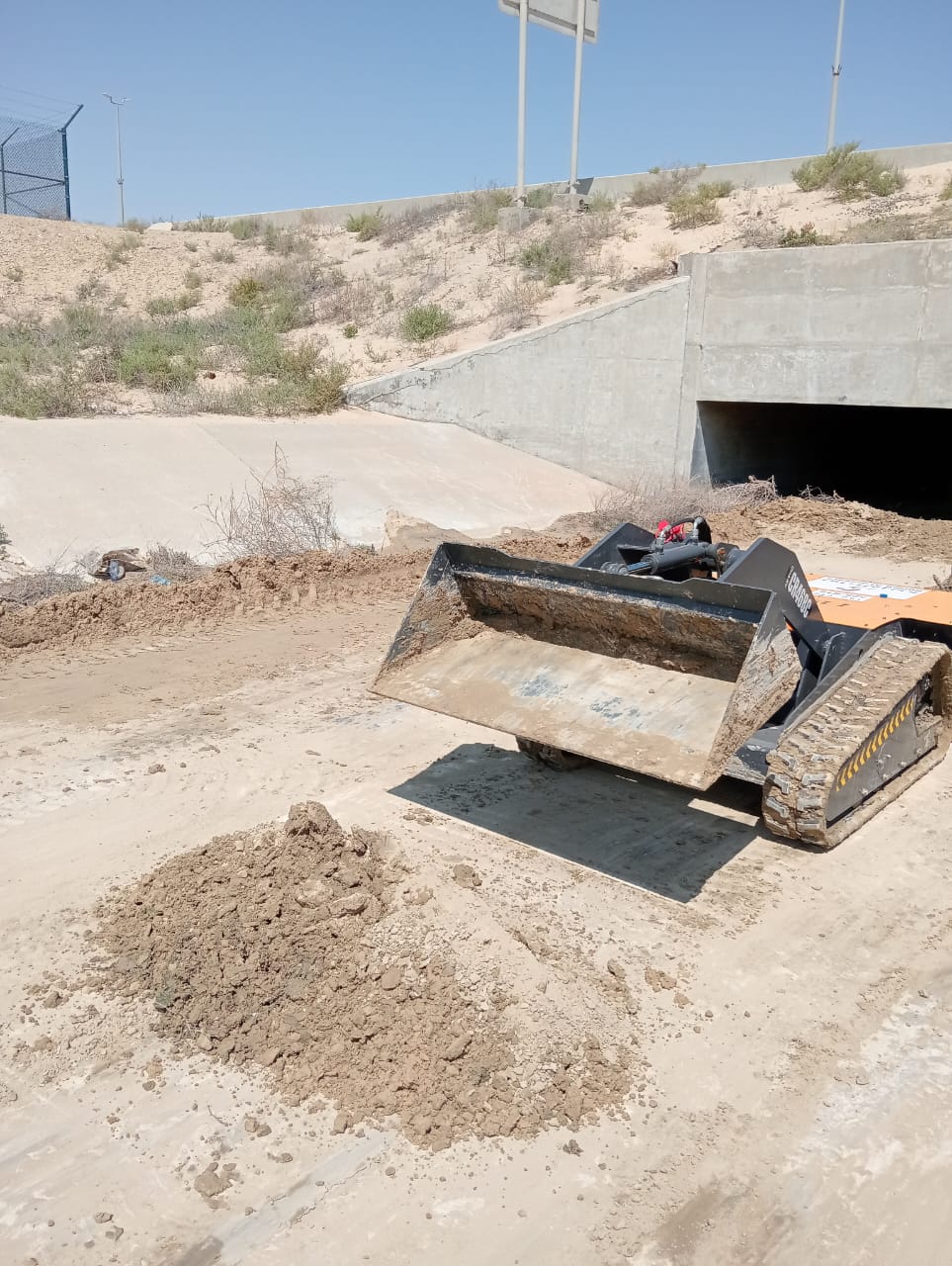
The CR468C minidozer is remote-controlled and electric, and is specified for narrow space, basement and high-temperature environments.
Urban waste handling is where the constraints invert. Transfer stations, basement loading bays and sorting halls combine restricted space, heat and dust, and they punish machines that need a driver sitting inside them. The CR468C minidozer is specified for exactly this profile: narrow space, basement, high-temperature environment and harsh environment, and it is remote-controlled, so no operator is required inside the machine.
Against a conventional wheel loader, the supplier's comparison data describes the minidozer as having a smaller size that allows it to work in a smaller space, running on electricity rather than fuel, and delivering operating costs stated as 90% lower. The same source describes cleaner energy use and suitability for harsh environments as the basis for the lower operating cost.
For a municipal or industrial waste operation, that translates into a narrower but more precise role: the minidozer covers the confined, hot or dirty positions where a full-size machine cannot enter, while conventional equipment continues to handle bulk transfer volumes. Reading it as a replacement for a wheel loader across the whole site would misprice the purchase case.
Technical explanation: what remote control and electric drive change
Removing the operator from the machine is a specification change, not a convenience feature. It expands the range of environments in which work is possible, because the machine is no longer limited by what a person can tolerate — which is why the minidozer is positioned for high-temperature and harsh environments rather than for standard yard duty.
Electric drive shifts site planning toward energy management. Charging position, working shift length and daily duty volume become part of the specification discussion instead of an afterthought, and the supplier addresses this directly by offering customization technical support for battery life.
The same customization support covers loading capacity and track life. In practice this means the machine can be tuned to the material it handles and the surface it runs on — two variables that decide consumable cost over a multi-year ownership period far more than the purchase price does.
Maintenance follows the same logic. The supplier states that after-sales service for the minidozer is convenient and efficient, and that engineers can perform online repairs; it also states that engineers will visit the site to assist with repairs where required.
Minidozer versus conventional wheel loader: stated differences and boundaries
| Dimension | Stated difference versus a conventional wheel loader |
|---|---|
| Size and access | Minidozer is smaller and can work in a smaller space |
| Operator | Remote-controlled; no human driver inside the machine |
| Energy | Electric rather than fuel |
| Operating cost | Stated as 90% lower |
| Best-fit environments | Narrow space, basement, high-temperature and harsh environments |
| Maintenance | Online engineer repair support; after-sales described as convenient and efficient |
The boundary matters as much as the advantage. The compact footprint that allows the minidozer into a basement is the same characteristic that limits throughput per pass, so high-volume stockpile work remains the territory of a conventional wheel loader. Remote operation also shifts the site requirement toward a defined control position with a clear view of the working face, which is a layout decision the buyer has to make before delivery rather than after.
Commercial terms and the execution checklist
| Item | Stated terms |
|---|---|
| Minimum order quantity | 1 unit |
| Delivery terms | FOB / CIF / CFR / EXW / DDP |
| Acceptance criteria | Pre-shipment inspection |
| Payment terms | TT / LC / DA / DP |
| Typical production lead time | 30–45 days |
| Monthly production capacity | 8,000 units for certain products; 50 units for others |
| Export profile | 80% of total sales exported; Africa and South America as main markets; markets across more than 50 countries and regions |
A minimum order quantity of one unit is significant for mixed-fleet procurement: a buyer can validate a truck configuration and a compact machine on the same order and test both against the site before committing to fleet volumes. Pairing a one-unit MOQ with pre-shipment inspection gives the buyer a documented acceptance point before the equipment leaves the origin port.
After-sales and long-term fleet support
For equipment that will operate in Africa, South America or other export markets, after-sales terms usually decide the total cost of ownership more than the invoice price does. The supplier states that after-sales service includes global technical support, provision of accessories and remote maintenance, and that this extends across the exported fleet rather than being limited to the domestic market.
Three support mechanisms are worth writing into a purchase specification:
- Wear-part policy. Quality assurance procedures include regular inspection of wear parts and free replacement of vulnerable parts, with an additional vulnerable part supplied and engineers able to support repair online.
- Remote and on-site engineering. Engineers can perform online repairs and, where necessary, visit the site to assist with repairs.
- Customization support after delivery. Technical support is available for loading capacity, track life and battery life — the three parameters that most often need adjustment once a machine is working in its real environment.
These are the terms that turn a first unit into a fleet relationship. A buyer evaluating a long-term supply position should treat them as procurement criteria in their own right, alongside the machine specification.
Market trend: compact machinery growth follows constrained sites
The demand pattern supports the scenario logic. The mini track machinery market is projected to grow at a CAGR of 4.5%, reaching USD 11.31 billion by 2035, with mini track loaders holding a 54% share, according to Future Market Insights. Small bulldozers, treated as compact machinery, are projected to grow from USD 2.11 billion in 2024 to USD 3.78 billion by 2035 at a CAGR of 5.44%, according to Spherical Insights.
The installed base is also concentrated: the global skid steer loader market was valued at approximately USD 9.4 billion in 2023, with North America accounting for 84.7% of the revenue, according to Grand View Research. On the supply side, Caterpillar Inc. led the compact construction equipment market with a share of over 15% in 2024, according to Global Market Insights, while Chinese manufacturers including SANY, XCMG, LiuGong and Yuchai are recognised for hydraulic systems and fuel efficiency.
The read-across for buyers is straightforward. Growth in compact machinery is being driven by sites that cannot accommodate full-size equipment — urban plots, basements, transfer stations and congested terminals. That is the same pressure that makes the minidozer category and rigid urban truck configurations relevant in the first place.
Limits buyers should plan around
- Throughput ceiling on compact machines. A remote-controlled minidozer is specified for narrow, high-temperature and harsh environments; bulk stockpile volume remains the domain of conventional loaders.
- Energy planning for electric drive. Charging position and shift length are site decisions, and battery life is adjustable only within the limits of the customization support offered.
- Control-zone discipline. Remote operation requires a defined operating position and a clear view of the working face, which has to be arranged before delivery.
- Configuration confirmation for truck bodies. The breadth of truck configurations available should be verified against the exact chassis and body combination required at quotation stage.
- Service coverage variability. Africa and South America are stated main markets, but support reach should be confirmed for the specific delivery country rather than assumed from the regional picture.
Future outlook
Two forces are likely to shape equipment matching over the next several years. The first is site constraint: as urban, port and waste-handling work continues to move into tighter footprints, the share of the fleet specified against access and environment rather than raw capacity will keep expanding. The second is energy and operator exposure, where remote-controlled and electric compact machines offer a route to working in heat, dust and confined space without placing a person in the machine.
For procurement teams, the practical implication is that the specification document is becoming a site document. Buyers who can describe their duty cycle — distance, cycles, material, temperature, access width — will get a configuration recommendation that holds up in service, whether that is a high-roof 6x4 tractor for corridor freight, a 4x2 cargo truck for port distribution, or a remote-controlled minidozer for a basement transfer station.
FAQ
Which compact machines are suitable for job sites where a conventional wheel loader cannot operate?
The CR468C minidozer is specified for narrow space, basement, high-temperature and harsh environments, and it is remote-controlled, so no operator sits inside the machine. Against a conventional wheel loader, the supplier's comparison data describes a smaller size that allows work in a smaller space, electric rather than fuel energy, and operating costs stated as 90% lower. A wheel loader remains the appropriate machine where bulk volume per pass is the governing requirement.
How should a fleet decide between a 4x2 cargo truck and a 6x4 tractor unit?
The decision follows the duty cycle. The FAW TIGER VH 4X2 CARGO TRUCK is a rigid configuration suited to multi-stop urban and port distribution, where trailer exchange would add turnaround time. Tractor duty is covered by the FAW NEW J5P 4X2 TRACTOR TRUCK, the JH6 6X4 Flat roof cab Tractor Truck and the FAW JH6 High Roof 6X4 550HP Tractor Truck, with the high-roof cab oriented toward longer driver shifts. In the supplier's comparison against Beiben, Sinotruk and Shacman, the FAW truck range is described as offering a more spacious cab, higher engine power, better fuel efficiency, more convenient repair and a wider list of available configurations, with a stated cost difference of about 10% lower.
Can loading capacity, track life and battery life be adjusted for a specific site?
Yes. The manufacturer offers customization technical support covering loading capacity, track life and battery life. These three parameters determine how a compact machine performs against the material it handles and the surface it runs on, and they are the usual adjustment points once a unit is working in its real operating environment.
What are the purchasing terms and acceptance criteria?
Stated terms are a minimum order quantity of 1 unit; delivery terms of FOB, CIF, CFR, EXW or DDP; acceptance criteria based on pre-shipment inspection; and payment terms of TT, LC, DA or DP. Typical production lead time is 30–45 days, with monthly production capacity of 8,000 units for certain products and 50 units for others.
What after-sales support applies to equipment delivered to export markets?
After-sales service includes global technical support, provision of accessories and remote maintenance. Quality assurance procedures include regular inspection of wear parts and free replacement of vulnerable parts, with an additional vulnerable part supplied. Engineers can perform online repairs and can visit the site to assist with repairs. Export business accounts for 80% of total sales, with Africa and South America as the main markets.
Further configuration and specification detail is available in the company brochure: Qingdao Chary Machinery product brochure (PDF).