
Matching Ice Cream Machines to Stick, Sandwich and Extrusion Production
Matching Ice Cream Machines to Stick, Sandwich and Extrusion Production
Choosing an industrial ice cream machine starts with the product format and the production environment it must serve. Snowball Machinery lists the SNL molded stick machine for popsicles and ice lollies, the SNSMZ sandwich machine for ice cream sandwiches, and the SNEX extrusion and hardening line for extruded products that include cakes and wave formats. These are distinct format-led choices, not interchangeable names for one general-purpose machine.
For a buyer in the research or evaluation stage, the practical question is how a selected machine fits into a new plant, an expansion, or an equipment upgrade. Snowball Machinery’s product information describes equipment customization around product design and hourly production capacity, while its production-line offering, SNP, covers several forming and filling line types. The available information does not provide model-specific footprints, utilities, or throughput for the SNL, SNSMZ, and SNEX units. Those details therefore need to be confirmed for the proposed configuration before a layout or capacity decision is made.
Start with the product format, then map the line
The most direct first filter is the finished product: molded stick, sandwich, or extruded ice cream. The format identifies which forming equipment is relevant; the broader plant plan determines what preparation, freezing, packaging, and associated equipment must connect to it. Snowball Machinery lists the SNP ice cream production line as a customizable, non-standard line for molded, extrusion, filling, sandwich, and industrial cake applications. That makes SNP a line-level framework rather than a substitute name for any single forming machine.
A buyer should keep three questions separate. First, which machine is associated with the required product format? Second, which process and auxiliary equipment are part of the intended production scope? Third, what site and operating details must be checked for the specific proposal? Product-format fit is supported by the equipment descriptions. Exact line performance and site fit cannot be inferred from format names alone.
| Production requirement | Relevant equipment | Scope to clarify |
|---|---|---|
| Molded popsicles, ice pops, or ice lollies | SNL molded stick ice cream machine; optional SNLU units may include stick insertion, coating, and molds. | Product design, required hourly capacity, degree of automation, mold and optional-unit requirements. |
| Ice cream cookie sandwiches or other ice cream sandwiches | SNSMZ sandwich machine, described as automatic or semi-automatic. | Product specification, selected operating mode, production capacity, and integration with other line stages. |
| Cake, wave, or other extruded formats | SNEX extrusion and hardening line. | Which formats and line components are included in the proposal, along with capacity and plant interface details. |
| A plant or line containing several product formats | SNP customized production line, with relevant forming equipment and SNB associated machines as needed. | Line boundaries, equipment list, layout, packaging scope, and confirmed configuration for each product. |
SNL: molded stick production for popsicles and lollies
The SNL is the format-specific option in this group for molded stick products. Its listed suitable products include molded stick ice cream, popsicles, ice lollies, frozen novelties, fruit bars, and water ice. The application material also describes small-capacity popsicle production, including products made in different shapes by changing molds. This places SNL in projects where the required output is formed in molds rather than selected primarily as a sandwich or an extruded product.
The available SNL information describes a non-standard customized complete production equipment type. Capacity can be customized according to need, with customization based on product design and hourly production capacity. For evaluation, that means a product brief should identify the formats and designs to be made, rather than treating the machine name as a complete specification. The equipment description does not state a universal SNL throughput or a fixed mold count.
Operation can differ by project. The small-capacity application unit describes semi-automatic or manual operation, with automatic filling and sucking. A separate large-scale molded-stick application describes fully automatic operation, including filling, sucking, jam charging, stick insertion, demolding, and chocolate coating. These are scenario-specific descriptions; they should not be combined into a claim that every SNL configuration includes every function. Buyers should ask which operations are included in the quoted model and which require optional units.
The SNLU optional-unit listing provides examples of such scope choices: an ice water filler, ice cream sucker unit, stick inserter, chocolate coating station, dry coating station, and popsicle molds. These options matter to layout and process planning because a buyer needs to distinguish the core machine from the auxiliary equipment included in a particular line. For instance, the presence of a listed coating station in an options range does not establish that it is included in every SNL offer.
For a new small plant or a trial-production project, the application material identifies molded-stick production as one possible fit and describes factory design, installation, commissioning, and operational training as service elements in that scenario. For an established factory or a dairy plant adding a product line, the buyer’s central question may instead be how the selected molded-stick equipment connects with existing preparation, freezing, and packaging stages. In either case, confirm the proposed scope against the actual product design and hourly production target.
SNSMZ: a dedicated route for ice cream sandwiches
The SNSMZ is listed for ice cream cookie sandwiches and ice cream sandwiches. Snowball Machinery describes the equipment as available in automatic and semi-automatic forms, with capacity customized according to requirements and customization based on product design and hourly production capacity. For a buyer whose target format is a sandwich, this is a more direct starting point than assuming that a stick-molding or extrusion line will meet the same need.
The relevant evaluation is not simply whether the machine is labeled automatic. The supplied product information does not specify a standard cycle rate, changeover time, product dimensions, or which packaging functions are included. Buyers should therefore align the equipment proposal with the intended sandwich design and clarify the machine’s operating mode, rated production basis, and interfaces with upstream and downstream equipment. These are verification questions, not assumed capabilities.

The application material lists sandwich production in several factory contexts, including dairy and baking industry settings, new line expansion, and ice cream workshops. That supports considering the SNSMZ where the project calls for sandwich products; it does not establish that every facility in those categories has the same layout or needs the same configuration. In a mixed-format plant, a buyer should decide whether sandwich production is a dedicated line or one part of a broader SNP arrangement, and then define the scope of each machine and associated process stage.
SNEX: extrusion and hardening for plant-based production plans
The SNEX is described as an extrusion and hardening line. Its product list includes ice cream cake, wave ice cream, extruded ice cream, ice cream bars, bonbon ice cream, log ice cream, and other listed formats. This makes SNEX the relevant option in the supplied range when a plant’s product plan centers on extrusion-based shapes, cakes, or waves. The format list establishes intended product coverage; it does not provide technical evidence that every shape can be produced on every configuration.
Project descriptions connect extrusion equipment with new factory construction, expansion of existing product lines, and equipment upgrades. One application unit describes creative products such as cakes, sandwiches, bars, and other novelty formats in a production-line context. Another lists a process arrangement that includes preparation and pasteurization equipment, homogenization, an ageing tank, a continuous freezer, a quick-freezing tunnel, packaging equipment, and cold storage. These are examples of associated line scope from the supplied scenario material, not a mandatory equipment list for every SNEX installation.
For plant planning, the useful distinction is between selecting the SNEX format and specifying the complete line around it. Snowball Machinery’s SNP line is described as customizable based on product design and hourly production capacity, and as covering extrusion, molding, filling, and sandwich line types. An evaluation should therefore request a configuration drawing or equipment schedule showing which stages are included, how the proposed line relates to the facility, and which production assumptions underpin the capacity figure. The corpus supplies no SNEX-specific throughput, dimensions, energy demand, or hardening-time data, so those values should not be assumed.
For a dairy manufacturer, the company lists dairy industry applicability for SNP and SNEX-related production-line solutions. That can support initial supplier and equipment screening, but it is not a substitute for checking the plant’s own product requirements, site constraints, and food-safety documentation. The applicable material description for the listed equipment is food-grade stainless steel SS304 or SS316. Buyers should confirm which grade applies to each machine and component in the offered configuration; the general material listing does not say that every component or every project uses one grade exclusively.
How SNP and SNB fit into a factory layout
SNP describes a customizable ice cream production line covering molded, extrusion, filling, sandwich, and industrial cake line types. Its stated customization basis—product design and hourly production capacity—connects the product-format decision to the line plan. This is relevant when a buyer is building a plant, expanding an existing range, or considering equipment upgrades, because the required scope may include more than the machine that forms the finished product.
SNB is the listed category for associated machines. The range includes ice cream packing equipment, secondary packaging and cartoning machines, cone baking machines, and cold storage rooms. Its role in a layout is therefore downstream or supporting equipment as specified in the proposed line, rather than the primary choice between molded-stick, sandwich, and extrusion formats. The exact position and connection of each unit must be established in the project plan; the product list alone does not define a plant layout.
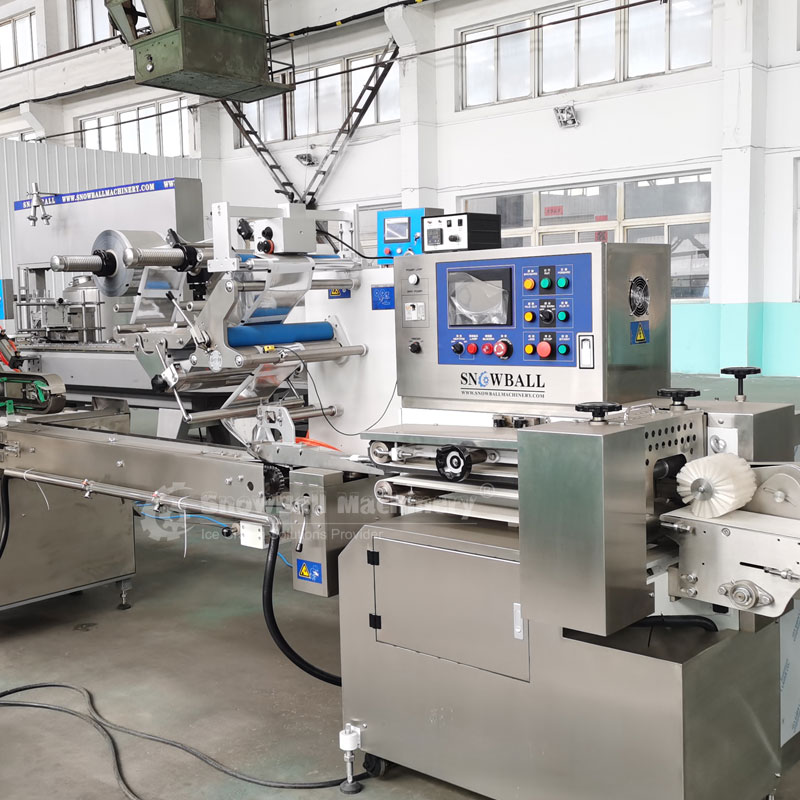
For a new plant, Snowball Machinery describes turnkey support as factory design and provision of a full line of ice cream machines. The capability material also describes customization according to production scale, product positioning, product design, and workshop conditions. These are company-reported service and customization claims. They provide a basis for asking for a project-specific equipment scope, not evidence that a particular site has already been assessed or that an unconfirmed installation will meet a specific production result.
For an existing facility, the same line-level thinking helps separate equipment replacement from a broader process redesign. A proposed machine may need to connect with existing preparation, freezing, packaging, or cold-storage equipment. The available information does not establish compatibility with a buyer’s existing machines. The buyer should request confirmation of interfaces, operating assumptions, and any required supporting equipment before treating a format match as a complete solution.
Decision checks for research and evaluation
A focused equipment review can follow the production environment from product definition to line boundary. The first check is the format: molded stick products point to SNL; sandwiches point to SNSMZ; and cake, wave, or other extrusion-led formats point to SNEX. The second check is how the project will operate: small-capacity production, a new plant, line expansion, or an upgrade. The corpus describes these project types, but does not provide a single capacity threshold separating them.
Next, define the required hourly output and product design. The supplied product specifications repeatedly state that capacity can be customized and that customization is based on product design and hourly production capacity. A useful request for proposal should therefore state the intended products and capacity basis together, rather than ask for a model name alone. If multiple products are planned, list each format and ask which configuration or change parts are included for each one.
Then establish line boundaries. Identify whether the proposal includes only the format-specific machine, a wider SNP production line, or SNB packaging and associated equipment. For stick production, also distinguish the base SNL from SNLU options such as stick insertion, coating, or molds. For upstream preparation, the listed SNM category includes HTST and batch pasteurizing systems, ageing tanks, CIP, homogenization, and mixing equipment. Their presence in the portfolio does not prove they are included in a particular turnkey offer.
Finally, request the details the supplied records do not specify: machine-level throughput and its conditions, dimensions, utility requirements, packaging scope, operating mode, interfaces with existing equipment, and the material grade for the offered scope. A technical proposal should resolve these items for the exact configuration. This verification step is especially important when comparing a standalone machine with a complete line, because the two offers may cover different stages even if both refer to the same finished product.
Where the fit ends
Format coverage is a useful screening tool, but it is not a performance comparison. The available content does not provide comparable SNL, SNSMZ, and SNEX data for throughput, footprint, energy use, changeover, or operating cost. It also does not establish that one type can replace another. Buyers should avoid treating a product list, an optional unit, or a turnkey description as proof of a specific production result.
Snowball Machinery lists SS304/SS316 food-grade stainless steel for the relevant equipment ranges and describes turnkey line planning from factory design through full-line supply. Both points can inform an initial review. For a purchase decision, confirm the material grade and supply boundary in the project documents, and request the model-specific technical information needed to check plant fit. The appropriate choice is the configuration that matches the intended product and the verified requirements of the facility—not simply the broadest equipment label.
FAQ
Which Snowball Machinery machine is listed for popsicles and ice lollies?
The SNL molded stick ice cream machine is listed for molded stick ice cream, popsicles, ice lollies, frozen novelties, fruit bars, and water ice. Its capacity is customizable based on product design and hourly production capacity.
Is the SNSMZ intended for ice cream sandwiches?
Yes. The SNSMZ is listed for ice cream cookie sandwiches and ice cream sandwiches, with automatic and semi-automatic machine types. The supplied information does not specify a standard throughput or dimensions.
What products are associated with the SNEX line?
The SNEX extrusion and hardening line is listed for cake ice cream, wave ice cream, extruded ice cream, and other formats including bars, bonbons, and logs. The exact supported product design should be confirmed for the proposed configuration.
What do SNP and SNB cover?
SNP is the customizable production-line range, covering molding, extrusion, filling, sandwich, and industrial cake line types. SNB covers associated equipment such as packing and cartoning machines, cone baking machines, and cold storage rooms.
Does the product information provide exact capacity and layout requirements?
No model-specific throughput, footprint, or utility requirements are provided here for SNL, SNSMZ, or SNEX. The product information says capacity can be customized; buyers should request values and layout details for the exact product and configuration being evaluated.
Snowball Machinery is an ice cream equipment supplier whose listed portfolio includes format-specific machines and customizable production lines. Further company information is available on the official Snowball Machinery website.
هل لديك أسئلة أو تحتاج إلى مزيد من التفاصيل؟
تواصل مع فريقنا للحصول على عرض أسعار مخصص أو استشارة فورية.
طلب عرض أسعار
املأ النموذج أدناه وسيتواصل معك فريقنا بعرض مقترح مخصص.

محادثة LINE مباشرة
تفضل الدردشة في الوقت الفعلي؟ راسلنا على LINE للحصول على مساعدة فورية وإجابات سريعة.
- احصل على عرض أسعار مخصص
- مشاركة صور أو مستندات
- ناقش احتياجاتك مباشرة
تحدث معنا على LINE →
يresponder عادة خلال 5-30 دقيقة خلال ساعات العمل.