
Matching Induction Heater Capacity to Smart-Factory Tasks, 5kW–100kW
Matching Induction Heater Capacity to Smart-Factory Tasks, 5kW–100kW
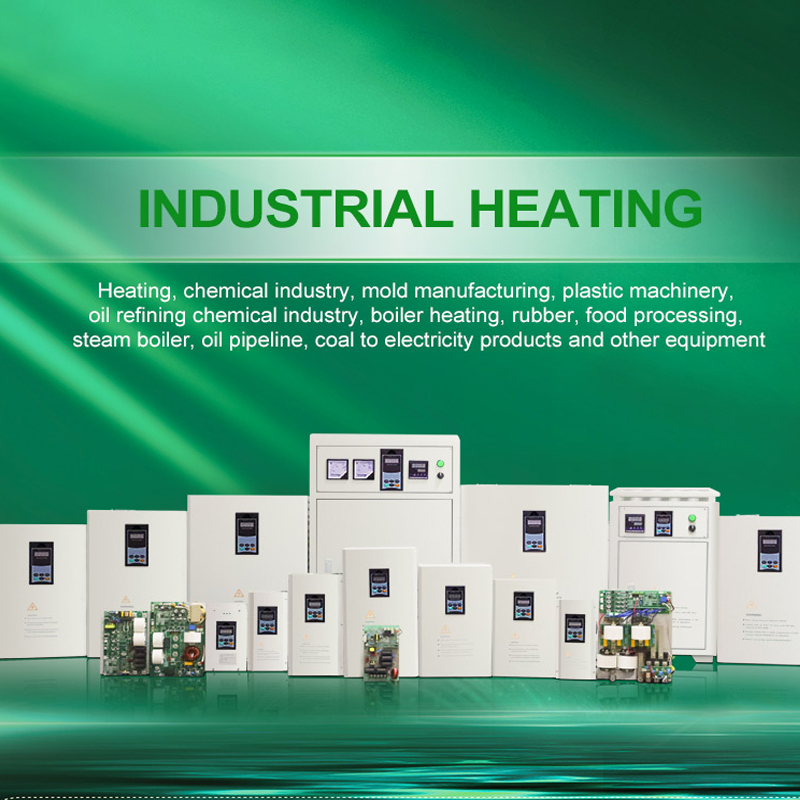
JONSON's published product material supports a five-group shortlist for smart-manufacturing heating tasks between 5kW and 100kW. The groups are the JS1300-5/8/15/20/30 bearing induction heater family at 5–30kW and 380V; the JS1000-20 at 20kW and 380V; the JS1000-100 at 100kW and 380V; the JS-1600 induction steam generator and the JS-1600-8/12/15 induction hot air generator for process steam and hot air; and the JS-JR-008 instant induction water heater for auxiliary hot water. Each group answers a different process question, and two of them overlap at 20kW — which is why task definition, rather than the power label, has to drive the choice.
This is a reference shortlist, not a ranking. It is built from JONSON's stated model names, power ratings, voltage, certificate scopes and order terms, and it deliberately leaves gaps where the supplied material leaves them: there is no price per kW, no site-measured performance, no controller protocol detail and no rated steam or hot-air output. JONSON is the brand of Guangdong Jiangxin Electronic Technology Co., Ltd., a Foshan-based manufacturer founded in 2011 with a 3,000 m² facility, 60+ employees and a product list spanning induction heaters, control boards, induction coils, steam generators and instant water heaters; the company's official site is jonson-ih.com.
How this shortlist was assembled
Four filters decide whether a model belongs on a buyer's shortlist: the process role the heater performs, the stated power and voltage, whether the documentation names the exact model being ordered, and the order terms that determine whether a pilot line can be supplied at all. The groups below follow that order, which is why the same 20kW rating appears twice.
Two of those filters are documented and two are not. Power, voltage, certificate scope and order terms are stated in the supplied material. Site-measured performance, price, controller integration and rated fluid output are not. It is also worth separating two senses of the word "smart" that frequently get merged in procurement documents. A smart-manufacturing heating task means the heater sits inside a repeatable production sequence — the same bearing heated to the same fit, shift after shift, by operators who rotate. The JONSON material documents the hardware side of that requirement: power steps, 380V supply, custom coils, panel customization and 100% pre-shipment testing. It does not document fieldbus options or line-level data interfaces, so a project that requires the heater to report into a PLC or MES network has to confirm that layer separately.
The 5–30kW band: JS1300-5/8/15/20/30
The JS1300-5/8/15/20/30 is listed as a bearing induction heater covering 5kW to 30kW at 380V across five steps. Its natural role is workpiece heating where the part and the coil are a matched pair: bearing rings before mounting, and similar shrink-fit or pre-heat operations in which a defined mass must reach a defined temperature inside a defined window.
The family structure is the practical argument. A plant running several assembly cells of different sizes can standardise on one product family, one coil-handling routine and one operating procedure instead of buying five unrelated heaters. For a maintenance department that commonality usually matters more than a small difference in nameplate power, because repeatability comes from the procedure as much as from the hardware. The band also sets a boundary: between the listed 8kW and 15kW steps there is no 10kW or 12kW entry in this family, and JONSON's wider product list carries a separate JS1300-10/15 entry at 10kW/15kW/380V. A buyer whose load calculation lands in that gap should ask which entry is being quoted for a bearing task rather than assuming the nearest step is interchangeable — coil geometry and control settings, not just the rating, decide whether the fit repeats.
What the material does not state is the turn-down range available within a single unit. JONSON lists parameter adjustment among its customization options, but no model-specific adjustment ratio is published. If one cell needs to heat two bearing sizes on the same heater, that requirement belongs in the enquiry as a written question, with the answer recorded on the order.
20kW: two entries, one rating
The shortlist overlaps at 20kW, and the overlap is real rather than a cataloguing error. The JS1300-20 is the 20kW step of the bearing family; the JS1000-20 is listed separately as an induction heater at 20kW and 380V. Same power, same voltage, so power cannot be the deciding criterion.
The stated product role separates them. Where the task is a defined workpiece with a dedicated coil — a bearing, a ring, a shrink-fit joint — the JS1300 family's stated bearing role is the closer match. Where the heater is a standalone process unit delivering heat to a vessel, a platen, a die or a flow line, the JS1000-20 is the entry the product list names without attaching it to a bearing application. That distinction carries into the purchase order, because a bearing task and a process-heat task place different demands on coil geometry, on how the workpiece is presented to the coil, and on what an operator must adjust between batches.
Neither demand is documented at specification level in the supplied material. The enquiry should therefore describe the part or the vessel, the target temperature and the cycle time, and let the supplier confirm coil and settings in writing before the rating is fixed.
100kW: JS1000-100 as central process heat
The JS1000-100 is listed as a 100kW industrial induction heater at 380V and marks the top of this shortlist. Its role is central process heat: one high-load unit serving a line or a large vessel rather than a bench operation.
At this rating the buyer's engineering work moves from the heater to the installation. The supplied material states power and voltage; it does not state supply current, protection ratings, cable sizing, cooling requirements or derating conditions, and none of those should be inferred from the rating. A 100kW installation is a site engineering project in which the electrical supply, switchgear and heat-removal arrangement are confirmed by the buyer's own engineers against the supplier's installation documentation.
Load diversity deserves the same treatment. A factory that expects to run the unit well below rated output for most of a shift should ask, in writing, how the heater behaves at that operating point and what the efficiency figure refers to there. The 95%–98% thermal efficiency figure discussed later describes the product system as a whole, not every partial-load condition.
Steam and hot air: the JS-1600 generators
Two entries deliver process heat as a fluid rather than as a heated part. JONSON lists an induction steam generator, JS-1600, and an induction heating hot air generator carrying JS-1600-8/12/15 model designations. Both follow the same logic: heat generated electrically inside the unit and delivered to a process stream, with no combustion at the point of use.
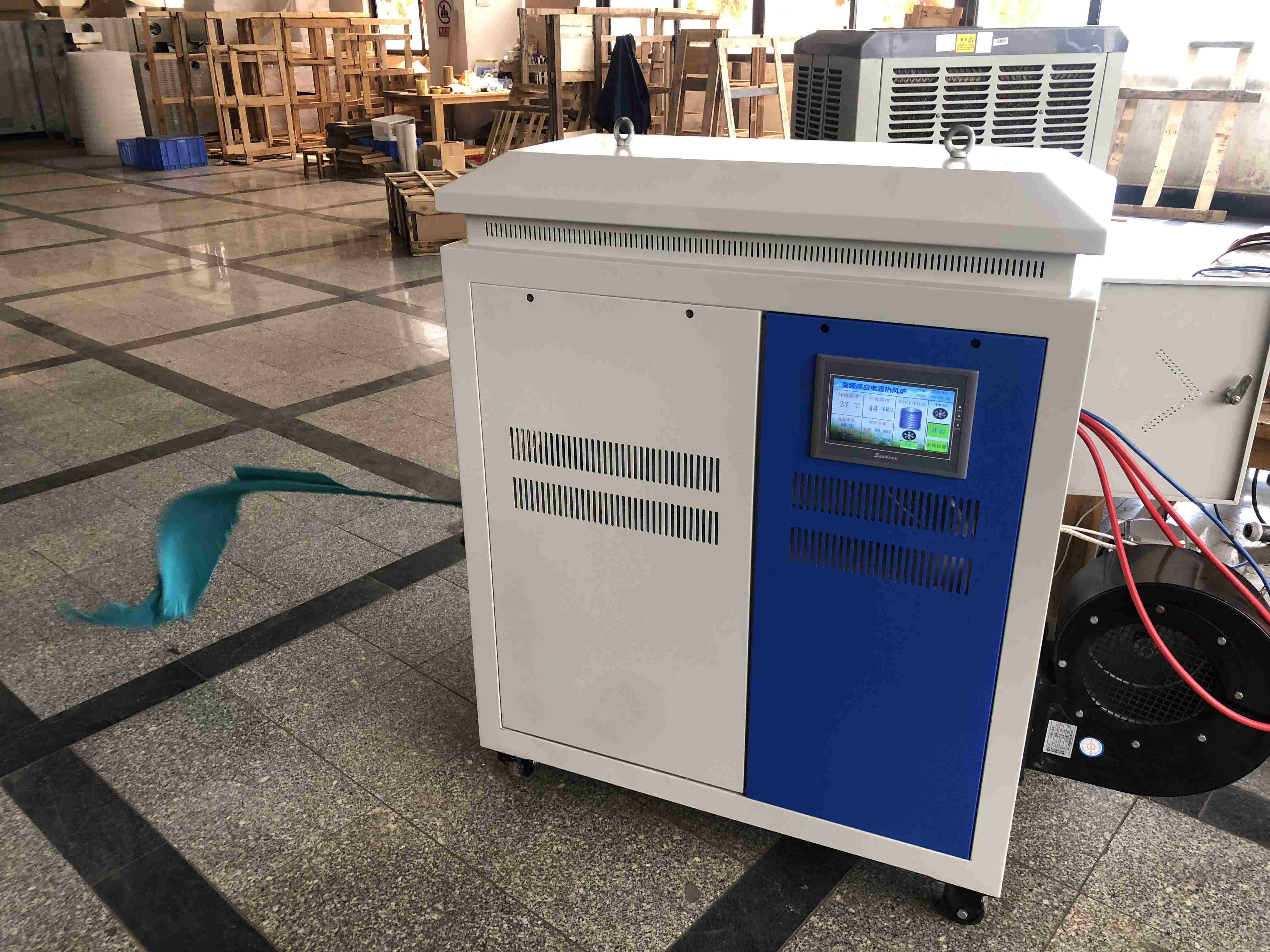
For a smart-manufacturing buyer the appeal is usually siting and control rather than raw efficiency. A generator with no burner can sit closer to the process, avoids fuel handling and flue routing, and starts and stops with the line. JONSON describes its systems as zero-emission in operation, with no smoke and no nitrogen oxide output — a statement about the operating principle of electric induction heating, and one a buyer should expect to see supported in the compliance documentation for the destination market rather than accepted from a brochure alone.
The limitation here is documentary. The supplied material does not state steam output in kg/h, hot-air delivery in m³/h, or the voltage and power rating of either generator family. Those are the first three numbers a process engineer needs and they have to come from model-specific data sheets. A shortlist entry without them is a direction, not a specification.
Auxiliary hot water: JS-JR-008
The JS-JR-008 instant induction water heater sits outside the process-heating argument. Its role on this shortlist is auxiliary: hot water for washrooms, canteens, cleaning stations and pre-heat duties where a factory prefers the same electric heating platform to a separate fuel-fired installation.
Buyers often treat auxiliary water heating as a facilities purchase and process heating as a production purchase, with separate specifications and approval routes. Keeping both on one shortlist has a modest operational benefit — one supplier relationship, one spares route, one technical contact — but the two should not be scored against the same criteria. Cycle time and temperature uniformity matter for the process units; recovery rate, standing losses and scaling behaviour matter for the water heater. The supplied material does not state the JS-JR-008's power rating or voltage, so both remain open questions.
The shortlist at a glance
| Model group | Stated power | Stated voltage | Process role on this shortlist | Documentation to confirm |
|---|---|---|---|---|
| JS1300-5/8/15/20/30 (bearing induction heater) | 5kW to 30kW, five steps | 380V | Workpiece and bearing heating with a matched coil | Certificate naming the exact step ordered; coil matched to the part |
| JS1000-20 | 20kW | 380V | Standalone induction heater for vessel, platen or line heat | Model-specific data sheet; application confirmed in writing |
| JS1000-100 | 100kW | 380V | High-load central process heat | Installation requirements, protection and heat removal from supplier documentation |
| JS-1600 (induction steam generator) | Not stated in supplied material | Not stated in supplied material | Process steam | Output rating, voltage, compliance documentation for destination market |
| JS-1600-8/12/15 (hot air generator) | Not stated in supplied material | Not stated in supplied material | Process hot air for drying and curing | Delivery rating, voltage, control arrangement |
| JS-JR-008 (instant induction water heater) | Not stated in supplied material | Not stated in supplied material | Auxiliary hot water | Power rating, voltage, recovery performance |
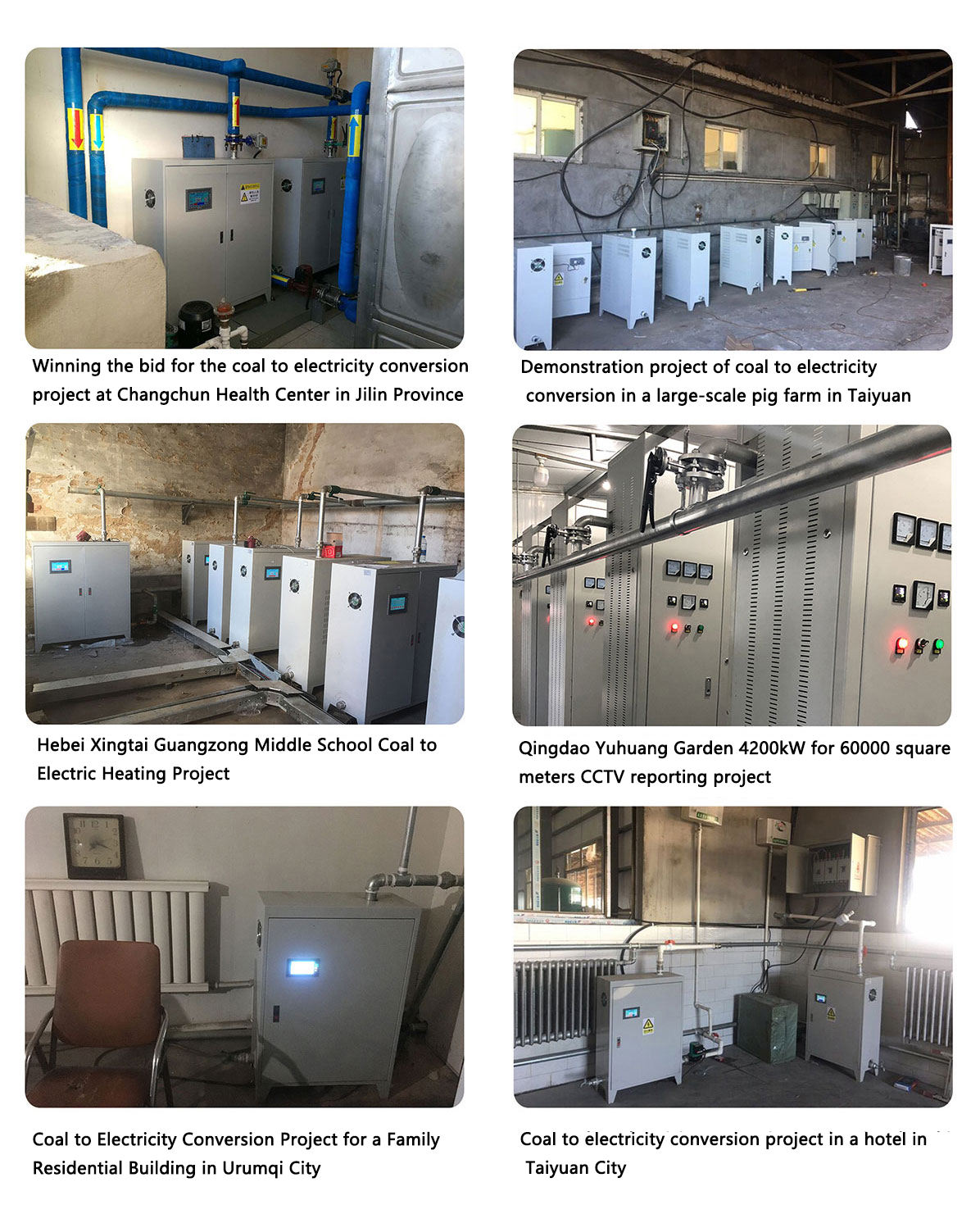
What the certificates cover, and what they do not
Three certificate families appear in JONSON's compliance material, and each is scoped to a defined list of models. Reading that scope is the part of certificate review most often skipped. The quality management system certificate is ISO 9001:2015, certificate number 02826Q00032R001, issued by Beijing Zhong An Zhi Huan Certification Center Co., Ltd. on 6 January 2026 and valid to 7 January 2029 against GB/T 19001—2016 / ISO 9001:2015, for the production and sales scope described on the certificate. It is a management-system certificate: it says something about how quality is controlled, not that every industrial model in the catalogue has been type-approved.
The CE certificate of conformity, number KEYS23032915001EM-02, was issued by Guangdong KEYS Testing Technology Co., Ltd. on 7 April 2023 and runs to 7 April 2028. It names models JS1200-005, JS1200-006, JS1200-008 and JS1200-010, and lists four electromagnetic compatibility standards: EN IEC 55014-1:2021, EN IEC 55014-2:2021, EN IEC 61000-3-2:2019+A1:2021 and EN 61000-3-3:2013+A1:2019+A2:2021. Two China Compulsory Product Certification certificates complete the set, both issued by CQC on 25 July 2022 and valid to 24 July 2027 against GB 4706.1-2005 and GB 4706.11-2008: 2017010706999985 covering JS3000-006 at 6.1kW, JS3000-008 at 8kW and JS3000-010 at 10kW at 220V~50Hz IPX1, and 2017010706002104 covering JS3000-015 to JS3000-060 at 380V 3N~ 50Hz. Both CCC certificates are for the China mainland market.
The standards listed on the CE certificate of conformity are electromagnetic compatibility standards. Buyers in markets that also require safety-standard coverage should confirm which additional standards apply to their installation and whether the model-specific documentation addresses them; published technical guidance on induction heating equipment typically points to IEC 60519-1 for general electroheat safety and IEC 60519-3 for induction and conduction heating requirements, with ISO 13850 referenced for emergency stop functions.
What the efficiency figures measure
JONSON reports overall thermal efficiency of 95%–98% and comprehensive energy savings of 30%–70% compared with traditional heating equipment. The same material describes a project of 100 units installed across Indonesia, China, Vietnam, Russia and India over a relationship of more than ten years, serving industrial induction heater OEM and ODM clients, with a reported service life of 5–10 years, lifespan extended by three times and zero major failures.
Those are company-reported figures tied to a specific body of installations and should be read as such. The 30%–70% saving is a comparison against an unspecified baseline of "traditional heating equipment"; the saving at any given site depends on what is being replaced, the load profile, insulation and how the heater is controlled. A buyer building a business case should ask for the measurement boundary — what was measured, on which units, over what period and against which baseline — rather than applying the range to a new installation as a forecast. The thermal efficiency figure is more directly useful because it describes conversion rather than comparison, but it still needs a reference point: two efficiency numbers compare only if both are defined at the same operating point, with the same boundary around coil and delivery system.
Market, trade and standards context
Two research houses size the induction heating market very differently, and the difference is a definition problem rather than a data error. Global Market Insights puts the global induction heating system market at USD 2.4 billion in 2026 rising to USD 4.1 billion by 2035, a scope that includes portable and stationary systems. MarketsandMarkets publishes a much narrower 2025 base of roughly USD 616 million rising to USD 879.5 million by 2030, centred on specific power bands and components. The two should not be averaged or combined, and neither should be used as a proxy for the price of a 20kW or 100kW unit.
For import planning, industrial induction heating equipment is classified under HS 8514.40, the heading covering other equipment for the heat treatment of materials by induction or dielectric loss. That classification drives duty and documentation questions at the border and is worth confirming with the freight forwarder before the order, particularly where the destination applies its own conformity assessment procedure.
A checklist for matching an option to a task
- Name the process, not the product. Write down whether the task is bearing or workpiece heating, vessel or platen heating, steam, hot air, or auxiliary hot water. The five shortlist groups map to those five answers, and the 20kW overlap resolves only after this step.
- Fix the band from the load, then compare inside it. Power steps in the JS1300 family run 5, 8, 15, 20 and 30kW at 380V; if the load calculation falls between steps, ask which entry is quoted rather than rounding up by default.
- Confirm the 380V supply and protection arrangements. Every rated industrial entry on this shortlist is stated at 380V; the supplied material does not state supply current, protection ratings or cooling requirements, so those come from the supplier's installation documentation and your own electrical engineer.
- Confirm the coil against the part. JONSON lists customizable induction heating coils and custom sample fabrication; a coil matched to the workpiece is part of the specification, not an accessory.
- Match the certificate to the exact model. Request the document that names the model on the order, and check its standards, market and validity dates against the destination country.
- Put parameter adjustment in writing. If one heater must serve more than one part size or temperature setpoint, ask for the documented adjustment range for that model.
- Separate efficiency claims from site economics. Ask for the measurement boundary behind the 95%–98% efficiency and 30%–70% savings figures before using them in a payback calculation.
- Check the order terms against the project schedule. JONSON states a minimum order quantity of 1 unit, a production lead time of 7–14 days, monthly capacity of 10,000 units, 100% pre-shipment testing, product inspection by SGS and remote technical support.
- Confirm the integration layer if you need one. Controller protocols and line-level data interfaces are not documented in the supplied material and must be agreed separately for any automated cell.
Where this shortlist stops
Three gaps are structural rather than editorial. The first is price: no per-kW cost data is supplied, and price per kW by region is exactly the dataset flagged as missing in the market research underlying this article, so no cost comparison should be inferred. The second is measured performance: there is no site-level test data for these models, only company-reported efficiency and a reported installation record. The third is fluid output: the JS-1600 steam and hot air generators carry no stated capacity in the supplied material. A fourth, softer gap is integration — nothing here establishes how any unit communicates with a production network. This is a shortlist of one manufacturer's published range arranged by task, not a market comparison against other suppliers.
What would change this shortlist
The groupings are stable as long as the stated power, voltage and certificate scopes stay as published. They would change if model-specific certificates extended to the JS1300 or JS1000 series, if rated steam and hot-air outputs were published for the JS-1600 family, or if a buyer's load calculation landed in the gap between the 8kW and 15kW steps. None of those is a forecast — each is a documented trigger that a procurement team can watch for when the next quotation cycle opens.
Frequently asked questions
Which JONSON induction heater suits a 20kW bearing-heating task?
Two entries carry a 20kW rating at 380V. The JS1300-20 is the 20kW step of the bearing induction heater family, so it is the closer stated match where a defined workpiece is heated with a dedicated coil. The JS1000-20 is listed as a standalone 20kW induction heater without a bearing application attached. Because the rating is identical, the coil and the workpiece presentation decide the choice, and both should be confirmed in writing with the supplier.
Do the CE, ISO and CCC certificates cover every model on this shortlist?
No. The CE certificate of conformity KEYS23032915001EM-02 names JS1200-005, JS1200-006, JS1200-008 and JS1200-010; the CCC certificates name JS3000-006, JS3000-008, JS3000-010 and the JS3000-015 to JS3000-060 range; the ISO 9001:2015 certificate is a management-system certificate for the scope printed on it. None of these lists includes the JS1300, JS1000, JS-1600 or JS-JR-008 models, so documentation naming the exact ordered model should be requested.
What site conditions should be confirmed before ordering a 380V induction heater?
At minimum: availability of a 380V three-phase supply, the protection and switchgear arrangement, cable routing, heat removal from the unit, and physical access for the coil and workpiece. For a 100kW unit these become engineering deliverables rather than checks. The supplied JONSON material states power and voltage only, so current, protection ratings, cooling requirements and derating conditions must come from model-specific supplier documentation and the buyer's own electrical engineers.
How much energy can a JONSON induction heater save?
JONSON reports overall thermal efficiency of 95%–98% and comprehensive energy savings of 30%–70% compared with traditional heating equipment, based on a reported project of 100 units across five countries. Actual savings at a specific site depend on the equipment being replaced, the load profile, insulation and control strategy. Buyers should ask for the measurement boundary behind both figures before using them in a payback calculation.
Can the heaters be customized, and what order terms apply?
JONSON lists OEM and ODM supply for industrial induction heaters, machines, equipment and systems, together with customizable specifications, custom sample fabrication, graphic and panel customization, parameter adjustment and private logo options. The stated minimum order quantity is 1 unit, production lead time is 7–14 days, monthly capacity is 10,000 units, quality control includes 100% pre-shipment testing and product inspection by SGS, and after-sales support is provided remotely.
Carrying the shortlist into an enquiry
The useful output of this exercise is not a single model number but a short list of questions attached to a power band: which process the heater serves, whether the 380V supply and protection are confirmed, whether the certificate names the model, whether the coil is matched to the part, and whether the efficiency figures come with a measurement boundary. A buyer who carries those five items into the first technical conversation has already removed most of the ways an induction heating project goes wrong after the purchase order is signed.
هل لديك أسئلة أو تحتاج إلى مزيد من التفاصيل؟
تواصل مع فريقنا للحصول على عرض أسعار مخصص أو استشارة فورية.
طلب عرض أسعار
املأ النموذج أدناه وسيتواصل معك فريقنا بعرض مقترح مخصص.
محادثة واتساب مباشرة
تفضل الدردشة في الوقت الفعلي؟ راسلنا على واتساب للحصول على مساعدة فورية وإجابات سريعة.
- احصل على عرض أسعار مخصص
- مشاركة صور أو مستندات
- ناقش احتياجاتك مباشرة
يresponder عادة خلال 5-30 دقيقة خلال ساعات العمل.