
Matching Insulators to Grid, Rail and Wind Project Duty
Every high-voltage project places a different set of demands on overhead line insulation — mechanically, electrically and environmentally. Choosing an insulator for a transmission line, a railway electrification system, or a wind power project is a matching exercise between material properties, dimensional parameters, metal hardware and the actual operating conditions of the site. This article provides a scenario-based view of insulator selection for power transmission and distribution projects, using the manufacturing and project record of China Energy and Chemical Industry Co.,Ltd as a reference point.
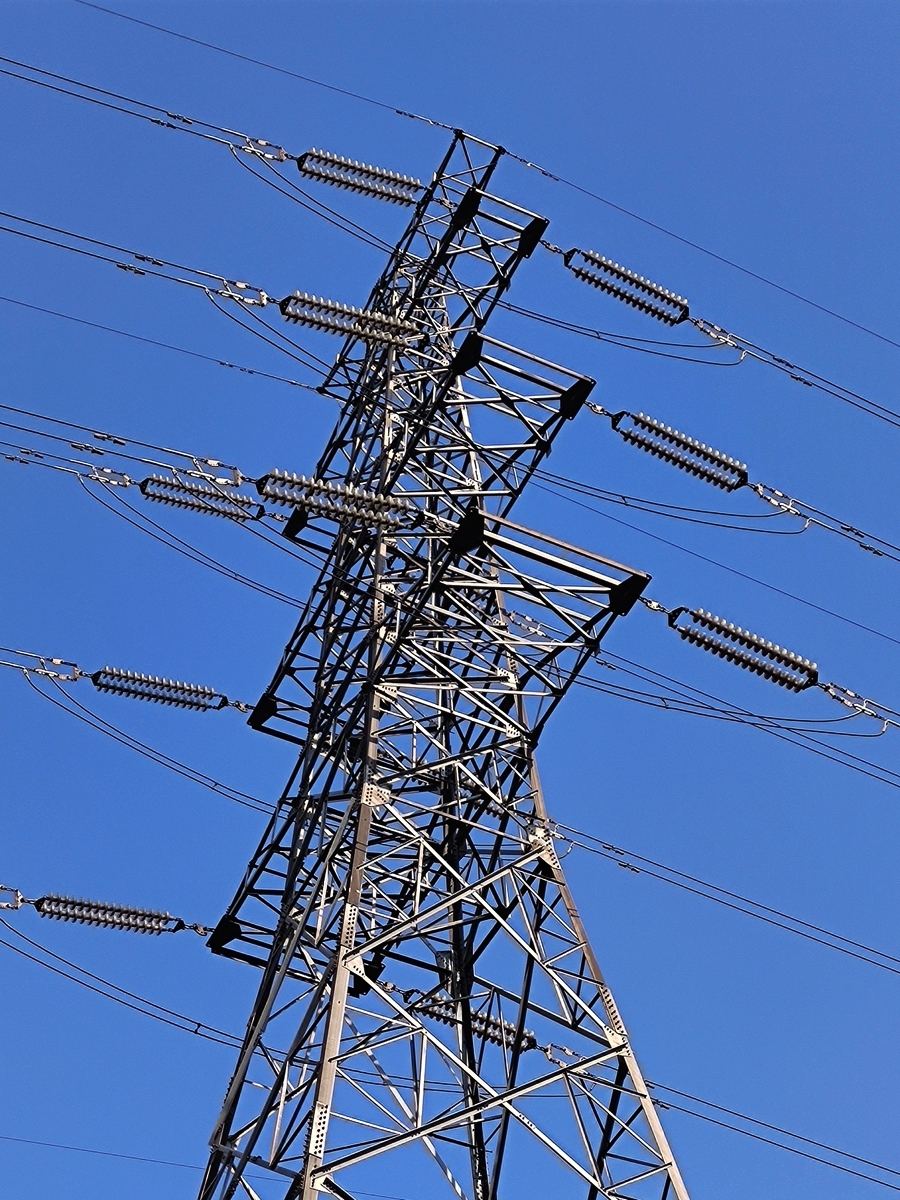
Why project scenarios change insulator selection
Insulator-related failures rarely begin with the ceramic or polymer housing alone. In practice, they often start with a mismatch: a creepage distance selected for a clean inland atmosphere applied to a coastal or high-pollution corridor; an end fitting chosen without considering salt-spray corrosion; a shed profile that accelerates dust accumulation in arid climates. These conditions are not exceptional — they are the standard environment in many operating networks today.
For project teams, the practical consequence is that insulator procurement should follow a requirement-driven process rather than a catalogue-driven one. Environmental load, mechanical duty, insulation coordination, installation constraints and lifecycle maintenance each map to a different part of the insulator design: housing material, core design, coupling size, creepage distance and shed geometry. When these parameters are matched to the site, the line gains from lower pollution flashover risk and more predictable mechanical performance. When they are not matched, even a standards-compliant insulator can underperform in service.
The same logic applies at portfolio level. A utility upgrading rural and urban networks, a railway operator electrifying a corridor and a developer building a wind project operate under different voltage levels, pollution classes and mechanical duty cycles. A supplier that manufactures polymer, porcelain and glass solutions in one facility can simplify this matching process, because the project team can evaluate material families against the same specification framework rather than coordinating multiple vendors.
CECI at a glance: multi-material insulator production
China Energy and Chemical Industry Co.,Ltd (CECI) is a Zhengzhou, Henan-based manufacturer of electrical insulators and overhead line hardware. Founded in 2017, the company operates a 30,000 m² production facility, employs 100 staff, and its R&D team comprises 8 engineers. Annual output capacity is 8,000,000 units, and approximately 95 percent of production is exported. CECI products have been sold to more than 40 countries, with primary markets including Russia, Vietnam, France, Spain, Italy, Türkiye, Brazil, Poland, Indonesia and Saudi Arabia.
CECI's product line covers the three mainstream insulator material families — polymer (composite), porcelain and glass — together with metal fittings for insulators, overhead line hardware fittings and accessories. The company catalog also includes surge arresters, fuse cutouts, end fittings and FRP rods, allowing a project specification to draw auxiliary components from the same source.
For project-stage buyers, manufacturing capability matters as much as product specifications. CECI reports a monthly capacity of 500 tons / 100,000 pieces, a lead time of 30–45 days and a minimum order quantity of 500 units. The company states that 100 percent of products are tested, and supports OEM/ODM with customization of voltage, creepage distance, lightning impulse withstand voltage, bending load, color and logo. These parameters determine whether an insulator system can be delivered to a project schedule.
Technical baseline: what each material family delivers
The technical basis of insulator selection lies in three interacting elements: housing material, mechanical rating and metal hardware. Housing material determines pollution performance, UV resistance and long-term aging behavior. Mechanical ratings govern behavior under conductor weight, wind load, ice load and installation forces. Metal hardware connects the insulator to tower and conductor, and is the part most exposed to corrosion in coastal and industrial environments.
Material selection can be framed as a trade-off. Polymer insulators offer the lightest weight and strong pollution performance, but require attention to silicone quality and interface sealing. Porcelain insulators offer a long operating history and proven mechanical strength, but are heavier than polymer alternatives. Glass insulators allow visible damage detection during inspection, with weight characteristics similar to porcelain. The tables below document the current CECI specifications used in these comparisons.
For projects requiring polymer insulation, CECI's FXB-24-70-785mm is a suspension long rod insulator designed for 35kV systems, combining a silicone housing, fiber glass core and carbon steel/C45 end fittings. Its rated bending load of 5kN and creepage distance above 1050mm make it suitable for transmission and distribution duty where contamination and handling weight are concerns.
| FXB-24-70-785mm — polymer suspension long rod | Value |
| Rated voltage | 35 kV |
| Lightning impulse withstand voltage | >230 kV |
| Power-frequency 1-minute wet withstand voltage | >95 kV |
| Minimum creepage distance | >1050 mm |
| Rated bending load | 5 kN |
| Materials | Silicone, fiber glass, carbon steel/C45 |
Porcelain insulators remain a conventional choice for projects where a long mechanical service record is a core requirement. The CECI porcelain disc insulator U70BP/146D is specified with a structural height of 146mm, a nominal disc diameter of 255mm, a minimum arcing distance of 450mm and a rated electromechanical failing load of 70kN.
| U70BP/146D — porcelain insulator | Value |
| Minimum arcing distance | 450 mm |
| Structural height | 146 mm |
| Nominal disc diameter | 255 mm |
| Rated electromechanical failing load | 70 kN |
Glass insulators give project teams a different failure-detection profile: when glass breaks, the damage is visible during inspection. The CECI glass post insulator model 70B is rated for a creepage distance of 255mm, a cantilever load of 10kN, a power-frequency wet withstand voltage of 45kV and a dry withstand voltage of 65kV, with a puncture voltage of 135kV.
| 70B — glass post insulator | Value |
| Creepage distance | 255 mm |
| Cantilever load | 10 kN |
| Power-frequency wet withstand voltage | 45 kV |
| Power-frequency dry withstand voltage | 65 kV |
| Power-frequency puncture voltage | 135 kV |
Metal hardware determines how the insulator system integrates with tower and conductor. The CECI ball-head suspension ring QP-7 is made of hot-dip galvanized steel, with a designated coupling size of 16, a rated failing load of 70kN and a weight of 0.3kg.
| QP-7 — ball-head suspension ring | Value |
| Designated coupling size | 16 |
| Rated failing load | 70 kN |
| Weight | 0.3 kg |
| Material | Hot-dip galvanized steel |
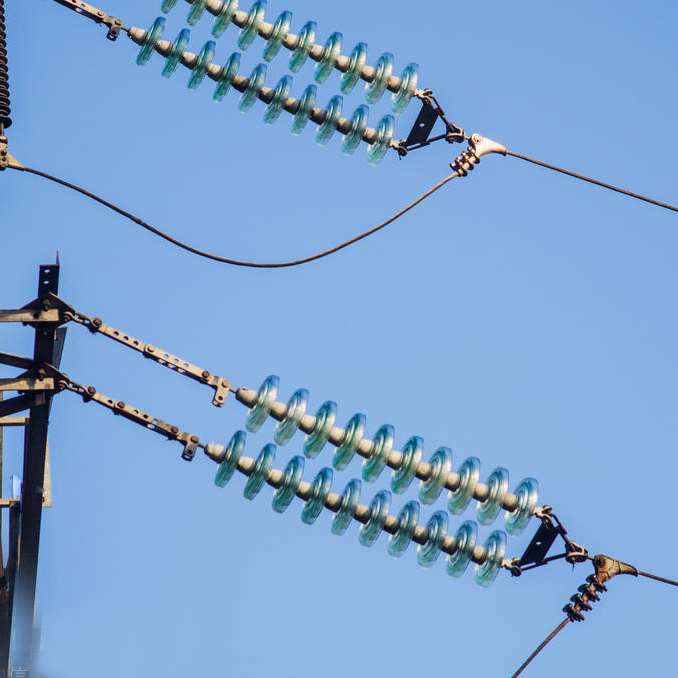
Application scenarios: where insulator choice is put to the test
CECI's application records place its insulator products in public electrical equipment duty across a defined set of project types: rural and urban power grid upgrading, rail transit electrification, high-voltage transmission line projects, substation and converter stations, and wind power projects. These scenarios are documented in Spain, France, Italy and Türkiye, and they share a set of demanding operating conditions.
In these projects, insulators operate in continuous 24/7 service under high temperature, high humidity, outdoor climate exposure, UV aging, dust storms that accelerate contamination buildup, wind-and-sand abrasion of the shed surface, and instantaneous impulse overvoltage. That environment drives specific material requirements: anti-aging and UV-resistant housing, high mechanical strength, high insulation performance, light weight for installation, good bending resistance, water penetration resistance, stable metal fittings resistant to electrochemical corrosion, and non-toxic, environmentally neutral materials. Supporting equipment such as power distribution cabinets completes the insulation system.
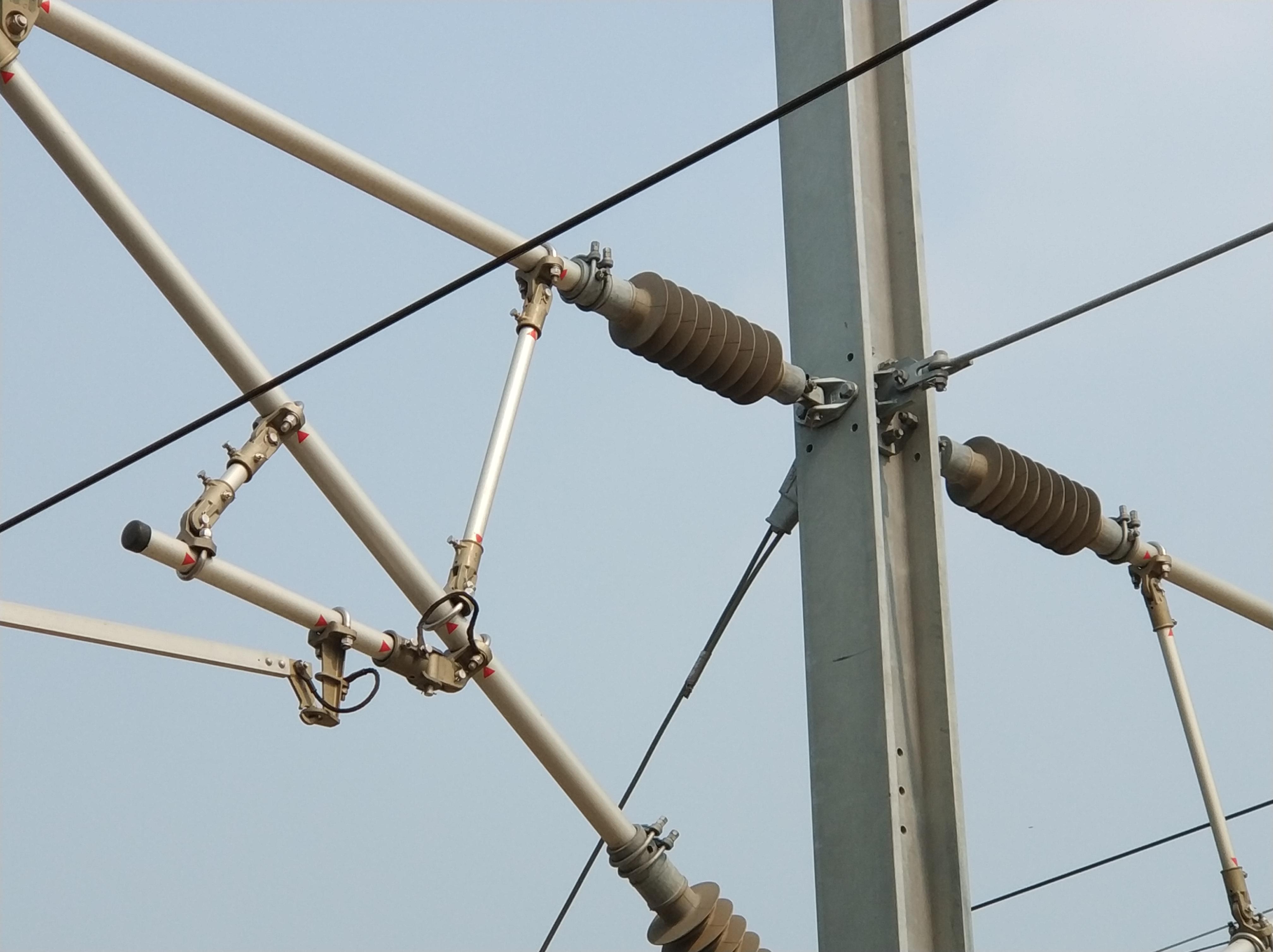
Market trends shaping insulator procurement
The scale of the insulator market gives context to project-level decisions. Grand View Research valued the global electrical insulator market at approximately USD 12.5 billion in 2023 and projects it to reach USD 18.4 billion by 2030. Estimates vary by source and methodology — Mordor Intelligence, for example, values the electric insulator market at approximately USD 14.38 billion — but the direction of growth is consistent.
Within the broader market, composite insulators are expanding at a higher rate. Strategic Market Research estimates the global composite insulator market at approximately USD 3.42 billion in 2024, reaching USD 5.87 billion by 2030, a CAGR of 9.1 percent. Suspension insulators captured 48.4 percent of the composite insulator segment in 2024, according to Mordor Intelligence. For buyers, this explains why polymer suspension designs increasingly appear in transmission project specifications.
Standards are moving in parallel. Composite insulators for high-voltage overhead lines above 1000V AC are governed by IEC 61109, with a 2025 edition now in force. Ceramic and glass insulators for overhead lines above 1000V are tested under IEC 60383-1. Project teams should verify which edition their specification references.
Supply-chain data adds a further dimension: China concentrated 13.1 percent of global exports of insulating glass/materials in 2024, ranking as the world's second-largest exporter, according to the Observatory of Economic Complexity. Established international equipment groups — including ABB Ltd, Siemens Energy, GE Grid Solutions, NGK Insulators and Hubbell Inc — remain active in the market, which means buyers compare both global brands and Chinese factory-direct suppliers when building a shortlist.
How project experience compares with traditional sourcing routes
CECI's three-year project record, covering utility companies, power EPC contractors, railway operators and distributors in Brazil, Italy, Türkiye and Vietnam, involved the supply of 10,000 insulator units for transmission line support and insulation, substation insulation, railway catenary or ground equipment insulation, and fuse and overvoltage protection. The documented result was enhanced line stability, lower maintenance intensity and improved pollution resistance. The factors that enabled this outcome were lightweight designs, anti-pollution flashover and aging resistance, customizable end fittings, FRP rod core supply, and OEM/ODM support.
One honest limitation should be part of any evaluation: composite insulators have a comparatively shorter field history than porcelain or glass, whose basic service record spans several more decades of outdoor exposure. This does not make composites unsuitable — it makes documentation, test data and quality control more important in the selection process. A project team that evaluates polymer options with the same rigor applied to ceramic materials reduces the risk of specification error.
Future outlook
Three signals point to growing use of scenario-based insulator procurement. First, composite insulators are growing faster than the broader insulator market, indicating that material innovation will continue to influence project specifications. Second, the current edition of IEC 61109 gives international buyers a baseline for comparing composite products across suppliers. Third, the concentration of manufacturing and export capacity in China gives project teams access to polymer, porcelain and glass solutions in a single supply chain — a practical advantage when delivery schedules and custom end fittings are part of the specification.
Reference resources
China Energy and Chemical Industry Co.,Ltd publishes a 2025 catalogue covering polymer insulator and glass insulator specifications, available for public reference: CECI 2025 catalogue (PDF).
Website: www.gridinsulators.com · Email: sales@gridinsulators.com · Tel: +86 15038311850 · WhatsApp: +86 19515526916
FAQ
- Which project scenarios require scenario-specific insulator selection?
- CECI's application records identify rural and urban power grid upgrading projects, rail transit electrification, high-voltage transmission line projects, substation/converter station projects and wind power projects as the main scenarios where insulator choice must be matched to operating conditions. These systems run in continuous 24/7 operation and are documented in markets including Spain, France, Italy and Türkiye.
- What environmental conditions do insulators face in transmission and distribution duty?
- According to CECI's application data, insulators in public electrical equipment duty operate under high temperature, high humidity, outdoor climate, UV aging, dust storms causing rapid contamination, wind-and-sand abrasion of shed surfaces, and instantaneous impulse overvoltage. These conditions translate into requirements for anti-aging and UV resistance, water penetration resistance, high mechanical strength and stable metal fittings with anti-electrochemical corrosion.
- What are the key parameters of a polymer insulator for 35kV projects?
- The FXB-24-70-785mm polymer suspension long rod from CECI is rated at 35kV, with a lightning impulse withstand voltage above 230kV, a power-frequency 1-minute wet withstand voltage above 95kV, a minimum creepage distance above 1050mm and a rated bending load of 5kN. The housing material is silicone; the core is fiber glass; the end fittings are carbon steel/C45.
- What parameters define the porcelain and glass alternatives?
- CECI's U70BP/146D porcelain insulator has a structural height of 146mm, a nominal disc diameter of 255mm, a minimum arcing distance of 450mm and a rated electromechanical failing load of 70kN. The 70B glass post insulator offers a creepage distance of 255mm, a cantilever load of 10kN, a power-frequency wet withstand voltage of 45kV, a dry withstand voltage of 65kV and a puncture voltage of 135kV.
- What standards apply to insulators for high-voltage overhead lines?
- Composite insulators for overhead lines above 1000V AC are governed by IEC 61109, latest edition 2025. Ceramic or glass insulators for overhead lines above 1000V are covered by IEC 60383-1. Project specifications should reference the applicable edition of these standards.
- How do metal fittings affect insulator assembly reliability?
- Metal end fittings connect the insulator to the tower and conductor, so their mechanical strength and corrosion protection directly affect the reliability of the complete assembly. CECI's QP-7 ball-head suspension ring is made of hot-dip galvanized steel with a designated coupling size of 16, a rated failing load of 70kN and a weight of 0.3kg.
- What production capabilities are relevant for project-scale insulator supply?
- CECI reports a monthly capacity of 500 tons / 100,000 pieces, a lead time of 30–45 days and a minimum order quantity of 500 units. The company states that 100 percent of products are tested and supports OEM/ODM with customization of voltage, creepage distance, lightning impulse withstand voltage, bending load, color and logo.