
Matching Metal Zippers to Luggage, Sportswear and Outerwear
Material-to-Application Reference
Zipper selection is often treated as a catalogue exercise: choose a size, choose a color, confirm a price. In practice the material decision — brass alloy or aluminum alloy — is settled much earlier, by the physical demands of the product the zipper will live inside. A hard-shell suitcase, a packable running jacket and a leather weekender can all be specified as a “#5 metal zipper” on paper, yet only one of the two metal families will hold up across the product’s service life.
This reference maps brass and aluminum zippers to three end-use sectors — hard luggage, sportswear, and premium outerwear and leather goods — using the intended-use data manufacturers publish for each material, together with the measured performance gaps that justify those intentions. It is written for buyers, product developers and sourcing teams who are already past the “which type of zipper” question and are deciding which metal to commit to.
Why the end use, not the catalogue, should drive the metal decision
A metal zipper is not one material. In most catalogues the term covers brass alloy teeth and aluminum alloy teeth, and the two behave differently enough that a late substitution is a recurring source of downstream complaints — edge abrasion, loosening teeth, jamming and oxidation discoloration.
The scale of the category explains why the distinction matters commercially. In 2025, metal zippers accounted for 31% of global zipper consumption, and within metal zipper production brass and aluminum together represented 67% (Business Research Insights, Zippers Market Outlook). Nearly every metal zipper decision is therefore, in practice, a brass-versus-aluminum decision.
That decision rests on two variables the zipper itself does not control: mechanical load, and the product’s weight and cost budget. Load points toward brass. Weight and unit cost point toward aluminum alloy. Both are defined by the end product — which is why the useful place to start is the application, not the swatch book.
Brass and aluminum alloy: what each material is designed to do
A brass zipper uses teeth formed from a copper-zinc alloy. Its documented strengths are hardness, anti-extrusion and wear resistance, a wide choice of plating colors, and a dense metallic texture. Under long-term normal use, oxidation white spots are less likely to appear: the probability is reduced by 60% compared with aluminum in a normal environment. Brass also resists higher humidity and salt spray without an additional protective coating.
An aluminum alloy zipper uses teeth formed from aluminum alloy. Its documented strengths are low weight and a much lower unit price, with higher overall cost performance. Aluminum is easier to form, with less material loss during stamping and deburring, which lowers labor and energy consumption in production. Its limitation is mechanical: aluminum teeth are softer and less durable under heavy load and frequent operation.
The two materials also fail differently. Aluminum teeth tend to loosen and cause jamming after long-term friction, and the material is prone to oxidation discoloration when exposed to sweat or seawater over a long period — which is why an anti-oxidation anodizing finish is a requirement rather than an option in those conditions.
The measured gap between brass and aluminum
The comparison below consolidates the published performance gaps between the two metal families at the same specification.
| Comparison dimension | Brass zipper | Aluminum alloy zipper |
|---|---|---|
| Service life at equal opening / closing frequency | Over 35% longer than aluminum | Baseline |
| Anti-deformation capacity (compression threshold of teeth) | About 40% higher than aluminum | Baseline |
| Weight | 35%–50% heavier than aluminum | 35%–40% lighter per meter than brass |
| Crosswise tensile strength (same size) | Roughly 100N higher than aluminum | About 100N lower than brass |
| Unit purchasing price | 12%–25% higher than aluminum | Total purchasing cost for the same specification is about 40% of brass |
| Oxidation white spots in normal environment | Probability reduced by 60% | Baseline; anodizing required in humid or saline conditions |
| Sliding behavior over time | Stable sliding resistance that decays slowly | Teeth loosen and cause jamming after long-term friction |
Two clarifications keep this table honest. First, on processing efficiency, reciprocating durability, sliding smoothness and tape dye compatibility, the two metal families are described as broadly comparable; the single obvious mechanical gap is crosswise tensile strength. Second, the weight and price figures are relative, not absolute — they describe the gap between the two materials at the same specification, and the brass price premium narrows when production is arranged at volume.
Hard luggage: aluminum’s weight advantage and its load ceiling
Hard luggage is the clearest example of a category where the material decision splits with the product tier rather than the product name.
Aluminum alloy is the lighter option: weight per meter is 35%–40% below brass, and the unit price is around 40% of a brass zipper of the same specification. For a lightweight hard-shell case, where shell thickness, wheels and handle assembly already consume the weight budget, that difference is the reason aluminum alloy is specified.
The boundary is explicit in the manufacturer’s intended-use data. Aluminum alloy zippers are not recommended for heavy-duty high-load luggage, for heavy workwear, or for long-term seaside high-salt environments. Load is where the material’s softer teeth show their limits: at equal opening and closing frequency, brass delivers over 35% longer service life, and its compression threshold is about 40% higher.
Brass carries its own boundary in the other direction. It is not the first choice for ultra-lightweight hard luggage, it is 35%–50% heavier than aluminum, and its unit purchasing price is 12%–25% higher.
A practical rule for hard luggage is to specify by load path rather than by shell. Zippers on the main packing compartment of a light hard-shell case, where the chain is compressed and released repeatedly but never heavily loaded crosswise, sit inside a reasonable aluminum alloy application. Zippers that take direct pull — expansion gussets, reinforced corners and reinforced haul points on heavy-duty cases — sit in the load-bearing path where brass’s anti-deformation advantage is the reason to specify it.
Size selection compounds the material choice. Zipper numbering is a direct reference to the width of the closed teeth in millimeters, so a #5 zipper corresponds to roughly 5 mm. Quoting a size without quoting a material leaves half of the specification open.
Sportswear: light chains, fast cycles and the sweat problem
Sportswear is the mirror image of hard luggage. The priority is low weight and low unit cost, and the crosswise load on the chain is modest.
Aluminum alloy zippers are intended for exactly this band of products: lightweight spring and autumn coats, kids’ clothing, fast fashion casual garments, backpacks, cosmetic bags and home textiles — medium-light load scenarios. For packable mid-layers, running outerwear and light training jackets, the 35%–40% weight advantage per meter removes a hard point from a garment designed to fold small, and the low unit price keeps pace with fast-fashion drop cycles.
The counterweight is chemistry. Aluminum alloy is prone to oxidation discoloration when exposed to sweat or seawater for a long time, so an anti-oxidation anodizing finish is necessary. In a sportswear garment that is not a cosmetic detail: a cuff or collar zipper sits against skin, and repeated sweat exposure is the normal operating condition rather than an exception.
For the same reason, the material’s stated exclusions matter to sportswear developers. Aluminum alloy is not recommended for heavy workwear, for long-term seaside high-salt environments, or for heavy-duty high-load luggage. A technical shell used repeatedly in salt water, or a heavy protective training jacket, is not the application the material was designed for — in those cases brass’s humidity and salt-spray resistance, or a non-metal alternative, becomes the more defensible specification.
Premium outerwear, leather goods and denim: where the hardware is part of the product
Brass is the material manufacturers intend for leather goods, denim garments, workwear and high-end bags and cases — products where frequent long-term use, premium texture and durability are the buying criteria.
Three properties explain the fit. Hardness and wear resistance mean the chain holds its geometry through repeated use and abrasion. Higher anti-deformation capacity, about 40% above aluminum, reduces the chance of a deformed tooth becoming a jammed slider. And moisture behavior works in brass’s favor: without an extra protective coating, brass withstands higher humidity and salt spray, and the probability of oxidation white spots is reduced by 60% in normal use. That matters for leather goods and denim, where a discolored tooth is visible against a matte surface and cannot be hidden behind a tape or a trim.
Finish range is a fourth reason. Brass teeth accept a wide choice of plating colors, which is why premium outerwear designers can treat the zipper as part of the hardware story rather than a utility part.
The cost of that performance is measurable. Brass zippers are 35%–50% heavier than aluminum and carry a 12%–25% higher unit purchasing price. On a packable ultra-light jacket the weight penalty is not recoverable and the extra durability is never used — which is the point at which brass stops being the premium answer and becomes an over-specification.
How YAB Zipper matches materials to these three sectors
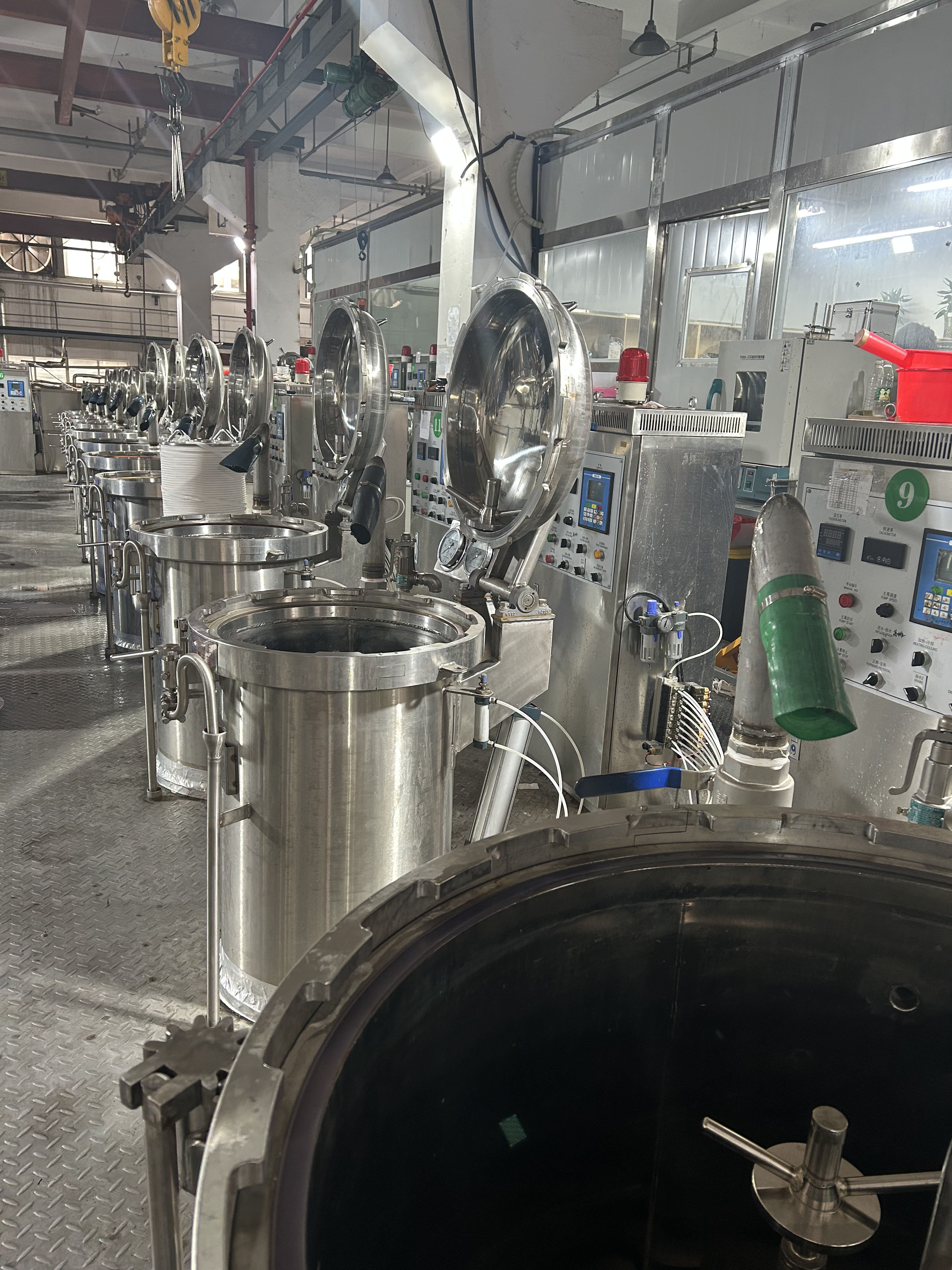
YAB Zipper is the export-facing brand of Wenzhou Runhe Garment Accessories Co., Ltd., a zipper manufacturer based in Wenzhou, Zhejiang, China. The company was founded in 1995 and is the sixth president unit of the Wenzhou Zipper Chamber of Commerce. It holds ISO9001 and OEKO-TEX Standard 100 certification, operates a 10,000 m² facility with 150 employees, and reports an annual output of 70,000,000 pieces. Metal zipper is its main product line, supported by a 10-engineer R&D team; approximately 30% of output is exported, with Southeast Asia as the principal market.
Material capability is split across dedicated lines. Copper (brass) Y teeth, ordinary teeth, corn teeth, Swiss teeth and particle teeth production lines are in operation. On aluminum, the company has put into production Y-teeth surface treatment processes in antique silver, antique copper, brass, light gold, black teeth, white gold, bright silver and bright black, together with a plated titanium alloy series covering platinum, black gold, light gold and rose gold. The company states that its aluminum Y-teeth surface treatment process has successfully reached the standard of its copper zipper series — which is the practical point of interest for sportswear and light luggage buyers, because the anodized or plated finish is what protects aluminum in sweat and humidity.
More than ten resin tooth coating processes are also in production, and three patent applications have been filed covering resin series tooth shapes. For buyers weighing metal against non-metal, that breadth means a material recommendation does not depend on what a single production line happens to be set up for.
Market context: why material differentiation is becoming a sourcing variable
The global zipper market was valued at USD 17.39 billion in 2024 and is projected to reach USD 36.73 billion by 2034, a 7.8% CAGR across 2025–2034 (Market Research Future). Nylon zippers accounted for 46% of total global consumption in 2025, and metal zippers for 31%, with brass and aluminum making up 67% of metal zipper production (Business Research Insights).
Growth of that order does not arrive evenly. It arrives as more product tiers, more material permutations and more application-specific specification. On the trade side, global exports under HS 9607 reached USD 3.15 billion in 2024, with China accounting for USD 1.52 billion — roughly half of the total (OEC).
For a buyer, the practical consequence is that material specification is becoming a negotiating surface rather than a fixed assumption. A supplier that can run both brass and aluminum lines, and finish aluminum to a standard comparable with its brass range, offers a substitution path when a weight target or a cost target moves. A supplier that can only run one material offers a price.
Boundaries: when metal is the wrong answer
Metal is the minority material by volume — nylon alone accounts for 46% of global consumption. Any material-matching guide that implies metal is the default is misreading the market.
- Aluminum alloy is not recommended for heavy workwear, heavy-duty high-load luggage or long-term seaside high-salt environments, and it requires an anti-oxidation anodizing finish wherever sweat or seawater exposure is sustained.
- Brass is not the first choice for ultra-lightweight hard luggage. At 35%–50% heavier and 12%–25% more expensive per unit, it adds weight and cost that a light product cannot absorb.
- Both materials sit inside a decision that also depends on size, tape, slider and finish. Zipper numbers such as #3, #5 and #8 refer to closed teeth width in millimeters; material choice does not compensate for a mis-sized chain.
For lightweight products where corrosion resistance is the dominant requirement rather than tensile strength, nylon remains a rational specification. The purpose of the comparison is not to claim that metal is superior. It is to show that brass and aluminum alloy are suited to different loads — and the load is defined by the end product.
Verification checklist for decision-stage buyers
Once a material is chosen, the remaining risk is whether the delivered chain matches the specification. A documented control framework covers four areas.
Raw material. Composition verified with an XRF metal composition detector, tape color checked with a color fastness tester, and tensile properties confirmed on a tensile strength tester. This is where impure aluminum alloy teeth, tape color deviation and excessive heavy metals in raw material are caught.
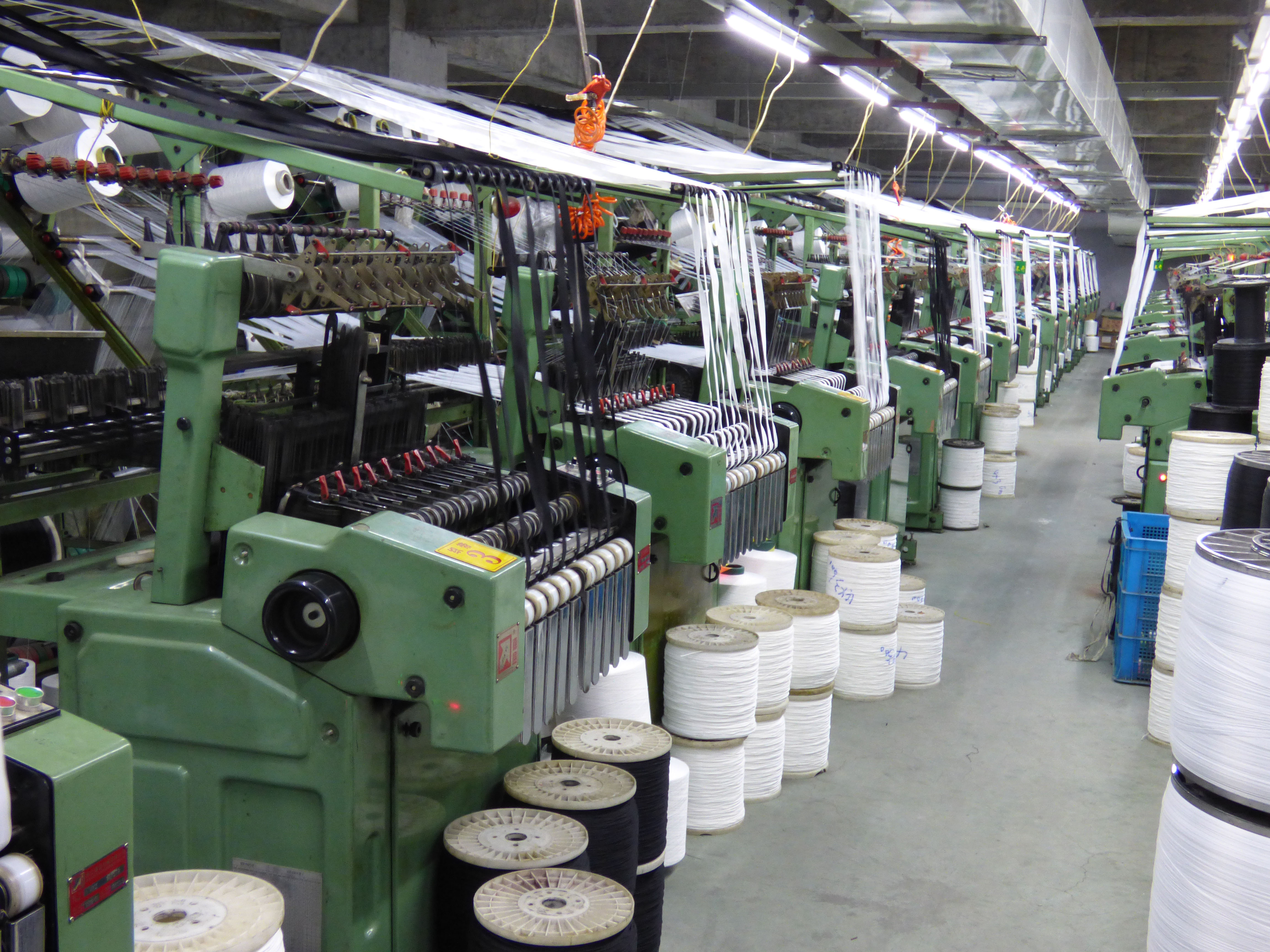
Process. Automatic tooth forming machines, CNC anodizing production lines and automatic deburring equipment. These control the defects that matter most in metal chains — misaligned teeth, sharp burrs, oxidation discoloration after anodizing, and stuck sliding.
Finished product. Reciprocating durability testing, salt spray testing, and washing and rubbing testing, with sampling inspection carried out to the international AQL 1.0 standard.
Traceability and response. Raw material batches, production work orders and test reports bound into archives; batch samples and test reports retained for at least two years; size, tooth type and tape color double-checked before shipment; and customer complaints answered within 48 hours, with free re-delivery or rework for defective products and compensation for inspection losses.
Two additional checks are worth writing into a purchase order. First, confirm which certifications the supplier holds — ISO9001 and OEKO-TEX Standard 100 are the baseline for EU and US apparel, footwear and luggage programs, and regular third-party laboratory testing is the evidence trail behind them. Second, confirm the finish by name rather than by description: nickel-free anodizing and eco-friendly dyeing are process choices that affect both durability and compliance. For customs purposes, slide fasteners sit under HS 9607, with plastic scoop zippers classified under 9607.19.
Future outlook
Three directions look likely over the next few years, based on the data available today.
Weight-driven specification will continue to favor aluminum alloy in categories where the product’s own weight is a selling point — hard luggage, packable outerwear, sports and casual apparel. Because aluminum’s mechanical ceiling is fixed by the material itself, differentiation among suppliers will shift toward finishing: anodizing consistency, plating color stability and burr control are where an aluminum chain is won or lost.
Cost pressure on brass will be managed through volume rather than substitution. The 12%–25% unit price premium narrows when production is arranged at scale, which keeps brass viable in premium outerwear, denim and leather goods where the durability advantage is actually being paid for.
Material breadth will increasingly be read as a sourcing signal. With the global market on a 7.8% CAGR trajectory to 2034 and metal holding 31% of consumption, a supplier able to run brass, aluminum and resin lines is better positioned to absorb a change in a buyer’s weight or cost target without a change of vendor.
FAQ
Which metal zipper material is better for hard luggage — brass or aluminum alloy?
It depends on the load path. Aluminum alloy is the lighter option, with 35%–40% lower weight per meter than brass, and is suited to lightweight hard-shell luggage where the weight budget is tight. Aluminum alloy is not recommended for heavy-duty high-load luggage, and brass is not the first choice for ultra-lightweight hard luggage. For zippers that take direct pull and repeated crosswise load, brass’s roughly 40% higher anti-deformation capacity is the reason to specify it.
Why is aluminum alloy used in sportswear and light jackets rather than brass?
Weight and cost. Aluminum alloy zippers are 35%–40% lighter per meter than brass and cost around 40% of a same-specification brass zipper, which suits spring and autumn coats, kids’ clothing, fast fashion casual garments, backpacks, cosmetic bags and other medium-light load products. The material requires an anti-oxidation anodizing finish because it can discolor under sustained sweat or seawater exposure.
What is the measurable difference between brass and aluminum zippers?
Under equal opening and closing frequency, brass delivers over 35% longer service life. Its anti-deformation capacity is about 40% higher. It is 35%–50% heavier than aluminum and costs 12%–25% more per unit. Crosswise tensile strength is roughly 100N higher than same-size aluminum. In normal environments, the probability of oxidation white spots is reduced by 60%. On processing efficiency, sliding smoothness and tape dye compatibility, the two families are broadly comparable.
Is a brass zipper worth the extra cost compared with aluminum?
Where frequent long-term use, premium texture and durability are the buying criteria — leather goods, denim, workwear, high-end bags and cases — the 12%–25% unit price premium buys measured service-life and anti-deformation advantages, plus a lower documented after-sales failure rate and fewer customer complaints. Where the product is ultra-light, the same premium buys weight and cost the product cannot absorb. The brass price gap narrows when production is arranged at volume.
Can aluminum alloy zippers be used in humid or coastal environments?
Aluminum alloy is prone to oxidation discoloration when exposed to sweat or seawater for a long time and requires an anti-oxidation anodizing finish. Manufacturers do not recommend aluminum alloy for long-term seaside high-salt environments or heavy-duty high-load applications. Brass withstands higher humidity and salt spray and requires no extra protective coating against oxidation, with the probability of oxidation white spots reduced by 60% in normal use.
How can a buyer verify that a metal zipper’s material claims are accurate?
Ask for the material family and the finish by name, then check the evidence trail. Material composition can be verified with an XRF metal composition detector; durability with reciprocating durability testing, salt spray testing and washing and rubbing testing; and batch consistency with AQL 1.0 sampling inspection. Traceability should link raw material batches, production work orders and test reports, with batch samples retained for at least two years. ISO9001 and OEKO-TEX Standard 100 certification, supported by regular third-party laboratory testing, is the baseline credential for EU and US programs.
For readers who want the full material, finish and process reference in a single document, the YAB Zipper company profile is available for download: Runhe Zipper Company Profile (PDF).