
Matching OFS06A-5 and OFS06B Sauna Rooms to Venue Scenarios
Sauna rooms are usually specified long before anyone decides on a model number. In hotel, guesthouse, wellness club and spa projects, the variable that actually decides the specification is the venue's operating pattern — how many sessions run per day, how long each session lasts, who supervises the equipment, how the cabin is powered, and how visible it is to guests. Get that mapping wrong and a technically sound infrared sauna room turns into an operational problem. Get it right and the same two model series can be repeated across a property portfolio for years without re-learning the product each time.
OCEAN FUTURE is the sauna room and spa equipment brand of FOSHAN GAOMING MUHE JINGCHENG SANITARY WARE CO., LTD., a manufacturer based in Foshan, Guangdong, China, operating a 50,000 m² factory with more than 200 employees and a product range covering sauna rooms, hot tubs, swim spas and cold plunges. The company states a sauna room portfolio that includes indoor, outdoor, infrared and traditional Finnish sauna rooms with OEM support. This article looks specifically at how two infrared series — OFS06A-5 and OFS06B — map onto four venue scenarios, and what that mapping means for buyers who intend to purchase repeatedly rather than once.
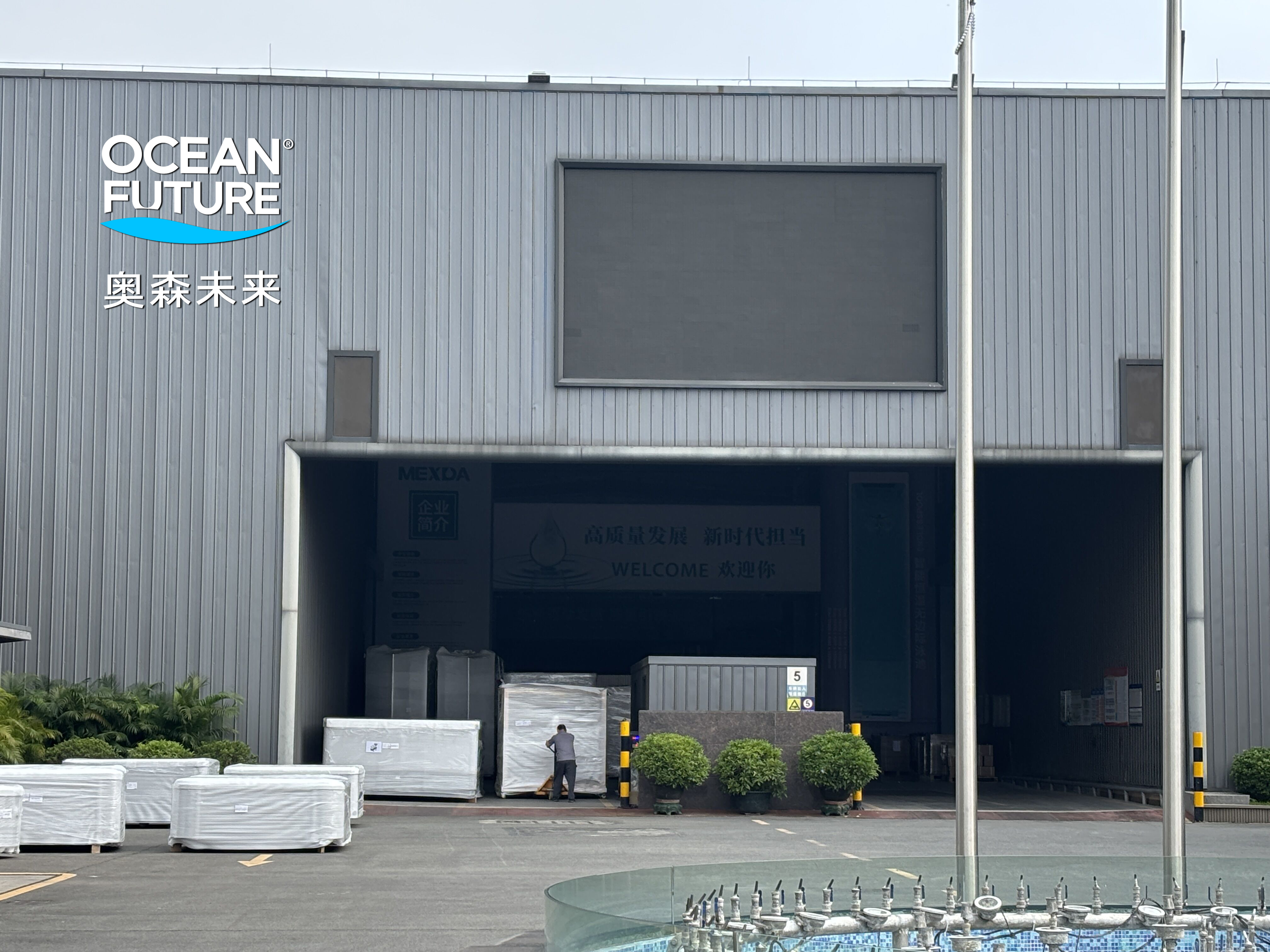
Sauna room production workshop: modular cabin assembly is the stage where scenario-specific configuration is fixed before shipment.
Why Venue Scenario, Not Model Number, Comes First
A hotel and a guesthouse can install cabins of similar size and still need different specifications. The hotel runs a brand standard across many rooms, expects housekeeping and front-desk staff to operate the equipment without training, and has to provision electrical capacity inside guest accommodation. A guesthouse runs one or two cabins, usually owner-operated, in a space where the cabin is part of the guest experience rather than a back-of-house utility.
Wellness and commercial clubs sit at the opposite end: higher session turnover, staff-supervised use, and a cleaning cycle between users. Spa facilities add a further constraint, because the cabin becomes part of a treatment sequence and has to hold a consistent ambience — lighting, audio, and a predictable heat profile — while therapists control the session.
Those four patterns produce different priorities for power rating, control behaviour, wood selection and comfort features. Treating them as one purchase decision is where most specification errors begin.
The OFS06A-5 and OFS06B Series: A Shared Platform
Both series are built on the same architectural logic: a prefabricated infrared sauna cabin with far infrared heating plates governed by an AV1 controller. Together, the two series span a power range from 1500W to 3850W, which is the working envelope a buyer selects from rather than a single fixed specification.
The material and comfort layer is shared as well. Cabins are offered in hemlock, aspen and red cedar, with tempered glass windows, colorful lighting, FM radio, Bluetooth, USB and two speakers. For a venue operator, that combination matters more than it first appears: audio and lighting are not decorative extras in a hospitality setting, they are part of how the guest perceives the session, and USB and Bluetooth determine whether a guest can play their own content without staff involvement.
Wood choice is the second decision layer. Hemlock, aspen and red cedar differ in cost positioning, aroma and moisture behaviour, and buyers in commercial settings generally select the wood against the venue's cleaning regime and visual language rather than against a single performance metric.
Power Ratings from 1500W to 3850W: A Sizing Logic
Within the 1500W–3850W envelope, the selection rule is heated volume and session turnover, not prestige. A compact cabin used by one or two people for a short session sits at the lower end of the range. Larger multi-person cabins, or cabins that must recover quickly between back-to-back sessions, sit at the upper end.
Two practical consequences follow. First, a higher-output configuration places greater demand on the venue's electrical provisioning, so the rating should be confirmed with the project electrician before the cabin is ordered rather than after it arrives. Second, overspecifying does not automatically improve the guest experience — it improves recovery time, which only matters where sessions queue.
Decision rule: match the power rating to heated volume and to how many sessions the venue expects per hour. Guesthouses and hotel suite installations typically sit at the lower end; commercial clubs and multi-person spa cabins typically sit at the upper end of the 1500W–3850W range.
AV1-Controlled Far Infrared Heating Plates
Both series route heating control through an AV1 controller rather than distributing control across individual plates. That design choice has an operational meaning that is easy to overlook in a specification sheet: the cabin behaves the same way in every room, regardless of which staff member prepared it.
In a hotel with multiple cabins, that consistency is what allows housekeeping to follow one procedure instead of a room-specific one. In a spa, it allows a therapist to hand over a session without re-explaining the equipment. In a guesthouse, it reduces the number of things an owner has to manage between guests. Where a venue runs supervised sessions, staff presence still governs the experience; where it runs unsupervised sessions, controller consistency is the main safeguard against variation.
Comfort and Experience Features by Venue Type
Tempered glass windows change how a cabin sits in a room. In a hotel suite or a spa corridor, visibility reduces the sense of an enclosed box and lets staff see occupancy at a glance. In a guesthouse, the same window turns the cabin into part of the interior rather than a utility installation.
Colorful lighting and the audio layer — FM radio, Bluetooth, USB and two speakers — carry different weight by venue. Spas use lighting to match a treatment mood and audio to control pace. Clubs use audio to shorten the perceived session length. Hotels mostly need features that work without instructions.
Scenario Mapping: Hotel & Hospitality
Hotels buy for repetition. The priority is a cabin that can be installed across multiple rooms or floors with the same specification, the same control interface and the same maintenance procedure. In this scenario the OFS06A-5 and OFS06B series function as a standard rather than a one-off: a lower power setting for compact in-suite cabins and a higher setting where a larger cabin serves a shared wellness area.
The practical checks are electrical provisioning per room, the cleaning cycle between guests, and whether the cabin's wood and lighting match the property's interior standard. Because the features are shared across the platform, a hotel can standardise on one series and vary only the power rating and wood finish.
Scenario Mapping: Guesthouse
Guesthouses usually install one or two cabins in a space where floor area is fixed and the owner operates the equipment personally. The dominant constraints are footprint, power availability and simplicity. A cabin at the lower end of the 1500W–3850W range, with a wood finish that reads as part of the room, is the typical fit.
For this buyer the long-term consideration is not capacity but serviceability: whether the same model can be reordered later, and whether the control interface stays identical if the property adds a second cabin. Standardising on one series early avoids a mixed fleet later.
Scenario Mapping: Wellness & Commercial Club
Clubs run the highest session turnover of the four scenarios. Cabins are used continuously, cleaned between users, and judged on consistency rather than novelty. Here the upper end of the power range earns its place, because recovery time between sessions directly affects how many bookings a cabin can absorb.
Durability requirements are also higher. OCEAN FUTURE specifies an aluminum-plastic composite panel casing that is water and UV resistant, a sealed structure, overheat protection and corrosion-resistant hardware, supported by pre-delivery environmental safety testing and quality inspection. In a club environment those are the specifications that determine maintenance cost, not the comfort features.
Scenario Mapping: Spa Facilities
Spa facilities integrate the cabin into a treatment sequence, so ambience and repeatability matter as much as output. Colorful lighting, the audio layer and a consistent AV1-controlled heat profile allow a therapist to deliver the same session to different guests.
Spa environments also carry the highest humidity exposure of the four scenarios, which makes the casing and sealed structure specification relevant, and makes placement a design decision rather than an afterthought. A far infrared cabin is a dry-heat environment; it should not be treated as interchangeable with a steam room in a wet spa zone.
Scenario Fit at a Glance
| Venue scenario | Usage pattern | Power position within 1500W–3850W | Feature emphasis | Primary buyer check |
|---|---|---|---|---|
| Hotel & hospitality | Multiple cabins, guest self-service, housekeeping cycle | Lower end for in-suite cabins; higher end for shared wellness areas | Tempered glass window, lighting consistency, simple controls | Per-room electrical provisioning and a single standard specification |
| Guesthouse | One or two cabins, owner-operated, low turnover | Lower end | Wood finish, window, audio for guest use | Footprint and the ability to reorder the same model later |
| Wellness & commercial club | High turnover, staff-supervised, cleaning between users | Upper end | Casing durability, sealed structure, overheat protection | Recovery time between sessions and maintenance exposure |
| Spa facilities | Treatment-integrated, therapist-controlled, humid surroundings | Mid to upper end depending on cabin size | Colorful lighting, audio layer, consistent heat profile | Humidity protection and placement outside wet zones |
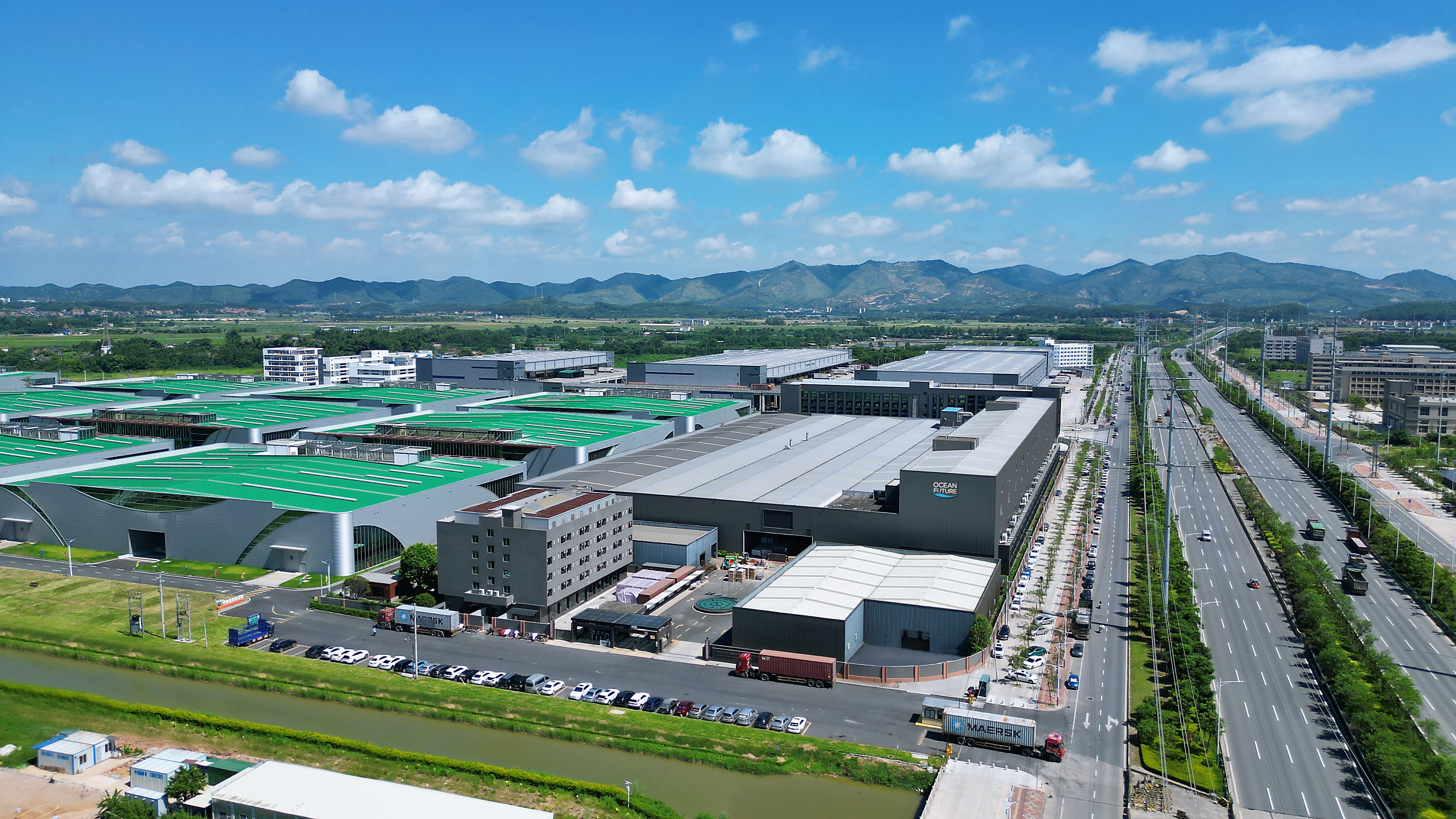
Production footprint: repeat orders depend on the same configuration being reproducible, not just on initial capacity.
Compared with Traditional Fixed Sauna Construction
The comparison that matters for venue buyers is not infrared versus traditional as a wellness philosophy, but prefabricated modular cabin versus site-built fixed sauna. OCEAN FUTURE's own comparison data positions modular, portable cabins with dual heating options against traditional fixed sauna rooms and single-mode cabins, citing assembly time reduced by 70% and heating speed up by 40%.
| Dimension | Prefabricated modular sauna room (OFS06A-5 / OFS06B) | Traditional fixed site-built sauna |
|---|---|---|
| Installation | Modular assembly; company comparison data cites assembly time reduced by 70% | Site construction with sequence-dependent trades |
| Heat-up behaviour | Company comparison data cites heating speed up by 40% | Stone-based heating with longer warm-up |
| Initial cost | Company comparison data cites initial cost about 10% lower than custom-built saunas | Custom-built pricing per project |
| Five-year cost of ownership | Company comparison data cites total cost of ownership nearly 30% lower over five years | Higher long-run maintenance and refurbishment exposure |
| Maintenance | Simple cleaning; sealed structure and corrosion-resistant hardware | Depends on site materials and workmanship |
| Relocation | Modular and portable | Effectively fixed |
Assembly-time, heating-speed and cost figures above are OCEAN FUTURE's own comparison data and should be validated against the buyer's site conditions and labour rates.
Where the modular infrared approach does not fit
There is a real boundary here. Far infrared heating plates deliver radiant heat without water on stones, so a venue whose brand promise is an authentic Finnish löyly experience should not substitute an infrared cabin for that ritual — OCEAN FUTURE's portfolio also includes traditional Finnish sauna rooms for exactly that reason. Second, a cabin at the top of the 1500W–3850W range requires electrical provisioning that older buildings may not have, and retrofitting supply capacity can outweigh the savings the modular format creates. Third, the casing is specified as water and UV resistant, but the cabin remains a dry-heat environment and should not be placed where it is treated as a wet-room fixture.
Market Trend Analysis: Documentation Is Catching Up with Demand
Two regulatory developments have changed what venue buyers are asked to document. In Europe, EN 18164 was published in February 2026 and covers the design and construction of sauna rooms, warm-air rooms, steam rooms and soft steam rooms in public facilities. In the United States, the electric sauna heater standard UL 60335-2-53 was published in June 2025. The two are not interchangeable: room construction and heater compliance are separate review objects, and a hotel or spa project may need both files.
Demand context supports continued investment. Technavio reports the US sauna market at USD 437.4 million in 2025, growing at a CAGR of 6.5% during 2026–2030. Harvia estimates the global sauna market at close to EUR 4 billion in value, with roughly 18 million saunas installed worldwide. Public market-size figures for saunas nonetheless disagree by orders of magnitude between commercial research vendors, so these numbers are best used directionally rather than as a sizing basis for a single project.
Compliance documentation is a separate matter from market data. A secondary trade article references CE-EMC compliance for OCEAN FUTURE tested by Guangzhou STU Hengchuang Testing Service Co., Ltd. covering EN IEC 55014 and EN 61000 series standards. Buyers should still obtain the certificate documents and confirm model-level coverage before committing to a repeat order.
From First Order to Long-Term Program: Execution Checks
Scenario fit only converts into a durable supply relationship if the commercial terms support repetition. OCEAN FUTURE states a monthly production capacity of 400 sets, with a minimum order quantity of 1 set, delivery terms covering EXW, FOB, CFR, CIF, DAP and DDP, pre-shipment testing as the acceptance criterion, and payment terms of 30% deposit with 70% balance before shipment. Company-published figures also cite a 50,000 m² factory, a 9-engineer R&D team, and an export share of 85% across the USA, Australia, the EU and Germany.
For a multi-property operator, the more important question is configuration control: whether the same power rating, wood and control interface can be re-specified identically on the next order. That is where standardising on one series across venue types pays off, because spares, staff training and maintenance procedures stay unchanged as the portfolio grows.
Product and specification documentation: OCEAN FUTURE sauna room catalogue (PDF).
Production process: pre-shipment testing is the acceptance point that repeat buyers rely on.
Future Outlook
As EN 18164 and UL 60335-2-53 move from publication into procurement templates, scenario documentation is likely to become a tender requirement rather than a buyer's internal note. Operators will be asked to show why a specific cabin specification suits a specific venue type, not only that the equipment meets an electrical standard. Venues that already hold a two-series standard across hotel, guesthouse, club and spa settings will find that transition easier, because the mapping already exists in their own procurement records.
The parallel trend is portfolio standardisation. As hospitality groups add wellness space to existing properties, the cost of a mixed fleet — different controls, different spares, different staff instructions — becomes visible. A platform approach, in which one series covers several venue types with differing power ratings and finishes, is the more durable structure for buyers planning beyond a single opening.
FAQ
Which OFS06 configuration suits a small guesthouse with limited floor space?
A compact cabin positioned at the lower end of the 1500W–3850W range is the usual fit for a guesthouse, because heated volume and occupancy are low and the owner operates the equipment directly. The constraints to confirm first are footprint, available power supply and whether the same model can be reordered if a second cabin is added later.
How does the AV1 controller affect daily operation in a hotel versus a spa?
The AV1 controller centralises control of the far infrared heating plates, so the cabin behaves consistently regardless of who prepares it. In a hotel this supports one housekeeping procedure across multiple cabins; in a spa it allows a therapist to hand over a session without re-explaining the equipment.
What power rating should a hotel suite or a spa treatment room specify?
The rating should follow heated volume and expected session turnover within the 1500W–3850W envelope. In-suite cabins for one or two users typically sit at the lower end; larger multi-person cabins, or cabins that must recover quickly between bookings, sit at the upper end. The rating should be confirmed with the project electrician before ordering.
What commercial terms apply to a trial order and to a repeat order?
OCEAN FUTURE states a minimum order quantity of 1 set, delivery terms covering EXW, FOB, CFR, CIF, DAP and DDP, pre-shipment testing as the acceptance criterion, and payment terms of 30% deposit with 70% balance before shipment. Monthly production capacity is stated at 400 sets, and company-published figures cite a 30–40 day lead time.
Which maintenance risks matter most in humid spa and club environments?
The two documented risks are overheating and moisture or humidity damage. OCEAN FUTURE specifies overheat protection, an aluminum-plastic composite panel casing that is water and UV resistant, a sealed structure and corrosion-resistant hardware, supported by pre-delivery environmental safety testing and quality inspection. Placement outside wet zones remains a design responsibility for the venue.
Can one series standard cover hotels, guesthouses, clubs and spas at the same time?
A single series can cover multiple venue types when the power rating and wood finish are varied to match each setting, because the control interface, comfort features and maintenance procedure remain the same. Where a property requires an authentic stone-based Finnish sauna experience, that is a separate product decision rather than a variation within the infrared platform.
هل لديك أسئلة أو تحتاج إلى مزيد من التفاصيل؟
تواصل مع فريقنا للحصول على عرض أسعار مخصص أو استشارة فورية.
طلب عرض أسعار
املأ النموذج أدناه وسيتواصل معك فريقنا بعرض مقترح مخصص.
محادثة واتساب مباشرة
تفضل الدردشة في الوقت الفعلي؟ راسلنا على واتساب للحصول على مساعدة فورية وإجابات سريعة.
- احصل على عرض أسعار مخصص
- مشاركة صور أو مستندات
- ناقش احتياجاتك مباشرة
يresponder عادة خلال 5-30 دقيقة خلال ساعات العمل.