
Matching PID Temperature Controllers to Project Conditions
Temperature control in semiconductor and industrial process equipment is rarely a single-product decision. A ±0.1°C accuracy specification is only the starting point; the same target can be implemented in a 48x48 mm panel-mount controller, a multi-channel DIN rail controller, a heating-tape controller with built-in SSR, or a pipeline gas heater. Each option answers a different project condition.
For buyers evaluating a PID temperature controller manufacturer, the practical question is whether the supplier's product family and engineering support match the installation environment, load type, communication architecture, and compliance requirements. Cakeen, an industrial control electronics manufacturer based in Wuxi, China, structures its temperature control products around these working conditions rather than around a single controller model. The company focuses on semiconductor industrial control electronics, electrical cabinet systems, and AI embedded systems.
Why Project Conditions Change the Manufacturer Decision
Procurement teams often begin with price and brand. In semiconductor fabs and industrial automation, however, controller failures are frequently integration failures: the controller has the right accuracy but the wrong mounting style, the wrong output stage, or insufficient communication capability. A panel-mount device may not fit a dense cabinet, a single-channel controller may not support a multi-zone process, and a low-current built-in SSR may not drive a large heating element. These are not controller accuracy problems; they are project adaptation problems.
Market evidence points to the same conclusion. According to SNS Insider, the global PID controller market was valued at USD 1.60 billion in 2024 and is projected to reach USD 2.24 billion by 2032. Strategic Market Research projects that the industrial temperature controller market will grow at a CAGR of 7.1% from 2024 to 2030. Market Research Reports estimates the global semiconductor temperature control equipment market at USD 663 million in 2024. As process tools and factory automation systems add more temperature-controlled zones, the selection logic shifts from component lists to application fit.
A Product Family Designed Around Working Conditions
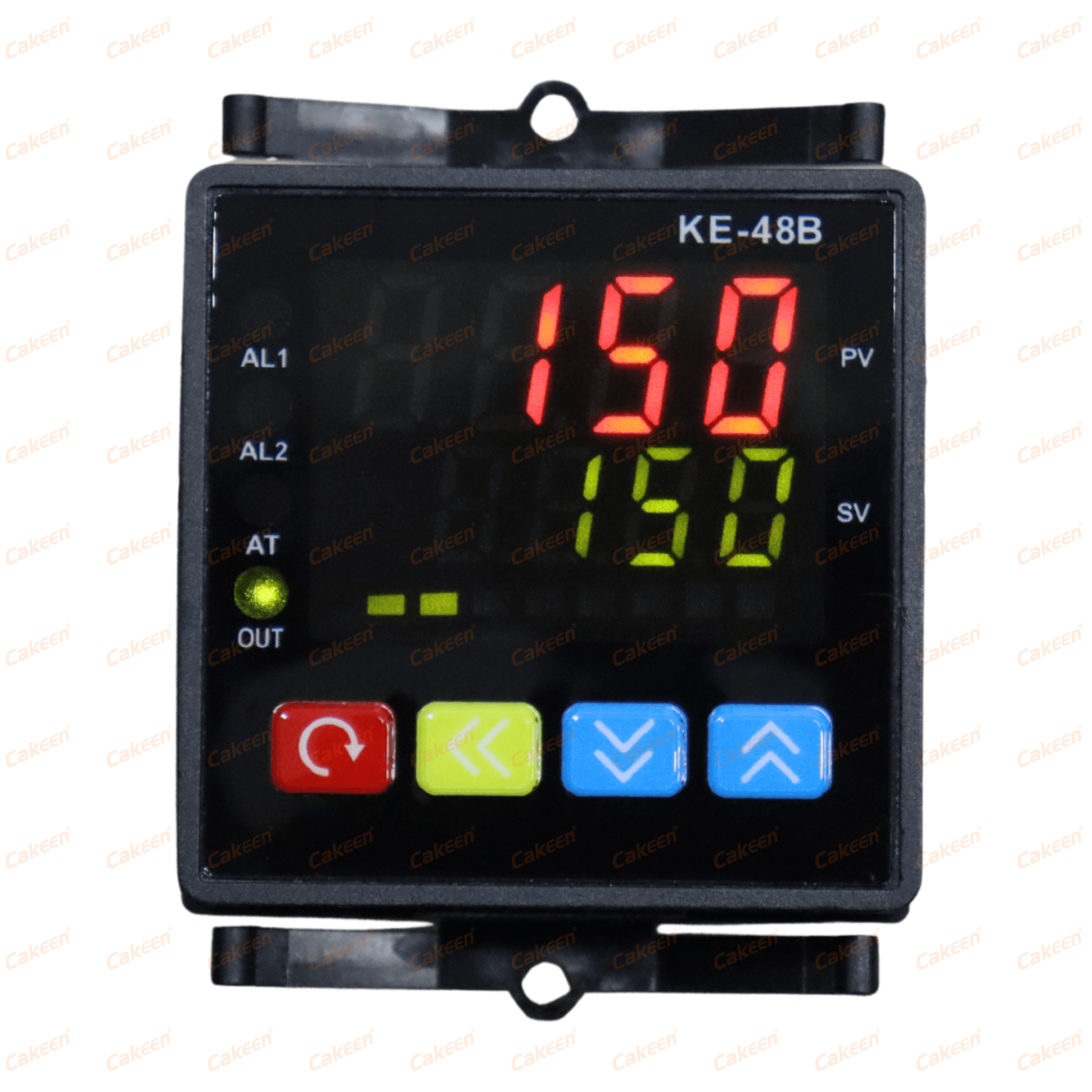
Cakeen's control product family covers several installation and process types. For panel-mount projects, the KE-48 is a 48x48 mm single-channel controller with ±0.1°C control accuracy and input flexibility for PT, K, J, R, S, T, B, E, N and L sensors. For multi-channel electrical cabinets, the KE-2104 is a DIN rail mount four-channel PID controller with external SSR output, 12-24VDC power, and DIN35 rail mounting. For heating tape and vessel insulation, the ASH, H6625 and KE-H10 models integrate built-in SSR output and RS485/Modbus RTU communication. For pipeline nitrogen heating, the HOT-GUN operates from 0 to 250°C with ±1°C control, AC 220V, and 800-1600W heating power. For process gas delivery, the HOT N2 MFC provides flow control with ±1% F.S. accuracy and a 1-100 SLM range. For centralized management, the K42CE-D communication module offers six RS485 ports and one Ethernet port, and the CMS industrial device central monitoring system handles 10,000+ Modbus TCP devices with 10-second real-time polling and 365-day time-series data retention.
Controller Selection Criteria in a Semiconductor Project
Selection should be driven by five engineering parameters.
1. Mounting Form Factor
Panel-mount controllers such as the KE-48 use a standard 48x48 mm cutout and are suited for operator-facing panels or equipment retrofit. The KE-2104 uses DIN35 rail mounting and is suited for new electrical cabinets where space is planned around multiple control modules. Heating-tape controllers such as the ASH, H6625 and KE-H10 are compact standalone units designed for pipe and vessel installations.
2. Channel Count
Single-channel controllers cover one temperature zone. The KE-2104 provides four channels in one DIN rail unit, reducing cabinet space when multiple zones must be controlled. Multi-channel PID controllers are often required when a single process chamber or cabinet contains several heaters and sensors.
3. Output Stage
Controllers can drive an external SSR, an analog output, or a built-in SSR. The KE-48 supports SSR and analog outputs including 0-20mA, 4-20mA and 0-10V. The KE-2104 is configured for external SSR output. The ASH and H6625 include a built-in SSR rated up to 3A; the KE-H10 raises this to 6A. The output stage must match the heater type and load current.
4. Communication
The KE-48, ASH, H6625 and KE-H10 communicate over RS485 with Modbus RTU. For larger networks, the K42CE-D converts multiple RS485 segments to Ethernet using Modbus TCP/RTU. The CMS central monitoring system adds temperature and alarm management for 10,000+ Modbus TCP devices with a 10-second polling interval and 365-day time-series history, which is useful for maintenance planning and process audits.
5. Power Supply and Certification
The KE-48, ASH, H6625 and KE-H10 operate from 100-265V AC; the KE-2104 uses 12-24VDC. Certification requirements should be checked at the system level. Cakeen reports ISO9001, ISO14001, ISO45001, UL, SEMI S2, CE and ROHS certifications. In North America, industrial control panels and components are commonly assessed against UL 508A; IEC 60947 is relevant for many international markets, according to UL Solutions.
| Model | Form factor | Channels | Output / I/O | Communication | Power |
|---|---|---|---|---|---|
| KE-48 | Panel mount 48x48 mm | Single | SSR / 0-20mA / 4-20mA / 0-10V | 1x RS485 | 100-265V AC |
| KE-2104 | DIN35 rail | 4 | External SSR | — | 12-24V DC |
| ASH | Heating-tape standalone | Single | Built-in SSR, MAX 3A | RS485 / Modbus RTU | 100-265V AC |
| H6625 | Mini heating-tape | Single | Built-in SSR, MAX 3A | RS485 / Modbus RTU | 100-265V AC |
| KE-H10 | Heating-tape standalone | Single | Built-in SSR, MAX 6A | RS485 / Modbus RTU | 100-265V AC |
| HOT-GUN | Pipeline N2 heater | — | Heating power 800-1600W | — | AC 220V |
| HOT N2 MFC | Gas flow controller | — | Flow accuracy ±1% F.S. | — | — |
| K42CE-D | CMS communication module | — | 2x NPN I/O | 6x RS485, 1x Ethernet, Modbus TCP/RTU | 12-24V DC |
- Define the mounting location: panel cutout, DIN35 rail, or pipeline installation.
- Confirm the number of control channels and temperature zones.
- Identify load type and current: heating tape, heating jacket, heating mantle, or other resistive heating element.
- Choose the output stage: built-in SSR, external SSR, or analog output.
- Specify communication: local RS485/Modbus RTU or Ethernet-based central monitoring.
- Check power supply: 100-265V AC or 12-24V DC.
- Review compliance: CE, UL, SEMI S2, ROHS, and regional panel standards.
- Decide whether OEM/ODM customization is required for the final equipment platform.
Application Cases and Evidence
Semiconductor Equipment OEM Integration
In a documented project, a semiconductor equipment OEM integrated Cakeen controllers into CVD, etching and diffusion furnace equipment. The program has run for more than four years with over 50 units per year. The KE-48 was selected because its compact 48x48 mm panel-mount design fits the OEM equipment interface; the KE-2104 four-channel DIN rail controller was used where cabinet space had to be saved. The documented result was improved equipment uptime and consistent process temperature across all chambers.
Heating Tape and Vessel Insulation
For pipe and vessel insulation and heating control, the ASH, H6625 and KE-H10 are designed for 24/7 continuous operation. The H6625 mini size is used in space-constrained installations, including semiconductor equipment pipeline heating and chemical delivery insulation. The KE-H10 provides a 6A built-in SSR output for higher-power heating tape applications. The ASH is positioned for general-purpose pipe and vessel insulation and heating control.
Hot N2 Pipeline Heating and Gas Delivery
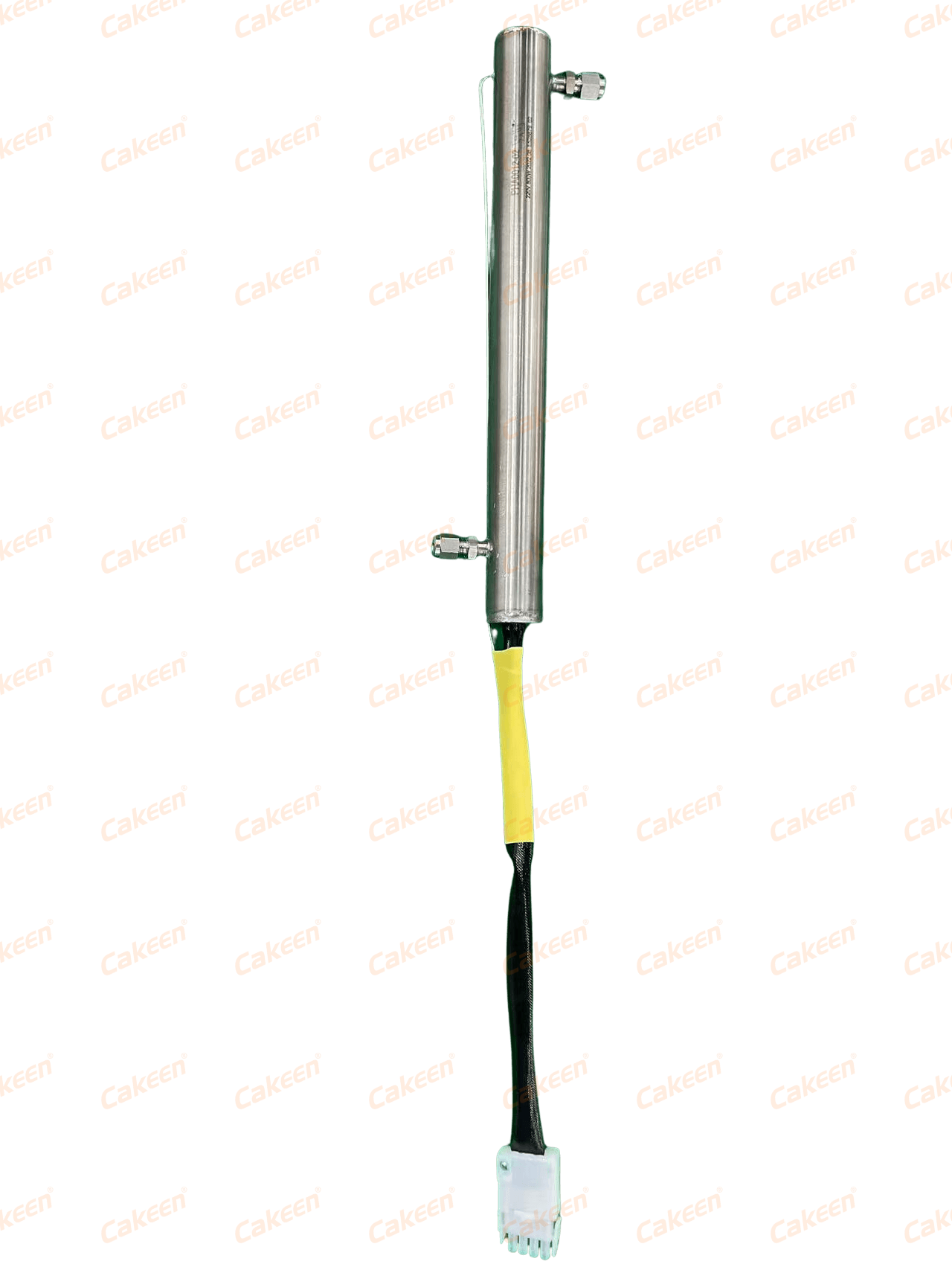
HOT-GUN is used in semiconductor thermal processing equipment under pipeline nitrogen heating, anti-condensation on pipe walls, and medium-high temperature conditions. It operates with ±1°C control accuracy, a 0-250°C setpoint range, and 800-1600W heating power. For process gas delivery, the HOT N2 MFC operates in high-purity gas environments and controls flow in the 1-100 SLM range with ±1% F.S. accuracy.
Centralized Multi-Device Monitoring
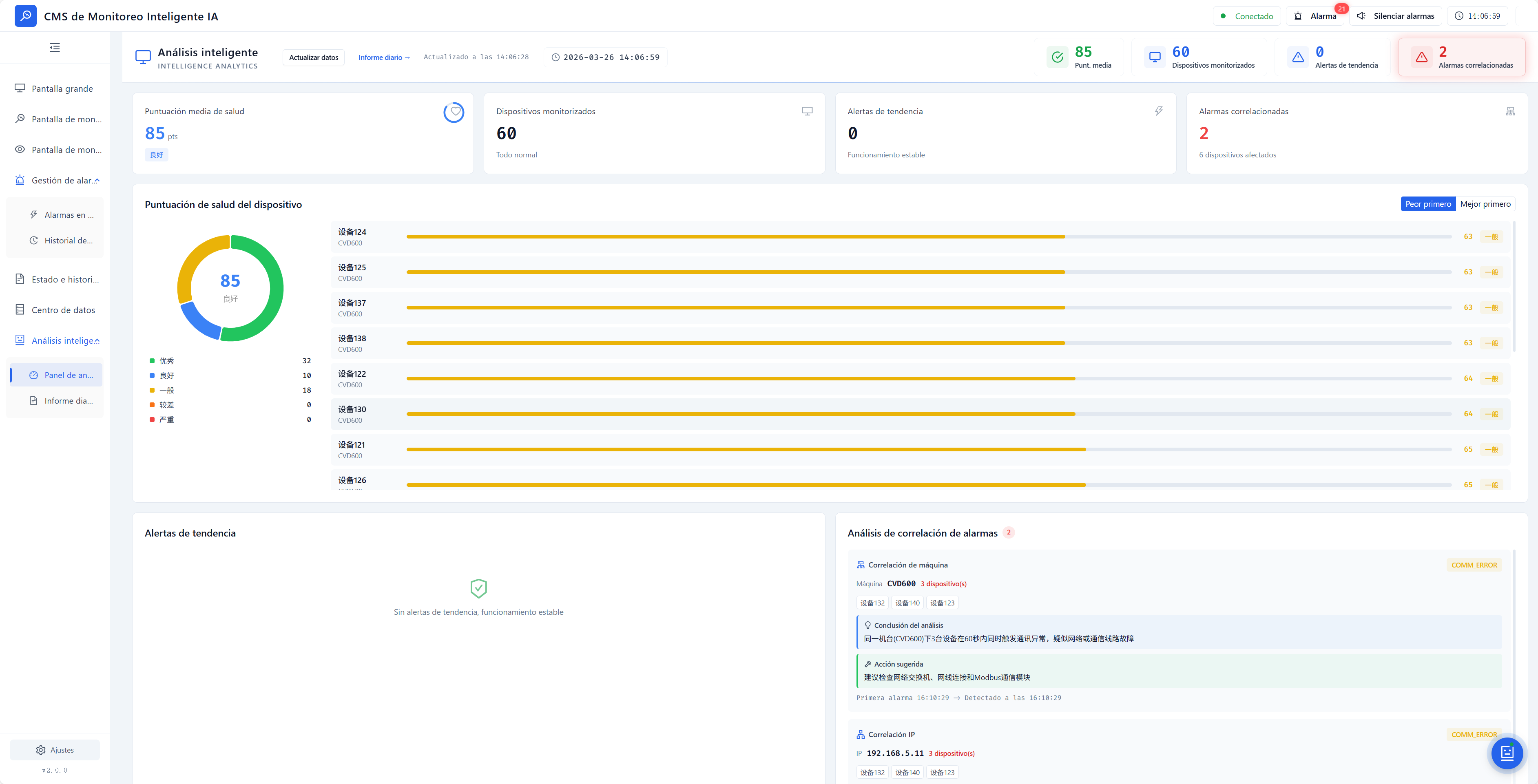
For factories with many temperature-controlled zones, the K42CE-D communication module supports multi-485 device networking, low-latency parameter setting, data acquisition and forwarding. The CMS platform provides temperature monitoring and alarm management, supports 10,000+ Modbus TCP devices, uses 10-second real-time polling and retains 365 days of time-series history in InfluxDB. This architecture turns separate PID controllers into one supervisory temperature control system.
Market Context for PID Temperature Controller Sourcing
Multiple data points suggest that temperature control is becoming more important to equipment design. The global PID controller market is expected to expand from USD 1.60 billion in 2024 to USD 2.24 billion by 2032, according to SNS Insider. The industrial temperature controller market is projected to grow at a CAGR of 7.1% through 2030, according to Strategic Market Research. Asia-Pacific accounted for 38.2% of the temperature controller market in 2023, with China as a key manufacturing hub, according to Dataintelo. The semiconductor temperature control equipment market was estimated at USD 663 million in 2024, according to Market Research Reports. SNS Insider also reports that oil and gas accounted for the largest end-user share of PID controllers in 2024 at approximately 31.4%.
Mordor Intelligence lists Honeywell, Omron, Siemens, Eurotherm and ABB among leading global temperature controller manufacturers. This competitive context is useful because buyers are not choosing between a regional supplier and a global brand; they are comparing integration depth, form-factor fit, OEM capability, and service response. High-precision PID controllers can achieve ±0.1°C stability, a performance level that Grand View Research identifies as critical for semiconductor lithography and etching. That matches the control accuracy specified across Cakeen's controller family.
Trend Signals for Buyers
- Multi-channel control is becoming standard in cabinet-based equipment, increasing demand for DIN rail controllers.
- Heating tape, heating jacket, mantle and vessel insulation projects need controllers with built-in SSR output and appropriate current ratings.
- Communication and monitoring are moving from optional features to system requirements, especially in semiconductor process environments.
- OEM/ODM customization is used to match controller parameters, logo, appearance and functional configuration to a specific equipment platform.
- Compliance remains a regional decision: UL 508A, IEC 60947, CE, SEMI S2 and ROHS may all be relevant depending on final system destination.
Application-Matched Selection vs Traditional Catalog Purchase
Traditional temperature controller sourcing often starts with a brand catalog and a price list. The buyer selects one universal controller, then designs the cabinet, SSR, power supply and communication network around it. The application-matched approach starts with the operating condition and then selects the controller form factor, output stage, communication interface, and OEM options from a family designed for those conditions.
| Selection dimension | Traditional catalog purchase | Application-matched selection |
|---|---|---|
| Starting point | Brand and price list | Working condition and load type |
| Form factor | One universal panel controller | Panel-mount, DIN rail, heating-tape or pipeline heater matched to installation |
| Output integration | Buyer adds SSR and analog wiring | Built-in SSR or external SSR output pre-specified by model |
| Communication | Separate gateway often required | RS485/Modbus RTU plus K42CE-D Ethernet bridge |
| Supporting services | Catalog literature | OEM/ODM customization, 100% test, remote support |
An application-matched approach has boundaries. The ASH and H6625 controllers integrate a built-in SSR rated up to 3A; the KE-H10 raises this to 6A. If the heating load exceeds these ratings, the project needs a controller with external SSR output, such as the KE-2104, and an appropriately sized external SSR. The KE-2104 itself is a DIN rail device, so it is not a direct replacement for a 48x48 mm panel-mount controller. These limits are not defects; they are specification requirements that should be documented before procurement.
Future Outlook
Temperature control is moving toward connected, project-specific systems. Market growth estimates, the expansion of semiconductor temperature control equipment, and the need for centralized monitoring all point in the same direction. In a semiconductor temperature control system, the controller is no longer an isolated instrument; it is one node in a network that includes sensors, SSRs, communication modules, and monitoring software. Buyers can expect more OEM/ODM requests, more multi-channel cabinets, and more software-based alarm management. The practical discipline is to map the application first: load type, mounting, channel count, communication protocol, compliance, and service model. Once those conditions are clear, the PID temperature controller manufacturer decision becomes a matching exercise rather than a price-only comparison.
FAQ
1. What project conditions should be defined before selecting a PID temperature controller?
Define installation form, channel count, load type and current, communication protocol, power supply, and compliance requirements. Cakeen's range covers panel-mount KE-48, four-channel DIN rail KE-2104, heating-tape ASH/H6625/KE-H10, pipeline N2 HOT-GUN, communication module K42CE-D, and CMS monitoring software.
2. Which Cakeen controller is suitable for heating tape or vessel insulation projects?
The ASH is a heating tape PID temperature controller for pipe and vessel insulation. The H6625 is a mini version for space-constrained installations. The KE-H10 provides up to 6A built-in SSR output. All three are single-channel models with ±0.1°C control accuracy, RS485/Modbus RTU communication, and 100-265V AC power.
3. What is the difference between a panel-mount and a DIN rail PID controller?
The KE-48 is a single-channel 48x48 mm panel-mount controller with SSR and analog output options plus one RS485 port. The KE-2104 is a four-channel DIN35 rail controller with external SSR output and 12-24VDC power. Panel-mount is used for operator-facing panels; DIN rail is used for cabinet-based multi-zone systems.
4. What options are available for Hot N2 control in semiconductor process gas delivery?
HOT-GUN is a pipeline nitrogen gas heater with ±1°C control from 0 to 250°C, AC 220V, and 800-1600W heating power, used to prevent condensation on pipe walls. The HOT N2 MFC is a high-precision flow controller for semiconductor process gas delivery, with ±1% F.S. accuracy and a 1-100 SLM flow range.
5. Can the manufacturer support OEM/ODM customization during project sourcing?
Yes. Cakeen supports OEM/ODM production with customization of all parameters, logo and appearance functions. Controller-level programs can use a monthly capacity of 40,000 units, a MOQ of 500 units, a lead time of 30-45 days, 100% test, and remote after-sales support.
6. How are multiple PID controllers connected to a central monitoring system?
Controllers such as the KE-48, ASH, H6625 and KE-H10 support RS485/Modbus RTU. For larger systems, the K42CE-D communication module provides six RS485 ports and one Ethernet port with Modbus TCP/RTU. The CMS industrial device central monitoring system supports 10,000+ Modbus TCP devices with 10-second polling and 365-day time-series history.