
Matching PP Trigger Sprayers to Chemical Packaging Scenarios
The global trigger sprayer market was valued at USD 491.8 million in 2025 and is projected to grow at a compound annual growth rate of 4.7% between 2026 and 2034, according to Fortune Business Insights. That figure covers the sprayer closure itself; a separate estimate of USD 2.6 billion, attributed in the same data set to Towards Packaging, appears to include the complete trigger spray bottle assembly — a methodology difference worth noting before any single market-size number is treated as a measure of real supply-base depth. For packaging and procurement teams working on chemical and daily-use chemical products, the operative question is narrower: which trigger sprayer fits which product scenario, and what has to be verified before a repeat order is released.
Scenario fit is the procurement variable that decides whether a chemical product works in the field
A trigger sprayer is a low-cost element of a chemical packaging programme, yet it is the element the end user touches on every single use. In the chemical and daily-use chemical industry, scenario fit is determined by three documented variables plus one structural variable: thread finish, material, spray type, and mechanical features such as locking or angular adjustment.
MILA Plastic Industry documents ten trigger sprayer models with a thread size of 28/400 and 28/410. Four of them — ML-101G1, ML-101G2, ML-102B1 and ML-102B2 — are specified as All-Plastic Trigger Sprayers. The remaining six — ML-103C1, ML-201B1, ML-201B2, ML-202D1, ML-203H1 and ML-204Z1 — are specified as Plastic Trigger Sprayers in PP. Spray type splits across the range as mist or foam, and four documented end applications recur throughout: household kitchen degreaser, bathroom and toilet cleaner, glass and window cleaner, and car care and auto detailing.
That structure is the reason scenario fit can be treated as a shortlisting exercise rather than a catalogue search. A buyer who starts from the product's target surface and formulation, then filters on spray type, cover configuration and thread, arrives at a defensible shortlist before commercial terms are discussed.
The problem: late specification, fixed neck standards and unverified chemistry assumptions
Three recurring problems push trigger sprayer selection into the wrong part of a packaging programme.
Late specification. When the bottle, label and formulation are frozen first, thread and spray-type mismatches surface at pilot fill rather than at the specification stage. A neck that does not seal cleanly, a spray pattern that is wetter than the cleaning task requires, or a trigger that actuates inside a packed carton all appear at the point where correction is most expensive.
Narrow neck standardization. Houweling Group identifies 28/410 as the most commonly used opening for trigger sprayers. Standardization is convenient, but it also means that a bottle programme built on an unusual neck finish will not find a matching trigger sprayer in a standard catalogue. All ten MILA models document fit for both 28/400 and 28/410 bottle necks, which covers the two finishes most chemical and daily-use chemical programmes are built on.
Chemistry assumed rather than validated. Material statements describe what a sprayer is made of; they do not certify that every formulation will behave identically against that material. This gap is where the most expensive misunderstandings occur, because the sprayer, the seal geometry and the formulation interact.
The opportunity sits on the other side of the same problem. Because the variables are few and the documented range is structured, a buyer can convert scenario requirements into a fixed model set and then hold that set stable across repeat orders — which is precisely what commercial cleaning and janitorial distributors need when they standardize a private-label range.
The PP trigger sprayer range behind this fit map
Zhejiang Mila Plastic Industry Co.,Ltd. (MILA Plastic Industry) is a Quzhou, Zhejiang–based manufacturer of household care packaging components — trigger sprayers, perfume pumps, lotion pumps and foam pumps — founded in 2018.
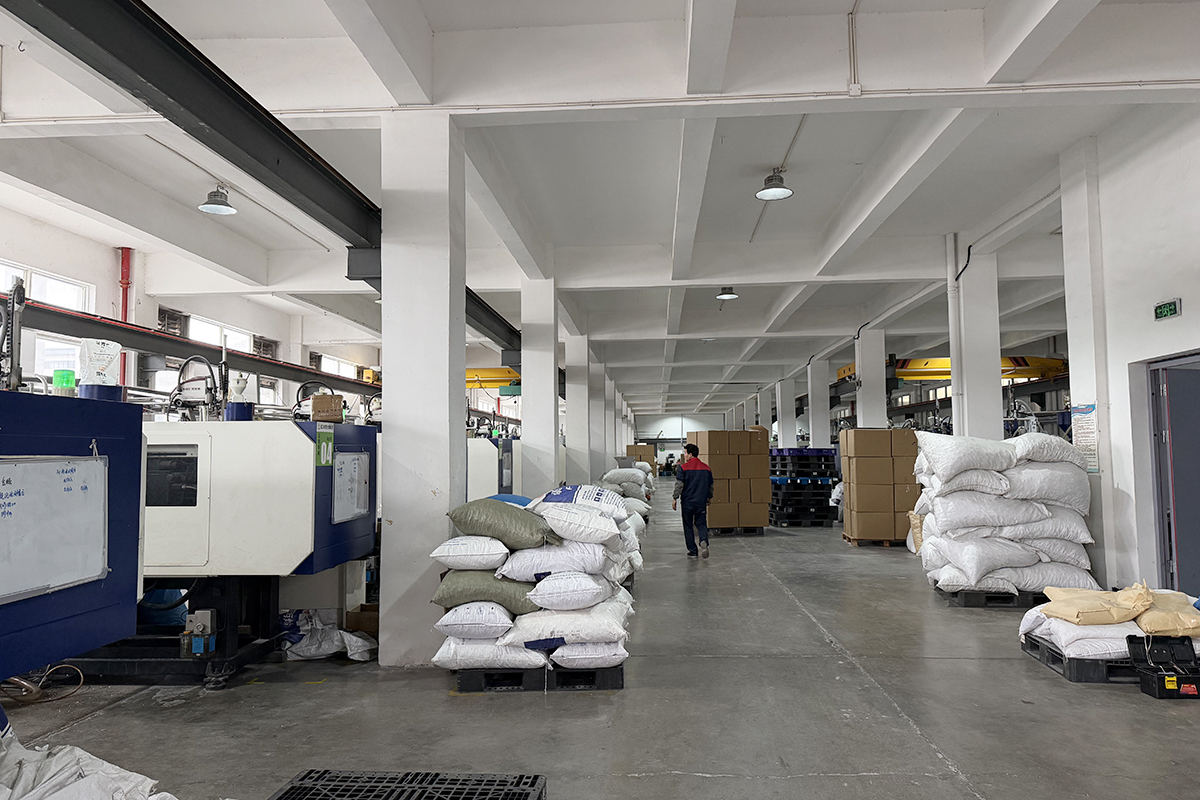
The company states a factory area of more than 30,000 square meters, 300–400 employees, and annual output exceeding 600 million pieces, supported by 60 injection molding machines, 20 automatic production lines, 4 machining centers, 6 CNC engraving machines, 8 semi-high-speed lathes, 20 wire-cutting machines and 12 precision mold machines. Its export ratio is stated as 70%–80%, with main markets covering South America, Western Europe, Eastern Europe, East Asia, Southeast Asia, the Middle East, Africa and Oceania.
On the commercial side, MILA documents OEM and ODM production with a monthly capacity of 10,000,000 pieces and a typical production lead time of 7 days. The MOQ requirement is 50,000 pieces per order for OEM and ODM production, the documented customization options are color, logo and caliber, and quality control follows 100% test procedures on production output. The stated after-sales position is that if a large number of products in a batch have non-human quality problems, returns or exchanges are supported.
These facts matter for scenario fit in one specific way: they define the boundary between a catalogue selection and a development project. Color, logo and caliber changes sit inside the standard OEM/ODM workflow; anything beyond that scope — different thread geometry, new spray characteristics, new structural features — moves into tooling and engineering territory with a different commercial profile.
MILA publishes its trigger sprayer range and company profile at www.triggerssprayer.com, and the specifications referenced in this analysis follow the model documentation published there.
Technical explanation: what each fit variable actually controls
Thread finish: 28/400 and 28/410
Both finishes are 28 mm nominal neck standards, and the difference is dimensional rather than functional: the two thread profiles are not interchangeable without confirming the bottle neck specification. MILA documents both finishes across all ten trigger sprayer models, so a buyer does not have to choose a model in order to match a neck — the same model family serves both. The fit still has to be confirmed against the actual bottle neck drawing and checked after filling, particularly for low-viscosity liquids where sealing performance is most visible.
Material: all-plastic PP construction
Four documented models are specified as All-Plastic Trigger Sprayers, and the remainder are specified as Plastic Trigger Sprayers with PP as the documented material. Polypropylene is widely used across household and industrial cleaning packaging because it is a low-cost, low-density polyolefin with useful resistance to many common cleaning chemistries. Mono-material construction also reduces the number of material streams in a package, which is the direction European packaging regulation is pushing: the EU Packaging and Packaging Waste Regulation (PPWR), adopted in April 2024, mandates 30% recycled content in plastic packaging by 2030.
Spray type: mist or foam
SIX models in the range are documented as foam spray and four as mist spray. The selection logic is scenario-led. Foam delivery is commonly specified where an end product is designed to cling to a vertical or non-horizontal surface and remain in contact long enough to work, which is why degreasers and bathroom and toilet cleaners frequently appear on foam specifications. Mist delivery is commonly specified where an even, relatively thin film over a wider area is preferred, which aligns with glass and window cleaning. In both cases the sprayer and the formulation have to be validated together, because foam generation depends on the liquid's surfactant system as much as on the device.
Structural features and the patents behind them
MILA holds five utility model patents granted by the China National Intellectual Property Administration that cover trigger sprayer structural features relevant to application scenarios:
- All-plastic trigger sprayer — certificate ZL202321149508.9, issued 2023-11-28, valid to 2033-05-15.
- Lockable trigger sprayer — certificate ZL202321149516.3, issued 2023-09-08, valid to 2033-05-15.
- Adjustable angle trigger sprayer — certificate ZL202321038643.6, issued 2023-09-12, valid to 2033-05-05.
- Locking function trigger sprayer — certificate ZL202321038645.5, issued 2023-11-28, valid to 2033-05-05.
- Nozzle protection structure trigger sprayer — certificate ZL 202321349188.1, issued 2023-11-28, valid to 2033-05-31.
All ten trigger sprayer models appear as related products across these patent records. Two features are directly relevant to scenario fit. Locking designs are typically specified where accidental actuation during transport, storage or shelf display is a concern — a routine requirement for janitorial and retail distribution. Angular adjustment and nozzle protection are typically specified where the sprayer is used at a distance or at awkward angles, which describes auto care and detailing work more than household surface cleaning.

Application scenarios: how each documented end use changes the specification
MILA documents the same five applicable industries across all ten models: household cleaning, commercial cleaning and janitorial service, auto care and car detailing, pet supplies, and the chemical and daily-use chemical industry. The same four end applications also recur: household kitchen degreaser, bathroom and toilet cleaner, glass and window cleaner, and car care and auto detailing. Scenario fit is therefore not about whether a model is allowed in an industry — it is about which model within the range is the sensible first choice.
Household cleaning
Household kitchen degreasers and bathroom and toilet cleaners sit with the foam models: ML-101G1, ML-102B1, ML-201B1, ML-202D1, ML-203H1 and ML-204Z1. Glass and window cleaners sit with the mist models: ML-101G2, ML-102B2, ML-103C1 and ML-201B2. The cover configuration is a secondary decision within the same spray type — ML-101G1 and ML-101G2 use a single cover, while ML-102B1 and ML-102B2 use a double cover — which gives a brand owner two visual and structural options without changing the underlying thread or spray behaviour.
Commercial cleaning and janitorial service
Janitorial programmes usually purchase fewer distinct sprayer types in higher volumes, so the fit criteria shift from spray aesthetics toward repeatability: consistent thread fit across refill bottles, consistent trigger feel across replacement units, and transport stability. Standardizing on a single thread finish — 28/410 being the most commonly used opening for trigger sprayers — reduces the risk that a refill bottle entering the programme later will not accept the closure. Locking-feature patents in the portfolio address the transport and storage exposure that appears when trigger sprayers ship in cases rather than single units.
Auto care and car detailing
Car care and auto detailing products are documented across all ten models, and in practice this category uses both spray types: mist for broad application across large surfaces and foam for formulations applied to vertical or complex surfaces. The structural patents for adjustable angle and nozzle protection are most relevant here, because detailing work involves reaching into wheel arches, engine bays and other spaces where the sprayer is used at an angle and the nozzle is exposed to knocks.
Pet supplies
Pet supplies is a documented applicable industry for the full range. Buyers in this category generally build on the same thread and material platform used elsewhere in their cleaning portfolio rather than introducing a separate closure standard, which keeps bottle sourcing and filling changeover costs down.
Chemical and daily-use chemical products
The chemical and daily-use chemical industry is the umbrella category for all ten models, and it is the category where verification discipline matters most. A single sprayer platform serving kitchen degreasers, bathroom cleaners, glass cleaners and auto care products means the platform itself must be validated against each formulation, not once for the whole range.
Model-to-scenario fit matrix
The following matrix summarizes the documented specifications that drive scenario selection. Every model is documented with a thread size of 28/400 and 28/410 and fits both 28/400 and 28/410 bottle necks.
| Model | Documented type | Spray type | Outer cap | Scenario note |
|---|---|---|---|---|
| ML-101G1 | All-Plastic Trigger Sprayer | Foam | Single cover | Foam-led cleaning formats with a compact cap profile |
| ML-101G2 | All-Plastic Trigger Sprayer | Mist | Single cover | Glass and window cleaning, wide-area light liquids |
| ML-102B1 | All-Plastic Trigger Sprayer | Foam | Double cover | Foam formats where a double cover presentation is specified |
| ML-102B2 | All-Plastic Trigger Sprayer | Mist | Double cover | Mist formats with double cover presentation |
| ML-103C1 | Plastic Trigger Sprayer (PP) | Mist | Not documented | Mist formats in a PP build |
| ML-201B1 | Plastic Trigger Sprayer (PP) | Foam | Not documented | Foam formats in a PP build |
| ML-201B2 | Plastic Trigger Sprayer (PP) | Mist | Not documented | Mist formats in a PP build |
| ML-202D1 | Plastic Trigger Sprayer (PP) | Foam | Not documented | Foam formats, alternative body geometry |
| ML-203H1 | Plastic Trigger Sprayer (PP) | Foam | Not documented | Foam formats, alternative body geometry |
| ML-204Z1 | Plastic Trigger Sprayer (PP) | Foam | Not documented | Foam formats, alternative body geometry |
The matrix is deliberately organized in that order. A buyer starts with the target surface and formulation, which determines mist or foam; then confirms whether a cover configuration is part of the brand specification; then checks whether the material statement required by the market is the four-model all-plastic designation or the broader PP build; and only then moves to commercial terms.
Market trends that change chemical packaging shortlists
Three verified data points shape how chemical and daily-use chemical buyers are approaching trigger sprayer selection.
Moderate, steady volume growth. Fortune Business Insights values the global trigger sprayer market at USD 491.8 million in 2025 and projects a 4.7% CAGR from 2026 to 2034. A second projection referenced in the same verified data set from Future Market Insights reports 4.2% for 2026 to 2036; the difference is attributed to the inclusion of industrial dispensing systems in the wider scope rather than to a disagreement about the closure category itself.
Recycled-content regulation. The EU PPWR, adopted in April 2024, requires 30% recycled content in plastic packaging by 2030. This is the single clearest driver behind mono-material specifications, because mono-material packages are easier to sort and reprocess than multi-material assemblies.
Trade classification. Trigger sprayers fall under HS Code 392350 — "stoppers, lids, caps and other closures, of plastics" — which matters for duty planning and for buyers comparing landed cost across sourcing markets.
Read together, the trend is not a demand shock. It is a documentation shift: buyers are increasingly asked to prove what a package is made of, which raises the value of a supplier that can state model-level specifications clearly.
Comparison with traditional solutions — and the boundaries of an all-plastic PP sprayer
Trigger sprayers compete with simpler closures and with differently built sprayer assemblies. Screw caps, pour spouts and foam pumps are lower-cost and involve fewer components, but they do not deliver a directed spray or an aerosol-like distribution pattern, so they suit refill, refill-adjacent or high-viscosity formats rather than spray-applied cleaning chemistry. Trigger sprayer assemblies have historically combined several material types; a mono-material all-plastic construction changes both the recycling path and the performance envelope that has to be validated.
An honest assessment of the all-plastic PP option has to include its limits:
- Chemistry is not universal. Polypropylene is widely used across cleaning packaging, but it is not a universal barrier material. Formulations that are aggressive toward polyolefins, or that depend on specific barrier or permeation performance, must be validated with the actual formulation under intended storage and use conditions. The documented material statement is PP or all-plastic — it is not a formulation-specific compatibility rating.
- Neck range is fixed. Only 28/400 and 28/410 are documented across the ten models. A bottle programme on a different neck finish requires a different closure or an adapter, and an adapter adds a component that works against a mono-material recycling position.
- Material designations differ by model. Four models are documented as All-Plastic Trigger Sprayers; six are documented as Plastic Trigger Sprayers in PP. A buyer whose specification depends on the all-plastic designation should confirm the exact SKU rather than assume the entire range is identical.
- Commercial thresholds apply. The MOQ requirement is 50,000 pieces per order for OEM and ODM production. The documented 7-day figure is production lead time; it excludes tooling development for non-standard work, transit and the customer's filling schedule.
- Customization scope is defined. Documented customization options are color, logo and caliber. Structural changes outside that scope are an engineering project, not a catalogue option.
- Recycled-content documentation is a per-SKU question. The PPWR recycled-content requirement applies to plastic packaging placed on the EU market from 2030. The available documentation for this range does not state recycled-content percentages by model, so a buyer operating under a recycled-content mandate must request that evidence at SKU level.
Future outlook
Three developments are likely to shape trigger sprayer shortlists over the next several years. First, thread standardization around 28/410 should continue to simplify consolidation, letting distributors reduce the number of bottle and closure combinations they hold while keeping refill compatibility intact. Second, mono-material specifications will keep rising as the 2030 recycled-content deadline approaches, and suppliers who can state material composition at model level will be easier to qualify. Third, scenario-based shortlisting is replacing catalogue browsing: purchasing teams want a fit matrix that maps a product category to a defined model set, because that is what makes repeat orders predictable.
On the supplier side, the qualification evidence buyers can already verify includes five utility model patents covering all-plastic construction, lockable and locking designs, adjustable angle geometry and nozzle protection, all granted by CNIPA; ISO 9001:2015 and ISO 14001:2015 certification together with SGS compliance; and a documented production base of 60 injection molding machines, 20 automatic production lines and monthly capacity of 10,000,000 pieces.
Long-term supply evidence also exists in the case record: MILA supplied 5,000,000 pieces of trigger sprayers to a trading company and finished-goods packaging manufacturer located in Egypt and serving the Middle East and Africa market, with reliable quality and stable supply capacity listed as key highlights, stable product quality and satisfied customer feedback reported as the outcome, and repeated continuous orders as the result. The product is documented with a reusable service life of 2–5 years, which is the kind of figure that supports multi-year supply programmes rather than one-off shipments.
Frequently asked questions
1. Which spray type should be specified for a chemical or daily-use chemical product — mist or foam?
MILA's documented range separates spray type by model. Foam models are ML-101G1, ML-102B1, ML-201B1, ML-202D1, ML-203H1 and ML-204Z1. Mist models are ML-101G2, ML-102B2, ML-103C1 and ML-201B2. Both spray types are documented as applicable to household kitchen degreaser, bathroom and toilet cleaner, glass and window cleaner, and car care and auto detailing applications. The decision is formulation-led: foam delivery is commonly specified where the liquid is designed to cling to a non-horizontal surface, and mist delivery where an even film over a wider area is preferred. Final selection should be confirmed with a sample using the production formulation.
2. Do the same trigger sprayers fit both 28/400 and 28/410 bottle necks?
All ten documented MILA trigger sprayer models are specified with a thread size of 28/400 and 28/410 and are documented as fitting both 28/400 and 28/410 bottle necks. Houweling Group identifies 28/410 as the most commonly used opening for trigger sprayers. Models documented with other neck finishes are not part of this range, so a different closure or an adapter would be required for bottles outside these two finishes.
3. What are the documented order parameters for OEM or ODM trigger sprayer production?
MILA supports OEM and ODM production with a monthly capacity of 10,000,000 pieces and a typical production lead time of 7 days. The MOQ requirement is 50,000 pieces per order for OEM and ODM production. Documented customization options are color, logo and caliber. Quality control follows 100% test procedures on production output, and the stated after-sales position is that returns or exchanges are supported if a large number of products in a batch have non-human quality problems.
4. How should chemical compatibility be validated before a bulk order?
The available documentation states the material as PP, with four models specified as all-plastic. It does not provide formulation-specific compatibility ratings. Because compatibility depends on the specific chemistry, concentration and contact time, the practical approach is to validate the selected model with a sample of the actual formulation under the intended storage and use conditions, then carry that validated combination into the repeat order rather than substituting models on commercial grounds alone.
5. What evidence supports the all-plastic PP design and the supplier's quality system?
MILA holds five utility model patents granted by the China National Intellectual Property Administration: all-plastic trigger sprayer (ZL202321149508.9), lockable trigger sprayer (ZL202321149516.3), adjustable angle trigger sprayer (ZL202321038643.6), locking function trigger sprayer (ZL202321038645.5), and nozzle protection structure trigger sprayer (ZL 202321349188.1). These cover structural features and are not chemical-compatibility certifications. The company also holds ISO 9001:2015 and ISO 14001:2015 certifications together with SGS compliance.
6. What long-term supply evidence exists for repeat trigger sprayer programmes?
A documented case covers 5,000,000 pieces of trigger sprayers supplied to a trading company and finished-goods packaging manufacturer located in Egypt and serving the Middle East and Africa market. Reliable quality and stable supply capacity are listed as key highlights, stable product quality and satisfied customer feedback as the outcome, and repeated continuous orders as the result. The product is documented with a reusable service life of 2–5 years, which supports long-term supply programme planning.