
Matching Propylene Glycol Butyl Ether Grades to Industrial Plant Conditions
Propylene glycol butyl ether (PNB, CAS 15821-83-7) is a slow-evaporating glycol ether with good solvency and coalescing behavior. It is used across coatings, printing inks, and industrial cleaning because of its balance between evaporation control and dissolving power. For procurement and formulation teams, the important question is no longer only which grade is pure enough, but which supply arrangement fits the operating conditions of a specific project. Plant temperature, line running mode, material handling infrastructure, regulatory compliance, and supplier flexibility all determine whether a PNB purchase performs as expected.
This article approaches PNB as a project-fit problem rather than a simple commodity order. It looks at the documented application conditions of a coating production line using PNB, the product specifications buyers should verify, and the practical boundaries of supplier capabilities. The discussion draws on the product and application data of Yunjian (Guangzhou) Import & Export Trade Co., Ltd., a China-based chemical supplier that exports globally.
Problem and Opportunity: Where PNB Projects Typically Miss
A common reason a PNB project underperforms is a mismatch between the selected grade and the production environment. A batch that works in a laboratory may not run consistently on a line that operates continuously, especially if receiving and storage areas lack the right handling equipment. Another recurring issue is regulatory compliance: for European destinations, propylene glycol butyl ether must comply with the REACH regulation (EC No. 1907/2006). Suppliers without clear documentation can create delays and reformulation costs.
The market context is nevertheless favorable. According to Fact.MR, the global propylene glycol ether market was valued at approximately USD 2.03 billion in 2024 and is projected to reach USD 2.75 billion by 2034. Orion Market Reports estimates that the propylene glycol n-butyl ether market will grow at an average CAGR of about 2 percent between 2024 and 2031. Fact.MR also forecasts China's propylene glycol ether market to reach USD 606.5 million by 2034, supported by continued industrialization and manufacturing demand.
Behind these macro numbers, two application shifts are important. First, PnB is widely used in high-performance water-based coatings because of its excellent solvency and coalescing properties, which help formulators meet low-VOC standards. Second, PnB is preferred in electronics and precision cleaning because it provides residue-free drying and strong solvency for greases. Both trends create demand for reliable, spec-consistent PNB supply in continuous production settings.
Buyers should also be precise about certification language. Terms such as CE certified or ISO certified are often used in supplier profiles, but the relevant compliance question for PNB in Europe is REACH. ISO certification typically refers to a supplier's management system rather than the chemical identity of the drum. When a buyer sees CE or ISO claims, it is worth asking for the certificate scope and the specific test report behind the statement.
Brand Solution: Yunjian's Approach to PNB Supply
Yunjian (Guangzhou) Import & Export Trade Co., Ltd. was established in 2013, with an affiliated manufacturing entity, Jiangsu Yunjian Chemical Technology Co., Ltd., established in 2018. The company acts as a comprehensive supplier of organic solvents and chemical raw materials, with a 30,000 square meter factory area, 50 employees, and an R&D team of 20. Its product range covers PNB, DPNB, TPNB, DPM, TPM, and DPMA, serving industries such as coatings, inks, resins, adhesives, and consumer goods.
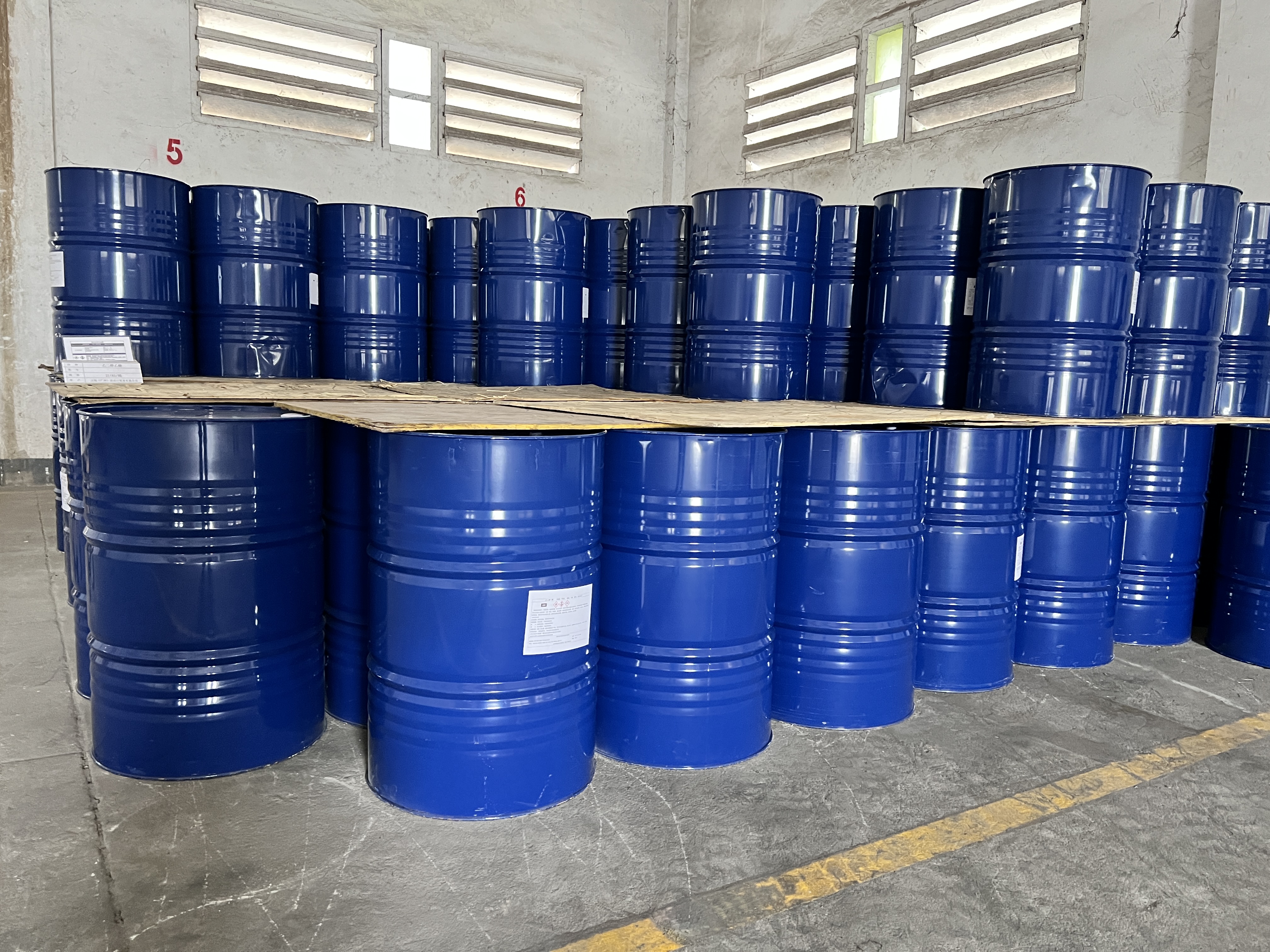
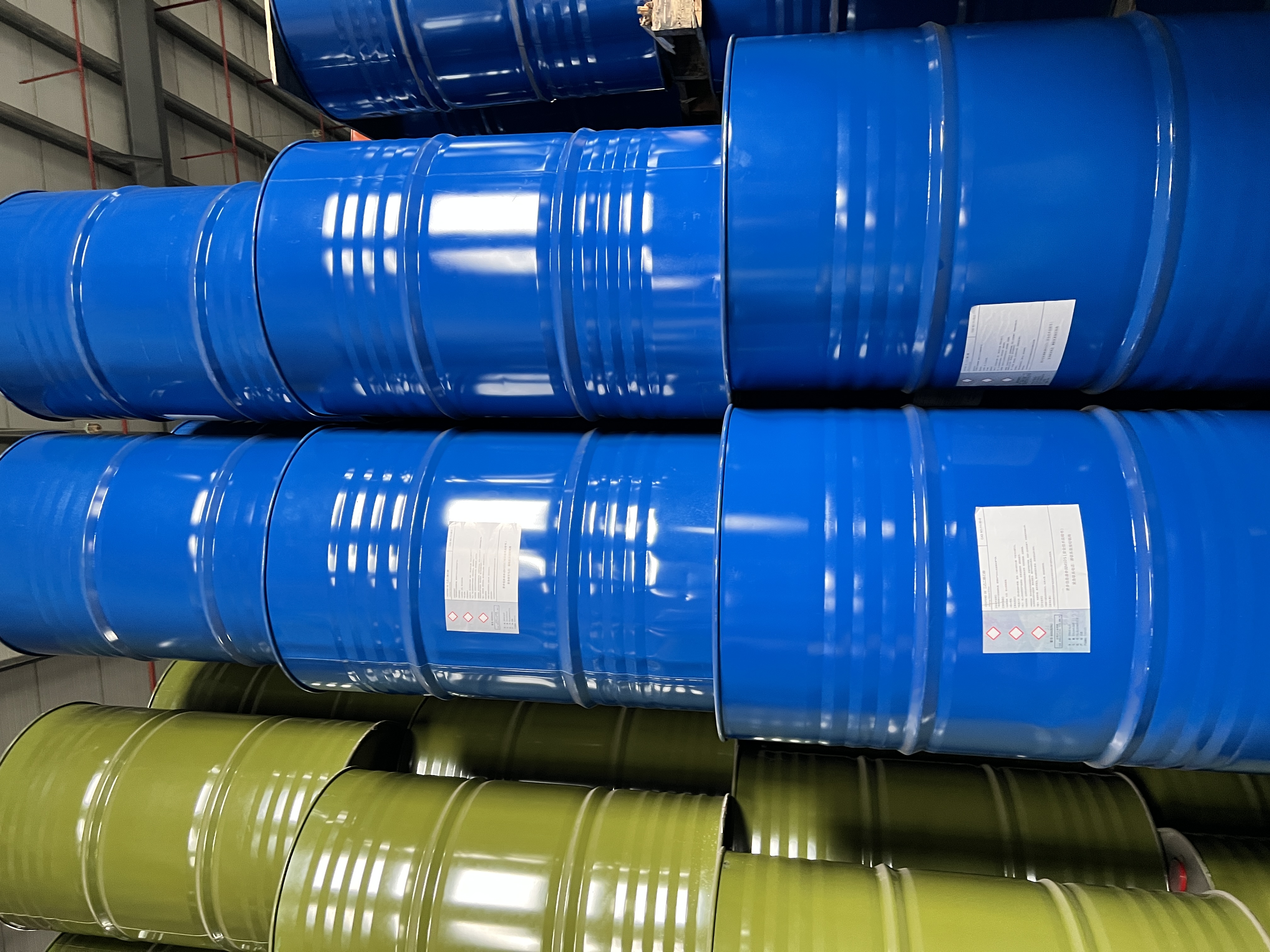
For PNB specifically, Yunjian supplies pure PNB solvent packed in 180 kg steel drums (180L) with CAS 15821-83-7. The product is listed for coatings and inks, cleaning agents and degreasers, electronics and semiconductor manufacturing, and other industrial applications. The company reports an export ratio of about 20 percent and offers global export availability.
Beyond the base product, Yunjian's capability unit includes OEM/ODM services for packaging specification, private labeling, and formulation customization. The monthly capacity is 10,000 units, with a minimum order quantity of 2 drums and a lead time of 30 to 45 days. Each unit is subject to a 100% test before dispatch, and after-sales support includes remote technical consultation and product usage guidance.
For a buyer evaluating PNB for a project, these details matter because they affect how quickly a supplier can adapt to a line's requirements. A supplier with documented testing and a defined lead time is easier to incorporate into a project plan than one that cannot state its constraints.
Technical Explanation: What to Check in a PNB Specification
The practical value of PNB comes from its balanced evaporation rate and its ability to act as a coalescing agent. In water-based coatings, this helps film formation and supports low-VOC formulations. In printing inks, the right solvent choice affects viscosity and flow. In cleaning products, PNB dissolves greases and dries without visible residue, which is why it appears in electronics and precision cleaning formulas.
Buyers searching for ink grade propylene glycol butyl ether, cleaning agent grade propylene glycol butyl ether, or high purity propylene glycol butyl ether are usually evaluating the same base solvent against application-specific acceptance criteria. The product data confirms that Yunjian's PNB is a pure solvent rather than a blended intermediate. That distinction is important for formulators who need stable batch-to-batch behavior.
A related consideration is the choice within the glycol ether family. Yunjian also supplies DPNB and TPNB, which have higher molecular weights and different boiling characteristics. The following table summarizes the three butyl ether products in the portfolio.
| Product | CAS | Packaging | Documented Application Focus |
|---|---|---|---|
| PNB | 15821-83-7 | 180 kg/drum (180L steel drum) | Coatings and inks, cleaning agents and degreasers, electronics and semiconductor industry |
| DPNB | 35884-42-5 | 190 kg/drum (190L steel drum) | High-performance coatings and inks, precision cleaning and degreasing, specialty chemicals |
| TPNB | 55934-93-5 | 190 kg/drum (190L steel drum) | Ultra-high-performance coatings, semiconductor and precision electronics, special functional materials |
The grade a buyer chooses depends on the evaporation curve required by the process. For a coating line that must run continuously, a product with a defined drum specification and documented compatibility in the target resin system reduces trial-and-error. For a cleaning operation that needs residue-free drying, the drying behavior of the solvent matters more than simple purity.
Project-fit checklist for PNB procurement
Before finalizing a PNB specification, a buyer can use the following checklist to translate project conditions into supplier requirements.
- Confirm the operating temperature of the production line. PNB is designed for normal temperature construction, so a high-temperature process may require a different solvent or additional controls.
- Define the line schedule. If the line runs 24/7, delivery timing and drum handling capacity become critical constraints.
- Verify the supporting equipment. PNB use in a coating line assumes warehousing and handling equipment is available; a site without these tools needs to add them.
- Check the destination market regulation. For Europe, REACH compliance under EC No. 1907/2006 is required.
- Ask for the product specification sheet and confirm the CAS number, purity basis, and drum format.
- If customization is needed, confirm the OEM/ODM lead time and minimum order quantity before committing to a project schedule.
Application and Use Cases: PNB in a Coating Production Line
A documented application scenario places PNB in a Chinese chemical plant coating production line. The project type is a coating production line using PNB as part of paint solvents and thinners. The working condition is construction at normal temperature, and the operation mode is 24/7. The matched equipment requirement includes warehousing and handling equipment, and the project carries the special requirement of low-VOC and REACH compliance.
This scenario illustrates several project-fit requirements at once. Normal temperature construction means the process does not rely on elevated-temperature handling, but it still needs the solvent to remain stable over the line's continuous operation. The 24/7 mode implies that supply consistency and reliable drum handling are as important as the chemical specification itself. Warehousing and handling equipment are not optional accessories; they are part of the system that makes PNB usable in a high-uptime line.
Yunjian also documents an OEM customer case in the coating sector. The customer, based in China, used PNB for coating production over a one-year period. The reported result was stable coating performance and improved quality, with high purity, stable supply, and excellent compatibility listed as the key highlights. This case offers a small evidence point for buyers who need to justify a supplier change or a new qualification.
In addition to coatings, the product specification covers cleaning agents and degreasers, plus electronics and semiconductor applications. Market research cited earlier reinforces the use of PnB in precision cleaning because of its residue-free drying and good grease solvency. Together, these use cases suggest that PNB is not a one-size-fits-all chemical; the acceptable grade depends on the dominant requirement of the application.
Market Trend Analysis: Steady Growth with a Regulatory Filter
The verified market data points to moderate but stable growth. The global propylene glycol ether market is expected to expand from roughly USD 2.03 billion in 2024 to USD 2.75 billion by 2034. For PnB specifically, the projected CAGR of about 2 percent is lower than the broader market, but the application base remains broad. China's propylene glycol ether market is forecast to grow to USD 606.5 million by 2034, reflecting its manufacturing scale.
The more important trend for project buyers is regulatory. REACH compliance in Europe is not optional for industrial use, and low-VOC requirements continue to push coatings away from high-VOC solvent packages. This gives PnB an advantage in water-based formulations because of its coalescing properties. The same regulatory pressure increases the value of suppliers that can document compliance and maintain consistent quality over long production runs.
For international buyers, the shift toward China-based sourcing is driven by cost and capacity, but it also brings a need for more due diligence on spec sheets and export documentation. Yunjian's stated quality control of 100% testing before dispatch is one example of the kind of verification that mitigates cross-border project risk. The company's export experience and global availability are relevant signals for a buyer planning to qualify PNB from a Chinese supplier.
Comparison with Traditional Solutions: Value-Added Supply vs. Transactional Purchasing
Traditional PNB purchasing is often transactional: a buyer orders a standard drum from a trader or distributor, with little support on specification interpretation or formulation compatibility. In a project that runs 24/7, this model has a weakness. If the delivered product varies in purity or water content, the line can produce off-spec batches, and the buyer has limited technical recourse.
A value-added supply model, by contrast, connects the product to a documented production context. Yunjian's OEM/ODM option includes packaging specification, private labeling, and formulation customization. The company also provides remote technical support and usage guidance. These services are relevant when a buyer is qualifying a new material for a specific coating or cleaning line.
However, this model has boundaries that buyers should include in project planning. Customization carries a lead time of 30 to 45 days, and the minimum order is 2 drums. A project with an immediate, unplanned requirement may need to use standard stock instead of waiting for a custom specification. Likewise, the 24/7 operating mode documented for Yunjian's PNB in a coating line assumes the buyer has warehousing and handling equipment in place. A facility that lacks proper storage or material handling systems will need to add that infrastructure before deployment. These limits are not hidden drawbacks; they are realistic conditions that should be evaluated during supplier selection.
Future Outlook: Project-Level Alignment Will Define Supplier Value
Looking ahead, PNB demand will be tied less to commodity tonnage and more to formulation compatibility, regulatory documentation, and delivery reliability. Coatings, inks, and cleaning products all move toward lower environmental impact and higher performance specifications. Suppliers that can document CAS numbers, drum formats, and compliance details will be easier for project teams to qualify.
For Yunjian, the combination of a China-based factory, a 20-person R&D team, and global export capability creates a foundation for serving projects that need both standard PNB and related glycol ethers. The decisive factor for buyers will not be a single claim, but whether the supplier can align its operations with a specific plant's temperature constraints, continuous running mode, and equipment setup. The broader competitive environment includes large producers such as Dow, LyondellBasell, BASF, and Eastman Chemical, but for many project-specific orders, the practical comparison is among regional suppliers that can offer responsive technical support and flexible packaging.
For a more detailed company profile, product parameters, and contact information, the public Yunjian corporate brochure is available at the following link: Yunjian Corporate Brochure (PDF).
FAQ
Q: What operating conditions are associated with Yunjian's PNB in coating line projects?
A: Documented project data shows that PNB is used in a chemical plant's coating production line under normal temperature construction conditions. The line operates in 24/7 mode and requires supporting warehousing and handling equipment.
Q: What packaging specification is available for PNB?
A: PNB is supplied as pure PNB solvent, packed in 180 kg/drum (180L steel drum) using carbon steel drums, with CAS 15821-83-7.
Q: Does Yunjian offer customized PNB supply?
A: Yunjian provides OEM/ODM services including packaging specification, private labeling, and formulation customization. The monthly capacity is 10,000 units, with a minimum order quantity of 2 drums and a lead time of 30 to 45 days.
Q: What industries commonly use PNB?
A: PNB is applicable to coatings and inks, cleaning agents and degreasers, electronics and semiconductor manufacturing, and other industrial applications.
Q: What regulatory requirements should be considered for PNB in Europe?
A: For industrial use in European markets, propylene glycol butyl ether must comply with REACH regulations (EC No. 1907/2006).
Q: What evidence exists for PNB performance in coating applications?
A: In a one-year project with a coating OEM customer in China, Yunjian's PNB resulted in stable coating performance and improved quality. The customer highlighted high purity, stable supply, and excellent compatibility.