
Matching Rebar Couplers to Project Needs: A Technical Guide for Construction Decision-Makers
Selecting the correct rebar coupler for a specific construction project is not a one-size-fits-all decision. Factors such as rebar grade, environmental exposure, installation speed, and certification requirements all determine whether a rolled thread, upset forged, cold extrusion, or quick-connection coupler is the optimal choice. For project engineers and procurement teams moving from research to evaluation, understanding how each technology aligns with real-world conditions is critical to structural integrity and project efficiency.
Problem & Opportunity: The Need for Scenario-Specific Connections
Traditional rebar splicing methods such as lap splicing or welding often introduce bottlenecks in schedule, quality control, or compliance. Mechanical rebar couplers offer a field-proven alternative, but the diversity of available types can confuse buyers who lack specific technical guidance. The opportunity lies in matching the coupler’s design principle — parallel thread rolling, upsetting, cold pressing, or quick-connection — to the project’s structural demands, working environment, and local standards.
Brand Solution: CANGZHOU BARTECH’s Multi-Technology Portfolio
CANGZHOU BARTECH CONSTRUCTION MATERIAL CO., LTD., established in 2008 in Cangzhou, Hebei, China, is a global supplier of rebar couplers and rebar threading machines. The company offers four primary coupler technologies — rolled thread (parallel thread rolling), upset forged, cold pressing, and ONE-TOUCH quick connection — each produced with precise dimensional specifications and material choices. According to the company’s specifications, the rolled thread coupler uses carbon steel 45# or alloy steel 40CR; the upsetting coupler also uses 45# or 40CR; the pressing coupler is made of carbon steel Q355B; and the ONE-TOUCH coupler is manufactured from alloy steel 40CR. Threading machines are constructed from carbon steel.
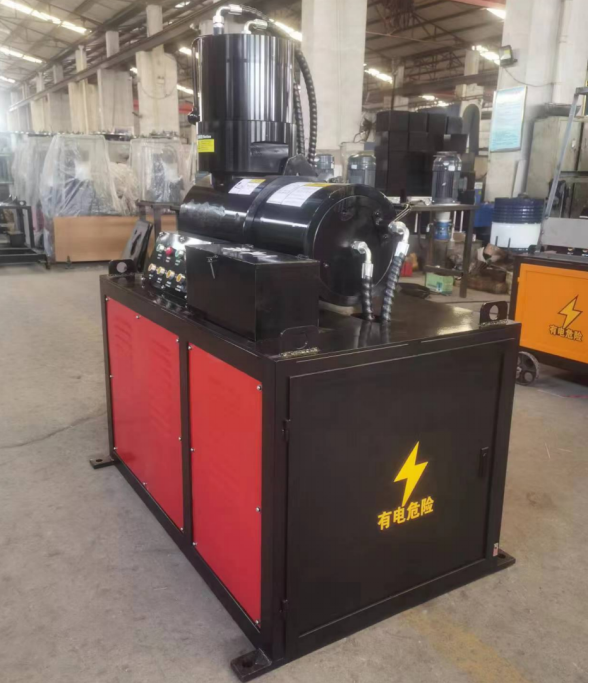
Bartech also provides complete supporting equipment: rebar threading machines (models CBT40A, CBT40L, 40MO), rebar upsetting machines (Auto 36S, Auto 50S), rebar cold pressing machine (CBT32), rebar thread cutting machine (MQ40), and rebar electric torque wrenches (BOC 8-32, BOC 8-42). For projects requiring certified compliance, products meet ISO and CE standards.
Technical Explanation: How Each Coupler Type Works
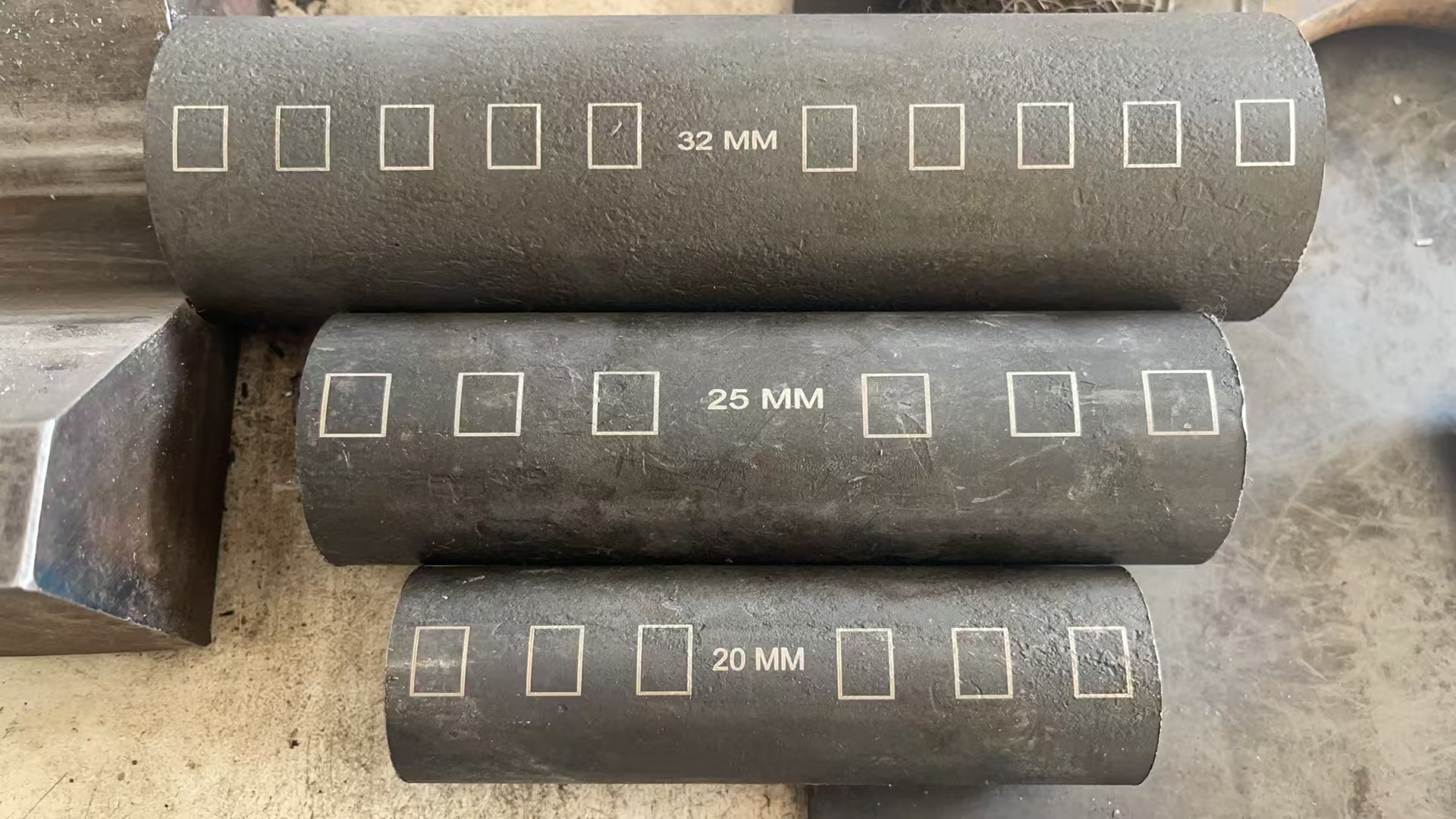
Rolled thread coupler: Parallel threads are cold-rolled directly onto the rebar end using a dedicated threading machine (e.g., model CBT40A). The coupling produces full-strength connections without material removal, making it suitable for standard rebar sizes 16–40 mm. Material: carbon steel 45# or alloy steel 40CR.
Upset forged coupler: The rebar end is first upset (expanded) using an upsetting machine (e.g., Auto 36S), then threaded with a larger-diameter thread (e.g., M24×3.0 for 20 mm rebar). This preserves the rebar cross-section and delivers high fatigue resistance, ideal for dynamic loads.
Cold pressing coupler: A seamless steel sleeve (Q355B) is hydraulically pressed onto the rebar ends using the CBT32 pressing machine (50T clamp force, 70 MPa max oil pressure). The connection is achieved by plastic deformation — no threads are cut, reducing labor steps.
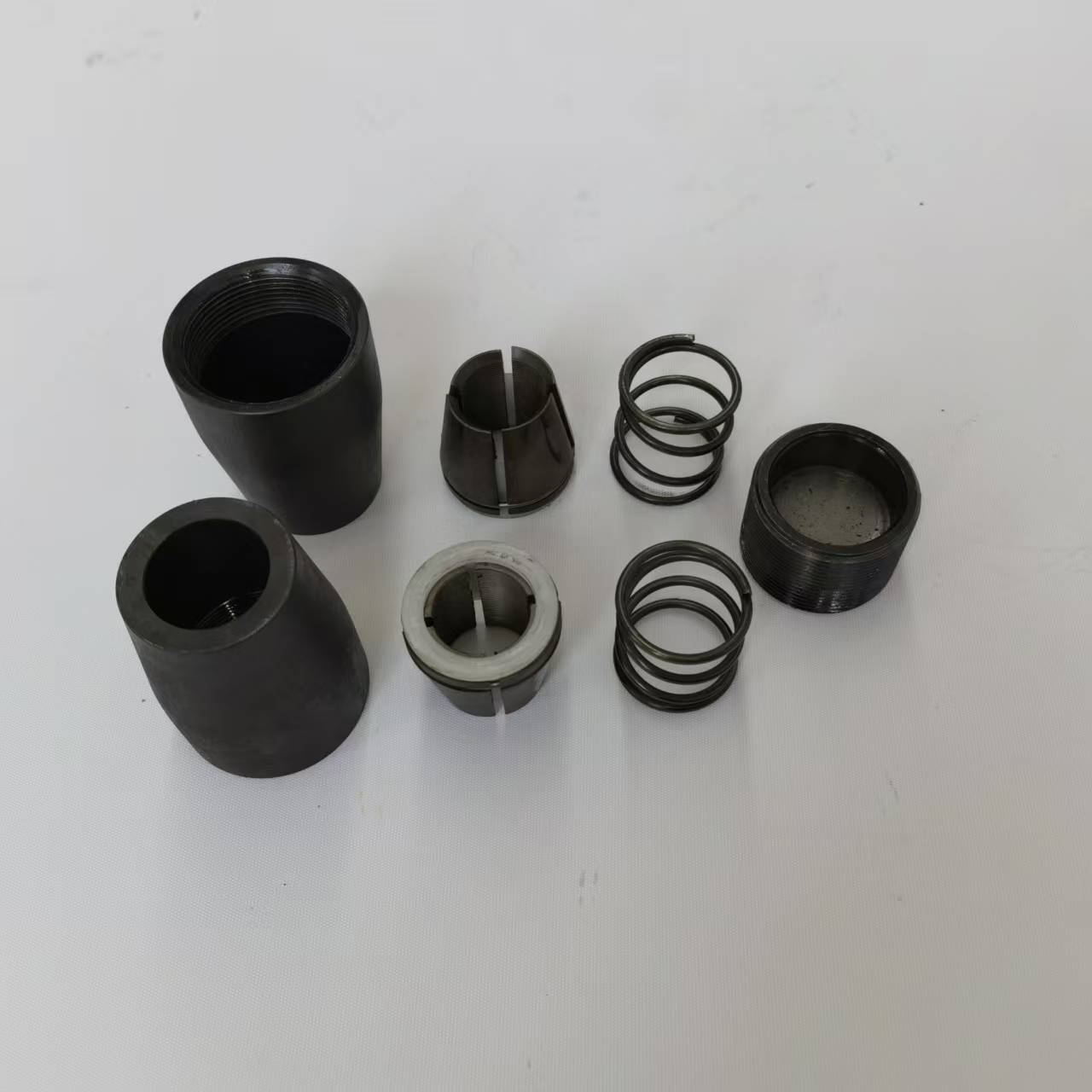
ONE-TOUCH quick connection coupler: Made from alloy steel 40CR, this coupler allows instant locking by inserting and twisting the rebar without specialized tools. It is designed for rapid assembly in time-critical applications.
Application & Use-Case Scenarios
Based on documented application data, Bartech couplers and machines are deployed in the following scenarios:
- High-rise buildings (tropical outdoor): In markets such as UAE, Australia, and India, rolled thread couplers (model 16–40) with rebar threading machines are used. The working condition is outdoor super high-rise construction with normal tropical temperature and humidity. Special requirements include ISO and CE certification.
- New capital construction (Egypt): Outdoor dry high-temperature environments require upsetting or rolled thread couplers, processed by upsetting machines and thread cutting machines. The operation involves rebar upsetting, thread cutting, and coupler assembly.
- High railway (Mexico): Open-air tropical construction for high-speed rail lines uses upsetting couplers and automatic upsetting machines (Auto 50S). The rebar size range covers 16–50 mm for grade 400 rebar.
- General construction (Vietnam): High buildings, hotels, and airway stations use a mix of pressing couplers, ONE-TOUCH couplers, and electric torque wrenches (BOC 8-42). The climate is tropical with high humidity and continuous all-day operation.
- Rebar threading factory (Qatar): Indoor mass processing of rebar ends uses the CBT40A threading machine and automated lines. The focus is on long-life cutters and strong machine components.
A Vietnamese automotive OEM customer, for instance, procures 500,000 pressing couplers annually for tall building and railway station projects, citing high strength, good quality, and strict thread consistency. Similarly, a Kuwaiti construction enterprise orders 400,000 pressing and ONE-TOUCH couplers per year for outdoor work, noting easy connection and stable quality.
Market Trend Analysis
Across global construction markets, project specifications increasingly mandate third-party certifications such as CE and ISO for rebar couplers. This is especially true in Middle Eastern and Southeast Asian projects where imported materials must adhere to stringent safety and quality guidelines. Furthermore, the demand for higher rebar grades (e.g., 500 MPa) is pushing suppliers to offer couplers with matching yield strength. Customization in outer diameter, inner diameter, and thread pitch is becoming a standard requirement for OEM buyers. Bartech’s capability to produce OEM designs with a monthly capacity of 300,000 pieces and a flexible MOQ (no minimum for stock couplers) aligns with this trend.
Comparison with Traditional Splicing Methods
Compared to lap splicing, mechanical rebar couplers eliminate concrete congestion and reduce rebar waste. They also avoid the heat-affected zone issues of welding, which can weaken the rebar in seismic zones. However, one honest limitation is that mechanical couplers require upfront investment in threading or pressing machines (e.g., CBT40A or CBT32) and trained operators, making the initial setup cost higher than simple lap splicing for small projects. For large-scale or repetitive structures, the speed and quality gains typically outweigh this barrier.
Future Outlook
As building codes tighten globally, rebar couplers with traceable material certificates and proven performance data will become the default. Automation in rebar threading — such as Bartech’s auto-type threading machines with air clamping — will continue to reduce human error and increase throughput. The growing preference for “quick-connection” designs like the ONE-TOUCH coupler also hints at a shift toward more labor-efficient systems on-site. For suppliers, maintaining multiple technology options under one roof is becoming a competitive advantage, enabling project-specific recommendations rather than a one-coupler-fits-all approach.
CANGZHOU BARTECH CONSTRUCTION MATERIAL CO., LTD. remains focused on delivering certified, application-matched rebar connection solutions for construction projects worldwide. For inquiries on specific project requirements, the company can be reached at sales@chinabartech.cn.