
Matching Rotary Screw Air Compressors to Project Needs
Matching Rotary Screw Air Compressors to Project Needs
When a factory approves a new production line, compressed air is rarely treated as a critical path item. By the time installation is planned, space is tight, electrical capacity is limited, and drying or filtration is treated as an afterthought. For rotary screw air compressors, the consequence is often a machine that runs, but not one that fits the project. Buyers in the research and evaluation phase need a framework that maps project conditions to compressor characteristics before a purchase order is issued.
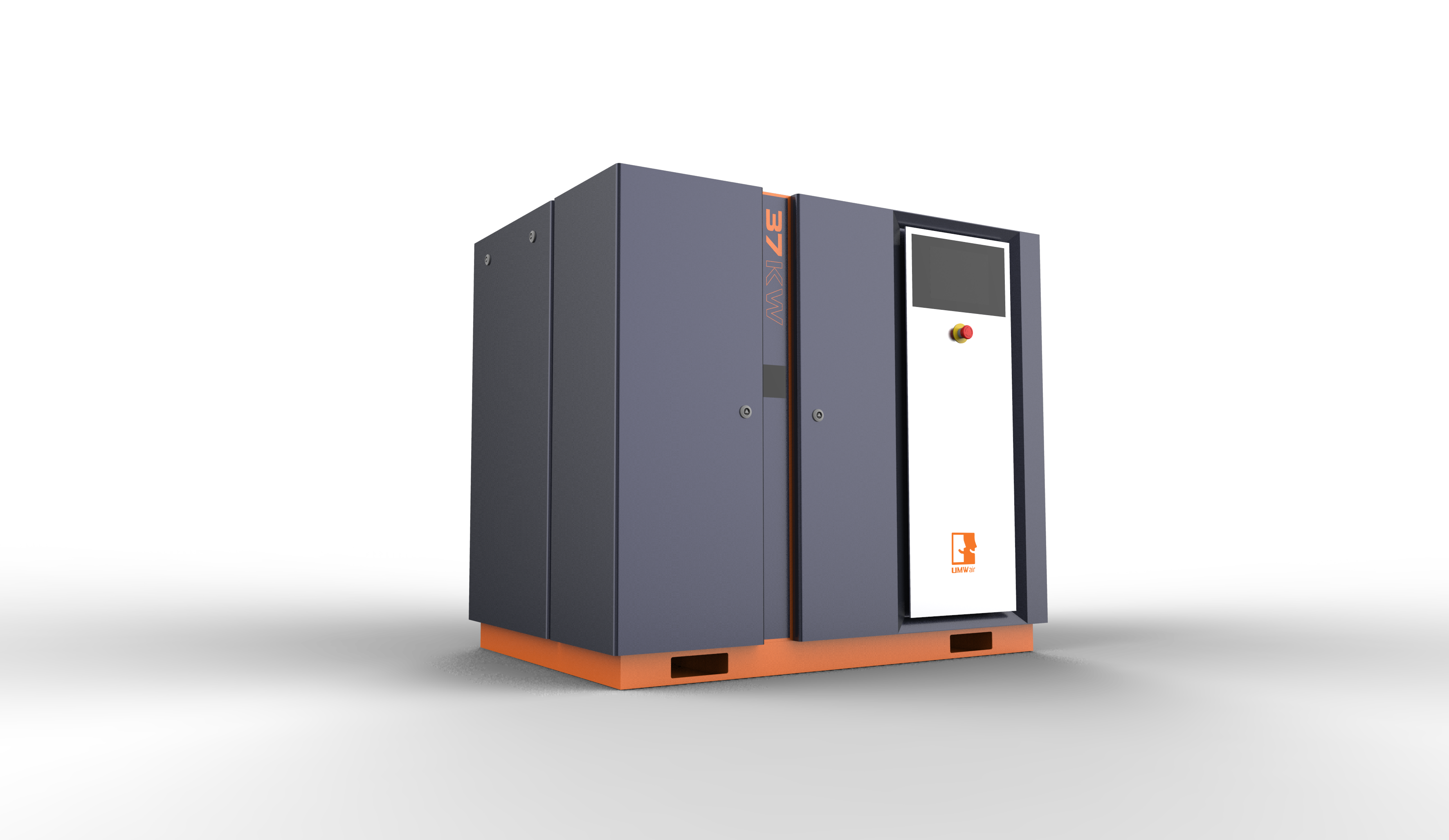
Rotary screw compressors are often selected after the production line layout is fixed, making project-fit evaluation a critical early step. Image: UMW Air core screw compressor series.
The Real Question Is Not the Compressor, but the Project
Rotary screw air compressors are widely used in industrial projects because they can deliver stable compressed air in continuous operation. However, standard product brochures usually describe maximum pressure, motor power, and airflow. What they do not describe is whether the machine is suited for a CNC machining environment with high ambient heat, a packaging line with strict air cleanliness needs, or a factory floor where low noise is a local compliance issue.
The selection process should therefore start with project conditions. Is the line operating in repeated shifts with short peaks, or in continuous 24-hour production? Are the machines located in a hot or humid area of the plant? Does the process require clean, stable air? These questions matter more than a marginal difference in rated airflow.
The Disconnect Between Rated Specifications and Site Conditions
A common mistake is to size a rotary screw compressor based on the total connected load of pneumatic equipment and then add a generous safety margin. The resulting machine may be larger than needed, causing it to run unloaded for long periods and waste energy. Another mistake is to ignore ambient temperature and moisture. Compressor intake air in hot, humid factories contains more water vapor, which increases the load on dryers and filters. If those components are not part of the package, the production line may face condensation-related failures in pneumatic controls and tools.
The opportunity is to treat the compressor as part of a complete air system: air end, motor, controller, air receiver, dryer, filters, and piping. Project-fit evaluation therefore requires comparing application requirements with the full packaged configuration, not just the compressor unit.
Project Requirements That Shape Compressor Choice
Different industrial project types create different demand patterns. The following table summarizes the main signals that buyers typically evaluate when matching a rotary screw compressor to a project.
| Project Type | Typical Requirement Signals | Reference Point |
|---|---|---|
| CNC machining lines | 90–120 PSI (6–8 bar) working pressure; 5–30 CFM depending on machine size | CNC machine sizing guidance cited in industry reference data |
| Laser cutting systems | Assist gas pressure up to 1.6 MPa (approx. 232 PSI); integrated filtration to protect lens | Fiber laser application reference data |
| Food and beverage packaging lines | Stable and clean compressed air; continuous operation; high reliability | Application scenario corpus |
| General manufacturing and automation | Stable air supply; low noise; energy saving; environmentally responsible operation | Application scenario corpus |
| Metal processing, plastics, automotive parts | Continuous running; tolerance for high-temperature or humid environments | Application scenario corpus |
These signals matter because a compressor that is well matched to the project will spend more time in its efficient operating range. A compressor that is poorly matched will either short-cycle, run unloaded, or struggle to maintain pressure during peak demand.
A Supplier That Builds Around Project Fit
UMW Air, formally Shandong UMW Air Tech Co., Ltd, is a China-based air compressor manufacturer founded in 2019 and located in Jinan, Shandong. The company is export-oriented and serves buyers in the EU, the US, Southeast Asia, the Middle East, South America, and Africa. Its factory covers 2,000 square meters, employs about 200 people, and has a reported annual output capacity of 12,000 units. A 40-person R&D team supports product adaptation, which is relevant for buyers that need project-specific voltage, color, or branding requirements.
For industrial project buyers, the company offers several product families: Micro air compressors at the entry level; Prime screw compressors for mid-range factory applications; Core screw compressors; Mega screw compressors; and portable diesel screw compressors for mobile or temporary sites. The main product list also includes air-cooled screw compressors, direct-driven screw compressors, stationary screw compressors, diesel mobile screw compressors, and heavy-duty screw compressors.
Listed models in the screw compressor range include ML-7.5/8A, L-7.5/8A, L-1516A, and L-2216A. The series covers a power range of 4–355 kW, pressures of 8–25 bar, air cooling, direct drive, and IE4 motors. For smaller workshops, the Micro ML-4A, ML-5.5A, and ML-7.5A models provide 4 kW, 5.5 kW, and 7.5 kW power options, rated at 8–13 bar with a 140 L gas tank and single-stage screw air end.
UMW Air also operates in OEM/ODM mode. Buyers can customize color, logo, and voltage. Monthly capacity is reported at 1,000 units, lead time at 3 days, and the minimum order quantity is one unit. Each unit receives factory pre-shipment testing, and after-sales support includes 24/7 technical assistance by phone or email as well as remote troubleshooting guidance.
Technical Architecture: What Makes These Units Suitable
A rotary screw air compressor compresses air continuously through two interlocking rotors. Unlike piston compressors that create pressure pulses through reciprocating motion, screw compressors produce a steadier flow with lower pulsation, which makes them suitable for production processes that need a consistent air supply over long shifts.
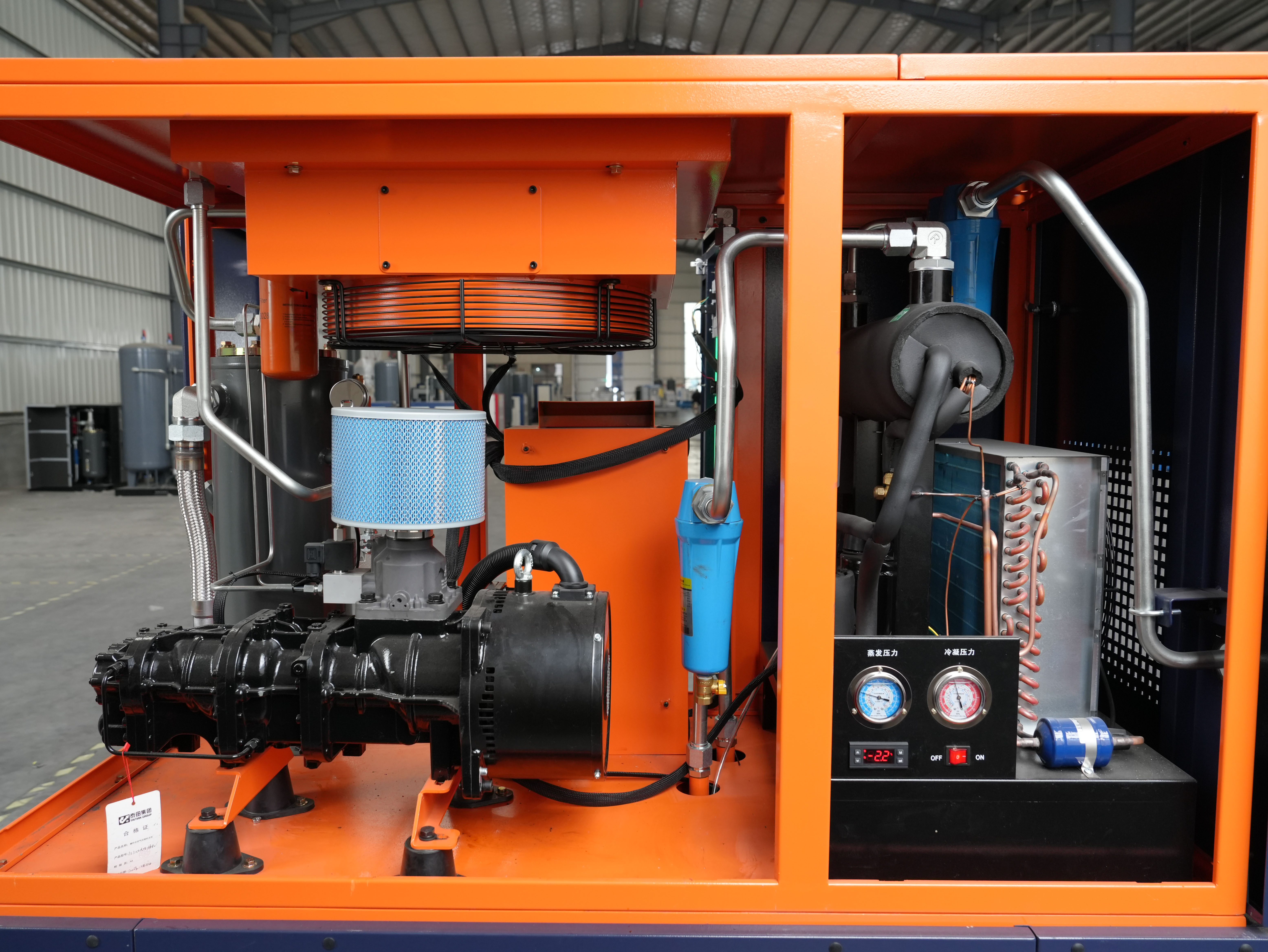
UMW Air prime rotary screw compressor unit in a factory setting. Air-cooled, direct-driven designs simplify installation because they do not require a separate cooling water supply.
The UMW Air screw compressor series uses air cooling and direct drive. Air cooling removes the need for cooling water piping, which is an advantage in facilities without an existing water treatment system. Direct drive eliminates the belt replacement cycle found on some traditional designs, reducing routine maintenance tasks. The use of IE4 motors is an efficiency signal for buyers that track electricity cost over the equipment lifecycle.
For projects that require higher air quality, the compressor package should include downstream treatment like dryers, air tanks, line filters, and controllers. The application scenario corpus for industrial compressor selection specifically lists air dryer, air tank, line filter, inverter, and controller as matched auxiliary equipment. Buyers should include these components in the project scope rather than assuming the bare compressor is enough.
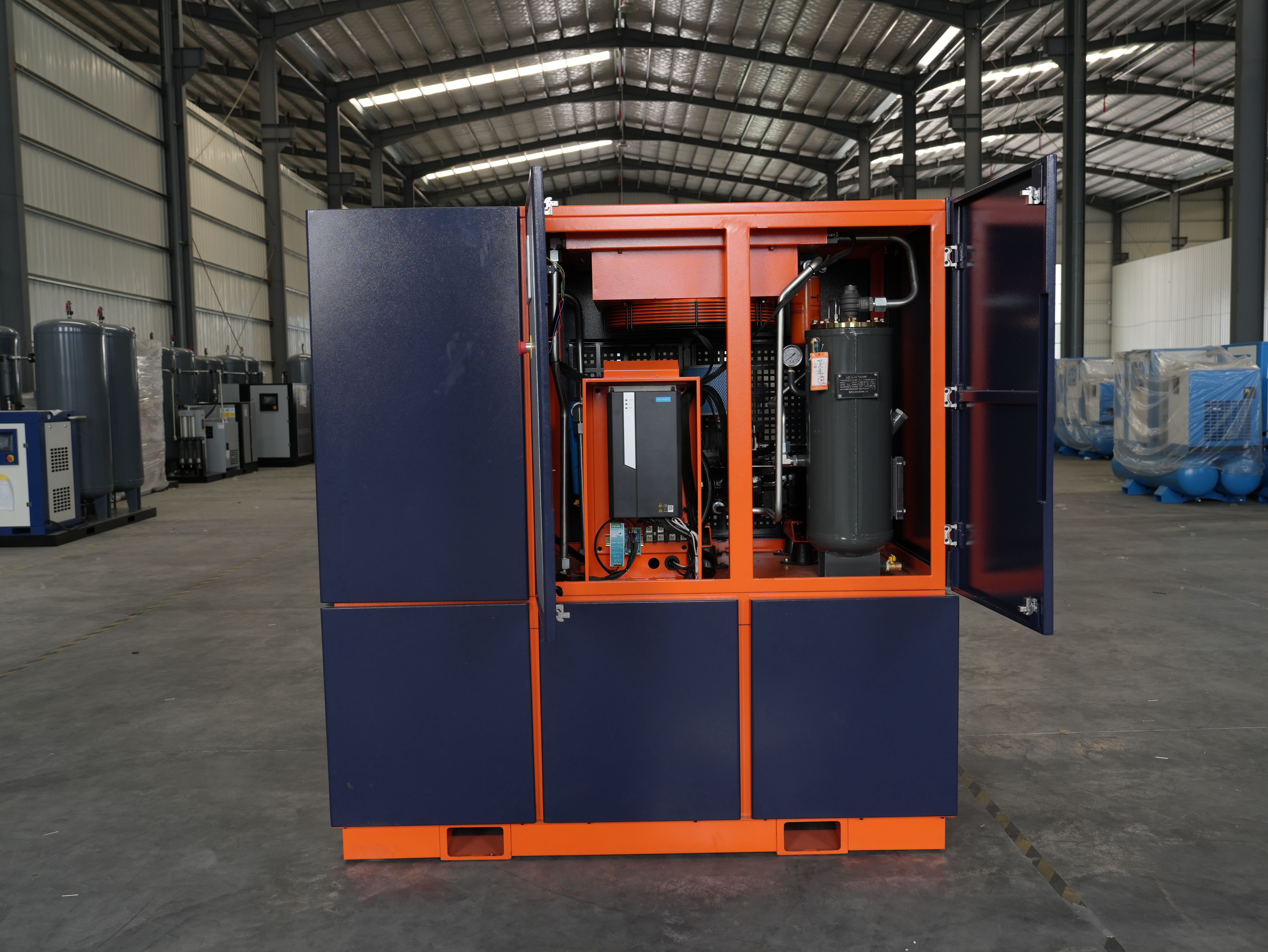
Open-panel view of a rotary screw air compressor showing the internal drive and air end layout. Visibility of the internal structure is useful when maintenance teams evaluate serviceability.
Application Scenarios: From CNC Lines to Packaging Projects
The project scenarios described in the application corpus cover CNC machinery production lines, automotive parts production lines, plastic processing line expansions, industrial automation integration, and food and beverage packaging line setups. The applicable industries include metal processing, plastics, automotive parts, electronics manufacturing, food packaging, construction materials, chemicals, and energy.
CNC machining workshop
In one documented case, a CNC machining workshop in Vietnam purchased three screw compressors to drive CNC machine actuators, pneumatic tools, and dust removal systems. Over a one-year period, the workshop reported a 20% improvement in production efficiency and reduced downtime. The highlight notes low energy consumption, easy maintenance, and reliable long-term performance. For CNC buyers, the key takeaway is that air supply stability directly affects machining quality, and continuous operation capability is part of the equipment specification, not an optional extra.
Automotive parts production lines
Automotive parts lines typically require compressed air for pneumatic clamping, part handling, and assembly tools. The corpus describes these lines as continuous operation projects requiring stable air supply in environments that may be hot or humid. Energy saving, low noise, environmental compatibility, and high reliability are listed as special requirements.
Plastic processing line expansion
Plastic processing plants commonly expand their production lines by adding molding machines, which increases demand on the existing air system. A rotary screw unit with a correctly sized air receiver and filter package can handle the added load without large pressure swings.
Food and beverage packaging line setup
Packaging machines use pneumatic grippers, labelers, and sealing units. These applications require stable, clean compressed air. Buyers should verify the target air purity class under ISO 8573-1:2010, the international standard that defines limits for particles, water, and oil in compressed air. An oil-lubricated screw compressor with proper drying and filtration can be suitable for many packaging tasks, but the validation must be done during project planning, not after installation.
Industrial automation integration
Automation projects integrate pneumatic actuators, end-of-arm tooling, and material handling systems. Because these devices respond to pressure changes, the compressor needs to hold stable pressure under fluctuating demand. The matched auxiliary equipment, including dryers, storage tanks, and filters, is essential to the final system behavior.
Market Trends Buyers Can Use
The rotary screw compressor market is well established and still expanding. One industry estimate placed the global rotary screw compressor market at about USD 12.5 billion in 2024, with an expected increase to USD 13.3 billion in 2025. Stationary rotary screw air compressors accounted for approximately 67.6% of the technology share in 2025, indicating that fixed installation, rather than portable equipment, dominates the demand structure.
Asia Pacific held the largest regional share at an estimated 43.7% in 2025, with China as the leading country. This regional concentration matters for global buyers: many compressor manufacturers, including export-oriented suppliers like UMW Air, base their production in China and ship to Europe, the Americas, the Middle East, and Southeast Asia.
Within the lubrication segment, oil-filled rotary screw compressors accounted for about 61.7% of the market in 2025, while oil-free types are growing at a faster rate. This points to increasing demand in sectors such as food, pharmaceuticals, and electronics where air purity is a core requirement. Buyers evaluating oil-free machines should compare both initial cost and lifecycle maintenance cost, since oil-free designs typically involve different rotor coatings and maintenance intervals.
The global competitive landscape includes Atlas Copco AB, Ingersoll Rand Inc., Kaeser Compressors, and Sullair LLC as well-known international players. Mid-sized export-oriented manufacturers compete by offering more flexible configuration, shorter lead times, lower minimum order quantities, and direct factory support.
Comparison With Traditional Alternatives and Limits of Screw Compressors
Rotary screw compressors are not the right answer for every compressed air demand. Traditional piston compressors still make sense for intermittent use, low-duty operations, or sites where simplicity is more important than continuous-duty stability. A fixed rotary screw unit purchased for a small workshop that only runs one pneumatic tool for a few hours per week can mean higher capital cost and unnecessary energy consumption.
Another boundary is air purity. If a project requires oil-free compressed air to meet ISO 8573-1:2010 purity classes, an oil-lubricated screw compressor alone will not satisfy that requirement. The buyer must either choose an oil-free compressor type or include a treatment chain of dryers and filters designed to achieve the target purity class. This decision should be made before selecting the compressor package, not during commissioning.
Traditional belt-driven compressors are still used in some plants because they are easy to service and familiar to local technicians. Direct-driven designs reduce transmission losses and eliminate belt maintenance, but the choice between belt and direct drive should also consider local repair capabilities and spare parts availability.
Finally, a large stationary screw compressor may be the wrong fit for a project that needs temporary air supply for construction or emergency backup. In that case, a portable diesel mobile screw compressor provides more deployment flexibility. The project-fit view is therefore not a one-way recommendation toward larger fixed units; it is a matching exercise based on operating continuity, required pressure, environmental conditions, and air quality expectation.
Future Outlook: Smarter, Cleaner, and More Project-Specific
The next phase of rotary screw compressor procurement is likely to be shaped by four factors: energy efficiency, control intelligence, air quality integration, and supplier responsiveness. IE4 motors and PM VSD technology are becoming reference points for buyers that evaluate total lifecycle cost rather than initial price. Intelligent PLC control allows compressors to respond to demand changes more precisely, reducing unloaded running time.
Noise requirements are also becoming stricter, especially for factories located near residential areas or operating in multi-tenant industrial parks. Low-noise rotary screw compressors help buyers meet local environmental constraints while maintaining continuous production. Integrated packages that combine the compressor with dryers and filters reduce installation complexity and help standardize air quality across the plant.
For suppliers, the trend is toward more flexible project-level support. Buyers increasingly ask for OEM/ODM configuration, custom voltage, private branding, and responsive after-sales service. UMW Air’s reported capability set, including 1-unit minimum order quantity, 3-day lead time, and 24/7 remote technical support, reflects this shift toward treating each industrial project as a custom configuration rather than a commodity transaction.
Frequently Asked Questions
Which industrial projects use rotary screw air compressors?
Rotary screw air compressors are applied in CNC machinery production lines, automotive parts production lines, plastic processing line expansions, industrial automation integration, and food and beverage packaging line setup projects. Suitable industries include metal processing, plastics, automotive parts, electronics manufacturing, food packaging, construction materials, chemicals, and energy.
What pressure and flow do CNC machines typically require?
CNC machine compressed air requirements typically range from 90–120 PSI (6–8 bar) working pressure, with flow rates of 5–30 CFM depending on machine size. These values are widely used as a starting point for compressor sizing in CNC workshops.
What air compressor pressure and filtration does laser cutting need?
Fiber laser cutting that uses compressed air as an assist gas can require pressures up to 1.6 MPa, approximately 232 PSI. The system also needs integrated filtration to prevent lens contamination, so the compressor package should be evaluated together with dryers and filters for laser applications.
Why is continuous operation important in factory projects?
Many production processes require a stable supply of compressed air throughout the shift. The application scenario corpus defines the operating mode as continuous operation, meaning the compressor must handle sustained duty without overheating or excessive wear. Rotary screw compressors are generally suited to this type of continuous work because they produce steady flow with lower pulsation than piston units.
What should buyers consider for hot or humid plant environments?
High-temperature or humid environments require stable and clean compressed air. Buyers should pay attention to cooling method, moisture separation, and dryer capacity. The application scenario corpus lists energy saving, low noise, environmental friendliness, and high reliability as special requirements for these conditions.
Can suppliers provide OEM or ODM configuration for a specific project?
UMW Air operates in OEM and ODM modes, offering customization of color, logo, and voltage. Monthly capacity is 1,000 units, lead time is 3 days, and the minimum order quantity is 1 unit. Factory pre-shipment testing is part of the quality control process, and after-sales support includes 24/7 technical assistance and remote troubleshooting.
What quality and performance indicators are relevant for rotary screw compressors?
ISO 8573-1:2010 defines compressed air purity classes for particles, water, and oil, and is especially relevant for food and pharmaceutical applications. Buyers also commonly look for CE, ISO 9001, IP55, and UL indicators in supplier documentation, but compliance should be verified against the specific model and target market.
Which suppliers lead the global rotary screw compressor market?
Atlas Copco AB, Ingersoll Rand Inc., Kaeser Compressors, and Sullair LLC are widely recognized international participants in the rotary screw compressor market. The market also includes many mid-sized export-oriented manufacturers that compete through flexible customization, shorter lead times, and direct factory support.
When might a rotary screw air compressor not be the best option?
A rotary screw compressor may not be the best fit for very intermittent, low-usage operations, where a simpler piston compressor could be more economical. It is also not suitable for applications that require strict oil-free air unless the system includes an oil-free machine or a properly designed drying and filtration chain that meets the target ISO 8573-1:2010 purity class.
In project-based procurement, the value of a rotary screw air compressor is determined less by its maximum rating and more by how well it matches the operating pattern, environmental conditions, and air-quality requirements of the line it serves. Buyers that define the compressed air system during project design, instead of after machine installation, are in a better position to control cost, downtime, and end-product quality.