
Matching Rubber Components to Green Energy Scenarios: Sealing and Vibration Control Fit
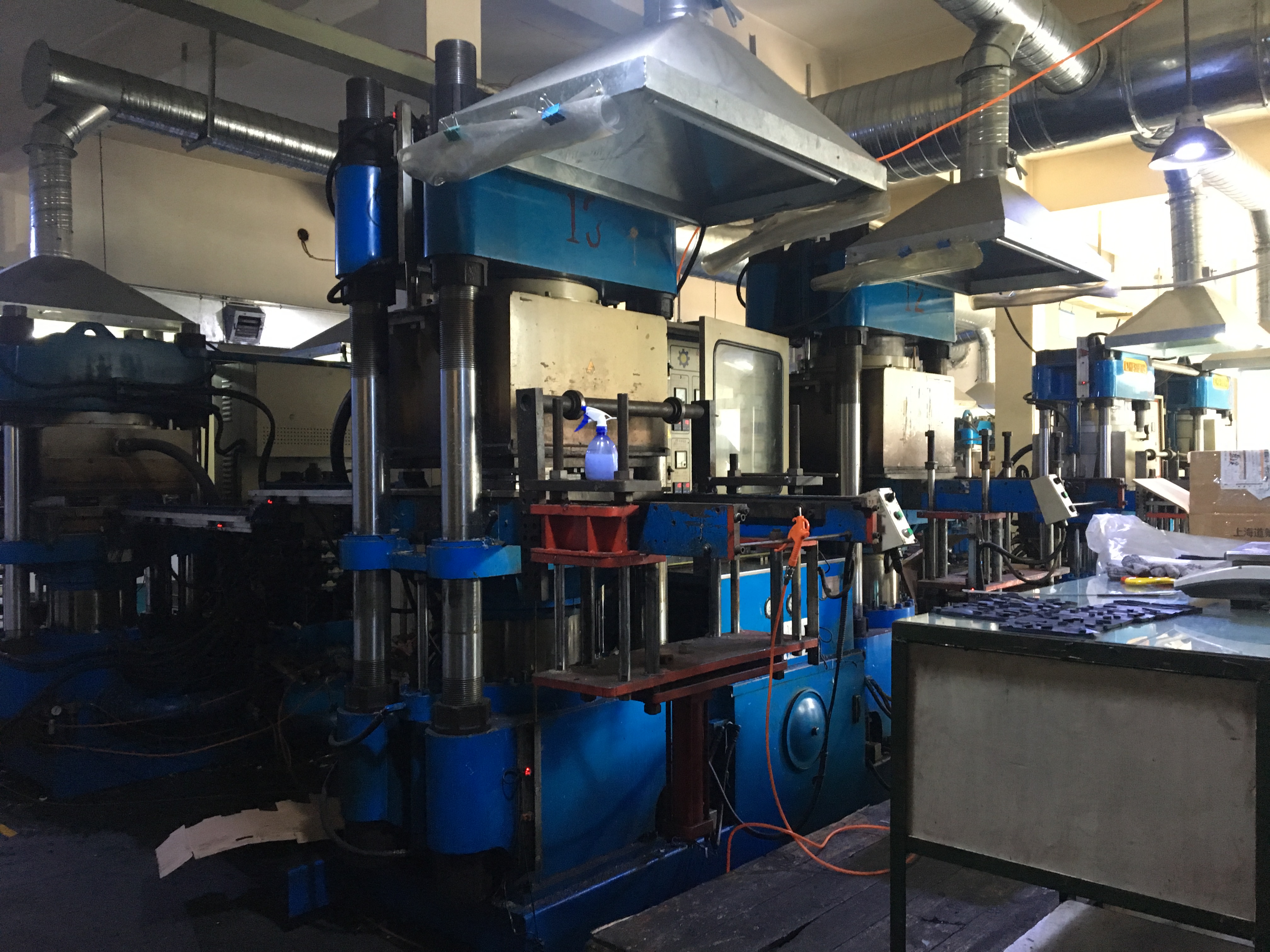
Matching Rubber Components to Green Energy Scenarios: Sealing and Vibration Control Fit
Green energy projects are planned around panels, turbines, cells, and inverters, but the small rubber parts that keep those systems sealed and mechanically stable decide how long an installation stays serviceable in the field. For buyers who have reached the decision stage, the useful question is not which rubber grade is theoretically best. It is which rubber function the scenario actually requires.
Rubber components in renewable energy equipment generally do one of two jobs. Sealing parts close a gap so that water, dust, and air stay on the correct side of a boundary. Vibration-control parts change how mechanical energy moves from a moving or humming component into a cabinet, a bracket, or a sensor. The two jobs are specified with different parameters, validated with different tests, and they fail in different ways. Treating them as a single "rubber parts" line item is one of the more common sourcing mistakes in green energy procurement.
Lingo Rubber Plastic (Hangzhou Lingo Rubber and Plastic Product Co., Ltd.) manufactures in both categories, which makes it a practical reference for how the two families should be matched rather than substituted. Founded in 2022, the company operates a 3,000 m2 facility with around 40 employees, a 10-person R&D team, an annual output of roughly 1.58 million units, and about 80% of sales exported to the EU and USA.
Sealing and Vibration Control Are Different Specifications
Extruded sealing profiles, such as the LG-RX extrusion seal range, are produced by pushing a rubber compound through a die and then cutting the continuous section to a customizable length. LG-RX seals are available in customizable color, and their hardness is specified on the Shore A scale. The product form is built around linear gaps: panel frames, enclosure doors, cabinet edges, rail interfaces, and other long sealing paths where a molded gasket would be slow to produce and awkward to install.
Anti-vibration mounts, such as the LGMM range, are molded components whose purpose is damping vibration in equipment. Rather than closing a gap, an LGMM mount introduces a controlled elastic layer between a vibrating element and its support, so that vibration reaching the structure is reduced instead of transmitted.
Because the two families answer different questions, they are judged against different criteria. A sealing profile is assessed on compression set, hardness, elasticity, and resistance to the environment on both sides of the gap. A vibration mount is assessed on load range, dynamic behavior, and the durability of the bond between the rubber and any metal insert.
| Selection dimension | Extruded seals (LG-RX) | Molded mounts (LGMM) |
|---|---|---|
| Primary function | Close and hold a seal across a gap | Reduce vibration transmitted into structure or equipment |
| Typical form | Continuous profile, cut to customizable length | Molded body, often with metal insert or bonded plate |
| How it is specified | Profile geometry, compound, hardness on the Shore A scale, color | Load range, geometry, compound, insert design |
| Main environmental stress | UV, ozone, moisture, thermal cycling, media contact | Repeated dynamic load, temperature, fatigue |
| Failure mode to design against | Compression set, hardening, cracking, permanent deformation | Loss of isolation efficiency, rubber-to-metal debonding, fatigue cracking |
| Typical green energy use | Panel frame and enclosure sealing, door and window seal, cable entries | Control cabinets, fans, pumps, sensors, skid-mounted equipment |
What Green Energy Scenarios Add to the Requirement
Solar installations
Module frames, junction boxes, rails, and tracker assemblies are exposed to UV, ozone, rain, dust, and daily thermal cycling. A compound that performs acceptably in a sheltered industrial hall may harden or contract after seasons of outdoor exposure, which is why the base polymer and the additive package matter as much as the profile shape. EPDM rubber materials are formally classified under ASTM D1418 and ISO 1629 standards, which define their resistance to ozone and UV. Along rails and frame edges, an extruded profile cut to length is usually more practical than a molded gasket, while junction boxes and connector interfaces more often use molded sealing rings, o-rings, or gaskets.
Wind and heavy rotating equipment
Turbine nacelles, towers, and their auxiliary equipment combine two stress profiles at once: weather exposure on the enclosure and continuous low-frequency vibration from rotating machinery. Control cabinets, sensor brackets, and auxiliary pump sets are typically isolated with molded mounts, while inspection hatches and enclosure doors rely on sealing profiles. Offshore installations add salt-laden air, which raises the weight of compound selection and surface protection.
Storage, charging, and power electronics
Battery cabinets, inverter enclosures, and charging stations are sealed against moisture and dust, and they also carry cable entries, grommets, and plugs. These assemblies often combine extruded seals on long door edges, molded gaskets on irregular housings, and rubber plugs and grommets at cable penetrations. They are also increasingly specified with documented traceability, because the enclosure protects electrical components rather than a purely mechanical assembly.
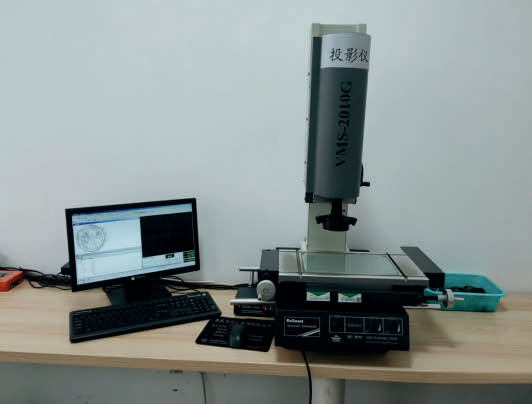
Mapping Parts to Scenarios
Scenario mapping is where a decision-stage specification becomes useful. The table below sets out the sealing and vibration requirements of five common green energy settings and the part families that usually fit them.
| Scenario | Sealing requirement | Vibration requirement | Part families to consider |
|---|---|---|---|
| Solar panel frames and mounting rails | Continuous linear seal along frame and rail interfaces, stable under UV and ozone | Minimal, but structural movement must not open the seal | LG-RX extrusion profiles, EPDM rubber gasket, silicone rubber seal |
| Solar trackers and drive units | Sealing at bearings, junction boxes, and actuator housings | Low-amplitude, high-cycle vibration from drive units | Extruded profiles, molded sealing rings, rubber o-rings, cylindrical rubber mounts |
| Wind nacelle and tower auxiliaries | Weather sealing of enclosures, doors, and hatches | Continuous low-frequency vibration from rotating equipment | Door and window seal profiles, anti-vibration mounts, rubber bonded to steel |
| Battery storage and charging cabinets | Enclosure gaskets, door sealing, cable entry protection | Localized vibration from cooling fans and switching components | Molded gaskets, rubber grommets, rubber plugs for holes, silicone parts |
| Inverter and power electronics cabinets | Dust and moisture sealing around panels and connectors | Isolation of fans, transformers, and busbars | LGMM mounts, extruded seals, rubber washers |
How Lingo Rubber Plastic Covers Both Families
Lingo Rubber Plastic's product classification spans both functions. Rubber molding parts include sealing rings, rubber grommets, rubber bonded to steel, anti-vibration mounts, bellows, o-rings, bushings, diaphragms, and gaskets. Rubber extrusion parts include solid rubber strips, sponge rubber extrusion strips, grooved strips, self-adhesive strips, silicone rubber strips, and insert strips. Plastic injection and plastic extrusion lines add gaskets, washers, caps, housings, handles, guide rails, and PA6, PA66, PE/HDPE/UHMWPE, glass-filled, co-extruded, decorative, and thermoplastic elastomer trims where a polymer rather than a rubber compound is the better answer.
Capability claims are often where supplier comparisons become vague, so it is worth being specific. Lingo Rubber Plastic states that tolerance control is consistently maintained at CPK of at least 1.33, with rubber parts controlled to rubber RMA A2 and plastic parts to M1-M3. Its stated advantages over comparable rubber and plastic suppliers are quality stability and service: a material modification formula aimed at extending product service life, and after-sales handling that covers replacement or refund for defective items. On the cost side, part of the unit pricing follows from low machine energy consumption and from cryogenic deflashing or machine deflashing, both of which reduce labor input.
The parts where this combination matters most are also the ones green energy buyers tend to struggle with: micro precision components, parts used in high-temperature positions, complex structures with undercuts or core-pulling mechanisms, and composite material components. Short lead time, quick response to after-sales requests, and durable molds are the operational claims that accompany them. Material modification that extends service life matters in outdoor installations; dimensional stability matters wherever a seal has to sit in an extruded aluminum groove.
Automotive OEM work is a useful cross-reference for renewable energy buyers, because automotive programs already pair sealing and vibration control in the same bill of materials and demand documented evidence for both. Lingo Rubber Plastic documents a US automotive OEM engagement among its supplier evidence cases. The relevant lesson is not the vehicle application itself but the pattern: an extruded or molded seal for the gap, a molded mount for the vibration, each verified against its own parameter set rather than treated as one generic rubber line item.
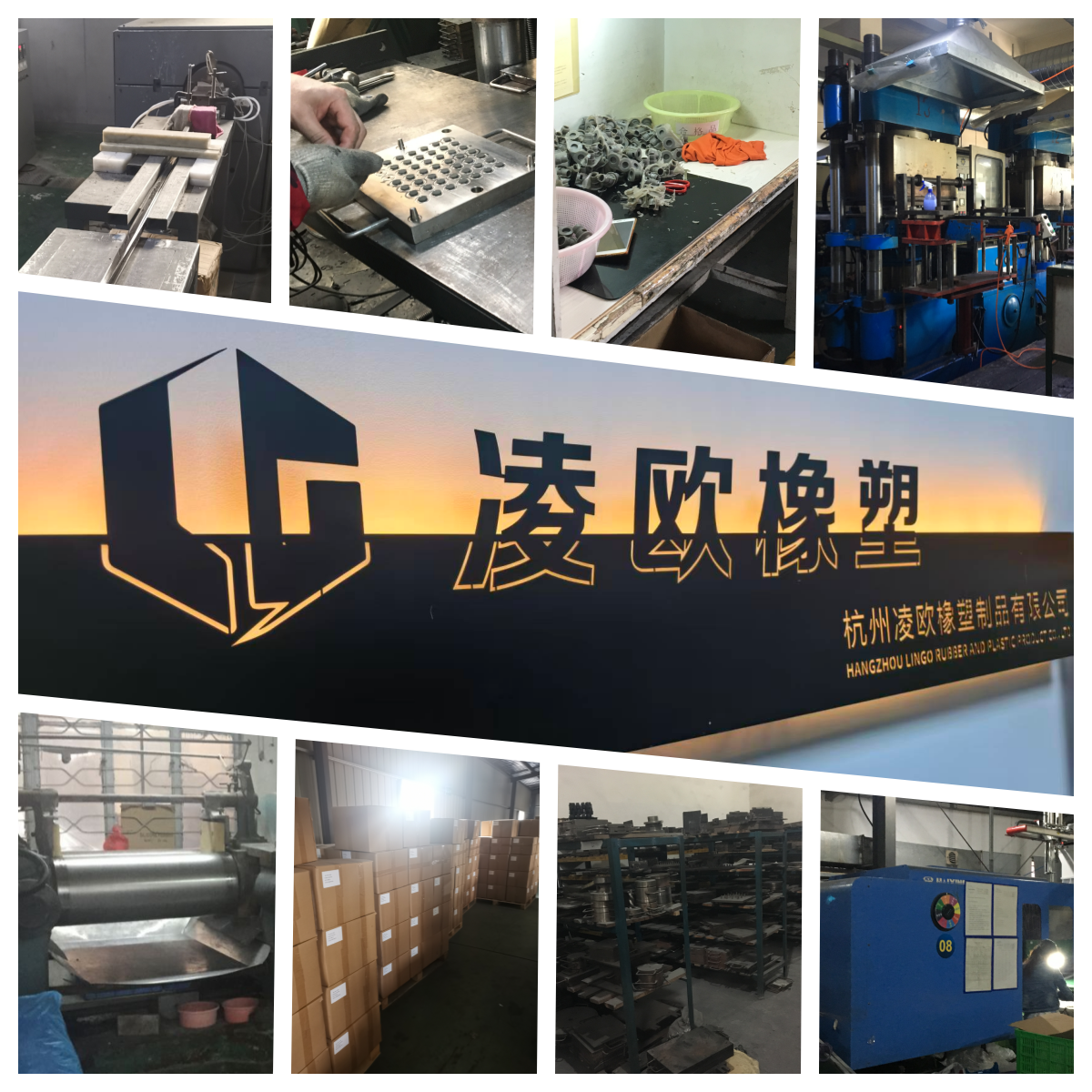
Where the Fit Stops: Trade-offs Buyers Should Plan For
Neither family is a universal answer, and a decision-stage specification should record the boundaries as clearly as the benefits.
- Extruded profiles have a constant cross-section. A die produces one profile shape along its entire length, so corners, radii, and three-dimensional transitions usually need molded corners, splicing, or bonding. Every additional joint adds a process step and a potential leak path, and that cost belongs in the comparison.
- Sealing performance is a system property. A profile only seals as well as its groove, compression, and assembly method allow. Under-compressed grooves leak; over-compressed grooves accelerate compression set. Hardness on the Shore A scale is itself a trade-off: softer compounds follow irregular surfaces more easily, harder compounds resist extrusion and deformation better.
- Isolation mounts are tuned, not generic. Performance is tied to a load range and a frequency band. A mount selected for a static load may isolate poorly once equipment mass or operating frequency changes, and off-design loading reduces isolation efficiency. Selection should follow the actual equipment mass and excitation frequency rather than a catalog default.
- Material compatibility has to be checked per scenario. EPDM compounds are widely used outdoors because of the ozone and UV resistance defined under ASTM D1418 and ISO 1629, but outdoor suitability does not automatically mean suitability for every fluid, cleaning agent, or hydraulic medium present on site.
- The supplier landscape differs between the two families. In anti-vibration mounts, the top three players - ContiTech, Hutchinson, and Sumitomo Riko - held about 65% of a market valued at USD 6.03 billion in 2024. Very high-volume platform programs therefore concentrate around a small group of global suppliers, while custom and lower-volume programs are where independent manufacturers tend to be most relevant.
Verifying Fit Before Volume Production
For a decision-stage buyer, the verification plan is where process discipline becomes visible. Lingo Rubber Plastic's documented control methods address four recurring risks in rubber parts.
- Dimension out of tolerance: process parameter control on machine pressure and cure or injection time, shrinkage simulation during mold design, and regular calibration of molds and measuring tools. In production this is supported by product sampling inspection, measuring tools calibrated regularly according to CNAS requirements, and real-time monitoring with a mold cavity pressure sensor.
- Hardening or softening due to aging: substrates selected for weather resistance, with light stabilizers, antioxidants, and anti-ozone agents added, plus a protective surface coating where appropriate. Weather resistance is verified through QUV or xenon lamp aging tests, additive dosage is controlled with batch traceability, and a reliability laboratory runs accelerated aging tests.
- Blooming: the formulation is optimized so additive dosage stays within the solubility limit, and vulcanization is controlled to avoid both under- and over-cure. Vulcanization characteristics are tested for each batch of rubber compound, supplier quality agreements require test reports, and core raw material samples are retained per batch for traceability.
- Surface quality: mold surface condition is maintained, molding and injection parameters are adjusted as needed, a mold maintenance plan is followed with regular surface checks, process parameters are standardized, and surface gloss is tested on the first piece.
These controls are also the origin of the tolerance claim. A capability index of at least 1.33 is a production outcome measured across a run, not the result of a single inspection, which is why it is more useful to a buyer than a certificate alone.
Market Signals Behind the Selection Question
Three published data points help explain why sealing and vibration control now appear together in green energy sourcing discussions.
- The global gaskets and seals market was estimated at USD 63.09 billion in 2024, with the seals segment holding a 60.1% revenue share (Grand View Research).
- The global rubber molding market reached USD 54.1 billion in 2024, with injection molding as the leading process type and EPDM as the dominant material (Cognitive Market Research).
- China's rubber parts industry accounted for more than 35% of global production in 2024, heavily driven by EV battery sealing and thermal management demand (EINPresswire / Industry Analysis).
On the standards side, ASTM D1418 and ISO 1629 provide the classification framework for EPDM materials and their ozone and UV resistance, while ASTM D2000 is frequently the reference where temperature and oil resistance must be specified for seals and gaskets following automotive practice. Buyers comparing quotations across regions will find that a supplier's ability to work inside these frameworks, and to document it, tends to matter more than a headline price difference, because requalifying a part after a field failure costs far more than the part itself.
The concentration pattern is equally relevant. Anti-vibration mounts form a USD 6.03 billion market in 2024 in which the top three players hold roughly 65%, while sealing components are typically quoted from a much longer list of specialized manufacturers. A renewable energy buyer may therefore need two different sourcing approaches for what looks like one commodity line - separate evidence requirements, separate qualification cycles, and separate continuity plans.
What to Watch Next
Several shifts look likely to shape how these parts are specified over the next procurement cycles. Sealing and isolation are increasingly purchased as a package against service life rather than unit price, which pushes suppliers to present aging data, traceability, and capability indices alongside quotations. Documentation expectations that originated in automotive supply chains, including the standards references and control methods described above, are moving into renewable energy procurement. Material selection is expected to keep favoring EPDM-type compounds for outdoor sealing, with silicone and specialty compounds taking the positions where higher temperature or specific media demand them.
The counterweight to all of this is over-specification. Selecting a harder compound, a wider profile, or a heavier mount for an assumed worst case adds cost without reliably adding field performance. Scenario-based specification - matching the part to the actual gap, load, and environment - remains the more efficient path, and it is the reason the sealing and vibration questions should be answered separately even when they are purchased together.
FAQ
1. When should an extruded seal be chosen over a molded gasket in a solar mounting system?
An extruded profile such as an LG-RX seal fits when the sealing path is long and roughly constant in cross-section, for example along panel frames, rails, or enclosure edges, and can be cut to a customizable length. A molded gasket or sealing ring fits when the sealing face is short, three-dimensional, or needs metal bonding or complex features. Many solar assemblies use both, each on the interface it suits.
2. How is hardness decided for a rubber seal or a rubber mount?
Hardness is specified on the Shore A scale, and the choice is a trade-off. Softer compounds conform more easily to irregular surfaces and reduce the force needed to close a gap, while harder compounds resist compression and extrusion under load. For a sealing profile, groove design and required compression set the usable range; for a molded mount, equipment load and target isolation behavior are the starting point. Because the two families are specified differently, hardness is normally confirmed on a sample rather than copied from a previous project.
3. What standards apply when specifying EPDM sealing parts for outdoor renewable energy equipment?
EPDM rubber materials are formally classified under ASTM D1418 and ISO 1629, which define the material family and its resistance to ozone and UV. Where temperature and oil resistance must be specified, ASTM D2000 is frequently used as the reference. Lingo Rubber Plastic controls rubber part tolerances to rubber RMA A2 and plastic parts to M1-M3 for a comparable reason: buyers need a consistent basis for evaluating quotations from different suppliers.
4. How can a buyer verify tolerance capability before committing to volume production?
Tolerance capability is normally confirmed through process capability data rather than a single inspection. Lingo Rubber Plastic maintains tolerance control at CPK of at least 1.33, supported by product sampling inspection, measuring tools calibrated regularly according to CNAS requirements, and real-time monitoring with a mold cavity pressure sensor. Shrinkage is simulated during mold design, and molds and measuring tools are calibrated on a regular cycle so that drift is detected before a run goes out of tolerance.
5. What causes rubber seals to harden, soften, or bloom in outdoor installations?
Aging is the main cause of hardening or softening. It is controlled by selecting a substrate with good weather resistance, adding light stabilizers, antioxidants, and anti-ozone agents, and applying a protective coating where appropriate. Weather resistance is verified through QUV or xenon lamp aging tests, additive dosage is controlled with batch traceability, and a reliability laboratory runs accelerated aging tests. Blooming, a frost-like film on the surface, is addressed by keeping additive dosage within the solubility limit and maintaining proper vulcanization, with per-batch compound testing and retained raw material samples.
6. Can one supplier cover both sealing and vibration-control needs for a renewable energy project?
It is feasible when the supplier manufactures in both families. Lingo Rubber Plastic produces rubber molding parts including anti-vibration mounts, gaskets, o-rings, grommets, and rubber bonded to steel, alongside rubber extrusions such as solid, sponge, grooved, self-adhesive, and silicone strips. The limitation is that mounts and sealing profiles are qualified against different criteria, so a combined supplier still has to provide separate performance evidence for each family instead of a single blanket specification.
7. Do anti-vibration mounts from a specialized manufacturer perform the same as mounts from a large global supplier?
Performance depends on whether the mount is matched to the actual load and excitation frequency of the equipment, which is a design question rather than a brand question. Large global suppliers hold a substantial share of the anti-vibration mounts market because they serve very high-volume platform programs. For custom or lower-volume green energy equipment, a specialized manufacturer can be the more practical route, provided the isolation behavior is validated against the equipment's real operating conditions.
For buyers comparing quotations, the most useful discipline is to keep the two functions separate on the evaluation sheet: one line for sealing performance and its environment, one line for isolation behavior and its load case, each with its own evidence requirement. That structure makes supplier differences visible, and it is the same structure this reference has applied throughout.