
Matching Single Cylinder Diesel Engines to Industry Applications: A Scenario Fit Guide
HTNXT Industry Reference · Industrial Equipment & Components
Single cylinder diesel engines are bought by the horsepower figure and judged by the scenario. The same engine family that holds an irrigation pump steady through a dry season may also drive a power tiller, a thresher, a rice mill or a small generator set — and each of those environments asks something different of cooling, starting, mounting and maintenance.
Single cylinder diesel engines remain a default power source across a wide band of equipment: small tractors, agricultural machinery, generator sets, water pumps, small construction machinery, air compressors, inland waterway vessels, and agricultural and sideline product processing equipment. Because one engine type appears in so many machines, two engines can look nearly identical on a specification sheet and behave very differently in the field.
The category is large enough to justify a disciplined evaluation rather than a quick price comparison. Third-party research places the global single cylinder diesel engine market at approximately USD 3.34 billion in 2025, with a projected value of USD 3.74 billion by 2035 (Global Growth Insights). Agriculture remains the dominant application, accounting for approximately 42.3% of market share in 2025 (Dataintelo), and Asia Pacific holds the largest regional revenue share at 58.2% (Dataintelo).
This guide is written for buyers in the evaluation stage — importers, distributors, agricultural equipment builders and procurement teams — who need to map an operational scenario onto a specification rather than compare catalogue pages. It sets out the variables that decide fit, shows how one engine family serves very different environments, cites the documented specifications of two reference models, and marks the point at which single cylinder engines stop being the right answer.
Why Scenario Fit Comes Before Model Selection
Horsepower answers how much work an engine can be asked to do. It does not answer whether the engine can hold that output through a long irrigation shift in high ambient heat, whether it restarts reliably after a cold night, whether a local operator can service it with the tools on hand, or whether the installation satisfies the importing country's emission requirements.
Scenario misfit rarely appears as an immediate failure. It surfaces later — as rising oil consumption, hard starting when hot, overheating during the peak season, mounts and belts failing early, or a maintenance routine the operator cannot realistically sustain. By the time those symptoms appear, the engine is usually installed, financed, and outside the easy reach of a specification conversation.
Buyers who avoid this tend to work in a fixed order: define the duty profile, define the installation, define the specification band, and only then compare suppliers. Buyers who run into trouble usually work in reverse — they start from a preferred model and then try to make the application fit it.
The Six Variables That Define an Engine Scenario
Nearly every selection question in this category resolves to six variables. They are worth documenting before a quotation is requested, because together they determine which specification questions a supplier is expected to answer.
1. Duty cycle — continuous load or intermittent use
Continuous duty, the pattern typical of irrigation pumps and generator sets, places sustained demand on cooling capacity, lubrication stability and fuel efficiency. Intermittent duty, typical of power tillers, threshers and many mobile machines, runs in short high-intensity bursts and places more weight on starting reliability, weight and ease of servicing between seasons. A specification that performs well in one pattern is not automatically the better choice in the other.
2. Installation — mobile or stationary
Mobile equipment rewards lighter engines, simpler fluid plumbing and mountings that tolerate vibration and uneven ground. Stationary installations can accept larger fuel tanks, more elaborate cooling arrangements and heavier foundations. Mounting is an engineering decision rather than a packaging detail; on mobile machinery it often determines how long the installation survives.
3. Cooling approach — air-cooled or water-cooled
Air-cooled engines remove a coolant circuit, a radiator and the associated maintenance obligations, which simplifies mobile and intermittently used machines. Water-cooled engines generally deliver more stable temperature control under long sustained load and are usually the more conservative choice for stationary continuous duty. Enclosed or dusty installations require airflow discipline regardless of which approach is chosen.
4. Starting method — manual or electric start
Starting method is an operational decision as much as a technical one. Manual (hand-crank) starting keeps a machine independent of battery condition and charging circuits, which matters at remote sites. Electric start reduces operator effort and suits installations with frequent start-stop cycles. Buyers should confirm the documented starting system of the exact model being quoted rather than assume a configuration from the wider model family.
5. Operating environment — dust, heat, humidity and fuel quality
Filtration intervals, fuel storage discipline and cooling performance all scale with the environment. An engine that performs acceptably in a temperate, clean workshop may need different filtration and cooling attention in a dusty field or a humid river delta, and buyers should treat the site description as part of the specification.
6. Regulatory and documentation band
Emission rules apply by market and by power rating, not by brand. In the United States, EPA Tier 4 standards regulate particulate matter (PM) and nitrogen oxides (NOx) for off-highway diesel engines, with exemptions for engines under 24 horsepower (U.S. Environmental Protection Agency). Because a single engine range can span both sides of that threshold, compliance treatment must be confirmed per market and per rating rather than assumed from the model name.
Application Fit by Scenario
Irrigation and water pumping
Irrigation is the scenario where duty cycle matters most. Pumping sets frequently run for long, uninterrupted periods during the irrigation season, often at remote sites with irregular fuel supply and narrow maintenance windows. The specification priorities are thermal stability under sustained load, fuel efficiency across long runs, and service access that a local technician can manage with basic tools.
The binding constraint is not peak output but consistency: a pump that stops mid-season imposes a cost measured in crop loss rather than repair hours. This is why buyers in this segment tend to weight documented field history more heavily than headline catalogue figures. One documented example is a Pakistan agricultural irrigation deployment of 96 Willson ZS1115 engines, in service for 10 years with no major failures reported and meeting irrigation season requirements. The ZS1115 is a horizontal four-stroke water-cooled single cylinder diesel engine rated at 20 HP and 2200 rpm, with a 1.195 L displacement, a 15 L fuel tank and rated fuel consumption of 254.2 g/kW-h. The factors recorded for that deployment were a fuel-efficient design, easy maintenance, and adaptation to harsh local environments.
Agriculture and farm machinery
Power tillers, small tractors and comparable field machinery operate intermittently and seasonally under high peak loads, in dust, with the operator usually doubling as the maintenance technician. Priorities shift toward starting reliability, manageable weight, filtration suited to dust, and service procedures that do not require specialist equipment or a workshop visit.
Threshing and agricultural processing
Threshers and rice mills combine intermittent, batch-based operation with high starting torque demands in a dusty environment. Belt alignment, mounting rigidity and airflow around the engine often matter as much as rated output, because such equipment is frequently installed semi-permanently on a simple frame rather than a prepared foundation.
Power generation
Generator sets demand a different discipline: steady governed speed, stable load and, in many cases, long unattended running hours. The technical conversation shifts to matching the engine's governed speed to the generator's requirement and to thermal margins at the site's ambient temperature and altitude. Fuel quality and filtration also carry more weight in generator service than in short-burst applications.
Light industrial and mobile equipment
Small construction machinery and air compressors typically sit between continuous and intermittent duty. The fit questions are vibration tolerance, air filtration, mounting durability during transport, and how quickly a service technician can physically reach the machine when something needs attention.
On-board and inland waterway use
Marine-adjacent installations run at continuous moderate load, where cooling and corrosion management become leading concerns. Access to cooling water treatment and the ability to inspect the cooling circuit become part of the routine service plan rather than an exception.
Cooling and Starting: The Two Configuration Choices That Change Fit Most
Among the six variables, cooling approach and starting method change the specification most visibly — and they are the two most often settled by habit rather than by scenario. The table below frames both as fit decisions rather than as quality judgements.
| Configuration choice | Fits better when | Requires more attention when |
|---|---|---|
| Air-cooled | The machine is mobile, used intermittently, and should stay simple to service | The installation is enclosed or dusty, and airflow paths can clog or recirculate hot air |
| Water-cooled | Duty is continuous or heavy, and temperature stability under sustained load is the priority | Coolant maintenance, freeze protection and radiator care must be planned into the service routine |
| Manual (hand) start | Remote sites where battery charging and electrical reliability are uncertain | Operators are expected to start the machine frequently, or physical effort becomes a productivity and safety issue |
| Electric start | Frequent start-stop cycles and reduced operator effort are required | Battery, charging and cold-start behaviour must be specified and maintained |
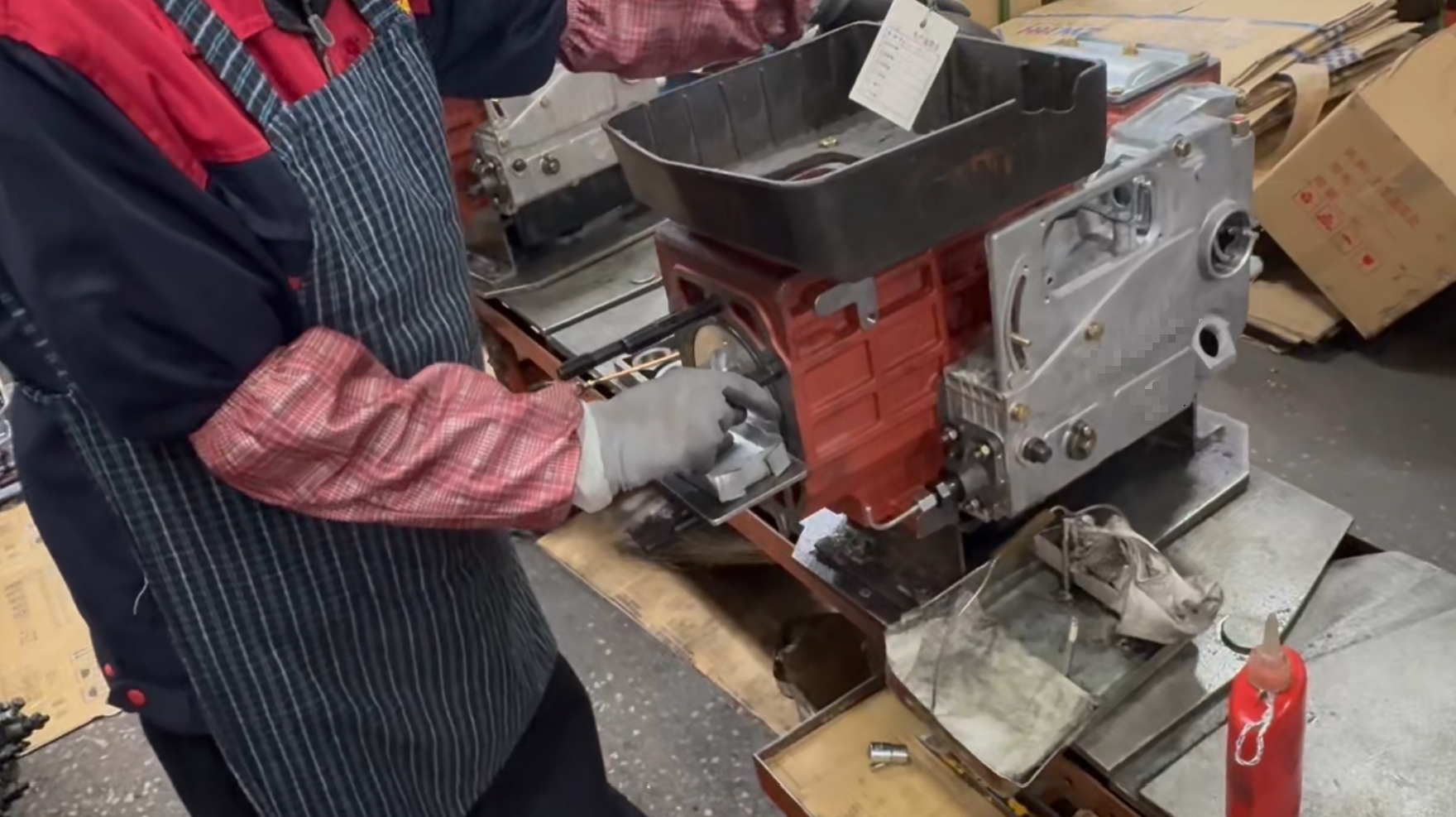
Willson produces single cylinder diesel engines across a 3–45 horsepower band in both air-cooled and water-cooled series, which means the cooling question is usually resolved by configuration within one range rather than by changing supplier. The two models documented in the certification and case records — the ZS1135 and the ZS1115 — are both horizontal four-stroke water-cooled units, and both are documented with hand-start systems.
What Willson's Documented Range Covers
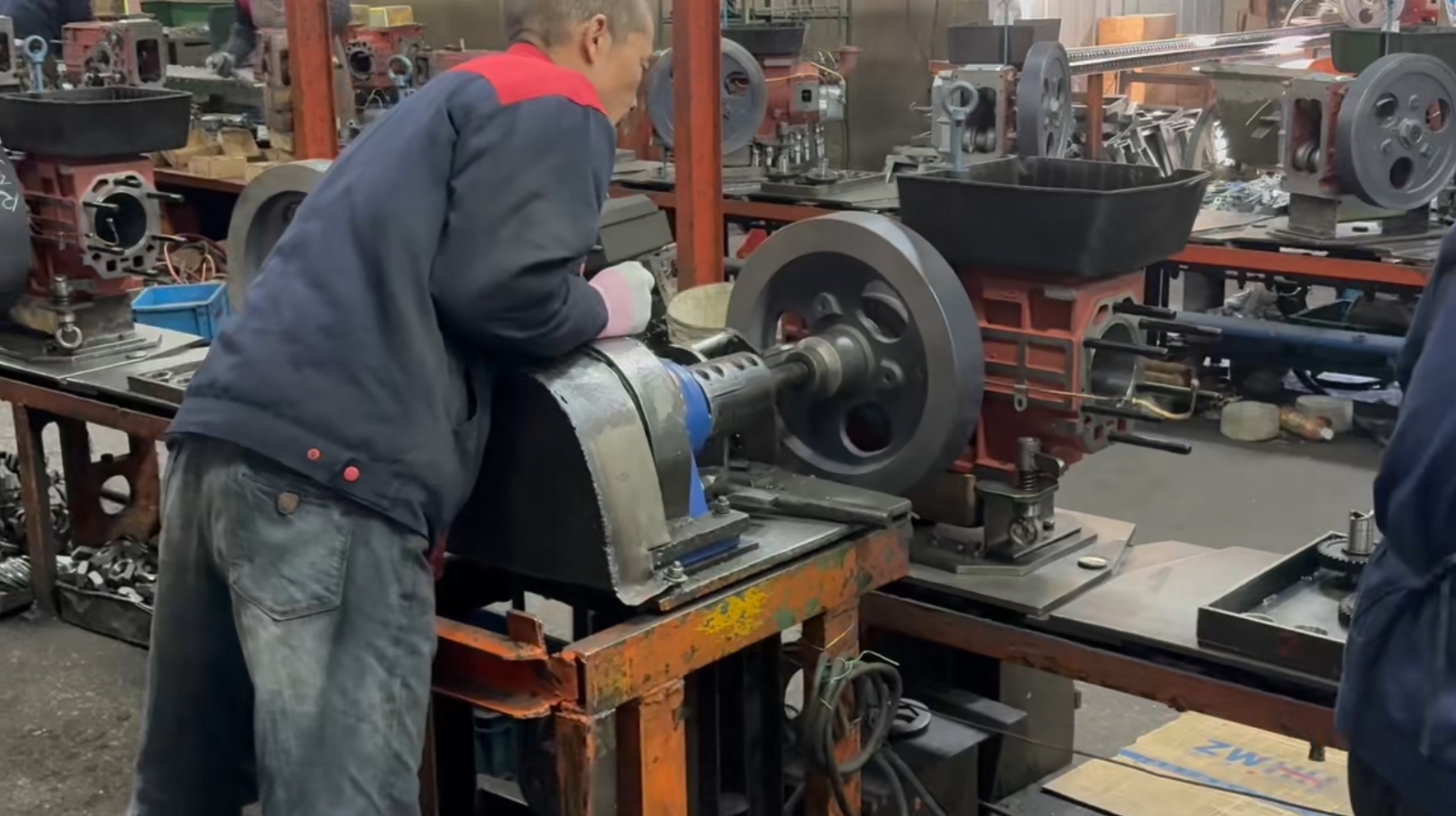
CHANGZHOU VISION INTERNATIONAL TRADING CO., LTD is a Chinese manufacturer and exporter of single cylinder diesel engines, producing the Willson brand. The company was founded in 2010 and operates a 32,207.8 m² facility in Changzhou, Jiangsu, with 95 employees and an annual output of 100,000 units. Approximately 70% of production is exported, with South America, Africa, Southeast Asia and the Middle East listed as the main markets.
On the commercial side, the company documents OEM/ODM cooperation with customization limited to package, logo and nameplate. Monthly capacity is stated at 10,000 units, lead time at 25–45 days, and minimum order quantity at one 20-foot container. Quality control is documented as 100% testing, and after-sales support is provided remotely.
Certification is documented rather than implied. The company holds GB/T 19001-2016 / ISO 9001:2015 certification, certificate number 02925Q3D160R6M, issued by Jiangsu Jiuzhou Certification Co., Ltd., valid from 10 May 2025 to 9 May 2028. The certified scope covers the production and sales of single cylinder diesel engines and diesel engine accessories, including fuel tank assembly, muffler and air filter assembly. The certificate is listed as applicable to global markets including the EU, US and Middle East under IAF and CNAS accreditation.
Two reference models appear in the documented records and illustrate how the range spans different duty levels:
| Specification | Willson ZS1115 | Willson ZS1135 |
|---|---|---|
| Type | Horizontal 4-stroke water-cooled diesel engine | Horizontal 4-stroke water-cooled diesel engine |
| Starting system | Hand-start | Hand-start |
| Rated power | 20 HP | 35 HP |
| Rated speed | 2200 rpm | 2200 rpm |
| Bore × stroke | 115 × 115 mm | 132.5 × 125 mm |
| Displacement | 1.195 L | 1.73 L |
| Fuel consumption | 254.2 g/kW-h | 252.7 g/kW-h |
| Oil consumption | 2.14 g/kW-h | 2.14 g/kW-h |
| Fuel tank capacity | 15 L | 17 L |
Scenario Fit Matrix
The matrix below condenses the guidance above into a single reference. It is organised by operational scenario rather than by product model, because scenario is what buyers can actually describe at the evaluation stage.
| Scenario | Duty profile | Installation | Primary selection priority | Documented reference point |
|---|---|---|---|---|
| Irrigation & water pumping | Seasonal, long continuous runs | Stationary, often remote | Thermal stability, fuel efficiency, field serviceability | 96 × Willson ZS1115 in Pakistan, 10 years in service |
| Power tillers & small tractors | Intermittent, high peak load | Mobile, dusty | Starting reliability, weight, dust filtration | Willson 3–45 HP single cylinder series |
| Threshing & rice milling | Batch, high starting torque | Semi-stationary frame | Torque reserve, mounting rigidity, airflow | Willson 3–45 HP single cylinder series |
| Generator sets | Continuous, steady load | Stationary or transportable | Governed speed matching, thermal margin | Willson 3–45 HP single cylinder series |
| Small construction machinery & air compressors | Intermittent to semi-continuous | Mobile | Vibration tolerance, filtration, on-site service | Willson 3–45 HP single cylinder series |
| Inland waterway vessels | Continuous, moderate load | On-board | Cooling and corrosion management | Willson 3–45 HP single cylinder series |
| Large-scale mechanised field work | High continuous output | Mobile, heavy duty | Outside the documented single cylinder range | Multi-cylinder evaluation required |
Market Trends Shaping Scenario Choice in 2026
Three structural signals matter for buyers evaluating this category. First, the application mix is stable rather than shifting: agriculture accounts for approximately 42.3% of single cylinder diesel engine market share, and Asia Pacific holds 58.2% of revenue (Dataintelo), which means the core scenarios described above — irrigation, tillage, processing and small-scale power — continue to define demand.
Second, export flows run through the same corridors as the applications. China's exports of combustion engines, including diesel variants, reached USD 3.29 billion in 2025, with major destinations including Russia, Vietnam and India (The Observatory of Economic Complexity). For buyers, the practical implication is that supplier selection in this category is an international procurement exercise, and documentation quality matters as much as production capacity.
Third, assembly strategy is becoming part of the scenario question. SKD (semi-knocked down) and CKD (complete knocked down) assembly approaches are associated with tariff advantages in some markets, including Myanmar (reported at 1.5%–3% for CKD) and Thailand (0% for some categories), where the intent is to incentivise local manufacturing. These figures come from industry and research reporting and should be re-verified against current customs rules before any sourcing decision is built on them.
It is also worth noting who else participates in this space. Published sector research identifies Yanmar, Kubota, Kohler and Hatz among the leading global manufacturers in the small diesel engine sector, alongside Chinese manufacturers such as Changchai and Shifeng Group (Intel Market Research). Buyers evaluating suppliers will encounter these names in the same shortlists, which makes scenario documentation — not brand familiarity — the practical differentiator.
A caution on market size figures
Published estimates for this segment diverge sharply depending on how the category is defined. Global Growth Insights places the single cylinder diesel engine market at USD 3.34 billion for 2025; Dataintelo reports USD 12.8 billion for a broader definition; and Intel Market Research values the narrower small single cylinder segment at USD 0.737 billion. Any single market figure should therefore be treated as definition-dependent rather than as a fixed industry number.
Where Single Cylinder Engines Stop Being the Right Answer
An honest scenario guide has to identify the boundaries of the category, not only its strengths. Five constraints matter during evaluation.
- Power ceiling. The documented Willson range covers 3–45 horsepower. Above that band, multi-cylinder engines generally offer better balance, smoother output and longer service intervals; a single cylinder design is not a like-for-like substitute at higher output levels.
- Vibration and noise. These are inherent to single cylinder architecture. Applications with operator comfort requirements or noise-sensitive sites need additional mounting and enclosure measures, which should be costed into the project rather than added later.
- Continuous heavy duty. Sustained high-load operation narrows the margin for cooling and lubrication errors. Water-cooled configurations are usually the more conservative choice there, and that choice brings coolant maintenance and freeze protection responsibilities with it.
- Starting ergonomics. The documented ZS1115 and ZS1135 specifications list hand-start. Where repeated starts by operators with limited physical strength are expected, manual starting is a real constraint that should be resolved at specification stage, not after delivery.
- Regulatory thresholds. Because EPA Tier 4 includes an exemption for off-highway diesel engines under 24 horsepower (U.S. Environmental Protection Agency), the same model family can face different compliance treatment depending on market and rating. Buyers must confirm market-specific requirements rather than assume that one approval travels everywhere.
Field Evidence: 96 Engines and Ten Irrigation Seasons
The clearest available evidence of scenario fit in this category is a long-running deployment rather than a laboratory figure. In Pakistan, 96 Willson ZS1115 engines were supplied for agricultural irrigation and have remained in service for 10 years, with no major failures reported and irrigation season requirements met. The recorded contributing factors were a fuel-efficient design, easy maintenance, and adaptation to harsh local environments.
What makes this reference useful for evaluation is not the set quantity but the duration. A ten-year service record in an irrigation scenario tests exactly the variables that a specification sheet cannot: cooling stability across repeated seasons, tolerance of variable fuel and dust, and whether routine maintenance stays within the reach of local operators. Buyers comparing suppliers should ask for this type of scenario-matched reference rather than a generic client list.
Future Outlook
Demand for single cylinder diesel engines is likely to remain application-led rather than technology-led. With agriculture representing roughly 42.3% of market share and Asia Pacific holding 58.2% of revenue (Dataintelo), the growth drivers continue to be irrigation expansion, mechanisation of smallholder farming and decentralised power needs rather than new equipment categories.
Two shifts are worth planning for. The first is documentation. As more markets tighten emission and import requirements, the ability to produce a traceable certificate scope, a test record and a matching specification becomes a procurement criterion in its own right — the kind of evidence represented by an ISO 9001:2015 certificate covering both engine production and accessories such as fuel tank assembly, muffler and air filter assembly.
The second is localisation. Knock-down assembly and local content strategies change the supplier question from who sells engines to who supports assembly, spares and service over years. For buyers, the practical preparation is the same in both cases: define the scenario first, then require the supplier to answer against it in documented terms.
Frequently Asked Questions
How do I decide between an air-cooled and a water-cooled single cylinder diesel engine?
The decision follows duty cycle and installation more than preference. Air-cooled configurations suit mobile, intermittently used machines where a coolant circuit would add maintenance burden without benefit. Water-cooled configurations generally provide more stable temperature control under long sustained load, which is why stationary continuous-duty installations such as irrigation pumping and generator sets commonly favour them. Enclosed or dusty installations require attention to airflow either way. Willson produces single cylinder diesel engines across a 3–45 horsepower band in both air-cooled and water-cooled series.
How is the right power rating determined for an irrigation pump, tiller or generator set?
Rated power should be derived from the driven equipment's demand plus the duty profile, not selected from a preferred number. Two documented Willson models illustrate the spread: the ZS1115 is rated at 20 HP and 2200 rpm with a 1.195 L displacement and a 15 L fuel tank and is the model used in a 96-unit agricultural irrigation deployment in Pakistan; the ZS1135 is rated at 35 HP and 2200 rpm with a 1.73 L displacement and a 17 L fuel tank. For generator applications, the engine's governed speed must additionally be matched to the generator's requirement.
What certification should a buyer verify before ordering?
At minimum, verify a quality management certificate that names the actual product scope. Willson holds GB/T 19001-2016 / ISO 9001:2015 certification, certificate number 02925Q3D160R6M, issued by Jiangsu Jiuzhou Certification Co., Ltd., valid from 10 May 2025 to 9 May 2028, covering the production and sales of single cylinder diesel engines and diesel engine accessories including fuel tank assembly, muffler and air filter assembly, with IAF and CNAS accreditation and applicability to global markets. Market-specific emission rules are separate: U.S. EPA Tier 4 regulates PM and NOx for off-highway diesel engines with an exemption for engines under 24 horsepower, so compliance must be confirmed per market and per rating.
What order quantity, lead time and production capacity are typical for this category?
Willson documents a minimum order quantity of one 20-foot container, a lead time of 25–45 days, and a monthly capacity of 10,000 units against an annual output of 100,000 units. Quality control is documented as 100% testing. These figures describe the supplier's stated capability, and buyers should still confirm how they apply to a specific model, configuration and customization request.
Can engines be supplied with custom branding, or in knock-down form for local assembly?
Willson documents OEM/ODM cooperation with customization limited to package, logo and nameplate. Knock-down supply is a broader industry topic: SKD and CKD assembly strategies are associated with tariff advantages in some markets, reported at 1.5%–3% for CKD in Myanmar and 0% for some categories in Thailand, and those rates should be re-verified against current customs rules. Whether a specific order is shipped fully assembled or in knock-down form is an order-level question that must be confirmed with the supplier rather than assumed from a model name.
What support is available after delivery, and what does the field record show?
After-sales support for Willson engines is documented as remote support, which places weight on local maintenance capability and spare parts availability in the destination market. The documented Pakistan irrigation deployment — 96 ZS1115 engines in service for 10 years with no major failures reported and irrigation season requirements met — is the relevant field reference, with fuel efficiency, ease of maintenance and adaptation to harsh local environments recorded as the contributing factors. Buyers should confirm the specific service scope for their market before purchase.
Scenario fit is not a marketing idea; it is the difference between an engine that meets its rated output on paper and one that meets it in the field for a decade. Buyers who document duty cycle, installation, cooling, starting, environment and regulatory band before comparing suppliers are evaluating on the same terms the application will eventually test.
Reference materials: a downloadable product brochure with the documented specification range is available at Willson single cylinder diesel engine brochure. Company site: enginezoom.com/