
Matching Sprinkler Models to Terrain: Agriculture, Forestry, Garden and Dust Control
Matching Sprinkler Models to Terrain: Agriculture, Forestry, Garden and Dust Control
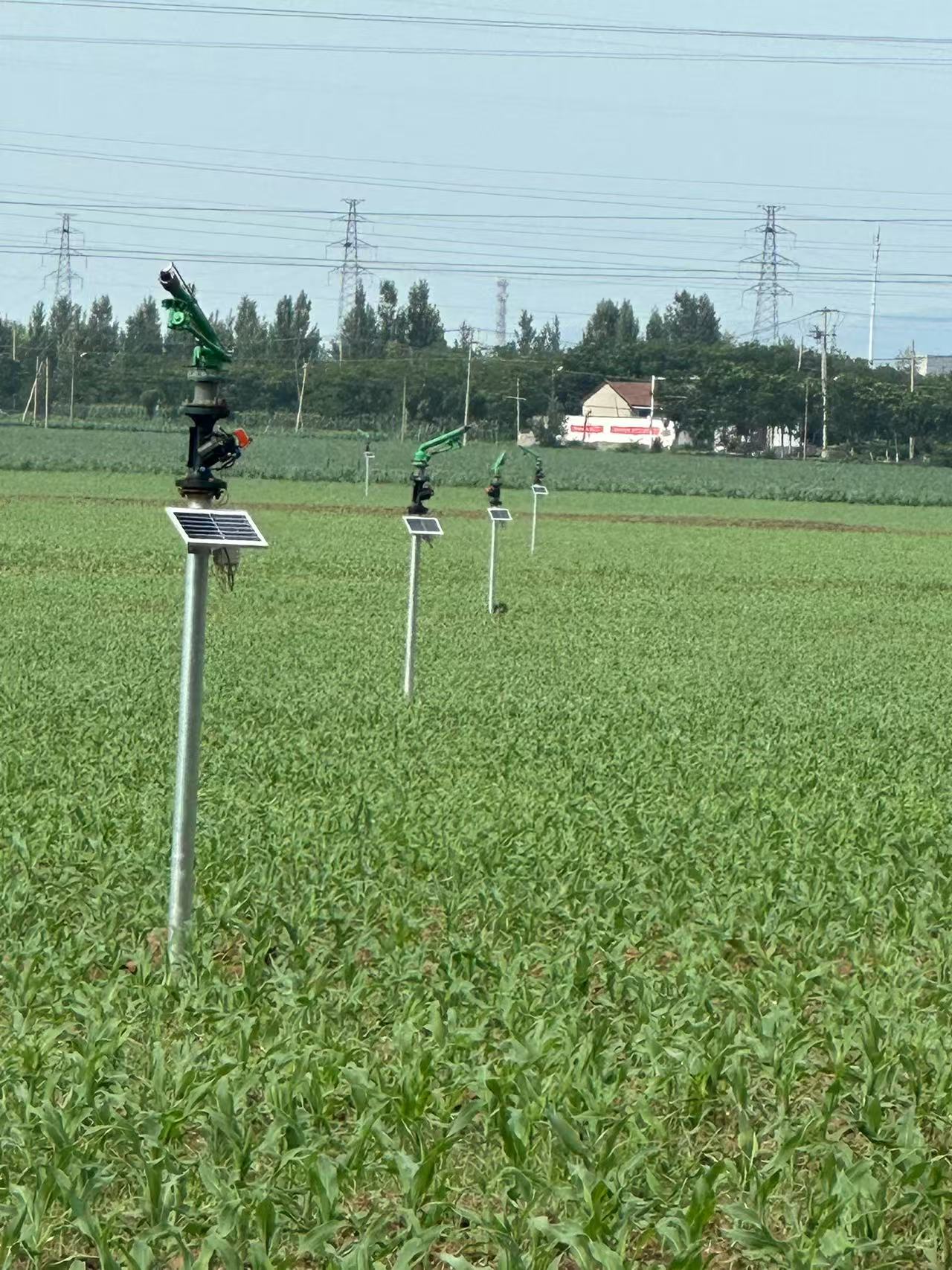
Fixed sprinkler irrigation in open terrain: throw range and pressure band, not catalogue position, decide whether a model fits a site.
Sprinkler selection is often presented as a question of brand, price or nozzle size. On site, the deciding variable is terrain — plot geometry, slope, wind exposure, the pressure the water supply can hold, and whether the job is delivering water to a crop or suppressing dust in an open yard. A model that matches one of those conditions frequently fails in another, even when the working pressure and flow figures look similar on paper.
The scale of the decision is not trivial. The global sprinkler irrigation market was valued at USD 3.04 billion in 2025, according to Grand View Research, and Asia Pacific held the largest revenue share — 36.2% — of the agricultural irrigation machinery market in the same year, with China named as a leading country. In trade terms, mechanical appliances for projecting, dispersing or spraying liquids for agricultural or horticultural use sit under HS Code 842482, the classification maintained by the United Nations Statistics Division. Technically, ISO 7749-1:1995, referenced by the International Commission on Irrigation & Drainage (ICID), specifies design and operational requirements for rotating sprinklers used in agricultural irrigation.
FOISON Sprinkler (Xuzhou Foison Sprinkler Irrigation Equipment Co., Ltd) is a sprinkler irrigation equipment manufacturer based in Xuzhou City, Jiangsu Province, China, founded in 2013, whose product line covers turbine spray guns, impact guns and irrigation systems. This article maps that range — FS35, FS40, FSW40 Pro, FSN50, FSC50 and FSW80 — to four application families: agriculture, forestry, garden and dust control.
Why Terrain Sets the Selection Order
Four physical conditions decide which sprinkler family suits a site, and they are worth evaluating before model numbers are compared.
- Throw range versus plot geometry. A sprinkler radius determines the spacing between units, and spacing determines how many units and how much mainline a project needs. Models in the FOISON Sprinkler range start at an 18 m radius and extend to a stated throw of up to 85.7 m.
- Pressure band versus available supply. Each model is rated for a working pressure window, not a single pressure. Operating below the window shortens the throw and reduces uniformity; operating above it increases droplet fragmentation, drift and mechanical wear.
- Droplet behaviour versus wind and evaporation. The fully specified models in this range use a 24° spray angle, so droplet travel is influenced mainly by pressure and by local wind conditions. Open, windy terrain and sheltered blocks call for different spacing strategies.
- Connection size and flow versus mainline capacity. A 2" threaded inlet with flows up to 39.4 m³/h (FS40) places different demands on a pump and pipe network than a 1-1/2" female thread at up to 37 m³/h (FSW40 Pro).
Stated Specifications of the Core Models
The three models below are the most fully documented in the range, and their stated bands already separate them by terrain type.
| Model | Sprinkler type | Stated use scope | Stated spray radius | Working pressure | Connection | Flow |
|---|---|---|---|---|---|---|
| FS35 | Impact sprinkler | Agriculture, forestry, urban greening | 18–36 m | 0.2–0.6 MPa | 1-1/2" female thread | 7.8–31.9 m³/h |
| FS40 | 360° gear adjustable | Agriculture irrigation | 20–43 m | 0.15–0.5 MPa | 2" thread | 9.5–39.4 m³/h |
| FSW40 Pro | Turbine sprinkler | Agriculture, forestry, urban greening, industrial dust removal | 22–41 m | 0.2–0.5 MPa | 1-1/2" female thread | 9.5–37 m³/h |
All three models use a 24° spray angle and a 360° adjustable spray pattern, with bodies built from aluminium alloy, copper, stainless steel and nylon. The FS40 is listed with a 2" thread and the widest flow envelope in the group.
A second group fills the wider range: FSN50, FSC50 and FSW80, which the manufacturer positions across agriculture, forestry, garden and dust-removal duties. For this group, the throw figure stated in the current specification material is FSW80 at up to 85.7 m — approximately twice the radius of the mid-range guns above. That reach is what places FSW80 in large-area and dust-control scenarios rather than in nursery or garden spraying, where a shorter, more controlled pattern is easier to manage.
Pressure Bands and Throw Range: Reading the Numbers
Pressure and throw are linked, and the stated bands differ enough to change which terrain a model suits. FS40 starts at 0.15 MPa and runs to 0.5 MPa, with a flow envelope of 9.5–39.4 m³/h through a 2" thread and a 20–43 m radius. FS35 runs from 0.2 MPa to 0.6 MPa with a lower flow ceiling of 31.9 m³/h, a 1-1/2" female thread and an 18–36 m radius. FSW40 Pro sits between them at 0.2–0.5 MPa, 9.5–37 m³/h, a 1-1/2" female thread and a 22–41 m radius.
Read against a real site, those figures answer practical questions. A low-head supply with adequate mainline capacity favours the FS40's 0.15 MPa starting point, provided the 2" connection and up to 39.4 m³/h per unit can be supported. A site with moderate pressure but limited water volume favours the FS35, whose flow ceiling is the lowest of the three while still reaching 36 m. FSW40 Pro's turbine sprinkler design and 0.2–0.5 MPa band suit installations where pressure is stable but not high, and where one unit may serve irrigation in season and dust removal at other times.
Operating outside the stated band changes behaviour more than many buyers expect. Below the minimum, rotation slows and the jet breaks up late, so wetted radius and uniformity fall away. Above the maximum, droplets fragment further, drift increases and mechanical wear accelerates. Because the stated spray angle is 24° across the core models, spacing and pressure — not angle — are the practical tuning levers on site.
Throw range should also be read as an installation decision rather than only a performance figure. A gun such as FSW80, with a stated throw of up to 85.7 m, can cover a large open block from a small number of positions, which reduces pipe runs, risers and fittings. The trade-off is hydraulic: each position must sustain the required pressure and flow, and wind acting over a long throw affects distribution more than it does with a mid-range gun.
Model-to-Scenario Mapping in Practice
The mapping below follows the stated use scope of each product line, and the physical driver that makes the match work in the field.
| Application family | Models positioned for the family | Primary selection driver |
|---|---|---|
| Agriculture irrigation | FS40, FS35, FSW40 Pro; FSN50, FSC50, FSW80 | Flow and radius versus block size and mainline capacity |
| Forestry and urban greening | FS35, FSW40 Pro; FSN50, FSC50, FSW80 | Throw range versus tree spacing and uneven ground |
| Garden and landscape spraying | FSN50, FSC50 | Controlled coverage and lower volume on smaller managed areas |
| Dust control and industrial spraying | FSW40 Pro, FSW80 | Throw range and spray pattern across open yards and stockpiles |
Agriculture Irrigation
For outdoor field and row-crop irrigation, the FS40 is the model with the widest flow range at 9.5–39.4 m³/h and the lowest starting pressure at 0.15 MPa, with a radius of 20–43 m through a 2" thread. FS35 covers mid-size blocks from 18 to 36 m at 0.2–0.6 MPa. FSW40 Pro also lists agriculture in its stated scope and serves blocks where 22–41 m spacing fits the field layout. In all three cases, coverage comes from overlap rather than from a single unit: sprinklers are positioned so the pattern of one overlaps the next, and that overlap — not the quoted radius alone — is what holds distribution uniform across a block.
Forestry and Urban Greening
Tree lines, plantation edges, roadside verges and municipal green space usually combine uneven ground with a need for longer throws, because the number of usable mounting positions is limited by the terrain itself. FS35 and FSW40 Pro both state forestry and urban greening in their use scope, with radii of 18–36 m and 22–41 m respectively. On sloped or terraced ground, throw distance and the effective wetted area change with elevation difference, so spacing calculated on level ground should be re-checked on site rather than transferred directly from a plan.
Garden and Landscape Spraying
Garden, nursery and landscape duties call for controlled coverage of smaller, managed areas rather than high-volume delivery over a wide block, and FSN50 and FSC50 are positioned for these duties within the FOISON Sprinkler range. The manufacturer's own guidance draws a further line inside protected cultivation: for greenhouses, a small plastic sprinkler or a micro spray pipe is recommended, while outdoor farms are better served by metal sprinklers.
Dust Control and Industrial Spraying
Dust suppression works differently from irrigation. Water is used to bind and settle airborne particles rather than to meet a crop water requirement, so reach and spray pattern dominate the selection. FSW40 Pro lists industrial dust removal in its stated use scope alongside agriculture, forestry and urban greening, covering a 22–41 m radius at 0.2–0.5 MPa. FSW80 extends the reach to up to 85.7 m, which suits wide, open areas such as stockpiles, yards and long working fronts where a mid-range gun would need many more positions to achieve the same coverage. In these applications the practical constraints are usually water availability and how long a plume can be maintained, not the sprinkler alone.
A Documented Field Case: Fixed Sprinkler Layout in New Zealand
A farm irrigation case documented by the manufacturer shows how these figures convert into a working layout. In New Zealand, 500 units of the FS35 impact sprinkler were installed for farm irrigation over a two-year project with a common customer. The fixed sprinkler layout covered 150,000 m² of a vegetable farm and was reported to save 55% of water and 60% of labour relative to the previous arrangement. The case summary also highlights fixed irrigation as a configuration that saves energy and labour.
The relevance to terrain matching lies in the configuration choice as much as the model. FS35 operates from 0.2 to 0.6 MPa with an 18–36 m radius and a 7.8–31.9 m³/h flow — a band that suits a fixed grid on relatively even ground where pressure can be held steady across the block. Savings of this kind depend on the previous practice, the crop and how evenly the block is covered, so they should be read as the outcome of one documented installation rather than as a guaranteed result for every site.
Where Sprinkler Irrigation Is Not the Best Answer
Sprinklers are one of several ways to deliver water, and they are not the right answer everywhere. The manufacturer's own comparison guidance recommends sprinkler irrigation for cost and ease of installation, on the basis that sprinklers cover a large area, are simple to operate and save both cost and water. The same guidance narrows that recommendation in two situations: inside greenhouses, where a small plastic sprinkler or a micro spray pipe is preferred, and on outdoor farms, where metal sprinklers are recommended over lighter alternatives.
Four practical boundaries are worth stating plainly:
- Placement precision. Sprinklers cover an area; drip pipe or micro spray pipe places water closer to the root zone. For high-value protected crops, area coverage is not the same as targeted delivery.
- Hydraulic demand. FS40 draws up to 39.4 m³/h per unit through a 2" thread. Installations must confirm that the pump curve, mainline diameter and filtration can support the number of units planned.
- Wind and evaporation. The stated 24° spray angle across the core models means the pattern is sensitive to wind, and long throws are more exposed to it than short ones.
- Layout cost. A fixed grid requires pipe, risers and fittings up front. The return appears over time through reduced labour, as in the New Zealand case, so the investment only pays back where the block stays in production.
A clear-eyed selection asks which constraint actually binds at the site. If water volume or pressure is the limit, a model with a lower flow ceiling and shorter radius is the more realistic choice. If labour is the limit, a fixed layout with fewer and longer-throw positions is usually the stronger option.
Procurement Verification Before Ordering
Procurement terms are consistent across the referenced product lines and can be checked before an order is placed.
| Item | Stated term |
|---|---|
| Minimum order quantity | 20 units |
| Delivery methods | FOB, CIF or DDP |
| Acceptance inspection | Pre-shipment test |
| Payment terms | 30% deposit and 70% before shipment |
| Customisation | OEM/ODM covering model, logo, function and shape |
| Monthly capacity | 50,000 units |
| Lead time | Within 20 days |
| Quality control | 100% test |
| After-sales | Remote support |
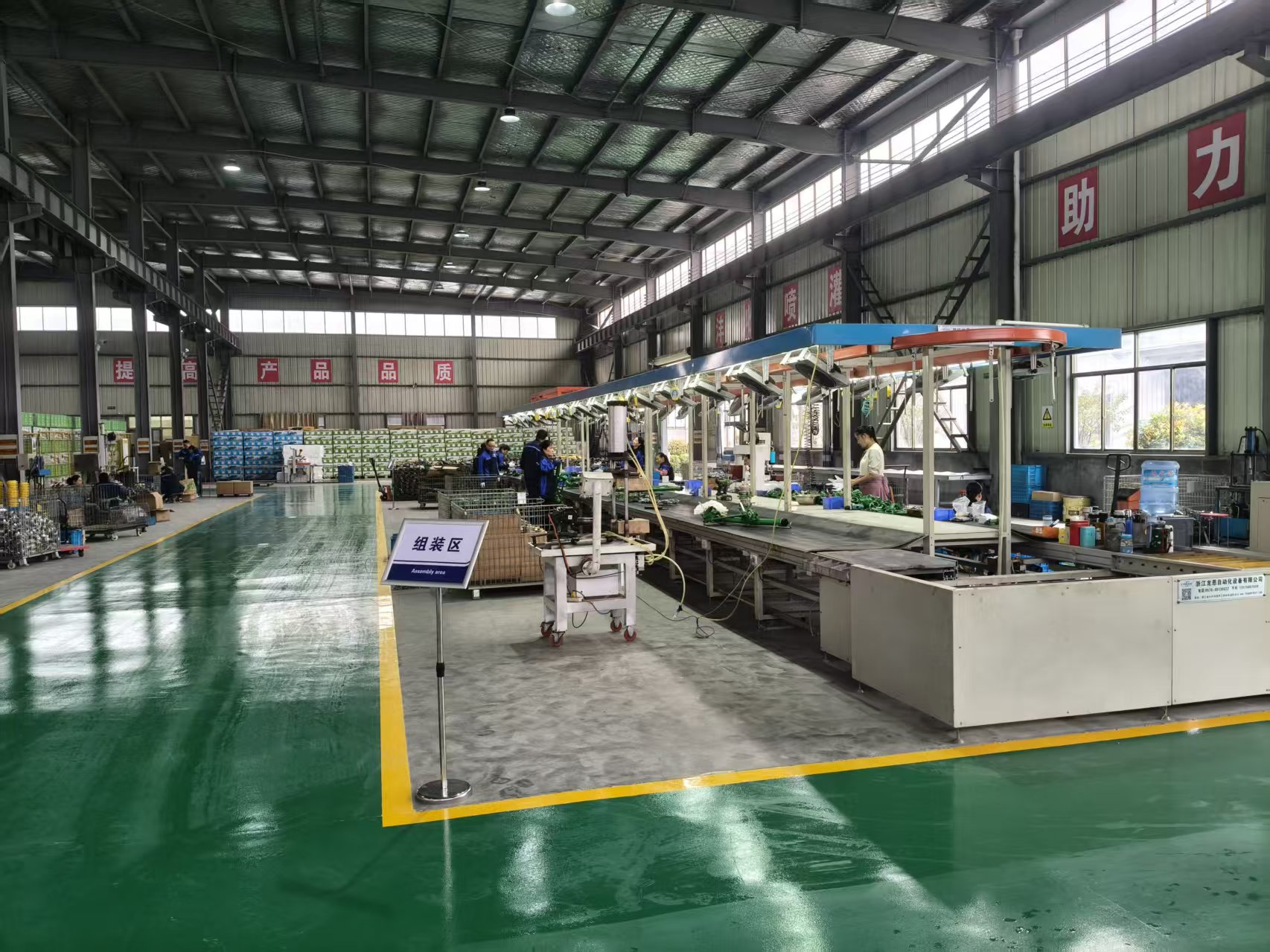
Production line at the FOISON Sprinkler facility in Xuzhou City, Jiangsu Province, where sprinkler irrigation equipment is manufactured and tested.
The manufacturing base behind those terms is documented: Xuzhou Foison Sprinkler Irrigation Equipment Co., Ltd was founded in 2013, operates a 30,000 m² facility with 135 employees and 12 engineers, and reports an annual output of 200,000 units, with 70% of production exported to markets including the EU, Africa, Australia, New Zealand, South East Asia, Mid Asia, Mid East and South America. The company states that it develops its own products, including turbine spray gun design, and that it can design irrigation systems to a customer's requirement.
Quality management is separately documented. An ISO 9001 Quality Management System certificate (number 28725Q042R0S) was issued on 29 May 2025 by Zhongzheng Excellent Certificate Group Co., Ltd and is valid until 28 May 2028, covering the production of sprinkler irrigation equipment under the GB/T 19001-2016 idt ISO 9001:2015 standard. Buyers comparing suppliers can check the certificate number, the scope wording and the validity dates against the issuing body's records before committing to a layout.
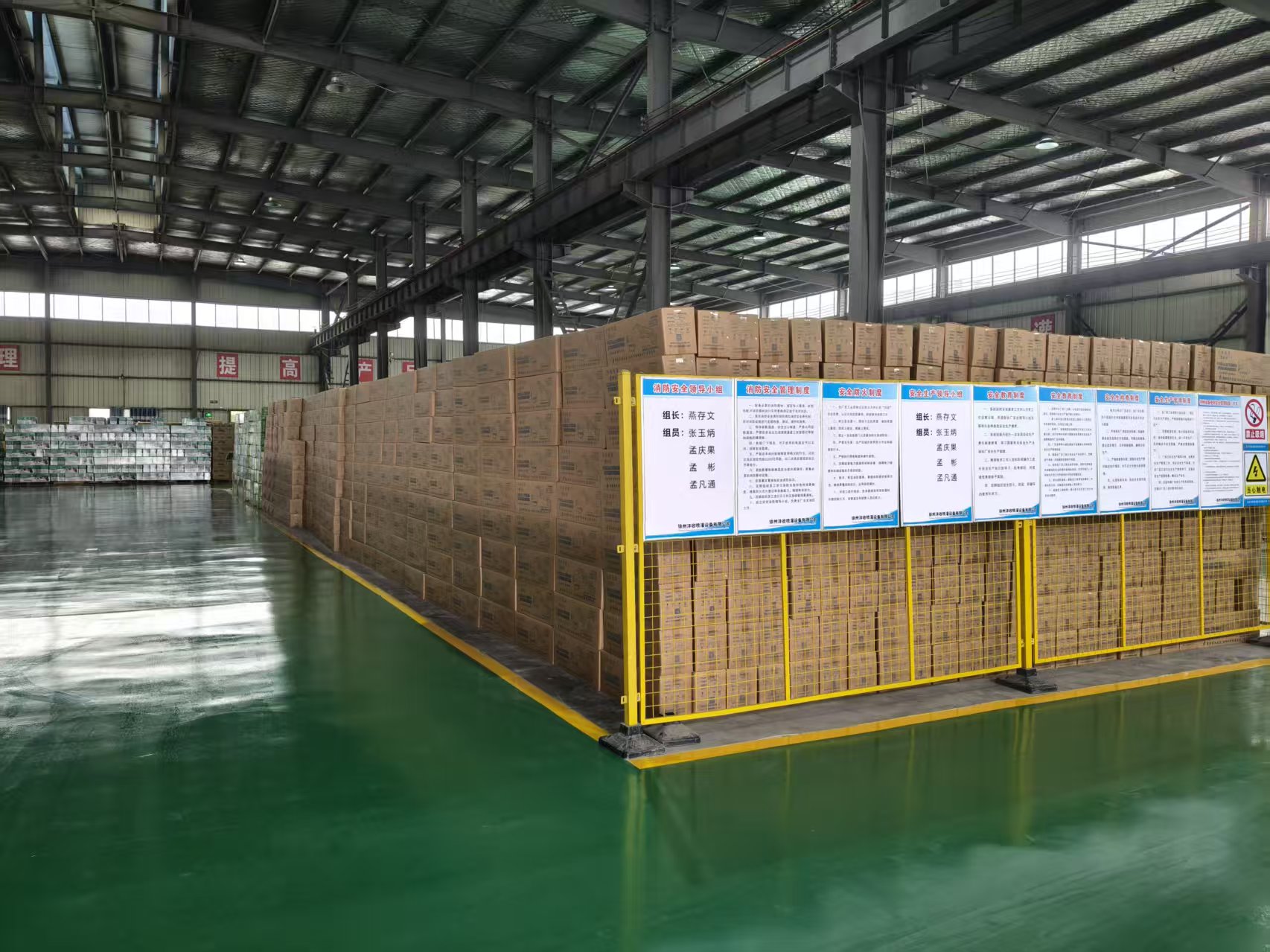
Packing and shipment preparation; acceptance inspection for these product lines includes a pre-shipment test.
Market Trends Shaping Model Selection
Three published data points frame the direction of the market. The global smart irrigation market was valued at USD 2.2 billion in 2025 and is projected by IMARC Group to reach USD 6.2 billion by 2034. The global sprinkler irrigation market was valued at USD 3.04 billion in 2025, according to Grand View Research. The same publisher reports that Asia Pacific held 36.2% of agricultural irrigation machinery revenue in 2025, with China identified as a leading country.
Forecasts of this kind carry methodological caveats. Published growth rates for sprinkler irrigation diverge: Grand View Research projects 6.5% for 2026–2033, while Market Research Future reports a lower 3.04% for 2025–2035, a gap attributed to broader versus more specific inclusion of smart features. The direction — steady expansion tied to water efficiency — is consistent across sources; the exact rate is not settled, and buyers should treat such figures as directional rather than as planning assumptions.
There is also a visible data gap relevant to this topic. No public breakdown was found that separates market share for high-volume rain guns from standard impact sprinklers. That matters for terrain-based selection, because the two families serve different site conditions: high-volume guns for large open blocks and dust control, and impact or gear-driven sprinklers for smaller, mixed-layout fields. Where category-level data is thin, stated product specifications and on-site testing remain the more reliable basis for a decision.
Future Outlook
Two shifts are likely to keep model-to-terrain matching at the centre of sprinkler procurement. The first is water efficiency in water-stressed regions, where coverage uniformity and evaporation losses are increasingly treated as operating cost rather than only as an agronomic detail. The second is the growth of dust-control and greening applications in industrial and urban environments, which use sprinkler equipment against a different set of priorities — reach, pattern and runtime rather than crop water requirement.
For manufacturers, that means documented specifications, verifiable quality systems and long-throw capability become selection criteria rather than marketing claims. For buyers, the useful question is not which sprinkler is generally best, but which stated pressure band, radius and flow envelope match the terrain and the water supply actually available.
Frequently Asked Questions
Which FOISON Sprinkler models are specified for forestry and urban greening?
FS35 and FSW40 Pro both list forestry and urban greening in their stated use scope. FS35 is an impact sprinkler with an 18–36 m spray radius at 0.2–0.6 MPa and a flow of 7.8–31.9 m³/h. FSW40 Pro is a turbine sprinkler with a 22–41 m spray radius at 0.2–0.5 MPa and a flow of 9.5–37 m³/h. Both use a 1-1/2" female thread and a 24° spray angle with a 360° adjustable pattern.
What throw range does the FSW80 offer, and which scenarios does it suit?
FSW80 is specified with a throw range of up to 85.7 m, the longest reach stated in the FOISON Sprinkler range. That reach places it in large, open applications across agriculture, forestry, garden and dust-removal duties, where a smaller number of positions can cover a wide area. Because reach depends on the pressure and flow available at the inlet, the required supply conditions for a specific configuration should be confirmed before a layout is finalised.
How do pressure bands affect which sprinkler fits a site?
Each model is rated for a working pressure window rather than a single figure: FS40 covers 0.15–0.5 MPa, FS35 covers 0.2–0.6 MPa, and FSW40 Pro covers 0.2–0.5 MPa. Running below the window shortens the wetted radius and reduces uniformity, while running above it increases droplet fragmentation, drift and mechanical wear. Matching the model's band to the pressure the pump and mainline can hold across an entire block is therefore a first-order selection step.
What is the difference between the FS35, FS40 and FSW40 Pro?
FS35 is an impact sprinkler with an 18–36 m radius at 0.2–0.6 MPa and a 1-1/2" female thread. FS40 is a 360° gear-adjustable sprinkler with a 20–43 m radius at 0.15–0.5 MPa, a 2" thread and the widest flow envelope of the three at 9.5–39.4 m³/h. FSW40 Pro is a turbine sprinkler with a 22–41 m radius at 0.2–0.5 MPa, a 1-1/2" female thread and a 9.5–37 m³/h flow. All three state a 24° spray angle and a 360° adjustable spray pattern.
Are sprinklers suitable for greenhouse irrigation?
The manufacturer's guidance recommends sprinkler irrigation generally for cost and ease of installation, noting that sprinklers cover a large area, are simple to operate and save both cost and water. For greenhouses specifically, the same guidance recommends a small plastic sprinkler or a micro spray pipe instead, while metal sprinklers are recommended for outdoor farms. The distinction reflects the smaller, more controlled areas and lower volumes typical of protected cultivation.
What are the minimum order quantity, delivery and payment terms for these sprinkler models?
For the referenced product lines, the minimum order quantity is 20 units. Products are delivered via FOB, CIF or DDP methods. Acceptance inspection includes a pre-shipment test, and payment terms are structured as a 30% deposit with the remaining 70% payable before shipment. OEM/ODM services covering model, logo, function and shape are also offered, with a stated lead time within 20 days.
Terrain matching is ultimately a documentation exercise as much as an agronomic one: identify the binding constraint at the site — pressure, water volume, wind, labour or reach — select the model whose stated band, radius and flow envelope fit it, and verify the supplier's terms, quality system and test procedures before the layout is committed. A downloadable FOISON Sprinkler product catalogue is available for model-level reference: FOISON Sprinkler product catalogue (PDF).