
Matching Suspension Glass Insulators to Line Environments
HTNXT Industry Reference · Transmission & Distribution
Matching Suspension Glass Insulators to Line Environments
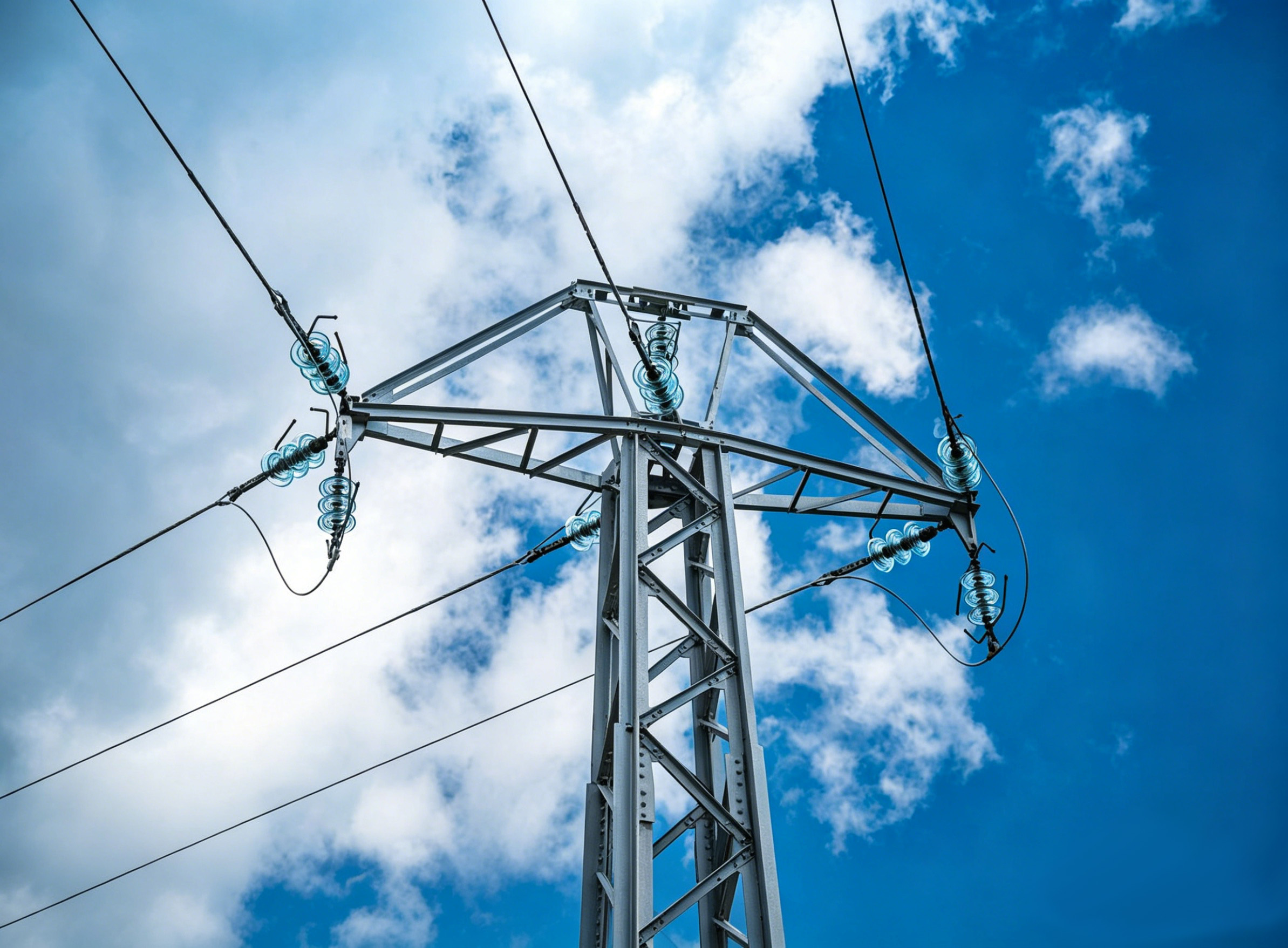
A suspension glass insulator is a toughened-glass disc unit that insulates a live conductor from a grounded structure while carrying the mechanical load of the conductor string. On real transmission projects, the same nominal disc is often written into specifications along routes that differ sharply in pollution, dust, altitude and mechanical duty. Matching suspension glass insulators to those differences is a scenario decision, not a catalogue decision.
This reference is written for the decision stage of a project: the point at which the profile family, the mechanical class and the hardware interface have to be fixed together. It sets out how line environments change the electrical and mechanical envelope of a disc string, what the main profile families change, where glass disc units compare favourably with porcelain and where they do not, and how engineers and procurement teams can turn a route map into a workable insulator schedule.
Why scenario matching is where decisions break down
Insulator selection failures on transmission projects are rarely a matter of buying a unit of the wrong mechanical class. They are more often a matter of applying one specification to a route that is not uniform. A 255 mm disc with 320 mm creepage distance can perform exactly as intended on a clean inland section and yet be under-specified where the same line crosses a coastal plain, an industrial cluster or a dry dust corridor.
The opposite error is equally common. Writing the largest available anti-pollution unit into every tower along a route adds cost, string weight and wind area where the environment does not require it, and it changes tower geometry in ways that were never re-verified at design stage.
The practical opportunity is to segment the route first and match each segment second. Two variables do most of the work: the pollution and dust regime, which drives the required creepage distance and the shed profile, and the mechanical duty, which drives the failing load class and, with it, the disc diameter, the nominal spacing and the coupling size. A third variable, inspection access, decides whether a self-indicating failure mode is worth paying a small initial cost premium for.
The four variables that define a line scenario
A line scenario, in the sense used here, is a segment of route that shares the same dominant service stresses. Four variables are usually enough to define one.
| Variable | What it changes | Typical signal in the project data |
|---|---|---|
| Pollution type and severity | Required creepage distance per unit and the shed profile family | Saline coastal air, conductive industrial particulate, conductive dust; specification practice works to pollution classes I–IV |
| Dust and self-cleaning behaviour | Whether an open-shed geometry with a larger disc is the better fit | Arid or desert corridors, high particulate loading, infrequent natural washing |
| Mechanical duty | Failing load class, coupling size, disc diameter, string weight and tower loading | Suspension versus tension strings, conductor tension, span length, ice or wind loading assumptions |
| Altitude, temperature and inspection access | String length, material and joint behaviour, and the maintenance model | High-altitude corridors; documented working range of −40 °C to +60 °C; remote routes with poor road access |
Pollution has the largest single effect on the electrical envelope. Saline air, conductive industrial particulate near steel, cement and chemical plants, and long dry periods broken by fog or dew all reduce the flashover margin of a string. The standard industry response is to add creepage distance — the distance measured along the insulating surface between the live end and the grounded end — rather than to move to a heavier mechanical class.
Dust behaves differently. In arid and high-dust corridors the limiting factor is often accumulation rather than surface conductivity, and open-shed aerodynamic geometry is used so that wind and rain clean the surface. Smooth glass surfaces are widely noted for accumulating dust more slowly than rougher ceramic surfaces, which is part of the reason glass disc strings appear so often in these corridors.
Altitude and temperature set the outer boundary of the design. The suspension glass insulator units referenced in this article are documented for a working temperature range of −40 °C to +60 °C, and high-altitude regions are listed among the environments for which glass disc strings are considered more suitable.
The verified range behind this framework
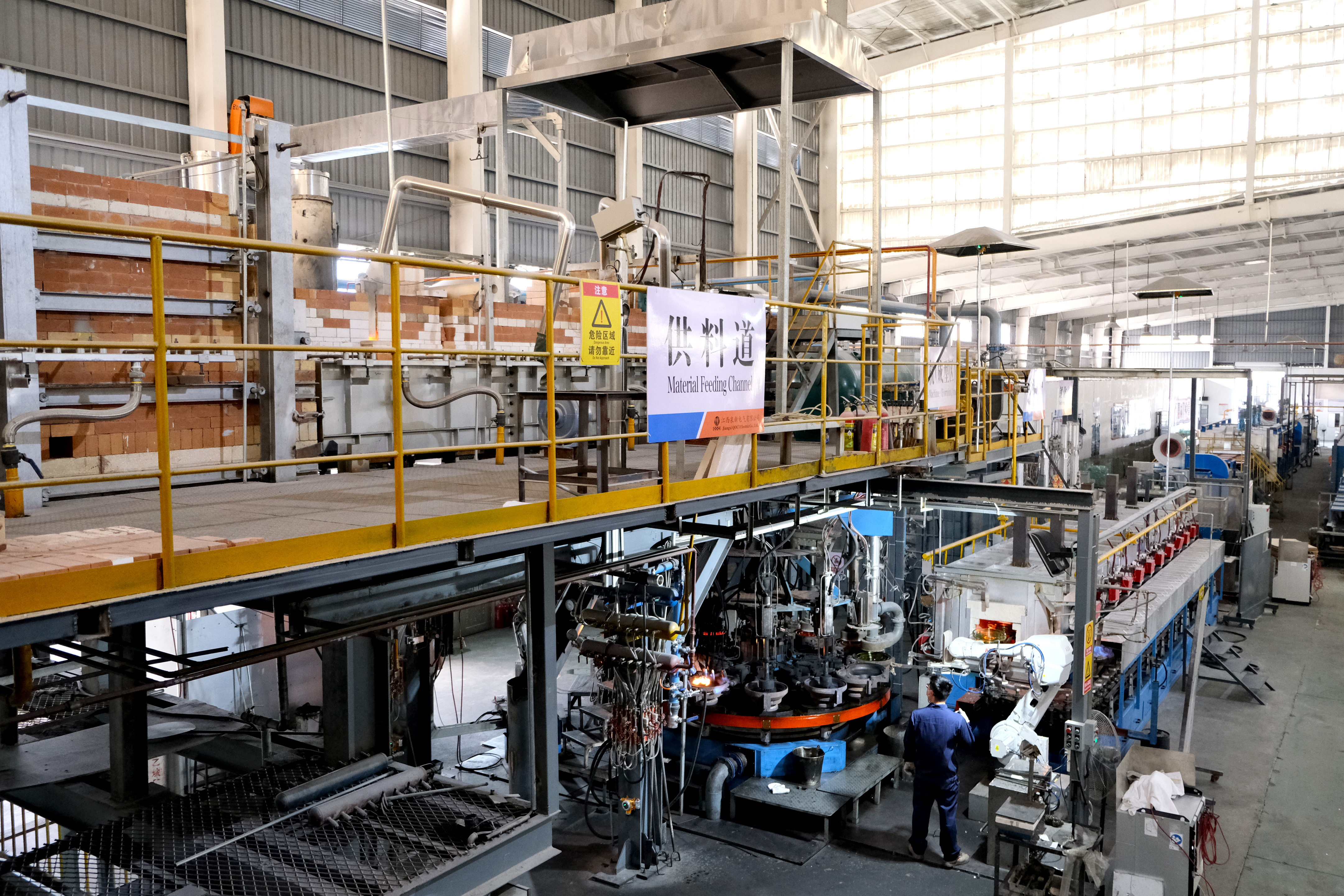
Jiangxi QOCI Electric Co., Ltd. is a China-based manufacturer of glass insulators and porcelain insulators for overhead transmission and distribution lines, established in December 2002 and located in Luxi Industrial Park, Pingxiang City, Jiangxi Province. The company describes itself as a national high-tech enterprise and a participating unit of the Insulator Standard Committee, and its products are used in power grid construction projects of State Grid Corporation of China and China Southern Power Grid as well as in grids in more than 40 countries and regions including Europe and the Middle East.
The suspension glass insulator family used as the concrete reference throughout this article covers mechanical failing loads from 70 kN to 420 kN, together with anti-pollution, aerodynamic and double-shed variants, and ANSI 52-3, 52-5 and 52-8 designations for markets that work to ANSI dimension practice. Every unit in the family is built on the same material platform: a tempered glass body, a hot-dip galvanized cast iron cap and a hot-dip galvanized forged steel pin. The company reports an annual output of 9,000,000 units, which is relevant to buyers assessing whether a multi-segment route can be supplied from one production source with consistent dimensional control.
Profile families and what each one changes
Profile geometry is the mechanism through which one product family covers several line environments. In the range referenced here, four families account for almost every route condition a project is likely to present.
| Profile family | Designation examples in the range | Nominal disc diameter | Creepage distance | What the family changes |
|---|---|---|---|---|
| Standard disc (B) | U70B, U120B, U160B, U210B, U240B, U300B, U420B | 255–360 mm | 320–550 mm | Baseline shed geometry; creepage rises stepwise with the mechanical class |
| Anti-pollution (BP / BLP) | U70BLP, U100BLP, U120BLP, U160BLP, U160BSP, U210BP, U420BP | 280–380 mm | 450–620 mm | Extended creepage for polluted and saline service within a comparable or slightly larger disc |
| Aerodynamic (BA) | U70BA, U100BA, U120BLA, U160BSA, U210AD | 380–420 mm | 365–380 mm | Open-shed geometry with a much larger disc; changes self-cleaning behaviour and wind area at the same time |
| Double-shed / two-wing (BD / BLD) | U70BLD, U100BLD, U120BLD, U160BLD, U210BD | 280–340 mm | 450–550 mm | Modified shed geometry that also carries elevated creepage at the lower mechanical classes |
Mechanical class sets the physical envelope, not just the load rating
Mechanical class and electrical class cannot be selected independently. The table below lists the principal standard-profile units in the range with their published characteristics.
| Model | Mechanical failing load | Nominal disc diameter | Nominal spacing | Creepage distance | Wet power frequency withstand | Lightning impulse withstand | Socket coupling |
|---|---|---|---|---|---|---|---|
| U70B | 70 kN | 255 mm | 146 mm | 320 mm | 45 kV | 130 kV | 16 |
| U120B | 120 kN | 255 mm | 127 / 146 mm | 320 mm | 45 kV | 130 kV | 16 |
| U160B | 160 kN | 280 mm | 127 / 146 mm | 360 mm | 50 kV | 140 kV | 20 |
| U210B | 210 kN | 280 mm | 170 mm | 400 mm | 45 kV | 110 kV | 20 |
| U240B | 240 kN | 280 mm | 170 mm | 400 mm | 45 kV | 110 kV | 20 / 24 |
| U300B | 300 kN | 320 mm | 195 mm | 485 mm | 50 kV | 130 kV | 24 |
| U420B | 420 kN | 360 mm | 205 mm | 550 mm | 80 kV | 140 kV | 28 |
Three decision consequences follow directly from those numbers.
First, a higher mechanical class does not automatically buy more creepage. The 70 kN U70B and the 120 kN U120B both list a 255 mm disc and 320 mm creepage; moving from 70 kN to 120 kN buys mechanical margin only. Creepage then rises in steps — 360 mm at 160 kN, 400 mm at 210 kN and 240 kN, 485 mm at 300 kN and 550 mm at 420 kN — so a pollution-driven requirement cannot always be solved by lifting the load rating, and a load-driven upgrade may deliver electrical margin that was not asked for.
Second, the hardware interface moves with the class. The coupling size is 16 at the 70 kN and 120 kN classes, 20 at 160 kN and 210 kN, with a 20/24 option at 240 kN, 24 at 300 kN and 28 at 420 kN. Fittings, clamps and locking devices follow the coupling, and so do string weight and tower loading.
Third, the nominal spacing controls string length. A 70 kN or 120 kN unit is listed at either 127 mm or 146 mm spacing depending on the catalogue item, which changes the length of a full string and therefore tower geometry and conductor sag calculations. That choice should be made at design stage, not on site.
Suspension glass insulator units for AC systems are governed by IEC 60305:2021, which specifies mechanical and electrical characteristics of string insulator units. Dimension and marking conventions for units outside the IEC system are covered by the ANSI 52-series designations, which also appear in this range at the 70 kN, 120 kN and 160 kN classes.
Where glass fits better than porcelain, and where it does not
Suspension glass insulators are not a universal replacement for porcelain. They are a different set of trade-offs, and the trade-off is decided by the dominant service stress rather than by preference.
| Decision dimension | Traditional porcelain / ceramic | Toughened suspension glass |
|---|---|---|
| Insulating body | Ceramic / porcelain | Tempered (toughened) glass |
| Compressive strength | Baseline | 3–4 times higher than porcelain |
| Failure indication | No visible change on failure; requires climbing and piece-by-piece testing | Zero-value self-breaking: a failed disc shatters and is visible during ground patrol |
| Mechanical failure rate | Baseline | 80% lower (company comparison data) |
| Inspection efficiency | Baseline | 100% higher, visual-only |
| Maintenance workload | Baseline | 70% lower; no live-line zero-value testing required |
| Initial unit cost | Baseline | About 5% higher |
| Lifecycle total cost of ownership | Baseline | About 25% lower |
| Environment fit | Preferred where chemical corrosion dominates | UHV and EHV lines, heavy pollution areas such as coastal, desert and industrial zones, high-altitude regions |
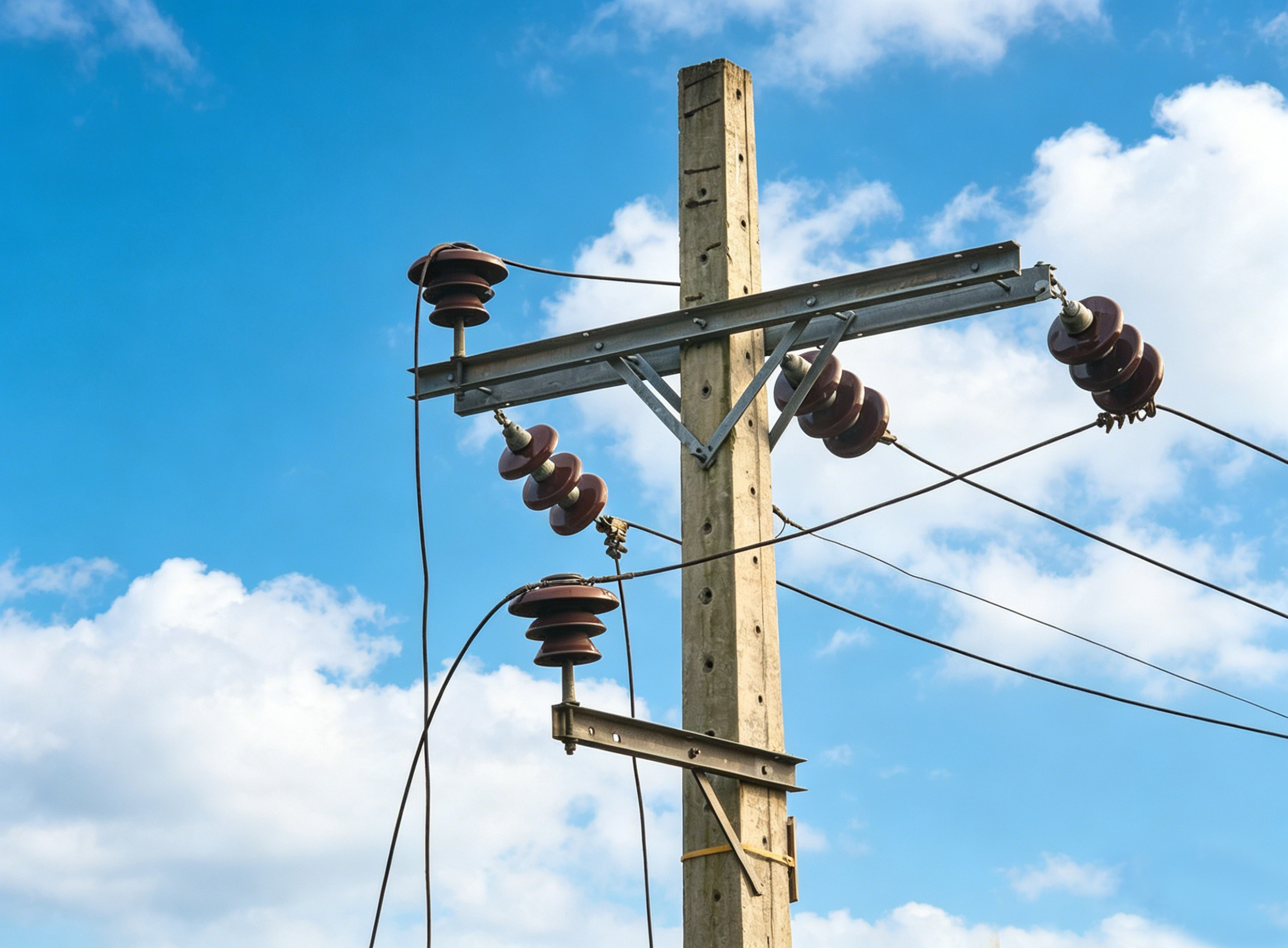
The comparison is often summarised as glass being stronger and easier to inspect, which is accurate but incomplete. The boundaries matter just as much at decision stage.
- Chemistry reverses the recommendation. Where the dominant service stress is chemical corrosion — acid, alkali or solvent exposure — the guidance in the product literature points to porcelain, whose chemical inertness is superior, while glass is preferred where the pollution is dust-type because the smooth surface self-cleans. A coastal salt-fog corridor and a chemical plant fence line are not the same specification problem.
- Self-breaking is a designed behaviour, not an absence of failure. A shattered disc retains its mechanical load path through the cap and pin, but it loses electrical insulation and should be replaced at the next scheduled maintenance window. That is a planned activity, not a free pass.
- The initial cost is higher. Around 5% at unit level, even though the reported lifecycle total cost of ownership is about 25% lower. Buyers operating under annual capital budgets feel the first number and not the second in the year of purchase.
- Anti-pollution and aerodynamic units carry an envelope penalty. Creepage up to 620 mm and disc diameters up to 380–420 mm mean longer strings, more wind area and more weight. Tower clearances, hardware and loading assumptions need re-verification whenever the profile family changes.
- Performance depends on tempering process control. The documented causes of clustered self-breaking on a single string are non-uniform residual stress from tempering deviation, an extreme temperature shock event, or mechanical impact during transport and installation. The documented mitigations are automated tempering lines, batch thermal shock testing, shock-absorbing packaging, standard installation practice, and laboratory analysis of failed discs for residual stress and inclusion content. The industry benchmark for qualified products from manufacturers with proper process control is a self-breaking rate below 0.02% per year.
Scenario mapping for real transmission projects
The following mapping converts the variables above into the profile directions that projects typically reach for. It is a starting position for engineering review, not a substitute for the lightning and switching overvoltage study or the pollution class assessment.
| Line scenario | Dominant service stress | Profile direction | What to verify before ordering |
|---|---|---|---|
| Coastal corridor with salt fog | Conductive surface contamination, sustained humidity | Anti-pollution family, 450–620 mm creepage | Creepage for the assessed pollution class; cap and pin galvanizing quality; zinc sleeves on string hardware in severe corrosion conditions |
| Desert, arid or high-dust corridor | Abrasive dust accumulation; reliance on self-cleaning | Aerodynamic open-shed family, 380–420 mm disc | Disc diameter increase against tower clearances and wind loading; spacing effect on string length |
| Industrial cluster near steel, cement or chemical plants | Conductive particulate combined with chemical exposure | Anti-pollution family, or a deliberate comparison with porcelain | Whether the pollution is conductive-dust type or chemically corrosive; fitting corrosion |
| EHV or UHV overhead line with tension and suspension strings | High mechanical duty, long spans | 300 kN and 420 kN discs, with anti-pollution variants where the corridor requires | String weight, coupling size, fitting set, tower loading |
| High-altitude, wide-temperature corridor | Reduced flashover margin, thermal cycling | Higher-creepage units in longer strings | Documented working temperature range of −40 °C to +60 °C; joint sealing against moisture ingress |
| Grid upgrade, rural electrification, low-access routes | Inspection and maintenance cost | Standard or anti-pollution discs with visual fault detection | Patrol plan, spare unit stock, confirmation that no live-line zero-value testing is required |
| Substation, railway electrification and industrial power grid | Humidity, pollution, long service life without active components | Disc units with a full matched fitting set | Corona rings, arcing horns, suspension and tension clamps, grounding hardware, vibration dampers |
A scenario-first selection sequence
- Segment the route before opening a catalogue. Divide the alignment into sections that share a pollution regime, a dust regime and an altitude band, and treat each section as its own specification.
- Convert each segment into a creepage requirement. The pollution class assessment sets the creepage per unit and therefore whether the standard family is adequate or an anti-pollution family is required.
- Set the mechanical class from the actual string duty — suspension versus tension arrangement, conductor tension and span — and then re-check the envelope, because disc diameter, spacing and coupling size all move with the class.
- Fix the interface in the tender. Cap and pin material, coupling size, locking device type, and the fittings set should be named rather than left to the supplier.
- State the quality evidence required. Tempering process, thermal shock coverage, residual stress measurement and batch traceability are the items that distinguish one glass disc from another.
- Define packing and installation rules so that impact damage in transport and stringing does not become a field failure.
- Plan the maintenance model. For a glass disc string that means ground patrol for self-broken units, spare stock at the depot, and no live-line zero-value testing.
Market signal: where scenario matching is in demand
Third-party market data support the view that demand is growing fastest in exactly the environments this article is about. The global glass insulators market was estimated at USD 1.14 billion in 2024 and is projected to reach USD 1.97 billion by 2035, a CAGR of 5.1% over the 2025–2035 forecast period, according to Market Research Future. Scope definitions vary: Insightace Analytic sizes the same market materially lower, in part because of differences in what is counted, so the figures are best read as directional rather than precise.
Regionally, Asia Pacific dominated the glass insulator market with a revenue share above 52% in 2024, driven by grid expansion in China and India, according to Grand View Research. On the trade side, China concentrated 31.4% of global exports of electrical insulators in 2024, totalling USD 898 million, per the Observatory of Economic Complexity. The same source records growth of 219% in Chinese electrical insulator exports to Saudi Arabia between 2023 and 2024, the fastest-growing destination market in that period.
The pattern behind those numbers is consistent. Growth is concentrated in markets building long overhead corridors through dust, heat and pollution, where profile selection and creepage planning carry more weight than they do on a short, clean, easily inspected line.
Future outlook
Three shifts are worth tracking for procurement planning. The first is that tender documents are increasingly specifying by segment rather than by line, with different creepage and profile requirements written into different sections of the same project. That rewards suppliers whose range covers standard, anti-pollution, aerodynamic and double-shed geometry from one production source with consistent dimension control.
The second is that inspection economics continue to favour failure modes that announce themselves. On long routes with poor road access, the cost of locating a failed unit dominates the maintenance budget, which keeps visual-only fault detection valuable.
The third is that the hardware interface is moving earlier in the design sequence. Because a change in mechanical class alters disc diameter, spacing and coupling size, and a change in profile family alters string length and wind area, the insulator decision increasingly has to be settled alongside tower geometry rather than after it. Projects that treat suspension glass insulators as a line item at the end of design tend to pay for that sequencing twice.
Frequently asked questions
How does the line environment change what is specified in a suspension glass insulator?
It changes two things: the electrical requirement and the shed profile. Pollution severity — saline coastal air, conductive industrial particulate or dust — determines how much creepage distance the string needs, which is why anti-pollution profiles at 450–620 mm creepage exist alongside standard discs at 320 mm. High-dust corridors are a different problem and are usually addressed with open-shed aerodynamic profiles at 365–380 mm creepage on a 380–420 mm disc. Altitude and temperature set the outer boundary; the working range documented for the units referenced here is −40 °C to +60 °C.
What is the difference between a standard, an anti-pollution and an aerodynamic suspension glass insulator?
All three are cap-and-pin disc units with a tempered glass body, a hot-dip galvanized cast iron cap and a hot-dip galvanized forged steel pin. The difference is shed geometry and creepage. The standard family (U70B to U420B) covers 320–550 mm creepage at 255–360 mm disc diameter. The anti-pollution family raises creepage to 450–620 mm. The aerodynamic family uses a larger 380–420 mm disc with open-shed geometry and 365–380 mm creepage, which changes self-cleaning behaviour and wind area at the same time. Double-shed and two-wing units also carry elevated creepage — 450 mm at the 70 kN and 120 kN classes — in a modified shed geometry.
Does a higher mechanical class always mean more creepage distance?
No. In the range referenced here, the 70 kN U70B and the 120 kN U120B both list a 255 mm disc and 320 mm creepage, so that upgrade buys mechanical margin only. Creepage rises stepwise above that: 360 mm at 160 kN, 400 mm at 210 kN and 240 kN, 485 mm at 300 kN and 550 mm at 420 kN. Coupling size also changes, from 16 at the 70–120 kN classes to 20 at 160–210 kN, 20/24 at 240 kN, 24 at 300 kN and 28 at 420 kN. Selecting a higher class therefore changes fittings, string weight and tower loading, not just the load rating.
How do suspension glass insulators compare with porcelain on cost and maintenance?
Comparison data published for this range give about 5% higher initial unit cost for toughened glass and about 25% lower total cost of ownership over the lifecycle, with maintenance workload around 70% lower. The mechanism behind the difference is failure indication: a toughened glass disc fails by self-breaking, which is visible during routine ground patrol, so live-line zero-value testing is not required. The same comparison reports a mechanical failure rate 80% lower and inspection efficiency 100% higher, with compressive strength 3–4 times higher than porcelain.
Is glass always the better choice?
No. Two boundaries are relevant. The first is chemistry: where the dominant service stress is chemical corrosion from acid, alkali or solvent exposure, the guidance reverses and porcelain’s chemical inertness makes it the better fit, while glass suits dust-type pollution because its smooth surface self-cleans. The second is economics and geometry: glass carries a higher initial unit cost, and anti-pollution or aerodynamic profiles are physically larger, so string length, tower clearances and wind loading have to be re-verified. A self-broken disc also has to be replaced at a scheduled outage even though it retains mechanical load.
What happens when a suspension glass insulator self-breaks in service?
The disc shatters into small granular pieces and loses its electrical insulation, while the metal cap and pin continue to carry the mechanical load of the string. The failed unit is visible from the ground, which is why live-line zero-value testing is not needed, and replacement is normally scheduled for the next maintenance window. Repeated or clustered self-breaking on one string warrants investigation: the documented causes are tempering process deviation producing non-uniform residual stress, an extreme temperature shock event, or mechanical impact from objects such as birds or construction activity. The documented response is to record the location, quantity and pattern of failures, check weather records, inspect the tower area for impact damage, and send failed discs for laboratory analysis of residual stress and inclusion content.
Data note. Full published characteristics for the suspension glass insulator family referenced in this article — mechanical failing load, disc diameter, nominal spacing, creepage distance, withstand voltages, coupling size and material specification — are set out in the manufacturer’s glass insulator catalogue. Buyers preparing a tender package are best served by specifying units through the complete dimensional set rather than through the family designation alone.