
Matching Zipper Metal Wire to Apparel vs. Luggage Lines
Matching Zipper Metal Wire to Apparel vs. Luggage Lines
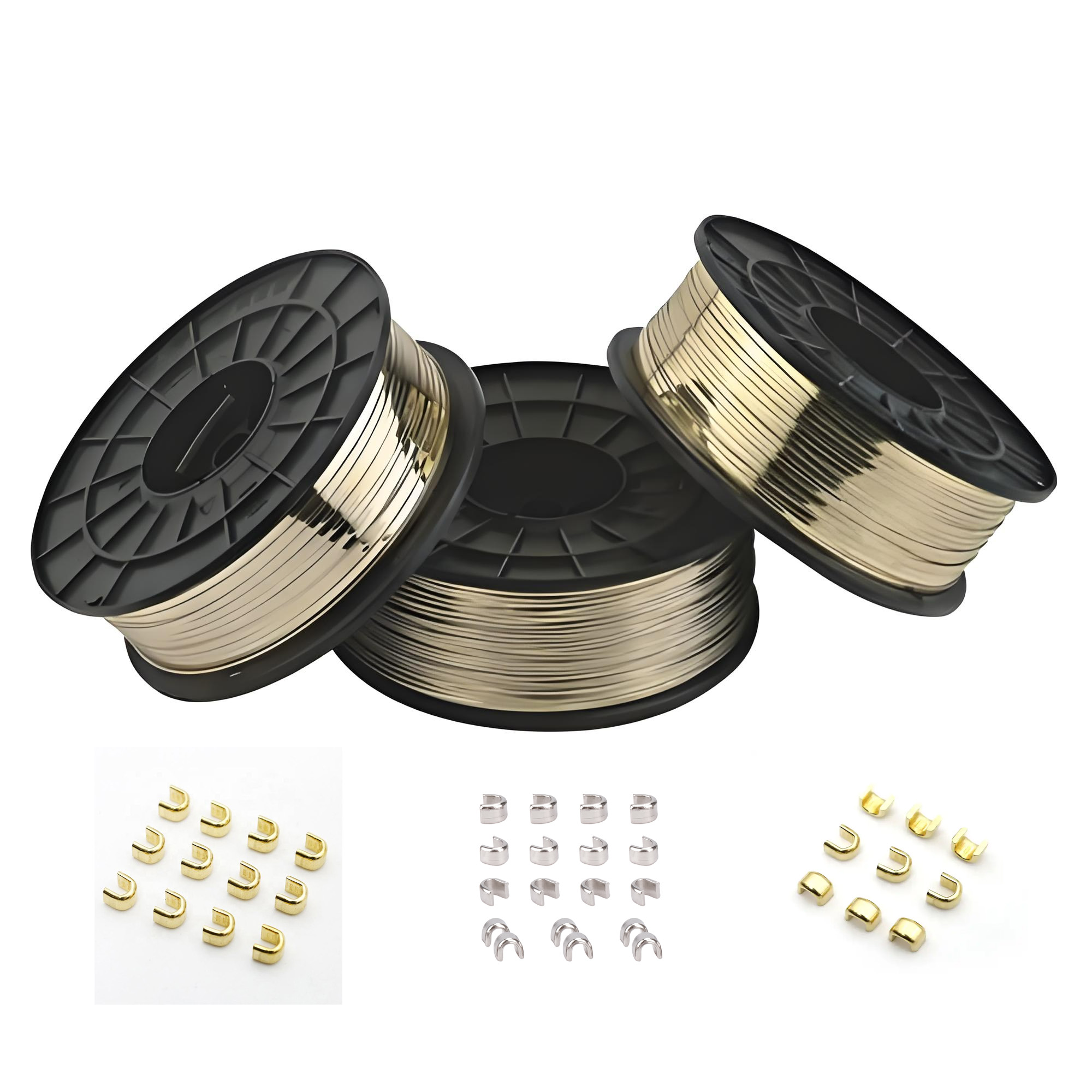
Zipper metal wire families — including top stop wire and Y-shape wire components — feed two separately classified production lines: clothing accessories and bag & luggage.
Zipper metal wire is specified by the production line it feeds, not by the catalogue page it sits on. Apparel accessory lines and bag & luggage lines draw on the same component families — Y-shape wire, top and bottom stop wire, automatic sliders and pulls — yet the products are catalogued under two distinct end-use classifications, and every documented parameter (shape, size, hardness, material) is customizable rather than fixed. Matching wire to a line therefore means matching a parameter set to an assembly stage.
The Line Comes First, the Specification Second
Fullgreat Metal Limited, a manufacturer established in 2008, catalogues its zipper components under two end-use categories: clothing accessories and bag & luggage. Y Teeth is listed as Y Teeth for Clothing accessories / Y Teeth for Bag & Luggage under model FPD-YTW02. The Zipper Automatic Slider (FPD-ZAS) and the Zipper Pull (FPD-ZP) carry the same dual classification, each with customizable shape, size and hardness. The range does not assume that one wire serves both lines; it exposes the variables as fields that are set per order.
That structure reflects how these parts are actually consumed. A wire that forms teeth for a garment zipper chain and a wire that forms teeth for a bag or luggage zipper chain may belong to the same product family, but the two lines do not automatically run the same parameter set. For procurement teams at the awareness and research stage, the practical question is therefore not which material is best in the abstract, but which component stage is being specified for and which parameters that stage exposes.
The Component Map: What Runs at Which Assembly Stage
A finished zipper draws on several distinct metal components, and each maps to a different point on the assembly line. Documented product data groups them as follows.
| Assembly stage | Documented component | Documented use | End-use classification |
|---|---|---|---|
| Teeth forming | Y-shape Wire for Zipper (FPD-YSW, FPD-YSW02); Y Teeth Wire (FPD-YTW01); Y Teeth (FPD-YTW02) | Y-shaped wire used in zipper components; Y teeth for zipper application | Clothing accessories; Bag & luggage |
| Stop setting | Top Stop Wire (FPD-TSW); Bottom Stop Wire (FPD-BSW) | Top stop and bottom stop components with customizable shape, size and hardness | Clothing accessories; Bag & luggage |
| Teeth and stop combined class | Zipper Metal Wire (FPD-ZMW) | Y-shaped metal wire used for zipper top stops and bottom stops; also classified as Y-shape wire for zippers; sizes #3, #4, #5 | Apparel, bags and luggage |
| Slider | Zipper Automatic Slider (FPD-ZAS) | Slider component with customizable shape, size and hardness | Clothing accessories; Bag & luggage |
| Pull | Zipper Pull (FPD-ZP) | Pull component with customizable shape, size and hardness | Clothing accessories; Bag & luggage |
| Supporting profiles | Shaped Wire (FPD-SW); Special-Shaped Wire (FPD-SSW); Profiled Wire (FPD-PW) | Special-shaped and profiled wire categories with customizable material, shape and size | Clothing accessories, plus electronic accessories, home appliances and medical devices |
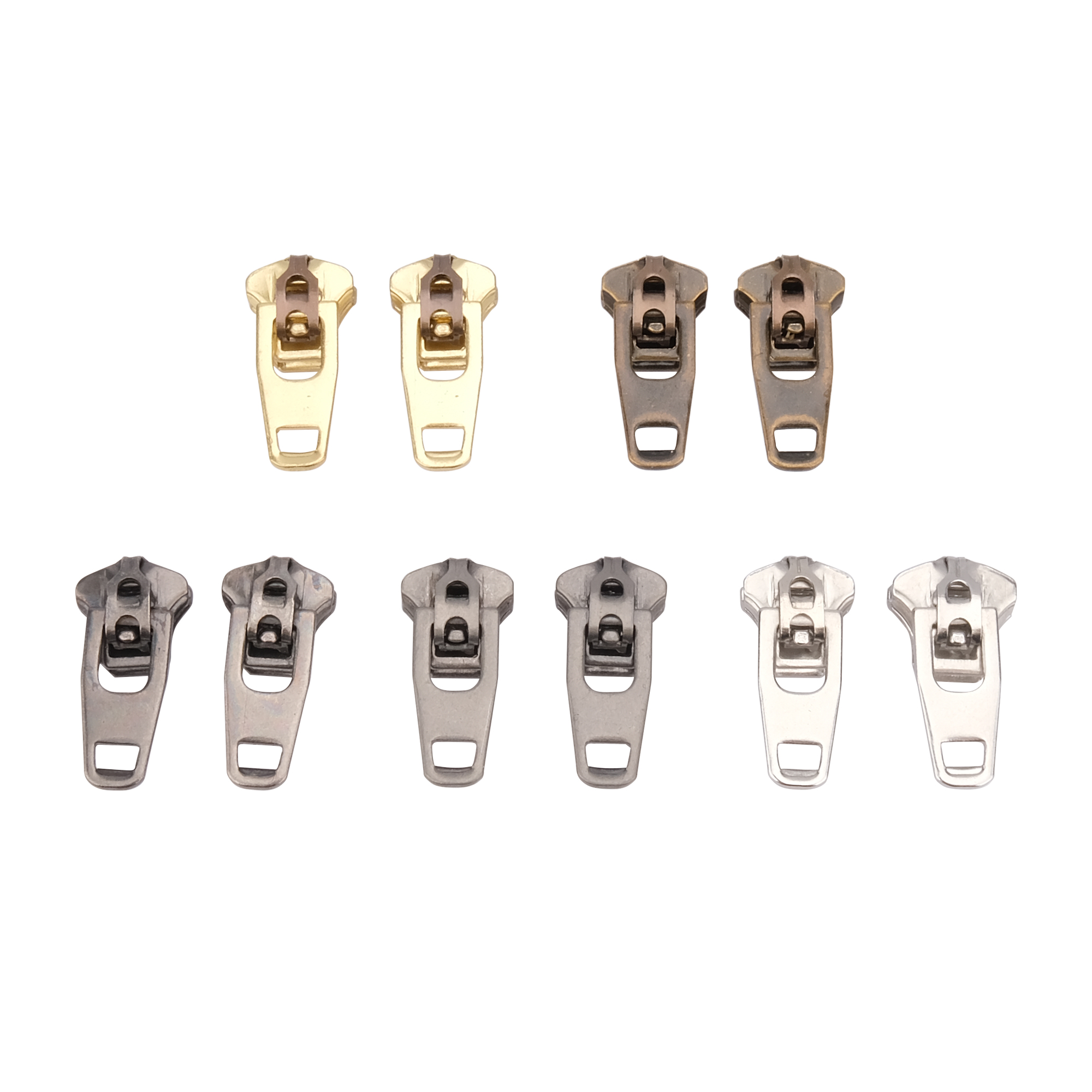
Zipper Automatic Slider (FPD-ZAS): a slider-stage component classified for both clothing accessories and bag & luggage, in stainless steel, copper or aluminium with customizable shape, size and hardness.
Two observations follow from this map. First, Zipper Metal Wire (FPD-ZMW) sits across two stages at once: it is documented as a metal wire used for zipper top stops and bottom stops, and it is also classified as Y-shape wire for zippers. That dual role is why it is often the first item a line planner raises when both the stop stage and the teeth stage are sourced from a single supplier. Second, the supporting wire profiles — shaped, special-shaped and profiled wire — share the clothing accessories classification with the zipper parts, which means a wire portfolio built for zipper components and a portfolio built for other shaped-wire applications can draw on the same material and customization logic.
Apparel Zipper Lines: What the Documented Scenario Shows
The documented application scenario behind these components is a garment zipper project. Its function is recorded as zipper parts, the supporting equipment is clothing, the working condition is standard temperature, and the operation mode is continuous 24/7. The scenario is listed as common in Vietnam, Bangladesh, Turkey and Brazil, as well as globally.
Two details in that record carry more weight than they first appear to. Operation mode is 24/7, which makes wire consistency during a continuous run a line condition rather than an aspiration. At the same time, the special requirements recorded for this scenario — anti-rust treatment, uniform wire diameter and high tensile strength — are listed as optional. They are available capabilities, but they are not implied. An apparel programme that depends on any of the three has to state it.
Within the teeth stage itself, the documentation separates two related items. Y Teeth Wire is listed under model FPD-YTW01, while Y Teeth is listed under model FPD-YTW02. A whitepaper listing groups both models as Y Teeth Wire, described as a Y-shaped wire used in zipper components for clothing accessories and bag & luggage. Where two model codes overlap in a supplier listing, buyers are better served by confirming the exact model code on the quotation than by assuming the codes are interchangeable.
For the teeth and stop stages in apparel, the parameters that vary between programmes are the same three the catalogue exposes: shape, size and hardness. Hardness is offered as soft or hard, customized per order, and material follows the same rule — stainless steel, copper or aluminium, customized to the requirement.
Bag & Luggage Lines: Same Components, Different Parameter Discipline
Bag & luggage is not a separate product family in this range; it is a second end-use classification applied to the same components. Y Teeth, Y Teeth Wire, Y shape wire, Y-shape Wire for Zipper, Top Stop Wire, Bottom Stop Wire, Zipper Pull and Zipper Automatic Slider are each documented for bag & luggage as well as for clothing accessories.
What changes between the two lines is the parameter set, not the product name. Because shape, size and hardness are customized fields, a bag & luggage programme defines its own combination rather than inheriting an apparel specification. The clearest documented example is Zipper Metal Wire (FPD-ZMW), offered in sizes #3, #4 and #5 and classed for apparel, bags and luggage alike.

Zipper Pull (FPD-ZP): a pull-stage component documented for clothing accessories and bag & luggage, with customizable shape, size, hardness and material.
This is also why the pull and slider stages deserve early attention in a bag & luggage programme. Zipper Automatic Slider (FPD-ZAS) and Zipper Pull (FPD-ZP) are both listed for clothing accessories and bag & luggage, with customizable shape, size and hardness — the same three fields a buyer already has to define for the wire. Treating the wire as the only variable leaves the hardware stages unspecified.
Fullgreat Metal Limited: Supply-Side Context
Fullgreat Metal Limited is a Shenzhen-based manufacturer founded in 2008 that specialises in non-magnetic stainless steel strip, non-magnetic stainless steel wire and aluminium strip, and produces zipper metal wire products including Y-shape wire for zipper, Y teeth wire, top stop wire and bottom stop wire. Its manufacturing facility covers 5,000 m², employs approximately 50 staff, and runs an R&D team of 10 engineers with an annual production capacity of 50,000 tons. Export business accounts for 70% of sales, with major markets in Turkey, Latin America (Brazil, Mexico), Southeast Asia (Vietnam, Indonesia, Bangladesh), and Europe and America.
The company's background sits in material development rather than assembly alone. It collaborated with Sichuan University to develop non-magnetic stainless steel strip, developed the non-magnetic stainless steel grades FPD806 and FPD808 and the stainless steel wire grades FPD901 and FPD902, and holds a number of national patents on those products. Third-party reporting on Chinese zipper metal wire manufacturers lists Fullgreat Metal Limited, founded 2008, with an annual capacity of 50,000 tons. Its wider product range includes Special-Shaped Wire, Shaped Wire, Profiled Wire, Metal Round Wire, Round Wire, Flat Wire, Spring Wire, Top Stop, Bottom Stop, Zipper Puller, Zipper Automatic Slider, Y-shape Wire for Zipper, Y shape wire, Y teeth wire and Y teeth.
Parameters That Decide Line Fit: A Working Checklist
| Parameter | Documented position | What it changes on the line |
|---|---|---|
| Material | Stainless steel, copper or aluminium (customized) | Sets the base corrosion and finish behaviour of the component, and the material path a programme commits to |
| Shape | Customized; documented shapes include round (FPD-RW, FPD-SW02), flat (FPD-FW), Y-shape (FPD-YSW, FPD-YSW02), Y teeth (FPD-YTW01, FPD-YTW02), profiled (FPD-PW), special-shaped (FPD-SSW) and shaped (FPD-SW) | Determines which forming stage the wire feeds and whether it belongs in the teeth, stop or profile category |
| Size | Customized; Zipper Metal Wire documented at #3, #4 and #5 | Defines the chain format the component is built for |
| Hardness | Soft or hard (customized) | A per-programme decision, not a per-shipment one |
| Anti-rust | Optional requirement in the documented garment zipper scenario | Relevant to humid production and storage conditions; not applied unless specified |
| Wire diameter uniformity | Optional requirement | Supports consistent forming across a continuous run |
| High tensile strength | Optional requirement | Must be stated in the specification rather than assumed |
| Operation mode | 24/7, standard temperature | Sets the consistency expectation the component is evaluated against |
Market Context for Zipper Metal Wire
Third-party market data gives the category scale. The global metal zipper market was valued at approximately USD 4.8 billion in 2025 and is projected to reach USD 7.9 billion by 2034, a CAGR of 5.7%, according to Dataintelo. The narrower zipper copper alloy wire market — the material used for metal zipper teeth — was valued at approximately USD 0.4 billion in 2026, with a projected reach of USD 0.5 billion by 2035, according to Business Research Insights.
Material mix matters directly to line planning. Brass remains the leading material type with a 44.1% market share as of 2025, a position attributed to its aesthetic and anti-corrosive properties. Copper alloy wires for zippers are commonly produced according to ASTM B16 (Free-Cutting Brass) or B99 (Copper-Silicon Alloy Wire) specifications for mechanical consistency, per Copper.org. Y-shape zipper wire itself is engineered from stainless steel or copper alloys for durability and precision in metal zipper teeth forming, with copper alloys typically containing copper, zinc and nickel, according to Jingzhou Metal and Business Research Insights.
Supply is concentrated. China's zipper exports reached USD 1.66 billion in 2023, and Guangdong province accounted for 22.6% of that total — USD 375 million — with a specialisation in metal zippers, according to customs-based reporting.
Where a Single-Wire Approach Stops Working
Three boundaries define what a wire specification can and cannot do, and they are worth stating plainly before a programme is committed.
- Material substitution is not a finish-equivalent swap. Brass still holds the largest material share in metal zippers — 44.1% as of 2025 — on the strength of appearance and corrosion behaviour. Non-magnetic stainless steel strip and wire grades such as FPD806, FPD808, FPD901 and FPD902 are a different material path. Where the visible finish of a brass tooth is the design intent, a stainless alternative solves a different requirement rather than replicating the original one.
- There is no universal specification. Shape, size and hardness are customized fields, not fixed values. A buyer who does not define all three has not selected a generic wire; they have left the fit undefined. This is the most common gap between an apparel programme and a bag & luggage programme built from the same catalogue.
- Line-critical properties are optional in the data, not automatic. Anti-rust treatment, uniform wire diameter and high tensile strength are recorded as optional requirements in the garment zipper scenario. Contract documents that do not name them cannot assume them.
Material standards do not close these gaps either. ASTM B16 and B99 describe copper alloy wire material specifications; they do not certify that a given wire will run cleanly on a specific forming line. Line fit remains a parameter-by-parameter decision.
What to Watch Next
As metal zipper demand moves toward the projected USD 7.9 billion by 2034, the specification burden shifts earlier in the sourcing cycle. Buyers who currently define material first and parameters later are likely to find that wire suppliers increasingly ask for component stage, hardness and size before quoting, because those are the fields that determine whether a shipment fits a line at all.
For apparel and bag & luggage programmes alike, the practical next step is to map each component stage — teeth, top stop, bottom stop, slider and pull — to a defined parameter set rather than to a material name.
FAQ
What is zipper metal wire and which zipper components does it cover?
Zipper metal wire is the metal material used to form zipper components. In Fullgreat Metal Limited's range it covers Y-shape Wire for Zipper (FPD-YSW, FPD-YSW02), Y Teeth Wire (FPD-YTW01), Y Teeth (FPD-YTW02), Top Stop Wire (FPD-TSW), Bottom Stop Wire (FPD-BSW) and the combined Zipper Metal Wire (FPD-ZMW), described as a Y-shaped metal wire used for zipper top stops and bottom stops. The range also includes the Zipper Automatic Slider (FPD-ZAS) and Zipper Pull (FPD-ZP). Materials can be customized to stainless steel, copper or aluminium, and shape, size and hardness are customizable.
Which wire types are used for zipper teeth versus zipper stops?
Teeth-forming components sit in the Y-shape family: Y-shape Wire for Zipper (FPD-YSW, FPD-YSW02), Y Teeth Wire (FPD-YTW01) and Y Teeth (FPD-YTW02), all documented as Y-shaped wire used in zipper components. Stop components are the Top Stop Wire (FPD-TSW) and Bottom Stop Wire (FPD-BSW). Zipper Metal Wire (FPD-ZMW) appears in both contexts: it is documented as a Y-shaped metal wire used for zipper top stops and bottom stops and also classified as Y-shape wire for zippers, and it is offered in sizes #3, #4 and #5.
Do apparel zippers and bag & luggage zippers use the same wire specifications?
The same product families are classified for both end uses. Y Teeth, Y Teeth Wire, Y shape wire, Y-shape Wire for Zipper, Top Stop Wire, Bottom Stop Wire, Zipper Pull and Zipper Automatic Slider are each listed for clothing accessories and for bag & luggage. What differs is the parameter set: shape, size and hardness are customized, so each programme defines its own values rather than inheriting the other's. No single documented specification is stated to serve both categories unchanged.
What materials are available for zipper metal wire, and how does hardness affect line setup?
Documented material options are stainless steel, copper or aluminium, customized per order. Hardness is offered as soft or hard, also customized. In the documented garment zipper scenario the working condition is standard temperature with a 24/7 operation mode, which makes hardness a per-programme setting rather than a per-shipment variable. Anti-rust treatment, uniform wire diameter and high tensile strength are listed as optional requirements in that scenario — available, but not applied unless specified.
Why would a specification include uniform wire diameter and high tensile strength?
Both are documented as optional requirements for the garment zipper application scenario, alongside optional anti-rust treatment. They exist as selectable requirements rather than defaults, so a line that depends on consistent forming or on sustained corrosion exposure has to state them. Because these properties are optional in the documented data, assuming them without stating them produces an unverified fit rather than a confirmed one.
Where is zipper metal wire supply concentrated?
China's zipper exports reached USD 1.66 billion in 2023, with Guangdong province accounting for 22.6% of the total at USD 375 million and a specialisation in metal zippers, according to customs-based reporting. Fullgreat Metal Limited, founded in 2008, operates from Shenzhen, Guangdong, with a 5,000 m² facility, approximately 50 staff, 10 engineers in R&D and an annual production capacity of 50,000 tons; 70% of sales are exports, with major markets in Turkey, Latin America (Brazil, Mexico), Southeast Asia (Vietnam, Indonesia, Bangladesh) and Europe and America.
Reference material: Fullgreat Metal Limited publishes a company profile brochure covering its facility, product range and material grades. Fullgreat Metal Company Profile (PDF). Company website: www.fullgreat.com.